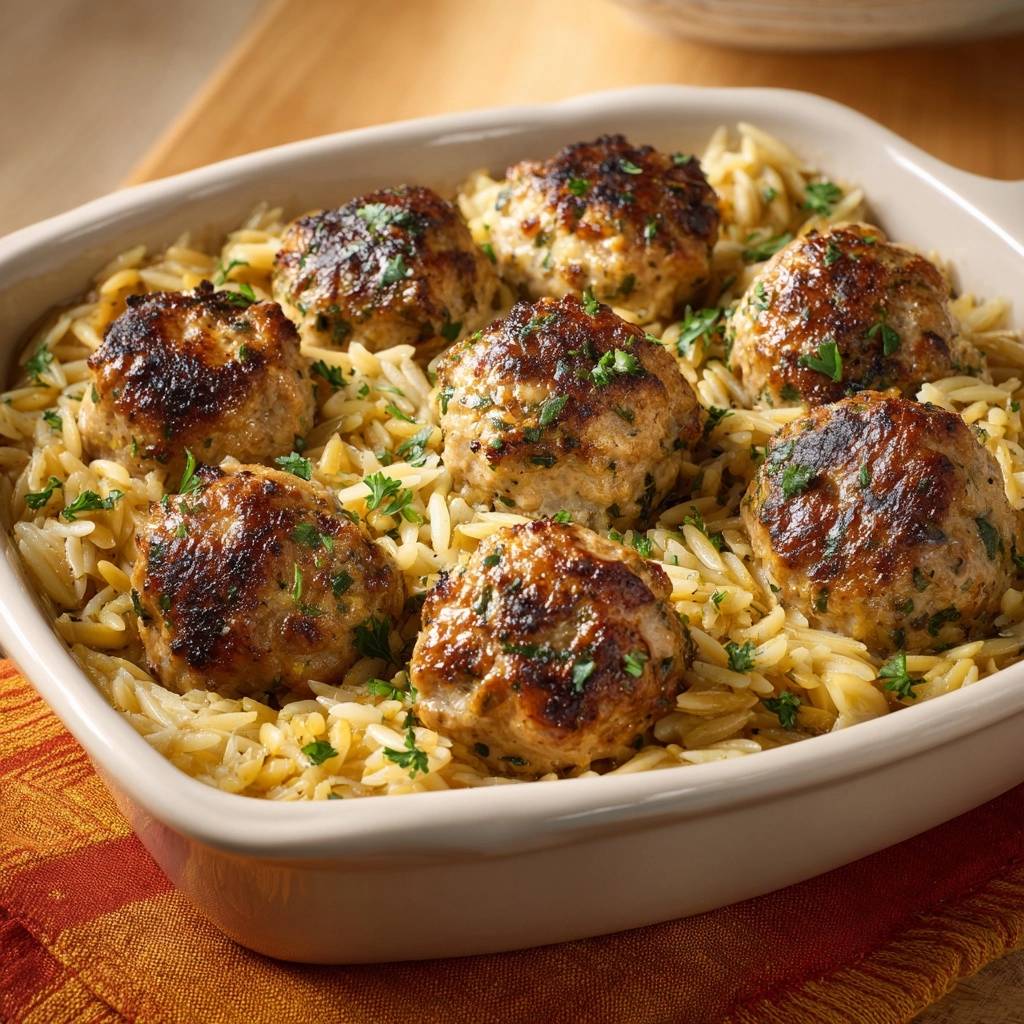
Most home cooks struggle with one-pan pasta bakes because the results often turn out mushy or gummy. You want a dish where every grain of pasta holds its shape and every meatball remains succulent, yet many recipes leave you with a soggy mess. This Golden Baked Meatballs and Orzo solves that problem by utilizing a specific “Anti-Soggy” philosophy that prioritizes structural integrity and deep, caramelized flavors.
For a similar satisfying pasta experience, explore this garlic butter meatball pasta.
The secret to this high-end, 40-minute dinner lies in the contrast of textures. You get a shattered-glass crispness on the outside of the meatballs and a distinct, al dente bite from the orzo. By the time the pan leaves the oven, the liquid has transformed into a silky glaze rather than a watery soup, creating a meal that feels sophisticated enough for guests but simple enough for a Tuesday night.
The real trick to success here is the “Toast and Absorb” method. Most people boil their pasta in water, but we are going to treat this orzo like a fine risotto. Toasting the dry grains in olive oil before adding any liquid creates a protective barrier that prevents the starch from blowing out. This ensures your pasta stays firm and nutty, even after a stint in the hot oven.
The Science of the Toast and Absorb Method
When you toss dry orzo into a hot, oiled skillet, you are initiating the Maillard reaction on a microscopic scale. This chemical reaction between amino acids and reducing sugars doesn’t just happen to steak; it happens to grains too. As the pasta turns a light tan color, the heat alters the starch molecules on the surface of each grain.
This toasting process creates a hydrophobic barrier, which essentially means the pasta becomes slightly water-resistant. Instead of the orzo immediately soaking up liquid and expanding into a soft, mushy texture, it absorbs the broth slowly and evenly. This is very similar to the “Pilaf Method” used in professional kitchens to ensure rice grains stay separate and fluffy.
Furthermore, toasting the starch develops a complex, popcorn-like aroma that raw pasta simply cannot provide. This depth of flavor permeates the entire dish as the broth simmers. Because the grains don’t release as much surface starch into the liquid, the final sauce remains clean and velvety rather than thick and pasty. It is a technical move that requires only three minutes but changes the entire DNA of the dish.
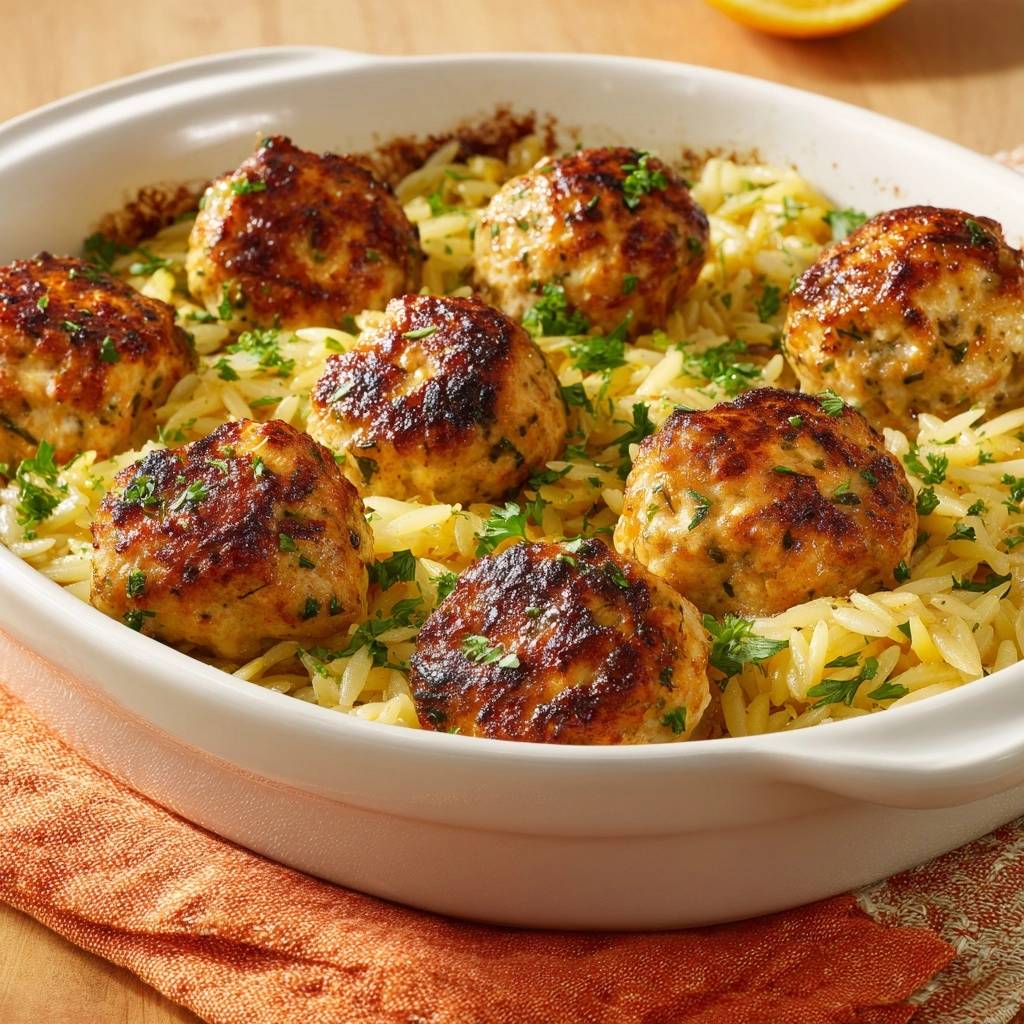
Essential Components for Golden Baked Meatballs and Orzo
Quality ingredients are the foundation of this recipe, especially since the ingredient list is relatively short. When choosing your ground meat, the fat-to-lean ratio is your most important decision. A lean meat ensures the orzo doesn’t become greasy, but you still need enough moisture to keep the meatballs tender during the high-heat bake.
Fresh parsley is another non-negotiable component. While dried herbs have their place, the bright, grassy punch of fresh parsley balances the richness of the parmesan cheese. Additionally, always reach for low-sodium chicken broth. As the liquid evaporates in the oven, the salt concentrates; using a full-sodium broth often results in a dish that is far too salty by the time it hits the table.
Selecting the Right Meat Base
If you choose 90/10 lean ground beef, you will get a rich, savory fond on the bottom of your pan that seasons the orzo beautifully. However, ground turkey is a fantastic lighter alternative that picks up the flavors of the garlic and oregano quite well. Just keep in mind that turkey is leaner and can dry out faster, so you must be diligent about pulling the pan from the oven the moment it hits the target temperature.
The Role of Binder and Aromatics
The combination of a beaten egg and breadcrumbs creates a “tender-firm” texture that prevents the meatballs from falling apart in the broth. I prefer using garlic and onion powder inside the meat mixture rather than fresh minced aromatics. At the high temperatures required for a proper sear, fresh garlic bits often burn and turn bitter, whereas powders distribute flavor evenly and withstand the heat of the skillet.
Phase One: Engineering the Perfect Meatball Sear
To get that “Golden” look, you need the right equipment. A cast iron or stainless steel skillet is superior here because they hold heat better than non-stick pans. When the meat hits the oil, you want to hear a loud sizzle. This is how you develop a “fond”—those little brown bits stuck to the pan that hold all the concentrated flavor for your pasta.
Sear the meatballs for about three to four minutes per side. You are looking for a deep, dark golden-brown crust that looks almost like a finished burger. Don’t worry about the insides being raw at this stage. We are intentionally leaving the centers uncooked so they can finish gently in the oven, which keeps them much juicier than if you cooked them through on the stovetop.
Phase Two: Toasting Orzo for Maximum Texture
After removing the meatballs, don’t wash that pan! Those browned bits are culinary gold. Add your remaining oil and the dry orzo directly into the skillet. Stir the pasta constantly. You will notice the color shift from a pale cream to a toasted gold, and the kitchen will start to smell like toasted nuts or crackers.
Once the orzo is toasted, pour in the chicken broth. Use a wooden spoon to scrape the bottom of the pan vigorously. This is called deglazing, and it lifts all that caramelized meat flavor off the metal and into the liquid. This ensures that every single grain of orzo is infused with the essence of the seared meat and spices.
Phase Three: The Precision Bake
Now it is time to assemble. Stir the parmesan into the simmering broth and then nestle the meatballs back into the pan. The “nestling” technique is vital. You want the bottom half of the meatball submerged in the liquid so it poaches and stays moist, while the top half remains exposed to the dry heat of the oven to maintain that crispy crust.
For a similar comforting meal, consider trying one-pan chicken meatballs.
Bake at 400 degrees F for about 12 to 15 minutes. This high temperature allows the orzo to absorb the liquid rapidly while the meatballs reach a safe internal temperature of 165 degrees F. The result is a “risotto-adjacent” finish where the pasta is creamy and bound by the melted cheese, but each grain remains distinct and firm to the bite.
Troubleshooting Common Texture Issues
If you pull the pan out and the orzo still feels a bit crunchy or “chalky,” don’t panic. Simply splash in another quarter-cup of broth, cover the pan with a lid or foil, and let it sit for five minutes. The residual steam will soften the grains without making them mushy. This usually happens if your oven runs a bit hot or your skillet is extra wide, causing faster evaporation.
On the flip side, if the meatballs feel a bit firm, it is likely they were over-seared or the meat was over-mixed. Next time, try to handle the meat as little as possible when forming the balls. Over-working the protein leads to a rubbery texture. Always use a meat thermometer to ensure you aren’t cooking them past the 165-degree mark, which is the point where poultry and beef start to lose their moisture.
Flavor Variations and Ingredient Swaps
You can easily adapt this “Golden” framework to different flavor profiles. For a Mediterranean twist, stir in some lemon zest and a handful of baby spinach right before you put the pan in the oven. The spinach will wilt perfectly in the steam. You could also swap the parmesan for crumbled feta, though the texture will be chunkier rather than creamy.
If you want a bit of heat, add a pinch of red pepper flakes to the oil while toasting the orzo. This “blooms” the spice and distributes the heat evenly throughout the pasta. Regardless of the additions, always keep the liquid-to-pasta ratio the same to ensure the structural integrity of the dish remains intact.
Optimal Pairings for One-Pan Orzo
Since this dish is rich with parmesan and savory meat, you need something bright and acidic to balance the palate. A simple arugula salad with a sharp lemon vinaigrette is the perfect companion. The peppery bite of the greens cuts right through the richness of the orzo.
Round Out Your Meal
Here are a few ideas to complement your golden baked meatballs and orzo.
- For a fresh vegetable option, consider making crispy parmesan roasted zucchini, which offers a slightly crunchy texture.
- To add some classic bread to the table, try this technique for crispy garlic bread.
Alternatively, charred broccolini with a squeeze of fresh lemon juice works wonders. The slight bitterness of the charred vegetable complements the toasted notes of the pasta. If you want something heartier, roasted carrots or parsnips provide a natural sweetness that plays well against the salty, savory meatballs.
Make-Ahead Strategy and Storage Logistics
You can prep the meatballs up to 24 hours in advance. Store them raw in an airtight container in the fridge so you can just sear and go when dinner time rolls around. This actually helps the flavors meld and makes the meatballs hold their shape even better during the searing process.
For leftovers, store the orzo and meatballs together in an airtight container for up to three days. When reheating, the orzo will have absorbed any remaining moisture and might look like a solid mass. To fix this, add a tablespoon of broth or water before microwaving. This creates a bit of steam that loosens the cheese and brings the pasta back to its original silky texture.
Expert Technical FAQ
Can I use a different pasta shape?
Small, dense shapes like ditalini or stelline work well with this method because they have a similar surface-area-to-volume ratio as orzo. However, avoid larger shapes like penne or rigatoni. Larger pastas require much more liquid and a longer cook time, which would cause the meatballs to dry out before the pasta is tender.
Why is my orzo sticking to the bottom?
This usually happens if you don’t stir the orzo immediately after adding the broth. The starches are very reactive when they first hit the liquid. Make sure you scrape the bottom of the pan thoroughly during the deglazing step. Using a well-seasoned cast iron or a high-quality stainless steel pan also helps prevent sticking.
Can I substitute the egg as a binder?
Yes, if you have an allergy, you can use a “panade.” Mash two tablespoons of crackers or breadcrumbs with a splash of heavy cream or milk until it forms a paste, then mix that into your meat. This provides the necessary moisture and structural support to keep the meatballs from becoming crumbly without using an egg.
How do I ensure the turkey meatballs stay juicy?
The key is the internal temperature and the nestling technique. Pull the meatballs at exactly 165 degrees F. By nestling them into the broth, the bottom half of the meatball is essentially being steamed and poached, which protects the delicate turkey proteins from the harsh, dry heat of the oven.
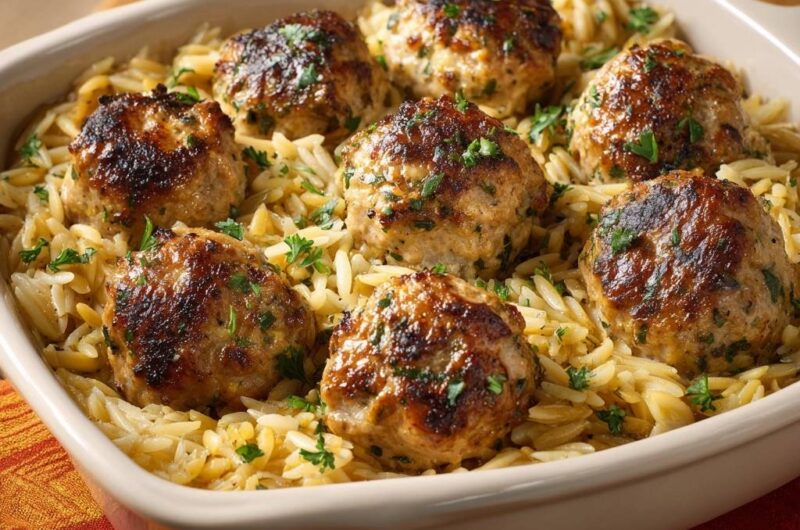
Baked Meatballs and Orzo
Course: Main CourseCuisine: AmericanDifficulty: easy4
servings15
minutes25
minutes540
kcal40
MinutesA flavorful one-pan meal featuring seared ground meat and toasted orzo pasta. By browning the dry pasta before simmering, this recipe ensures a firm texture that avoids the common pitfall of soggy oven-baked pasta.
Ingredients
1 pound ground turkey or lean ground beef
1/2 cup breadcrumbs
1 egg, beaten
1/2 cup fresh parsley, finely chopped (divided)
1 teaspoon garlic powder
1 teaspoon onion powder
1/2 teaspoon dried oregano
Salt and black pepper to taste
1.5 cups dry orzo pasta
2.5 cups low-sodium chicken broth
2 tablespoons olive oil (divided)
1/2 cup grated parmesan cheese
Directions
- Preheat your oven to 400 degrees F. In a large bowl, combine the ground meat, breadcrumbs, egg, 1/4 cup of the parsley, garlic powder, onion powder, dried oregano, salt, and pepper. Mix until just combined.
- Shape the mixture into 8 to 10 large meatballs.
- Heat 1 tablespoon of olive oil in a large oven-safe skillet over medium-high heat. Sear the meatballs for 3 to 4 minutes per side until a deep, dark golden-brown crust forms. The image shows a heavy sear, which provides the flavor base. They do not need to be cooked through yet. Remove meatballs and set aside.
- Wipe out any excess burnt bits if necessary, then add the remaining 1 tablespoon of olive oil to the pan. Add the dry orzo. Stir constantly for 2 to 3 minutes until the pasta smells nutty and turns a light golden brown. This toasting step is the absolute key to preventing soggy pasta.
- Pour in the chicken broth and scrape the bottom of the pan to release any flavorful browned bits. Bring to a light simmer.
- Stir in the parmesan cheese. If your skillet is not oven-safe, transfer the orzo and broth mixture into a 9×9 inch baking dish now.
- Nestle the seared meatballs into the orzo and broth, ensuring they are partially submerged but the browned tops remain exposed to maintain their crust.
- Transfer to the oven. Bake for 12 to 15 minutes until the liquid is fully absorbed by the orzo and the meatballs reach an internal temperature of 165 degrees F.
- Garnish generously with the remaining fresh parsley and serve immediately for the perfect texture.
Notes
- The secret to this dish is the Toast and Absorb method. Toasting the dry orzo creates a protective barrier that keeps each grain distinct. Ensure the tops of the meatballs remain exposed while baking to maintain their golden crust.