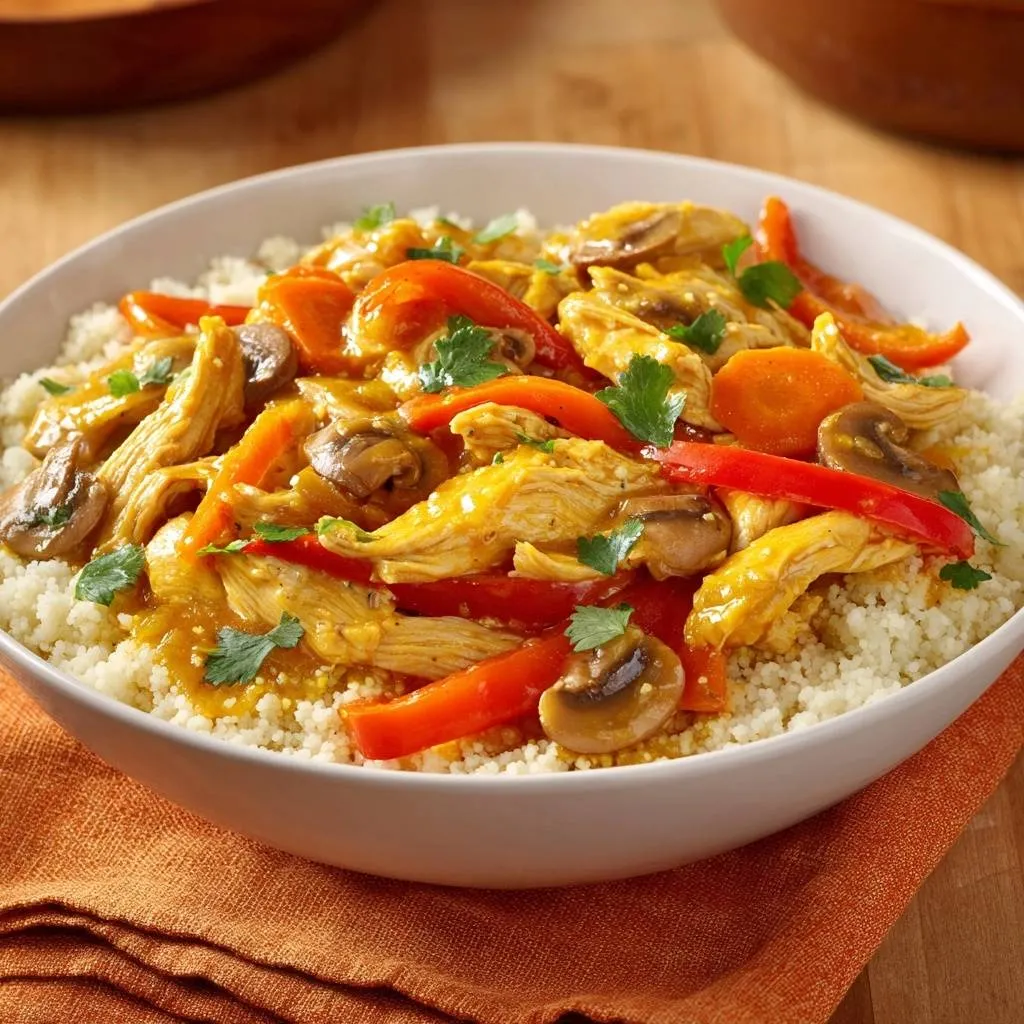
Most home cooks have experienced the disappointment of a dry, bland chicken dinner. You follow the recipe, yet the meat turns out rubbery and the grains feel like sand in your mouth. This Golden Chicken and Vegetable Couscous changes that narrative by focusing on moisture retention and vibrant, earthy aromatics.
The secret lies in the stunning golden hue and the silky texture of the sauce. We achieve this through a combination of turmeric and a specific searing method that creates a luscious coating. You aren’t just making a meal; you’re mastering a technique that ensures every bite is succulent and deeply seasoned.
For a similar, satisfying meal, give this one-pot chicken rice a try.
I’ve found that the biggest mistake people make is rushing the browning process. By using a starch-based “velveting” technique, we create a protective barrier around the chicken. This keeps the juices locked inside while the outside develops a beautiful, golden crust that naturally thickens your sauce later on.
The Science of Velveting for Juicy Chicken
Velveting is a classic technique often used in professional kitchens to keep lean meats tender. When you toss your chicken strips in cornstarch, you’re creating a microscopic shield. This barrier prevents the high heat of the pan from tightening the muscle fibers too quickly, which is usually what squeezes out the moisture.
As the chicken hits the hot oil, the starch gelatinizes instantly. This creates a smooth, slippery texture—hence the name “velveting.” Beyond just texture, this starch layer acts as a magnet for the golden sauce we build later in the process. It allows the broth and turmeric to cling to the meat rather than sliding off into the bottom of the bowl.
Compared to traditional pan-frying, where the exterior of the chicken can become tough and leathery, velveting keeps the meat supple. It is the superior choice for chicken breast, which lacks the fat content of thighs. You’ll notice the difference the moment your fork cuts through a piece with almost zero resistance.
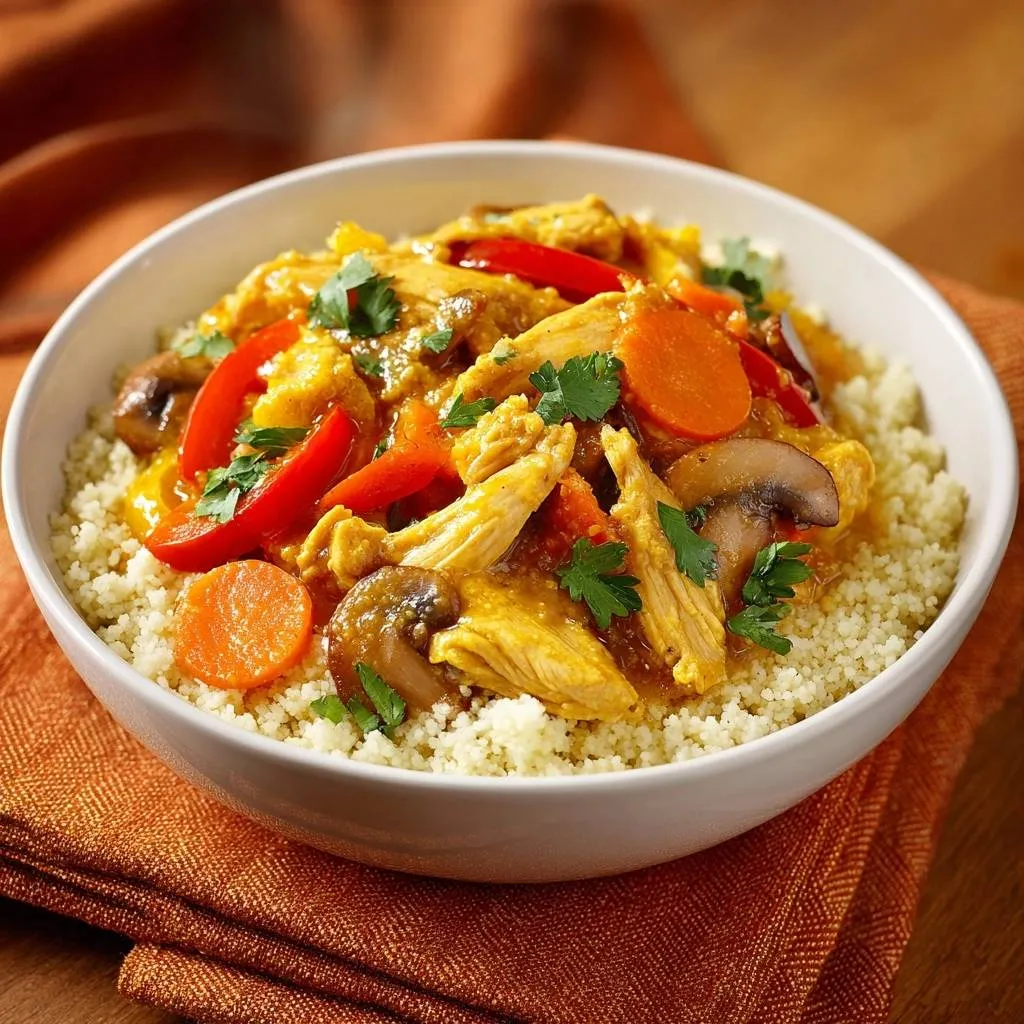
Essential Components for Golden Chicken and Vegetable Couscous
Quality ingredients are the backbone of this dish. For the couscous, we are using the traditional Moroccan variety, which consists of tiny granules of semolina. These small grains have a massive surface area, making them perfect for soaking up the golden broth we’re about to create.
While some recipes suggest using boiling water to hydrate the grains, I strongly recommend using a high-quality chicken broth instead. Water provides moisture, but broth provides a foundation of savory flavor. Since couscous is relatively neutral, it needs that extra boost of seasoning from the very beginning of the cooking process.
The olive oil you choose also matters. Use a standard extra virgin olive oil for sautéing the vegetables. It has a high enough smoke point for medium-high heat but still carries a fruity richness that complements the earthy turmeric and the sweetness of the bell peppers.
Selecting and Prepping the Vegetable Medley
Uniformity is your best friend when prepping the vegetables. I like to slice the carrots into very thin rounds so they soften at the same rate as the bell peppers. If the carrots are too thick, you’ll end up with a dish that has crunchy roots and mushy peppers, which ruins the cohesive mouthfeel.
Button mushrooms are a vital addition because they provide a deep, savory umami flavor. When they hit the pan, they release moisture and then begin to brown, creating a concentrated flavor base. Make sure your mushrooms are dry before slicing; if they’re damp, they’ll steam rather than sear, and you’ll miss out on that golden-brown color.
The Role of Turmeric and Aromatics
Turmeric is the star of the show here, providing that iconic sunshine-yellow color. It has a mild, slightly bitter, and earthy flavor that grounds the sweetness of the carrots. If you prefer a more complex spice profile, you can substitute a mild curry powder, which usually contains turmeric along with cumin, coriander, and fenugreek.
When you add the turmeric to the pan, let it “bloom” in the oil for about 30 seconds. This short window of heat wakes up the fat-soluble compounds in the spice, intensifying both the color and the aroma. Be careful not to let it sit too long without liquid, as burnt turmeric can quickly turn unpleasantly acrid.
Hydrating the Couscous for Maximum Fluffiness
The ratio of liquid to grain is the most critical factor in achieving fluffy couscous. For this recipe, a 1:1 ratio is the gold standard. If you add too much liquid, the grains will clump together into a gummy mass. If you add too little, they will remain hard and gritty in the center.
The “steam and trap” method is foolproof. Once you pour the boiling broth over the dry grains, cover the bowl immediately with a tight-fitting lid or plastic wrap. This traps the steam, forcing the moisture into the heart of each tiny grain. Let it rest undisturbed for at least five minutes; patience here is key to a light texture.
After the resting period, use a fork to gently fluff the grains. Never use a spoon, as it tends to mash the delicate granules together. A fork separates the grains, allowing air to circulate and ensuring the couscous stays light and airy rather than dense and heavy.
Step-by-Step: Executing the Perfect Golden Sear
Before you add the chicken to the pan, ensure the oil is shimmering. You want to hear a distinct sizzle the moment the meat touches the surface. If the pan isn’t hot enough, the cornstarch will turn into a sticky paste instead of a crisp, golden crust, and the chicken will likely stick to the bottom.
Avoid the temptation to crowd the pan. If you put too much chicken in at once, the temperature of the skillet will drop, and the meat will start to boil in its own juices. Work in batches if your pan isn’t large enough to hold the strips in a single layer. This ensures every piece gets that beautiful sear.
Remember, we are only searing the chicken for about two minutes per side. It should be golden on the outside but still slightly underdone in the middle. Don’t worry! It will finish cooking later in the sauce. This two-stage cooking process is exactly how you prevent the meat from drying out.
Building the Golden Sauce and Deglazing
After you remove the chicken, you’ll notice brown bits stuck to the bottom of the pan. This is called “fond,” and it is a concentrated source of flavor. When you pour in the chicken broth, use a wooden spoon to scrape those bits up. They will dissolve into the liquid, adding depth and richness to your golden sauce.
As the broth simmers with the vegetables, the residual cornstarch from the chicken strips begins to work its magic. It acts as a natural thickener, transforming the thin broth into a glossy, silky sauce. This happens quickly, so keep an eye on the pan as the liquid reduces and starts to coat the back of your spoon.
Returning the chicken to the pan for the final few minutes allows the meat to reach the perfect internal temperature while soaking up the flavors of the sauce. The result is a cohesive dish where the chicken, vegetables, and sauce feel like they belong together rather than being separate components on a plate.
Troubleshooting Common Texture Issues
If you find your sauce is too thin, simply let it simmer for an extra minute or two without the lid. This allows more water to evaporate, concentrating the flavors and thickening the consistency. Conversely, if the sauce becomes too thick or “gloopy,” whisk in a tablespoon or two of extra broth to loosen it back up.
Overcooked vegetables can be a bummer, but you can avoid this by ensuring you don’t sauté them for too long before adding the broth. They should still have a slight “snap” to them when the liquid goes in. If your couscous feels dry, a small drizzle of olive oil and a splash of lemon juice can often revive the texture and add a bright pop of flavor.
Flavor Variations and Regional Swaps
This recipe is a fantastic canvas for customization. If you want more protein and fiber, try stirring in a can of rinsed chickpeas during the vegetable sauté phase. They hold their shape well and absorb the turmeric sauce beautifully. You can also swap the bell peppers for zucchini or snap peas depending on what is in season.
If you enjoy a good chicken stir-fry, you might also appreciate the spice in this spicy garlic chicken stir-fry.
For a North African twist, consider adding a handful of golden raisins or chopped dried apricots. The sweetness of the fruit provides a stunning contrast to the savory chicken and earthy spices. A sprinkle of toasted slivered almonds on top can also add a much-needed crunch that elevates the entire eating experience.
If you prefer a heartier grain, you can use pearl (Israeli) couscous instead of the smaller Moroccan variety. Keep in mind that pearl couscous requires a different cooking method; it needs to be simmered in liquid for about 8-10 minutes on the stovetop rather than just being steeped in a bowl.
Round Out Your Meal
Looking for something to complement your chicken and vegetable couscous? Consider these dishes.
- For a fresh and vibrant addition, try the Moroccan spiced carrot and chickpea salad, which shares warming spices.
- If you like a bit of crunch, the sesame ginger chicken salad offers a different take on chicken with its satisfying texture.
Optimal Side Dishes and Serving Suggestions
Because this dish is quite savory and rich, it pairs perfectly with bright, acidic sides. A simple cucumber and mint salad with a light vinaigrette provides a refreshing palate cleanser between bites of the warm, spiced couscous. The coolness of the cucumber cuts through the warmth of the turmeric perfectly.
A drizzle of lemon-tahini sauce over the top of the bowl can also add a creamy, nutty element that ties everything together. Simply whisk together tahini, lemon juice, a splash of water, and a pinch of salt until smooth. It adds a professional touch to the presentation and a layer of complexity to the flavor profile.
Storage, Reheating, and Meal Prep Strategies
This is an excellent dish for meal prep, but storage strategy is key. If possible, store the fluffed couscous in a separate airtight container from the chicken and vegetable mixture. Couscous is highly absorbent and will soak up all the delicious sauce if they sit together overnight, leaving the grains mushy and the chicken dry.
When it comes to reheating, the microwave is fine, but the stovetop is better. Place the chicken and sauce in a small pan over low heat and add a splash of broth to loosen the sauce. Heat the couscous separately with a damp paper towel over the top to keep it from drying out. This ensures the chicken stays tender and the grains stay fluffy.
You can keep leftovers in the refrigerator for up to three days. I don’t recommend freezing this specific dish, as the texture of the bell peppers and the couscous can become grainy and soft once thawed. It is best enjoyed fresh or within a few days of cooking.
Expert Tips for Professional Presentation
To make this dish look as good as it tastes, focus on color contrast. The deep yellow of the turmeric sauce is the star, so use a wide, shallow bowl to show it off. Garnish generously with freshly chopped parsley; the bright green pops against the golden hues and adds a necessary hit of freshness.
When plating, place a large mound of fluffed couscous at the bottom and create a small well in the center. Ladle the chicken and vegetables into that well, allowing the golden sauce to cascade down the sides of the grains. This ensures every forkful of couscous gets a bit of that liquid gold.
Frequently Asked Questions
Can I use chicken thighs instead of breasts?
Yes, you absolutely can. Chicken thighs are more forgiving and stay juicy even if cooked slightly longer. However, you should still use the velveting technique with cornstarch to ensure the sauce thickens properly and the meat develops that signature silky exterior. Trim any excess fat from the thighs before slicing them into strips.
Is there a gluten-free alternative to couscous for this recipe?
Since couscous is made from wheat, it is not gluten-free. A great alternative is quinoa or even cauliflower rice. If using quinoa, cook it separately according to package instructions using chicken broth for flavor. If using cauliflower rice, sauté it briefly in a separate pan before topping it with the golden chicken and vegetable mixture.
How do I make this spicier without losing the golden color?
To add heat without muddying the vibrant yellow color, add a pinch of cayenne pepper or some red chili flakes when you add the turmeric. Avoid using dark chili powders or heavy amounts of black pepper, as these can turn the sauce a brownish hue. A sliced fresh red chili added with the bell peppers also works beautifully.
Can I use frozen vegetables?
You can use frozen carrots or peppers in a pinch, but fresh is highly recommended for the best texture. Frozen vegetables release a lot of water as they thaw in the pan, which can prevent the mushrooms from browning and may thin out your sauce too much. If you must use frozen, thaw and pat them dry thoroughly before adding them to the skillet.
Why did my turmeric turn bitter?
Turmeric becomes bitter if it is scorched or if you use too much of it. Always ensure there is enough oil in the pan when you add the spice, and only let it cook for about 30 seconds before adding the broth. The liquid stops the intense dry-heating process and allows the spice to mellow out into the sauce.
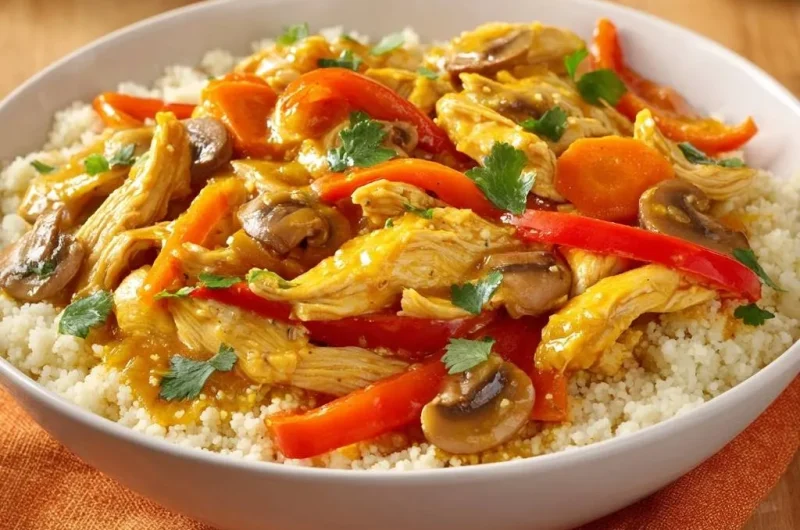
Chicken and Vegetable Couscous
Course: Main CourseCuisine: Mediterranean and American FusionDifficulty: easy4
servings15
minutes20
minutes410
kcal35
MinutesA vibrant and healthy dish featuring thin-sliced chicken breast seared with a cornstarch barrier to lock in moisture, served over fluffy couscous with sautéed mushrooms, carrots, and bell peppers in a golden turmeric broth.
Ingredients
1.5 lbs chicken breast, sliced into thin, bite-sized strips
2 cups dry couscous
2 cups boiling water or chicken broth (for the couscous)
2 red bell peppers, sliced into long strips
8 oz button mushrooms, sliced
2 large carrots, peeled and sliced into thin rounds
1.5 cups chicken broth (for the sauce)
1 tablespoon turmeric or mild curry powder
2 tablespoons olive oil, divided
1 tablespoon cornstarch
1/2 teaspoon salt, plus more to taste
1/4 teaspoon black pepper
Fresh parsley, roughly chopped for garnish
Directions
- Prepare the Couscous: Place dry couscous in a large heat-proof bowl. Pour 2 cups of boiling water or broth over it, cover tightly with plastic wrap or a lid, and let sit for 5-10 minutes.
- Velvet the Chicken: In a medium bowl, toss the raw chicken strips with the cornstarch, 1/2 teaspoon salt, and black pepper until evenly coated. This starch layer creates a protective barrier that keeps the juices inside the meat.
- Sear the Chicken: Heat 1 tablespoon of olive oil in a large skillet or wok over medium-high heat. Add the chicken in a single layer. Sear for 2 minutes per side until golden on the outside but slightly underdone in the center. Remove the chicken from the pan and set aside on a plate.
- Sauté Vegetables: Add the remaining 1 tablespoon of oil to the same pan. Add the carrots, bell peppers, and mushrooms. Sauté for 5-6 minutes, stirring frequently, until the vegetables are tender and the mushrooms have browned.
- Create the Golden Sauce: Stir in the turmeric (or curry powder) and cook for 30 seconds until fragrant. Pour in the 1.5 cups of chicken broth. Use a wooden spoon to scrape up the browned bits (fond) from the bottom of the pan.
- Simmer and Thicken: Bring the liquid to a simmer. Return the chicken and any juices from the plate back into the pan. Simmer for 3-4 minutes. The cornstarch from the chicken will naturally thicken the broth into the glossy, golden sauce seen in the photo.
- Assemble: Fluff the prepared couscous with a fork and divide among four bowls. Top generously with the chicken, vegetables, and plenty of the golden sauce. Garnish with fresh parsley and serve immediately.
Notes
- The secret to the juicy chicken is the velvet-searing technique using cornstarch. Ensure the pan is medium-high heat to create a golden crust without overcooking the center.