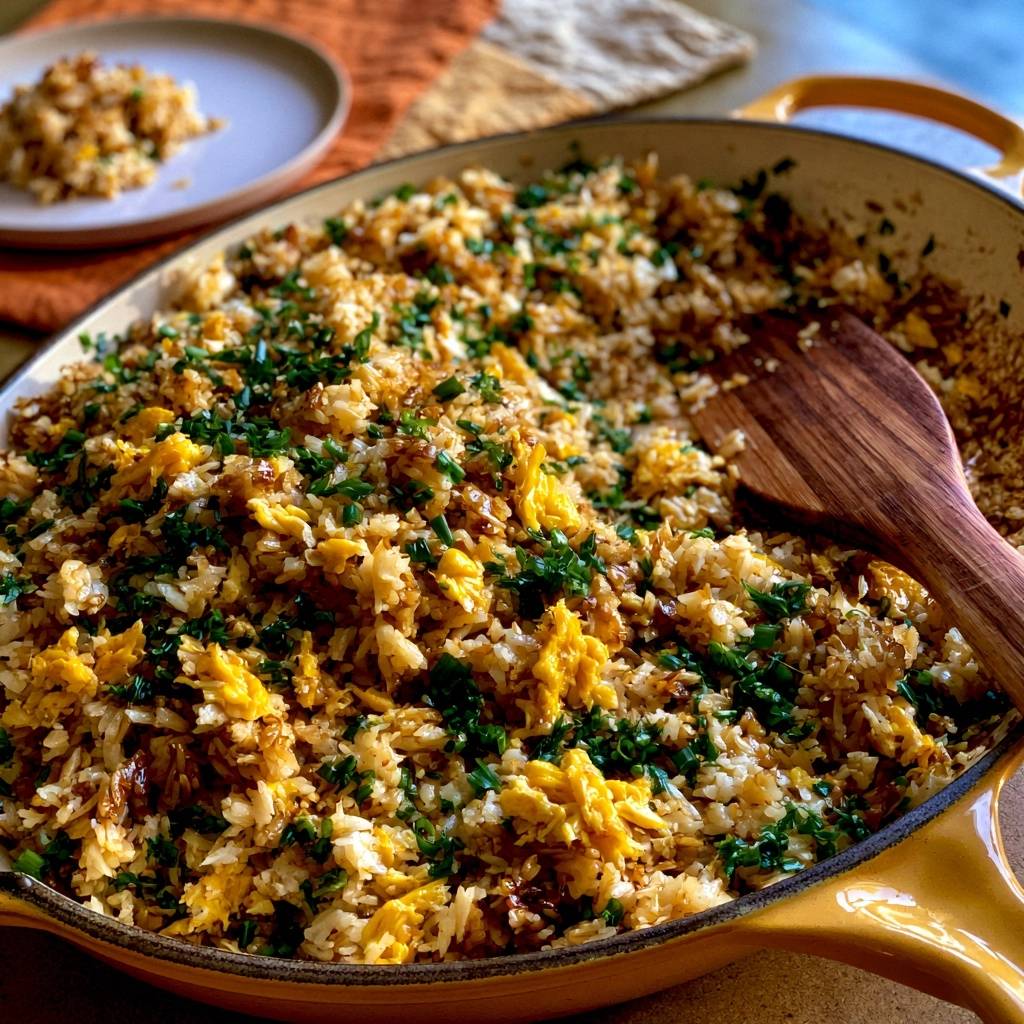
Stop settling for soggy, clumped-up fried rice that tastes like a wet mess. The secret to that restaurant-quality texture isn’t just the heat of the pan; it’s all about moisture control and the searing method. By using chilled, day-old rice and a high-heat toasting technique, you ensure every single grain stays separate, firm, and perfectly caramelized.
This recipe eliminates the gummy texture forever and delivers a deep golden color and abundant fresh herbs. You’ll notice the difference the moment the rice hits the pan. Instead of steaming, the grains will sizzle and jump, creating a chewy exterior that holds up against the savory sauces.
The real trick to professional results is the perimeter drizzle. Never pour your soy sauce directly onto the rice. Instead, hit the scorching hot sides of the pan so the liquid caramelizes instantly. This flash-evaporation concentrates the flavor and prevents the rice from drinking up raw moisture, which is the primary cause of mushiness.
The Anatomy of Perfect Golden Egg Fried Rice
Perfect fried rice is a study in contrast. You want a vibrant yellow hue from the eggs and a deep, burnished gold on the rice grains themselves. The fresh green from the scallions and parsley should pop against that warm background, signaling freshness in every bite.
Texturally, each grain of jasmine rice must remain distinct. When you lift a spoonful, the grains should fall away from each other rather than sticking in a heavy mass. This version relies on the floral aroma of jasmine rice and the sharp, clean bite of fresh aromatics to balance the richness of the eggs.
Essential Components for Texture and Umami
Jasmine rice is the gold standard here because of its long-grain structure and relatively low starch content compared to short-grain varieties. When it’s cooked and cooled, the grains firm up beautifully. This allows them to withstand the vigorous tossing required for a good sear.
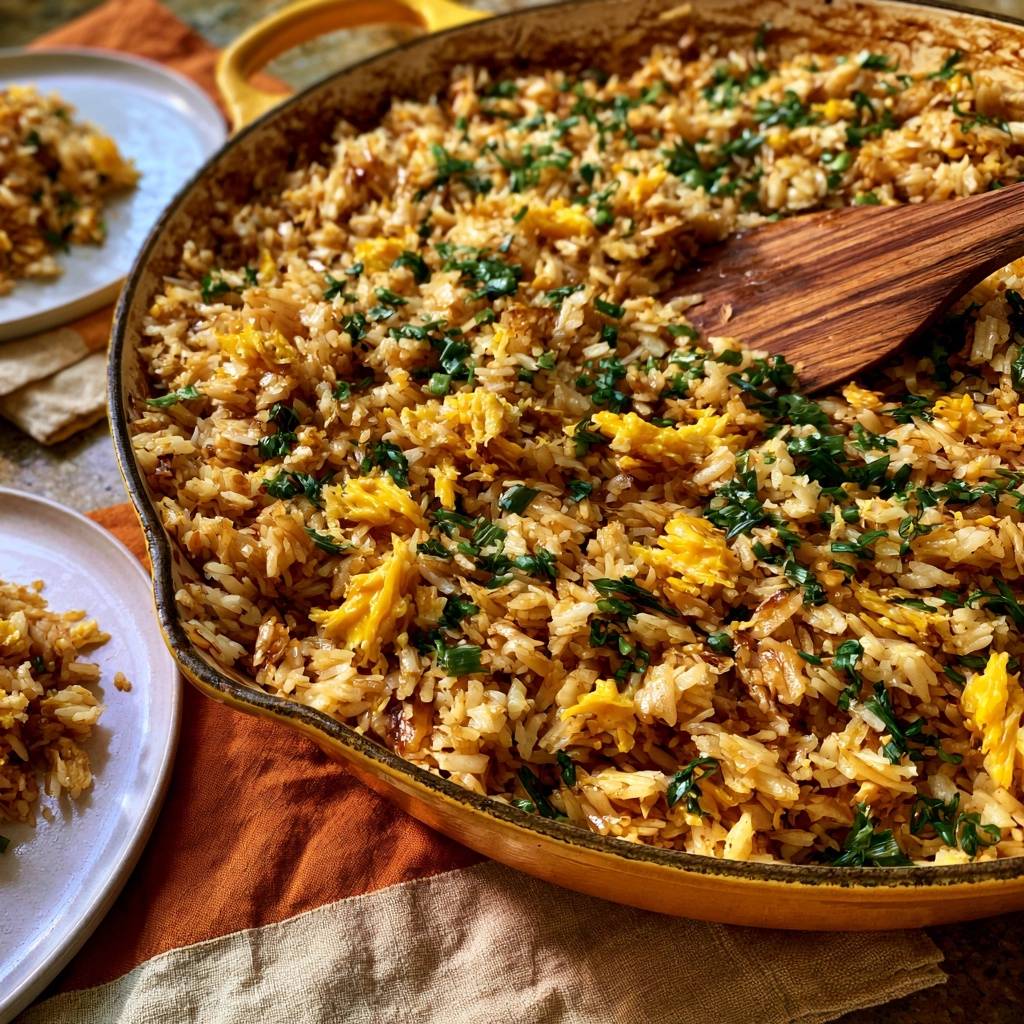
Oyster sauce is your secret weapon for that signature golden glow. It provides a thick, syrupy consistency and a punch of umami that soy sauce alone can’t achieve. It coats the rice in a savory glaze that helps the egg ribbons adhere to the grains without making them wet.
White pepper is the preferred seasoning for heat. Unlike black pepper, which leaves visible dark specks and a woody flavor, white pepper offers a sharp, fermented heat that blends seamlessly into the golden aesthetic. It provides a sophisticated spice profile that lingers on the back of the palate.
Why Chilled Overnight Rice is Non-Negotiable
Freshly cooked rice is full of surface moisture and active starches that act like glue. When you put it in the fridge overnight, a process called retrogradation occurs. The starch molecules realign, and moisture migrates from the surface to the center of the grain.
This leaves the outside of the rice dry and slightly hardened. When this dry surface hits hot oil, it toasts immediately rather than steaming. If you use fresh rice, you’ll end up with a gummy mash no matter how high your heat is.
The Role of High-Smoke Point Fats
You need a fat that can handle the heat. Vegetable oil is ideal because it has a high smoke point and a neutral flavor profile. This allows the natural nuttiness of the toasted rice and the aromatics to shine through without interference.
Avoid using butter or low-smoke point oils like extra virgin olive oil for the main searing phase. These fats will burn and turn bitter long before the rice achieves the necessary toasted crust. Save the sesame oil for the very end to preserve its delicate, toasted aroma.
Critical Tools for High-Heat Searing
A heavy-bottomed skillet or an enameled cast iron pan is your best friend for this recipe. These pans have excellent heat retention. When you dump four cups of cold rice into the pan, a thin non-stick skillet will lose its temperature instantly, causing the rice to stew in its own moisture.
A heavy pan stays hot, ensuring the rice sears the moment it touches the surface. This constant high heat is what creates the “wok hei” or breath of the wok flavor at home. It ensures the exterior of the rice becomes chewy and caramelized while the inside stays tender.
Step-by-Step: Achieving the Golden Grain Technique
Phase 1: Preparing the Rice Matrix
Before you even turn on the stove, you must prep the rice. Take your chilled jasmine rice and place it in a large bowl. Use your clean hands to gently break up any large clumps until every grain is individual.
If you skip this, the clumps will stay stuck together in the pan. The heat won’t be able to penetrate the center of the clump, leaving you with pockets of cold, white rice. Think of this as creating the “matrix” that will soon be coated in gold.
Phase 2: Soft-Scrambling the Egg Ribbons
Heat one tablespoon of oil until it shimmers. Pour in your beaten eggs and let them sit for just a few seconds until the bottom sets. Use a spatula to gently push the eggs into large, bright yellow ribbons.
Remove the eggs from the pan while they still look slightly wet and glossy. They will continue to cook from residual heat. By pulling them early, you ensure they stay tender and custardy rather than turning into rubbery bits during the final toss.
Phase 3: The High-Heat Toasting Method
Wipe the pan and add the remaining oil. Once it’s smoking slightly, sauté the garlic for just ten seconds. Immediately add the rice and spread it into a flat, even layer across the bottom of the pan.
Now, the hardest part: don’t touch it. Let it sit undisturbed for 60 seconds. You should hear a vigorous crackling sound. This creates a toasted crust on the grains. Toss the rice and repeat the process for another minute until the rice feels light and bouncy.
Phase 4: Caramelizing Liquid Seasonings
Push the rice slightly toward the center and drizzle your soy sauce and oyster sauce around the edges of the pan. The liquid should bubble and hiss violently as it hits the hot metal. This flash-caramelization removes the “raw” taste of the sauce.
Quickly toss the rice through the bubbling sauce. The rice will pick up the concentrated flavors and the deep golden color instantly. Add the eggs back in, breaking them slightly with your spatula but keeping the pieces large enough to be visible.
The Importance of Fresh Herb Integration
The final step is all about brightness. Kill the heat before adding the scallions and parsley. The residual heat is plenty to soften the herbs and release their oils without turning them brown or mushy.
Parsley adds a clean, peppery note that cuts through the richness of the fried eggs. Scallions provide a sharp, oniony bite. Together, they create a beautiful green contrast that makes the golden rice look as good as it tastes.
Troubleshooting Common Fried Rice Failures
If your rice starts sticking to the pan, your heat is likely too low or you didn’t use enough oil. Don’t panic; just add a tiny splash of oil around the edges and turn up the flame. The rice should release once the surface toasts.
If the rice feels too hard or crunchy, it might have been too dry. Sprinkle a single teaspoon of water over the rice and cover the pan with a lid for 30 seconds. The steam will soften the grains just enough without making them soggy.
Burned garlic is a common pitfall. If the garlic turns dark brown, it will taste bitter. Always have your rice ready to go so you can add it the moment the garlic becomes fragrant. The rice acts as a heat sink and stops the garlic from burning.
Flavor Variations and Protein Additions
You can easily customize this golden base. If you want to add carrots or peas, sauté them before the rice and remove them, just like the eggs. This prevents their moisture from steaming the rice during the toasting phase.
For protein like shrimp or chicken, sear them separately over high heat until fully cooked. Toss them back in at the very end with the eggs. This keeps the meat juicy and ensures the rice stays perfectly fried and separate.
Optimal Serving Pairings and Presentation
This rice is rich and savory, so it pairs beautifully with something bright and acidic. A simple cucumber salad with rice vinegar and a pinch of sugar provides a refreshing crunch. A light ginger broth also helps cleanse the palate between bites.
When plating, use a small bowl to mold the rice into a dome, then invert it onto a plate. This showcases the individual grains and the flecks of green herbs. The glistening, golden finish will look like it came straight from a professional kitchen.
Expert Tips for Professional Results
If you have a wok, use it! The thin walls and high surface area allow for even better moisture evaporation. However, a heavy skillet works perfectly well if you don’t crowd the pan. If you need to double the recipe, cook it in two batches.
Focus on the “toss” rather than the “stir.” Stirring can break the grains and release starch, leading to gumminess. Use a flipping motion with your spatula to keep the rice moving through the air, which helps dry out any remaining moisture.
Always taste before adding extra salt. Different brands of soy sauce and oyster sauce have varying salt levels. The umami from the oyster sauce often provides enough seasoning that you won’t need additional salt at all.
Can I use brown rice for this method?
You can use brown rice, but the results will be different. The outer bran layer of brown rice prevents the egg and sauces from coating the grain as thoroughly, so you won’t get the same “golden” look. You will need to increase the toasting phase by about two minutes, as brown rice holds more surface moisture than white jasmine rice.
How do I store and reheat leftovers?
Store leftovers in an airtight container in the refrigerator for up to three days. To reheat, avoid the microwave if possible, as it makes the rice rubbery. Instead, add a drop of oil to a hot pan and “re-fry” the rice for two minutes. Add a teaspoon of water if the grains seem too dry, which will help them plump back up.
What if I don’t have day-old rice?
If you’re craving fried rice but only have fresh rice, use the “emergency” hack. Spread the freshly cooked rice onto a large baking sheet in a thin, even layer. Place it in the freezer for 15 to 20 minutes. This rapidly chills the rice and dries out the surface moisture, mimicking the effects of overnight refrigeration.
Is there a substitute for oyster sauce?
If you don’t have oyster sauce, you can use a vegetarian mushroom sauce, which has a similar thick consistency and deep umami flavor. Alternatively, mix one tablespoon of soy sauce with a half-teaspoon of brown sugar. This won’t provide the exact same golden glaze, but it will mimic the sweet and salty balance required for the dish.
Golden Egg Fried Rice
Course: Main CourseCuisine: AsianDifficulty: easy4
servings10
minutes10
minutes20
Minutes360
kcalAsian
Ingredients
4 cups cooked jasmine rice (must be chilled overnight)
4 large eggs, beaten
4 tablespoons vegetable oil (divided)
3 cloves garlic, minced
2 tablespoons soy sauce
1 tablespoon oyster sauce (for the deep golden color and umami)
1 teaspoon toasted sesame oil
1/2 teaspoon white pepper
1/2 cup fresh scallions, finely chopped
1/2 cup fresh parsley, finely chopped
Directions
- The most important step to prevent mushiness is using cold rice. Take your chilled rice out of the fridge and use your hands to gently break up any large clumps until the grains are individual.
- Heat 1 tablespoon of oil in a large heavy-bottomed skillet or enameled cast iron pan over medium-high heat. Pour in the beaten eggs. Let them set for a few seconds, then scramble into large, bright yellow ribbons. Remove the eggs from the pan while they are still slightly soft and set aside.
- Wipe the pan clean and add the remaining 3 tablespoons of oil. Increase the heat to high until the oil is shimmering. Add the minced garlic and sauté for only 10 seconds until fragrant.
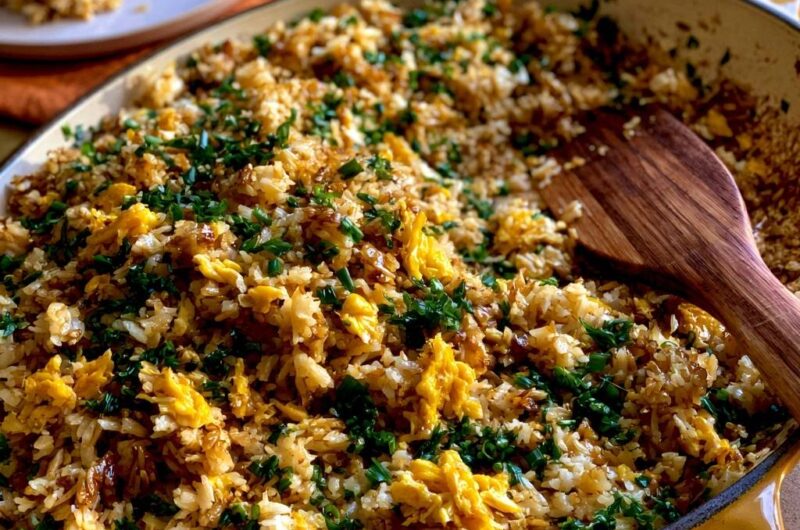
- Add the cold rice to the pan. Spread the rice out into an even layer and let it sit undisturbed for 60 seconds to sear and develop a golden crust. Toss and repeat for another 60 seconds. This “toasting” phase dries out surface moisture and creates the firm, chewy texture shown in the image.
- Drizzle the soy sauce, oyster sauce, and sesame oil around the edges of the pan so the liquid caramelizes against the hot metal before hitting the rice. This prevents the rice from absorbing raw liquid and becoming gummy.
- Add the cooked eggs back into the pan, keeping the pieces large enough to be visible.
- Turn off the heat and immediately toss in the white pepper and the generous amount of scallions and parsley. The residual heat will wilt the herbs slightly without losing their vibrant green color. Give it one final toss so the grains are individually coated, glistening, and flecked with green. Serve immediately.
Notes
- The secret to preventing mushy rice is using cold, day-old rice and allowing it to sear undisturbed in a high-heat pan.