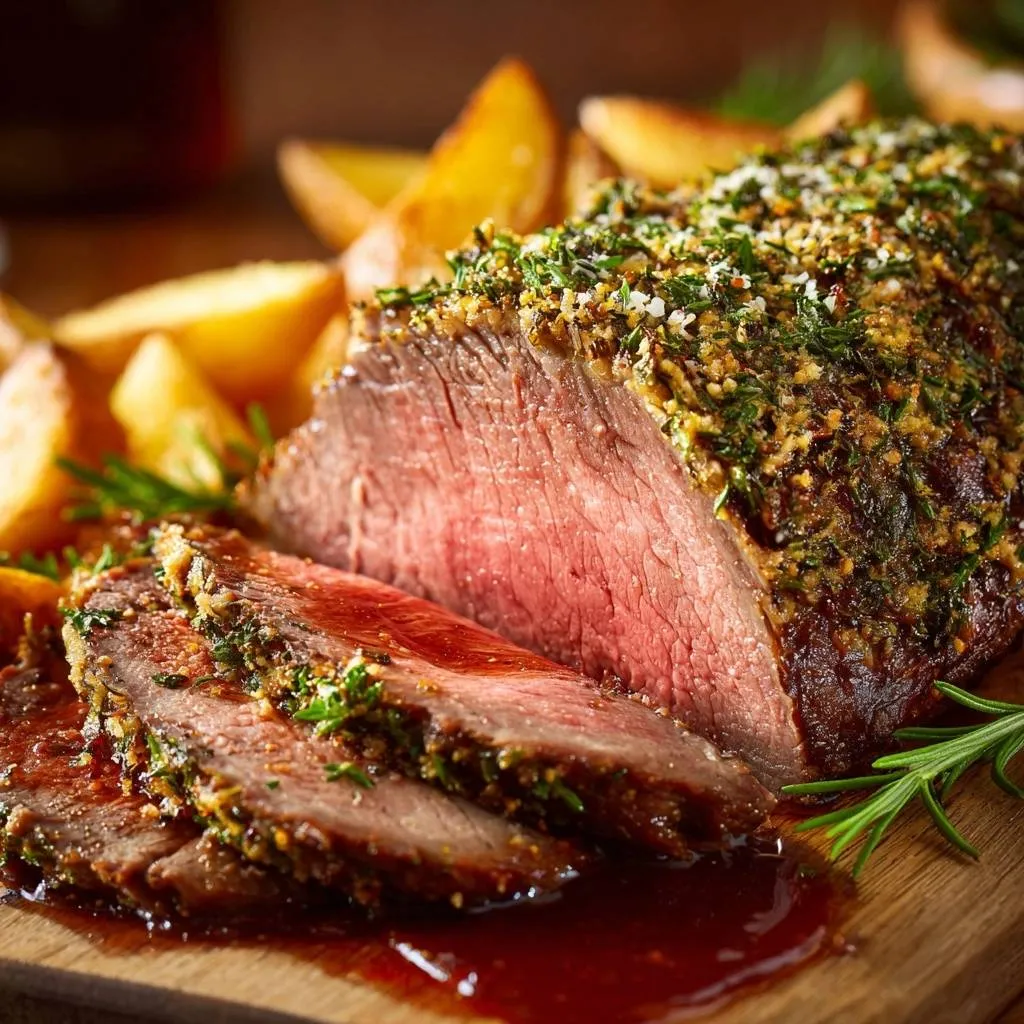
The Sunday roast holds a sacred place in the American kitchen, representing a time to slow down and gather. However, many home cooks face the dreaded “soggy crust syndrome,” where a beautiful herb topping turns into a sliding, mushy mess the moment the knife hits the meat. This failure usually stems from trapped steam or a weak bond between the protein and the aromatics.
For an even more tender result, consider this herb-crusted beef tenderloin roast.
This recipe for Herb Crusted Roast Beef with Golden Potatoes solves those structural issues through a specific layering technique. By focusing on moisture control and using a high-heat sear before applying the crust, you ensure the exterior remains crisp while the interior stays succulent. The result is a sophisticated, earthy, and savory centerpiece that maintains its integrity from the oven to the dinner plate.
The secret to success lies in the resting period between the sear and the crust application. If you apply your herbs to a piping hot roast straight from the pan, the residual heat releases steam that liquefies the binder. Letting the meat breathe for just a few minutes creates a stable surface that allows the crust to anchor firmly and stay crunchy.
The Science of the Non-Soggy Herb Crust
Understanding the thermodynamics of roasting is the first step toward a perfect crust. Moisture is the ultimate enemy of texture; when meat roasts, it releases juices and steam. If you coat a wet, raw roast with breadcrumbs, that moisture gets trapped underneath the coating, effectively steaming the crumbs from the inside out.
We combat this by creating a “Steam Barrier” through a two-step process. Firstly, searing the meat creates a browned, caramelized surface that is drier than raw muscle fiber. Secondly, allowing the meat to rest for eight minutes before crusting ensures the most intense surface steam has dissipated. This prevents the breadcrumbs from absorbing liquid before they even hit the oven.
The choice of binder also plays a massive role in structural integrity. Many recipes use oil or water-based liquids, but these often thin out and slide off under high heat. Dijon mustard acts as a heat-stable protein binder. Because it contains natural mucilage and solids, it creates a tacky “culinary glue” that grips the meat fibers and holds the heavy herb-and-crumb mixture in place during the entire roasting process.
Essential Components for the Herb Crusted Roast
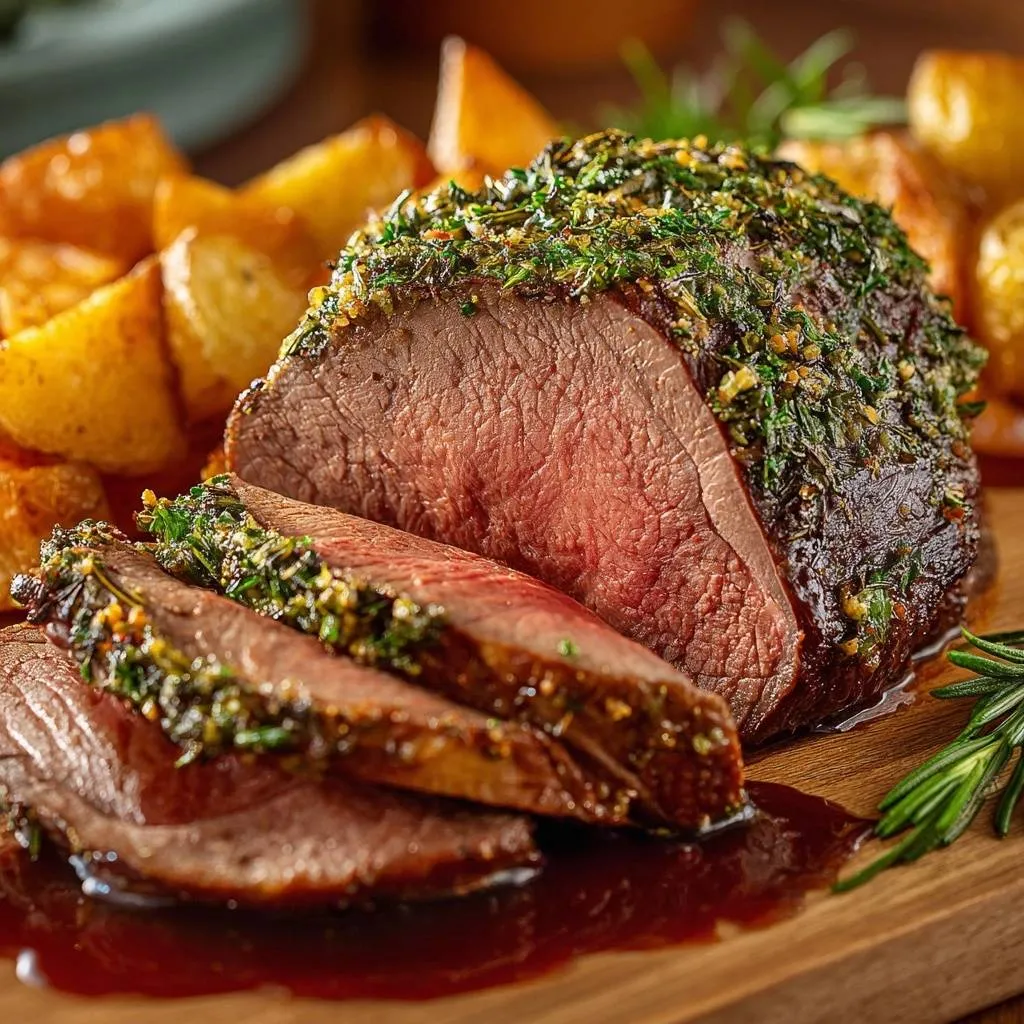
Quality ingredients are the foundation of this dish, and each component serves a specific functional purpose. For the beef, I recommend a Top Sirloin roast or a Tri-Tip. These cuts offer an ideal surface-area-to-volume ratio, providing plenty of room for that savory crust without requiring the long, slow braising times of tougher cuts like chuck.
The crust itself relies on a Panko-Parmesan matrix. While standard breadcrumbs are too fine and can become pasty, Panko provides a jagged, airy structure that shatters when you bite into it. Adding freshly grated Parmesan cheese is the pro move here. As the roast cooks, the fat in the cheese melts and acts as a secondary adhesive, “welding” the Panko and herbs together into a unified, golden shell.
Freshness is non-negotiable when it comes to the rosemary and parsley. Dried herbs lack the volatile oils necessary to perfume the meat and can often taste dusty or bitter when exposed to high oven heat. Fresh herbs provide a vibrant, forest-like aroma that cuts through the richness of the beef. Finally, Yukon Gold potatoes are the superior choice over Russets. Their natural sugars caramelize beautifully at 425 degrees, and their waxy texture ensures they hold their shape even when bathed in beef drippings.
Selecting the Right Cut of Beef
Top Sirloin is a fantastic “everyday” luxury cut because it is lean but flavorful. If you choose a Tri-Tip, be mindful of the grain direction, as it often shifts in the middle of the cut. Avoid roasts with a massive, thick fat cap on the top, as the herb crust will struggle to adhere to rendering fat and may slide off as the fat melts away.
The Role of Dijon Mustard as a Culinary Adhesive
Mustard is more than just a flavor booster; it is a chemical workhorse. The vinegar in the mustard lightly tenderizes the surface of the beef, while the mustard seeds provide a grit that helps the Panko “lock” into place. Unlike egg washes, which can create a rubbery film, mustard disappears into the crust, leaving only a subtle tang and a rock-solid bond.
Pre-Roast Preparation: The Searing Phase
Before the herbs ever touch the meat, you must achieve a proper sear. This triggers the Maillard reaction, a chemical dance between amino acids and reducing sugars that creates those deep, savory flavors we associate with great steak. You cannot achieve this if the meat is damp, so use paper towels to pat the beef until it is bone-dry.
Heat your olive oil until it is shimmering and just starting to wisps of smoke. When you drop the beef in, you should hear a loud, aggressive sizzle. Sear each side for about three minutes. You are looking for a deep mahogany color, not just a light tan. This initial blast of heat builds a flavor foundation that the oven simply cannot replicate on its own.
Step-by-Step: Applying the Herb and Parmesan Coating
Once the beef is seared, move it to a plate and walk away for at least five minutes. This is the technical heart of the recipe. During this rest, the internal juices of the meat begin to redistribute, and the surface temperature drops slightly. This prevents the “steam-off” effect that ruins so many herb crusts.
After the rest, apply a thin, even film of Dijon mustard over the top and sides. You don’t want a thick gloop; a translucent layer is plenty. If the mustard is too thick, it will create a barrier that prevents the crust from actually touching the meat, leading to a “shell” that detaches during slicing.
When applying the herb and Panko mixture, don’t just sprinkle it on. Use the palms of your hands to physically press and anchor the crumbs into the mustard. Apply firm, steady pressure. You want the mixture to feel like it is part of the roast, not just sitting on top of it. This physical bond is what allows you to get clean, beautiful slices later on.
Roasting Techniques for Beef and Potatoes Simultaneously
This one-pan method is efficient and flavor-focused. By nesting the beef among the Yukon Gold wedges, the potatoes act as a natural roasting rack. As the beef cooks, the seasoned fats and juices drip down, essentially confit-roasting the potatoes in beef fat. This creates a creamy interior and a salty, crisp exterior on every wedge.
Roast at 425 degrees F to ensure the potatoes crisp up before the beef overcooks. For a perfect medium-rare, pull the roast when a thermometer hits 130-135 degrees F. Remember that carryover cooking will raise the temperature by another 5 degrees while the meat rests. If you wait until it hits 145 degrees in the oven, you will end up with a medium-well roast.
Deglazing the Pan for a Rich Red Wine Jus
After removing the beef and potatoes, you will see dark, caramelized bits stuck to the bottom of the skillet. This is called “fond,” and it is concentrated flavor gold. Place the skillet on the stovetop over medium-high heat and pour in the red wine. Use a wooden spoon to scrape those bits up as the liquid bubbles.
Add the beef bone broth and let the mixture simmer until it reduces by half. This concentrates the proteins and sugars, creating a natural thickness. To finish, use the “Monter au Beurre” technique. Whisk in a tablespoon of cold butter right at the end. The cold fat emulsifies with the hot liquid, creating a glossy, velvety sauce that coats the back of a spoon without the need for flour or cornstarch.
Troubleshooting Common Roast Beef Issues
If your crust falls off during slicing, it usually means the meat didn’t rest long enough before the coating was applied, or you were too gentle when pressing the crumbs on. Another culprit is using a dull knife. Always use a very sharp carving knife and a gentle sawing motion to avoid crushing the crust.
If your potatoes are soft rather than crispy, you might be crowding the pan. If the wedges are piled on top of each other, they will steam instead of roast. Ensure they are in a single layer. If the jus tastes too salty, it is likely because it reduced too far. Simply whisk in a splash of water or a little more broth to balance the flavors back out.
Preventing the Herb Crust from Burning
Because we roast at a high temperature, the garlic and herbs can sometimes darken too quickly. Keep an eye on the roast after the 30-minute mark. If the crust looks deep brown but the meat isn’t at temperature yet, loosely tent a piece of foil over the top. This reflects the direct heat while allowing the roast to finish cooking.
Ensuring Even Doneness in the Potatoes
Consistency is key for the potatoes. Cut your wedges into uniform sizes so they all finish at the same time. About halfway through the roasting process, use tongs to carefully flip the potatoes. This ensures that both cut sides get direct contact with the hot pan and the seasoned beef drippings.
Expert Tips for Slicing and Presentation
The final 15-minute rest after the roast comes out of the oven is the most important step for moisture retention. If you cut into the beef immediately, the pressurized juices will flood the cutting board, leaving the meat dry and the crust soggy. Patience here pays off with a succulent, pink center.
When you are ready to serve, identify the grain of the meat. You want to slice “against the grain,” which means cutting perpendicular to the long muscle fibers. This shortens the fibers, making every bite tender and easy to chew. For a professional look, pool the red wine jus on the bottom of the plate, stack a few golden potatoes, and lean the beef slices against them.
Frequently Asked Questions
Can I substitute dried herbs for fresh in the crust?
It is not recommended for this specific recipe. Dried herbs have a much more concentrated, potent flavor and a woody texture that doesn’t soften during roasting. If you must use them, reduce the amount to one tablespoon each and be aware that the crust will lack the vibrant green color and fresh aroma of the original dish.
What is the best substitute for red wine in the jus?
If you prefer not to use red wine, pomegranate juice is an excellent alternative because it provides the necessary acidity and deep color. You can also use extra beef bone broth mixed with a tablespoon of balsamic vinegar. The goal is to provide a sharp contrast to the rich, fatty flavors of the beef and butter.
Can I use a different type of potato like a Russet?
You can use Russets, but the texture will be significantly different. Russets are starchier and fluffier, which means they may fall apart or become “mealy” when roasted in the beef drippings. Yukon Golds are the gold standard here because they maintain a buttery, firm texture that stands up well to the high-heat roasting environment.
How do I reheat leftovers without losing the crunch?
Never use a microwave to reheat this roast, as it will turn the herb crust into a rubbery mess. Instead, place the slices in an air fryer at 350 degrees F for 3-4 minutes, or in a hot oven for 5-7 minutes. This dry heat reactivates the fats in the Parmesan and Panko, restoring much of the original crunch to the crust.
Why did my red wine jus turn out thin and watery?
A thin jus usually means it wasn’t reduced enough or the butter wasn’t cold when added. Ensure the liquid has simmered down until it looks syrupy before you take it off the heat. Whisking in the butter away from the direct flame ensures it emulsifies into the sauce rather than just melting into a layer of oil on top.
Herb Crusted Roast Beef
Course: Main CourseCuisine: AmericanDifficulty: medium6
servings20
minutes1
hour540
kcal80
MinutesA foolproof method for roast beef that ensures the herb crust stays locked onto the meat. By using a searing technique, a mustard binder, and a resting period before coating, this dish delivers a savory, crunchy exterior paired with succulent beef and crispy potatoes.
Ingredients
3 pound beef top sirloin roast or tri-tip
1/2 cup panko breadcrumbs
1/4 cup grated Parmesan cheese (for the golden crust texture)
3 tablespoons fresh rosemary, finely minced
3 tablespoons fresh parsley, finely minced
4 cloves garlic, minced
2 tablespoons Dijon mustard
1 teaspoon coarse sea salt
1 teaspoon cracked black pepper
4 tablespoons olive oil, divided
4 large Yukon Gold potatoes, cut into thick wedges
For the Red Wine Jus:
1 cup beef bone broth
1/2 cup dry red wine
1 tablespoon cold butter
Directions
- Preheat your oven to 425 degrees F. Pat the beef completely dry with paper towels. This is the first step to preventing a soggy crust.
- Season the meat with salt and pepper. Heat 2 tablespoons of olive oil in a large oven-safe skillet over high heat. Sear the beef for 3 minutes per side until a deep brown crust forms. Remove the beef from the skillet and set aside on a plate.
- To solve the soggy crust problem, let the meat rest for 5 to 8 minutes before applying the coating. This prevents the steam from the hot meat from loosening the crust.
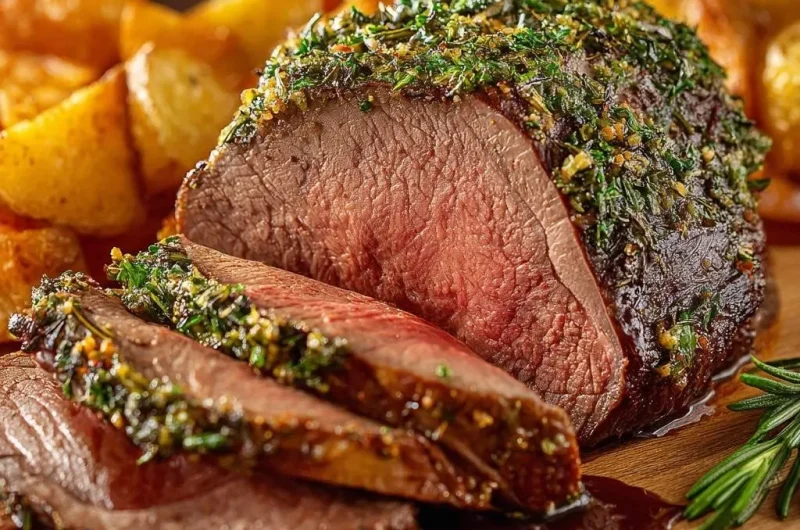
- In a small bowl, mix the panko, Parmesan, rosemary, parsley, garlic, and 1 tablespoon of olive oil. The Parmesan helps bind the herbs and creates the golden, textured appearance seen in the image.
- Brush a thin, even layer of Dijon mustard over the top and sides of the beef. The mustard acts as a culinary glue that stands up to heat better than oil alone.
- Firmly press the herb and breadcrumb mixture onto the mustard coating. The pressure is key to locking the texture in place.
- Toss the potato wedges with the remaining tablespoon of oil and a pinch of salt. Arrange them in the skillet used for searing. Place the beef on top of the potatoes or nestled between them.
- Roast in the oven for 40 to 50 minutes, or until a meat thermometer reaches 130-135 degrees F for medium-rare.
- Transfer the beef to a cutting board and let it rest for at least 15 minutes. While the meat rests, place the skillet over medium-high heat on the stove. Add the red wine to deglaze, scraping up the browned bits. Add the beef broth and simmer until reduced by half. Whisk in the cold butter for a glossy finish.
- Slice the beef against the grain. Serve immediately with the crispy potatoes and the red wine jus drizzled over the base of the plate as pictured.
Notes
- The secret to the crust is letting the meat rest for 5-8 minutes after searing but before applying the mustard and herb mixture; this prevents steam from making the breadcrumbs mushy. Always slice against the grain for maximum tenderness.