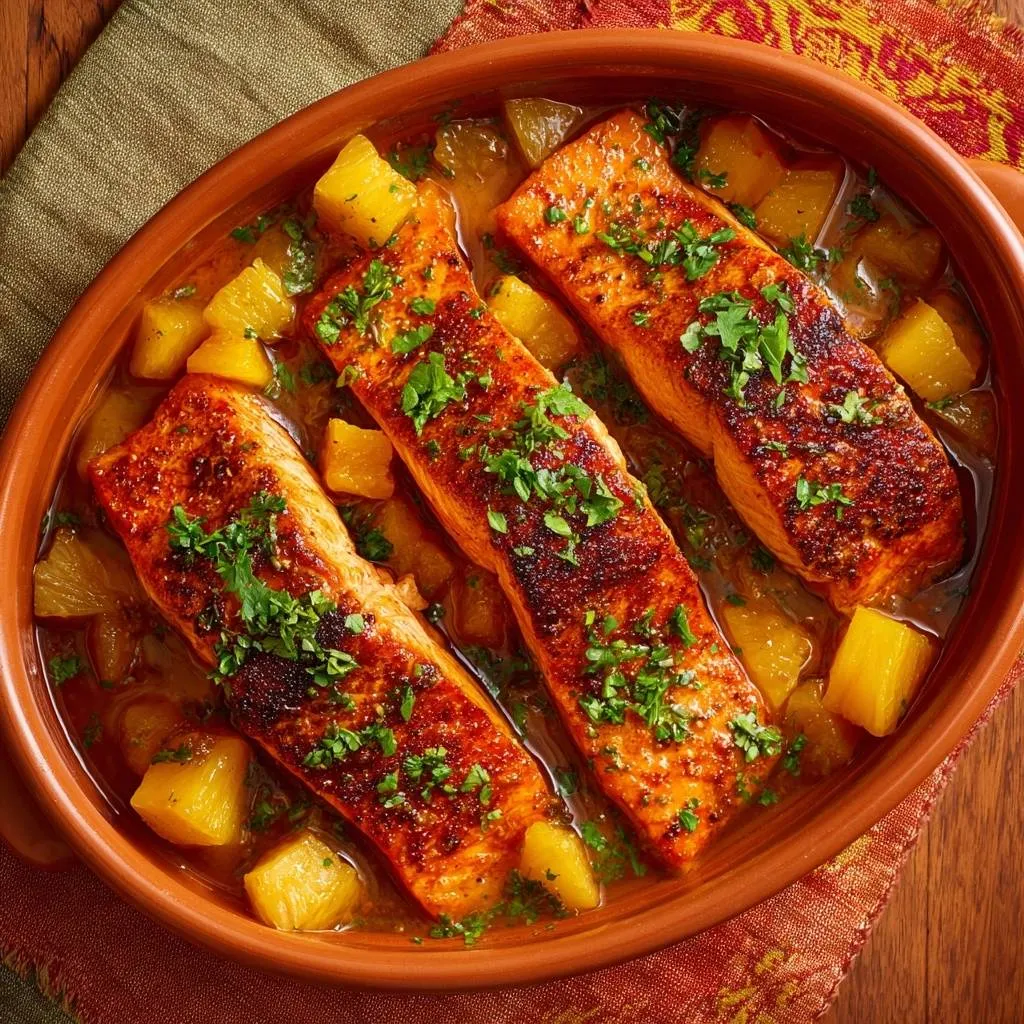
Stop settling for chalky, overcooked salmon that sticks to the pan and leaves you reaching for a glass of water just to swallow a bite. The secret to restaurant-quality fish isn’t a fancy oven or an expensive gadget; it’s all about the moisture-lock sear. By caramelizing a honey and spice rub quickly at a high temperature, you create a protective, savory-sweet barrier that keeps the interior buttery and flakey.
When you finish the fillets in a shallow bath of pineapple juice, the liquid deglazes the pan and creates a luscious emulsion. This process ensures the fish stays succulent while the outside develops a deep, golden crust that shatters slightly under your fork. You get that incredible contrast of a warm, tender center and a sticky, caramelized exterior that tastes like a tropical getaway on a plate.
The real trick to this dish lies in the temperature transition. Most home cooks keep the heat too low for too long, which steams the fish instead of searing it. I’ve found that using a heavy skillet to achieve a hard sear first, then immediately dropping the temperature with the pineapple juice, creates a professional-grade finish every single time. It’s a foolproof way to guarantee your salmon never turns into a dry, flavorless brick.
The Science of the Moisture-Lock Sear
To get that perfect crust, we rely on the Maillard reaction. This chemical reaction occurs when amino acids and reducing sugars—like those found in honey and soy sauce—meet high heat. Because honey is rich in natural sugars, it browns much faster than the fish alone, creating a complex, toasted flavor profile before the internal proteins have a chance to overcook.
High heat is your best friend here because it transforms those sugars into a crust before the internal muscle fibers tighten and push out their natural juices. If you cook the fish slowly over low heat, the moisture escapes, leaving the salmon tough. The quick sear locks everything inside, while the acidity in the pineapple juice helps break down tough connective tissues on the surface.
Pineapple contains an enzyme called bromelain, which acts as a natural tenderizer. When the juice hits the pan, it doesn’t just add flavor; it actively works to keep the surface of the salmon soft and receptive to the glaze. This creates a harmonious balance where the heat provides the crunch and the fruit enzymes provide the melt-in-your-mouth tenderness.
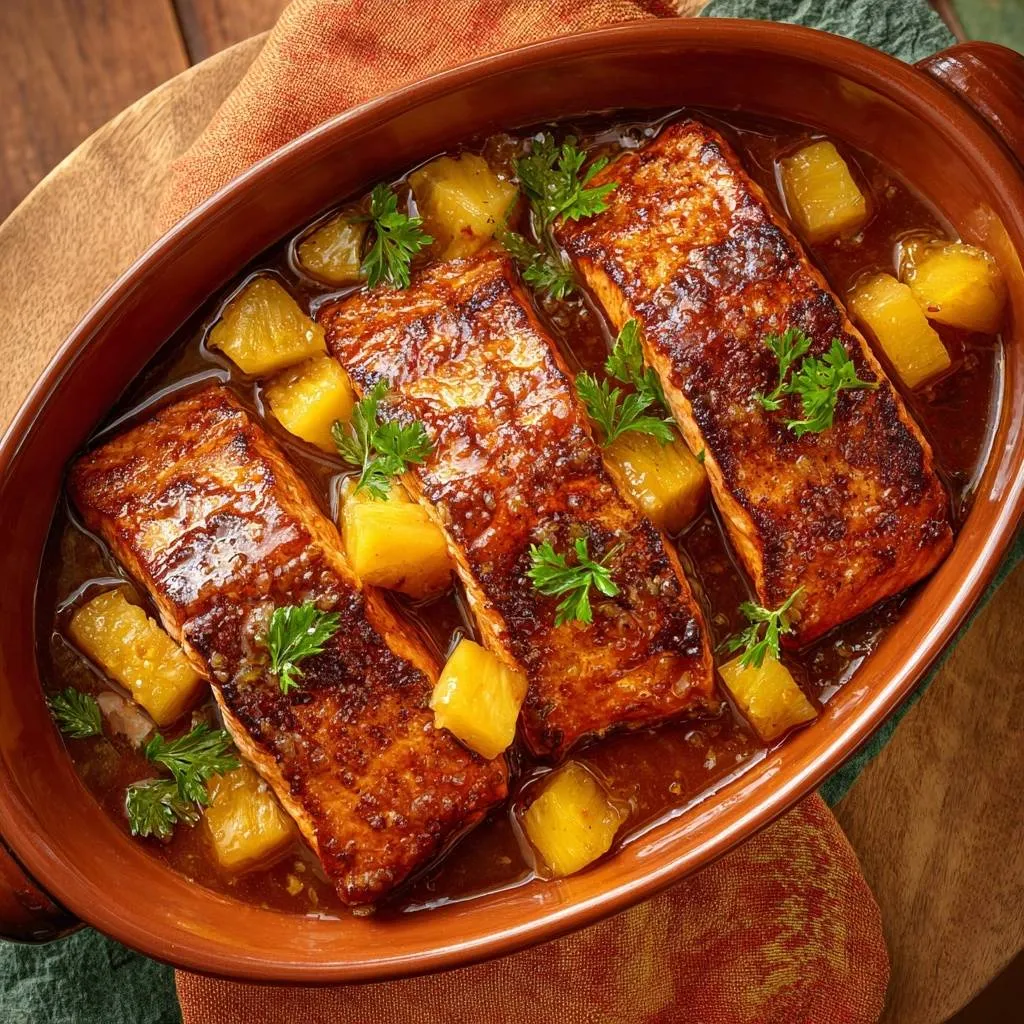
Essential Components for Honey Glazed Pineapple Salmon
Quality ingredients make or break a simple sear. I always recommend skinless fillets for this specific recipe because we want the honey-spice paste to coat every single side of the fish. Without the skin acting as a shield, the entire fillet can participate in that glorious caramelization process, giving you more of that “burnt sugar” savory goodness in every bite.
Smoked paprika is the unsung hero of the spice rub. While regular paprika adds color, the smoked variety provides a subtle wood-fired depth that mimics a grill. This smokiness cuts through the intense sweetness of the honey and pineapple, ensuring the dish feels sophisticated rather than cloying. It adds a “third dimension” to the flavor profile that keeps you coming back for more.
Fresh pineapple chunks are non-negotiable if you want the best texture. Canned pineapple is often sitting in heavy syrup and can become mushy when heated. Fresh chunks hold their structural integrity in the hot skillet, softening just enough to release their juices while maintaining a satisfying, fibrous bite that contrasts beautifully with the soft salmon.
Selecting the Right Cut of Salmon
When you’re at the seafood counter, look for Atlantic salmon if you prefer a milder, fattier fish that stays moist easily. Sockeye or King salmon are also excellent choices, though Sockeye is leaner and requires a more watchful eye to prevent overcooking. Regardless of the variety, the flesh should be firm to the touch and have a vibrant, healthy color without any graying edges.
Check for freshness by giving the fish a quick sniff; it should smell like the ocean, not “fishy.” If the fillet bounces back when you gently press it with your finger, it’s fresh. A piece of salmon that leaves a permanent indentation is likely past its prime and won’t hold up well to the high-heat searing method we’re using today.
The Role of Natural Sugars and Acids
The chemistry between honey and pineapple juice is what makes this sauce sing. Honey provides the viscosity and the deep sweetness, but it needs an acidic partner to prevent the dish from tasting flat. Pineapple juice brings that necessary citric acid, which cuts through the fatty profile of the salmon and brightens the entire palate.
If you’re drawn to the sweet and savory combination, you might also enjoy this soy glazed salmon.
As the juice reduces in the pan, the sugars concentrate, but the acidity remains. This creates a balanced glaze that coats the back of a spoon. If you find the sauce is too sweet for your liking, a tiny splash of extra lime juice or a bit more soy sauce can provide the salty or acidic counterpoint needed to bring it back into alignment.
Preparation: The Secret to Non-Stick Searing
If there is one rule you must follow, it’s this: pat your salmon completely dry. I mean bone-dry. Use multiple paper towels to wick away every drop of moisture from the surface of the fish. Surface moisture is the enemy of a good sear because it creates a layer of steam between the fish and the pan, which prevents browning and causes the fish to stick.
For an extra crisp finish on your fish, check out this pineapple glazed salmon.
Once the fish is dry, whisk your honey, paprika, garlic powder, onion powder, and soy sauce into a thick, uniform paste. You want it to be tacky enough to cling to the salmon without running off immediately. Brushing this mixture on just before the fish hits the pan ensures the spices don’t burn while the salmon sits on the counter.
Step-by-Step: Executing the Perfect Pan-Sear
Success in the kitchen often comes down to timing and observation. This recipe moves fast once the fish hits the oil, so make sure your pineapple and juice are measured and ready to go. You won’t have time to chop or measure once the caramelization begins, as the sugars in the honey can go from golden to burnt in a matter of seconds.
Phase 1: Achieving the Golden Honey Crust
Heat your olive oil in a heavy skillet until it is shimmering and just starting to show tiny wisps of smoke. Carefully lay the salmon fillets seasoned-side down into the hot oil. You should hear a loud, aggressive sizzle immediately. If you don’t hear that sound, your pan isn’t hot enough, and you should wait another minute before adding the rest.
Now, the hardest part: don’t touch the fish. Leave it alone for a full 3 to 4 minutes. Moving the salmon too early will tear the delicate flesh and ruin the crust. Watch the sides of the fillets; you’ll see the opaque, cooked color slowly creeping up from the bottom. Once that line reaches about halfway up the side, the fish is ready to flip.
Phase 2: Deglazing with Pineapple Juice
Carefully flip the fillets using a thin spatula. Immediately toss in the pineapple chunks and pour the juice around the fish. The pan will hiss and release a cloud of fragrant steam—this is the juice deglazing the pan and picking up all those caramelized honey bits stuck to the bottom. This “fond” is where all the concentrated flavor lives.
Turn the heat down to medium and grab a large spoon. Start basting the salmon by scooping up the bubbling liquid and pouring it over the top of the fillets. This technique, often used by French chefs, keeps the top of the fish moist and builds up layers of glaze while the bottom finishes cooking through. The sauce will thicken into a vibrant orange syrup as it reduces.
Phase 3: Monitoring Internal Temperatures
The biggest mistake people make with salmon is cooking it until it flakes easily with a fork. By the time it flakes, it’s already overcooked and dry. Instead, use an instant-read thermometer. Pull the salmon off the heat when it hits 135°F. It might look a little translucent in the very center, but don’t worry.
Carry-over cooking is a real phenomenon. As the fish rests on a plate for a few minutes, the residual heat will continue to cook the center, bringing the final temperature up to a perfect, safe 145°F. This ensures the proteins stay soft and the fats remain liquid, giving you that luxurious, buttery mouthfeel that defines a great salmon dish.
Troubleshooting Common Salmon Mistakes
If your glaze starts to smell like it’s burning before the 3-minute mark, your heat is likely too high. Simply slide the pan off the burner for thirty seconds to let the temperature drop, then return it to a slightly lower flame. You want a dark mahogany color, not black. If the sauce becomes too thick and gummy, whisk in a tablespoon of water or extra juice to loosen it back up.
If the fish sticks when you try to flip it, it’s usually telling you it isn’t ready. A properly seared piece of fish will “release” itself from the pan once the crust has fully formed. Give it another 30 seconds and try again. If you’re using a cast iron skillet, make sure it’s well-seasoned, as the honey can be quite sticky on a dry, unseasoned surface.
Optimal Tools for High-Heat Fish Cookery
A heavy-bottomed skillet, like cast iron or stainless steel, is essential for this recipe. These materials hold onto heat much better than thin aluminum pans. When you add cold pineapple juice to a hot pan, a thin pan will lose its temperature instantly, resulting in soggy fish. A heavy pan maintains its heat, ensuring the juice boils and reduces immediately.
I also highly recommend using a fish spatula. These are thinner and more flexible than standard spatulas, allowing you to slide underneath the delicate fillets without breaking them. If you only have a thick plastic spatula, be very gentle when flipping to ensure the caramelized crust stays attached to the salmon and doesn’t stay behind in the pan.
Flavor Variations and Ingredient Swaps
If you don’t have honey on hand, maple syrup makes a fantastic substitute and adds a lovely woody note to the glaze. For those who want a bit of heat, whisking in a teaspoon of red pepper flakes or some freshly grated ginger into the honey paste will give the dish a spicy, Asian-inspired kick that pairs perfectly with the pineapple.
While pineapple is the star here, you can achieve a similar effect with orange juice or even mango puree. The goal is to have a fruit base with enough natural sugar to glaze and enough acid to balance the fat. If you’re out of soy sauce, a pinch of extra salt and a dash of Worcestershire sauce can provide that savory “umami” depth the recipe needs.
Side Dishes to Complement Pineapple Glaze
Since the pineapple glaze is quite bold and sweet, you want side dishes that are relatively neutral or slightly bitter to provide balance. A bed of fluffy jasmine rice or quinoa is perfect for soaking up every last drop of the pan sauce. The grains act as a sponge, ensuring none of that liquid gold goes to waste.
For vegetables, try charred broccolini or sautéed bok choy. The slight bitterness of these greens cuts through the sugar in the glaze, refreshing your palate between bites. A simple cucumber salad with a splash of rice vinegar also provides a cool, crisp contrast to the warm, rich salmon and the tropical sweetness of the fruit.
Expert Tips for Professional Presentation
We eat with our eyes first, and the contrast of colors in this dish is stunning. Don’t skimp on the fresh parsley at the end. The bright green herbs pop against the deep orange of the glazed salmon and the yellow pineapple. It makes the dish look fresh and vibrant rather than heavy and monochromatic.
When plating, try stacking two or three pineapple chunks on top of the fillet rather than just scattering them around the plate. This creates height and makes the dish look like it came straight out of a high-end bistro. Pour the remaining sauce from the pan directly over the center of the fish so it cascades down the sides, highlighting that beautiful, glossy texture.
What to Try Next
Complement your honey-glazed pineapple salmon with these fresh and vibrant salads.
- For a touch of roasted sweetness, sample the roasted broccoli and pineapple salad, which shares pineapple with your salmon.
- Enjoy the crisp textures in the harvest kale and apple salad for a refreshing counterpoint.
Frequently Asked Questions
Can I use frozen salmon for this recipe?
Yes, you can use frozen salmon, but you must thaw it completely in the refrigerator overnight first. Frozen fish tends to release more moisture than fresh fish, so you need to be extra diligent about patting it dry with paper towels. If the fish is still icy or wet, it will steam in the pan and you won’t get that signature honey crust.
How do I prevent the honey from burning in the pan?
The key is managing your heat and using enough oil. Honey has a low burn point, so if your pan is screaming hot without enough fat, it will scorch. Make sure the oil is shimmering before adding the fish, and if you see the edges of the honey turning black too quickly, turn the heat down immediately. The addition of the pineapple juice also helps “reset” the temperature and prevents further burning.
Is fresh pineapple juice better than bottled?
Freshly squeezed pineapple juice is superior because it contains active enzymes and a more complex flavor profile. However, bottled 100% pineapple juice works perfectly fine for this glaze. Just avoid “pineapple drink” or “pineapple cocktail,” which often contain added corn syrup and water, as these won’t reduce into a thick, flavorful sauce as effectively as pure juice.
How should I store and reheat leftovers?
Store any leftover salmon in an airtight container in the fridge for up to two days. To reheat, avoid the microwave, which will turn the salmon rubbery and dry. Instead, place the fish in a cold oven, set it to 275°F, and heat for about 10 to 15 minutes. This gentle warming method preserves the moisture and keeps the glaze from becoming a sticky mess.
Honey Glazed Pineapple Salmon
Course: Main CourseCuisine: AmericanDifficulty: easy3
servings10
minutes15
minutes420
kcal25
MinutesA vibrant and flavorful salmon dish featuring a caramelized honey and spice crust finished in a shallow bath of pineapple juice for maximum moisture and a deep golden finish.
Ingredients
3 salmon fillets (6 ounces each, skinless preferred for maximum crust)
2 cups fresh pineapple chunks
1/2 cup pineapple juice
3 tablespoons honey
1 tablespoon soy sauce (for depth of color)
2 tablespoons olive oil
1 teaspoon smoked paprika
1 teaspoon garlic powder
1/2 teaspoon onion powder
Salt and black pepper to taste
1/4 cup fresh chopped parsley for garnish
Directions
- Pat the salmon fillets completely dry with paper towels. This is the most important step to prevent steaming and ensure a proper sear.
- In a small bowl, whisk together the honey, smoked paprika, garlic powder, onion powder, and soy sauce to create a thick paste. Brush this mixture generously over the top and sides of the salmon fillets. Season with salt and pepper.
- Heat the olive oil in a large heavy skillet (cast iron is best) over medium-high heat. Once the oil is shimmering and just starting to wisps of smoke, place the salmon fillets seasoned-side down.
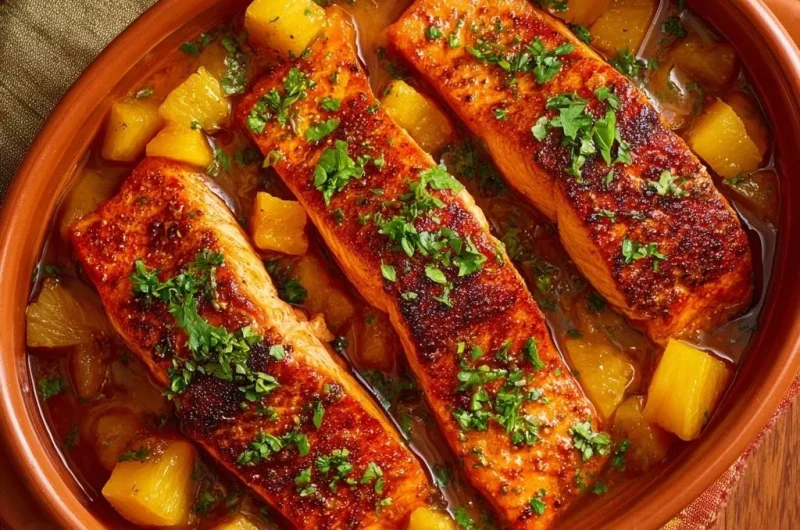
- Sear for 3 to 4 minutes without moving the fish. This allows the sugars in the honey and the spices to caramelize into the dark, flavorful crust seen in the image.
- Carefully flip the fillets. Immediately add the pineapple chunks and pineapple juice to the pan around the fish.
- Reduce the heat to medium. Use a spoon to baste the salmon with the bubbling liquid for another 3 to 4 minutes. The juice will deglaze the pan and emulsify with the honey drippings to create a vibrant orange sauce.
- Remove from heat once the salmon reaches an internal temperature of 135°F (it will rise to 145°F while resting).
- Transfer the salmon and pineapple to a serving dish. Pour the remaining pan sauce over the fish and garnish heavily with fresh chopped parsley to match the visual presentation. Serve immediately.
Notes
- Patting the salmon completely dry is the most important step to prevent steaming. Use a cast iron skillet for the best caramelization. Remove from heat at 135°F as the temperature will rise to 145°F while resting.