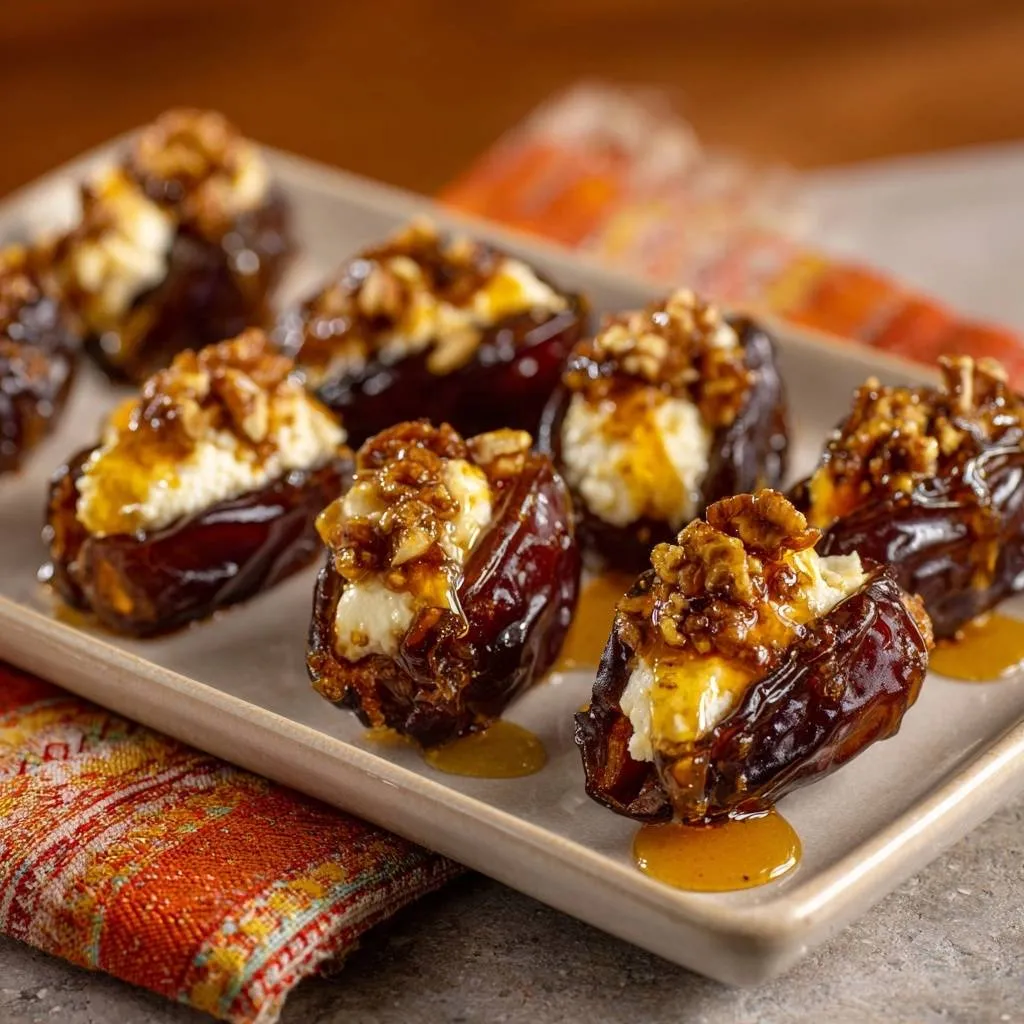
Imagine biting into a soft, caramel-like Medjool date that gives way to a cloud of tangy whipped cheese, only to be met with the intense, buttery crunch of a toasted walnut. It’s a sensory rollercoaster where the deep sweetness of the fruit plays perfectly against a hint of sea salt and a glossy honey glaze. When done right, these Honey Walnut Stuffed Medjool Dates are the undisputed stars of the appetizer spread, offering a sophisticated balance of textures that feels like a high-end indulgence.
For a similar creamy experience, try this velvet-smooth whipped feta.
For a similarly elegant treat, explore these elegant stuffed dates that also start with a simple slit.
However, many home cooks struggle with the dreaded “soggy bottom” or a filling that turns into a weeping, sticky mess before the guests even arrive. The secret to avoiding a mushy appetizer lies in managing the moisture levels of the date and the temperature of your honey. By using a specific flash-toasting technique for the nuts and a controlled drizzle, you ensure the fruit stays firm and the crunch remains loud enough for the person across the room to hear.
I’ve found that the real trick to professional-grade stuffed dates is all about the barrier. If you place raw nuts directly onto moist cheese, they’ll soften within minutes. By toasting the walnuts first, you release their natural oils, creating a hydrophobic shield that keeps them incredibly crisp even after they’re bathed in honey. This small technical adjustment transforms a simple snack into a masterpiece of culinary architecture.
Selecting the Best Medjool Dates
Not all dates are created equal, and for this recipe, the Medjool variety is the only way to go. Often called the “king of dates,” Medjools are prized for their large size, moist flesh, and rich, maple-syrup flavor profile. When you’re at the market, look for dates that feel heavy for their size and have a slight give when pressed, similar to a firm marshmallow.
You’ll notice some dates have “loose skin,” where the outer layer has puffed away from the fruit, while others have “tight skin.” For stuffing, a tighter skin is generally better as it holds its shape under the weight of the cheese and walnuts. Avoid the smaller Deglet Noor dates for this specific dish; they are far too fibrous and lack the cavernous interior needed to hold a generous amount of whipped filling.
Identifying Freshness and Sugar Bloom
Sometimes you’ll see a light, white powdery substance on the surface of a date. Don’t panic—this isn’t mold! It’s actually “sugar bloom,” which happens when the natural sugars in the fruit migrate to the surface and crystallize. It’s perfectly safe to eat and often a sign of a very sweet, mature date.
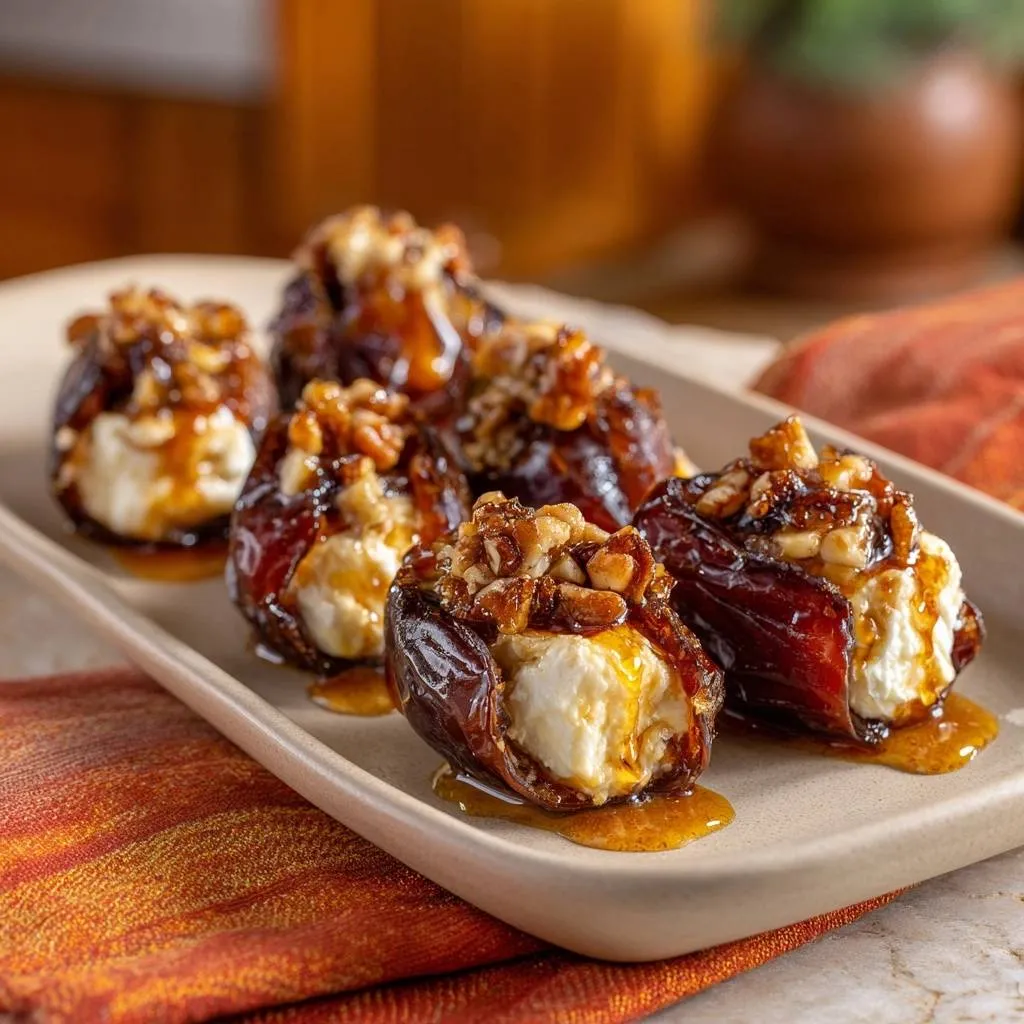
To ensure maximum freshness, choose dates that appear plump and have a glossy, dark brown sheen. If the dates look excessively shriveled or feel hard to the touch, they’ve likely lost too much moisture. While still edible, they won’t provide that luxurious, melt-in-your-mouth contrast we’re looking for against the crunchy walnuts.
Essential Components for Honey Walnut Stuffed Medjool Dates
The ingredient list for this appetizer is short, so quality is everything. I recommend using a high-fat goat cheese or a full-fat cream cheese to get that velvety mouthfeel. Goat cheese adds a sophisticated tang that cuts through the sugar, while cream cheese offers a milder, more dessert-like experience. Whichever you choose, make sure it’s at room temperature before you start whipping so it becomes light and airy.
Sea salt is the unsung hero of this recipe. Because Medjool dates and honey are both high in glucose, the salt acts as a necessary foil to prevent the dish from being cloyingly sweet. A fine-grain sea salt works best here as it distributes evenly through the cheese, providing a consistent savory spark in every single bite.
The Role of Citrus Zest in Flavor Balancing
If you want to know why some appetizers taste “flat” while others pop, the answer is usually acidity. Adding a half-teaspoon of fresh orange zest to your cheese mixture is the ultimate pro move. The essential oils in the orange peel provide a bright, floral top note that lifts the heavy flavors of the honey and nuts.
This citrus addition mimics the flavor profiles found in Mediterranean and Middle Eastern desserts. It cleanses the palate between bites, making the rich cheese feel lighter. Just be sure to zest only the bright orange part of the skin, as the white pith underneath is bitter and will ruin the delicate balance of the filling.
The Science of the Anti-Soggy Bottom Technique
Honey is hygroscopic, which is a fancy way of saying it loves to suck moisture out of its environment. If you drizzle cold, thick honey over a date, it sits heavily on the surface and eventually draws water out of the fruit’s cells, leading to a sticky, weeping mess. This is the primary cause of the “soggy bottom” that ruins so many party platters.
If you enjoy this sticky sweetness, you might also like honey roasted stuffed pears with their delightful crisp finish.
To combat this, we use the flash-toasting method for the walnuts. When you toast the nuts, you aren’t just adding flavor; you’re changing their chemistry. The heat coaxes the oils to the surface, creating a natural waterproof coating. This barrier prevents the honey from soaking into the nut and keeps the moisture of the cheese from migrating upward, preserving that vital crunch.
Why Temperature-Controlled Honey Drizzling Works
Warming your honey for exactly 10 to 15 seconds changes its viscosity, making it much more fluid. This allows you to achieve a thin, professional-grade coating that drapes over the walnuts like a silk sheet. Because the honey is warm and thin, it sets quickly upon contact with the cooler dates, creating a high-gloss finish that stays put.
If the honey is too thick, you’ll end up with heavy globs that eventually slide off the dates and pool at the bottom of the plate. By controlling the temperature, you ensure the honey stays on the “mountain” of walnuts where it belongs. This results in a clean presentation that looks like it came straight from a professional catering kitchen.
Step-by-Step: Preparing the Walnut Base
Toasting walnuts is a quick process, but it requires your full attention. Use a heavy-bottomed skillet over medium heat to ensure even heat distribution. Don’t add any oil or butter; the dry heat is what we need to crisp the cellular structure of the nut and release those fragrant oils.
Use the “nose-first” method to judge doneness. You’ll smell the walnuts becoming fragrant and woody about a minute before they are visually ready. Once they turn a pale golden brown, remove them from the pan immediately. They will continue to cook for a few seconds from residual heat, and they can go from perfectly toasted to burnt in a heartbeat.
Step-by-Step: Pitting and Filling the Fruit
When you’re ready to pit the dates, use a small paring knife to make a shallow, surgical slit down the length of the fruit. You don’t want to cut all the way through! Gently pry the date open with your thumbs and pop the pit out. This keeps the “boat” shape intact so it can hold the maximum amount of filling.
For the filling, you can use a small spoon, but a piping bag (or a plastic bag with the corner snipped off) gives you much more control. Aim to mound the cheese slightly above the rim of the date. This creates a beautiful visual “pillow” for the walnuts to rest on and ensures every bite has the perfect ratio of fruit to cream.
Step-by-Step: The Final Assembly and Glaze
Once your dates are filled, press the toasted walnut pieces firmly into the cheese. You want them to be anchored so they don’t tumble off when a guest picks one up. I like to use a mix of halves and smaller pieces to fill in any gaps, creating a dense, craggy surface that catches the honey glaze beautifully.
For the drizzle, use a zig-zag motion across the entire platter. This creates those elegant, thin lines of honey that look so appetizing. Finally, sprinkle a tiny pinch of sea salt over the top while the honey is still warm. This ensures the salt crystals stick to the glaze rather than falling to the bottom of the plate.
Flavor Variations and Ingredient Swaps
While the honey-walnut combo is a classic, you can easily adapt this recipe to suit your pantry. If you find goat cheese too bold, try using Labneh or a thick, strained Ricotta for a milder, creamier profile. Both options provide a wonderful canvas for the sweetness of the Medjool dates without overpowering the other ingredients.
Complementary Dishes
Round out your meal with these dishes that pair well with sweet dates.
- For a fresh counterpoint, consider the Harvest Apple and Walnut Salad, featuring similar nutty notes.
- Enjoy a warm, savory contrast with the Crispy Pan-Seared Halloumi Kale Bowl, offering a satisfying blend of textures.
You can also swap the walnuts for toasted pistachios or pecans. Pistachios add a vibrant green color that looks stunning against the dark dates, while pecans offer a sweeter, more buttery flavor. For an Eastern Mediterranean twist, stir a single drop of rose water or orange blossom water into your honey before drizzling for an incredible floral aroma.
Make-Ahead Strategies and Storage Logistics
You can definitely prep the components of this dish in advance to save time. Toast the walnuts and whip the cheese mixture up to two days before your event. Store the cheese in an airtight container in the fridge and keep the toasted nuts in a dry pantry. However, I strongly recommend waiting to assemble the dates until the day of the party.
If you must assemble them a few hours early, do not refrigerate the finished product. Cold temperatures can cause the honey to crystallize and the dates to become unpleasantly firm. Keep them at room temperature in a cool, dry place. If they have been chilled, let them sit out for at least 30 minutes before serving so the cheese softens and the flavors wake up.
Troubleshooting Common Preparation Issues
If your cheese mixture feels too runny to mound properly, it might be too warm. Pop it in the fridge for 15 minutes to firm up the fats before piping. On the flip side, if your dates feel too dry or hard, you can steam them for 60 seconds to rehydrate the skins, though this should be a last resort as it can make them harder to handle.
Did you over-toast the walnuts? If they taste bitter, there’s no saving them—it’s better to start over than to ruin the whole batch of dates. To prevent this, always move the nuts to a cool plate immediately after toasting. The residual heat of a heavy skillet is often enough to push perfectly toasted nuts into the “burnt” category if left sitting.
Fixing Overly Sticky Dates
Medjool dates can sometimes be so sticky that they cling to your fingers and the knife, making the pitting process frustrating. A quick trick is to lightly dust your fingertips with a tiny bit of cornstarch or arrowroot powder. This provides just enough of a barrier to handle the fruit cleanly without affecting the final taste or appearance of the appetizer.
Expert Tips for Professional Presentation
Presentation is half the battle with finger foods. To make the glossy, honey-drenched dates really pop, serve them on a dark surface like a slate board or a deep blue ceramic platter. The contrast between the dark fruit and the light cheese creates a striking visual that draws people in immediately.
For a high-end catering look, garnish the platter with a few sprigs of fresh mint or even some edible flowers. The pop of green against the amber honey and brown dates makes the dish look fresh and vibrant. Remember, we eat with our eyes first, and a little bit of greenery goes a long way in making a simple stuffed date look like a gourmet treat.
How should I store leftover stuffed dates?
Store any leftovers in an airtight container at room temperature for up to 24 hours. If you need to keep them longer, you can refrigerate them for up to 3 days, but be aware that the honey may become sticky and the walnuts might lose some of their crunch. Do not freeze these, as the texture of the cheese and the date will become grainy and unappealing upon thawing.
Why did my walnuts get soft after I put them on the dates?
This usually happens if the walnuts weren’t toasted long enough or if they were added to the cheese while still hot. The steam from the warm nuts gets trapped against the moist cheese, leading to instant softening. Always let your toasted walnuts cool completely to room temperature before pressing them into the cheese filling to maintain that vital crunch.
Can I use a different type of honey for the glaze?
Yes, you can use various types of honey to tweak the flavor. A wildflower honey is a great all-purpose choice, while a clover honey offers a very mild sweetness. If you want something more robust, try a buckwheat honey, which has deep, malty notes that pair beautifully with the walnuts. Just ensure the honey is pure and hasn’t started to crystallize before you warm it.
What can I use if I don’t have a piping bag?
If you don’t have a professional piping bag, a simple gallon-sized plastic storage bag works perfectly. Fill the bag with your whipped cheese mixture, squeeze it toward one bottom corner, and snip off about half an inch of the tip. This gives you the same control and “mounded” look as a piping bag without the extra equipment.
Can I make this recipe without goat cheese?
Absolutely. If you aren’t a fan of the “funk” of goat cheese, cream cheese is the best substitute. For a more savory, Mediterranean profile, you could even use a thick Greek yogurt that has been strained overnight (Labneh). The key is using a base that is thick enough to hold its shape and support the weight of the walnuts.
How do I prevent the honey from making a mess on the serving platter?
The trick is the “temperature-controlled” drizzle. By warming the honey for 10-15 seconds, it becomes thin enough to coat the nuts and then “set” quickly. If you drizzle it while it’s too thick, it will slowly migrate and pool. Also, try to drizzle the honey over the dates while they are already on their final serving platter so you don’t have to move them once they are glazed.
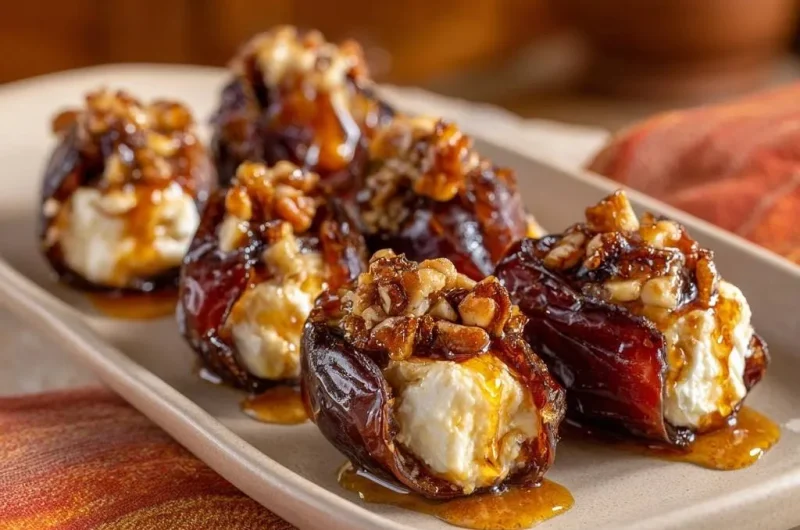
Stuffed Medjool Dates
Course: AppetizerCuisine: Mediterranean-InspiredDifficulty: easy12
dates15
minutes5
minutes145
kcal20
MinutesA sophisticated party appetizer featuring Medjool dates stuffed with whipped goat cheese and crunchy toasted walnuts, finished with a warm honey glaze.
Ingredients
12 large Medjool dates
4 ounces goat cheese or cream cheese, softened
1/2 cup walnut halves, roughly chopped
3 tablespoons honey
1/4 teaspoon sea salt
1/2 teaspoon orange zest (optional)
Directions
- Start by addressing the texture. Place the chopped walnuts in a dry skillet over medium heat. Toast them for 3 to 5 minutes, stirring constantly, until they are fragrant and golden. This step is vital because it creates a moisture barrier that prevents the nuts from getting soft once they hit the honey.
- While the nuts cool, slice each Medjool date lengthwise to create a pocket. Remove and discard the pits.
- In a small bowl, whip the softened cheese with the orange zest and sea salt until light and airy.
- Use a small spoon or a piping bag to fill each date with about 1 to 2 teaspoons of the cheese mixture. To match the visual presentation, allow the cheese to mound slightly above the rim of the date.
- Press a generous amount of the toasted walnuts into the top of the cheese filling.
- To prevent the “soggy bottom” effect and achieve the glossy look in the image, warm your honey in the microwave for 10-15 seconds until it is very fluid.
- Drizzle the honey generously over the walnuts, allowing it to pool slightly at the base of the dates on the serving platter. By warming the honey, it coats the toasted nuts quickly and sets with a high-gloss finish without soaking into the fruit, keeping the date base firm and the presentation professional.
- Serve immediately at room temperature for the best contrast between the creamy cheese and the crunchy toasted walnuts.
Notes
- The secret to the ‘anti-soggy bottom’ is flash-toasting the walnuts to create a moisture barrier and warming the honey so it sets as a gloss rather than soaking into the fruit.