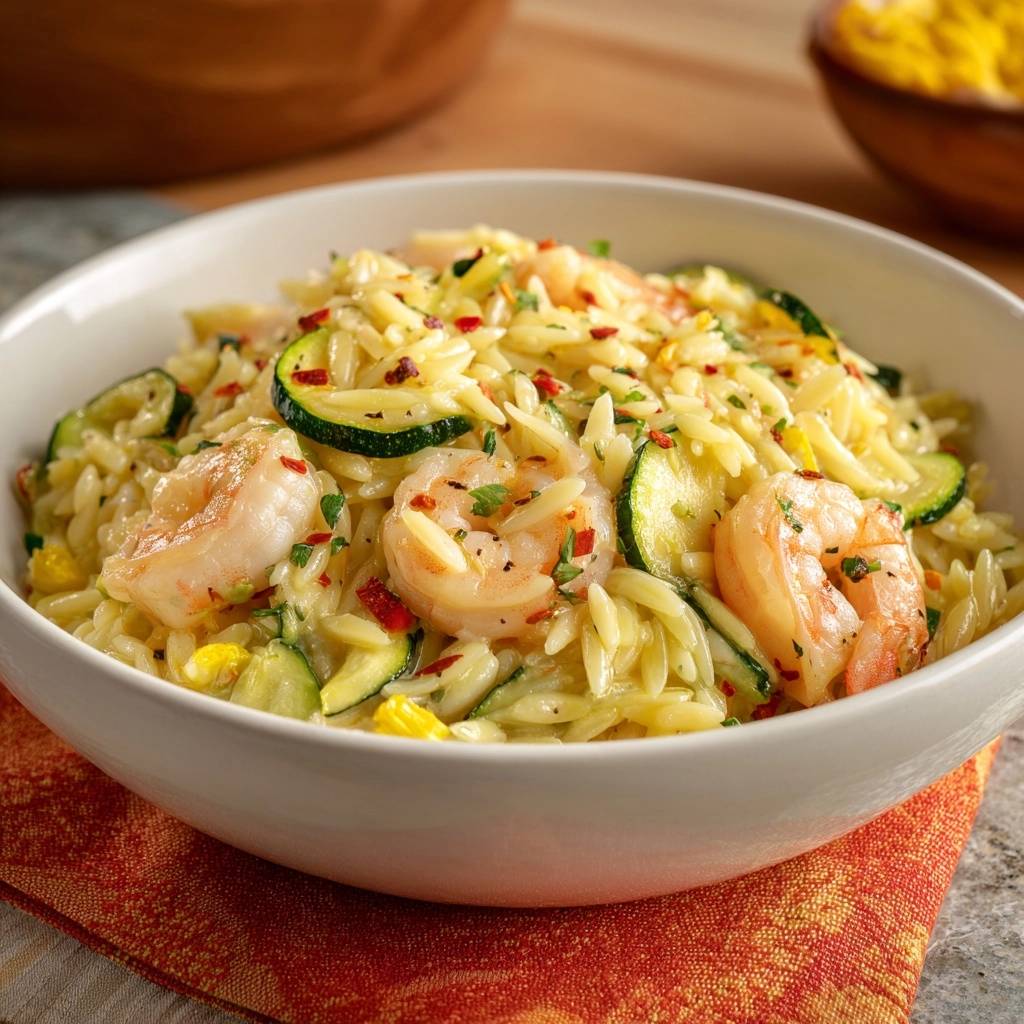
Forget everything you know about mushy, clumped-up pasta that sticks to the roof of your mouth. We’ve all been there, staring at a pot of orzo that looks more like a heavy paste than a refined meal. This Lemon Garlic Shrimp and Zucchini Orzo is the antidote to those kitchen frustrations, offering a bright, vibrant plate that feels like a coastal vacation.
The secret to this dish lies in the contrast of textures. You get the snap of fresh zucchini, the sweet pop of corn, and shrimp so succulent they practically melt. However, the real star is the orzo itself, which we treat with a specific technique to ensure every single grain remains distinct and silky.
If you want to cook like a pro, you have to stop boiling orzo like standard pasta. The trick is to toast the dry grains in a mix of butter and oil before any liquid ever touches the pan. This creates a nutty, toasted base that prevents the starch from turning into a gummy mess, giving you that perfect al dente bite every single time.
The Science of Non-Gummy Orzo
Orzo is a tiny, rice-shaped pasta that carries a massive amount of surface starch. When you boil it in a large pot of water, that starch releases and creates a sticky film. If you don’t drain it perfectly or if you let it sit for even a minute, those grains bond together into a solid mass. It’s a common headache that ruins many home-cooked meals.
To fix this, we use a process called dextrinization. By heating the dry starch in fat, we actually change the chemical structure of the pasta’s exterior. This creates a protective barrier that slows down the absorption of liquid. Instead of the pasta “blowing out” and becoming mushy, it holds its shape while the center cooks through.
Furthermore, this method allows the orzo to absorb the flavor of the broth and garlic from the inside out. Rather than just being coated in sauce, the pasta becomes the sauce. You end up with a dish that has a rich, velvety mouthfeel without needing heavy creams or excessive fats. It’s a lighter, more sophisticated way to handle small-shape pasta.
Why Toasting Dry Pasta Changes Everything
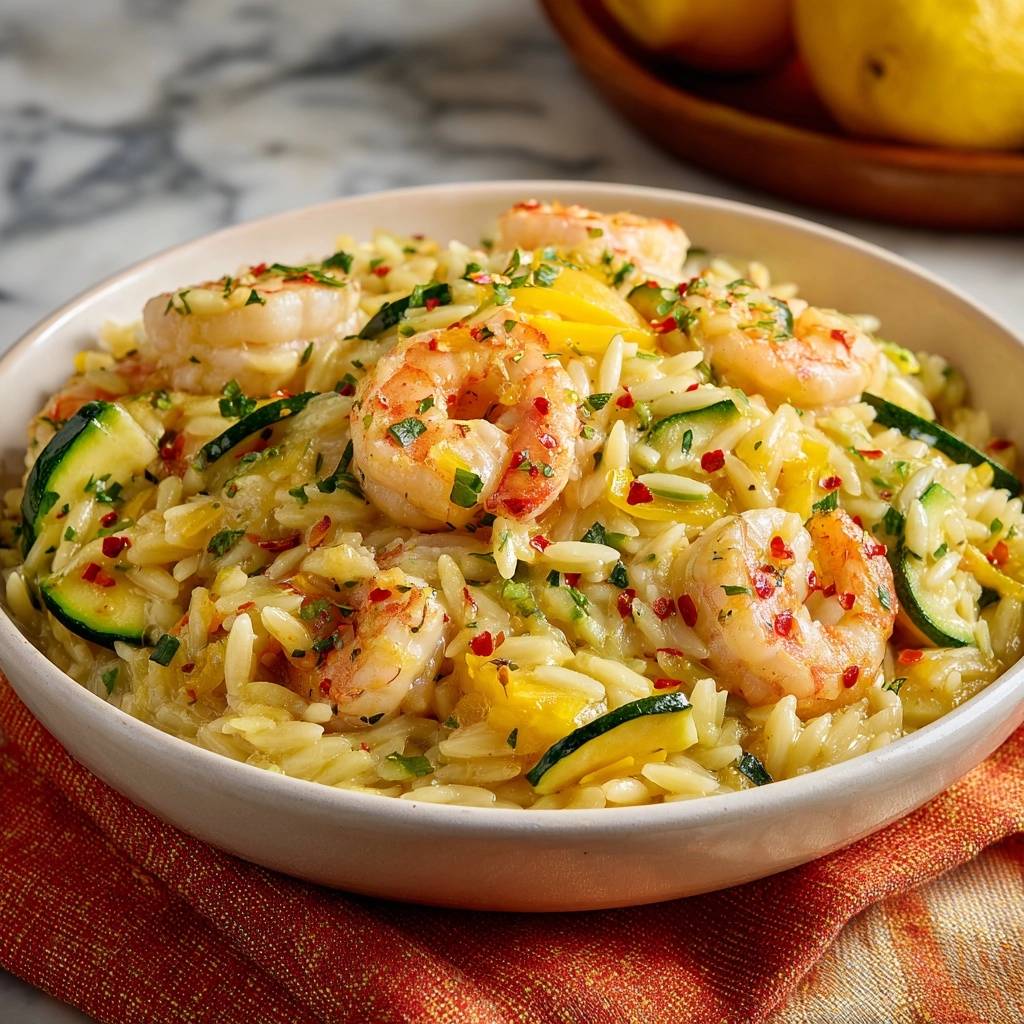
When you toss that dry orzo into the melted butter, keep your eyes and nose sharp. You’re looking for the grains to transition from a pale ivory to a beautiful, light golden hue. Therefore, you must stir constantly to ensure even browning and prevent any burnt spots.
As the pasta toasts, you’ll notice a distinct nutty aroma filling your kitchen. This smell is a sign that the sugars and proteins are reacting to the heat. This step is the difference between a bland side dish and a restaurant-quality entree that people will actually ask for seconds of.
Essential Components for Lemon Garlic Shrimp and Zucchini Orzo
Quality ingredients make or break a simple one-pan meal like this. Firstly, always reach for low-sodium chicken or vegetable broth. Since the liquid reduces significantly as the orzo simmers, standard broth can become way too salty. Using low-sodium gives you total control over the final seasoning of the dish.
Secondly, fresh lemon is non-negotiable here. Bottled juice often has a metallic aftertaste that clashes with the delicate shrimp. You need the zest for that punchy, aromatic oil and the juice for the bright acidity that cuts through the butter. It’s the element that wakes up all the other flavors in the pan.
Finally, the size of your shrimp matters more than you think. I recommend large shrimp, specifically the 16/20 count. They are big enough to get a gorgeous sear on the outside without overcooking in the middle. Smaller shrimp tend to turn into rubbery little curls before the orzo is even halfway done.
Selecting and Prepping Your Shrimp
Always buy peeled and deveined shrimp to save yourself a massive amount of prep time. However, the most important prep step is drying them. Use a paper towel to pat the shrimp until they are bone-dry on the surface before they hit the hot oil.
For more shrimp ideas, check out this garlic butter shrimp orzo recipe.
If the shrimp are wet, they will steam in the pan instead of searing. You want that golden-brown crust, known as the Maillard reaction, which adds a deep savory flavor. A dry shrimp is a tasty shrimp, so don’t skip this two-minute task.
Zucchini and Corn: Achieving Crisp-Tender Texture
Timing is everything when it comes to green vegetables. If you add the zucchini at the start with the orzo, it will dissolve into a grey mush by the time the pasta is soft. By waiting until the halfway point, you ensure the zucchini keeps its vibrant green color and a slight “snap” when you bite into it.
The corn adds a structural balance to the dish. Its natural sweetness provides a lovely counterpoint to the sharp garlic and acidic lemon. Whether you use fresh kernels off the cob or frozen sweet corn, they provide a burst of juice that keeps the dish feeling fresh and light.
Step-by-Step: Searing Shrimp and Building Flavor
Start by getting your skillet nice and hot over medium-high heat. When you add the shrimp, you should hear a loud sizzle immediately. Cook them for only about 90 seconds per side. They should be pink on the outside but still slightly translucent in the very center.
Remove them to a plate immediately. They will finish cooking later in the residual heat of the pasta. Look at the bottom of your pan; those little brown bits are called “fond.” Don’t wash the pan! That’s concentrated flavor that will dissolve into your orzo and make the whole dish taste incredible.
The Hydration Phase: Simmering Orzo to Perfection
Once your orzo is toasted and the garlic is fragrant, it’s time to add the broth. Pour it in slowly and give the bottom of the pan a good scrape to release all that flavor. Keep the pan uncovered during this stage. This allows the steam to escape, which concentrates the sauce into a silky glaze.
Stir the pan every minute or two. This movement helps the orzo release just enough starch to thicken the broth into a sauce without making it gummy. You’ll see the liquid transform from a thin soup into a glossy coating that clings to every grain of pasta.
Finishing Touches: The Cold-Emulsion Technique
The final step happens off the heat. If you keep boiling the pan after adding the lemon and parsley, you’ll lose those delicate, bright notes. High heat can actually make fresh parsley taste bitter and dull the impact of the lemon zest.
Stir the shrimp and their juices back into the warm orzo. The residual heat is plenty to warm them through and finish that last 20% of cooking. This ensures the shrimp stay plump and juicy. Fold in the lemon and herbs at the very last second for a “high-note” finish that smells absolutely amazing.
Troubleshooting Common Orzo Obstacles
If you find that your liquid has evaporated but the orzo still feels crunchy, don’t panic. Simply add a splash of warm broth or water, about a quarter cup at a time, and keep stirring. This is usually caused by the heat being a bit too high, causing the liquid to boil off before the pasta can absorb it.
On the other hand, if the dish tastes a bit flat, it usually needs more acid rather than more salt. A extra squeeze of lemon juice can brighten the entire profile instantly. If you accidentally over-salted the dish, a tiny splash of water can help dilute the intensity without ruining the texture.
Flavor Variations and Ingredient Swaps
This technique works beautifully with other proteins too. You can easily swap the shrimp for sea scallops; just make sure to sear them quickly so they don’t get tough. If you want a vegetarian version, chickpeas or even sautéed mushrooms make a fantastic substitute for the seafood.
For a seasonal twist, try using asparagus spears or frozen peas instead of zucchini. If you want a deeper, more earthy flavor, add a pinch of saffron to the broth while it simmers. The technique remains exactly the same, but the flavor profile can shift from Mediterranean to something more exotic with just one or two changes.
Optimal Pairings for This One-Pan Meal
Since this dish has protein, starch, and veggies all in one pan, you don’t need much else. A simple arugula salad with a light lemon vinaigrette is the perfect side. The peppery bite of the greens cuts through the richness of the butter and garlic beautifully.
If you want to soak up every last drop of that lemon-garlic glaze, serve this with a few slices of crusty sourdough bread. For a refreshing drink, try a sparkling botanical water with cucumber or a chilled herbal tea. These clean flavors won’t overwhelm the delicate shrimp.
Expert Tips for Storage and Reheating
Orzo is like a sponge; it will continue to soak up moisture as it sits in the fridge. If you have leftovers, store them in an airtight container for up to two days. When you’re ready to eat, the pasta might look a bit dry or clumped together.
To revive it, reheat the orzo in a skillet over low heat with a tablespoon of broth or water. Stir gently as it warms up, and the sauce will become silky again. I don’t recommend freezing this dish, as zucchini contains a lot of water and will become very mushy once thawed and reheated.
Expert Troubleshooting
Can I use whole wheat orzo for this recipe?
Yes, you can use whole wheat orzo, but keep in mind it has a much higher fiber content. This means it usually requires about 20% more liquid and a few extra minutes of simmering time. The texture will be heartier and slightly more “toothy” than traditional semolina orzo, but the toasting method still works perfectly to prevent clumping.
Why does my garlic taste bitter?
Garlic burns very quickly, especially when you are working with the high heat used for toasting pasta. If you add the minced garlic at the very beginning of the toasting phase, it will likely burn and turn bitter. Always add the garlic during the last 30 seconds of toasting, just before you pour in the liquid, to keep it sweet and aromatic.
Can I use frozen shrimp instead of fresh?
Absolutely. Frozen shrimp are often fresher than the “fresh” ones at the seafood counter because they are flash-frozen on the boat. Just make sure to thaw them completely in the refrigerator overnight. Most importantly, pat them very dry with paper towels before searing, or they will release too much water and won’t get that golden crust.
How do I scale this recipe for a large dinner party?
If you are doubling the recipe, you must use a very large, wide skillet or a braiser. If the orzo is piled too deep in the pan, it won’t toast evenly and the bottom layer might burn while the top stays raw. You may also need to sear the shrimp in two separate batches to avoid crowding the pan, which causes the temperature to drop and the shrimp to steam.
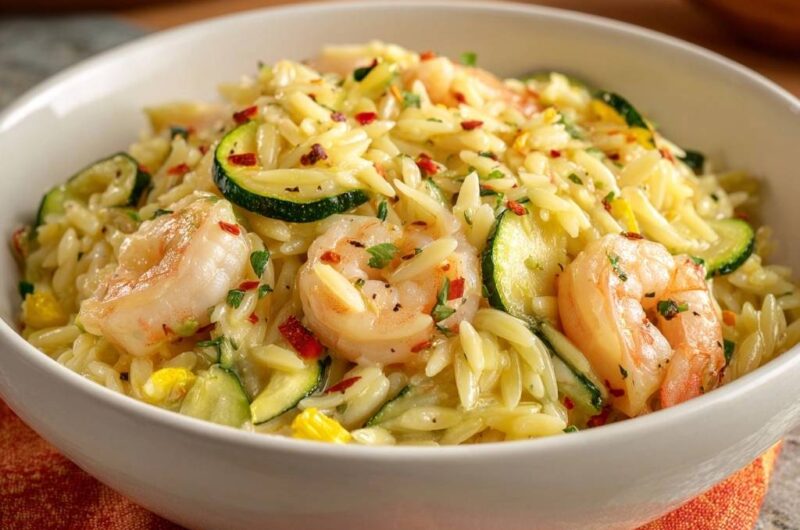
Shrimp and Zucchini Orzo
Course: Main CourseCuisine: AmericanDifficulty: easy4
servings10
minutes15
minutes410
kcal25
MinutesA restaurant-quality shrimp and orzo dish that uses a toasting technique to ensure the pasta stays al dente and distinct. Combined with fresh zucchini, corn, and a bright lemon garlic glaze, it is a quick and healthy weeknight meal.
Ingredients
1 pound large shrimp, peeled and deveined
1.5 cups dry orzo pasta
2 medium zucchinis, sliced into thin half-moons
1/2 cup sweet corn kernels (fresh or frozen)
3 cups low-sodium chicken or vegetable broth
3 cloves garlic, minced
1 tablespoon olive oil
2 tablespoons unsalted butter (divided)
1 tablespoon fresh lemon juice
1 teaspoon lemon zest
1/2 teaspoon red pepper flakes
2 tablespoons fresh parsley, finely chopped
Salt and black pepper to taste
Directions
- Heat the olive oil and 1 tablespoon of butter in a large skillet over medium-high heat. Season shrimp with salt and pepper, then sear for 1 to 2 minutes per side until pink and just opaque. Remove shrimp from the pan and set aside on a plate.
- In the same skillet, add the remaining tablespoon of butter and the dry orzo. This is the critical step: stir the dry orzo constantly for 2-3 minutes until the grains are lightly golden and smell nutty. This toasting process is what stops the pasta from becoming gummy.
- Add the minced garlic and red pepper flakes, sautéing for 30 seconds until fragrant.
- Pour in the broth and bring to a gentle simmer. Reduce heat to medium-low and cook uncovered for about 5 minutes, stirring occasionally to ensure even hydration.
- Stir in the sliced zucchini and the corn kernels. Continue to simmer for another 4 to 5 minutes. The zucchini will cook to a perfect crisp-tender texture and the corn will add a pop of sweetness and color as the liquid reduces.
- Once the liquid is mostly absorbed and has formed a light, silky glaze around the tender orzo, stir the cooked shrimp (and any juices from the plate) back into the pan.
- Remove from heat immediately. Fold in the lemon juice, lemon zest, and fresh parsley. The residual heat will finish the shrimp without making them rubbery. Serve immediately in warm bowls to maintain the perfect al dente texture.
Notes
- The critical step is toasting the dry orzo in butter for 2 to 3 minutes until golden to prevent a gummy texture. Use low-sodium broth to better control the saltiness of the final dish.