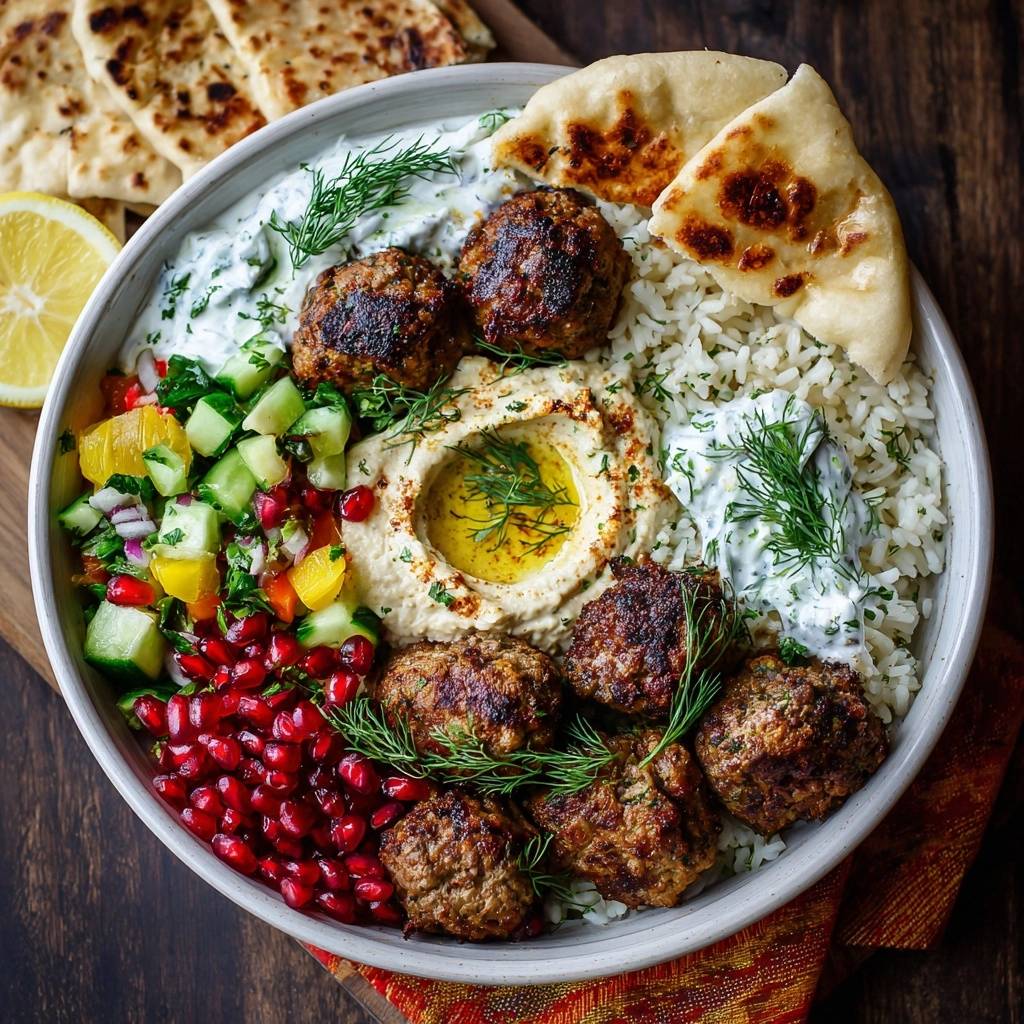
If you have ever bitten into a meatball only to find it tough, dry, or rubbery, you know the disappointment of a “hockey puck” dinner. It is a common frustration that usually stems from the meat proteins tightening up and squeezing out every drop of moisture during the cooking process. However, these Mediterranean Beef Meatball Bowls solve that problem entirely by using a simple culinary secret that ensures every bite is tender and succulent.
These bowls are the ultimate high-protein meal, balancing the savory richness of seared beef with a vibrant array of fresh, cool toppings. You get the warmth of the spiced meat paired against the snap of pomegranate seeds, the creaminess of smooth hummus, and the refreshing tang of chilled tzatziki. It is a complete sensory experience that feels like a restaurant-quality meal right in your own kitchen.
The real magic happens before the meat even hits the pan. By using a panade—a simple mixture of starch and liquid—you create a structural barrier within the meatball. This technique is the hallmark of an expert cook, and once you try it, you will never go back to tossing dry breadcrumbs straight into your ground beef again.
The Science of the Panade for Tender Meatballs
A panade might sound fancy, but it is just a humble paste made from panko breadcrumbs and milk. When you soak the breadcrumbs for five minutes, the starch molecules expand and absorb the liquid, turning into a soft, gel-like consistency. This paste acts as a physical buffer between the strands of meat protein.
When beef cooks, the proteins naturally want to coil up and bond together, which is what makes meat feel firm. Without a panade, those proteins bond so tightly that they wring out the natural juices like a wet sponge. The starch in the panade gets in the way of those bonds, preventing the “cross-linking” that leads to a tough texture. Therefore, the moisture stays trapped inside the meatball rather than evaporating into the pan.
If you compare this to a meatball made with just dry crumbs and an egg, the difference is night and day. Dry crumbs often act like little desiccant packets, actually pulling moisture away from the meat. By hydrating them first, you ensure the meatball remains soft and juicy even after it develops a deep, dark crust on the outside.
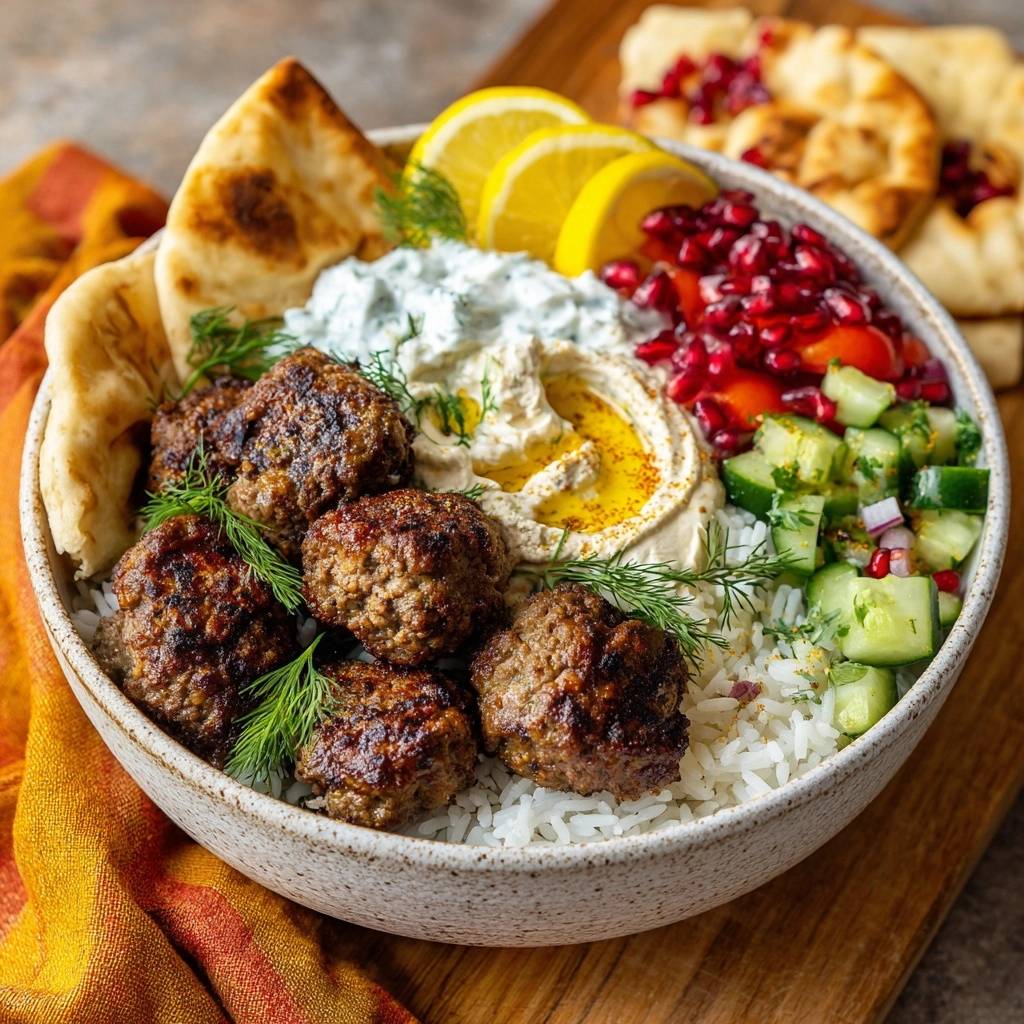
Essential Components for Mediterranean Beef Meatball Bowls
Quality ingredients are the backbone of this dish, and it starts with the beef. For the best results, you should always reach for an 80/20 ground beef blend. While lean grinds might seem healthier, they lack the fat necessary to carry the Mediterranean spices and provide a luscious mouthfeel.
In addition to the meat, the choice of grain matters immensely. Basmati rice is the preferred base because its long, slender grains stay distinct and fluffy. Unlike short-grain rice, which can become sticky or clumpy, Basmati provides a light foundation that doesn’t feel heavy when paired with the rich hummus and beef.
Selecting the Right Ground Beef Blend
The 20% fat content in an 80/20 blend is crucial for the searing process. As the meatballs cook for 8 to 10 minutes, that fat renders out, essentially frying the exterior of the meatball in its own juices. This creates a savory crust while the panade protects the interior from drying out. If you use a 90/10 blend, you often end up with a dull, gray exterior and a crumbly, dry middle.
Aromatics and Spices: The Mediterranean Profile
The flavor profile relies on a trio of cumin, oregano, and fresh parsley. Cumin provides an earthy warmth, while the oregano adds a floral, herbal note that defines Mediterranean cooking. It is vital to mince your garlic very finely or even use a microplane. Large chunks of garlic can burn during the high-heat sear, leaving behind a bitter taste that ruins the delicate balance of the bowl.
Step-by-Step: Preparing the Moisture-Lock Meatballs
Start by creating your “moisture lock” paste. Mix the panko and milk in a small bowl and let it sit until it looks like a thick, soft mash. This step is non-negotiable if you want that melt-in-your-mouth texture. Once the paste is ready, add it to your large mixing bowl with the beef, beaten egg, and spices.
When you begin mixing, use your hands and work quickly. You want to stop the moment the ingredients are evenly distributed. Over-mixing is a common trap; the more you handle the meat, the more the proteins break down and become gummy. Furthermore, the heat from your hands can actually start to melt the beef fat before it even hits the pan, which leads to a greasy, dense meatball.
Shape the mixture into small, golf-ball-sized rounds, roughly 1.5 inches in diameter. Keeping them uniform ensures they all finish cooking at the same time. If they feel a bit soft, you can pop them in the fridge for 10 minutes to firm up, but the panade usually provides enough structure to keep them round as they move to the skillet.
Techniques for Achieving a Deep Golden Crust
To get that perfect crust, you need a heavy skillet—cast iron or stainless steel is much better than non-stick for this. Heat the olive oil until it is shimmering. You will know it is ready when a tiny drop of water flicked into the pan sizzles instantly. Place the meatballs in the pan, but do not crowd them; they need space for steam to escape so they sear rather than boil.
The most important rule is to leave them alone for the first two minutes. This allows the Maillard reaction to occur, which is the chemical process that creates that savory, brown crust. If you try to turn them too early, the meat will stick to the pan and tear. Once they release easily, turn them frequently to ensure every side gets that deep golden color and the center reaches 160°F.
Building the Bowl: Texture and Temperature Contrast
Assembling the bowl is where you create the “wow” factor. Start with a generous base of the dill-flecked Basmati rice. Use the back of a spoon to create a “swoosh” or a large well in the center for the hummus. This creates a beautiful presentation and ensures you get a bit of creamy hummus in every forkful.
The key to a great Mediterranean bowl is the contrast between hot and cold. Place the sizzling, hot meatballs directly onto the rice, then surround them with the chilled cucumber salad and cold tzatziki. This temperature play makes the meal feel fresh and exciting. By placing the “wet” ingredients like hummus and tzatziki on top of the rice rather than under it, you prevent the grains from becoming soggy before you can eat.
The Herb-Infused Basmati Base
To make the rice stand out, toss it with fresh dill immediately after it finishes steaming. Adding the herbs at the very end is a pro move because it preserves their bright green color and volatile oils. If you cook the herbs with the rice, they often turn brown and lose their punchy, fresh aroma.
Adding Brightness with Pomegranate and Lemon
Acidity is the final touch that brings everything together. The pomegranate seeds aren’t just for looks; they provide little “pops” of sweet-tart juice that cut through the richness of the beef. A final squeeze of fresh lemon juice over the entire bowl wakes up the flavors and balances the earthy cumin and garlic.
Flavor Variations and Dietary Swaps
If you want a more traditional “kofta” style flavor, you can swap half the beef for ground lamb. The lamb adds a distinct, gamey richness that pairs beautifully with the mint and dill. For those looking for a low-carb option, cauliflower rice works perfectly as a base, though you should sauté it briefly with lemon and garlic first.
For a similar vibrant flavor, check out this Mediterranean meat and veggie rice bowl.
If you need to make this gluten-free, simply replace the panko breadcrumbs with almond flour or gluten-free breadcrumbs in the panade. The almond flour won’t absorb as much milk, so start with half the amount of liquid and add more until you reach that paste-like consistency. The result will still be significantly more tender than skipping the panade altogether.
Make-Ahead Strategies and Storage Logistics
These bowls are fantastic for meal prep, but you must be strategic about storage. Keep the “hot” components (meatballs and rice) in one container and the “cold” components (hummus, tzatziki, and salad) in another. This prevents the vegetables from wilting and the sauces from making the rice mushy during storage.
When it comes time to reheat, the meatballs need a little extra care. Place them in a microwave-safe dish and cover them with a damp paper towel. This creates a small steam chamber that helps the panade re-hydrate, ensuring the meat stays tender. Alternatively, you can reheat them in a dry skillet over medium heat to crisp up the edges again.
Troubleshooting Common Meatball Issues
Even with a great recipe, things can go wrong in the kitchen. If your meatballs are falling apart in the pan, it is usually because the panade didn’t have enough time to hydrate or the pan wasn’t hot enough. Ensure that paste is thick and the oil is shimmering before you start cooking.
If your meat looks gray instead of brown, you likely crowded the pan. When meatballs are too close together, they release moisture that turns into steam, which “boils” the meat. Cook in batches if necessary to give each meatball at least an inch of breathing room. This ensures that beautiful, dark crust every time.
Why are my meatballs sticking to the skillet?
Sticking usually happens because of surface moisture or a pan that isn’t hot enough. If the meat looks “sweaty” when you take it out of the fridge, gently pat the outside of the meatballs with a paper towel before placing them in the oil. Also, remember that meat naturally releases from the pan once a proper crust has formed; if it’s sticking, give it another 30 seconds.
Can I bake these instead of pan-frying?
Yes, you can bake these at 400°F for about 15 to 18 minutes. While this is a great hands-off method, you will lose that specific “skillet crust” that adds so much flavor. If you choose to bake them, consider broiling them for the last two minutes to get a bit of color on the tops.
How do I keep the cucumber salad from getting watery?
Cucumbers have a very high water content that releases once you add salt. To prevent a soggy salad, dice your cucumbers, toss them with a pinch of salt, and let them sit in a colander for 10 minutes. Pat them dry before mixing with the tomatoes and peppers to keep your salad crisp and vibrant.
What is the best way to char pita bread without a grill?
You can get a beautiful char right on your stovetop. If you have a gas stove, use tongs to hold the pita directly over a low open flame for 10 seconds per side. If you have an electric stove, heat a dry cast iron skillet over high heat and press the pita down for 30 seconds until dark spots appear. This adds a smoky depth that complements the seared beef perfectly.
How long can I store the leftovers in the fridge?
You can store the cooked meatballs and rice in an airtight container for up to 4 days. However, the cucumber and tomato salad is best eaten within 2 days, as the vegetables will begin to soften and lose their crunch. For the best experience, keep the sauces in separate small containers so they stay thick and creamy.
Why are my meatballs still tough even with the panade?
The most likely culprit is over-mixing the meat. When you work the beef too much, you develop the proteins similarly to how you develop gluten in bread. This creates a springy, tough texture. Use a light touch and stop mixing the second the ingredients are combined. Additionally, ensure you aren’t using meat that is too lean; that 80/20 ratio is vital for tenderness.
Can I freeze the meatballs for later?
Absolutely! These meatballs freeze beautifully. You can freeze them raw on a baking sheet before transferring them to a bag, or freeze them after they are cooked and cooled. If freezing cooked meatballs, they will last for up to 3 months. Just thaw them in the fridge overnight before reheating so they don’t lose their structural integrity.
What can I use if I don’t have panko breadcrumbs?
Regular breadcrumbs work fine, but you may need to adjust the milk slightly. Since regular crumbs are finer than panko, they absorb liquid faster. You can also use a slice of white bread with the crusts removed; just tear it into tiny pieces and soak it in the milk until it can be mashed into a smooth paste.
Beef Meatball Bowls
Course: Main CourseCuisine: MediterraneanDifficulty: easy4
servings20
minutes15
minutes610
kcal35
MinutesA vibrant and nutritious bowl featuring tender beef meatballs made with a milk-soaked breadcrumb panade to ensure maximum moisture. Served alongside dill-infused basmati rice, smooth hummus, tzatziki, and a fresh cucumber and pomegranate salad.
Ingredients
For the Meatballs:
1 pound ground beef (80/20 blend for best results)
1/2 cup panko breadcrumbs
3 tablespoons milk
1 egg, beaten
2 cloves garlic, minced
1 teaspoon dried oregano
1/2 teaspoon ground cumin
1/2 teaspoon salt
1/4 teaspoon black pepper
2 tablespoons fresh parsley, finely chopped
2 tablespoons olive oil for frying
For the Bowl:
2 cups cooked basmati rice (tossed with 1 tablespoon fresh dill)
1 cup smooth hummus
1/2 cup tzatziki sauce
1 cup diced cucumber, tomato, and yellow bell pepper salad
1/2 cup pomegranate seeds
1 tablespoon extra virgin olive oil (for drizzling)
Fresh dill and lemon wedges for garnish
Warm, charred pita bread
Directions
- The Moisture Lock: In a small bowl, combine the panko breadcrumbs and milk. Let this sit for 5 minutes until it forms a soft paste. This panade is the essential step to ensure your meatballs stay tender and never dry out.
- In a large mixing bowl, combine the ground beef, the breadcrumb paste, egg, garlic, oregano, cumin, salt, pepper, and parsley. Use your hands to mix just until combined. Do not overwork the meat, as over-mixing leads to a dense, tough texture.
- Shape the mixture into small, golf-ball-sized rounds (about 1.5 inches).
- Heat 2 tablespoons of olive oil in a large skillet over medium-high heat. Once the oil is shimmering, add the meatballs in a single layer.
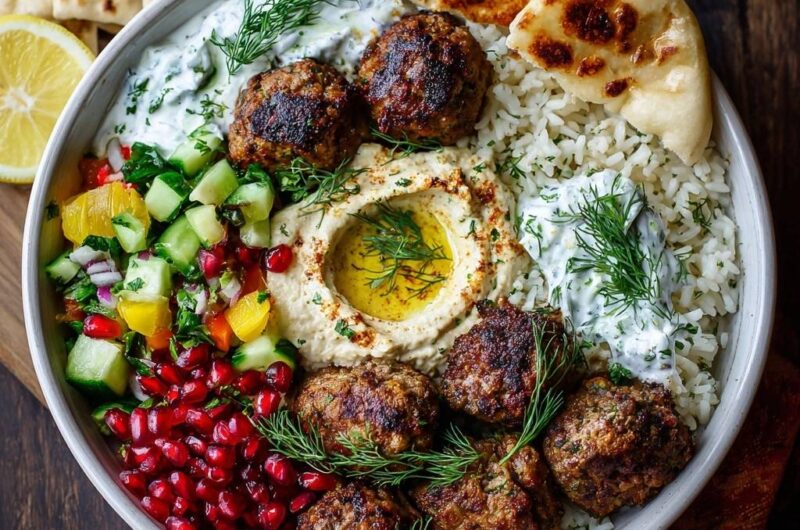
- Sear the meatballs for 8 to 10 minutes, turning frequently to ensure a deep, dark golden-brown crust on all sides. The panade will keep the inside juicy while the high heat develops the crust shown in the image. Ensure the internal temperature reaches 160°F.
- Assemble the bowls: Place a base of fluffy dill rice in each dish. Use the back of a spoon to create a large well in the center of the bowl and fill it with a generous scoop of hummus. Use the spoon to create a small divot in the hummus and drizzle with extra virgin olive oil.
- Arrange the hot meatballs around the hummus. Add a dollop of tzatziki sauce over the rice.
- Add the cucumber and pepper salad to one side, and a vibrant pile of pomegranate seeds to the other.
- Garnish with fresh dill sprigs and serve immediately with warm, lightly charred pita bread and a squeeze of fresh lemon juice.
Notes
- The secret to the texture is the panade (milk and breadcrumbs). Do not overwork the meat when mixing to avoid a dense texture. Ensure meatballs reach an internal temperature of 160 degrees Fahrenheit.