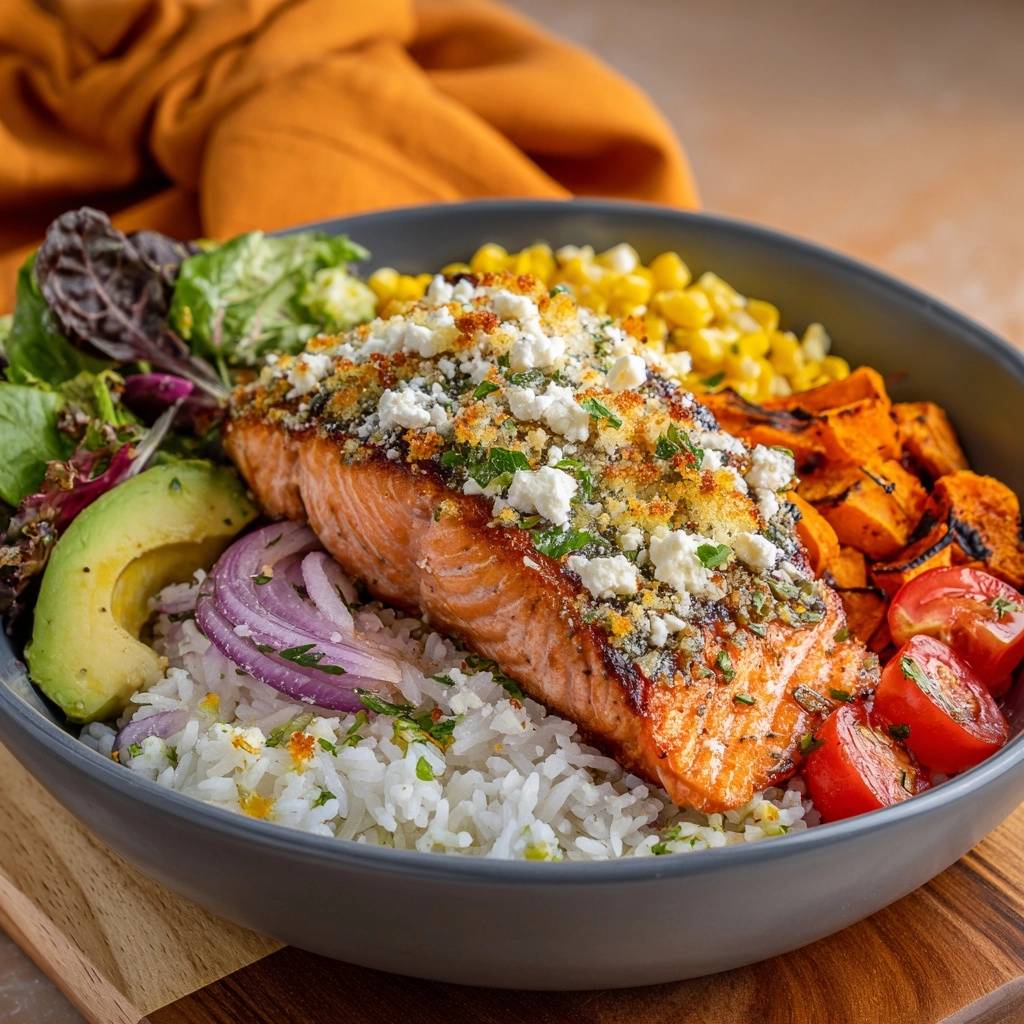
Imagine biting into a piece of salmon where the top layer shatters like a cracker, revealing a buttery, tender center that practically melts on your tongue. That contrast between the golden, toasted panko and the rich, flaky fish is the hallmark of a perfect Mediterranean Salmon Power Bowl. However, most home cooks struggle with the “soggy bottom” epidemic, where the skin turns rubbery and the crust slides off the moment the fork touches it.
This recipe solves that frustration by focusing on a specific high-heat searing technique and a moisture-wicking crust. We aren’t just making a salad with fish on top; we’re building a balanced meal designed for sustained energy. By combining complex carbohydrates like roasted sweet potatoes with healthy fats from avocado and lean protein from salmon, you get a meal that fuels your afternoon without the heavy post-lunch slump.
The secret to this professional-grade crust isn’t a fancy oven or expensive gadgets. It’s all about the “glue.” While many recipes use butter or oil, we use Dijon mustard. It acts as a thermal barrier that protects the delicate flesh while locking the panko in place, ensuring every single crumb stays attached from the skillet to your bowl.
The Science of the Anti-Soggy Salmon Crust
Achieving a restaurant-quality sear requires understanding the Maillard reaction. This chemical reaction between amino acids and reducing sugars gives browned food its distinctive flavor and texture. When you place skin-on salmon in a hot pan, the heat renders the subcutaneous fat, essentially frying the skin in its own oils. This creates a structural “heat shield” that protects the rest of the fillet from overcooking.
Moisture is the absolute enemy of a crisp crust. If there’s water on the surface of your fish, it will turn into steam, resulting in a pale, mushy texture. By using panko breadcrumbs instead of traditional fine breadcrumbs, we create more surface area for the heat to hit. Panko is larger and airier, which allows it to wick moisture away from the fish rather than absorbing it and becoming heavy.
Why Dijon Mustard is the Ultimate Culinary Glue
Dijon mustard is a secret weapon in the kitchen because of its high acidity and thick viscosity. Unlike oil, which can cause the breading to slide off, Dijon grips the salmon flesh tightly. It creates a tacky surface that holds the panko in place even when you flip the fish. Furthermore, the mustard acts as a flavor-packed insulator, preventing the internal juices of the salmon from soaking into the breadcrumbs and making them soggy during the final minutes of cooking.
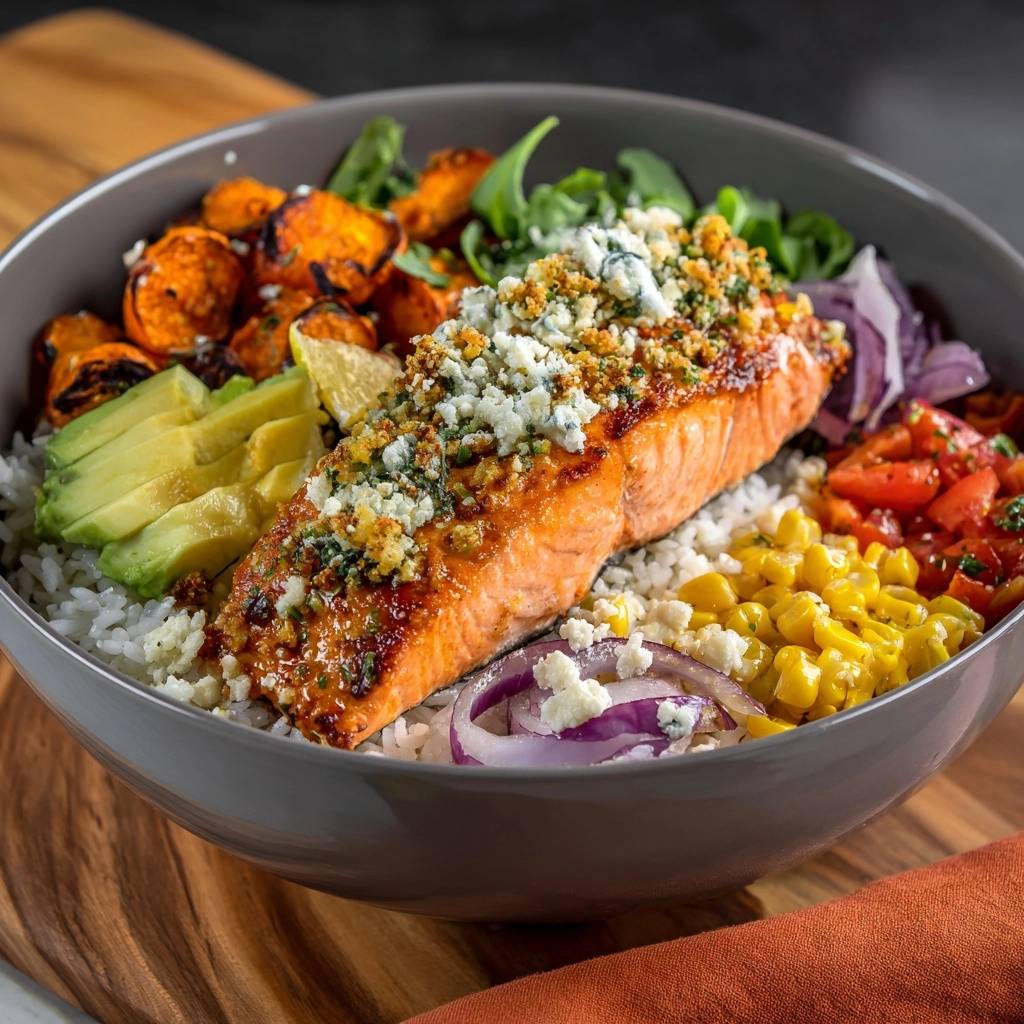
Essential Components for Mediterranean Salmon Power Bowls
Quality ingredients are the foundation of any power bowl. When shopping for salmon, look for fillets with a vibrant color and firm texture. While wild-caught salmon like Sockeye offers a robust, lean flavor, farmed Atlantic salmon provides a higher fat content that is very forgiving for beginners. Always keep the skin on; it provides the structural integrity needed to flip the fish without it falling apart in the pan.
The vegetable components are just as vital for a well-rounded bowl. Roasted sweet potatoes provide a natural sweetness that balances the salty feta, while halved cherry tomatoes add a necessary acidic pop. Corn kernels, especially when charred, bring a smoky depth that complements the toasted panko. Finally, the avocado adds a creamy mouthfeel that ties the grains and greens together into a cohesive meal.
Selecting the Right Salmon Cut
For the best results, choose center-cut fillets rather than the thin tail pieces. Center cuts have a more uniform thickness, which is essential when you’re applying a crust. If one side of the fish is significantly thinner than the other, the panko on the thin side will burn before the thick side is cooked through. Aim for fillets that are about 1 to 1.5 inches thick for the perfect ratio of crust to tender meat.
The Base: Balancing Grains and Greens
A great power bowl uses a 50/50 split between grains and greens. Long-grain white rice is an excellent choice because it stays fluffy and absorbs the savory fats that drip from the salmon. Mixing it with a blend of red leaf and romaine lettuce adds volume and a refreshing crunch. This combination ensures you feel full and satisfied without feeling weighed down by a heavy bowl of pure starch.
Step-by-Step: Achieving the Perfect High-Heat Sear
The most critical step happens before the heat is even turned on. You must pat the salmon fillets completely dry with paper towels. I’m talking bone-dry. If the skin feels tacky or wet, keep dabbing. This ensures the fish sears immediately upon contact with the oil rather than boiling in its own moisture.
You must use a shimmering hot skillet. If you place the fish in a cold pan, the proteins will bond to the metal, causing the fish to stick and tear. Wait until the olive oil is thin and moving quickly across the pan like water. When you lay the salmon in, you should hear a loud, aggressive sizzle. That sound is the moisture evaporating and the crust beginning to form.
Phase 1: Rendering the Skin for Structural Support
Once the salmon hits the pan skin-side down, leave it alone. Do not poke it, prod it, or try to slide it around. For 4 to 5 minutes, the heat is working to render the fat and turn the skin into a crispy, golden wafer. You will see the color of the flesh start to change from a translucent pink to an opaque light orange, moving from the bottom of the fillet upward. This undisturbed time is what creates that “shatter-proof” base.
For another quick salmon preparation, consider these deconstructed salmon sushi tower ideas.
Phase 2: The Golden Panko Flip
When the salmon is cooked about two-thirds of the way through, it’s time for the flip. Carefully turn the fillet onto the panko-crusted side. Immediately turn the heat down to medium. Panko contains tiny amounts of sugar and flour that can burn quickly under high heat. You only need 2 to 3 minutes here to achieve a deep golden brown. The goal is a crust that looks like toasted mahogany, not charred black.
Assembling the Power Bowl for Maximum Texture
Assembly is an art form that preserves the work you put into the salmon. Use a “perimeter arrangement” strategy by placing the rice and greens in the center, then tucking the sweet potatoes, corn, and onions around the edges. Keep the “wet” ingredients, like the sliced avocado and juicy tomatoes, away from the salmon until you are ready to eat. This prevents the moisture from the vegetables from migrating into your crispy panko crust.
The Feta Finish: Using Residual Heat
Don’t add the feta cheese while the salmon is in the pan, or it will melt into a greasy puddle. Instead, crumble the feta over the fish the moment it lands in the bowl. The residual heat from the salmon is just enough to soften the cheese, making it creamy and slightly warm. This allows the saltiness of the feta to mingle with the fresh parsley, brightening the rich flavors of the fish without compromising the crunch of the panko.
Flavor Variations and Ingredient Swaps
This bowl is incredibly versatile. If you want to swap the grains, quinoa or farro offer a nutty flavor and extra protein. For a gluten-free version, replace the panko with crushed walnuts or pecans; the nuts provide a similar crunch and a boost of healthy omega-3s. If you’re watching your carb intake, roasted cauliflower florets make a fantastic substitute for sweet potatoes, offering a lower glycemic index while still providing a satisfying bite.
Troubleshooting Common Salmon Searing Mistakes
If your fish is sticking to the pan, it’s likely because of the Leidenfrost Effect—or rather, the lack of it. This effect occurs when a liquid produces an insulating vapor layer that keeps it from sticking to a hot surface. If the pan isn’t hot enough, that layer never forms. If the fish is stuck, wait another 30 seconds; often, the fish will “release” itself from the pan once the crust is fully formed. If the panko is browning too fast, simply slide the pan off the heat for a minute to let the residual heat finish the cooking process.
Expert Tips for Meal Prep and Storage
You can easily prep the components of this bowl in advance. Roast the sweet potatoes, char the corn, and cook the rice up to three days ahead of time. Store them in separate airtight containers to keep the flavors distinct. However, for the best experience, cook the salmon fresh. If you do have leftover salmon, never put it in the microwave. The microwave will turn the fish rubbery and the crust soggy. Instead, eat the leftover salmon cold over a salad or give it a quick 3-minute pulse in an air fryer at 350°F to revive the crunch.
Frequently Asked Questions
Can I use frozen salmon for these bowls?
Yes, you can use frozen salmon, but you must thaw it completely in the refrigerator overnight. Frozen fish tends to release more moisture than fresh fish. After thawing, you will need to use twice as many paper towels to ensure the surface is bone-dry. If the fish is even slightly damp, it will steam in the pan and you’ll lose that crispy texture.
What is the best substitute for panko?
If you don’t have panko, crushed Ritz crackers or saltines are the next best thing for a buttery crunch. You can also use almond flour for a grain-free option. Keep in mind that almond flour and crackers have more fat and sugar than panko, so they will brown much faster. Watch the pan closely during the final flip to prevent scorching.
How do I know when the salmon is perfectly cooked?
The most reliable way is to use an instant-read thermometer. For a moist, medium-rare center, pull the salmon when it hits 125°F to 130°F. If you don’t have a thermometer, use the “flake test.” Gently press the side of the fillet with a fork; if the layers of fish begin to separate (flake) easily, it is done. The center should still look slightly translucent.
Can I make this recipe dairy-free?
Absolutely. To get that same creamy, salty element without the feta, add a generous dollop of hummus to the bowl or drizzle everything with a lemon-tahini dressing. The tahini provides a rich, savory depth that mimics the creaminess of the cheese while staying entirely plant-based.
Why is my salmon skin still rubbery?
Rubbery skin is usually caused by one of two things: not enough heat or not enough oil. The skin needs to essentially “shallow fry” in the pan. If the pan is dry or the temperature is too low, the fat in the skin won’t render out, leaving it tough and chewy. Make sure the oil is shimmering and the skin stays in contact with the heat for at least 4 full minutes.
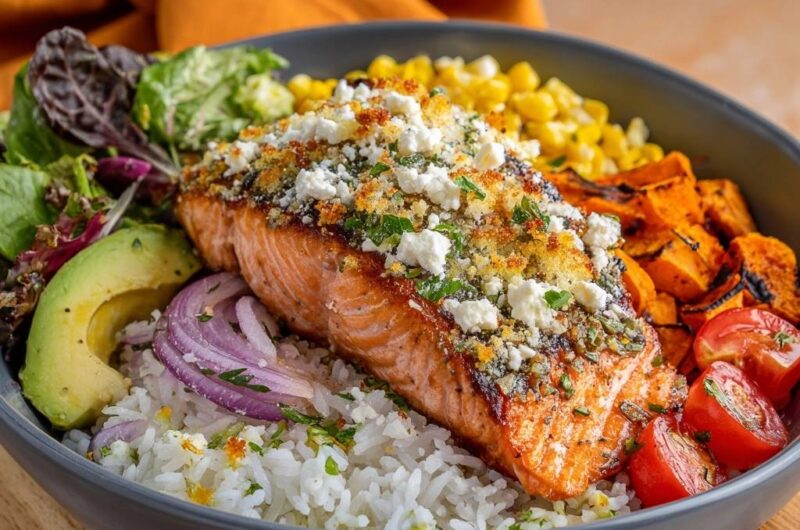
Mediterranean Salmon
Course: Main CourseCuisine: Mediterranean and AmericanDifficulty: easy2
servings15
minutes20
minutes610
kcal35
MinutesA nutritious and vibrant bowl featuring high-heat seared salmon with a shatteringly crisp panko crust, served over rice and greens with roasted sweet potatoes, avocado, and feta cheese.
Ingredients
2 salmon fillets (6 oz each), skin-on
1 cup long-grain white rice, cooked
1 cup sweet potato, cubed and roasted
1/2 cup corn kernels, charred or steamed
1/2 cup cherry tomatoes, halved
1/2 avocado, sliced
1/4 red onion, thinly sliced
2 cups mixed greens (red leaf and romaine)
1/4 cup panko breadcrumbs
1 tablespoon Dijon mustard (the “glue” for the crust)
3 tablespoons feta cheese, crumbled
2 tablespoons fresh parsley, finely chopped
2 tablespoons olive oil, divided
1 teaspoon garlic powder
Salt and black pepper to taste
Directions
- Pat the salmon fillets completely dry with paper towels on both sides. This is the most important step to prevent steaming. Season the flesh side with salt, pepper, and garlic powder.
- In a small bowl, mix the panko breadcrumbs with 1 teaspoon of olive oil and half of the chopped parsley.
- Brush a thin layer of Dijon mustard onto the top (flesh side) of the salmon. Press the panko mixture firmly into the mustard. The mustard acts as a moisture barrier and adhesive, ensuring the crust stays attached and crisp.
- Heat a non-stick or cast-iron skillet over medium-high heat with the remaining olive oil. Once the pan is shimmering hot, place the salmon skin-side down. Do not move it for 4-5 minutes. This renders the fat and creates a structural, crispy barrier.
- Carefully flip the salmon onto the panko-crusted side. Lower the heat to medium and cook for 2-3 minutes. Watch closely to ensure the panko turns golden brown without burning.
- Assemble your bowls by placing a base of cooked rice and mixed greens. Arrange the roasted sweet potatoes, corn, tomatoes, red onion, and avocado slices around the perimeter.
- Place the crispy salmon fillet in the center of the bowl.
- Immediately garnish the top of the salmon crust with the crumbled feta cheese and remaining parsley. The residual heat from the salmon will slightly soften the feta into the crust without compromising the crunch. Serve immediately.
Notes
- The Dijon mustard acts as a moisture barrier and adhesive for the crust. Ensure the salmon is patted completely dry before cooking to prevent steaming.