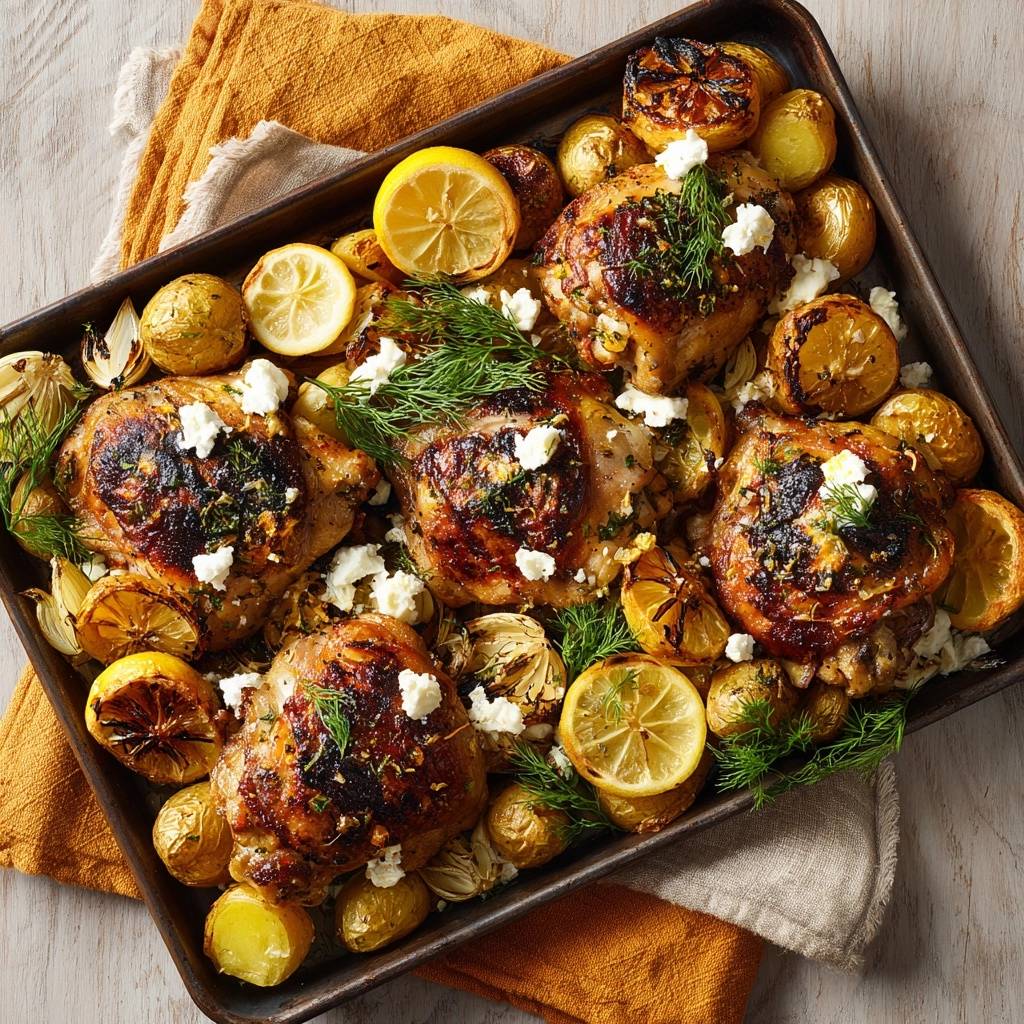
Most home cooks love the idea of a sheet pan meal, but the reality often falls short of the dream. You’re usually left with a tray of pale, rubbery chicken skin and potatoes that have turned into a mushy mess from sitting in a pool of steam. It’s frustrating when you want a crisp, golden dinner but end up with something that looks like it was boiled in an oven.
The solution lies in mastering moisture management and thermal mass. By treating your baking sheet like a searing-hot cast iron skillet and controlling the water content of your ingredients, you can achieve a restaurant-quality roast at home. This Mediterranean profile relies on the classic trio of oregano, lemon, and garlic to create a bright, savory flavor that permeates every bite.
I’ve found that the real secret to success is the “dry-prep” method. If you don’t remove every drop of surface moisture from that chicken skin, you’ll never get the crunch you crave. It’s a simple step that makes the difference between a mediocre Tuesday night dinner and a meal your family will actually request every week.
The Physics of Crispy Chicken Skin
Achieving that shatter-crisp texture on a chicken thigh is a matter of chemistry, specifically the Maillard reaction. This chemical reaction between amino acids and reducing sugars gives browned food its distinctive flavor and color. However, moisture is the absolute enemy of this process because water evaporates at 212°F, while the Maillard reaction needs temperatures above 300°F to really kick in.
When you pat the chicken bone-dry with paper towels, you remove the barrier that prevents the heat from reaching the skin immediately. This allows the fat underneath the skin to render out quickly. As that fat melts, it essentially “fries” the skin from the inside out, creating that deep golden crust we all love. If the skin is wet, it just steams in its own juices, resulting in that dreaded flabby texture.
I always recommend bone-in, skin-on thighs for this high-heat roasting method. Chicken breasts are far too lean and will dry out long before the potatoes are tender. Thighs contain more connective tissue and fat, which means they stay juicy and flavorful even at the high temperatures required to crisp the skin. They are much more forgiving and provide a richer, more satisfying result.
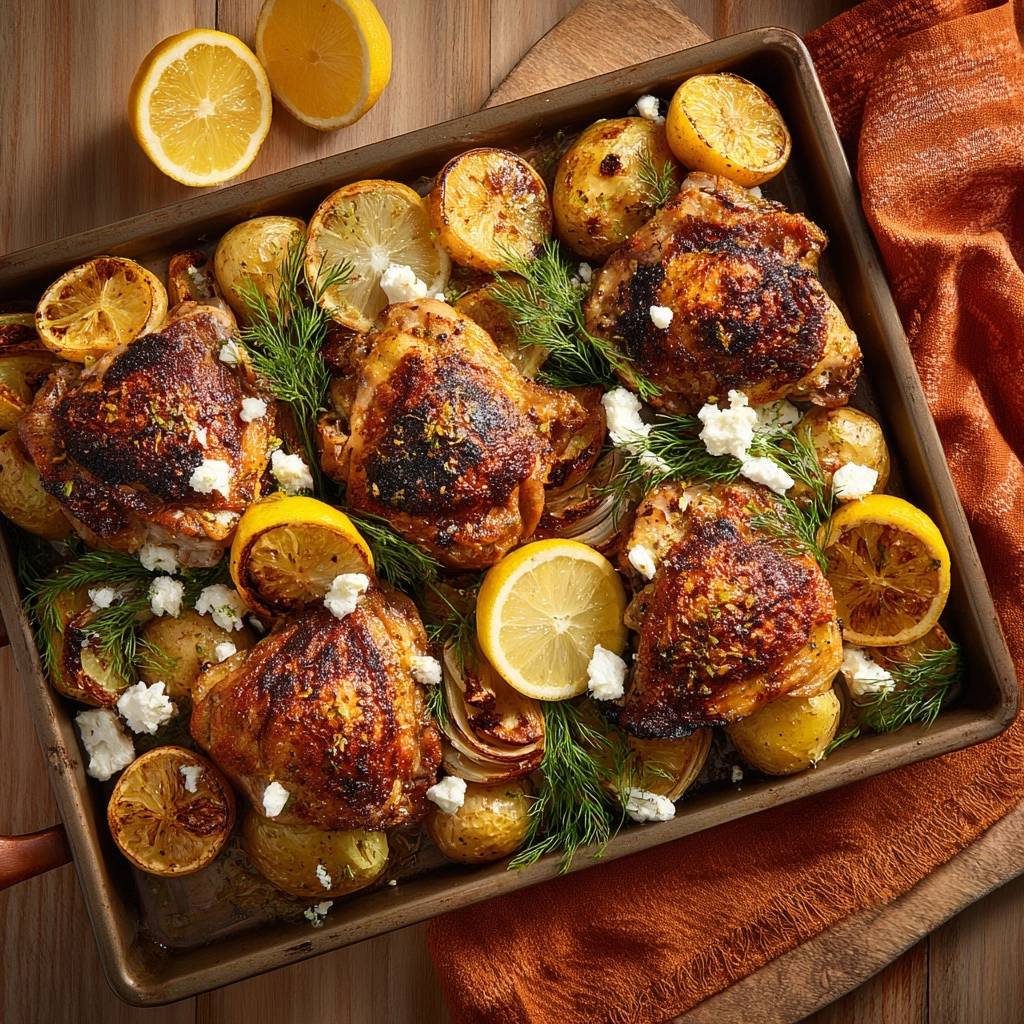
Essential Components for Mediterranean Sheet Pan Chicken and Potatoes
Quality ingredients are the backbone of this dish, starting with the oil. While many people reach for standard vegetable oil, a high-quality Extra Virgin Olive Oil provides a fruity depth that defines Mediterranean cooking. Don’t worry about the smoke point; at 425°F, a good EVOO holds up beautifully for roasting while infusing the potatoes with incredible flavor.
The potatoes you choose will determine the final texture of your side dish. Baby gold potatoes are the gold standard here because they have a naturally creamy, buttery interior and a very thin skin. Unlike Russets, which can become grainy or dry, gold potatoes hold their shape and develop a lovely caramelized exterior when they hit the hot metal of the pan.
Smoked paprika is my “secret weapon” for visual appeal. While traditional Mediterranean recipes might use standard paprika, the smoked version adds a subtle earthiness and helps the chicken achieve a stunning mahogany hue. It mimics the look of a rotisserie chicken or a wood-fired oven, making the dish look as good as it tastes.
Selecting the Right Potato Variety
I prefer baby gold potatoes over larger varieties because they require zero peeling and very little prep. Their thin skins crisp up beautifully in the olive oil, providing a nice snap when you bite into them. Because they are small and uniform, they cook at the exact same rate as the chicken thighs, ensuring nothing is overdone.
If you use Russets, you’ll likely find they soak up too much moisture and become mealy. The waxy nature of gold potatoes means they stay firm on the outside but velvety on the inside. Just make sure to leave them whole if they are small, or halve them only if they are larger than a golf ball to keep the timing consistent.
The Role of Aromatics: Garlic, Oregano, and Lemon
Aromatics are what transform basic roasted chicken into a Mediterranean feast. When you roast thick lemon slices, they undergo a magical transformation. The harsh acidity mellows out, the sugars in the fruit caramelize, and they become jammy and sweet. You can even eat the rind once it’s softened and browned!
Dried oregano is actually preferable to fresh during the roasting phase. Fresh herbs tend to burn and turn bitter in a 425°F oven, whereas dried oregano is more heat-stable and releases its oils slowly. The garlic should be minced finely and mixed into the oil paste to prevent it from scorching on the surface of the pan.
Preheating the Steel: Why Pan Temperature Matters
One of the biggest mistakes people make is putting their food onto a cold baking sheet. By placing your heavy-duty rimmed baking sheet in the oven while it preheats, you’re creating a “sizzle effect.” The moment those potatoes and chicken thighs touch the hot metal, the searing process begins.
This immediate contact heat prevents the potatoes from sticking and ensures the undersides start browning right away. It’s the same principle as preheating a cast iron skillet before searing a steak. If you start with a cold pan, the food sits in its own released moisture as the metal slowly warms up, which leads to soggy bottoms and uneven cooking.
Step-by-Step: Preparing the Mediterranean Sheet Pan Chicken and Potatoes
The first phase is all about the dry prep. I can’t stress this enough: use more paper towels than you think you need. Pat the chicken until the paper towel comes away completely dry. Once the chicken is prepped, toss your potatoes, onions, and lemon slices in a bowl with oil and salt. This ensures every nook and cranny is coated before they hit the pan.
Next, create your flavor paste. Mixing the spices and garlic into the olive oil first ensures an even distribution of flavor. Instead of just sprinkling spices on top, you’re going to rub this paste directly onto the skin. For the best results, gently lift the skin and rub some of that garlic-herb mixture directly onto the meat underneath. This seasons the chicken from the inside out.
When you’re ready to roast, work quickly. Pull the scorching hot pan out, dump the vegetables on, and nestle the chicken thighs among them. You want the chicken to have as much contact with the pan as possible. The onions should be quartered with the root intact so they don’t fall apart, allowing them to char on the edges while staying sweet and tender in the middle.
Achieving the Perfect Spice Rub Distribution
Using an oil-based paste is far superior to a dry rub for high-heat roasting. Oil acts as a carrier, helping the fat-soluble compounds in the oregano and paprika penetrate the skin. It also creates a protective layer that helps the spices toast without burning to a crisp.
If you enjoy this method for achieving crispy skin, you’ll also appreciate how the crispy chicken thighs turn out.
When you apply the paste, make sure you cover the entire surface of the thigh. Any bare spots won’t brown as deeply or taste as vibrant. This paste also helps the salt adhere to the skin, which further aids in drawing out moisture and creating that signature crunch.
The Roasting Phase: Heat Management and Rack Positioning
We roast at 425°F because we need that intense heat to render the chicken fat quickly. During the 40 to 45 minutes in the oven, do not be tempted to flip the chicken. The skin needs uninterrupted exposure to the dry, hot air to dehydrate and crisp. Flipping it would just trap steam against the skin and ruin all your hard work.
For the final five minutes, I like to move the pan to the top rack. This puts the chicken closer to the heating element, providing a final blast of heat that chars the edges of the onions and lemons. It’s that last bit of “oven magic” that gives the dish its professional, rustic look.
While the USDA says chicken is safe at 165°F, chicken thighs are actually much better when cooked to 175°F or even 180°F. At this higher temperature, the collagen in the dark meat breaks down completely, resulting in a tender, fall-off-the-bone texture. Don’t worry about drying them out; the fat content in thighs keeps them incredibly moist.
Troubleshooting Common Sheet Pan Errors
The most common failure in sheet pan cooking is “Crowded Pan Syndrome.” If your potatoes and chicken are piled on top of each other, they will steam instead of roast. Air needs to circulate around every piece of food to whisk away moisture. If your pan feels too full, it’s always better to split the ingredients between two pans.
If you find that your potatoes are tender but the chicken skin is still looking a bit pale, don’t keep cooking the whole tray. You can pull the potatoes off and give the chicken a few extra minutes under the broiler. However, if you followed the preheating and drying steps, you should have perfectly timed results every single time.
Finishing Touches: Feta, Dill, and Residual Heat
The finishing touches happen the moment the pan comes out of the oven. Carryover cooking is a real thing; the chicken will continue to cook for a few minutes once it’s pulled. This is the perfect time to scatter your feta cheese and fresh dill. You don’t want to cook the feta, as it can become oily and lose its tangy bite.
Instead, let the residual heat from the sizzling pan soften the cheese just enough so it becomes creamy. The fresh dill will wilt slightly and release its bright, anise-like aroma without turning black or bitter. This contrast between the hot, salty chicken and the cool, fresh herbs is what makes the dish feel truly Mediterranean.
Optimal Pairings for a Complete Mediterranean Feast
Since this is a rich, savory meal, you’ll want something bright and acidic to balance the flavors. A simple cucumber and tomato salad with a splash of red wine vinegar and dried mint is a perfect companion. The crunch of the fresh vegetables cuts through the richness of the roasted chicken fat beautifully.
A side of cool tzatziki or a simple garlic yogurt sauce also works wonders. You can dollop the yogurt right onto the plate and dip the roasted potatoes into it. The tanginess of the yogurt complements the caramelized lemons and salty feta, rounding out the entire meal into a cohesive, vibrant feast.
Storage and Reheating for Maximum Texture Retention
If you have leftovers, store them in an airtight container in the fridge for up to three days. Whatever you do, avoid the microwave for reheating! Microwaves trap steam, which will turn your once-crispy chicken skin into a soggy, rubbery mess. It’s a waste of all that effort you put into the initial roast.
The best way to reheat this dish is in an air fryer or a toaster oven at 375°F for about 5-8 minutes. This dry heat will reactivate the fats and crisp the skin back up while warming the potatoes through. It tastes almost as good as it did the night you made it, making it a fantastic option for meal prep.
Expert Troubleshooting
Can I use chicken breasts instead of thighs for this recipe?
You can, but it is much trickier. Chicken breasts cook significantly faster than thighs and have almost no fat to protect them from the high heat. If you use breasts, you will likely need to start the potatoes 15 minutes early, then add the chicken to the pan. Even then, you won’t get the same level of crispiness without overcooking the meat.
Why are my potatoes sticking to the baking sheet?
This usually happens for two reasons: either the pan wasn’t preheated or you didn’t use enough oil. The oil acts as a non-stick barrier, and the preheated metal creates an immediate sear that releases the food. Make sure you toss the potatoes thoroughly in the bowl to ensure every surface is coated before they hit the pan.
Can I substitute dried dill for the fresh dill at the end?
I strongly recommend against using dried dill as a garnish. Dried dill has a very different, much more muted flavor profile that can sometimes taste like hay. The fresh dill provides a necessary “pop” of brightness that cuts through the heavy roasted flavors. If you can’t find dill, fresh parsley or mint are much better substitutes than dried herbs.
How do I scale this recipe up for a large family?
If you need to double the recipe, do not try to cram everything onto one sheet pan. Use two separate pans and rotate them halfway through the cooking time (top to bottom rack). This ensures that the air circulation remains consistent for both pans. If the oven is too crowded, the moisture levels will rise, and you’ll lose that crispy texture you’re aiming for.
What should I do if my garlic starts to burn?
Garlic burns when it is exposed to direct heat for too long. To prevent this, make sure the garlic is mixed into the oil paste and rubbed under the chicken skin or tucked between the potatoes. If you see the garlic on the pan turning dark brown too early, you can lightly toss the vegetables to shield the garlic pieces from the direct heat of the oven air.
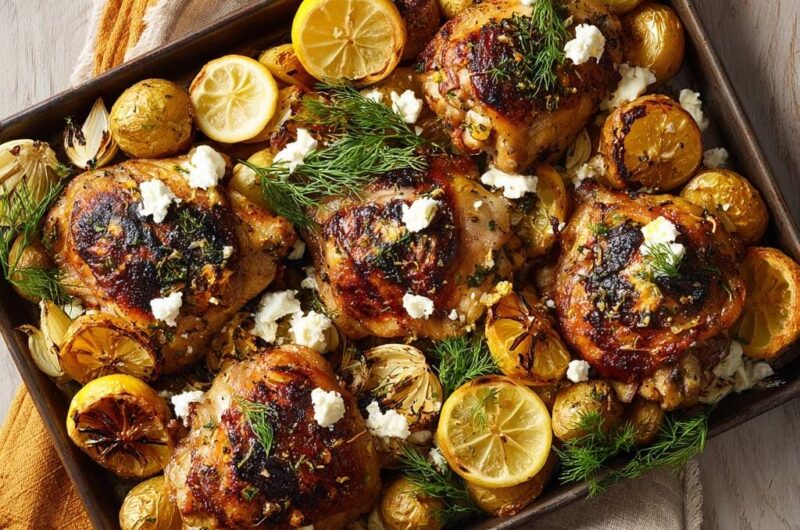
Chicken and Potatoes
Course: Main CourseCuisine: MediterraneanDifficulty: medium4
servings15
minutes45
minutes580
kcal60
MinutesA high-heat sheet pan meal designed to eliminate rubbery skin. Bone-in chicken thighs are roasted with baby gold potatoes, onions, and lemons, then finished with salty feta and fresh herbs.
Ingredients
4 large bone-in, skin-on chicken thighs
1.5 pounds baby gold potatoes, left whole
2 lemons, sliced into thick rounds
2 small white onions, peeled and quartered (keeping the root intact)
4 tablespoons extra virgin olive oil, divided
4 cloves garlic, minced
1 tablespoon dried oregano
1 teaspoon smoked paprika (for the deep color shown)
1.5 teaspoons kosher salt
1/2 teaspoon cracked black pepper
1/2 cup large-crumb feta cheese
1 bunch fresh dill, stems removed
Directions
- Preheat your oven to 425°F (220°C). Place a large, heavy-duty rimmed baking sheet inside the oven while it preheats. A hot pan is essential for searing the bottom of the potatoes and chicken immediately.
- Use paper towels to pat the chicken thighs extremely dry on all sides. This is the most critical step for crispy skin.
- In a large bowl, toss the whole baby potatoes, onion quarters, and lemon slices with 2 tablespoons of olive oil, 1 teaspoon of salt, and 1/2 teaspoon of pepper.
- In a small ramekin, mix the remaining 2 tablespoons of olive oil, minced garlic, oregano, smoked paprika, and the remaining salt. Rub this paste generously over the chicken skin and underneath the skin against the meat.
- Carefully remove the scorching hot baking sheet from the oven. Immediately arrange the potatoes, onions, and lemon slices across the pan. Nestled between them, place the chicken thighs skin-side up. Ensure the chicken is sitting directly on the metal surface or on a thin layer of potatoes to maximize heat contact.
- Roast for 40 to 45 minutes. For the dark, charred finish seen in the image, move the pan to the top rack for the final 5 minutes of cooking. Do not flip the chicken; the skin needs uninterrupted dry heat to crisp.
- Remove from the oven once the chicken skin is deep mahogany and the internal temperature reaches 175°F (thighs are best at this temperature for tenderness).
- While the pan is still sizzling, scatter the large feta crumbles and fresh dill sprigs over the chicken and vegetables. The residual heat will slightly soften the cheese and release the aroma of the dill. Serve directly from the sheet pan.
Notes
- For the best results, pat the chicken extremely dry and preheat the baking sheet. Chicken thighs are most tender when cooked to an internal temperature of 175 degrees Fahrenheit.