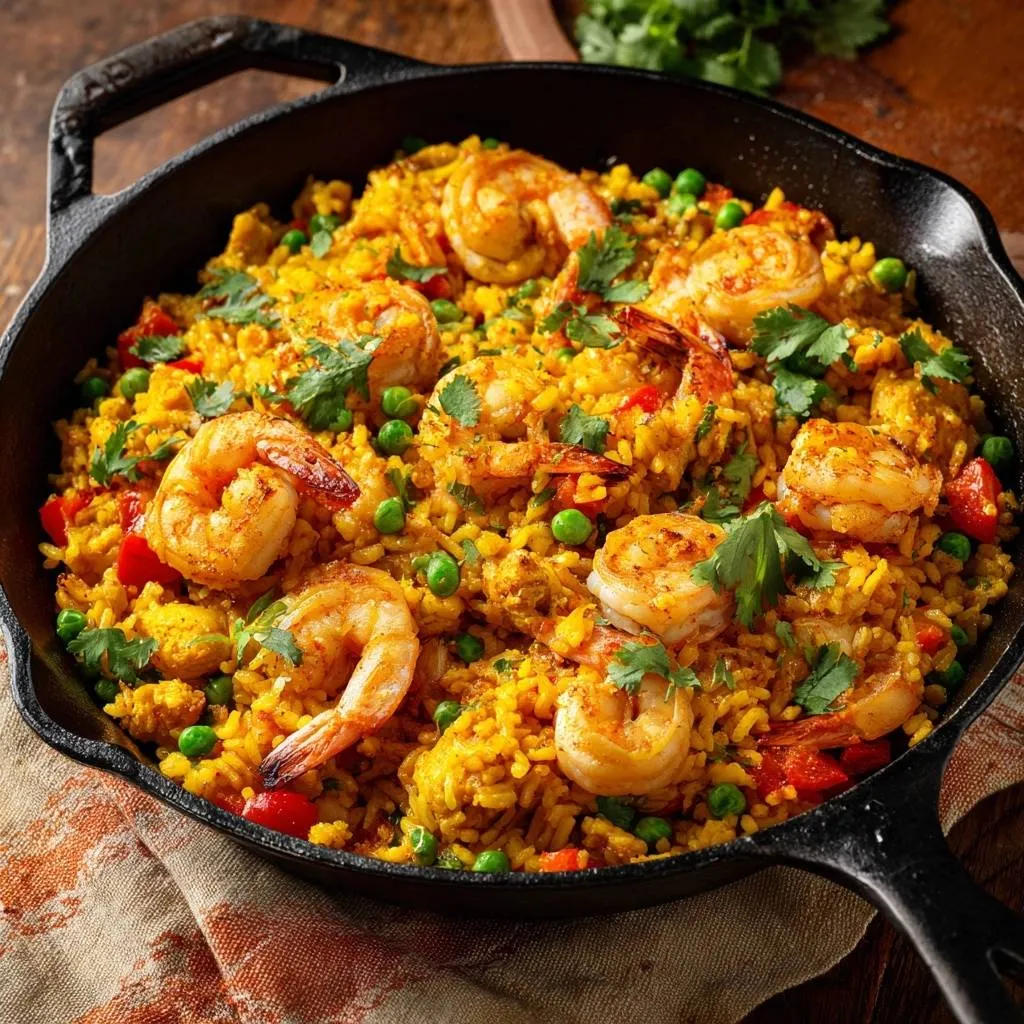
Few things are more disappointing than a skillet meal that promises fluffy grains but delivers a gummy, mushy mess. We’ve all been there, staring at a pan where the rice has clumped together and the shrimp have shriveled into rubbery rings. However, achieving that perfect restaurant-style texture is actually quite simple once you understand how to manage your heat and moisture.
For more fluffy rice ideas, check out this quick garlic herb shrimp.
This One-Pan Saffron Shrimp and Rice is designed to solve those common kitchen frustrations while surrounding you with the incredible aroma of toasted spices. By using a specific “toast and rest” method, you can ensure every grain stays distinct and tender. It’s a sophisticated, vibrant meal that looks like it took hours of effort, yet it comes together in a single pan in under 45 minutes.
The secret to this recipe’s success lies in the initial treatment of the dry rice. I’ve found that skipping the rinse and moving straight to a dry sauté in olive oil creates a protective barrier around each grain. This prevents the starch from blowing out and turning your dinner into porridge. If you follow this one rule, you’ll never have to worry about soggy rice again.
The Science of Non-Gummy Skillet Rice
To understand why rice often fails in a one-pan setting, we have to look at the starch. Rice contains two main types of starch: amylose and amylopectin. Long-grain varieties like Jasmine or Basmati are higher in amylose, which helps the grains stay separate. However, even the best rice will turn gummy if the exterior starch granules burst too quickly during the boiling process.
Therefore, we use the “toast and rest” method to manipulate these starches. When you sauté the dry rice in oil with your aromatics, you are essentially “parching” the grain. This creates a hydrophobic barrier that slows down the absorption of liquid. Instead of the water rushing in and exploding the starch, the heat penetrates the grain more evenly, resulting in a firm, fluffy bite.
In addition to toasting, the resting phase is where the real transformation happens. When you turn off the heat, the steam trapped under the lid finishes the cooking process gently. This replaces the need for a traditional rice cooker because the skillet acts as a pressurized environment. If you stir the rice while it’s simmering, you break those delicate grains and release excess starch, so keeping the lid closed is your best defense against mushiness.
Essential Components for One-Pan Saffron Shrimp and Rice
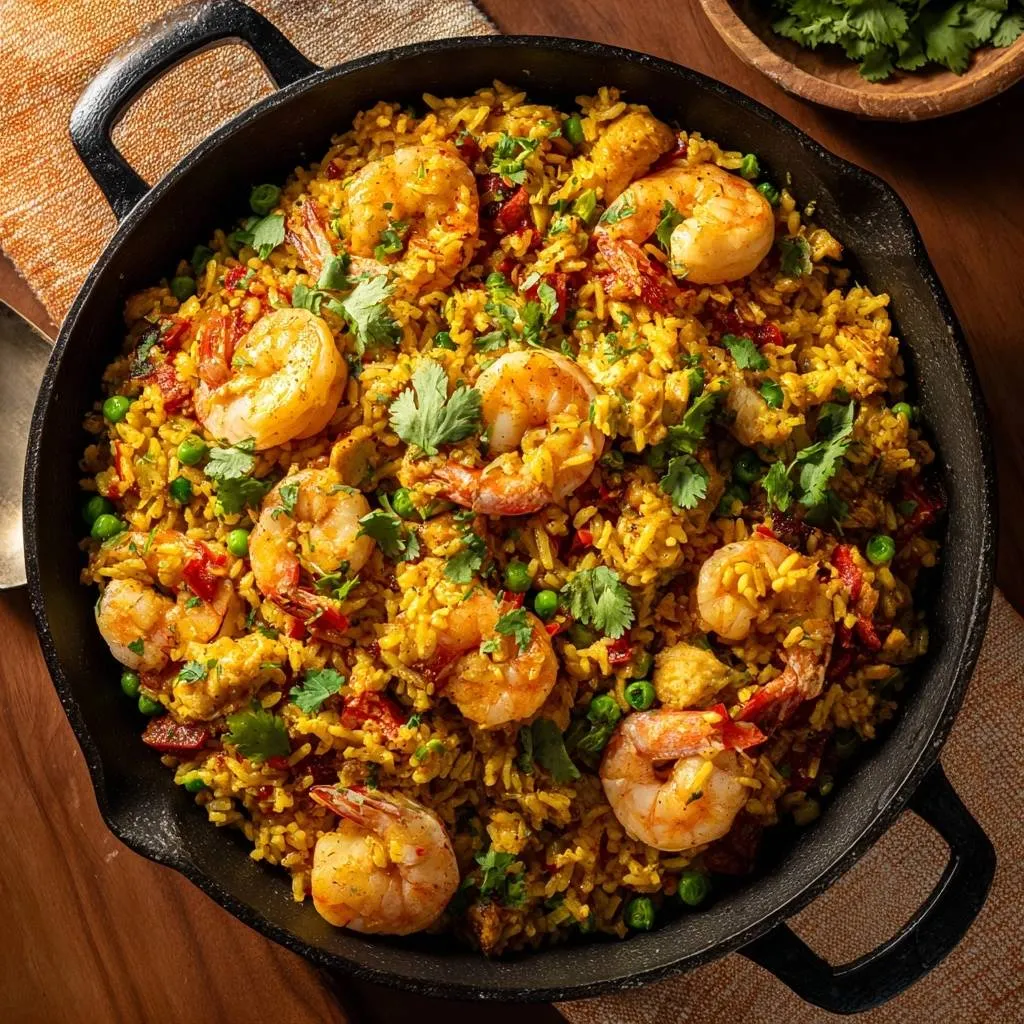
Quality ingredients are the backbone of this dish, starting with the shrimp. I always recommend large, peeled, and deveined shrimp, preferably with the tails left on. The tails aren’t just for looks; they actually hold a significant amount of flavor that seeps into the rice as it steams. Furthermore, larger shrimp are much more forgiving and won’t overcook as quickly as smaller varieties.
Choosing the right rice is non-negotiable for this specific technique. You must use a long-grain white rice like Jasmine or Basmati. These varieties have the structural integrity to withstand the toasting and simmering without collapsing. Strictly avoid short-grain or medium-grain rice, such as Arborio or sushi rice, as they are designed to be creamy and sticky, which is the exact opposite of what we want here.
The vibrant golden color and complex flavor profile come from a duo of saffron and turmeric. While saffron provides that unmistakable, earthy aroma and floral depth, turmeric acts as a natural dye to ensure the rice looks as good as it tastes. Additionally, make sure your onion and red bell pepper are finely diced. You want them to melt into the background of the rice, providing sweetness in every forkful without creating large, watery chunks that disrupt the texture.
Choosing and Preparing the Saffron Threads
Real saffron is the world’s most expensive spice, so you want to make sure you’re getting the real deal. Look for deep red threads with slightly frayed ends; if the threads are uniform and bright orange, they might be safflower, which lacks the signature flavor. To get the most out of your investment, never drop the threads directly into the pan. Instead, crush them between your fingers and let them “bloom” in the warm chicken broth for a few minutes before cooking. This ensures the flavor and color are evenly distributed throughout the entire skillet.
Step-by-Step: Searing Shrimp and Building Flavor
We start by searing the shrimp in a hot skillet for just about a minute per side. You aren’t trying to cook them all the way through yet; you just want a golden exterior and a hint of snap. Once they are opaque, pull them out of the pan immediately. This prevents them from becoming tough and rubbery while the rice simmers for the next twenty minutes.
After removing the shrimp, you’ll notice brown bits stuck to the bottom of the pan. This is called the “fond,” and it is pure flavor gold. As you sauté your onions and peppers, these bits will begin to loosen. When you eventually pour in the broth, make sure to scrape the bottom of the pan with a wooden spoon. This incorporates all that savory, caramelized shrimp essence directly into the cooking liquid for the rice.
The Critical Toasting and Simmering Phase
Once your vegetables are soft, it’s time for the most important step: toasting the rice. Add the dry grains to the pan and stir them constantly. You are looking for the edges of the rice to become translucent while the center stays white. You’ll know it’s ready when you smell a distinct, nutty aroma filling the kitchen. This step ensures the grains stay separate and firm.
After adding the saffron-infused broth and spices, bring the pan to a boil and then immediately drop the heat to low. Now comes the hard part: do not touch the lid. Every time you peek, you lose the steam pressure and heat required to cook the rice evenly. This “no-peek” rule is the difference between perfectly cooked grains and a pan that is half-crunchy and half-mushy. Trust the timer and let the steam do its job.
Integrating Seafood and the Final Steam
When the 15-minute timer goes off, work quickly. Lift the lid, scatter the frozen peas and the par-cooked shrimp over the top, and shut the lid again within seconds. You don’t need to stir them in; the residual steam trapped in the pan is more than enough to thaw the peas and finish the shrimp to a succulent, tender perfection. This gentle steaming method keeps the seafood juicy.
Finally, remove the pan from the heat and let it sit, covered, for at least five minutes. I know it’s tempting to dig in right away, but this rest is vital. It allows the moisture to redistribute from the bottom of the pan to the top of the rice. This ensures the grains on the surface finish softening while the grains on the bottom don’t get soggy. It’s the final touch that guarantees that perfect, fluffy texture.
Troubleshooting Common Rice and Shrimp Issues
If you find that your liquid has evaporated but the rice is still crunchy, don’t panic. Simply splash in two or three tablespoons of warm broth or water, replace the lid tightly, and let it steam on the lowest heat for another three minutes. This usually happens if your lid isn’t perfectly tight or if your “low” heat setting is a bit too high. Conversely, if the rice is done but there is still liquid at the bottom, remove the lid and turn the heat up to medium for sixty seconds to cook it off.
Preventing a burnt bottom is all about heat control. You want a gentle simmer, not a rolling boil. However, if you do get a slightly crispy layer on the bottom, many cultures actually consider this a delicacy! In Spain, it’s called “socarrat.” As long as it isn’t black and bitter, that toasted bottom layer adds a wonderful crunch. Lastly, always taste your broth before adding salt. If you are using a standard store-bought chicken broth, it may already be quite salty, so you might need to scale back the added salt in the recipe.
Flavor Variations and Regional Swaps
This one-pan method is incredibly versatile. For a Mediterranean twist, you can stir in some halved kalamata olives and marinated artichoke hearts during the final steaming phase. If you prefer a bit of heat, adding a teaspoon of harissa paste or a pinch of red pepper flakes with the garlic will give the dish a spicy, North African flare that pairs beautifully with the saffron.
You can also play with the herbs. While cilantro offers a bright, citrusy finish, fresh flat-leaf parsley or even a bit of dill can change the personality of the dish entirely. If you want a richer flavor, you can swap half a cup of the chicken broth for a splash of white grape juice or a bit of extra-virgin olive oil to add more body to the rice grains.
Optimal Side Dishes and Serving Suggestions
Since this is a rich, savory dish, it pairs best with something bright and acidic. A simple shaved fennel salad with a lemon vinaigrette is a fantastic accompaniment. Alternatively, roasted asparagus or a quick cucumber salad can provide a refreshing crunch that contrasts with the tender rice and shrimp. Always serve this dish with plenty of fresh lemon wedges on the side. A squeeze of fresh lemon juice right before eating cuts through the richness of the olive oil and wakes up the floral notes of the saffron.
Storage and Reheating for Best Texture
Leftovers can be stored in an airtight container in the refrigerator for up to two days. However, reheating rice and shrimp can be tricky since shrimp overcook so easily. The best method is to place the portion in a bowl, cover it with a damp paper towel, and microwave in 30-second bursts. The damp towel creates a mini-steam chamber that re-hydrates the rice without turning the shrimp into rubber. You can also do a quick “stir-fry” refresh in a non-stick skillet with a tiny splash of water to loosen the grains.
Frequently Asked Questions
How do I store leftovers and can I freeze this dish?
Store any leftovers in an airtight container in the refrigerator for up to 2 days. I do not recommend freezing this dish. Rice often becomes grainy and loses its structural integrity when frozen and thawed, and the shrimp will likely become very tough during the reheating process. It is best enjoyed fresh or within 48 hours.
Why is my rice still crunchy after the cooking time is up?
This usually happens if the heat was too high, causing the liquid to evaporate before the rice could absorb it, or if the lid wasn’t sealed tightly enough. To fix this, add 1/4 cup of warm broth, cover tightly, and simmer on low for an additional 5 minutes. Always ensure you are using a heavy-bottomed skillet with a well-fitting lid to trap the steam.
Can I use brown rice instead of white rice?
You can, but it requires significant adjustments. Brown rice takes about 40 to 45 minutes to cook and requires more liquid (usually a 2:1 ratio). If you use brown rice, do not add the shrimp until the very end of the much longer cooking time, or they will be completely overcooked. For the best results with this specific one-pan method, stick to Jasmine or Basmati.
What can I use if I don’t have saffron?
While nothing perfectly replicates the floral aroma of saffron, you can use a combination of turmeric and a little extra smoked paprika to achieve a similar golden color and earthy depth. Use about 1/2 teaspoon of turmeric to ensure the rice has that iconic yellow hue. It won’t have the same “luxury” taste, but it will still be a delicious, savory meal.
My shrimp are small; do I need to change the cooking time?
Yes, smaller shrimp cook much faster. If you are using medium or small shrimp, skip the initial searing step entirely. Instead, simply season them and tuck them into the rice during the final 5 minutes of simmering. The steam will be more than enough to cook them through without making them tiny and tough.
Is it necessary to use chicken broth, or can I use water?
You can use water, but you will lose a significant layer of flavor. The chicken broth provides a savory base that complements the saffron. If you don’t want to use chicken broth, vegetable broth is a great alternative. If you must use water, be sure to increase the salt and perhaps add a bit more garlic and onion to compensate for the loss of savoriness.
Saffron Shrimp and Rice
Course: Main CourseCuisine: Mediterranean-Inspired AmericanDifficulty: medium4
servings15
minutes25
minutes410
kcal40
MinutesA vibrant and flavorful skillet meal featuring succulent shrimp, aromatic saffron, and perfectly textured long-grain rice. The recipe utilizes a specific toasting technique to ensure every grain of rice remains distinct and fluffy.
Ingredients
1 pound large shrimp, peeled and deveined (tail-on for presentation)
2 cups long-grain white rice (such as Jasmine or Basmati)
3.5 cups warm chicken broth
1/2 teaspoon saffron threads, crushed
2 tablespoons olive oil
1 large red bell pepper, diced
1/2 cup frozen peas
1 small yellow onion, finely diced
3 cloves garlic, minced
1 teaspoon smoked paprika
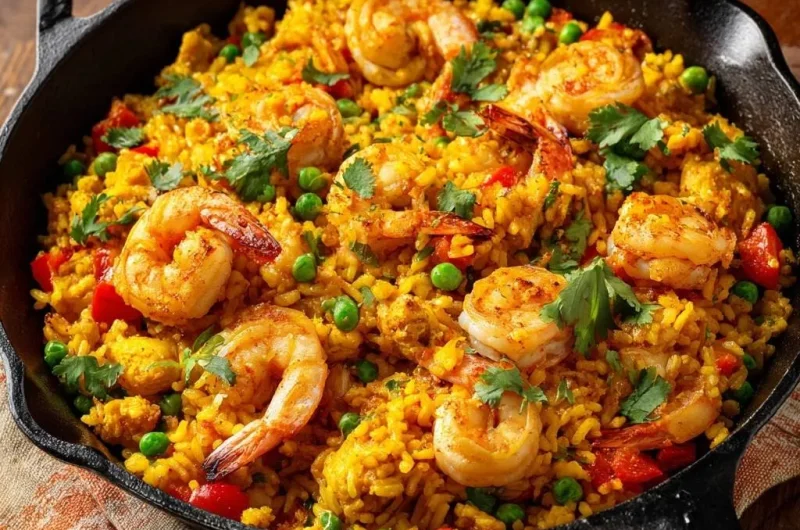
1/2 teaspoon turmeric (for the vibrant yellow color shown in the image)
1/2 teaspoon salt (plus more for seasoning shrimp)
Fresh cilantro for garnish
Lemon wedges for serving
Directions
- Pat the shrimp dry and season lightly with salt and a pinch of smoked paprika. Heat 1 tablespoon of olive oil in a large cast-iron skillet over medium-high heat. Sear the shrimp for 1 minute per side until golden and just opaque. Remove shrimp from the pan and set aside.
- Lower heat to medium and add the remaining 1 tablespoon of olive oil. Add the diced onion and red bell pepper. Sauté for 3-4 minutes until softened.
- Add the dry rice to the skillet with the vegetables. This is the critical step: stir the rice constantly for 3 minutes until the edges look translucent and it smells slightly nutty. This toasting prevents the grains from becoming gummy later.
- Stir in the minced garlic, smoked paprika, and turmeric. Cook for 1 minute until fragrant.
- Stir the crushed saffron threads into the warm chicken broth, then pour the liquid into the skillet. Add salt. Use a wooden spoon to scrape any browned bits (fond) from the bottom of the pan.
- Bring the mixture to a boil, then immediately turn the heat to low. Cover with a tight-fitting lid. Do not lift the lid or stir the rice while it simmers, as this releases the steam needed for even cooking.
- After 15 minutes, quickly lift the lid and scatter the frozen peas and the pre-seared shrimp over the top of the rice. Replace the lid immediately.
- Cook for another 3 to 5 minutes until the liquid is fully absorbed and the rice is tender.
- Remove from heat and let the pan sit, covered, for 5 minutes. This final rest allows the moisture to redistribute so the grains finish softening perfectly.
- Garnish generously with fresh cilantro and serve directly from the skillet with lemon wedges.
Notes
- The ‘toast and rest’ method is essential: sautéing the dry rice in oil creates a barrier that prevents mushiness, while the 5-minute rest after cooking redistributes moisture for perfect texture.