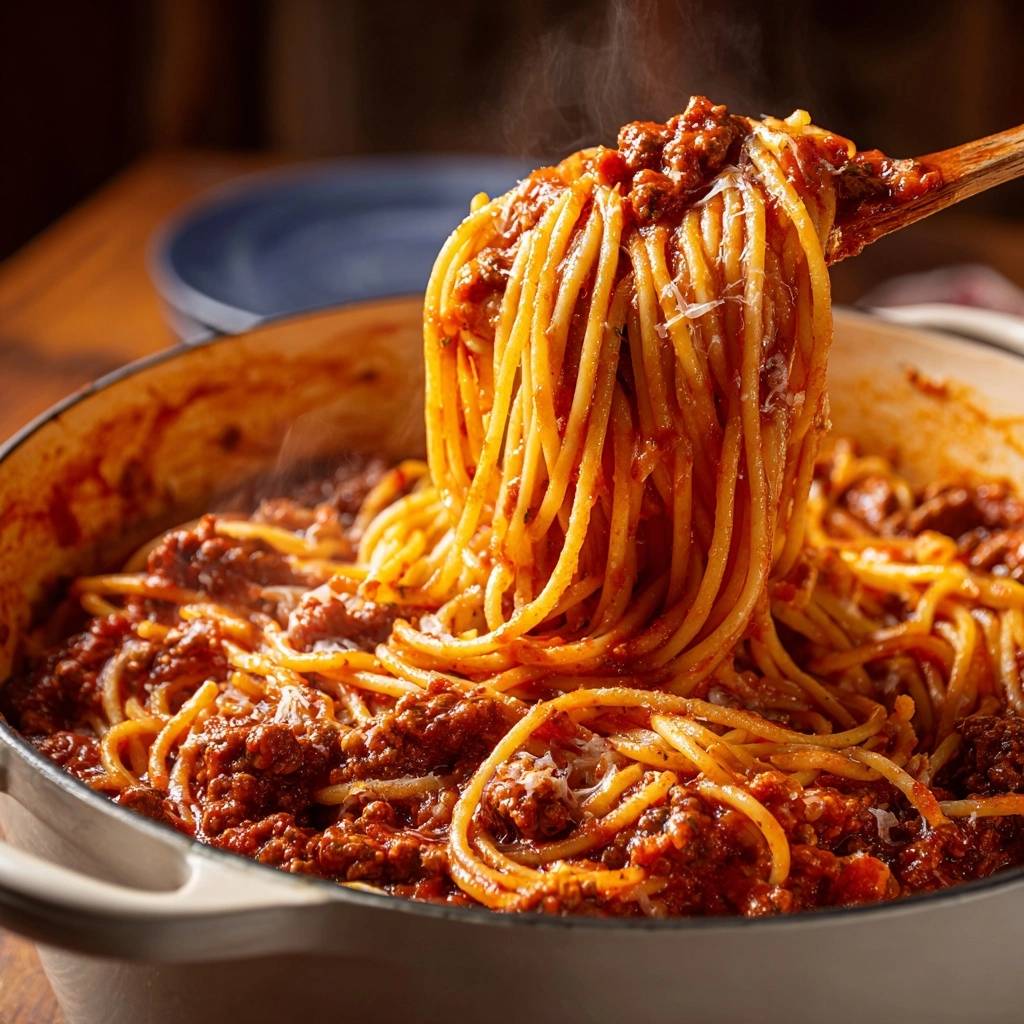
Nothing ruins a dinner faster than a plate of spaghetti sitting in a puddle of thin, flavorless liquid. We’ve all been there, watching the sauce slide right off the noodles, leaving a watery mess at the bottom of the bowl. It’s a culinary disappointment that makes even the best ingredients feel like a waste of time.
This One-Pot Hearty Beef Spaghetti changes the game by turning a simple weeknight meal into a technical masterpiece. By ditching the separate pot of boiling water, you’re not just saving on cleanup; you’re actually upgrading the texture of your dinner. In just 35 minutes, you’ll have a meal that boasts 610 kcal of pure, comforting satisfaction.
For another great one-pot meal, check out this cheesy beef pasta.
The secret to this success lies in the starch. Most people drain their pasta water down the sink, but that cloudy liquid is actually “liquid gold” for emulsification. When you cook the noodles directly in the sauce, that starch stays in the pot, binding the fats and liquids together into a velvety glaze that clings to every single strand.
The Science of Starch and Sauce Emulsification
Traditional pasta cooking methods are actually quite inefficient if you want a cohesive sauce. When you boil noodles in a massive pot of salted water and then drain them, you’re throwing away the very tool needed to create a thick, restaurant-quality finish. The starch molecules released during the boiling process are essential for thickening.
In this one-pot method, we create a controlled environment where the pasta starch has nowhere to go but into the beef broth and marinara. As the noodles soften, they shed starch into the simmering liquid. This creates a natural thickener that bridges the gap between the watery broth and the rich tomato base.
Furthermore, the fat from the 80/20 ground beef plays a vital role here. Usually, oil and water don’t mix, but the starch acts as an emulsifier. It allows the savory beef fat to blend seamlessly with the tomato acidity. The result is a stable, glossy sauce that won’t separate or “weep” on your plate, ensuring every bite is as rich as the first.
Essential Components for One-Pot Hearty Beef Spaghetti
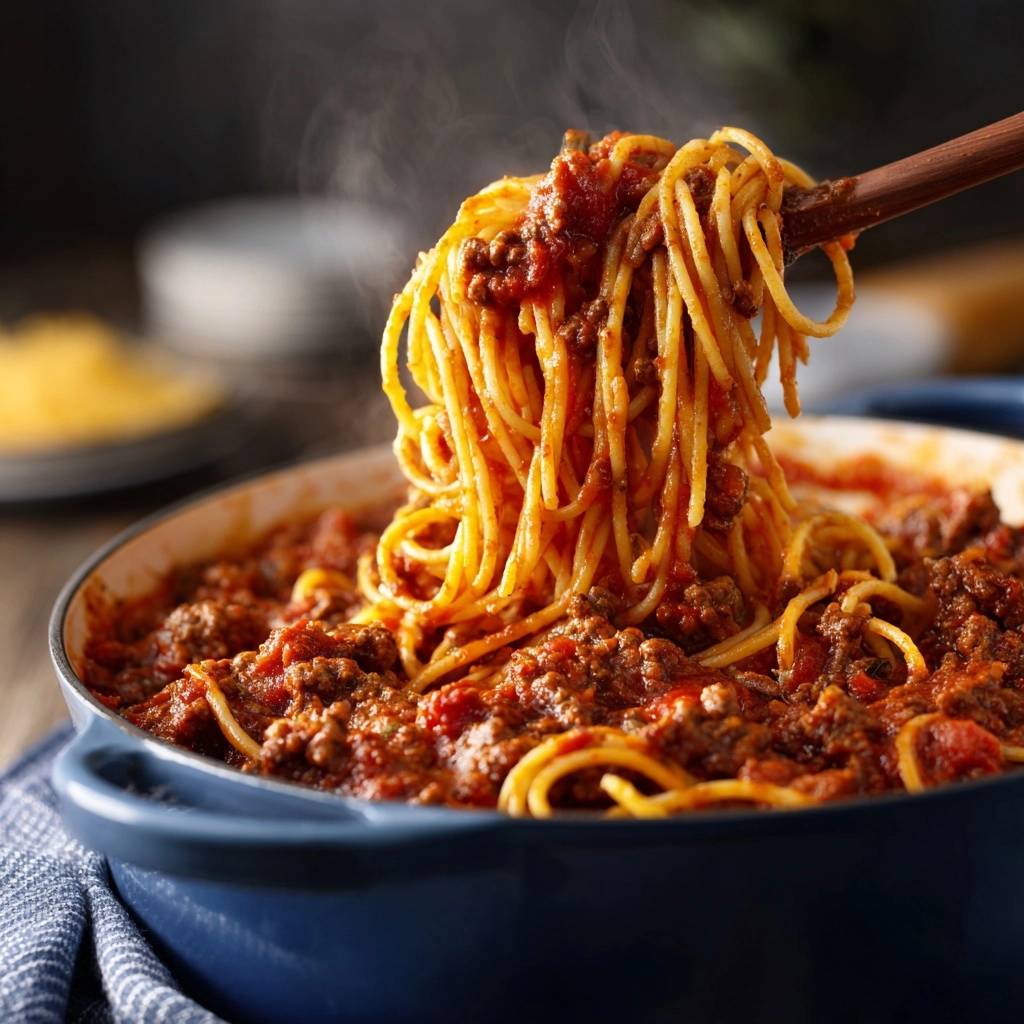
Quality ingredients are the foundation of this dish, starting with the beef. I always recommend 80/20 ground beef because the fat content is necessary for that silky mouthfeel. Leaner blends often result in dry meat crumbles that don’t integrate well with the pasta strands.
Your choice of marinara matters immensely since it provides the bulk of the flavor profile. Look for a high-quality brand that lists tomatoes and olive oil as the first ingredients rather than sugar or water. This provides a robust, acidic backbone that balances the savory depth of the beef broth.
Using beef broth instead of plain water is a non-negotiable step for building layers of flavor. Water would dilute the sauce, whereas broth reinforces the meatiness of the dish. It ensures that even the inside of the pasta noodles tastes seasoned and savory once they’ve finished simmering.
Selecting the Right Pasta Shape and Brand
While standard spaghetti is the classic choice, the brand you buy can change the outcome. If you can find it, look for “bronze-die” extruded pasta. These noodles have a rougher, sandier surface than smooth, mass-produced pasta, which means they release more starch and hold onto the sauce even better.
You might feel like a rebel breaking your spaghetti in half, but in a one-pot recipe, it’s often a practical necessity. Breaking the noodles ensures they fit flat in your Dutch oven and stay fully submerged in the liquid. This prevents the ends from sticking out and cooking unevenly while the rest of the pasta softens.
Aromatics and Pantry Staples for Deep Flavor
Tomato paste is the unsung hero of this recipe, providing an intense umami punch and a beautiful dark color. It adds a “cooked-all-day” flavor in just a few minutes. Freshly minced garlic and dried oregano provide the classic Italian-American aroma that makes the kitchen smell incredible.
I also include onion powder alongside the fresh garlic. While fresh onions are great, onion powder distributes a uniform, savory sweetness throughout the sauce without adding extra moisture or bulk. This keeps the focus on the beef and the thick, clingy texture of the sauce itself.
Phase One: Searing Beef and Building the Base
Start by heating your olive oil in a heavy-bottomed Dutch oven. When you add the beef, don’t be tempted to move it around too much right away. You want to let it sit until it develops those dark, crispy edges. This is the Maillard reaction in action, creating complex flavor compounds you can’t get from steaming meat.
As the beef browns, you’ll notice fat rendering out into the pan. Unless it’s an overwhelming amount, do not drain it! That fat carries the flavor of the beef and is the key ingredient that will eventually emulsify with the pasta starch. It’s the difference between a “dry” meat sauce and a luxurious, glossy one.
Caramelizing the Tomato Paste and Garlic
Once the beef is browned, clear a small space in the center of the pot and add your tomato paste and aromatics. Stir them constantly for about two minutes. You’re looking for the paste to shift from a bright, vibrant red to a deep, dark brick red color.
This step is crucial because it “toasts” the paste, removing the raw, metallic tin taste often found in canned products. Be careful with the garlic here; it should be fragrant and soft but never brown or black. Burnt garlic will turn the entire pot bitter, so keep things moving with your spoon.
Phase Two: The One-Pot Simmering Technique
Now it’s time to pour in the marinara and the beef broth. Give everything a good stir to scrape up any browned bits from the bottom of the pot. Those bits are pure flavor! Once the liquid reaches a rolling boil, it’s time to introduce the spaghetti noodles.
Push the noodles down so they are completely submerged in the bubbling liquid. At first, it might look like you’re making a soup, but don’t panic. As the pasta absorbs the broth and the heat evaporates the excess moisture, that thin liquid will transform into a concentrated, meat-heavy glaze.
The Importance of Frequent Agitation
Unlike traditional boiling where you can walk away, one-pot pasta requires your attention. You need to stir the pot frequently with tongs or a sturdy wooden spoon. This “agitation” serves two very important purposes for the final texture of the dish.
First, it prevents the noodles from sticking together in a giant clump. Second, the friction of the noodles rubbing against each other actually forces more starch out into the sauce. This active stirring is what creates that thick, creamy consistency that makes this recipe so special.
Monitoring Liquid Reduction and Pasta Doneness
Keep the heat at a steady medium simmer. If the liquid disappears too quickly before the pasta is tender, the sauce will become gummy. If this happens, simply splash in an extra 1/4 cup of broth to give the noodles more room to cook.
Start tasting the pasta around the 10-minute mark. You want it to be “al dente,” which means it still has a slight firmness or “bite” in the center. Remember that the pasta will continue to cook for a minute or two even after you take it off the heat, so don’t let it get mushy.
Avoiding Common One-Pot Pasta Mistakes
The most common pitfall is gummy noodles, which usually happens from overcooking or not stirring enough. If the noodles sit still, they release starch in concentrated pockets, leading to clumps. Keep them moving to ensure the starch is distributed evenly throughout the sauce.
Another issue is a sauce that’s too salty. Since the liquid reduces significantly, the salt becomes more concentrated. I always recommend using a low-sodium beef broth so you have total control over the seasoning. You can always add more salt at the end, but you can’t take it away.
Finally, watch out for scorched bottoms. Because the sauce is thick and contains sugars from the tomatoes, it can easily burn if the heat is too high. If you smell anything even slightly toasted, turn the heat down immediately and give the bottom of the pot a thorough scrape.
Flavor Variations and Protein Swaps
While beef is the classic choice, you can easily swap the protein to suit your mood. Ground lamb offers a richer, more earthy flavor that pairs beautifully with the oregano. You could also use a mix of ground beef and ground turkey for a slightly lighter feel without losing the hearty texture.
If you want to sneak in some vegetables, finely diced mushrooms are a fantastic addition. They mimic the texture of the ground beef and add an extra layer of savory depth. Finely grated carrots also work well, as they melt into the sauce and provide a subtle natural sweetness that balances the tomatoes.
For those who like a bit of heat, add a teaspoon of red pepper flakes when you’re sautéing the garlic. The heat will bloom in the oil and distribute evenly throughout the entire pot, giving the spaghetti a gentle, warming back-note that cuts through the richness of the beef.
What to Serve with Hearty Beef Spaghetti
Since this dish is quite rich and starch-heavy, you’ll want side dishes that offer a bright, acidic contrast. A simple arugula salad with a sharp lemon vinaigrette is the perfect partner. The peppery greens and citrus juice help cleanse the palate between bites of the savory pasta.
Roasted broccolini with a squeeze of lemon and a pinch of red pepper flakes is another excellent choice. The charred, slightly bitter edges of the vegetable provide a nice textural contrast to the soft, saucy noodles. It keeps the meal feeling balanced rather than overly heavy.
If you’re feeling indulgent, a piece of crusty bread is great for swiping up any leftover sauce. However, because the sauce is so thick and clings so well to the noodles, you might find you don’t even have any “puddles” left to mop up!
Storage, Reheating, and Make-Ahead Tips
One-pot pasta stores incredibly well in the fridge for up to three days. However, you’ll notice that it thickens up significantly as it cools. The starch continues to absorb moisture, so the leftovers might look a bit dry or stiff when you first take them out of the container.
To reheat, don’t just throw it in the microwave as-is. Place the spaghetti in a skillet or a microwave-safe bowl and add a tablespoon or two of water or beef broth. This extra moisture will “loosen” the starch and bring that silky, glossy sauce back to life as it heats up.
I don’t recommend freezing this specific dish. Pasta that has been cooked in sauce tends to get quite soft and grainy after being frozen and thawed. It’s such a quick meal to make from scratch that it’s best enjoyed fresh or within a few days of cooking.
Expert Troubleshooting and Technical FAQ
Can I use whole wheat spaghetti for this recipe?
Yes, you can use whole wheat spaghetti, but you will need to adjust your liquid levels. Whole wheat pasta is more fibrous and typically absorbs more liquid than white pasta. Start with an extra half-cup of beef broth and be prepared to add more as it simmers to ensure the noodles cook through completely.
Why is my sauce still too thin after the cooking time is up?
If your sauce is thin, it usually means the liquid hasn’t reduced enough or the heat was too low. Increase the heat slightly and simmer uncovered for another 2-3 minutes while stirring constantly. The extra evaporation and the friction from stirring will quickly thicken the sauce into a glaze.
Can I double the recipe in one pot?
You can double the recipe, but you must use a very large pot, like an 8-quart Dutch oven. The biggest challenge with doubling is heat distribution; the large mass of cold ingredients can take a long time to return to a boil. Make sure you have enough room to stir vigorously, or the noodles will clump.
Is it possible to use frozen ground beef?
It is best to thaw the beef completely before starting. Frozen beef releases a lot of excess moisture as it thaws in the pan, which prevents it from searing and browning properly. For the best flavor and that “crispy edge” texture, always start with fully thawed meat patted dry with a paper towel.
Why do I add the parmesan at the very end?
Adding cheese while the pot is over high heat can cause the proteins in the cheese to clump or become stringy rather than melting smoothly. By removing the pot from the heat first, you allow the parmesan to emulsify gently into the sauce. This creates a creamy finish and ensures the salt from the cheese doesn’t overwhelm the dish.
Beef Spaghetti
Course: Main CourseCuisine: AmericanDifficulty: easy4
servings10
minutes25
minutes610
kcal35
MinutesA hearty, one-pot meal featuring ground beef and spaghetti cooked directly in a savory tomato and beef broth base. This method utilizes natural pasta starches to emulsify the sauce for a thick, glossy finish.
Ingredients
1 pound ground beef (80/20 for best flavor)
1 pound spaghetti noodles
24 ounces high-quality tomato marinara sauce
3 cups beef broth
2 tablespoons tomato paste (for depth and color)
3 cloves garlic, minced
1 tablespoon olive oil
1 teaspoon dried oregano
1/2 teaspoon onion powder
1/2 cup freshly shredded parmesan cheese
Salt and black pepper to taste
Directions
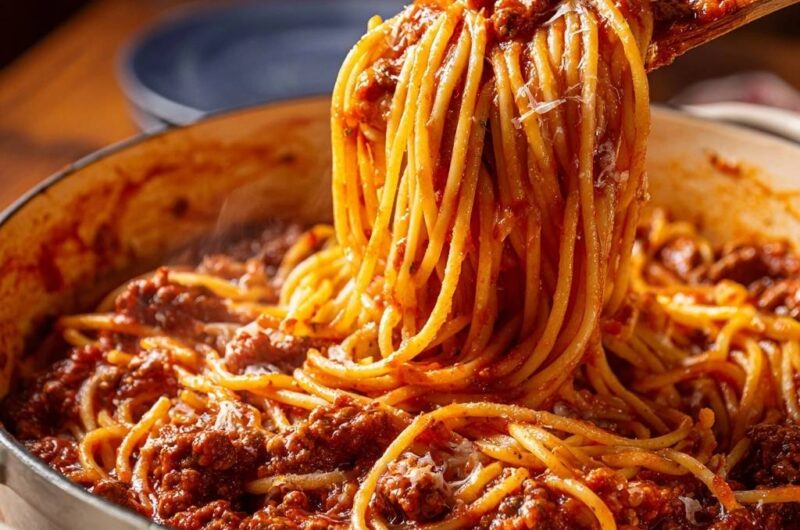
- Heat the olive oil in a large heavy-bottomed Dutch oven over medium-high heat. Add the ground beef and cook until fully browned and slightly crispy at the edges. Do not drain the fat unless it is excessive; a small amount of beef fat is required to emulsify with the pasta starch for that glossy finish seen in the image. Cook until no pink remains and it reaches 160°F (71°C).
- Stir in the tomato paste, minced garlic, oregano, and onion powder. Cook for 2 minutes, stirring constantly, until the tomato paste turns a deep brick red and the garlic is fragrant.
- Pour in the tomato marinara sauce and the beef broth. Season with a pinch of salt and black pepper. Stir well and bring the mixture to a rolling boil.
- Add the spaghetti noodles to the pot. You may break them in half to ensure they are fully submerged. This is the critical step: the starch from the pasta will stay in the pot rather than being drained away, acting as a natural thickener.
- Reduce the heat to medium. Simmer uncovered, stirring frequently with tongs or a wooden spoon. Frequent stirring is essential to prevent the noodles from clumping and to force the starch to release into the sauce.
- Cook for about 10 to 12 minutes. As the liquid reduces, the sauce will transform from watery to a thick, meat-heavy glaze that clings tightly to the strands. If the sauce thickens too quickly before the pasta is tender, add an extra 1/4 cup of broth.
- Once the pasta is al dente and the sauce is rich and glossy, remove from heat. Stir in half of the parmesan cheese until melted. Serve immediately directly from the pot, topped with the remaining parmesan.
Notes
- Do not drain the beef fat unless it is excessive, as it helps emulsify the sauce. Stir frequently to prevent clumping and to release the starch needed for thickening.