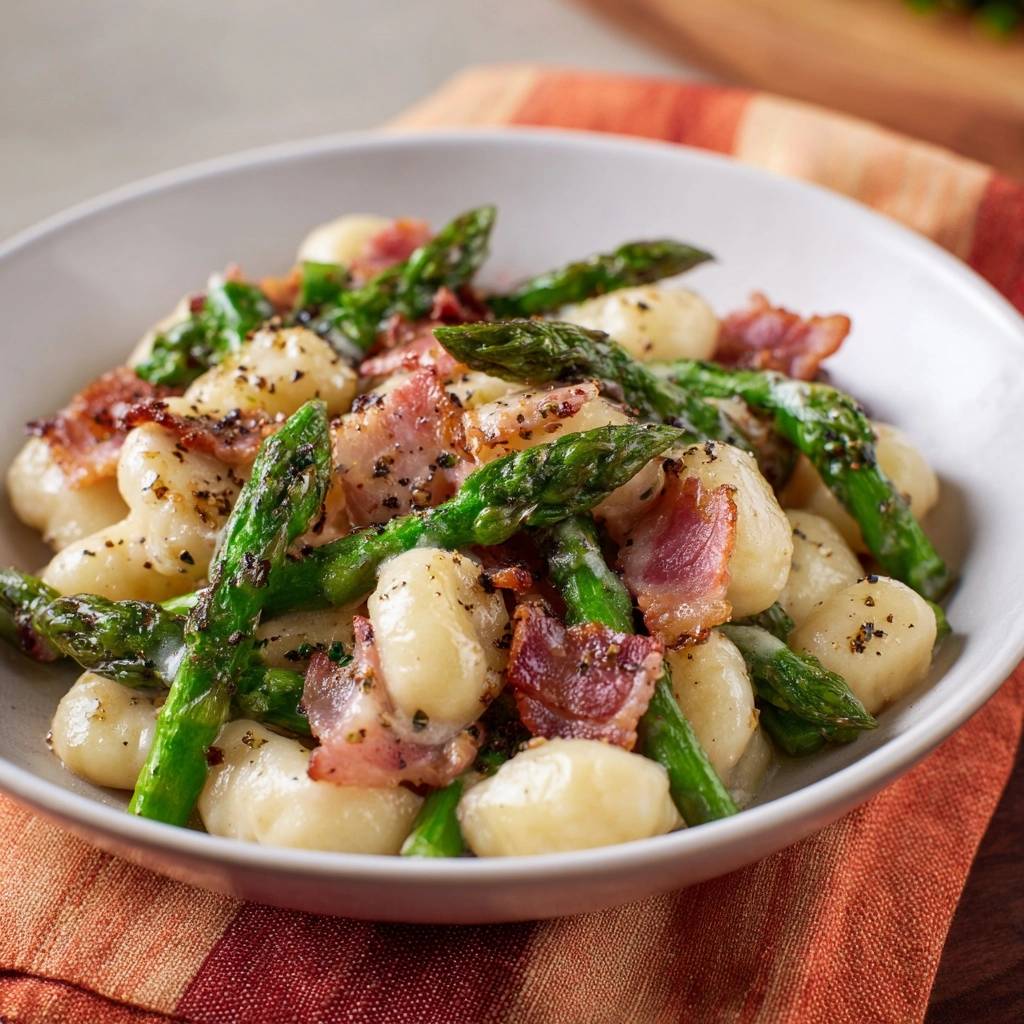
Stop boiling your gnocchi into a gummy, waterlogged mess. Most home cooks make the mistake of dropping these delicate potato pillows into a pot of water, which usually results in a soggy, unappealing texture. This recipe uses the skillet-only method to ensure a golden, crispy exterior and a light, pillowy center every single time.
You’ll love the sensory contrast in this dish. The initial crunch of the seared gnocchi gives way to a soft interior, while the fresh asparagus provides a bright, snappy bite. It’s a restaurant-quality meal that feels fancy but comes together in one pan in about twenty-five minutes.
For another take on a tender gnocchi preparation, check out creamy gnocchi with sage.
The secret to success lies in the “steam-sear” technique. By searing the gnocchi in fat first and then adding a splash of liquid under a lid, you cook the dough through without losing that beautiful crust. I’ve found that skipping the boiling water entirely is the only way to achieve that perfect, non-mushy mouthfeel.
The Science of Searing: Why Boiling Gnocchi Fails
Potato gnocchi are essentially little bundles of starch and moisture. When you drop them into boiling water, the starch on the outside hydrates instantly, often becoming slippery or “slimy” before the center even warms up. If you leave them in a few seconds too long, the structural integrity collapses, leaving you with a plate of mush.
Searing triggers the Maillard reaction, which is the chemical process that creates those savory, browned flavors on the surface of food. By using a skillet, you’re creating a protective crust that holds the gnocchi’s shape. The heat transforms the outer layer into a crisp shell while the internal moisture stays trapped inside.
Our hybrid method uses a small amount of chicken broth to create a localized steam environment. This ensures the centers are tender and fully cooked. However, because the liquid is minimal and evaporates quickly, it doesn’t have enough time to break down the crispy exterior you just worked so hard to build.
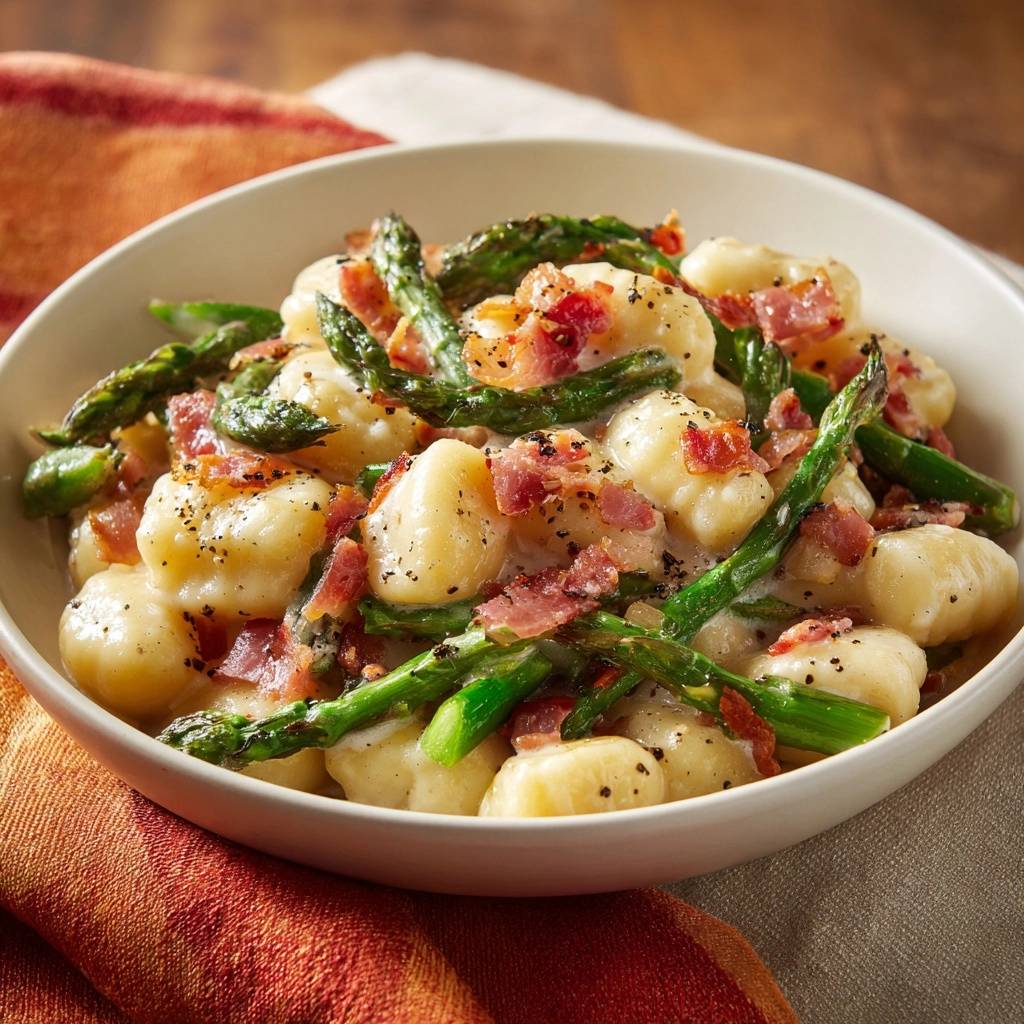
Essential Components for Pan-Seared Gnocchi with Asparagus and Bacon
For this recipe, shelf-stable or refrigerated gnocchi actually work better than delicate, handmade versions. These varieties have a slightly firmer structure that stands up beautifully to the high heat of a skillet. They won’t fall apart when you flip them, making the searing process much easier for a weeknight dinner.
The bacon isn’t just a topping; it’s the foundation of the entire flavor profile. Using thick-cut bacon allows you to render out plenty of high-quality fat, which serves as the primary cooking medium for the gnocchi. This “liquid gold” infuses every bite with a smoky, salty depth that oil simply can’t match.
For a similar approach to building flavor with cured meats, check out this orecchiette with seared sausage.
Don’t reach for the fine table pepper here. Coarsely cracked black pepper provides a specific floral heat and a bit of texture that cuts through the richness of the butter and bacon. It should be highly visible on the finished dish, acting as a bold seasoning rather than a background note.
Selecting and Prepping Fresh Asparagus
Asparagus is at its best when the tips are tightly closed and the stalks feel firm. You can check for freshness with the “snap test”—simply bend a spear near the bottom, and it should break cleanly at the point where the woody end meets the tender stalk. If it bends without snapping, it’s likely past its prime.
I recommend cutting your asparagus into two-inch pieces on a bias. These angled cuts create more surface area for the butter and seasonings to cling to. Plus, the size matches the gnocchi perfectly, ensuring you get a bit of everything in every single forkful.
If you have pencil-thin spears, they will cook very quickly, so add them toward the end of the sauté. Jumbo spears might need an extra minute or two in the pan. Regardless of the size, you’re looking for a vibrant green color and a “tender-crisp” texture that still has a bit of a bite.
The Role of Rendered Fat and Unsalted Butter
We use a combination of bacon fat and unsalted butter to get the best of both worlds. Bacon fat has a higher smoke point, which allows us to get that deep golden sear on the gnocchi without the pan smoking. It provides the heavy lifting for the flavor and the texture.
The butter is added later to provide milk solids that help create a light, emulsified glaze. I always suggest unsalted butter because it gives you total control over the seasoning. Since the bacon and parmesan already bring plenty of salt to the party, you don’t want to overdo it by using salted butter.
Phase One: Rendering Bacon for Maximum Flavor Extraction
Start your bacon in a pan over medium heat. You want to render the fat slowly so it doesn’t burn. As the bacon heats up, the fat will melt away, leaving the meat to crisp up in its own juices. This process usually takes about five to seven minutes depending on the thickness of your slices.
Look for a “flexible-crisp” texture. The edges should be browned and slightly crunchy, but the center of the bacon pieces should still have a little give. Once you reach this stage, use a slotted spoon to move the bacon to a plate, but keep every drop of that rendered fat in the skillet.
That leftover fat is the most important ingredient in the dish. It’s seasoned with the salt and smoke from the bacon, and it’s going to act as the “glue” that binds the gnocchi’s crust to the potato dough. If your bacon was lean and didn’t produce much fat, feel free to add a teaspoon of oil to help things along.
Phase Two: Achieving the Golden Gnocchi Crust
Turn the heat up to medium-high and add your gnocchi. The “Single Layer Rule” is non-negotiable here. If you crowd the pan, the gnocchi will release steam against each other and become gummy. If you’re doubling the recipe, work in batches to ensure every piece touches the hot surface of the pan.
Let them sit undisturbed for at least three minutes. It’s tempting to shake the pan, but you need that direct contact to build a crust. You’ll know they’re ready to flip when the bottoms are a deep, honey-gold color. Once you flip them, the pan will be very hot, so be ready for the next step.
Immediately pour in your chicken broth or water and pop the lid on. You’ll hear a loud sizzle—that’s exactly what you want. The steam will penetrate the gnocchi, cooking them through in just two minutes. This is the “magic moment” where the texture transforms from raw dough to a light, airy pillow.
Phase Three: Sautéing Asparagus and Emulsifying the Glaze
After you remove the lid, push the gnocchi to the outer edges of the pan. Drop the butter into the center and let it foam up before tossing in the asparagus. The residual moisture from the broth will mix with the melting butter to create a very thin, silky pan sauce.
Sauté the asparagus for about three to four minutes. You’ll see the color shift from a dusty green to a bright, neon emerald. Keep everything moving so the gnocchi don’t stick to the edges. The goal is for the liquid to evaporate almost entirely, leaving just a glossy coating on the vegetables.
Avoid overcooking the asparagus until it’s limp or dull olive green. You want it to be just tender enough to pierce with a fork but still firm enough to hold its shape. This keeps the dish feeling fresh and light despite the richness of the bacon and butter.
Seasoning Strategy: The Importance of Coarse Black Pepper
Once the bacon is back in the pan, it’s time for a very generous amount of black pepper. I’m talking about enough pepper that you can see the dark specks clearly against the golden gnocchi. The sharp, biting heat of the pepper is essential for balancing the fats in this recipe.
Without enough pepper, the dish can feel a bit heavy. The spice acts as a palate cleanser, making each bite feel as exciting as the first. When you toss everything together for that final minute, the heat of the pan will bloom the oils in the pepper, making it even more fragrant.
Add your sea salt sparingly at first. Taste a piece of gnocchi with a bit of bacon to see how much extra salt you actually need. Finish with the parmesan cheese right at the end. The cheese should just barely melt, creating a lacy, savory coating that ties the whole skillet together.
Flavor Variations and Ingredient Swaps
If you want to change things up, this formula is very forgiving. You can easily swap the asparagus for sugar snap peas or thin broccolini florets. Both of these vegetables have a similar cook time and provide that necessary green “snap” to the dish.
For those who don’t eat traditional bacon, beef strips or even a high-quality turkey bacon can work. If you go this route, you’ll likely need to add two tablespoons of olive oil to the pan since those meats don’t render as much fat as pork-based bacon does.
To brighten the flavor profile, try adding a squeeze of fresh lemon juice or a pinch of red pepper flakes right before serving. The acidity of the lemon cuts through the butter beautifully, while the red pepper adds a different kind of heat than the black pepper provides.
Troubleshooting Common Gnocchi Textures
If your gnocchi come out hard or chewy, you likely didn’t use enough liquid during the steam phase, or the lid wasn’t tight enough. The steam is what softens the potato starch inside. Next time, ensure you have a full half-cup of broth and keep that lid sealed tight for the full two minutes.
If the gnocchi are sticking to the pan and tearing, there are two likely culprits: the pan wasn’t hot enough when you added them, or you didn’t use enough fat. A non-stick skillet is your best friend for this recipe, but even then, you need that layer of bacon fat to act as a barrier.
Limp asparagus usually happens if it’s added too early or if the heat is too low. If you find your vegetables are getting mushy before the gnocchi are done, try removing the gnocchi from the pan entirely while you sauté the asparagus, then toss them back together at the very end to warm through.
Optimal Pairings for a Skillet Gnocchi Dinner
Since this dish is quite rich and savory, I love pairing it with something bitter or acidic. A simple arugula salad with a lemon vinaigrette is the perfect side. The peppery bite of the greens complements the black pepper in the gnocchi and helps balance the richness of the bacon fat.
Complementary Dishes
To round out your meal, consider these dishes that pair well with pan-seared gnocchi.
- For a fresh vegetable element, try our crispy Parmesan roasted zucchini, featuring a similar baking technique.
- A bright and crunchy salad like our shredded Brussels sprout salad offers a nice contrast in textures and flavors.
For a beverage, something crisp and bubbly works best. Sparkling water with a heavy squeeze of lime or a splash of cranberry juice provides a refreshing contrast. The carbonation helps scrub the palate between bites of the buttery, cheesy pasta.
If you want a more substantial meal, a side of roasted cherry tomatoes can add a nice pop of sweetness. The acidity of the tomatoes works similarly to lemon juice, cutting through the savory notes and adding a beautiful red color to your dinner table.
Expert Tips for Handling Leftovers
Gnocchi is notoriously difficult to reheat because the microwave turns the potato dough rubbery and tough. If you have leftovers, the best way to revive them is the “re-sear” method. It takes an extra five minutes, but the results are worth it.
Heat a small skillet over medium heat with a tiny pat of butter. Add the leftover gnocchi and asparagus and cook for about three to four minutes, tossing frequently. This will bring back some of that original crispness and ensure the bacon stays crunchy rather than becoming chewy.
Store your leftovers in an airtight container in the fridge for up to three days. I don’t recommend freezing the cooked dish, as the asparagus will lose its texture and the gnocchi can become grainy when thawed. This meal is truly at its peak when eaten fresh from the skillet.
Frequently Asked Questions
Can I use homemade gnocchi for this searing method?
Yes, you can, but you need to be careful. Homemade gnocchi often have a much higher moisture content and a softer texture than store-bought versions. I recommend chilling your homemade gnocchi in the fridge for an hour to firm them up, and perhaps giving them a very light dusting of flour before they hit the hot fat to prevent sticking.
Do I need to boil the gnocchi before putting them in the pan?
Absolutely not! In fact, boiling them first is exactly what we want to avoid. The half-cup of broth or water we add during the cooking process creates enough steam to cook the gnocchi through. Boiling them beforehand would make them too soft to achieve that signature crispy crust we’re looking for.
What is the best pan for searing gnocchi?
A high-quality non-stick skillet is the easiest choice for beginners because gnocchi are very starchy and prone to sticking. However, a well-seasoned cast iron skillet is also excellent and can produce an even deeper, crunchier sear. I would avoid stainless steel unless you are very confident in your heat management, as the gnocchi can bond to the surface quite easily.
How do I keep the asparagus vibrant green?
The key is to watch for the color change and use the principle of carry-over cooking. As soon as the asparagus turns bright emerald, it’s nearly done. Remove the pan from the heat while the spears still have a slight “bite” to them. The residual heat in the pan will finish cooking them to perfection by the time you sit down to eat.
Can I make this dish vegetarian?
You certainly can. To replace the smoky depth of the bacon, use a high-quality olive oil and add a half-teaspoon of smoked paprika to the pan. You might also consider adding some sautéed mushrooms or sun-dried tomatoes to provide that savory “umami” element that the bacon usually contributes.
Pan-Seared Gnocchi
Course: Main CourseCuisine: Italian-AmericanDifficulty: easy4
servings10
minutes15
minutes420
kcal25
MinutesA one-pan meal featuring potato gnocchi seared in bacon fat for a crispy exterior and steamed for a pillowy center, tossed with fresh asparagus and parmesan cheese.
Ingredients
1 pound potato gnocchi (shelf-stable or refrigerated)
1 bunch fresh asparagus, trimmed and cut into 2-inch pieces
6 slices thick-cut bacon, cut into 1-inch pieces
2 tablespoons unsalted butter
1/2 cup chicken broth or water (to steam-cook the gnocchi centers)
1/2 teaspoon coarsely cracked black pepper
1/4 teaspoon sea salt
1/4 cup grated parmesan cheese
Directions
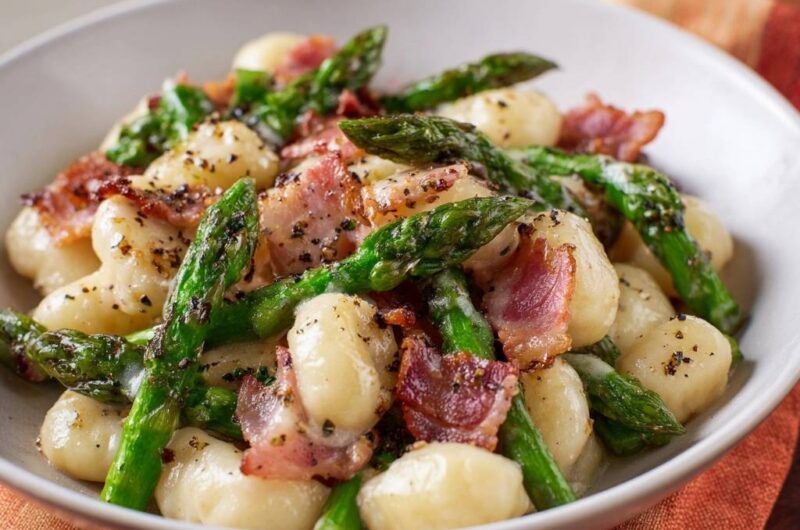
- Start with a large non-stick skillet over medium heat. Add the chopped bacon pieces. Render the fat until the bacon is cooked through but still slightly flexible (as seen in the image). Use a slotted spoon to remove the bacon and set aside, leaving the rendered fat in the pan.
- Increase the heat to medium-high. Add the dry gnocchi directly from the package into the hot bacon fat in a single layer. Do not crowd the pan; work in batches if necessary.
- Sear the gnocchi undisturbed for 3 minutes until the bottoms are deeply golden and crispy. Flip the gnocchi, then immediately add the chicken broth (or water) to the pan. Cover with a lid for 2 minutes. This creates steam that cooks the interior of the gnocchi so they are tender, not hard, while the fat maintains the sear.
- Remove the lid and move the gnocchi to the edges of the pan. Add the butter to the center and toss in the asparagus. Sauté for 3 to 4 minutes until the asparagus is tender-crisp and the liquid has evaporated into a light glaze.
- Add the bacon back into the pan. Season with the sea salt and a very generous amount of coarsely cracked black pepper. The pepper should be highly visible on the surface of the gnocchi and asparagus.
- Toss everything together over the heat for 1 minute to marry the flavors. Sprinkle with grated parmesan cheese just before serving to create the light, melty coating seen in the image. Serve immediately.
Notes
- Use the skillet-only method to ensure a golden, crispy exterior and a light, pillowy center. Do not boil the gnocchi beforehand.