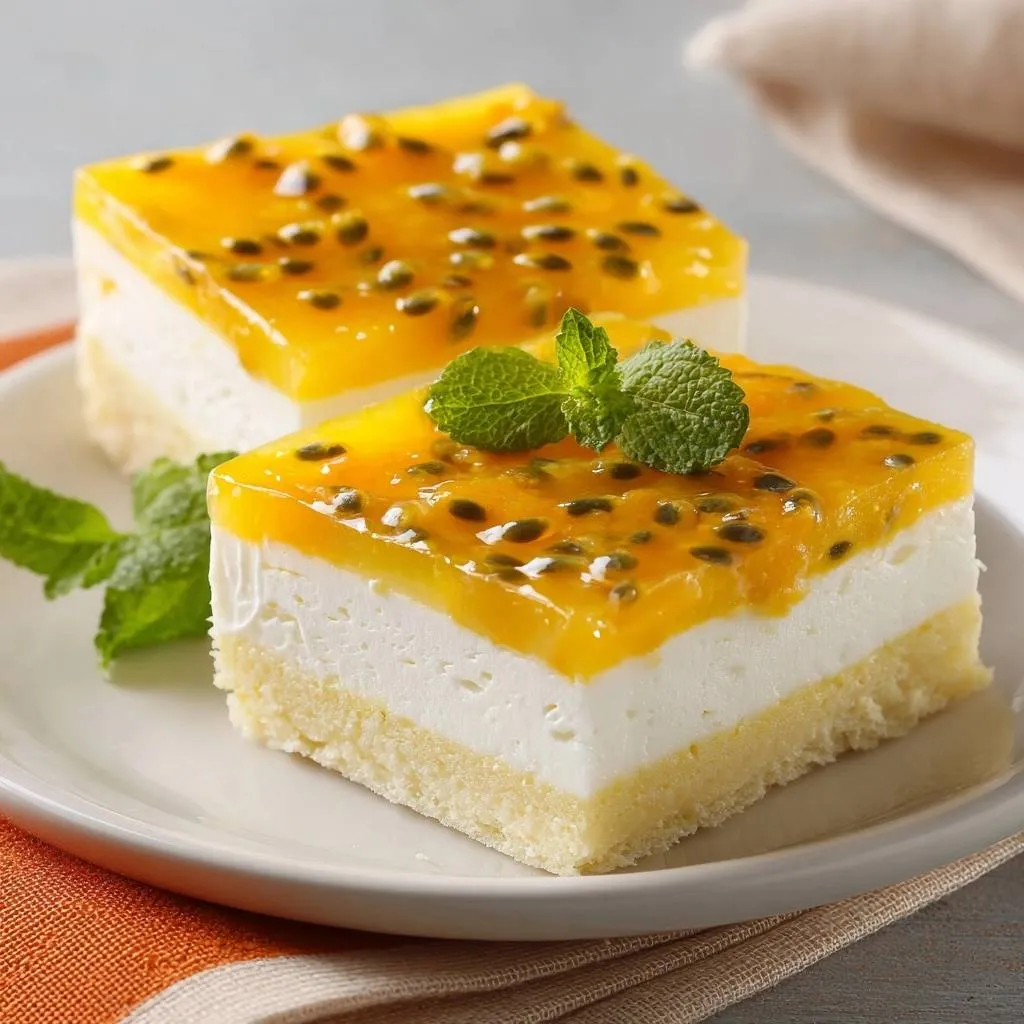
Imagine biting into a dessert where the first thing you notice is a sharp, tropical tang, followed immediately by a velvety, rich creaminess. Then, instead of the dreaded mushy bottom, you hit a definitive, buttery crunch that holds its own. That contrast is exactly what makes these Passion Fruit Cheesecake Bars a standout in any kitchen.
For a similar cheesecake experience, check out these red velvet cheesecake cookies.
Most people struggle with fruit-topped bars because the moisture from the cheesecake and the glaze eventually migrates downward, turning the crust into a soggy mess. However, this recipe uses a specific sealing technique to keep that base as crisp on day three as it was on day one. It’s all about managing the moisture levels before the layers even meet.
The secret to this professional finish is a simple protein seal. By brushing the hot, par-baked crust with a thin layer of egg white, you create a waterproof barrier. This tiny step ensures the cheesecake batter sits on top of the crust rather than soaking into it, giving you those clean, distinct layers you see in high-end bakeries.
The Architecture of a Perfect Tropical Dessert Bar
A great dessert bar needs to be sturdy enough to hold in your hand but delicate enough to melt in your mouth. Because passion fruit is naturally high in acid, it provides the perfect structural and flavor counterpoint to the heavy fats in the cream cheese. This acidity cuts through the richness, making the bars feel light rather than cloying.
Using an 8×8 inch pan is vital for achieving the correct ratio of crust to filling. If the pan is too large, the cheesecake layer becomes too thin and overbakes quickly. In a smaller pan, the center might remain soupy while the edges brown. This specific size ensures the heat penetrates evenly, leaving you with a stable, sliceable treat.
Essential Components for Passion Fruit Cheesecake Bars
Quality ingredients are the backbone of this recipe, starting with the butter. You must use cold, cubed unsalted butter for the shortbread base. As the cold butter hits the hot oven, it releases steam, creating tiny air pockets that result in a flaky, crisp texture rather than a greasy one.
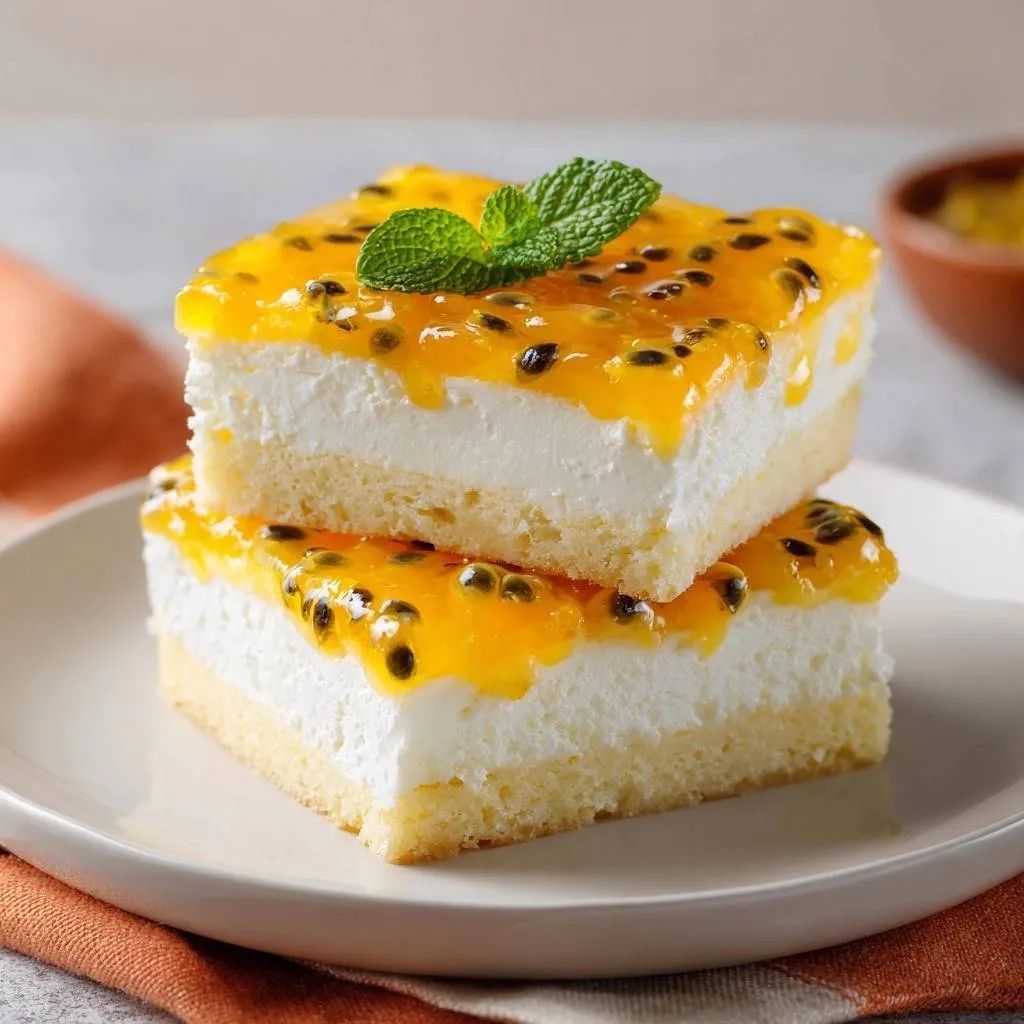
In the filling, sour cream plays a dual role. It adds a subtle tang that echoes the passion fruit and softens the dense texture of the cream cheese. Always use full-fat versions of both; low-fat alternatives contain more water and fillers, which can lead to a grainy mouthfeel or a weeping glaze.
Selecting and Preparing Fresh Passion Fruit Pulp
When shopping for passion fruit, look for the ones that look like they’ve seen better days. A wrinkled, dimpled skin is the sign of a fruit that is heavy with sweet, aromatic juice. If the skin is smooth, the fruit is likely still tart and hasn’t developed its full sugar content yet.
To prep them, simply slice in half and scoop the pulp and seeds into a bowl. The seeds are edible and provide a beautiful, rustic look to the glaze. However, if you prefer a smoother finish, you can press the pulp through a fine-mesh sieve, though you may need an extra fruit or two to make up the volume.
The Role of High-Fat Dairy in Texture
Full-fat cream cheese is the structural glue of this dessert. It provides the necessary solids to keep the bars upright once they are sliced. Avoid the “whipped” variety found in tubs, as it contains too much incorporated air, which will cause your bars to puff up and then crack as they cool.
Room temperature ingredients are non-negotiable here. If your cream cheese is cold, you’ll end up with tiny lumps that no amount of whisking can fix. Set your ingredients out at least two hours before you plan to bake to ensure a silky, emulsified batter.
For more cheesecake inspiration, check out this creamy pumpkin swirl cheesecake.
The Science of the Moisture Barrier Technique
The “Protein Seal” is a classic pastry chef trick that works through denaturation. When you brush a thin layer of egg white onto the hot shortbread, the residual heat cooks the protein instantly. This creates a thin, hydrophobic film over the flour particles.
Therefore, when you pour the wet cheesecake batter on top, the moisture cannot penetrate the crust. This prevents the “migration” of water molecules, which is the primary cause of a soggy bottom. It’s a thirty-second step that completely changes the quality of the final product.
Step-by-Step: Building the Shortbread Foundation
When you combine your flour, sugar, and cold butter, aim for a texture that looks like coarse breadcrumbs. You should still see tiny, pea-sized bits of butter throughout the mixture. These bits are what will melt and create that signature shortbread snap.
Be careful not to overwork the dough, especially if using a food processor. Over-mixing develops gluten, which turns a tender crust into a tough, cookie-like slab. Bake until the edges are just starting to turn a pale golden brown; it will continue to firm up as it cools.
Creating the Aeration-Free Cheesecake Filling
The biggest mistake home bakers make is over-beating the eggs. Once you add the eggs to your cream cheese mixture, switch to a low speed or use a spatula. Incorporating too much air will cause the cheesecake to rise like a souffle and then collapse, creating unsightly cracks on the surface.
Use the “jiggle test” to check for doneness. When you gently shake the pan, the edges should be firm and set, but the center should still wobble slightly like Jell-O. The residual heat will finish cooking the center as the bars cool on the counter.
Perfecting the Glossy Passion Fruit Glaze
The glaze relies on starch gelatinization to achieve its beautiful, clear sheen. As you heat the passion fruit pulp with cornstarch and sugar, the mixture will initially look cloudy. However, as it reaches a simmer, the starch granules burst and thicken the liquid into a transparent gel.
Ready for More Sweet & Savory Options?
These passion fruit cheesecake bars pair well with lighter fare or other sweet treats.
- For a bright and fresh spring meal, consider the Asparagus Pea Feta Frittata, which offers a savory contrast.
- If you’re planning a brunch alongside your cheesecake, these Fluffy Diner-Style Pancakes make a comforting addition.
You are looking for the “nappe” stage, where the glaze is thick enough to coat the back of a spoon without immediately running off. Let the glaze cool slightly before pouring it over the cheesecake. If it’s boiling hot, it might melt the top layer of the cheesecake, causing the colors to bleed together.
Troubleshooting Common Cheesecake Bar Issues
If your crust crumbles when you try to slice it, you likely didn’t press it firmly enough into the pan. Use the bottom of a flat measuring cup to pack the crumbs into a solid, even layer before baking. This compression is what gives the bar its structural integrity.
Surface cracking usually happens because the oven was too hot or the bars were overbaked. If you see a crack forming, remove the bars from the oven immediately. Don’t worry too much, though; the passion fruit glaze is excellent at hiding any minor surface imperfections.
Advanced Slicing Techniques for Sharp Edges
To get those clean, professional-looking squares, you need to use the “Hot Knife” method. Dip a long, sharp knife into a tall glass of hot water, wipe it completely dry, and make one long, decisive cut. The heat from the blade slices through the fats in the cream cheese like butter.
Crucially, you must wipe the knife clean and re-dip it in hot water after every single cut. If you don’t, the cheesecake residue from the previous slice will smudge the passion fruit glaze into the white filling. For an 8×8 pan, a 3×4 grid will give you 12 perfectly sized bars.
Make-Ahead Logistics and Storage Standards
These bars are actually better the next day. A long chill in the refrigerator allows the flavors to meld and the cheesecake to fully set, making it much easier to slice. I recommend making them at least 24 hours before you plan to serve them.
Store leftovers in an airtight container in the fridge for up to four days. If you want to freeze them, flash-freeze the individual bars on a tray for an hour first. Once the glaze is frozen solid, you can wrap them tightly in plastic wrap without ruining the beautiful top layer.
Expert Tips for Tropical Flavor Enhancements
If you want to add another layer of flavor, try rubbing some fresh lime zest into the sugar before you make the crust. The citrus oils will permeate the shortbread and brighten the entire dessert. A tiny pinch of ground ginger in the cheesecake filling also adds a sophisticated warmth.
Garnishing with fresh mint isn’t just for looks. The cool, peppery flavor of the mint acts as a palate cleanser. It prepares your taste buds for the next bite of rich cream and tart fruit, making every mouthful feel as vibrant as the first one.
Frequently Asked Questions
Can I use a graham cracker crust instead?
You can, but graham crackers are much more porous than shortbread. They tend to absorb moisture quickly, so the “Anti-Soggy Bottom” egg white seal is even more critical. You may also find the sweetness of graham crackers competes too much with the delicate passion fruit.
How do I prevent the passion fruit seeds from being too crunchy?
If you find the seeds distracting, you can pulse the pulp in a blender for just a few seconds. This breaks the seeds into smaller, less noticeable bits without turning the pulp into a puree. Alternatively, strain half the seeds out and keep the rest for the visual appeal.
Why did my glaze turn cloudy instead of clear?
Cloudy glaze usually means the cornstarch didn’t reach a high enough temperature to fully “cook out.” Make sure the mixture reaches a gentle simmer. Also, avoid over-whisking once it thickens, as incorporating too many tiny air bubbles can also make the glaze look opaque.
Is there a substitute for sour cream in the filling?
Full-fat Greek yogurt is an excellent substitute for sour cream. It provides a similar tang and moisture level. However, ensure it is plain and not “low-fat,” as the extra water in lighter yogurts can prevent the cheesecake from setting firmly enough to be handheld.
How long can these bars sit at room temperature?
Because these are dairy-based, they shouldn’t sit out for more than two hours. In warmer weather, the glaze may also begin to soften and lose its glossy finish. Keep them chilled until the moment you are ready to serve for the best texture and food safety.
Passion Fruit Cheesecake Bars
Course: DessertCuisine: AmericanDifficulty: medium12
bars25
minutes45
minutes310
kcal70
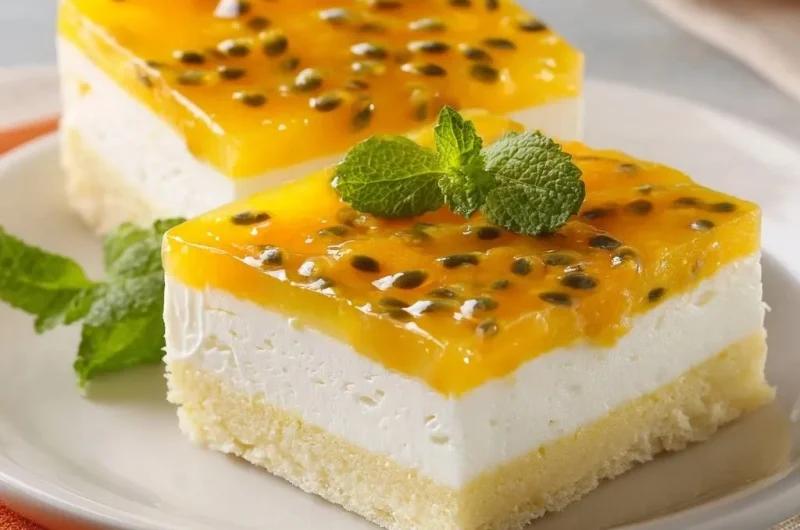
MinutesThese tropical cheesecake bars feature a buttery shortbread base, a creamy cheesecake filling, and a vibrant passion fruit glaze. The recipe focuses on a par-baking and egg-white sealing method to ensure the crust remains crunchy and sturdy.
Ingredients
1.5 cups all-purpose flour
1/2 cup unsalted butter, cold and cubed
1/4 cup granulated sugar
1/4 teaspoon salt
16 ounces cream cheese, softened
1/2 cup sour cream
2/3 cup granulated sugar (for filling)
2 large eggs
1 teaspoon vanilla extract
1 cup passion fruit pulp with seeds
1/4 cup water
1/4 cup granulated sugar (for glaze)
1 tablespoon cornstarch
Fresh mint leaves for garnish
Directions
- Preheat your oven to 350°F (175°C) and line an 8×8 inch baking pan with parchment paper, leaving an overhang on the sides for easy removal.
- To prevent a soggy bottom, combine flour, cold cubed butter, 1/4 cup sugar, and salt in a food processor or using a pastry cutter until the mixture resembles coarse crumbs. Press firmly and evenly into the bottom of the prepared pan.
- Bake the crust for 15-18 minutes until the edges are lightly golden. This par-baking step is the secret to a sturdy crust.
- While the crust is hot, lightly brush the surface with a tiny bit of whisked egg white (taken from one of your filling eggs). This creates a waterproof protein seal that prevents the cheesecake moisture from seeping into the shortbread.
- In a large bowl, beat the softened cream cheese and 2/3 cup sugar until completely smooth and fluffy. Add the sour cream and vanilla. Add eggs one at a time, mixing on low speed just until combined to avoid incorporating excess air bubbles.
- Pour the cheesecake mixture over the sealed crust and bake for 25-30 minutes until the edges are set but the center still has a slight jiggle. Remove from the oven and let it cool completely at room temperature.
- In a small saucepan, whisk together the passion fruit pulp, water, 1/4 cup sugar, and cornstarch. Heat over medium heat, stirring constantly, until the mixture comes to a simmer and thickens into a clear, glossy gel that coats the back of a spoon.
- Pour the warm passion fruit glaze over the cooled cheesecake layer, spreading it evenly to the edges.
- Refrigerate for at least 4 hours, or preferably overnight, to allow the layers to set firmly. Use the parchment overhang to lift the block out of the pan. Use a hot, clean knife to slice into sharp squares. Garnish with fresh mint.
Notes
- To ensure clean slices, use a hot, clean knife and wipe it between every cut. The egg white seal is the key to preventing the crust from becoming mushy.