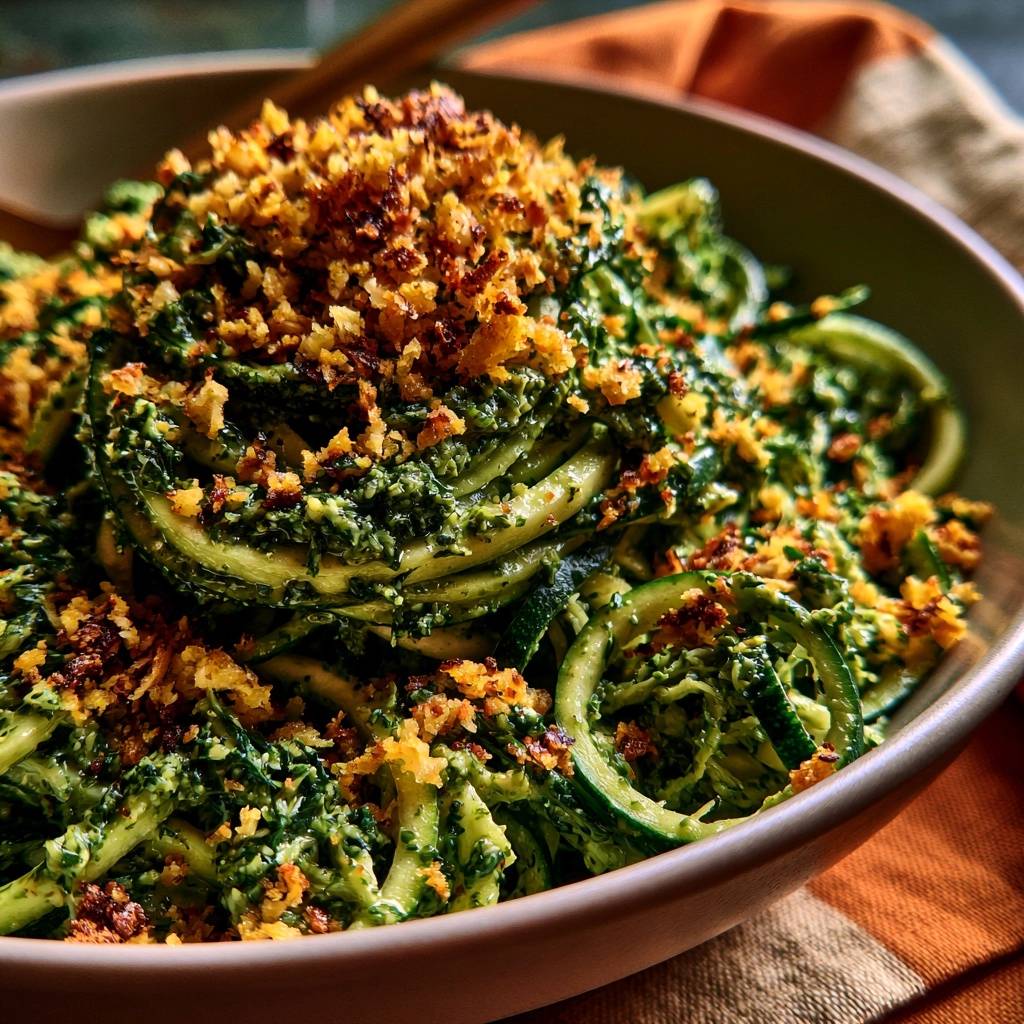
Zucchini noodles often get a bad reputation for being a soggy, watery disappointment that pales in comparison to real pasta. However, when you treat them with the right culinary techniques, they transform into a vibrant, al dente base that carries heavy sauces beautifully. This recipe focuses on the incredible contrast between silky, herbaceous pesto and the aggressive, golden crunch of toasted Panko breadcrumbs.
The secret to success lies in moisture management rather than just cooking time. You aren’t just heating up vegetables; you’re engineering a texture that mimics traditional spaghetti while keeping the meal light and fresh. By mastering a few simple prep steps, you can ensure your dinner remains firm and flavorful instead of turning into a vegetable soup at the bottom of your bowl.
I’ve found that the absolute key to this dish is the “salt and squeeze” method. If you skip the ten-minute salting phase, the zucchini will inevitably release its internal water the moment it hits the heat. Taking those few extra minutes to prep the noodles ensures the pesto clings to the strands rather than sliding off into a puddle of green liquid.
The Science of Moisture: Why Zucchini Turns Watery
Zucchini is composed of over 95% water, much of which is stored within the vacuoles of its cellular structure. When you apply heat, those cell walls break down and release all that liquid simultaneously. This is why a simple sauté often results in a mushy mess; the noodles are essentially boiling in their own juices rather than searing in the pan.
To combat this, we use the principle of osmosis. By sprinkling salt over the raw spiralized strands, we create a high-concentration environment outside the zucchini cells. This forces the water to move through the cell membranes to balance the concentration, effectively “sweating” the noodles before they ever touch a skillet. It’s a proactive strike against sogginess that changes the physical integrity of the vegetable.
Traditional boiling is the enemy of the zucchini noodle because it adds even more external moisture to an already hydrated plant. By using the salt-and-drain method followed by a high-heat flash sear, you bypass the steaming effect entirely. You’re left with a noodle that has a distinct “snap” and a much more concentrated flavor profile that stands up to the richness of the pesto.
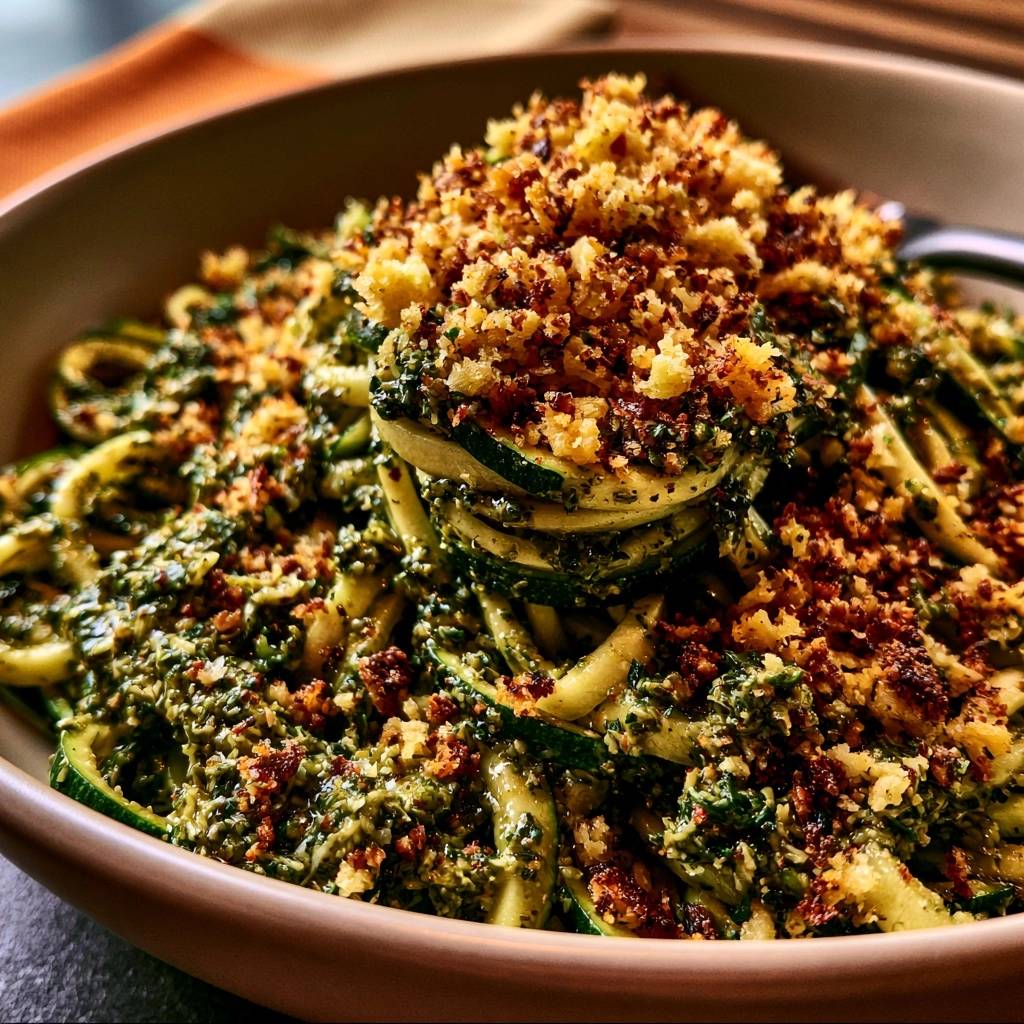
Essential Components for Pesto Zucchini Noodles with Toasted Breadcrumbs
Since this recipe has so few ingredients, the quality of each one carries a lot of weight. For the pesto, look for a thick, vibrant green variety that uses high-quality oil. If the pesto is too runny or oily, it will weigh down the delicate noodles; a thicker, paste-like consistency is ideal because it emulsifies perfectly with the residual heat of the pan.
The breadcrumbs provide the necessary structural contrast to the soft noodles. Panko is vastly superior to traditional fine breadcrumbs here because its large, airy flakes create a much more pronounced “crunch” that doesn’t get lost in the sauce. When toasted in olive oil, these crumbs act like little flavor sponges that hold onto the red pepper flakes and salt.
Don’t overlook the lemon zest, as it serves a vital culinary purpose. The fats in the pesto and parmesan cheese are quite heavy, and the bright, citrusy oils from the zest cut through that richness. It lifts the entire flavor profile, making the dish feel much lighter and more balanced on the palate.
Selecting the Right Zucchini for Spiralizing
When you’re at the grocery store, reach for medium-sized zucchinis that feel heavy for their size and have firm, unblemished skin. Avoid the massive, “trophy” zucchinis often found in home gardens. These oversized vegetables have developed large, watery seed cores that lack structural integrity and will fall apart into mush once spiralized.
Smaller zucchinis have a tighter cell structure and fewer seeds, which results in a much more resilient noodle. If the zucchini feels soft or “bendy” in your hand, it’s already losing moisture and won’t provide that al dente bite you’re looking for. Freshness is your best friend when it comes to maintaining texture.
The Role of High-Heat Fats
We use olive oil for this recipe because it provides a clean flavor and a high enough smoke point for a quick sear. While butter might seem tempting for the flavor, it contains milk solids that can burn quickly at the high temperatures required to flash-cook the zucchini. Olive oil allows the pan to get shimmering hot without smoking.
For the breadcrumbs, the oil helps distribute the heat evenly, ensuring every single crumb turns a uniform golden brown. It also helps the red pepper flakes bloom, releasing their spicy oils into the crumbs. This creates a layered flavor experience where the heat is built into the crunch rather than just sprinkled on top.
The “Anti-Soggy” Pre-Treatment Process
This is the most important part of the entire process. Once you’ve spiralized your zucchini, place the strands in a large colander and toss them with the salt. Let them sit for at least 10 minutes. You will actually see the water begin to bead up on the surface and drip through the holes of the colander.
After the time is up, the noodles will look slightly wilted, but don’t worry. Transfer them to a clean, lint-free kitchen towel or a few layers of heavy-duty paper towels. Wrap them up tightly and squeeze with as much force as you can. You’ll be shocked at how much liquid comes out—sometimes up to half a cup!
The goal is for the noodles to feel dry to the touch and slightly pliable, almost like softened pasta. By removing this water now, you ensure that the only thing happening in the skillet is a quick sear. This step is the difference between a professional-grade meal and a watery bowl of squash.
Step-by-Step: Achieving the Perfect Golden Crunch
Start by heating your small skillet with a tablespoon of oil. Once it’s warm, toss in the Panko and the red pepper flakes. You must stay at the stove for this part; breadcrumbs can go from perfectly golden to burnt and bitter in a matter of seconds. Keep them moving constantly with a spatula.
Watch for the color to shift from a pale white to a deep, toasted tan. You should also start to smell a nutty, toasty aroma filling the kitchen. As soon as they reach that rich golden hue, pull the pan off the heat immediately. The residual heat of the pan will continue to cook them for a few seconds, so don’t wait until they look “done” to move them.
Transfer the toasted crumbs to a small bowl so they stop cooking. This ensures they stay light and crispy. If you leave them in the hot pan, they will likely over-brown on the bottom, losing that delicate crunch and taking on a scorched flavor that will ruin the dish.
Flash-Searing: The 90-Second Sauté Technique
Now it’s time for the main event. Get your large skillet over high heat with the remaining olive oil. You want the oil to be shimmering and just on the verge of smoking. High heat is non-negotiable here because we want to blister the outside of the zucchini noodles without cooking them all the way through to the center.
Drop the dried noodles into the pan. You should hear a loud sizzle immediately. Use tongs to toss and move the noodles constantly. You aren’t looking to brown them deeply; you just want to heat them through and give them a quick sear. This should take no longer than 60 to 90 seconds.
If you leave them in the pan too long, the heat will eventually reach the remaining internal moisture, and they will start to weep. The “toss and move” method ensures every strand hits the hot surface of the pan briefly. As soon as they look bright green and slightly softened but still have a “snap” when you pull on one, they are ready.
Emulsifying the Sauce with Residual Heat
The biggest mistake people make is keeping the burner on while adding the sauce. Pesto is an emulsion of oil, nuts, and cheese; if it gets too hot, the oil will separate and the basil will turn a dull, muddy brown. Turn the heat completely OFF before you add the pesto, parmesan, and lemon zest.
The residual heat from the pan and the noodles themselves is more than enough to melt the parmesan and loosen the pesto so it coats every strand. Toss everything together quickly and vigorously. You’ll see the cheese melt into the pesto, creating a creamy, luxurious coating that clings to the zucchini.
By using this off-heat method, you preserve the fresh, peppery bite of the basil and the bright acidity of the lemon. It also prevents the zucchini from releasing any more water, keeping the sauce thick and velvety. This is the secret to that “restaurant-style” finish where the sauce stays on the noodle instead of pooling at the bottom.
Flavor Variations and Ingredient Swaps
While Panko provides an incredible crunch, you can easily swap it out for toasted pine nuts or crushed walnuts if you want a gluten-free option. Simply toast the nuts in the same way you would the breadcrumbs until they are fragrant and golden. They add a rich, buttery depth that complements the basil perfectly.
If you want to add more complexity, try stirring in some chopped sun-dried tomatoes or a spoonful of roasted garlic along with the pesto. The sweetness of the tomatoes balances the salty parmesan beautifully. For those who prefer a bit more tang, a few capers can add a briny pop of flavor that works well with the lemon zest.
To keep the dish entirely plant-based, you can substitute the parmesan cheese with nutritional yeast. It provides a similar nutty, cheesy flavor profile without the dairy. Just be sure to use a high-quality extra virgin olive oil, as its flavor will be more prominent without the cheese to mask it.
Troubleshooting Common Zoodle Issues
If you find that your noodles are still releasing water despite the salting step, it usually means they weren’t squeezed dry enough. You can fix this mid-cook by pushing the noodles to one side of the pan and using a wadded-up paper towel to carefully blot the excess liquid from the empty side of the skillet.
If the dish tastes a bit flat or bland, it’s likely an issue with acid or salt balance. Zucchini is very neutral, so it needs a good amount of seasoning. Add an extra squeeze of fresh lemon juice or a tiny pinch of sea salt right before serving. Often, just a touch more acidity is all it takes to make the pesto flavors “pop.”
For those without a spiralizer, don’t worry. You can use a standard julienne peeler to create long, thin strips, or even a mandoline slicer set to a thin matchstick blade. If you use a vegetable peeler to make wide “ribbons,” just keep in mind they will cook even faster—usually in about 45 seconds—because they are so thin.
Expert Tips for Plating and Presentation
To get that professional “skyscraper” look, use a pair of long kitchen tongs to grab a large portion of noodles. Twirl them against the side of the pan or a large spoon to create a tight nest, then carefully place the nest in the center of the bowl. This height keeps the noodles from spreading out and cooling down too quickly.
Wait until the very last second to add your toasted breadcrumbs. If you toss them in the pan with the sauce, they will immediately absorb the moisture and lose their crunch. By piling them high on top of the plated noodles, you ensure that every bite has a distinct contrast between the tender, saucy zucchini and the crispy topping.
Finish the plate with a few fresh basil leaves or an extra dusting of parmesan cheese. The visual appeal of the bright green noodles against the golden crumbs makes this simple meal feel like a gourmet treat. Serve it immediately while the temperatures and textures are at their peak.
Frequently Asked Questions
Can I make these noodles ahead of time?
You can spiralize the raw zucchini up to two days in advance. Store the raw “zoodles” in an airtight container lined with a dry paper towel to absorb any moisture that leaks out during storage. However, once the dish is cooked, it must be eaten immediately. Reheating cooked zucchini noodles almost always results in a mushy texture as the cell walls collapse further upon a second round of heating.
What is the best spiralizer blade for this recipe?
The medium “spaghetti” blade is the best choice for this dish. It creates a noodle thick enough to maintain some structural integrity during the flash-sear. Avoid the “angel hair” or ultra-thin blades, as those strands are so delicate they often disintegrate the moment they hit the salt or the heat. Wide ribbon blades can also work, but they tend to trap more water between the layers, making them harder to get truly “al dente.”
How do I increase the protein in this dish?
This recipe pairs beautifully with lean proteins that don’t overwhelm the pesto. Grilled chicken breast, sautéed shrimp, or even a piece of seared salmon are excellent choices. If you want to keep it vegetarian, try adding a handful of crispy roasted chickpeas or some cannellini beans. Just be sure to cook your protein separately and add it to the bowl at the end so you don’t overcrowd the zucchini pan, which would cause the noodles to steam.
Can I use frozen zucchini noodles?
I strongly recommend against using frozen zucchini noodles for this specific recipe. Freezing causes the water inside the zucchini cells to expand and burst the cell walls. When thawed, the noodles lose all their structural integrity and become extremely soft and watery. The “anti-soggy” salting and squeezing technique won’t work on frozen noodles because the damage is already done at a cellular level. For the best results, always stick with fresh zucchini.
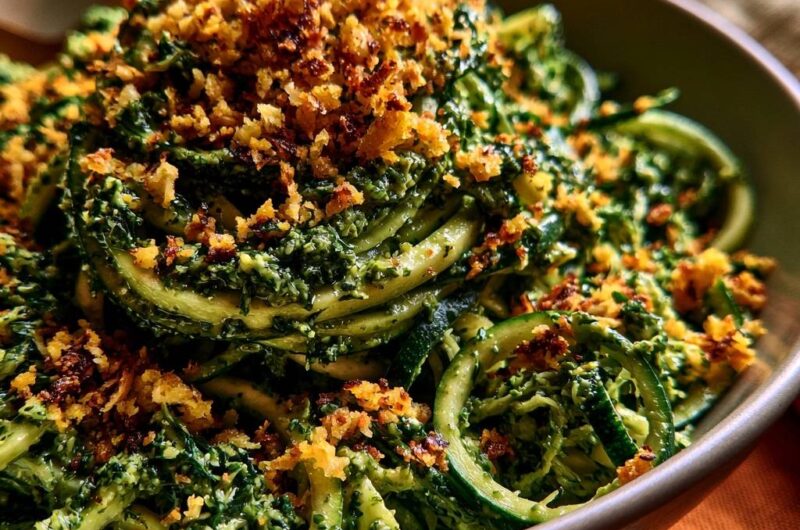
Pesto Zucchini Noodles with Toasted Breadcrumbs
Course: Main CourseCuisine: Italian-AmericanDifficulty: easy2
servings15
minutes5
minutes20
Minutes310
kcalItalian-American
Ingredients
3 medium zucchinis, spiralized
1/2 cup fresh basil pesto (thick, high-quality)
1/2 cup Panko breadcrumbs
3 tablespoons olive oil, divided
1/2 teaspoon salt
1/4 teaspoon red pepper flakes
1/4 cup grated parmesan cheese
1 tablespoon lemon zest (optional, for brightness)
Directions
- The most critical step to prevent sogginess is to place your spiralized zucchini in a colander and sprinkle with 1/2 teaspoon of salt. Let it sit for 10 minutes. This draws out the excess water that usually ruins the dish. After 10 minutes, wrap the noodles in a clean kitchen towel and squeeze firmly to remove as much liquid as possible. The noodles should feel significantly drier and slightly more pliable.
- While the zucchini drains, heat 1 tablespoon of olive oil in a small skillet over medium heat. Add the Panko breadcrumbs and red pepper flakes. Stir constantly for 2 to 3 minutes until the crumbs are deep golden brown and fragrant. Remove from heat immediately and set aside.
- Heat the remaining 2 tablespoons of olive oil in a large skillet over high heat. High heat is essential to sear the noodles quickly before they can release more moisture.
- Add the dried zucchini noodles to the hot skillet. Toss rapidly with tongs for only 60 to 90 seconds. Do not overcook; they should be just tender but still have a distinct snap.
- Turn off the heat. Immediately add the pesto, parmesan cheese, and lemon zest to the skillet. Toss quickly to coat the noodles evenly. The residual heat from the pan will melt the cheese and warm the sauce without breaking the emulsion or causing the zucchini to weep.
- Transfer the noodles to serving bowls. Top generously with the toasted breadcrumbs, ensuring a thick layer covers the top to provide the crunch shown in the image. Serve immediately to maintain the perfect contrast between the tender noodles and the crispy topping.
Notes
- High heat and the salt-and-squeeze method are essential to prevent the dish from becoming watery. Do not cook the noodles for more than 90 seconds.