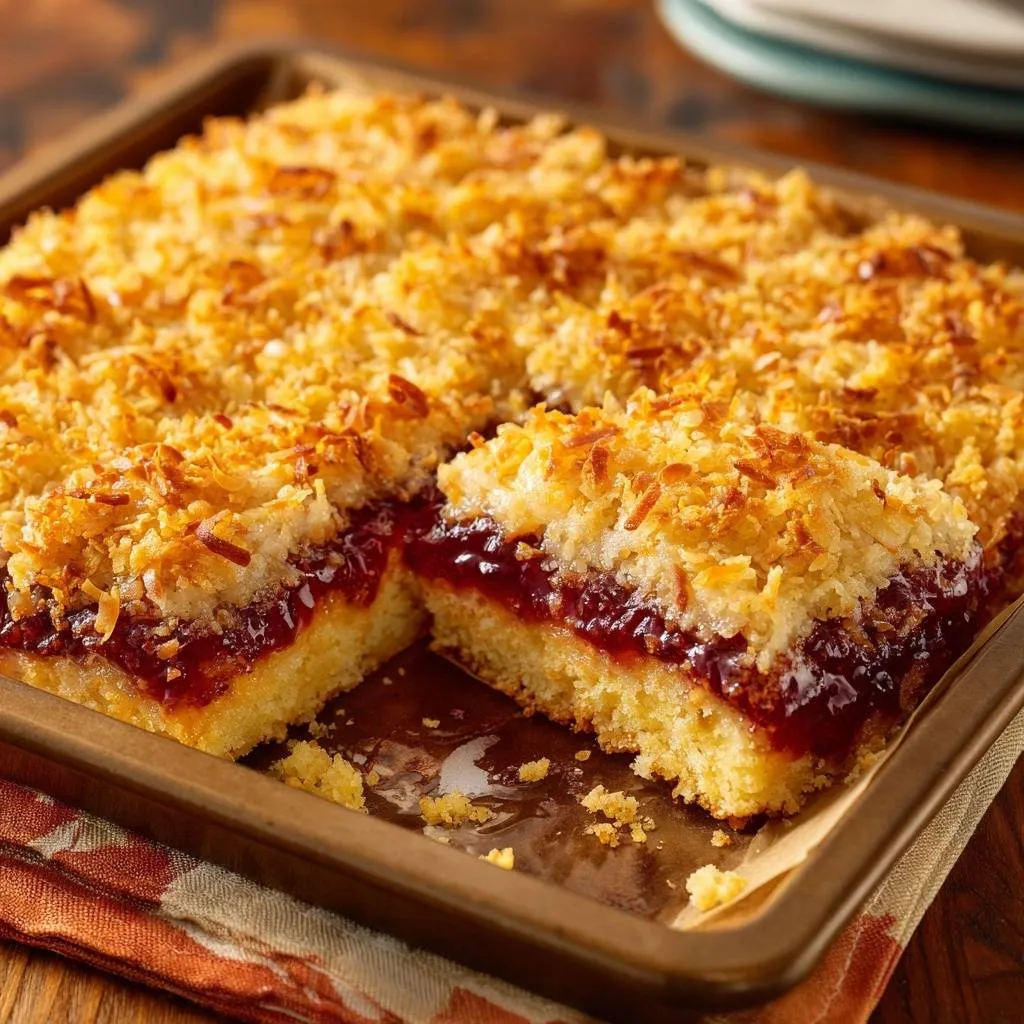
Imagine biting into a bar where the sharp, bright tang of raspberries meets the tropical, chewy sweetness of toasted coconut. You get that initial crunch from a buttery shortbread base, followed by a jammy center that stays exactly where it belongs. It is a textural masterpiece that feels like a fancy bakery find, yet it comes together in your own kitchen with simple pantry staples.
However, many home bakers struggle with fruit bars that turn into a soggy, weeping mess by the second day. The moisture from the fruit often migrates downward, turning a crisp crust into something resembling wet cardboard. This recipe solves that structural nightmare by using a “skyscraper” approach, building a solid foundation that can handle the weight and moisture of the toppings.
The secret to this success is a two-part moisture barrier. First, we par-bake the base to create a heat-set seal. Second, we whisk a tiny bit of cornstarch into the jam. This ensures the filling thickens into a stable ribbon rather than soaking into the flour, giving you a clean, professional snap in every single bite.
The Science of the Anti-Soggy Raspberry Coconut Jam Bar
Creating a fruit bar that holds its shape requires understanding the chemistry of the “Moisture Barrier.” When you spread raw jam onto raw dough, the sugars and water in the fruit immediately begin to break down the starch molecules in the flour. By the time the oven heat penetrates the center, the bottom is already saturated, leading to that dreaded mushy texture.
Par-baking the crust for about 15 minutes changes everything. This initial blast of heat sets the proteins in the flour and creates a golden, toasted surface. This surface acts as a physical shield. When the jam finally hits the crust, the base is already firm enough to resist absorption, keeping the shortbread crisp and the jam vibrant.
In addition to the par-bake, cornstarch plays a vital role as a stabilizer. Store-bought jams are designed to be spreadable at room temperature, but they often liquefy under high oven heat. Adding cornstarch creates a gel-like consistency during the second bake. This prevents the filling from running out the sides when you slice the bars, ensuring the layers stay distinct and beautiful.
Why Cold Butter and Egg Yolks Define the Crust
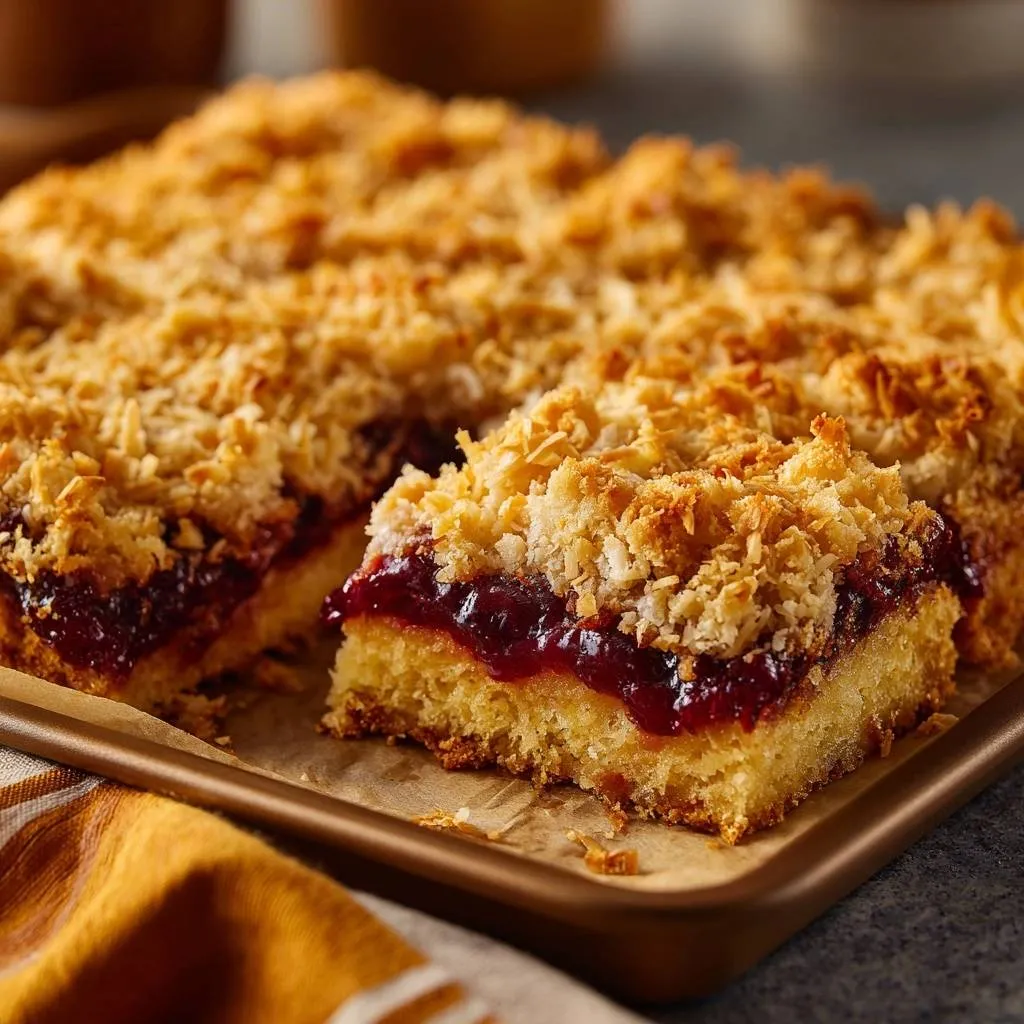
The physics of a great shortbread depends entirely on the temperature of your butter. Using cold, cubed butter creates tiny pockets of fat throughout the dough. As the bars bake, the water in that butter evaporates, creating steam that lifts the flour into delicate, flaky layers while maintaining a sturdy structure.
Furthermore, the addition of a single egg yolk provides “shortness” to the dough. While a whole egg might make the crust cakey or tough, the fat in the yolk tenderizes the gluten. This results in a base that snaps cleanly when you bite into it rather than crumbling into a million pieces on your plate.
Essential Components for the Perfect Fruit and Nut Layer
Quality ingredients are the backbone of this recipe. All-purpose flour is the best choice here because it has just enough protein to provide structural integrity without making the bars heavy. If you were to use cake flour, the base would be too fragile to support the thick coconut topping.
When it comes to the coconut, sweetened shredded varieties work best for that classic “macaroon” feel. The sugar on the coconut helps trigger the Maillard reaction, which is the chemical process that gives the toasted tips their deep golden color and nutty aroma. If you only have unsweetened coconut, you might find the topping lacks that signature chewy-crisp contrast.
Selecting the Right Raspberry Jam
You can use either seeded or seedless raspberry jam depending on your preference. Seeded jam offers a more rustic, homemade look and a bit of extra texture. However, the most important factor is the acidity. Raspberries are naturally tart, which is essential for balancing the heavy sweetness of the condensed milk and coconut topping.
If you decide to use a “fruit spread” or a low-sugar preserve, be aware that these often have a higher water content. In those cases, you might want to increase the cornstarch by an extra half-teaspoon. This adjustment ensures the filling doesn’t become watery during the final bake.
The Role of Sweetened Condensed Milk in Topping Texture
Sweetened condensed milk is the “glue” of the topping. It coats the coconut flakes, ensuring they don’t just dry out and burn in the oven. Instead, it creates a fudgy, chewy matrix that binds the coconut and the reserved dough crumbles together.
Step-by-Step: Building the Structural Foundation
To start, you want to use the “Pulse and Press” method. Whether you use a food processor or a pastry cutter, stop as soon as the mixture looks like coarse crumbs. You are looking for pea-sized bits of butter covered in flour. If you over-process it into a smooth paste, the crust will lose its flaky texture.
When you move the mixture to your 8×8 pan, don’t be afraid to use some muscle. Press the dough firmly into the corners and edges. You want a flat, even surface with no air pockets. This compression is what allows the bar to support the heavy jam and coconut layers without falling apart.
For a similar berry swirl experience, explore these raspberry cheesecake brownies.
The Par-Bake: Your Secret to a Golden Seal
Slide that pressed crust into the oven for 12 to 15 minutes. You aren’t looking for a deep brown color yet; look for the edges to just barely turn a pale gold. The center should look matte and set rather than shiny or wet. Spreading the jam onto the crust while it is still hot helps the layers bond together instantly.
Assembling the Raspberry and Coconut Layers
Once the base is par-baked, spread your jam and cornstarch mixture in a thin, even layer. Then, take your coconut and condensed milk mixture and dollop it over the top. Use a fork to gently fluff the coconut. This creates more surface area, allowing the tips of the coconut to catch the heat and toast beautifully.
The reserved half-cup of dough crumbles is the final touch. By mixing these into the coconut, you add little nuggets of “crunch” that break up the chewiness of the topping. It creates a multi-dimensional mouthfeel that makes these bars so addictive.
Achieving the Deep Golden Toast
During the final 20 to 25 minutes of baking, keep a close eye on the oven. You want the coconut to reach a deep, rich golden brown. You will also see the raspberry jam bubbling slightly at the very edges of the pan. This bubbling is a sign that the cornstarch has reached the temperature needed to thicken the filling properly.
Troubleshooting Common Baking Hurdles
If you find your crust is too crumbly to slice, you likely over-measured your flour. Always use the “spoon and level” method rather than scooping directly with the measuring cup. If the jam seems runny even after baking, it usually means the bars haven’t had enough time to cool down and set.
Temperature Control: The Importance of Total Cooling
Patience is the hardest part of this recipe. These bars undergo “carry-over cooking” as they sit on the counter. The jam is essentially a hot liquid when it first comes out of the oven. It needs at least two hours to firm up into a sliceable consistency. If you cut them too early, the layers will slide apart, and the base will lose its crispness.
Flavor Variations and Ingredient Swaps
While raspberry is the classic choice, you can easily swap it for apricot or blackberry jam. If you want to brighten the flavor, try rubbing some lemon or lime zest into the sugar before mixing the dough. For a sophisticated twist, add a drop of almond extract to the crust to give it a flavor profile similar to a traditional European Bakewell tart.
Storage, Freezing, and Make-Ahead Logistics
These bars stay fresh at room temperature in an airtight container for about three days. If you want them to last longer, you can refrigerate them for up to a week, though the crust will soften slightly over time. They also freeze beautifully. Just layer them with parchment paper in a freezer-safe bag for up to three months.
Expert Tips for Professional Results
Can I use frozen raspberries instead of jam?
You can, but you must cook them down first. Simmer the frozen berries with a bit of sugar and lemon juice until the liquid reduces by half and becomes thick. If you put raw frozen berries on the crust, they will release too much water and ruin the shortbread base.
Why did my coconut topping turn dark too fast?
This usually happens if your oven rack is too high or if your oven runs hot. The sugar in the condensed milk caramelizes quickly. If you see it browning too fast, simply tent a piece of aluminum foil loosely over the top for the last 10 minutes of baking.
Can I double this for a 9×13 pan?
Yes, you can double the ingredients for a larger crowd. The baking times will remain very similar, though you might need to add 5 extra minutes to the final bake. Just ensure the center of the larger pan is fully set and the jam is bubbling before removing it from the oven.
How do I get perfectly clean square cuts?
For those sharp, bakery-style edges, use the “hot knife” technique. Run a sharp chef’s knife under hot water, wipe it dry, and make one clean slice. Wipe the knife clean and reheat it between every single cut to prevent the jam from smearing across the coconut topping.
Is there a gluten-free flour substitute that works for this specific shortbread?
A high-quality 1-to-1 gluten-free flour blend containing xanthan gum works quite well here. Because shortbread doesn’t rely on gluten development for rise, the texture remains very similar to the original. Just be sure to press the dough extra firmly into the pan, as gluten-free crusts can be slightly more fragile.
Raspberry Coconut Bars
Course: DessertCuisine: AmericanDifficulty: medium12
servings15
minutes40
minutes295
kcal55
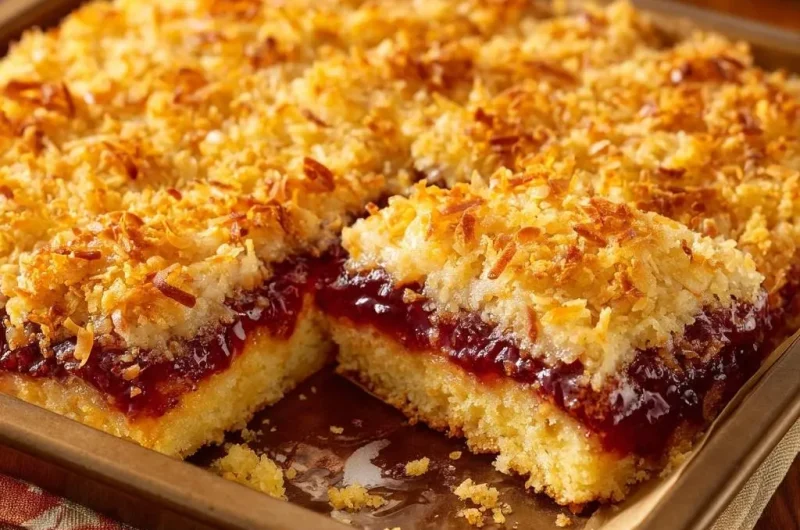
MinutesThese bars feature a sturdy shortbread base, a bright raspberry filling, and a toasted coconut topping. The recipe uses a par-baking method and cornstarch to ensure the bottom stays crisp and the layers remain distinct.
Ingredients
1.5 cups all-purpose flour
0.5 cup granulated sugar
0.5 teaspoon baking powder
0.75 cup cold unsalted butter, cubed
1 large egg yolk
1 teaspoon vanilla extract
1.25 cups raspberry jam
1 teaspoon cornstarch (mixed into the jam)
2 cups sweetened shredded coconut
0.5 cup sweetened condensed milk
Directions
- Preheat your oven to 350°F (175°C) and grease an 8×8 inch baking pan or line it with parchment paper, leaving an overhang on the sides for easy removal.
- In a food processor or using a pastry cutter, pulse the flour, sugar, baking powder, and cold butter until the mixture resembles coarse crumbs. Add the egg yolk and vanilla, pulsing just until the dough begins to clump together.
- Reserve 1/2 cup of the crumble mixture for the topping. Press the remaining dough firmly and evenly into the bottom of your prepared pan.
- To solve the soggy bottom issue, par-bake this base alone for 12 to 15 minutes until the edges are just barely golden and the center is set. This creates the essential moisture barrier.
- While the base bakes, stir the cornstarch into the raspberry jam in a small bowl. In a separate bowl, toss the shredded coconut with the sweetened condensed milk and the reserved 1/2 cup of dough crumbles until well combined.
- Remove the pan from the oven. Spread the raspberry jam in an even layer over the hot, par-baked crust.
- Evenly distribute the coconut and condensed milk mixture over the jam layer. Use a fork to fluff it slightly so the coconut peaks can toast.
- Return the pan to the oven and bake for another 20 to 25 minutes. The coconut topping should be deeply golden brown and the jam should be bubbling at the edges.
- Allow the bars to cool completely in the pan. This cooling period is essential for the jam to set and the crust to reach maximum crispness. Lift from the pan using the parchment overhang, slice into squares, and serve.
Notes
- The secret to avoiding a soggy bottom is par-baking the base for 12 to 15 minutes and adding cornstarch to the jam to create a moisture barrier. Ensure the bars cool completely before slicing to allow the jam to set.