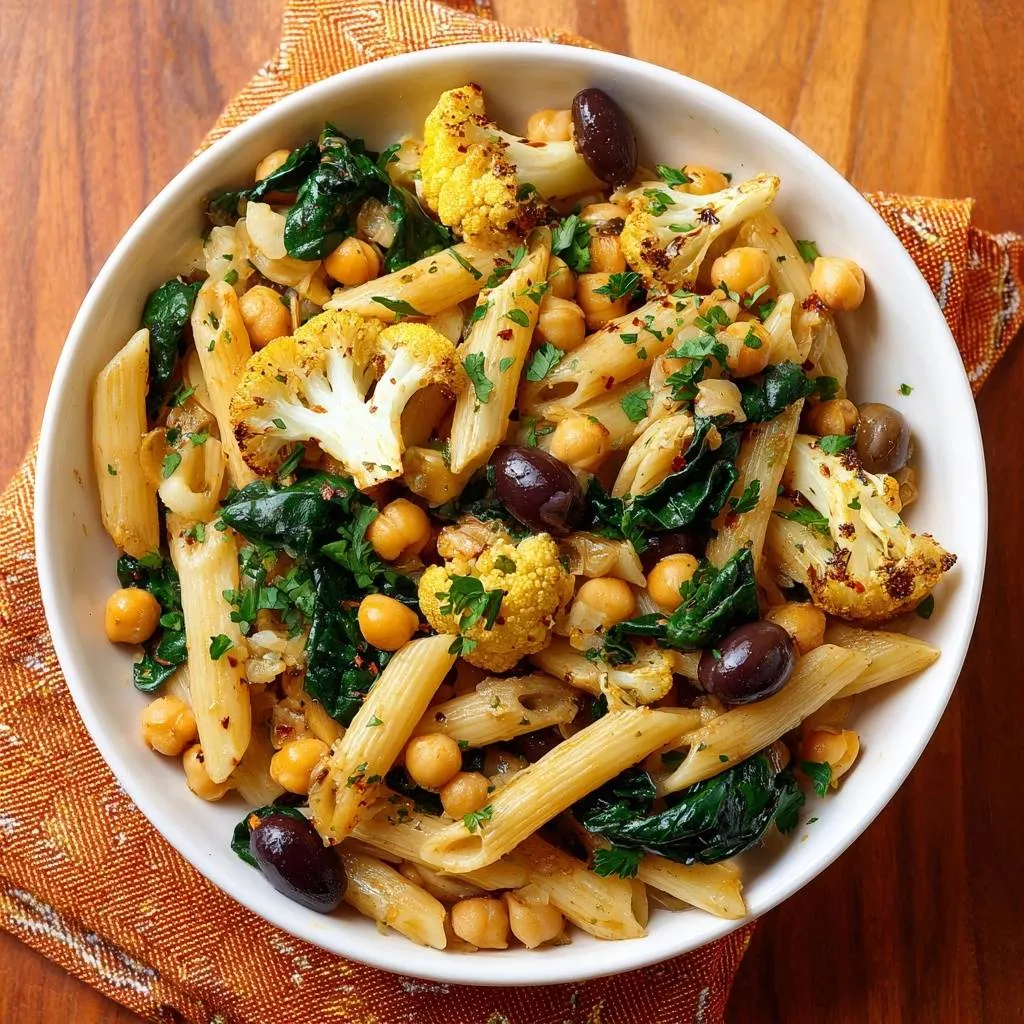
Most vegetable pasta dishes suffer from a fatal flaw: the “mush factor.” You’ve likely experienced it before—watery zucchini or boiled-to-death broccoli that turns your dinner into a soggy mess. This Roasted Cauliflower and Chickpea Penne solves that problem by focusing on moisture control and high-heat caramelization. We aren’t just tossing vegetables into a pot; we’re building layers of texture that stand up to the bite of the pasta.
The secret lies in the contrast between the charred, nutty cauliflower and the firm, al dente penne. By roasting the vegetables separately, we develop deep, earthy flavors that boiling simply can’t touch. This isn’t just a bowl of noodles; it’s a carefully constructed meal where every ingredient maintains its integrity. You’ll get a silky, light sauce that clings to every ridge without the need for heavy creams or butter.
To ensure success, you must pay attention to the cauliflower’s surface area. I always tell people to cut their florets with at least one flat side. When that flat edge makes direct contact with the hot roasting pan, it creates a deep brown crust that provides a smoky sweetness. This simple knife technique is what separates a home-cooked meal from a restaurant-quality dish.
The Physics of Texture: Why Roasting Beats Steaming
When you boil or steam cauliflower, you’re essentially trapping moisture inside the vegetable’s cellular structure. This leads to a sulfurous aroma and a limp, unappealing texture. However, when you subject cauliflower to 425°F, you trigger the Maillard reaction. This chemical process breaks down the sugars and proteins, transforming the vegetable into something nutty, sweet, and incredibly savory.
High heat is your best friend here because it evaporates surface moisture rapidly. If you roast at a lower temperature, the cauliflower will soften before it browns, leaving you with that dreaded mushy interior. By cranking the oven up, you ensure the edges get crispy and charred while the center remains “tender-crisp.” It’s a delicate balance that requires a hot environment and plenty of breathing room on the pan.
Surface area plays a massive role in heat conduction. This is why “flat-edged” florets are superior to rounded ones. When you slice through the head of the cauliflower, try to create as many flat planes as possible. These flat surfaces act like little heat sinks, browning deeply against the metal of the sheet pan. The result is a complex flavor profile that provides a perfect counterpoint to the creamy chickpeas and bright spinach.
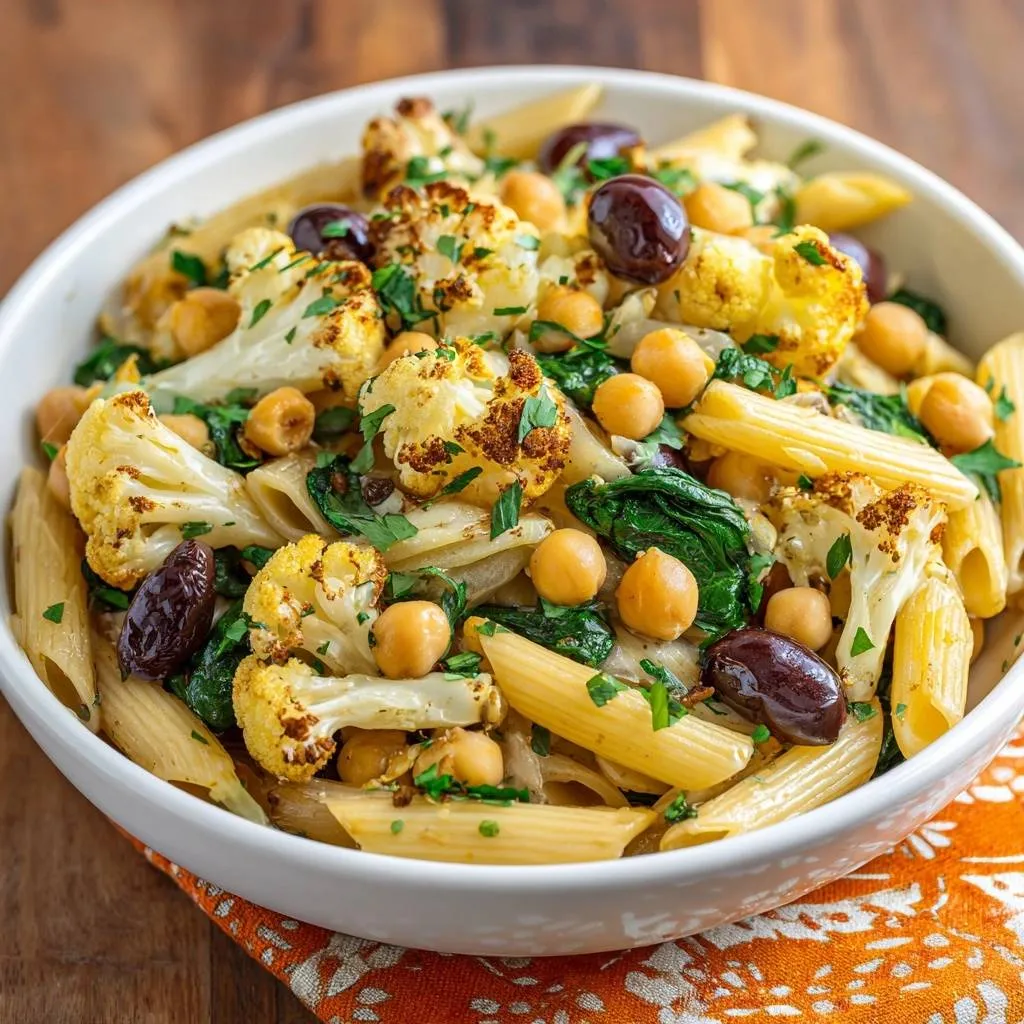
Essential Components for Roasted Cauliflower and Chickpea Penne
Success starts at the grocery store. When selecting your cauliflower, look for a head that feels heavy for its size and has tightly packed florets. Any brown spots or “fuzziness” indicate the vegetable is past its prime and will likely release too much water during the roasting process. A dense, fresh head will hold its shape beautifully even under intense heat.
The chickpeas are equally important, but they require a little prep work. You must drain them and pat them bone-dry with a clean kitchen towel or paper towels. If they go into the oven wet, they will steam rather than crisp up. A dry chickpea develops a slightly crunchy exterior and a creamy, almost buttery interior that adds a fantastic protein-rich bite to the pasta.
For the pasta, penne rigate (the kind with ridges) is non-negotiable. Those tiny grooves are designed to catch the emulsified olive oil and pasta water sauce. Smooth penne will let the sauce slide right off, leaving it to pool at the bottom of your bowl. Additionally, we use yellow onion for its high sugar content, which provides a subtle sweetness, and a touch of turmeric to give the entire dish a warm, golden glow.
The Role of Starchy Pasta Water
Never pour your pasta water down the drain! This cloudy liquid is what professional chefs call “liquid gold.” As the penne boils, it releases starch into the water. When you combine this starchy water with the olive oil and the browned bits in your skillet, it acts as a natural emulsifier. It binds the fat and the liquid together into a cohesive, velvety sauce.
Step-by-Step: Achieving the Perfect Char
The roasting phase is where the magic happens, but it requires discipline. The most common mistake is overcrowding the sheet pan. If your cauliflower and chickpeas are piled on top of each other, the moisture they release will get trapped, creating a steam chamber. You want every single floret to have its own “personal space” on the pan to ensure the air can circulate freely.
If you enjoy roasted vegetables, you’ll also love these perfectly roasted baby potatoes.
Once you’ve tossed the vegetables in olive oil, turmeric, salt, and pepper, spread them out in a single, even layer. Use two pans if you have to! About halfway through the 20-minute roasting time, give the pan a good shake or use a spatula to flip the florets. You’re looking for dark brown, almost blackened edges. Don’t be afraid of that char; it’s where all the deep, smoky flavor lives.
Keep a close eye on the chickpeas during the last five minutes. They can go from perfectly crisp to unpleasantly hard very quickly. You want them to look slightly shrunken and golden-brown. When you pull the pan out of the oven, the aroma should be nutty and fragrant, not burnt. Let them sit for just a minute on the hot pan to finish crisping up while you prepare the skillet.
The Skillet Emulsion: Combining Textures
Timing is everything when you move to the stovetop. You want to pull your penne out of the boiling water when it is still “shy of al dente.” This means it should still have a slightly firm, almost chalky center. Why? Because the pasta will finish its final two minutes of cooking directly in the skillet, absorbing the flavors of the garlic, onion, and roasted vegetable juices.
Once you add the pasta, roasted veggies, olives, and spinach to the skillet, pour in that reserved pasta water. Now, you need to move fast. Use a pair of tongs or a large wooden spoon to toss everything vigorously over medium-high heat. This motion encourages the starch and oil to marry. You’ll see the liquid transform from a watery puddle into a glossy sauce that coats every noodle.
The spinach should just barely wilt from the residual heat. If you overcook it, it will turn slimy and lose its vibrant green color. As soon as the leaves have collapsed and the sauce has thickened enough to cling to the penne, kill the heat. The whole process in the skillet should take no more than two or three minutes to keep the textures at their peak.
Flavor Variations and Ingredient Swaps
While this recipe is fantastic as written, you can easily adapt it to what’s in your pantry. If you want more crunch, try adding a handful of toasted pine nuts or slivered almonds at the very end. For a punchier, saltier profile, you can swap the Kalamata olives for two tablespoons of drained capers or even some finely chopped salt-preserved lemons.
If you prefer heartier greens like kale or Swiss chard over spinach, just remember to adjust your timing. These greens need a bit more help to soften, so toss them into the skillet a minute or two before you add the pasta. You can also play with the heat levels. If red pepper flakes feel too standard, try Aleppo pepper for a mild, fruity heat or Urfa Biber for a deep, chocolatey smokiness.
Troubleshooting Common Pasta Pitfalls
If your pasta ends up looking dry, don’t panic. This usually happens because the noodles absorbed the liquid faster than expected or you didn’t use enough pasta water. Simply splash in more of that reserved starchy water, one tablespoon at a time, while tossing over low heat until the gloss returns. It’s always better to reserve more water than you think you’ll need.
Soft chickpeas are usually the result of skipping the drying step or crowding the roasting pan. If you find your garlic tastes bitter, you likely let it brown too much in the skillet. Garlic only needs about 60 seconds to become fragrant; if it turns dark brown, it’s best to start the sauté over, as that bitterness will permeate the entire sauce and ruin the delicate flavors of the cauliflower.
Optimal Pairings for Roasted Cauliflower and Chickpea Penne
Because this dish is quite earthy and rich from the roasting process, it pairs beautifully with something bright and acidic. A simple arugula salad tossed in a sharp lemon vinaigrette is the perfect companion. The peppery bite of the arugula cuts through the olive oil and balances the sweetness of the caramelized onions and cauliflower.
If you’re looking for something more substantial, a thick slice of crusty sourdough or homemade focaccia is ideal. You’ll want something to mop up any of that emulsified sauce left at the bottom of the bowl. The contrast between the soft, chewy bread and the crispy roasted chickpeas makes for a very satisfying textural experience.
Storage and Reheating Protocols
This pasta is truly at its best the moment it leaves the skillet. As it sits, the pasta will continue to soak up the sauce, and the cauliflower will lose its crisp edges. If you do have leftovers, store them in an airtight container in the fridge for up to three days. I don’t recommend freezing this dish, as the cauliflower will become unpleasantly rubbery once thawed.
To reheat, avoid the microwave if possible. Instead, toss the pasta back into a skillet with a splash of water or a tiny bit of broth. Heat it over medium-low, tossing constantly, until the sauce loosens up and the pasta is warmed through. This method helps revive the emulsion and keeps the vegetables from getting soggy.
Expert Tips for Professional Results
The first rule of great pasta is to salt your boiling water until it “tastes like the sea.” This is your only chance to season the penne itself. If the water isn’t salty enough, the entire dish will taste flat, no matter how much salt you sprinkle on at the end. Aim for about a tablespoon of salt for every four quarts of water.
Invest in a heavy-rimmed baking sheet, often called a half-sheet pan. These pans hold heat much better than thin, flimsy ones, which helps achieve that consistent char on the cauliflower. Finally, always chop your fresh parsley at the very last second. This keeps the volatile oils intact, ensuring the herb provides a bright, peppery finish rather than just looking like green confetti.
Frequently Asked Questions
How do I keep the cauliflower from getting mushy?
The key is high heat and space. Roast at 425°F and ensure the florets are in a single layer with room between them. If they are too close, they will steam in their own moisture. Also, make sure the cauliflower is dry before tossing it in oil; any extra water will prevent browning.
Can I use frozen cauliflower for this recipe?
I don’t recommend it for this specific dish. Frozen cauliflower has been blanched and then frozen, which breaks down the cell walls. When it thaws and roasts, it releases a significant amount of water, making it almost impossible to get those crispy, charred edges that define this recipe.
What can I use if I don’t have chickpeas?
Cannellini beans or Great Northern beans are excellent substitutes. However, they won’t get as crispy as chickpeas. If you use them, follow the same drying process. Alternatively, you could use extra cauliflower or even some roasted walnuts for a similar nutty crunch.
Why is my sauce not thickening or sticking to the pasta?
This usually happens if the pasta water wasn’t starchy enough or if you didn’t toss the pasta vigorously enough. Make sure you use the water from the very end of the boiling process when it’s most cloudy. The “vigorous toss” is essential to create the emulsion between the oil and the water.
Is there a way to make this dish spicy?
Absolutely. You can increase the amount of red pepper flakes in the sauté, or add a teaspoon of harissa paste to the skillet when you add the garlic. The smokiness of harissa pairs beautifully with the roasted cauliflower and turmeric.
How do I store and reheat leftovers?
Store in an airtight container in the refrigerator for up to 3 days. To reheat, place the pasta in a skillet over medium heat with a tablespoon or two of water. Toss frequently until heated through. This helps the sauce become creamy again without making the noodles mushy.
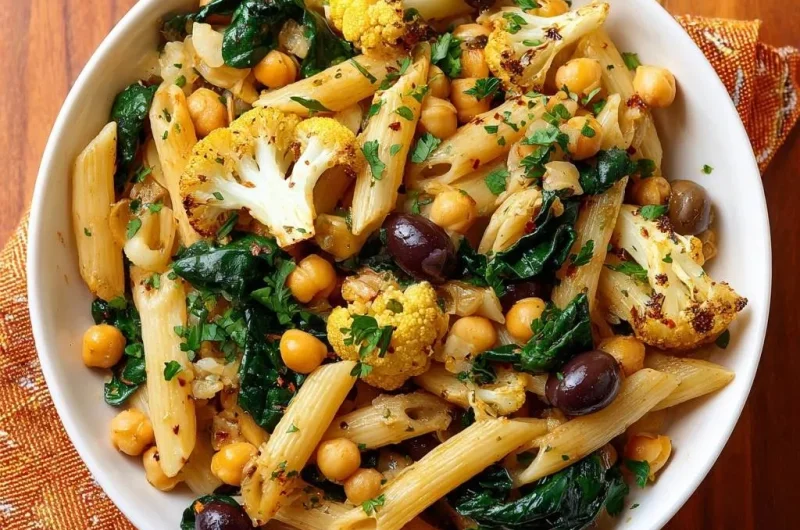
Roasted Cauliflower and Chickpea Penne
Course: Main CourseCuisine: Mediterranean-AmericanDifficulty: easy4
servings15
minutes25
minutes440
kcal40
MinutesA vibrant pasta dish featuring caramelized cauliflower, protein-rich chickpeas, and baby spinach tossed in a silky olive oil sauce that clings perfectly to the penne.
Ingredients
12 ounces penne pasta
1 small head cauliflower, cut into medium-sized flat-edged florets
1 can (15 ounces) chickpeas, drained and patted very dry
1 medium yellow onion, finely diced
3 cups fresh baby spinach
1/2 cup whole Kalamata olives, pitted
4 tablespoons extra virgin olive oil, divided
3 cloves garlic, minced
1/2 teaspoon red pepper flakes
1/2 teaspoon ground turmeric (for golden color)
1/4 cup fresh parsley, finely chopped
Salt and black pepper to taste
1 cup reserved starchy pasta cooking water
Directions
- Preheat your oven to 425°F (220°C). This high heat is essential to ensure the cauliflower roasts and browns before it turns to mush.
- Toss the cauliflower florets and dried chickpeas on a large sheet pan with 2 tablespoons of olive oil, the ground turmeric, salt, and pepper. Spread them in a single layer. If the pan is crowded, they will steam rather than roast. Roast for 20 to 25 minutes, tossing halfway through, until the cauliflower edges are charred and the chickpeas are slightly crisp.
- While the vegetables roast, boil a large pot of heavily salted water. Cook the penne until it is just shy of al dente (about 2 minutes less than the package directions). Before draining, reserve at least 1 cup of the starchy pasta water.
- In a large skillet or wide pot, heat the remaining 2 tablespoons of olive oil over medium heat. Add the diced onion and sauté for 5 minutes until translucent and starting to golden. Add the minced garlic and red pepper flakes and sauté for just 1 minute more until fragrant.
- Add the cooked penne, the roasted cauliflower, and the chickpeas to the skillet. Toss in the whole olives and the fresh baby spinach.
- Immediately pour in 1/2 cup of the reserved pasta water. Increase the heat to medium-high and toss vigorously for 2 minutes. The starch in the water will emulsify with the olive oil and the browned bits from the roasted veggies to create a light, silky sauce. If the pasta looks dry, add more pasta water a tablespoon at a time.
- Remove from heat once the spinach has wilted and the sauce has thickened to coat the pasta. Garnish generously with fresh parsley and serve immediately while the textures are at their peak.
Notes
- Ensure the cauliflower and chickpeas are spread in a single layer to prevent steaming. Use the starchy water to create a sauce that clings to the noodles.