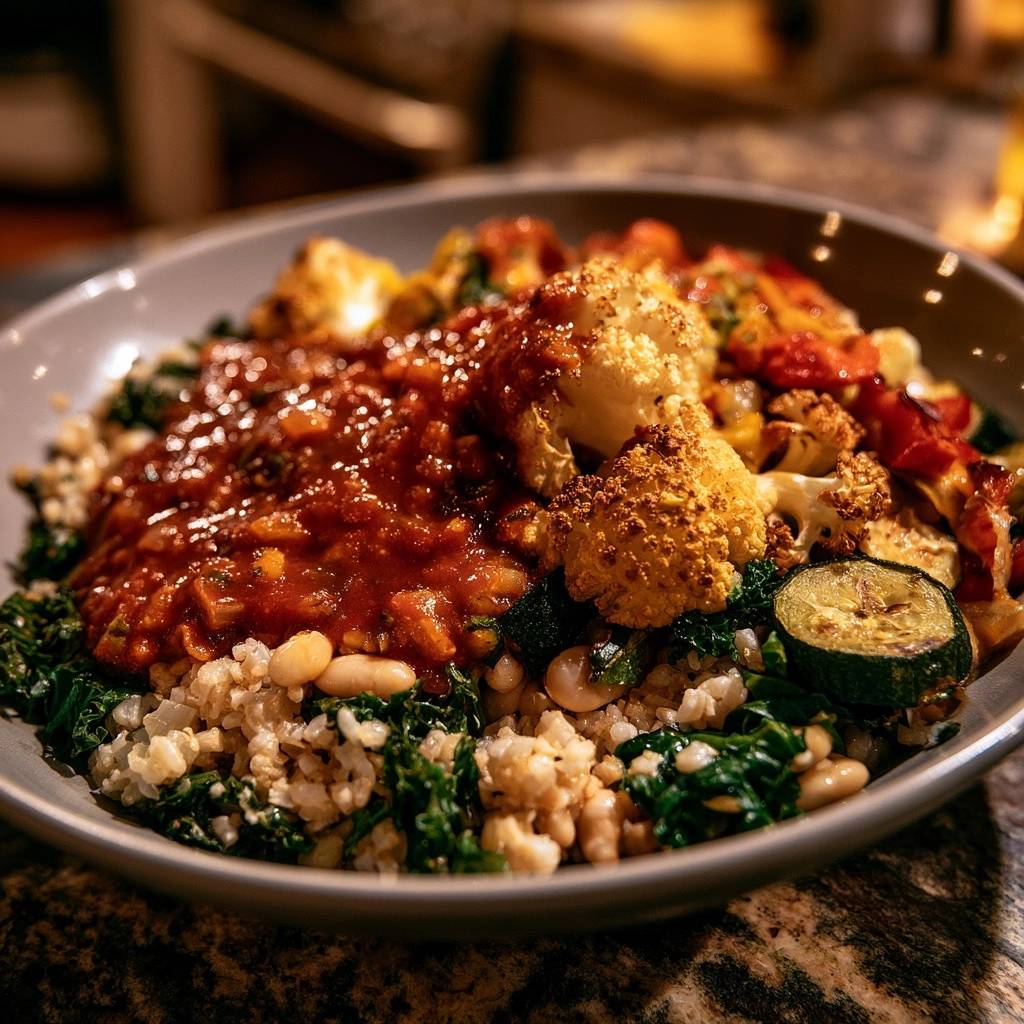
Stop settling for mushy, steamed-out vegetables that ruin your healthy grain bowls. Most home cooks struggle with soggy zucchini and limp cauliflower because they treat roasting like a passive task rather than a high-heat sear. The secret to a restaurant-quality bowl is achieving a deep, caramelized char on the vegetables while keeping the grains light and fluffy.
This recipe uses a specific high-heat technique and a strategic layering method to ensure your sauce adds flavor without turning your dinner into a watery mess. You’ll learn how to balance the creamy texture of cannellini beans with the crispy, smoky edges of perfectly roasted florets. It’s about creating a meal that feels substantial and vibrant rather than heavy and damp.
The absolute key to success here is preheating your baking sheet. When you toss cold vegetables onto a piping hot metal surface, the moisture on the surface evaporates instantly. This creates an immediate sear that locks in the vegetable’s natural sweetness and prevents that dreaded translucent, limp texture. If you skip this step, you’re essentially boiling your dinner in the oven.
The Anatomy of a Non-Mushy Grain Bowl
A great grain bowl is a study in contrasts. You need the chew of the grain, the creaminess of the bean, the crunch of the roasted vegetable, and the acidity of the sauce. This Roasted Cauliflower and White Bean Grain Bowl provides a complete protein profile by pairing legumes with whole grains, ensuring you stay full for hours.
The chunky marinara or roasted red pepper sauce acts as a high-acid counterpoint to the earthy, roasted flavors of the cauliflower. Without that acidity, the bowl can feel one-note. By keeping the sauce thick and chunky, you provide a concentrated burst of flavor that doesn’t seep into the grains and turn them into mush.
Essential Produce and Pantry Staples
When prepping your cauliflower, aim for medium florets. If you chop them into tiny crumbles, they’ll burn before the zucchini is even tender. If you leave them in giant chunks, the outside will char while the stems remain raw and woody. Consistency in size ensures every bite is cooked through perfectly.
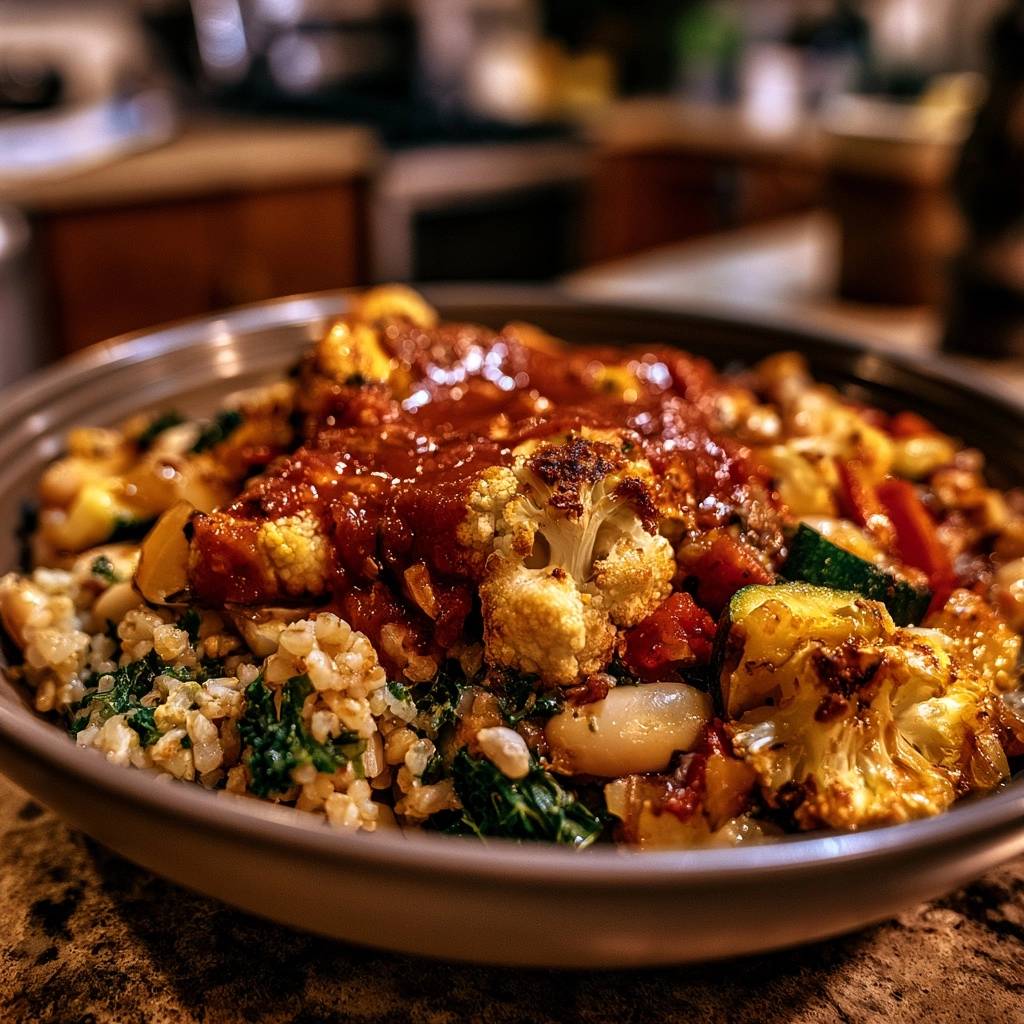
Cannellini beans are the preferred choice here because of their buttery, silky interior. While chickpeas are a popular alternative, they can sometimes feel too firm or dry in a grain-heavy dish. Cannellini beans melt into the warm rice and kale, providing a rich mouthfeel that mimics dairy without the need for heavy creams.
Always use a high-smoke point oil like extra virgin olive oil or avocado oil. Since we are roasting at 425°F, you need an oil that can handle the heat without breaking down and tasting bitter. The oil isn’t just for flavor; it acts as a heat conductor that helps the spices adhere to every crevice of the cauliflower.
Selecting the Right Grain Base
Brown rice and quinoa are the two heavy hitters for this bowl. Brown rice offers a distinct, nutty chew that stands up well to the hearty roasted vegetables. If you prefer a lighter texture with a boost of protein, quinoa is your best bet. Its small pearls create a fluffy bed that catches the spices from the sautéed kale.
To keep your grains from clumping, make sure you don’t overwater them during the initial cook. Use a strict 2:1 ratio for water to grain and let them steam with the lid on for ten minutes after the heat is off. This allows the grains to firm up so they remain distinct pearls rather than a sticky mass when you toss them in the skillet.
The Science of High-Heat Vegetable Roasting
Roasting at 425°F is the magic number for triggering the Maillard reaction. This chemical reaction between amino acids and reducing sugars gives roasted vegetables their characteristic brown crust and savory depth. If you roast at a lower temperature, the vegetables will cook through, but they won’t develop that complex, charred flavor profile.
Zucchini is notoriously difficult to roast because it’s over 90% water. As it heats up, that water wants to escape as steam. If your oven temperature is too low, the water stays trapped inside the cell walls, resulting in a mushy texture. High heat forces that moisture out quickly, allowing the exterior to brown before the interior collapses.
Why We Preheat the Baking Sheet
Think of your baking sheet like a cast-iron skillet. You wouldn’t put a steak into a cold pan, and you shouldn’t put vegetables onto a cold sheet. The thermal conductivity of the hot metal provides an immediate sear to the side of the vegetable touching the pan. This creates a structural “crust” that helps the vegetable hold its shape.
When you hear that sizzle as the cauliflower hits the pan, you know you’re doing it right. That sound is the sound of moisture evaporating. This immediate heat transfer is what separates a professional-grade grain bowl from a standard home-cooked side dish. It ensures the zucchini rounds stay snappy rather than becoming translucent and limp.
The Danger of Overcrowding the Pan
Overcrowding is the number one enemy of crispiness. Every vegetable releases steam as it roasts. If the florets are packed tightly together, that steam has nowhere to go except into the neighboring vegetable. This creates a pocket of evaporative cooling that drops the temperature around the food, effectively boiling it in its own juices.
Give your vegetables at least half an inch of breathing room. If you have a particularly large head of cauliflower, use two baking sheets instead of one. It’s better to wash an extra pan than to eat a plate of soggy vegetables. A single layer ensures the hot air can circulate around every piece, browning them from all sides.
Step-by-Step: Preparing Roasted Cauliflower and White Bean Grain Bowls
Start by getting that oven hot. While it preheats with the pan inside, you can focus on the prep. The smell of smoked paprika hitting the warm vegetables is your first sign that this meal is going to be special. You want to see a vibrant orange hue coating every piece of cauliflower and zucchini before they ever touch the heat.
Phase 1: Seasoning for Maximum Flavor Extraction
Toss your vegetables in a large bowl rather than seasoning them on the pan. This ensures every nook and cranny of the cauliflower florets is coated in oil and spices. The oil acts as a vehicle for the garlic powder and smoked paprika, carrying those flavors deep into the vegetables as they roast.
Don’t be shy with the salt at this stage. Salt helps draw out the internal moisture of the zucchini, which then evaporates in the high heat of the oven. You’re looking for a uniform coating that looks glossy. If the vegetables look dry, add another teaspoon of oil; you need that fat to conduct the heat effectively.
Phase 2: The Sauté and Grain Integration
While the oven does the heavy lifting, turn your attention to the skillet. Sautéing the kale in olive oil softens its fibrous cell walls, making it much more pleasant to eat than raw kale. Once the kale is bright green and tender, add your cooked grains and beans directly to the pan. This is a crucial step for flavor building.
By tossing the grains and beans in the skillet, they absorb the residual oil and the earthy flavor of the kale. It also ensures that every component of your bowl is hot. There’s nothing worse than a grain bowl with piping hot vegetables sitting on a bed of cold, flavorless beans. This integration step creates a cohesive base for the dish.
Phase 3: Strategic Assembly and Layering
Now comes the “Anti-Soggy” plating logic. Start with a generous base of the warm grain, bean, and kale mixture. Top this with your beautifully charred roasted vegetables. You’ve worked hard to get those crispy edges, so don’t ruin them now by drowning the entire bowl in sauce.
Heat your sauce in a separate small pan until it’s bubbling. Instead of tossing everything together, spoon the sauce over just one side or the center of the bowl. This allows you to control how much sauce is in each bite. You can dip the crispy cauliflower into the sauce as you eat, preserving that crunch until the very last mouthful.
Flavor Variations and Ingredient Swaps
This bowl is incredibly versatile. If you want a deeper, smokier profile, swap the marinara for a roasted red pepper sauce or even a chipotle-infused tomato base. The sweetness of the peppers complements the charred cauliflower perfectly. You can also add a handful of toasted pine nuts or sunflower seeds at the end for an extra layer of crunch.
If kale isn’t your favorite, Swiss chard or spinach work beautifully. Just keep in mind that spinach wilts much faster than kale, so you’ll only need to sauté it for about 60 seconds. For a Mediterranean twist, add some halved kalamata olives or a sprinkle of dried oregano to the roasting vegetables.
For those who want even more protein, you can add a dollop of hummus or a scoop of Greek yogurt on top. The cool creaminess of the yogurt provides a lovely contrast to the warm, spicy vegetables. If you want to keep it strictly plant-based, a drizzle of tahini mixed with lemon juice adds a rich, nutty finish that ties all the components together.
Avoiding Common Grain Bowl Mistakes
If you find that your cauliflower edges are charring but the stems are still hard, your florets might be too large. You can fix this by adding a tablespoon of water to the pan and covering it loosely with foil for the last five minutes of roasting. This creates a quick burst of steam that softens the stems without ruining the crust.
Mushy grains are usually the result of overcooking or not draining them well enough. If your grains are too soft, spread them out on a plate and let them air dry for a few minutes before adding them to the skillet. This helps some of the excess moisture evaporate so they don’t turn into a paste when mixed with the beans.
Always rinse your canned beans thoroughly. The liquid in the can often has a metallic, starchy taste that can muddy the flavors of your bowl. Rinsing them under cold water until the bubbles disappear ensures you only get the clean, creamy flavor of the bean itself. It also helps reduce the sodium content of the overall dish.
Make-Ahead Strategies and Storage Logistics
This is a fantastic meal prep recipe, but you have to be smart about storage. Store the roasted vegetables in a separate container from the grain and bean mixture. If you store them together, the moisture from the grains will migrate into the cauliflower, making it soft and rubbery by the next day.
When it’s time to reheat, avoid the microwave for the vegetables if possible. An air fryer or a quick toss in a hot skillet will revive the crispy edges of the cauliflower and zucchini in just a few minutes. The grain and bean mixture can be microwaved with a damp paper towel over the top to keep the rice from drying out.
The components will stay fresh in the refrigerator for up to four days. This recipe does not freeze well as a completed bowl because the zucchini becomes very watery upon thawing. However, you can freeze the cooked grains and beans separately, then simply roast fresh vegetables when you’re ready to eat.
Expert Tips for Professional Results
To truly elevate this dish, finish each bowl with a bright pop of acidity. A squeeze of fresh lemon juice or a tiny splash of red wine vinegar right before serving cuts through the richness of the olive oil and the smokiness of the paprika. It wakes up all the other flavors and makes the whole dish taste lighter.
Seasoning at every layer is the hallmark of a professional chef. Don’t just salt the vegetables; add a pinch of salt to the grains as they cook and another pinch to the kale as it wilts in the skillet. Building these layers of seasoning ensures that no part of the bowl tastes bland, creating a harmonious experience from top to bottom.
If you want an even deeper char, try placing your baking sheet on the lowest rack of the oven. This puts the vegetables closer to the heating element, intensifying the browning on the bottom of the florets. Just keep a close eye on them to ensure the spices don’t burn, as paprika can turn bitter if it gets too dark.
Troubleshooting Your Grain Bowls
Can I use frozen cauliflower for this recipe?
You can use frozen cauliflower, but you must adjust your technique. Frozen vegetables release significantly more water than fresh ones. To prevent sogginess, do not thaw them first. Toss the frozen florets in oil and spices and roast them at 450°F. They will likely need an extra 5 to 10 minutes to achieve a proper char. Note that the texture will be softer than fresh cauliflower, but the high heat will still help develop flavor.
How do I keep the zucchini from getting watery?
The key to non-watery zucchini is the thickness of the slice and the roasting temperature. Slicing them into 1/2-inch rounds provides enough mass to withstand the high heat without turning to mush. If you slice them too thin, they will disintegrate. Additionally, ensure you don’t salt the zucchini too far in advance of roasting; salt them right before they go into the oven so they don’t sit and sweat on the counter.
What other beans work well if I don’t have cannellini?
Great Northern beans or Navy beans are excellent substitutes as they share a similar creamy texture and mild flavor. If you want a firmer bite, chickpeas (garbanzo beans) are a great choice, though they won’t blend into the grains as seamlessly. Even black-eyed peas can work well if you want a slightly more earthy, savory note in your bowl.
Is this recipe suitable for a low-carb diet?
Yes, you can easily adapt this for a low-carb lifestyle. Simply replace the brown rice or quinoa with a base of cauliflower rice or double the amount of sautéed kale. You could also use a bed of fresh arugula or baby spinach. The roasted vegetables and white beans provide plenty of substance, so you won’t feel like you’re missing out by skipping the traditional grains.
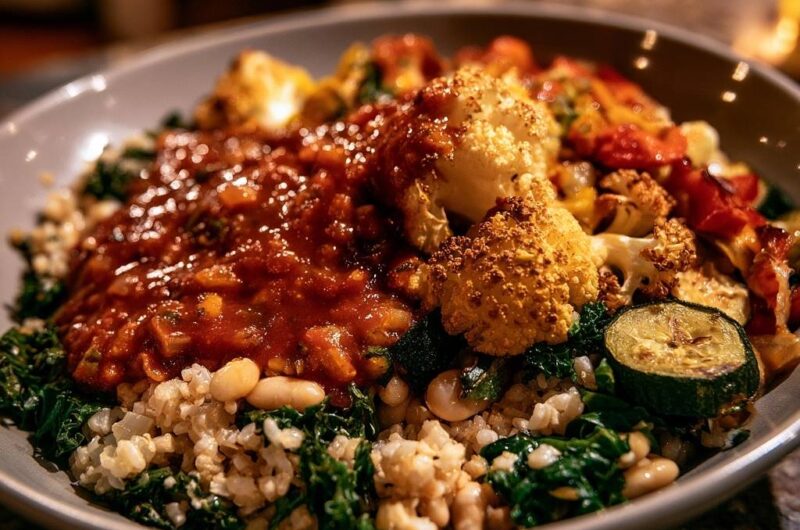
Roasted Cauliflower and White Bean Grain Bowls
Course: Main CourseCuisine: AmericanDifficulty: easy4
servings15
minutes25
minutes40
Minutes385
kcalAmerican
Ingredients
1 large head cauliflower, cut into medium florets
2 medium zucchini, sliced into 1/2-inch thick rounds
1 can (15 oz) cannellini beans, drained and rinsed
2 cups cooked brown rice or quinoa
4 cups fresh kale, stems removed and finely chopped
1 cup chunky marinara or roasted red pepper sauce
1/2 cup diced red bell pepper (for roasting)
3 tablespoons olive oil, divided
1 teaspoon garlic powder
1 teaspoon smoked paprika
Salt and black pepper to taste
Directions
- Preheat your oven to 425°F (218°C). This high temperature is the absolute key to preventing soggy vegetables. Place a large rimmed baking sheet inside the oven while it preheats so the metal is piping hot.
- In a large bowl, toss the cauliflower florets, zucchini rounds, and diced red peppers with 2 tablespoons of olive oil, garlic powder, paprika, salt, and pepper. Ensure every piece is lightly coated; the oil acts as a heat conductor for that perfect crisp.
- Carefully pull the hot baking sheet from the oven and spread the vegetables in a single layer. You should hear a sizzle. Do not crowd the pan; if the vegetables are too close, they will steam each other instead of roasting. Roast for 20 to 25 minutes, tossing halfway through, until the cauliflower edges are dark golden brown and charred.
- While the vegetables roast, heat the remaining tablespoon of oil in a large skillet over medium heat. Add the chopped kale and a pinch of salt. Sauté for 3 to 4 minutes until wilted and tender.
- Add the cooked grains and the drained white beans directly into the skillet with the kale. Toss for 2 minutes to warm through and allow the grains to absorb the residual oil and kale flavor. This prevents the beans from being cold and ensures the base of the bowl is well-integrated.
- Assemble the bowls by creating a generous base of the grain, bean, and kale mixture.
- Top the grains with the hot roasted cauliflower, zucchini, and peppers.
- The final trick: Heat your sauce separately in a small saucepan until bubbling. Spoon the thick sauce only over one side/center of the bowl right before serving. This allows you to enjoy the crispy texture of the roasted florets alongside the rich sauce without the vegetables becoming submerged and losing their crunch.
Notes
- Preheating the baking sheet is essential for achieving a char and preventing sogginess. Ensure vegetables are in a single layer and not crowded on the pan. Heat the sauce separately and add just before serving to maintain the roasted texture.