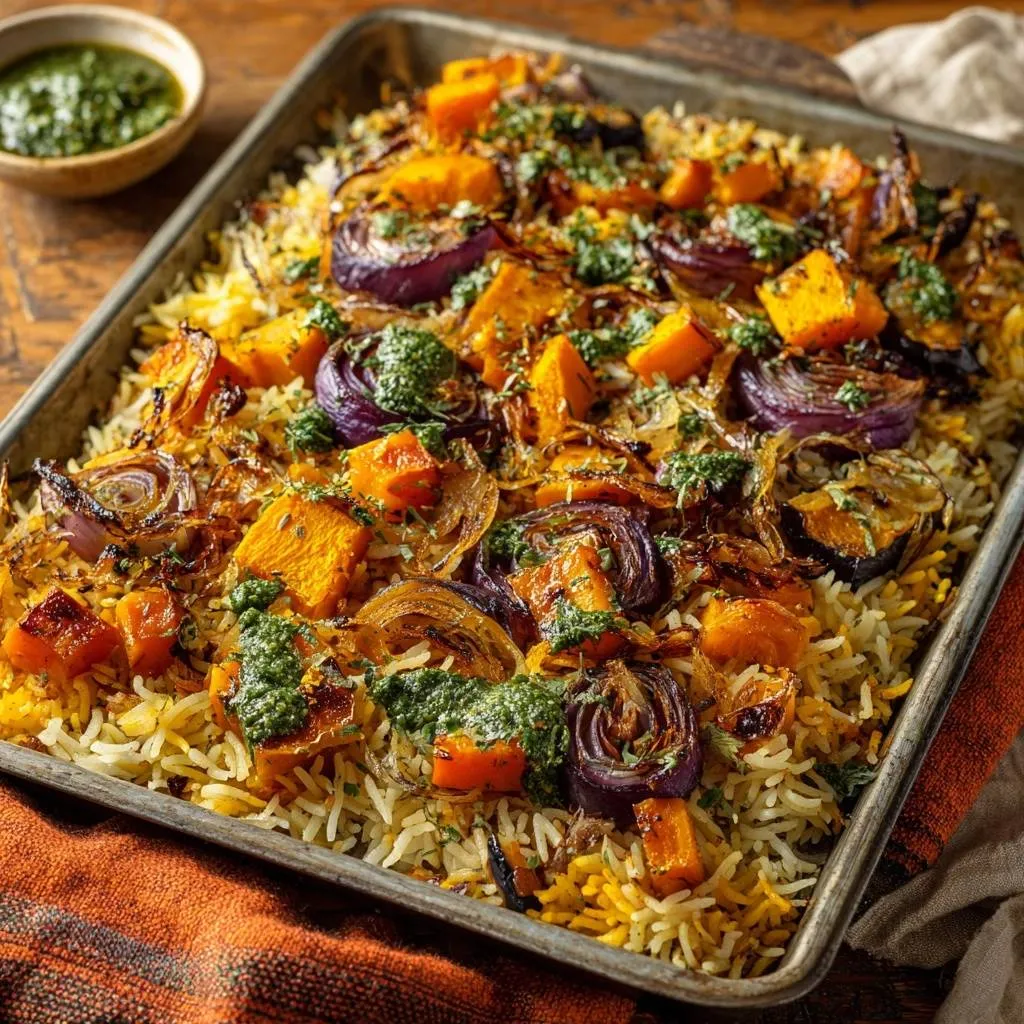
Imagine pulling a tray out of the oven where every grain of rice is distinct, fluffy, and kissed with a golden hue. The butternut squash has developed those coveted caramelized edges, and the red onions have transformed into sweet, jammy ribbons. This isn’t your typical mushy casserole; it’s a vibrant, textured meal that celebrates the high-heat magic of roasting.
Most people struggle with sheet pan rice because the vegetables release moisture, turning the grains into a soggy clump. However, this recipe solves that problem by using a staggered roasting technique. We treat the rice and vegetables as partners with different needs, ensuring everything reaches peak texture at the exact same moment.
The secret to this success lies in the par-boil. By partially cooking the Basmati rice in boiling water first, you hydrate the starch without fully softening the grain. This allows the oven’s dry heat to finish the job, creating a beautiful contrast between the creamy squash and the slightly crispy, elongated rice grains. Oh man, the smell of toasted cumin hitting that hot pan is absolutely incredible!
The Physics of Non-Mushy Sheet Pan Rice
Standard “dump and bake” methods often fail because they rely on trapped steam to cook the rice. While that works for a pilaf, it’s the enemy of a crisp sheet pan meal. When you crowd raw rice and watery vegetables together, the excess steam prevents the Maillard reaction—the chemical process that creates browning and deep flavor.
Therefore, we use the par-boiling method to gelatinize the outer layer of the rice starch while keeping the core firm. This step is crucial because it removes excess surface starch that usually causes sticking. Once the rice hits the hot, oiled sheet pan, the dry air of the oven evaporates any remaining surface moisture. This results in grains that stay separate and firm rather than turning into a porridge-like consistency.
Essential Components for the Perfect Roast
Quality ingredients are the foundation of this dish, and Basmati rice is the undisputed champion here. Its long, slender shape and low amylopectin content mean it naturally resists clumping. If you try to use a short-grain sushi rice or arborio, you’ll likely end up with a sticky mess because those varieties are designed to hold onto moisture.
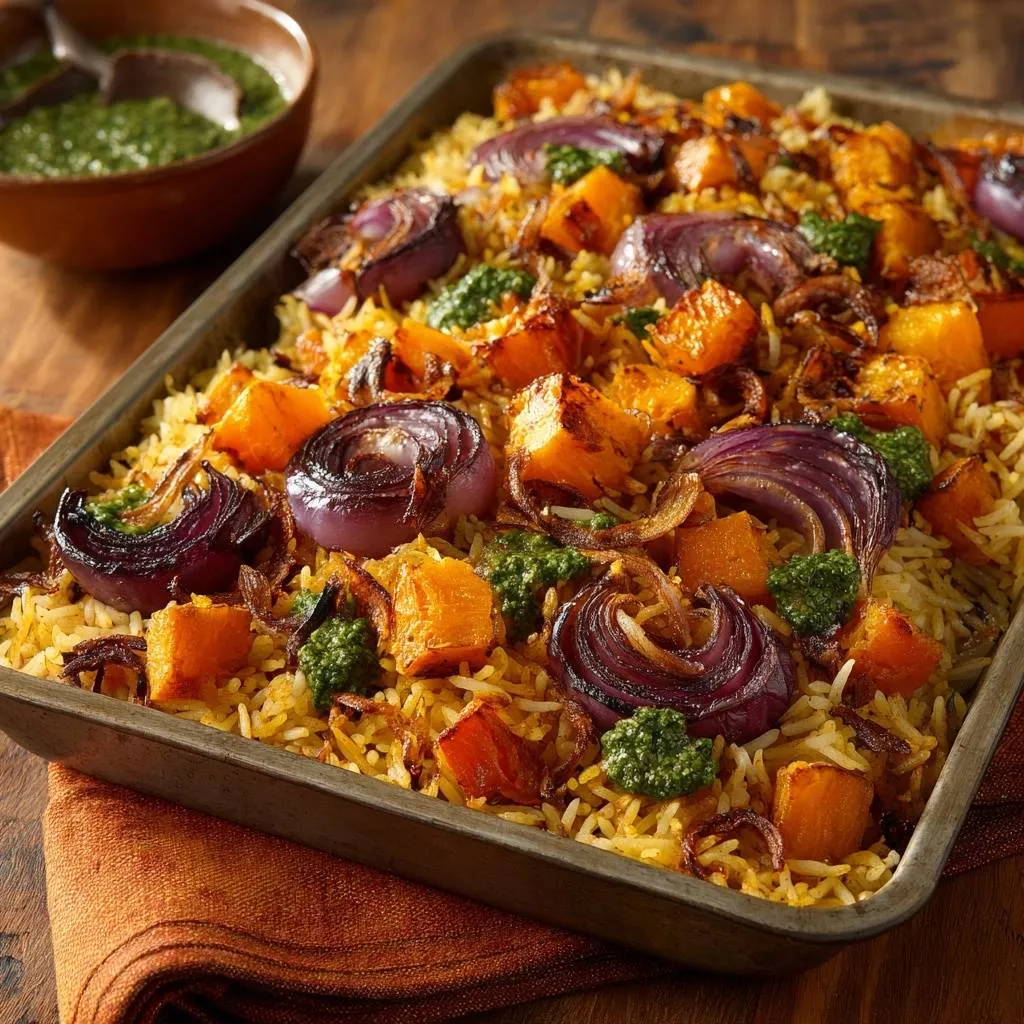
In addition to the rice, the natural sugars in red onions and butternut squash play a massive role. As they roast at high heat, these sugars break down and brown, providing a deep, savory sweetness that balances the earthy spices. Using a high-quality olive oil is also vital, as it acts as the heat conductor that crisps the rice grains against the metal pan.
Selecting and Prepping Butternut Squash
When you’re at the store, look for a squash that feels heavy for its size with a matte, blemish-free skin. A shiny skin often indicates it was picked too early and won’t be as sweet. Once you get it home, peeling is much easier if you slice off the top and bottom first to create a stable base.
Cutting the squash into 3/4-inch cubes is the “golden ratio” for this recipe. This size is large enough to maintain a creamy, tender center while the outside gets those beautiful charred bits. If you cut them too small, they’ll disappear into the rice; too large, and they won’t be cooked through by the time the rice is crispy.
Aromatic Spices: Turmeric, Cumin, and Garlic
The flavor profile here is warm, earthy, and deeply aromatic. Turmeric is the star for color, giving the rice a brilliant sunshine glow that looks stunning on the plate. Cumin seeds are a game-changer compared to ground cumin; they provide a nutty, toasted crunch when they pop in the oven’s heat.
You might notice we use garlic powder instead of fresh minced garlic. This is a deliberate choice for high-heat roasting. Fresh garlic has a high water content and tiny particles that burn easily at 425°F, turning bitter. Garlic powder distributes evenly and withstands the intense heat, providing a consistent savory backbone without the risk of scorching.
Step-by-Step: Executing the Staggered Roast Method
Success with this dish comes down to timing and temperature. You aren’t just throwing things on a tray; you’re managing a transformation. By following these phases, you ensure that every element—from the onions to the rice—is cooked to perfection without overextending any single ingredient.
Phase 1: The Par-Boil and Steam Release
Start by boiling your rice in plenty of salted water, just like you would pasta. You must set a timer for exactly 5-6 minutes. At this point, the rice should be “al dente”—soft on the outside but with a distinct, firm bite in the middle. If you cook it any longer, it will definitely turn mushy in the oven.
Immediately drain the rice and spread it out on a large, flat plate or a clean baking sheet. Do not leave it sitting in the colander! Spreading it out allows the steam to escape quickly, which stops the cooking process instantly. This “steam release” is the most critical step for achieving that fluffy, individual grain texture we’re after.
Phase 2: High-Heat Vegetable Caramelization
While your rice is cooling, get those vegetables into the oven. The squash and onions need a 15-minute head start because they contain much more water than the par-boiled rice. You want to see the onions starting to soften and the squash beginning to look matte and slightly golden.
Make sure you keep the red onion rounds somewhat intact when you first put them on the pan. This prevents the thin layers from burning too quickly. As they roast, they’ll naturally soften and separate, mingling their sweet juices with the olive oil on the pan, which eventually seasons the rice.
For more caramelized onion goodness, explore this caramelized onion almond chicken recipe.
Phase 3: The Final Crisp and Fluff
Now comes the fun part. When you add the seasoned rice to the pan, don’t just dump it in a pile. Spread it across the hot surface, mingling it with the vegetables so it picks up those roasted flavors. The rice needs to be in a thin, even layer to maximize its contact with the hot metal.
Halfway through the final roast, take a fork and gently fluff the rice. This isn’t just for show; it releases any trapped steam that has built up under the grains. By flipping and moving the rice, you ensure that every side of the grain gets a chance to hit the dry heat, resulting in a light, airy texture.
Troubleshooting Common Sheet Pan Obstacles
If your rice still feels a bit too crunchy after the final roasting time, don’t panic. Simply sprinkle a tablespoon of water over the pan, cover it tightly with foil, and pop it back in the oven for 3 minutes. The trapped steam will gently finish the grains without making them soggy.
On the flip side, if your squash is mushy but not browned, you likely overcrowded the pan. When vegetables are too close together, they steam each other instead of roasting. Next time, use a larger pan or split the recipe between two sheets. If the onions are browning too fast, move them toward the center of the pan where the heat is slightly less intense than the edges.
Flavor Variations and Ingredient Swaps
This method is incredibly versatile and works with a variety of seasonal produce. While butternut squash is a classic, you can easily swap it for other hearty vegetables. The key is to maintain the same size and density so the roasting times remain consistent.
Alternative Squash and Root Vegetables
Kabocha squash is a fantastic alternative; it has a chestnut-like texture and a very sweet flavor. If you’re short on time, try Delicata squash. The best part about Delicata is that the skin is thin and edible, so you can skip the peeling process entirely! Sweet potatoes also work beautifully, though they may cook slightly faster than butternut squash.
Herb-Based Finishes: Beyond Chimichurri
The finishing drizzle is what brings the whole dish to life. While chimichurri adds a bright, garlicky punch, a lemon-tahini dressing offers a creamy, nutty contrast. If you like heat, a dollop of zhoug (a spicy cilantro sauce) is incredible. The goal is to add a hit of acidity to cut through the natural sweetness of the roasted onions and squash.
This bright, garlicky flavor is also the star of chimichurri steak rice bowls.
Optimal Pairings for a Complete Meal
This sheet pan rice is a powerhouse on its own, but you can easily round it out. For a boost of plant-based protein, toss a can of rinsed chickpeas onto the pan during the final 15 minutes of roasting. They’ll get slightly crispy and soak up the turmeric and cumin beautifully.
Round Out Your Meal
Consider adding one of these dishes to complete your meal.
- For a bright, refreshing counterpoint, try the roasted broccoli and pineapple salad, featuring similar roasting techniques.
- If you’re in the mood for something hearty and satisfying, the zesty cheeseburger pasta salad offers a different texture and flavor profile.
To balance the warm spices, serve the dish with a side of cooling cucumber yogurt. Simply mix grated cucumber with plain yogurt, a squeeze of lemon, and a pinch of salt. A crisp green salad with a sharp, mustardy vinaigrette also provides a refreshing contrast to the rich, roasted flavors of the squash.
Storage and Reheating for Maximum Texture
This is one of those rare rice dishes that actually makes for great leftovers. Store it in an airtight container in the refrigerator for up to 4 days. The flavors actually deepen as the spices meld with the vegetables overnight. However, I don’t recommend freezing this dish, as the squash can become watery and the rice may lose its distinct bite upon thawing.
When you’re ready to eat, skip the microwave if you can. Microwaving tends to steam the rice, making it soft. Instead, reheat the leftovers in a dry skillet over medium-high heat for a few minutes. This helps the rice regain its slightly crispy edges and keeps the squash from getting mushy. It’s almost like making a quick fried rice!
Expert Tips for Sheet Pan Success
Can I use brown rice for this recipe?
Yes, you can use brown Basmati rice, but you must adjust the par-boiling time. Brown rice has a tough outer bran layer, so it will need about 12-15 minutes of boiling before it reaches that al dente state. Once par-boiled, follow the rest of the roasting steps as written. The result will be even nuttier and have a bit more chew.
Why did my red onions burn while the squash was still hard?
This usually happens due to oven “hot spots” or rack positioning. Ensure your rack is in the center of the oven for even heat distribution. Also, make sure your squash cubes aren’t larger than 3/4-inch. If the onions are sliced too thin (less than 1/2-inch), they will definitely burn before the squash softens. Keep those onion rings thick!
Do I need to use parchment paper on the baking sheet?
While parchment paper makes cleanup easier, roasting directly on a greased metal pan actually yields better results. Metal is an excellent heat conductor, which helps the rice and squash develop a better crust. If you do use parchment, ensure it is rated for 425°F, but be aware you might lose a little bit of that golden crispiness on the bottom of the grains.
How can I scale this recipe for a large family or a dinner party?
If you want to double the recipe, do not try to cram everything onto one sheet pan. Overcrowding is the number one cause of soggy rice. Instead, use two separate large rimmed baking sheets. Rotate the pans between the top and bottom racks halfway through the roasting time to ensure they both get even exposure to the heating elements.
What if I don’t have chimichurri or pesto?
No problem at all! You can create a quick “cheat” sauce by mixing 3 tablespoons of olive oil with a big squeeze of lemon juice, a handful of chopped fresh herbs (like cilantro or mint), and a pinch of red pepper flakes. The acidity is the most important part, as it brightens the earthy flavors of the turmeric and cumin.
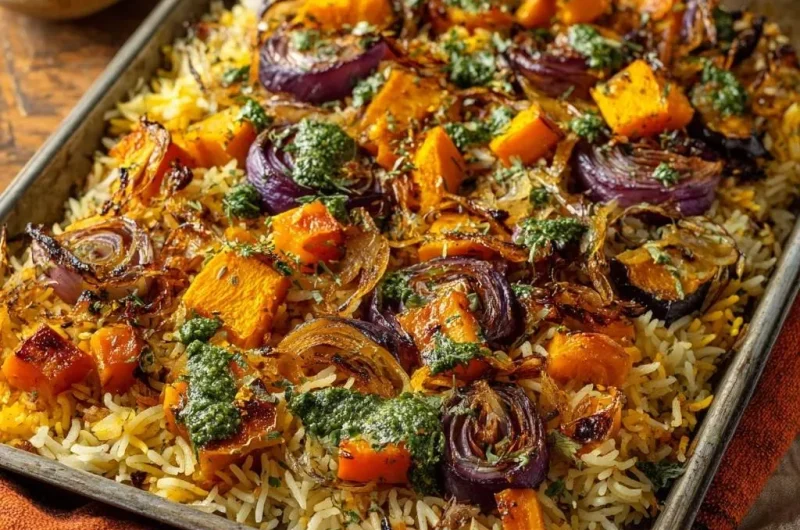
Roasted Squash and Red Onion Rice
Course: Main CourseCuisine: AmericanDifficulty: easy4
servings15
minutes35
minutes340
kcal50
MinutesThis recipe solves the problem of soggy sheet pan rice by par-boiling the grains and staggered roasting. The result is a flavorful, textured meal with perfectly roasted vegetables and distinct, slightly crispy rice grains.
Ingredients
2 cups Basmati rice, rinsed thoroughly
1 small butternut squash, peeled and cubed into 3/4-inch pieces
2 large red onions, sliced into 1/2-inch thick rounds (keep rings intact)
4 tablespoons olive oil, divided
1 teaspoon ground turmeric
1 teaspoon cumin seeds
1/2 teaspoon garlic powder
Salt and black pepper to taste
1/4 cup herb chimichurri or pesto for drizzling
Fresh parsley, finely chopped for garnish
Directions
- Preheat your oven to 425°F (220°C). Grease a large, rimmed baking sheet with 1 tablespoon of olive oil.
- Prepare the Rice: Bring a large pot of salted water to a boil. Add the rinsed rice and par-boil for exactly 5-6 minutes (the grains should be al dente-cooked on the outside but still firm in the center). Drain immediately and spread onto a flat plate to let steam escape and prevent further cooking.
- Roast the Vegetables: In a large bowl, toss the cubed squash and red onion rounds with 2 tablespoons of olive oil, salt, and pepper. Spread them in a single layer on the prepared baking sheet. Roast for 15 minutes.
- Season the Rice: While vegetables roast, toss the par-boiled rice in a bowl with the remaining 1 tablespoon of olive oil, turmeric, cumin seeds, and garlic powder until the rice is evenly yellow.
- Combine: Remove the sheet pan from the oven. Move the vegetables slightly to the side and spread the seasoned rice across the pan, mingling it with the squash and onions. Ensure the rice is in a thin, even layer to allow for crisping.
- Final Roast: Return the pan to the oven for another 12-15 minutes. Halfway through, gently fluff the rice with a fork to release trapped steam and ensure even heat distribution.
- Finish: Remove when the squash is tender and charred at the edges, and the rice grains are elongated and fluffy.
- Serve: Drizzle the herb chimichurri or pesto over the hot sheet pan and garnish with fresh parsley. Serve directly from the pan for the best texture.
Notes
- The secret to the texture is par-boiling the rice for exactly 5 to 6 minutes; do not overcook at the boiling stage or the rice will become mushy during the roasting phase.