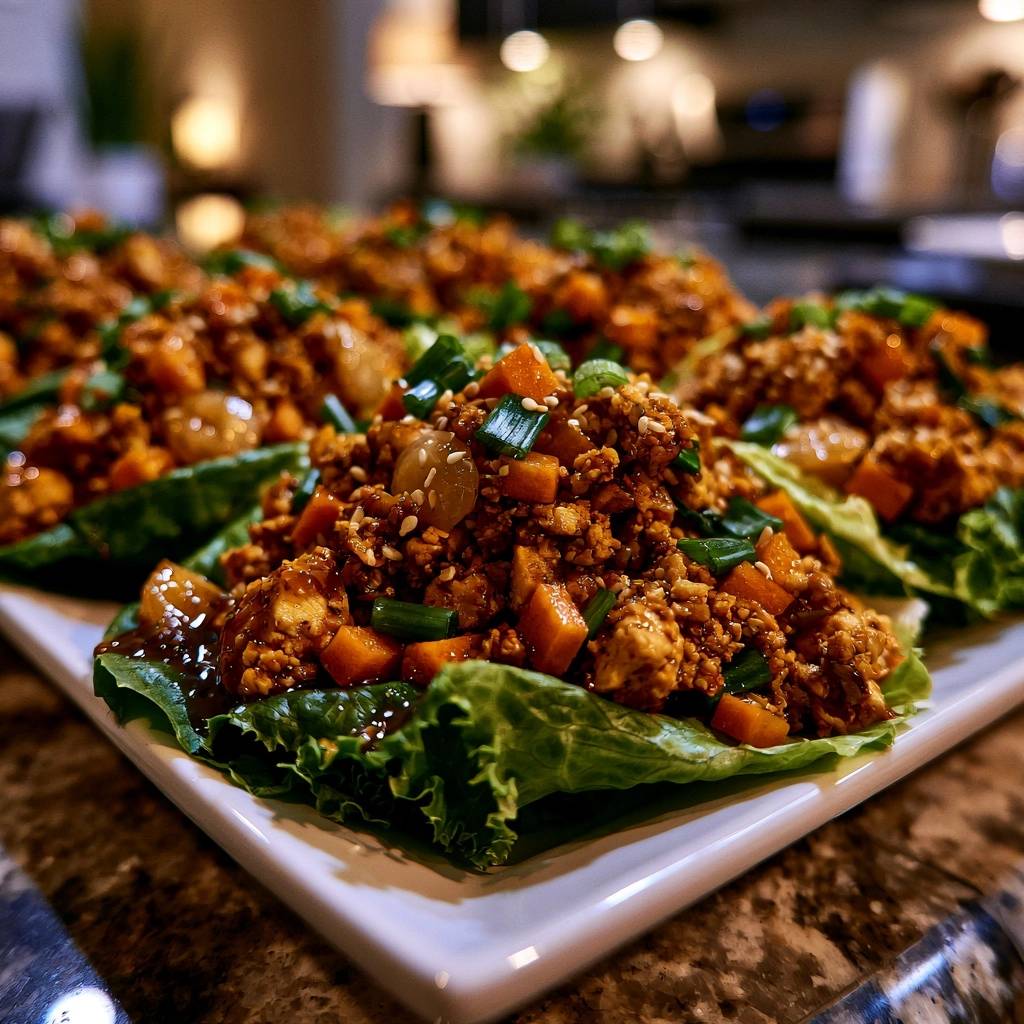
Imagine biting into a cold, crisp leaf of butter lettuce that shatters with a satisfying snap, only to meet a steaming, savory filling of glazed chicken and golden tofu. The contrast between the icy crunch of the greens and the rich, umami-packed heat of the protein is what makes this dish a perennial favorite. However, most home cooks struggle with the dreaded “soggy bottom” where the sauce pools and turns the lettuce into a limp, unappetizing mess.
The secret to restaurant-quality Savory Chicken and Tofu Lettuce Wraps lies in moisture management and texture layering. By utilizing a high-heat sear and a specific binding technique, you can create a filling that is intensely flavorful and glossy without releasing excess liquid. This ensures every wrap stays structurally sound from the first bite to the last.
To achieve that perfect glaze, you must use a cornstarch slurry at the very end of the cooking process. This isn’t just about thickening; it’s about emulsifying the soy and hoisin sauces into a coating that clings to the meat rather than soaking into the leaf. When you master this one simple step, you’ll never settle for watery takeout versions again.
The Architecture of a Perfect Lettuce Wrap
A great lettuce wrap is a study in structural integrity. While ground chicken provides the savory, meaty base, adding extra-firm tofu creates a superior mouthfeel. The tofu acts like a sponge for the sauce while offering a soft, pillowy contrast to the chewy chicken and the sharp, watery crunch of diced water chestnuts.
Aromatics form the foundation of the flavor profile. Using the white parts of green onions during the initial sauté builds a deep, oniony base that mellows as it cooks. When you pair this with the zing of fresh ginger and the pungent kick of garlic, you create a complex flavor web that carries the heavier sauces.
Texture layering doesn’t stop with the protein. Finely diced carrots add a subtle sweetness and a bright pop of color, while water chestnuts provide a consistent “crunch” factor that doesn’t soften under heat. Every ingredient is chosen to play a specific role in the bite, ensuring no part of the filling feels one-dimensional.
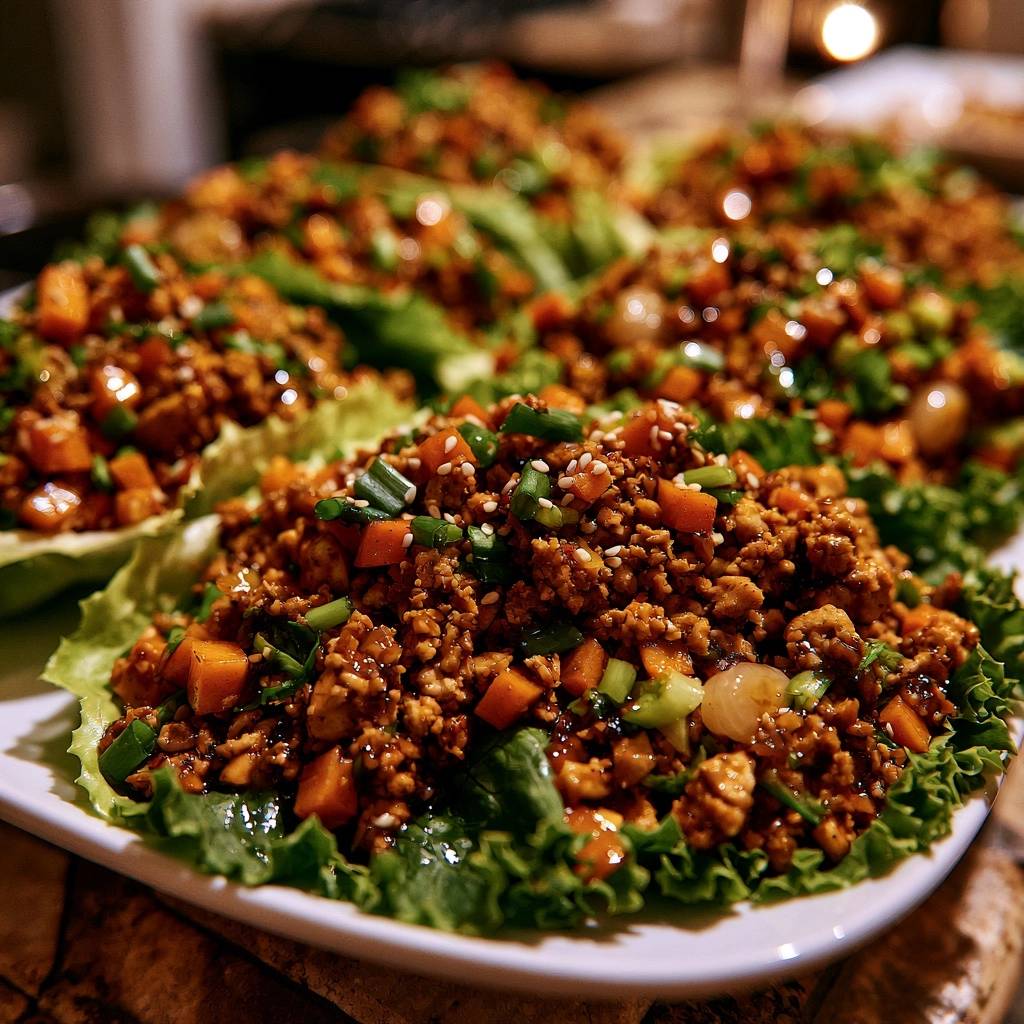
Essential Components for Savory Chicken and Tofu Lettuce Wraps
Quality ingredients are the difference between a bland stir-fry and a gourmet wrap. Extra-firm tofu is non-negotiable here because it holds its shape during the high-heat toss. Before dicing, you should press the tofu between paper towels for at least ten minutes to remove excess water, which allows the edges to brown beautifully in the pan.
The sauce relies on the balance between salty soy sauce and the thick, fermented sweetness of hoisin. Hoisin acts as the “body” of the sauce, but it can be quite heavy. Therefore, a teaspoon of rice vinegar is essential to provide a bright acidity that cuts through the salt and sugar, waking up your taste buds.
For that signature deep reddish hue and a gentle hum of heat, sriracha or chili garlic sauce is a must. It doesn’t just add spice; it provides a vibrant color that makes the filling look as good as it tastes. If you prefer a milder dish, you can reduce the amount, but don’t skip it entirely as it adds a necessary layer of complexity.
Selecting the Right Lettuce Variety
Butter lettuce, often sold as Bibb or Boston lettuce, is the gold standard for wraps. Its leaves are naturally cup-shaped and flexible, meaning they won’t snap when you fold them. When shopping, look for heads that are heavy for their size with vibrant, unbruised leaves and a tight center.
Romaine hearts are a fantastic secondary choice if you prefer a more substantial crunch. While they are more rectangular, the sturdy rib of a Romaine leaf provides excellent support for heavier fillings. However, avoid Iceberg lettuce if possible; while it is very crunchy, it is prone to cracking and leaking sauce down your sleeve.
The Role of Aromatics and Umami Boosters
Freshness is paramount when dealing with ginger and garlic. Grating your ginger with a microplane is far superior to mincing it with a knife. Grating breaks down the tough fibers and releases the juice, allowing the ginger to melt into the sauce and distribute its warmth evenly throughout the entire dish.
The “two-stage” scallion strategy is a pro move that separates amateurs from experts. By cooking the white bottoms of the green onions with the garlic, you infuse the oil with flavor. Saving the bright green tops for a final stir-in ensures a fresh, peppery finish and a beautiful visual contrast against the dark, glazed meat.
Moisture Management: The Anti-Soggy Strategy
The biggest enemy of a good lettuce wrap is “weeping” vegetables. When vegetables are cooked over low heat, they release their internal moisture, effectively boiling the chicken in a gray, flavorless liquid. To prevent this, your pan must be screaming hot before the ingredients ever touch the surface.
High-heat cooking triggers the Maillard reaction, which is the chemical process that browns the meat and creates those deep, savory flavors. By searing the chicken and tofu quickly, you lock in the juices. This keeps the protein moist on the inside while ensuring the outside is dry enough for the sauce to stick.
The cornstarch slurry is your final insurance policy. It acts as a binding agent that captures any stray moisture and transforms it into a thick, glossy glaze. Instead of a puddle of liquid at the bottom of your lettuce cup, you get a concentrated coating that stays exactly where you put it.
The Science of the Cornstarch Slurry
When you mix cornstarch with cold water and add it to a hot pan, a process called gelatinization occurs. The starch molecules swell and trap the surrounding liquid, turning a thin sauce into a rich, velvet-like coating. This happens almost instantly once the liquid reaches a simmer.
Without this slurry, the soy sauce and vinegar would simply run off the meat and pool in the lettuce. This liquid would then soften the cell walls of the lettuce, causing it to wilt and tear. The slurry creates structural integrity, allowing the wrap to hold its shape even as you eat it.
Preparation: The Bone-Dry Lettuce Method
Even the best filling can’t save wet lettuce. You should wash your lettuce leaves early and dry them thoroughly using a salad spinner or by patting each leaf individually with a clean towel. Any water left on the leaves will repel the sauce and make the wrap feel slippery and messy.
Once dry, keep the lettuce in the refrigerator until the very second you are ready to serve. Cold temperatures keep the cell walls of the lettuce rigid and crisp. The thermal shock of the hot filling hitting the ice-cold leaf is a sensory experience that defines this dish.
Step-by-Step: Searing the Protein and Vegetables
Start by heating your vegetable oil in a large skillet or wok until it is shimmering and just starting to smoke. You want to hear a loud, aggressive sizzle the moment the chicken hits the pan. If the pan isn’t hot enough, the chicken will steam rather than sear, resulting in a rubbery texture.
Add the chicken and tofu together, spreading them out into an even layer. Resist the urge to stir immediately. Let the protein sit for a minute to develop a golden-brown crust. This crust is where all the flavor lives, so give it time to form before you start breaking the meat into smaller crumbles.
Phase 1: Achieving the Maillard Reaction
As you break up the chicken, keep the heat high. You are looking for the meat to lose its pink color and for the tofu edges to become slightly crisp and golden. If you see liquid starting to pool in the pan, turn the heat up even further or move the meat to the sides to let the moisture evaporate quickly.
Do not crowd the pan. If you are doubling the recipe, cook the protein in two separate batches. Overcrowding drops the temperature of the skillet instantly, which leads to the very sogginess we are trying to avoid. Patience in this phase pays off in the final flavor.
Phase 2: Integrating Texture and Aromatics
Once the chicken is browned, toss in the carrots, water chestnuts, garlic, ginger, and scallion whites. You only need to sauté these for about two to three minutes. Therefore, the carrots will stay vibrant and the water chestnuts will retain their signature snap.
You should smell the garlic and ginger immediately. If the aromatics start to brown too quickly, toss them with the meat to insulate them from the direct heat of the pan. The goal is to soften the raw edge of the vegetables without turning them into mush.
Phase 3: The Glazing Process
Whisk your sauce ingredients one last time to ensure the hoisin is fully incorporated, then pour it over the mixture. As the sauce hits the hot pan, it will bubble and release a fragrant steam. Stir everything together so every piece of chicken and tofu is evenly coated.
Give your cornstarch slurry a quick stir (starch settles at the bottom) and pour it in. Watch as the thin liquid transforms into a dark, glossy glaze in under a minute. Once the sauce is thick enough to coat the back of a spoon and no longer runs, remove the pan from the heat immediately.
Flavor Variations and Ingredient Swaps
While ground chicken is traditional, this recipe is incredibly versatile. You can easily swap the chicken for ground turkey or even finely chopped shrimp for a lighter twist. If you want an earthier flavor, add half a cup of finely minced shiitake mushrooms during the aromatic phase.
For those who need a soy-free option, coconut aminos work as a direct replacement for soy sauce, though you may want to add a pinch of salt as aminos are naturally sweeter. If you want more heat, a spoonful of sambal oelek or extra red pepper flakes will provide a sharper spicy kick than sriracha.
Expert Troubleshooting for Better Results
If you find your filling has become too salty, don’t panic. You can balance it out with an extra splash of rice vinegar or a teaspoon of honey. If the sauce becomes too thick or “gloopy,” simply stir in a tablespoon of water to loosen it back to a glossy consistency.
If your lettuce leaves are smaller than expected or seem a bit fragile, use the “double-cup” method. Nest two lettuce leaves together to create a stronger base. This provides extra insurance against tearing and adds even more crunch to every single bite.
Serving Suggestions and Presentation
Presentation is key for a family-style meal. Place the hot filling in a large serving bowl and surround it with a platter of the chilled, dry lettuce leaves. This allows everyone to build their own wraps, which keeps the lettuce from wilting under the heat of the meat while sitting on the table.
Garnish the filling generously with the reserved green onion tops and a sprinkle of toasted sesame seeds. For an extra layer of texture, you can also offer a bowl of crushed peanuts or crispy fried rice noodles on the side. The goal is to provide a variety of toppings that enhance the savory glaze.
Complementary Side Dishes
Since these wraps are light and fresh, you should pair them with sides that don’t feel too heavy. A chilled smashed cucumber salad with plenty of garlic and sesame oil is a perfect match. It echoes the flavors of the wraps while providing a cooling contrast to the warm filling.
A simple clear broth or a light miso soup can also round out the meal without making it feel overbearing. Avoid heavy fried sides like egg rolls or tempura, as they can compete with the delicate texture of the lettuce. Keep the focus on the fresh, vibrant flavors of the wraps themselves.
Storage and Meal Prep Guidelines
The chicken and tofu filling stores beautifully and actually tastes even better the next day as the flavors continue to meld. Store the filling in an airtight container in the refrigerator for up to three days. However, you must store the lettuce separately to keep it from losing its crispness.
When reheating, the stovetop is your best friend. Toss the filling in a hot skillet for a few minutes until it is warmed through. This helps maintain the texture of the chicken and tofu better than a microwave, which can make the meat a bit rubbery. Always prepare fresh lettuce leaves right before you plan to eat.
Expert Tips for Restaurant-Quality Wraps
Can I use soft or silken tofu for this recipe?
No, you should avoid soft or silken tofu for this specific dish. Soft tofu has a very high water content and a delicate structure that will crumble into a paste when tossed in a hot wok. Extra-firm tofu is essential because it maintains its cubed shape and develops a pleasant, chewy exterior that mimics the texture of the chicken.
How do I keep the lettuce from wilting on the serving platter?
The best way to keep lettuce crisp is to serve it on a chilled platter. You can also place a few ice cubes in a bowl and set the lettuce leaves on top of a clean cloth over the ice. Most importantly, never pre-fill the wraps. Let your guests build them as they eat so the lettuce only touches the hot filling for a few seconds before being consumed.
What is the best substitute for hoisin sauce?
If you don’t have hoisin, you can create a quick substitute by mixing BBQ sauce with a little bit of soy sauce and a pinch of Chinese five-spice powder. While it won’t be identical, it provides the necessary sweetness and depth. Another option is using a thick teriyaki sauce, though you may need to add a bit of peanut butter to mimic the fermented bean paste texture of real hoisin.
Can this be made in a slow cooker or pressure cooker?
While you can cook chicken in a slow cooker, it is not recommended for this specific recipe. The magic of these wraps comes from the high-heat sear and the quick reduction of the sauce into a glaze. A slow cooker will result in a “stewed” texture with a lot of excess liquid, which is the exact opposite of the dry, glossy filling needed for a perfect wrap.
How do I get that specific reddish hue seen in restaurant lettuce wraps?
That iconic color comes from the combination of hoisin sauce and a chili element like sriracha or sambal oelek. The dark brown of the hoisin mixes with the bright red of the chili sauce to create a deep, mahogany glaze. If your filling looks too pale, add an extra teaspoon of hoisin and a small dash of sriracha until the desired color is achieved.
Why did my filling turn out watery even though I used the slurry?
This usually happens if the pan wasn’t hot enough or if the vegetables were cooked for too long. If the carrots and onions sit in the pan over medium heat, they will slowly release their water. Ensure you are using high heat and that the sauce reaches a full boil after adding the cornstarch slurry. The starch only activates and thickens once it hits a specific boiling temperature.
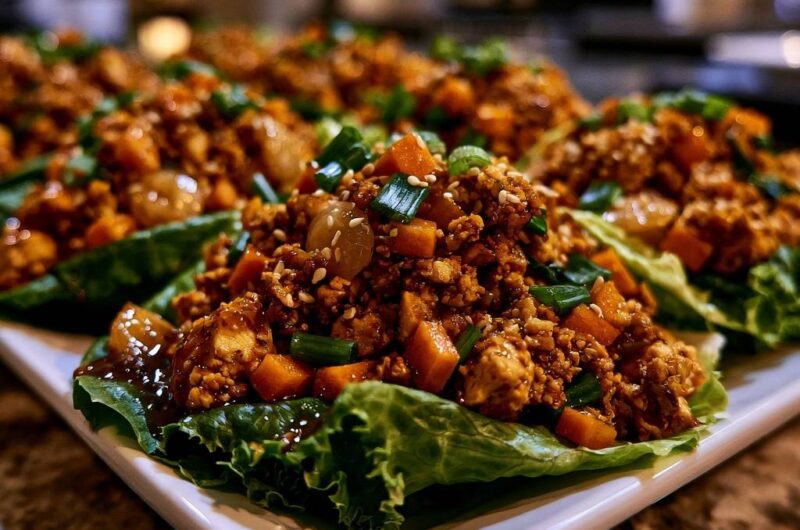
Savory Chicken and Tofu Lettuce Wraps
Course: Main CourseCuisine: Asian-AmericanDifficulty: easy4
servings15
minutes12
minutes27
Minutes310
kcalAsian-American
Ingredients
1 pound ground chicken
1/2 cup extra-firm tofu, pressed and cut into 1/4-inch tiny cubes
1 tablespoon vegetable oil
1 cup finely diced carrots
1/2 cup diced water chestnuts
3 green onions, sliced (whites and greens separated)
2 cloves garlic, minced
1 teaspoon fresh ginger, grated
3 tablespoons soy sauce
2 tablespoons hoisin sauce
1 teaspoon rice vinegar
1 teaspoon sriracha or chili garlic sauce (for the deep reddish hue)
1 teaspoon cornstarch mixed with 1 tablespoon water (slurry)
1 teaspoon sesame seeds
1 head Butter lettuce or Romaine leaves, washed and dried thoroughly
Directions
- The most important step for crisp wraps is to ensure your lettuce is bone-dry. Wash the leaves early, pat them dry with paper towels, and keep them in the fridge until the exact moment of serving.
- Heat the vegetable oil in a large skillet or wok over high heat. High heat is essential to sear the proteins quickly so they stay juicy without boiling in their own juices.
- Add the ground chicken and the cubed tofu to the hot pan. Break the chicken into small crumbles and cook until the chicken is browned and the tofu edges are slightly golden. The chicken is done when it reaches 165°F (74°C) in the thickest part.
- Stir in the carrots, water chestnuts, garlic, ginger, and the white parts of the green onions. Sauté for 2 to 3 minutes until the carrots are slightly tender but still vibrant and firm.
- In a small bowl, whisk together the soy sauce, hoisin, rice vinegar, and sriracha. Pour this over the chicken mixture.
- To prevent a soggy bottom, stir in the cornstarch slurry. Let the sauce bubble and reduce for 1 minute. The slurry will transform the liquid into a thick, dark, glossy glaze that clings to the meat and vegetables rather than pooling at the bottom.
- Remove from heat and stir in the green onion tops and sesame seeds.
- Spoon the warm, glazed filling into the cold, dry lettuce leaves and serve immediately. The contrast between the hot, thick-glazed filling and the cold, crunchy lettuce is the key to perfection.
Notes
- The secret to crisp wraps is ensuring the lettuce is bone-dry and using a cornstarch slurry to create a thick glaze that clings to the filling instead of pooling.