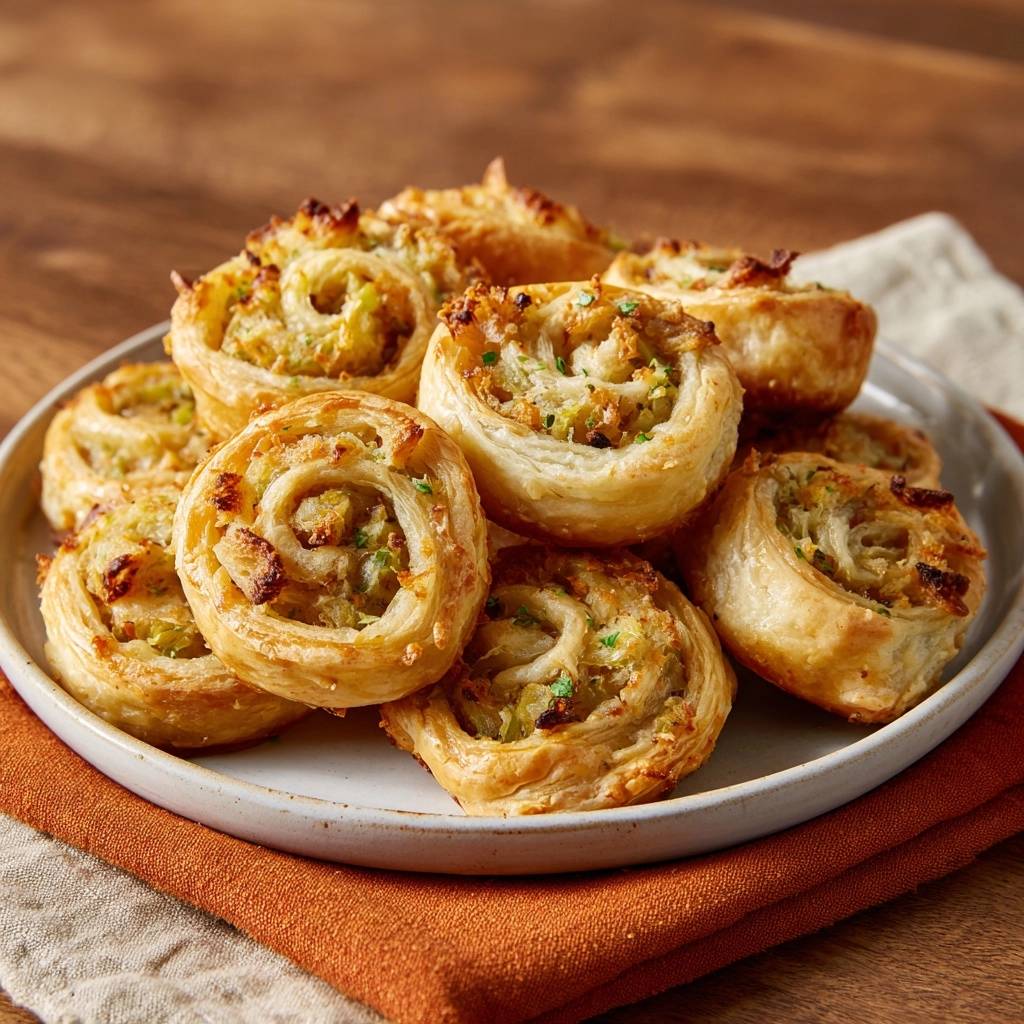
Nothing ruins a beautiful puff pastry appetizer faster than a greasy, limp bottom. Most recipes fail because the vegetable filling releases too much moisture during baking, essentially steaming the dough from the inside out instead of crisping it. This creates a heavy, doughy mess that lacks that signature crunch we all crave.
The secret to these Savory Leek and Parmesan Pinwheels lies in a specific moisture-locking technique. By combining a breadcrumb barrier with a high-heat blast, we ensure every single bite is shatteringly crisp from top to bottom. You get the sharp, salty punch of Parmesan and the mellow, buttery sweetness of leeks without any of the sogginess.
For another savory puff pastry idea, try these caramelized onion and gruyere swirls.
I’ve found that the temperature of your pastry is the most critical factor for success. If the dough gets too warm while you’re working, the butter layers melt into the flour, and you lose those beautiful flakes. Always keep your puff pastry in the fridge until the very second your filling is cooled and ready to spread.
If you enjoy this flaky pastry base, you will also adore this savory breakfast puff pastry tart.
The Physics of Flaky Puff Pastry
Puff pastry is a marvel of culinary engineering known as lamination. It consists of hundreds of thin layers of dough separated by even thinner layers of solid fat. When that cold pastry hits a hot oven, the water in the butter turns to steam almost instantly. This steam expands, pushing the dough layers apart to create that incredible lift and airy texture.
However, moisture-heavy fillings like leeks are the natural enemy of this process. As leeks cook inside the oven, they release cellular water. If that water isn’t managed, it soaks into the raw dough layers, weighing them down and preventing the steam from doing its job. Instead of a light spiral, you end up with a dense, gummy center.
This recipe preserves the pastry’s structural integrity by pre-cooking the leeks to remove excess water. We then introduce a “moisture-locking” binder. This ensures the steam comes from the butter in the dough, not the juice in the vegetables, resulting in a professional-grade puff every time.
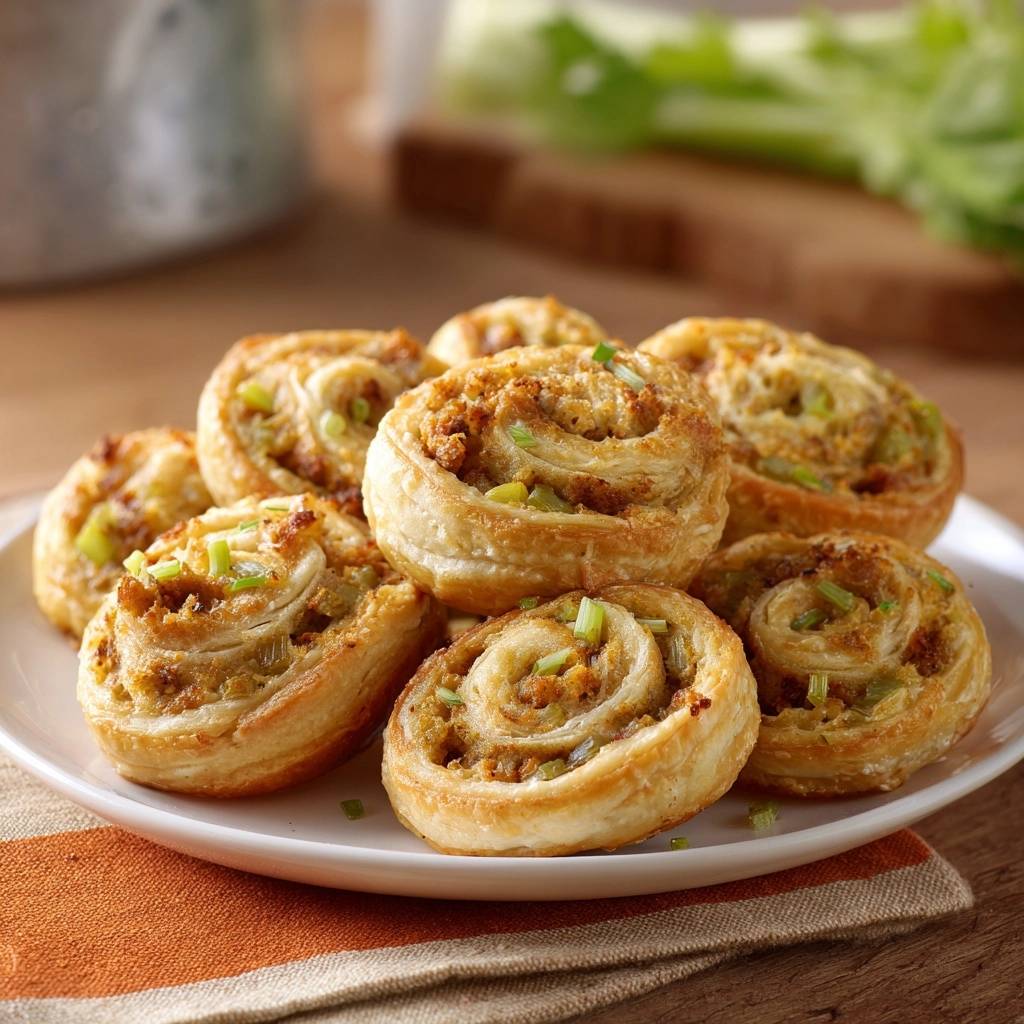
Essential Components for Savory Leek and Parmesan Pinwheels
Quality ingredients are the foundation of this dish, starting with the puff pastry. Look for a brand that uses real butter if possible, and ensure it is thawed but very cold. If the pastry feels floppy or sticky, pop it back in the freezer for five minutes to firm up the fat.
We use Panko breadcrumbs specifically because their large, airy surface area is superior at absorbing moisture compared to fine, sandy breadcrumbs. They act like tiny sponges, holding onto the cream and leek juices so they don’t migrate into the pastry. This keeps the interior creamy while the exterior stays crunchy.
When it comes to the cheese, skip the pre-shredded green cans or bags. Pre-shredded cheese is coated in potato starch or cellulose to prevent clumping, which interferes with how the cheese melts and browns. Freshly grated Parmesan has a lower melting point and a much more intense, nutty flavor that stands up to the sweetness of the leeks.
Selecting and Cleaning Fresh Leeks
Leeks grow in sandy soil, and because of their layered structure, grit often gets trapped deep inside the stalks. To clean them properly, slice off the dark green tops and the root ends. Cut the remaining white and light green parts in half lengthwise and rinse them under cold running water, fanning the layers out to dislodge any hidden dirt.
Only use the white and pale green sections for this recipe. The dark green tops are too fibrous and tough for a delicate pinwheel, though they are excellent for flavoring stocks later. Pat the cleaned leeks completely dry before chopping to avoid adding unnecessary water to your skillet.
The Anti-Soggy Filling Technique
The most important step in this recipe happens in the skillet. Sautéing the leeks for 8 to 10 minutes isn’t just about softening them; it’s about evaporation. You want to see the leeks shrink significantly and lose their translucent, watery appearance. If there is liquid pooling in the pan, keep cooking until it vanishes.
Once the leeks are soft, we use the “Pan-Binding” method. By stirring the breadcrumbs and heavy cream directly into the hot pan, you create a thick, savory paste. The breadcrumbs hydrate instantly, creating a thermal barrier. This mixture stays put during the bake rather than leaking out and making the bottom of the pastry soggy.
Crucially, you must let this filling cool completely before it touches the dough. If you spread a warm filling onto cold puff pastry, the butter in the dough will melt instantly. This destroys the lamination before the tray even reaches the oven. I often spread the filling on a plate and put it in the fridge to speed up the cooling process.
Step-by-Step: Constructing the Perfect Spiral
To get a professional finish, use the “Preheated Sheet” method. Place your baking sheet in the oven while it preheats to 400°F. When you finally place your cold pinwheels onto that scorching hot surface, the bottom of the pastry sears and sets immediately. This creates a crisp crust that can support the weight of the filling.
When rolling out your pastry, aim for a consistent 10×12 inch rectangle. Spread the cooled leek mixture in a thin, even layer. Leaving a 1/2 inch border at the top edge is vital. This “clean” strip of dough acts as your anchor. When you reach the end of the roll, that bare dough will stick to the outside of the log, keeping the spiral tight.
The “Seam-Seal” technique involves brushing that top border with a tiny bit of egg wash. Think of it as culinary glue. Once the log is rolled, give it a gentle squeeze to ensure the seam is fully adhered. If the log feels soft at this point, chill it for 15 minutes before slicing to ensure clean, round shapes.
Precision Slicing: Serrated Knives vs. Dental Floss
Using a standard chef’s knife often squashes the pastry log, turning your beautiful circles into sad ovals. A sharp serrated knife used with a gentle sawing motion is much better. It cuts through the delicate layers without compressing them, preserving the air pockets needed for puffing.
For the cleanest possible cut, try unflavored dental floss. Slide a long piece of floss under the log, cross it over the top, and pull quickly. This “strangulation” cut slices through the dough from all sides simultaneously, keeping the pinwheel perfectly circular. It’s a favorite trick for professional bakers.
Avoiding Common Pastry Mistakes
If your pinwheels start to unroll in the oven, it usually means the seam wasn’t sealed properly or the filling was spread too thick near the edge. Make sure you really press that final edge down. If you notice the tops are browning too fast while the centers look pale, move the tray to a lower oven rack for the final five minutes.
Another common issue is “leaking” fat. If you see a pool of oil on the parchment paper, your pastry was likely too warm when it went into the oven. To fix this next time, ensure the filling is ice-cold. If it happens mid-bake, don’t panic; just use a spatula to move the pinwheels to a dry spot on the paper once they are firm enough to touch.
Flavor Variations and Ingredient Swaps
Once you master the moisture-locking base of leeks, cream, and breadcrumbs, you can experiment with other flavors. Sun-dried tomatoes and feta make a great Mediterranean version, but you must drain the tomatoes thoroughly and pat them dry with paper towels. Excess oil is just as bad as excess water for puff pastry.
Sautéed mushrooms with fresh thyme are another fantastic option. Just like the leeks, mushrooms must be cooked until they stop releasing liquid and start to brown. Avoid using high-moisture greens like fresh spinach unless you blanch them, squeeze them bone-dry in a kitchen towel, and then chop them finely.
Make-Ahead Strategies and Storage
These pinwheels are incredibly freezer-friendly. You can roll the log, wrap it tightly in plastic wrap, and freeze it for up to a month. When you’re ready to bake, let it thaw slightly for 10 minutes so you can slice it, then bake as directed. You may need to add 2 or 3 minutes to the total baking time.
To store leftovers, keep them in an airtight container in the fridge for up to three days. Never use a microwave to reheat them, as it will make the pastry chewy and tough. Instead, use an air fryer at 350°F for 3 minutes or a toaster oven to restore that “shatteringly crisp” texture.
Pairing Suggestions for Savory Appetizers
These rich, buttery pinwheels pair beautifully with drinks that offer a bit of acidity or effervescence. A sparkling botanical water with hints of cucumber or mint provides a refreshing contrast to the salty Parmesan. The bubbles help cleanse the palate between bites of flaky pastry.
Round Out Your Meal
These hearty soup recipes offer a comforting contrast to the savory leek and parmesan pinwheels.
- For a warming bowl with tender meatballs, consider this Creamy Meatball Orzo Soup, which features comforting pasta.
- If you enjoy vibrant flavors, try the Hearty Pesto Minestrone Soup, bringing fresh herbs and vegetables to your table.
If you’re serving these as part of a light lunch, a sharp arugula salad is the perfect companion. Toss the greens with a simple lemon vinaigrette and cracked black pepper. The peppery bite of the arugula and the citrus from the lemon cut right through the richness of the butter and heavy cream.
Expert Troubleshooting
Can I use store-bought pie crust instead of puff pastry?
You can, but the result will be very different. Pie crust is “short” and crumbly rather than flaky and airy. It won’t rise or create the dramatic layers that puff pastry provides. If you use pie crust, the pinwheels will be much denser and more like a savory cookie than a light pastry.
Why did my leeks turn bitter?
Leeks contain natural sugars that caramelize beautifully, but they can turn bitter if they burn. This usually happens if the heat is too high or if you don’t stir them frequently enough. Keep the heat at medium and look for a soft, golden color rather than a dark brown char.
How do I prevent the cheese from burning before the pastry is done?
If the Parmesan on top is getting too dark, it’s likely because your oven’s heating element is too close to the tray. Move the baking sheet to the middle or lower-middle rack. You can also lightly tent the tray with foil for the last 5 minutes of baking to protect the cheese while the pastry finishes crisping.
Can this be made vegan?
Yes, you can adapt this recipe by using a “frozen puff pastry” that is accidentally vegan (many store brands use vegetable oils instead of butter). Substitute the butter with olive oil, use a splash of full-fat coconut milk instead of heavy cream, and replace the Parmesan with nutritional yeast or a firm vegan parmesan alternative.
Leek and Parmesan Pinwheels
Course: AppetizerCuisine: French InspiredDifficulty: easy12
pinwheels20
minutes20
minutes155
kcal40
MinutesThese savory pinwheels feature a creamy leek and Parmesan filling wrapped in shatteringly crisp puff pastry. By using a breadcrumb barrier and a preheated baking sheet, this recipe ensures a golden, crunchy texture every time.
Ingredients
1 sheet frozen puff pastry, thawed but very cold
2 large leeks, white and light green parts only, finely chopped
1 tablespoon unsalted butter
1 tablespoon olive oil
1/2 cup freshly grated Parmesan cheese
1/4 cup Panko or fine breadcrumbs
2 tablespoons heavy cream (to bind the filling)
1 teaspoon garlic powder
1/2 teaspoon salt
1/4 teaspoon black pepper
1 egg, beaten with 1 teaspoon water (egg wash)
1 tablespoon fresh parsley, finely chopped
Directions
- Preheat your oven to 400°F (200°C). Line a large baking sheet with parchment paper. For maximum crispness, place the baking sheet in the oven while it preheats so the pastry hits a hot surface immediately.
- Heat the butter and olive oil in a skillet over medium heat. Add the chopped leeks and sauté for 8 to 10 minutes. You want to cook them until they are soft and most of their natural moisture has evaporated.
- The Anti-Soggy Hack: Stir the breadcrumbs and the 2 tablespoons of heavy cream directly into the leeks in the pan. The breadcrumbs absorb the remaining vegetable moisture, while the cream binds the mixture so it doesn’t fall out of the pastry. Remove from heat and let the mixture cool completely (warm filling will melt the pastry fat and cause sogginess).
- Roll out the cold puff pastry on a lightly floured surface into a 10×12 inch rectangle.
- Spread the cooled leek mixture evenly over the pastry, leaving a 1/2 inch border at the top edge. Sprinkle the Parmesan cheese, garlic powder, salt, and pepper evenly over the leeks.
- Roll the pastry tightly into a log, starting from the long edge closest to you. Brush the top border with a little egg wash to seal the seam.
- Use a sharp serrated knife or unflavored dental floss to slice the log into 12 even rounds (about 1 inch thick).
- Carefully place the pinwheels onto the preheated baking sheet. Brush the exposed pastry spirals with the egg wash.
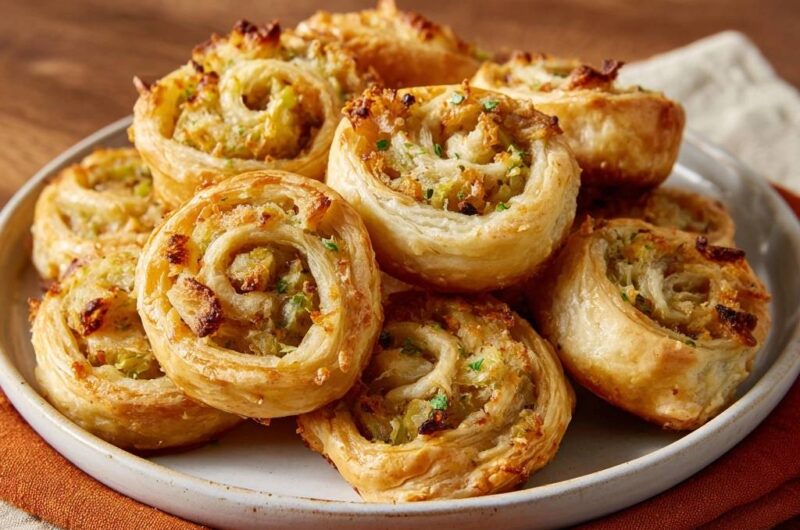
- Bake for 18 to 22 minutes. The pinwheels are done when the pastry has puffed significantly and the edges are a deep, golden brown as seen in the image.
- Garnish with fresh parsley immediately. Serve warm to enjoy the contrast between the creamy leek center and the crunchy, flakey outer layers.
Notes
- The Anti-Soggy Hack: Stirring breadcrumbs into the leeks absorbs excess moisture, while placing the pinwheels on a preheated baking sheet ensures the bottom crisps instantly.