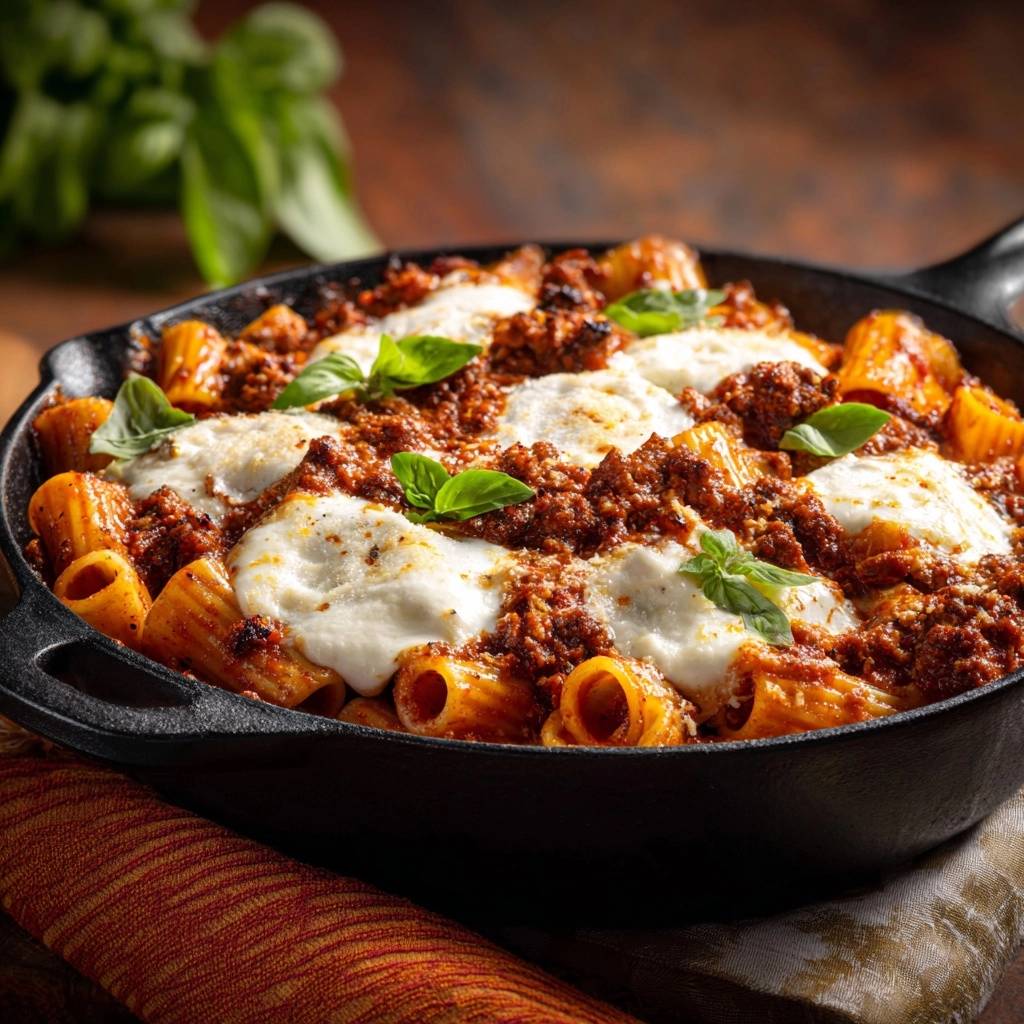
Most home cooks have experienced the disappointment of a pasta bake that looks beautiful on top but reveals a gummy, mushy interior once you dig in. It’s a common frustration where the noodles lose their structural integrity and turn into a soft mass that blends right into the sauce. If you’ve been settling for mediocre baked pasta, it’s time to change your approach to the Skillet Baked Rigatoni with Meat Sauce.
The secret to achieving that perfect restaurant-style bite lies in a two-part strategy: the aggressive par-boil and the skillet sear. By significantly undercooking the pasta in water and finishing it in a scorching cast iron skillet, you create a textural masterpiece. You get those coveted crispy, charred edges on the top while the centers remain perfectly al dente, holding their shape against the weight of a rich meat sauce.
I’ve found that the real magic happens when you stop treating the oven as the primary cooking tool and start seeing it as a finishing touch. The cast iron skillet acts as a heat conductor that sears the bottom layer of pasta while the broiler handles the top. This method ensures every single tube of rigatoni stays firm and distinct, providing a satisfying chew that contrasts beautifully with pools of melted mozzarella.
The Physics of Non-Mushy Baked Pasta
Understanding why pasta turns mushy is the first step toward culinary mastery. When you boil pasta, the starch granules swell and eventually burst, releasing amylose into the water. If you cook the noodles to completion in water and then bake them, they continue to absorb moisture from the sauce in the oven. This leads to over-saturation, where the pasta loses all structural tension and becomes a soggy mess.
By boiling your rigatoni for exactly four minutes less than the package directions, you are essentially “freezing” the cooking process at a critical stage. The center of the noodle should still have a visible white snap when bitten. This leaves the pasta “hungry” for moisture, but instead of absorbing plain water, it will absorb the flavorful fats and juices from your meat sauce during the ten-minute bake.
The cast iron skillet plays a vital role in this physics equation because of its incredible heat retention. Unlike a glass or ceramic dish, which heats up slowly, the cast iron provides immediate, intense heat to the bottom of the pasta. This creates a slight sear on the bottom layer, preventing the sauce from pooling and making the base of the dish watery. It’s the difference between a steamed casserole and a vibrant, textured bake.
Essential Components for a Robust Meat Sauce
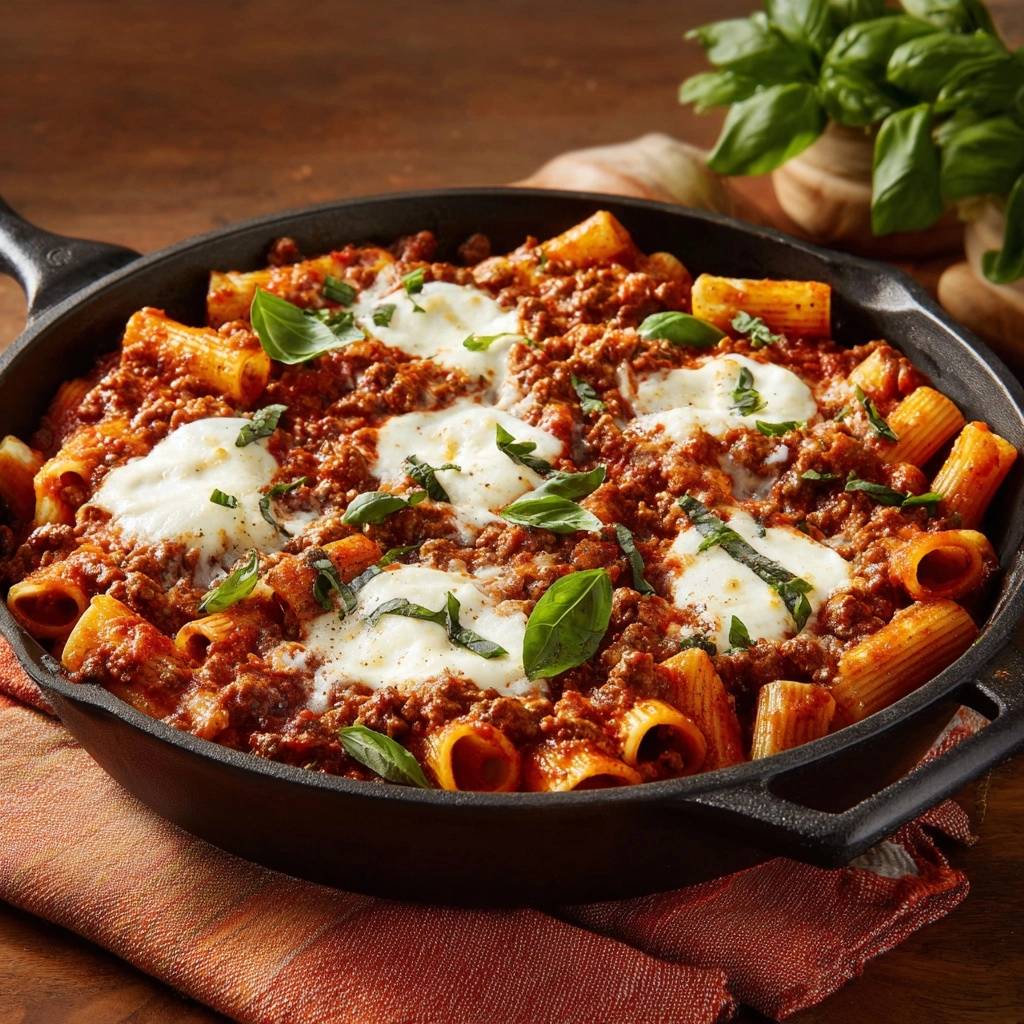
A great Skillet Baked Rigatoni with Meat Sauce requires a sauce with enough body to cling to the ridges of the pasta. I always recommend using lean ground beef, specifically a 90/10 or 93/7 blend. While fat equals flavor, too much grease in a skillet bake will separate from the tomato sauce, leaving an oily film on the roof of your mouth. Lean beef provides the protein structure needed for a chunky, hearty texture.
The foundation of your flavor is a high-quality marinara sauce, but the real “pro move” is the addition of heavy cream. This isn’t just about making the sauce “pink”; it’s about viscosity. The fat in the cream emulsifies with the tomato acidity, creating a thick, velvet-like coating. This ensures the sauce doesn’t just slide off the noodles but actually fills the hollow centers of the rigatoni, delivering flavor in every bite.
Don’t skimp on the aromatics like fresh garlic and red pepper flakes. Sautéing the garlic in olive oil until it’s just fragrant—but not brown—lays a savory base that cuts through the richness of the cream. The red pepper flakes provide a subtle back-end heat that balances the sweetness of the tomatoes, making the entire dish feel more complex and professional.
Selecting the Right Rigatoni Shape
Rigatoni is the undisputed king of baked pasta for two reasons: its ridges and its diameter. The word “rigatoni” comes from the Italian “rigate,” meaning ridged. These exterior grooves act like tiny gutters that trap the meat sauce and grated parmesan. Furthermore, the wide opening of the tube allows the thick, creamy meat sauce to flow inside, ensuring you aren’t just eating dry pasta with sauce on top.
Fresh Mozzarella vs. Low-Moisture Shreds
While pre-shredded cheese is convenient, it’s often coated in potato starch to prevent clumping, which can lead to a gritty texture when melted. For this recipe, fresh mozzarella rounds are superior because they melt into beautiful, creamy white pools. However, fresh mozzarella has high water content. To avoid a watery skillet, I always pat the mozzarella slices dry with a paper towel before placing them on the pasta.
Preparing the Skillet and Searing the Beef
To start, get your skillet screaming hot before adding the beef. You are looking for the Maillard reaction—that deep, dark browning that creates complex savory flavors. If you crowd the pan or use low heat, the meat will release its juices and steam, turning a dull gray color. Gray meat lacks depth, so let the beef sit undisturbed for a minute or two to develop a crust before breaking it up.
Once the beef is browned, drain the excess fat but leave the browned bits (the fond) on the bottom of the skillet. Add your garlic, oregano, and red pepper flakes now. Cooking the spices in the remaining oil for about sixty seconds “blooms” them, releasing fat-soluble flavors that would otherwise stay trapped. You’ll know it’s ready when the kitchen starts smelling like a high-end Italian trattoria.
The Emulsion: Combining Cream and Marinara
After adding the marinara and heavy cream, let the mixture come to a gentle simmer. You’ll notice the color shift from a bright red to a deep, rich orange-red. This simmering period is crucial because it allows the sauce to reduce slightly and thicken. You want a consistency that is thick enough to coat the back of a spoon without immediately running off.
The heavy cream does more than add richness; it acts as a stabilizer. The calcium in the cream helps mellow the sharp acidity of the canned tomatoes, creating a more balanced flavor profile. As the sauce bubbles, the flavors of the seared beef and the bloomed spices meld together, creating a cohesive meat sauce that tastes like it’s been simmering for hours rather than minutes.
For added stability in layered dishes, consider spinach and beef lasagna.
Assembly: The Vertical Tube Technique
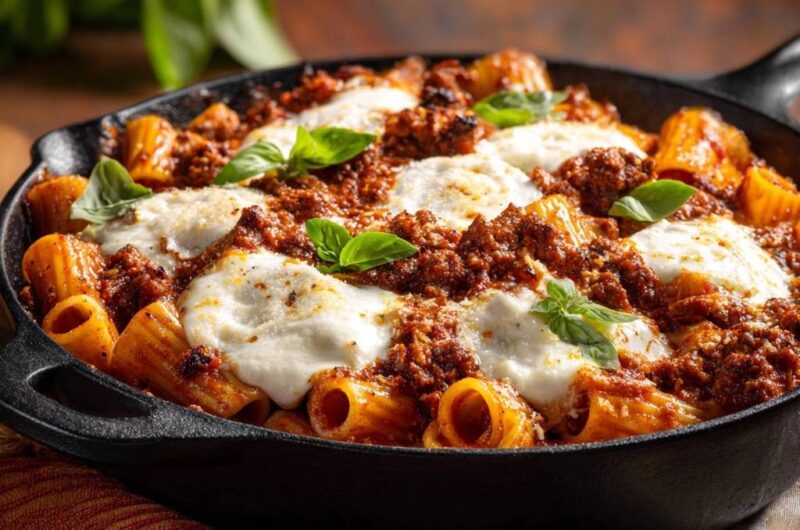
When it’s time to add the pasta to the skillet, don’t just dump it in and level it off. Toss the rigatoni thoroughly so the sauce gets inside the tubes. Then, use your spoon to nudge some of the noodles so they stand vertically. This might seem like a small detail, but it’s the secret to the best texture. These “vertical chimneys” catch the direct heat of the oven and the broiler.
The tips of the pasta sticking out of the sauce will dehydrate slightly and become incredibly crispy, almost like a pasta chip. This provides a necessary crunch that breaks up the softness of the cheese and the chewiness of the sauce-soaked noodles. It’s a visual and textural cue that tells your guests this isn’t just another soggy casserole; it’s a carefully crafted skillet bake.
Oven Timing and the Broiler Finish
The ten-minute bake at 400°F is designed to heat the dish through and allow the pasta to finish its final stage of cooking inside the sauce. Because the skillet is already hot from the stovetop, the heat penetrates quickly. During this time, the mozzarella will begin to soften and spread, but it won’t have that signature golden-brown look just yet.
The final two to three minutes under the broiler are non-negotiable. This is where the “magic” happens. Stay by the oven and watch closely, as the transition from golden to burnt happens in seconds. You want the cheese to be bubbling with dark brown spots and the edges of the vertical pasta tubes to look slightly charred. This char adds a smoky depth that complements the sweetness of the tomato sauce.
Troubleshooting Common Rigatoni Pitfalls
If you find your sauce looks too thin after adding the cream, simply let it simmer for an extra three minutes before adding the pasta. Remember that the pasta will absorb some liquid, but it won’t fix a watery soup. If you don’t own a cast iron skillet, you can use a stainless steel oven-safe pan, but avoid non-stick pans as they aren’t designed for the high heat of a broiler.
In the event that you accidentally overcooked your pasta during the boiling stage, do not panic. Skip the ten-minute bake entirely. Instead, toss the pasta with the hot sauce in the skillet, top with cheese, and go straight to the broiler. This prevents the already-soft noodles from spending any more time breaking down in the oven’s ambient heat.
Optimal Side Dishes for Baked Pasta
Because this Skillet Baked Rigatoni is incredibly rich and savory, you need side dishes that provide a sharp contrast. A simple arugula salad with a lemon-heavy vinaigrette is my favorite pairing. The bitterness of the greens and the acidity of the lemon cut right through the heavy cream and beef. It refreshes your palate between bites of cheesy pasta.
If you want something heartier, charred crusty bread is essential. Rub a clove of raw garlic over the toasted surface of a baguette to create a simple garlic bread. This is perfect for mopping up the extra sauce left in the bottom of the skillet. Avoid heavy, buttery sides like mashed potatoes or creamy corn, as they will compete with the richness of the main dish.
Make-Ahead Strategies and Storage
If you want to prep this ahead of time, I recommend making the meat sauce and boiling the pasta separately. Store them in different containers in the fridge. If you combine them and let them sit overnight without cooking, the pasta will drink up all the sauce, leaving you with a dry, bloated mess the next day. Assemble and bake only when you are ready to eat.
For leftovers, avoid the microwave if possible. Microwaving pasta often makes it rubbery and causes the oils in the sauce to separate. Instead, put a portion in a small oven-safe dish or an air fryer at 350°F for about five to seven minutes. This revives the crispy edges of the pasta and remelts the cheese without sacrificing the texture of the rigatoni.
Expert Troubleshooting
Can I use ground turkey or lamb instead of beef?
You can certainly use ground turkey, but since it is much leaner than beef, you should add an extra tablespoon of olive oil to the skillet to prevent the meat from becoming too dry. If using lamb, be aware that it has a much higher fat content and a distinct gamey flavor. You will likely need to drain the fat twice during the browning process to keep the sauce from becoming greasy.
Why did my fresh mozzarella release too much water?
Fresh mozzarella is stored in brine, which it soaks up like a sponge. If you don’t pat the slices dry with paper towels, that brine releases into your sauce as the cheese melts, creating a watery layer on top of your skillet. For the best results, slice the cheese and let it sit on paper towels for ten minutes before you plan to top the pasta.
Can this be made in a glass baking dish?
While you can technically bake this in a glass dish, you will lose the “sear” factor. Glass is an insulator, meaning it takes a long time to heat up. You won’t get the same browning on the bottom and sides of the pasta that a cast iron skillet provides. If you must use glass, preheat the dish in the oven for a few minutes before adding the hot pasta and sauce.
How do I scale this for a larger crowd?
If you need to feed more than six people, a standard 12-inch skillet won’t be large enough. Instead of doubling the recipe in one pan, use a large Dutch oven. The cast iron walls of the Dutch oven provide the same heat benefits as a skillet. Just ensure you don’t pile the pasta too deep, or the middle layers won’t get that perfect sauce-to-pasta ratio.
Skillet Baked Rigatoni
Course: Main CourseCuisine: Italian-AmericanDifficulty: medium6
servings15
minutes25
minutes485
kcal40
MinutesA hearty baked pasta dish featuring rigatoni, lean ground beef, and a creamy marinara sauce. By par-boiling the pasta and finishing it in a cast iron skillet, you achieve a perfect texture with crispy edges and bubbly cheese.
Ingredients
1 pound rigatoni pasta
1 pound lean ground beef
24 ounces high-quality marinara sauce
1/2 cup heavy cream (to achieve the thick, rich sauce consistency shown)
8 ounces fresh mozzarella, sliced into thick rounds
1/2 cup grated parmesan cheese
2 tablespoons olive oil
3 cloves garlic, minced
1 teaspoon dried oregano
1/2 teaspoon red pepper flakes
Fresh basil leaves for garnish
Salt and black pepper to taste
Directions
- Preheat your oven to 400°F (200°C).
- Bring a large pot of heavily salted water to a boil. Add the rigatoni and cook for exactly 4 minutes less than the package directions for al dente. The pasta should still have a firm “snap” in the center. Drain and set aside.
- In a large (12-inch) oven-safe cast iron skillet, heat the olive oil over medium-high heat. Add the ground beef and cook until deeply browned and slightly crispy, breaking it into small crumbles. Drain any excess fat.
- Stir in the minced garlic, oregano, and red pepper flakes. Cook for 1 minute until fragrant.
- Pour in the marinara sauce and the heavy cream. Stir to combine and bring to a simmer for 3-5 minutes until the sauce thickens and darkens. Season with salt and pepper.
- Add the undercooked rigatoni to the skillet. Toss thoroughly, ensuring the thick meat sauce fills the inside of the tubes.
- Arrange the pasta so some tubes are standing vertically (as seen in the image). Top the skillet with the thick rounds of fresh mozzarella and a generous dusting of parmesan cheese.
- Transfer the skillet to the oven and bake for 10 minutes.
- Switch the oven to Broil for the final 2-3 minutes. Watch closely until the mozzarella is melted into white pools and the edges of the pasta sticking out of the sauce are slightly charred and crispy.
- Remove from the oven and let it rest for 5 minutes. This allows the sauce to bind to the pasta. Garnish with fresh basil leaves and serve directly from the skillet.
Notes
- The secret to avoiding mushy pasta is cooking the rigatoni for exactly 4 minutes less than the package directions. Using a cast iron skillet helps create crispy edges and ensures even heat distribution during the baking and broiling process.