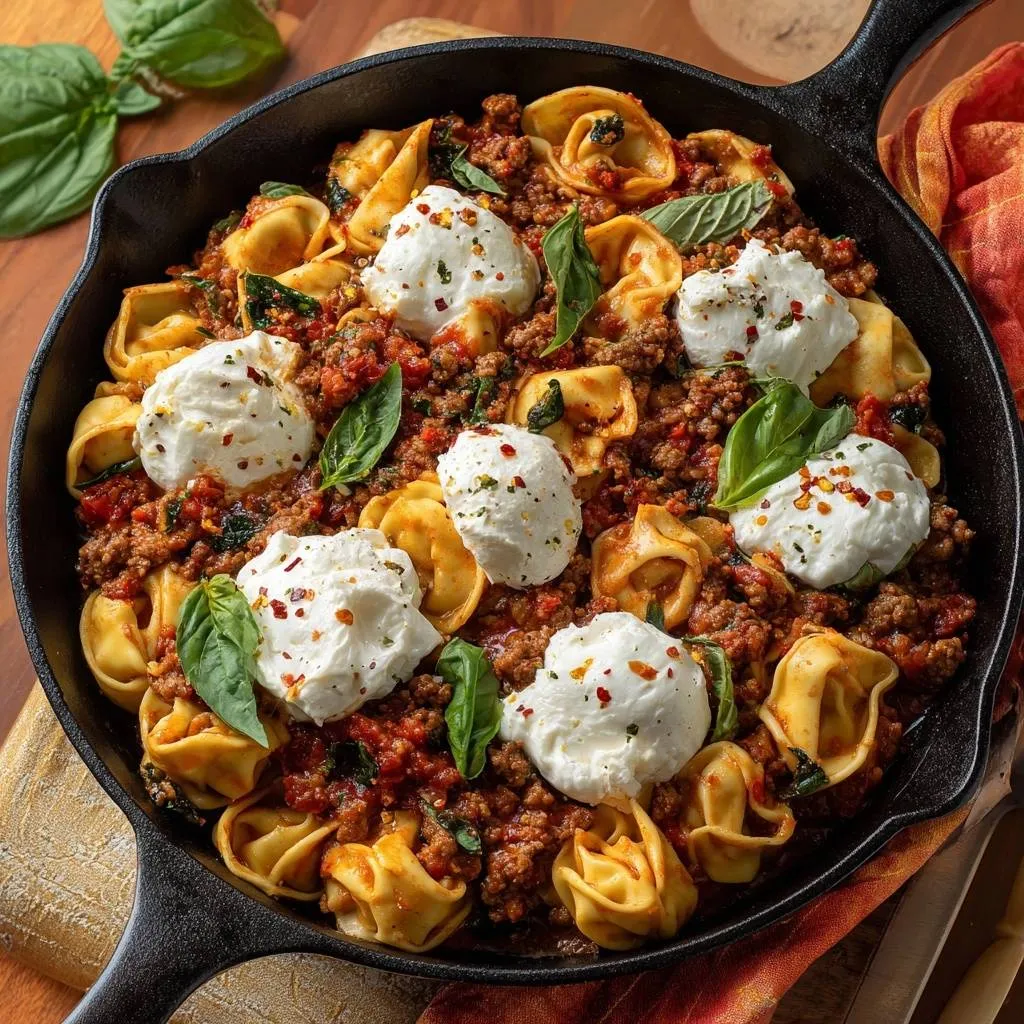
Stop boiling your tortellini in a separate pot of water right now. That extra step is actually the primary reason your pasta ends up waterlogged, gummy, and falling apart before it even hits the plate. When you boil cheese-filled pasta in a massive pot of water, the delicate dough absorbs too much liquid, which dilutes the flavor and weakens the structure of the tortellini.
This one-skillet method flips the script by using the sauce itself as the cooking medium. By simmering the pasta directly in a rich blend of marinara and beef juices, you lock in the integrity of the dough while infusing every single bite with savory depth. It is the ultimate “Better Than Takeout” hack that delivers a restaurant-quality meal in under thirty minutes.
The secret to success here lies in the steam-absorption technique. Using a tight-fitting lid creates a pressurized environment that cooks the pasta through without the violent agitation of boiling water. This ensures your tortellini stays plump and intact, while the natural starches from the pasta thicken the sauce into a silky glaze that clings to every curve.
The Science of Starch and One-Pan Simmering
Cooking pasta directly in the sauce isn’t just a time-saver; it is a fundamental culinary upgrade based on starch chemistry. When you boil pasta in a large pot of water, you are essentially throwing away “liquid gold”—the starch that leaches out of the dough. In a skillet, that starch stays in the pan, acting as a natural emulsifier that binds the fats from the beef and the acidity of the tomatoes into a cohesive, velvet-like sauce.
Furthermore, traditional boiling creates high osmotic pressure. This pressure forces water into the center of the tortellini, often causing the seams to rupture and the cheese filling to leak out into the abyss of the pasta water. By simmering in a thicker liquid like marinara, the rate of absorption is slower and more controlled. This prevents the dough from becoming over-saturated and mushy.
Therefore, the pasta maintains a distinct “al dente” bite that provides a satisfying resistance when you chew. You are essentially braising the pasta rather than boiling it. This method ensures that the flavor profile is built from the inside out, as the tortellini absorbs the seasoned tomato base instead of plain, unseasoned water.
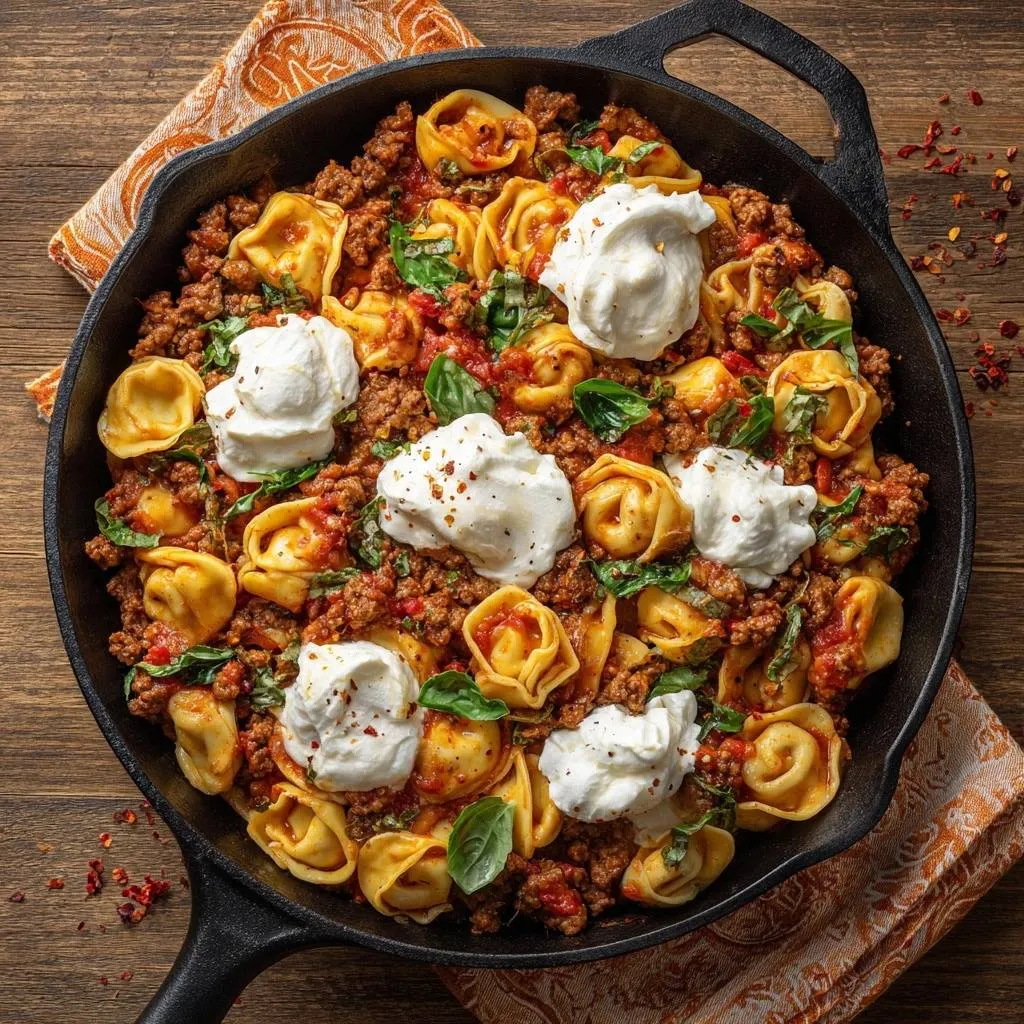
Essential Components for Skillet Beef Tortellini with Ricotta
Quality ingredients are the backbone of this dish, especially since there are so few of them. For the beef, I always recommend an 80/20 or 85/15 fat ratio. While lean beef might seem healthier, the extra fat is necessary to keep the meat moist during the browning process and to provide the richness needed to balance the acidity of the tomatoes.
When it comes to the pasta, refrigerated tortellini is mandatory. Dried tortellini takes much longer to hydrate and often has a tougher, more leathery exterior that doesn’t play well with the quick-simmer method. Refrigerated versions are fresh, supple, and ready to absorb the sauce in minutes. Look for a high-quality cheese blend to ensure the filling stays creamy.
Your choice of marinara will dictate the final flavor profile. Since the sauce reduces slightly in the skillet, avoid brands with high sugar content, as they can become cloyingly sweet. A traditional San Marzano-based sauce with high acidity works best. Finally, always opt for whole milk ricotta. Part-skim ricotta tends to be grainy and watery, whereas whole milk ricotta provides those lush, creamy dollops that make this dish feel indulgent.
Selecting the Right Skillet for Heat Retention
A heavy-bottomed vessel is your best friend for this recipe. I prefer a large cast iron skillet because it holds heat exceptionally well, ensuring the beef browns evenly without the pan temperature dropping. If you don’t have cast iron, a deep stainless steel saute pan with a heavy core will also work beautifully.
The goal is even heat distribution to prevent the bottom layer of pasta from scorching while the top layer steams. A thin, cheap pan will create “hot spots” that might burn the sauce before the tortellini is cooked through. Additionally, make sure your pan has a lid that fits snugly to trap the steam effectively.
Phase One: Developing the Beef Base and Aromatics
The first step is all about the Maillard reaction. When you hit the beef with high heat in the olive oil, you want to let it sit for a minute before breaking it up. This creates those deeply browned, slightly crispy edges that offer a fantastic textural contrast to the soft, pillowy pasta later on.
Once the beef is browned and you have drained the excess grease, it is time for the aromatics. Add your minced garlic only at the very end of the browning phase. Garlic burns quickly, and burnt garlic is bitter and acrid. Cooking it for just sixty seconds until it smells fragrant is all you need to infuse the fat with flavor without ruining the dish.
Phase Two: The Absorption Method for Al Dente Pasta
After the beef is seasoned, pour in your marinara and the half-cup of water. This extra liquid is crucial; the pasta needs it to hydrate. If you skip the water, the sauce will become too thick and pasty before the tortellini is tender. Bring this mixture to a gentle simmer—look for small, consistent bubbles, not a rolling boil.
Gently nestle the cold tortellini into the sauce, making sure they are mostly submerged. Once the lid goes on, the magic happens. The steam trapped inside the skillet cooks the tops of the pasta while the bottoms simmer in the sauce. Keep the heat at medium-low to ensure a steady, gentle cook that doesn’t toughen the dough.
Phase Three: Finishing with Ricotta and Fresh Herbs
The finishing touch is what elevates this from a standard pasta dish to something special. Instead of stirring the ricotta into the sauce, which would turn it into a pink, muddy mess, use a spoon to drop large, distinct mounds over the top. This creates “flavor pockets” where you get a burst of cool, creamy cheese against the hot, savory beef sauce.
For a similar approach to sealed-in flavor, check out this cheesy baked spaghetti.
Tear your fresh basil by hand rather than chopping it with a knife to prevent the edges from bruising and turning black. The residual heat from the skillet is enough to wilt the basil and warm the ricotta through in about a minute. This preserves the bright, peppery notes of the herb and the clean, milky taste of the cheese.
Troubleshooting Common Skillet Pasta Issues
If you find your sauce has become too thick before the pasta is done, don’t panic. Simply stir in a tablespoon or two of warm water to loosen it up. This mimics the “pasta water” logic used in traditional Italian cooking to create a glossy finish. Conversely, if the sauce looks too thin, simply simmer it uncovered for sixty seconds to let the excess moisture evaporate.
If the tortellini still feels firm after seven minutes, your lid might not be tight enough. Add a tiny splash of water and cover it again for another two minutes. To avoid excess grease, ensure you drain the beef thoroughly after browning. Leaving exactly one tablespoon of fat in the pan provides flavor without making the final sauce feel heavy or oily on the palate.
Flavor Variations and Protein Swaps
This recipe is incredibly versatile. If you want a lighter version, ground turkey or chicken works well, though you may need an extra tablespoon of olive oil since those meats are leaner. For a more robust, earthy flavor, ground lamb is an excellent substitute that pairs beautifully with the ricotta and mint instead of basil.
You can also easily sneak in some vegetables. A few handfuls of baby spinach can be stirred in right before you add the ricotta; the heat of the sauce will wilt it in seconds. Diced zucchini or bell peppers can also be sautéed alongside the beef for added texture and nutrition without requiring extra pans.
Optimal Side Dishes for Heavy Pasta Skillets
Because this skillet is rich and hearty, you want side dishes that offer high acidity or a bit of bitterness to cleanse the palate. A simple arugula salad tossed in a sharp lemon vinaigrette is the perfect companion. The peppery bite of the greens cuts right through the density of the beef and cheese.
Alternatively, charred broccolini with a squeeze of fresh lemon and a pinch of red pepper flakes provides a nice crunch. Avoid heavy garlic bread or starchy sides, as the tortellini is already quite filling. You want something bright and crisp to balance the “comfort food” vibes of the main course.
Storage and Reheating for Best Texture
This dish is undoubtedly best when served fresh from the skillet. However, leftovers will keep in an airtight container in the refrigerator for up to three days. Be aware that the pasta will continue to absorb moisture as it sits, so the sauce will be much thicker the next day.
To reheat, place the portion in a small pan over low heat and add a splash of water or beef broth. This re-hydrates the sauce and prevents the tortellini from becoming dry or rubbery. Avoid the microwave if possible, as it tends to heat unevenly and can cause the cheese filling to explode out of the pasta.
Expert Tips for Skillet Beef Tortellini with Ricotta
Can I use frozen tortellini for this recipe?
Yes, you can use frozen tortellini, but you will need to increase the simmering time by about 3 to 4 minutes. Additionally, add an extra quarter-cup of water to the sauce, as frozen pasta tends to require more hydration to reach the proper al dente texture. Do not thaw them first; just drop them in frozen.
Why is my sauce breaking or looking oily?
A broken sauce usually happens if the heat is too high or if the beef wasn’t drained properly. If you see oil separating from the tomato base, try stirring in a tablespoon of the ricotta or a splash of heavy cream. The proteins will help re-emulsify the fat into the sauce. Always keep the simmer gentle to prevent the fats from separating.
Can I substitute the ricotta with a different cheese?
If you aren’t a fan of ricotta, mascarpone is a fantastic alternative that is even creamier and slightly sweeter. For a tangier profile, small dollops of goat cheese work wonders. If you want something that melts more completely, fresh mozzarella pearls can be used, though you will lose that distinct “dollop” texture that ricotta provides.
How do I scale this recipe for a large crowd?
Scaling this dish can be tricky because it relies on the surface area of the pan for even steaming. If you need to double the recipe, it is better to use two separate large skillets rather than one giant pot. If the pasta is piled too deep, the bottom layer will turn to mush before the top layer is even warm.
What is the best way to prevent the garlic from burning?
The best way to protect your garlic is to create a small “well” in the center of your browned beef. Turn the heat down slightly, add the garlic to that cleared space with a tiny bit of oil, and cook it for only 30 to 60 seconds. As soon as you smell that classic aroma, immediately pour in the marinara sauce to stop the cooking process.
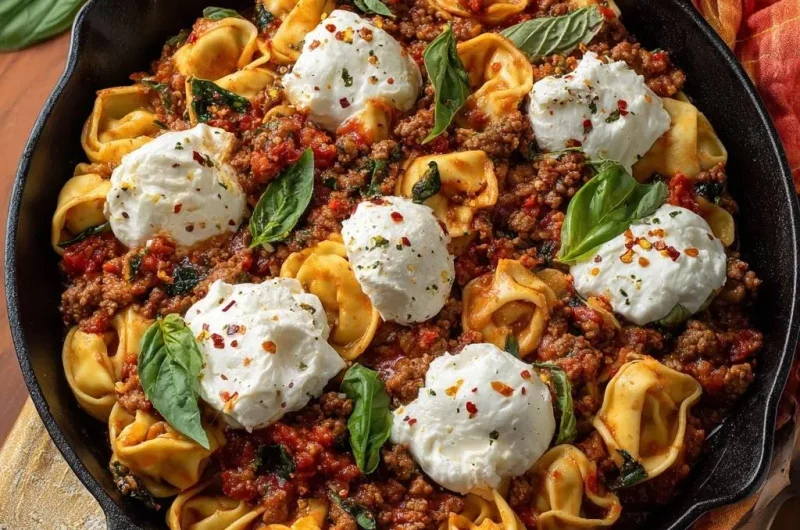
Beef Tortellini
Course: Main CourseCuisine: AmericanDifficulty: easy4
servings10
minutes20
minutes580
kcal30
MinutesA revolutionary one-pan method that simmers refrigerated tortellini directly in a rich beef marinara sauce. This technique prevents waterlogged pasta and results in a perfect al dente texture, finished with creamy dollops of ricotta and fresh basil.
Ingredients
1 pound ground beef (80/20 or 85/15 for best flavor)
20 ounces refrigerated cheese tortellini
24 ounces high-quality marinara sauce
1/2 cup water (or beef broth for extra depth)
1 cup whole milk ricotta cheese
1/2 teaspoon red pepper flakes
1/4 cup fresh basil leaves, torn
1 tablespoon olive oil
2 cloves garlic, minced
Salt and black pepper to taste
Directions
- Heat the olive oil in a large cast iron skillet over medium-high heat. Add the ground beef and cook until fully browned and slightly crispy, breaking it into small crumbles with a wooden spoon.
- Drain the excess fat, leaving about a tablespoon in the pan for flavor. Add the minced garlic and cook for 1 minute until fragrant.
- Season the beef with salt, pepper, and half of the red pepper flakes.
- Pour the marinara sauce and the 1/2 cup of water into the skillet with the beef. Stir to combine and bring the mixture to a gentle simmer.
- Add the cold refrigerated tortellini directly into the simmering sauce. Do not boil them beforehand. Stir gently to ensure every piece of pasta is submerged in the liquid.
- Cover the skillet with a tight-fitting lid and reduce heat to medium-low. Simmer for 5 to 7 minutes. This is the secret to the perfect texture: the steam inside the pan cooks the pasta through while the starch from the pasta thickens the sauce, preventing a gummy or watery consistency.
- Remove the lid and stir gently. The sauce should be thick, rich, and clinging to the pasta. If it is too thick, add a splash of water; if too thin, simmer uncovered for 1 more minute.
- Using a spoon, dollop 6 to 8 large, distinct mounds of ricotta cheese over the top of the skillet. Do not stir them in; let them sit on top as shown in the image.
- Sprinkle the remaining red pepper flakes and the fresh basil leaves over the ricotta and beef.
- Cover for 1 more minute just to warm the ricotta through, then serve immediately directly from the skillet.
Notes
- Do not boil the tortellini beforehand. Cooking the pasta directly in the sauce allows the starch to thicken the meal and ensures the pasta maintains its structural integrity.