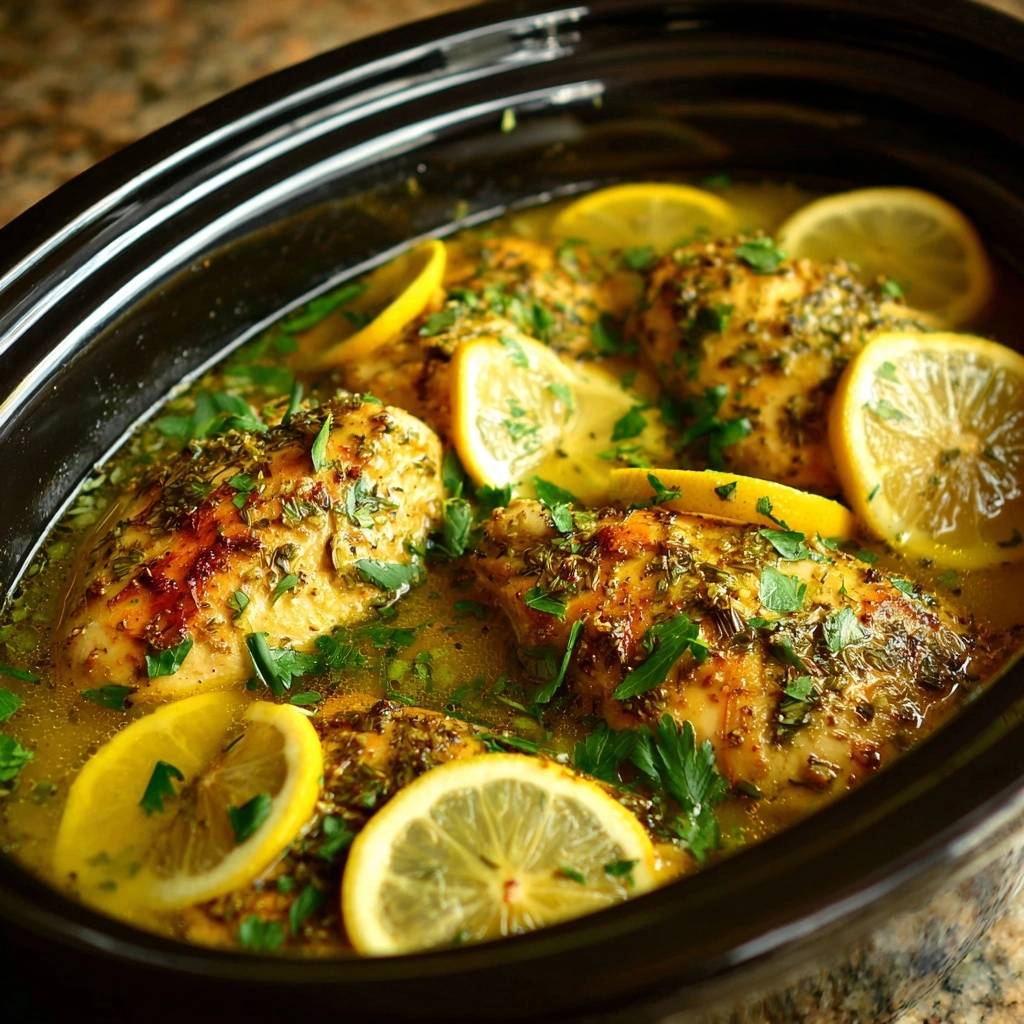
Most slow cooker chicken recipes end up as a pile of dry, stringy fibers swimming in a bland broth. You know the type—it looks fine in the pot, but it feels like chewing on cardboard once it hits your plate. This recipe changes that narrative by bridging the gap between crockpot convenience and gourmet texture.
With just 15 minutes of active prep, you can create a dish that boasts a 380-calorie profile without sacrificing an ounce of flavor. We aren’t just dumping ingredients into a ceramic pot and hoping for the best. Instead, we’re using a few chef-inspired techniques to ensure every bite is succulent and bright.
The secret to success here is the sear and the temperature. By browning the meat first and avoiding the “high” setting on your slow cooker, you lock in moisture that usually escapes during long cook times. Trust me, once you taste the difference a quick pan-sear makes, you’ll never go back to the “dump and go” method again.
For a similar crispy outcome with lemon and garlic, check out this skillet roasted lemon chicken.
The Science of Moisture in Slow Cooker Poultry
Chicken breasts are lean, which makes them notoriously difficult to cook in a slow cooker compared to fatty thighs. Because they lack the connective tissue and fat that breaks down over time, they can easily become rubbery if exposed to high heat for too long.
Using the “Low” setting is non-negotiable for this recipe. Low heat allows the muscle fibers to relax and gently poach in the lemon-herb liquid rather than contracting and squeezing out their natural juices. This gentle approach ensures the meat remains tender enough to cut with a fork.
The acidity from the lemon juice also plays a vital role in the texture. While too much acid can turn meat mushy, the specific ratio in this recipe helps tenderize the outer layers of the chicken. It creates a delicate “bite” that balances the richness of the melted butter.
Essential Components for the Lemon Herb Base
Quality ingredients are the backbone of this sauce. I always recommend using low-sodium chicken broth because it gives you total control over the salt levels. You want to taste the herbs and citrus, not just a salt lick, so start with a low-sodium base and adjust at the very end.
Unsalted butter is another key player that oil alone cannot replace. While olive oil is great for the initial sear, the butter adds a velvety mouthfeel and a nutty undertone to the sauce. It carries the flavors of the garlic and onion powder across your palate, making the sauce feel much more luxurious.
Fresh garlic is a must here. Pre-minced jarred garlic often has a metallic aftertaste that can become amplified during a long cook cycle. Crushing and mincing your own cloves ensures a sweet, pungent aroma that permeates the meat beautifully.
Fresh vs. Dried: Choosing Your Herbs
Fresh rosemary and thyme provide a woody, earthy depth that dried herbs sometimes lack. However, if you only have dried herbs in the pantry, remember the 3:1 ratio. Use one teaspoon of dried herbs for every tablespoon of fresh called for in the recipe.
Dried herbs are more concentrated, so they need the moisture of the slow cooker to “bloom” and release their oils. Parsley, on the other hand, is much more delicate. We save half of it for the very end to maintain that vibrant green color and fresh, peppery finish.
The Role of Citrus Acidity
We use lemons in two ways to maximize the flavor profile. The juice provides the necessary acidity to brighten the heavy flavors of the butter and chicken. It acts as a flavor enhancer, much like salt does, making everything else taste more like itself.
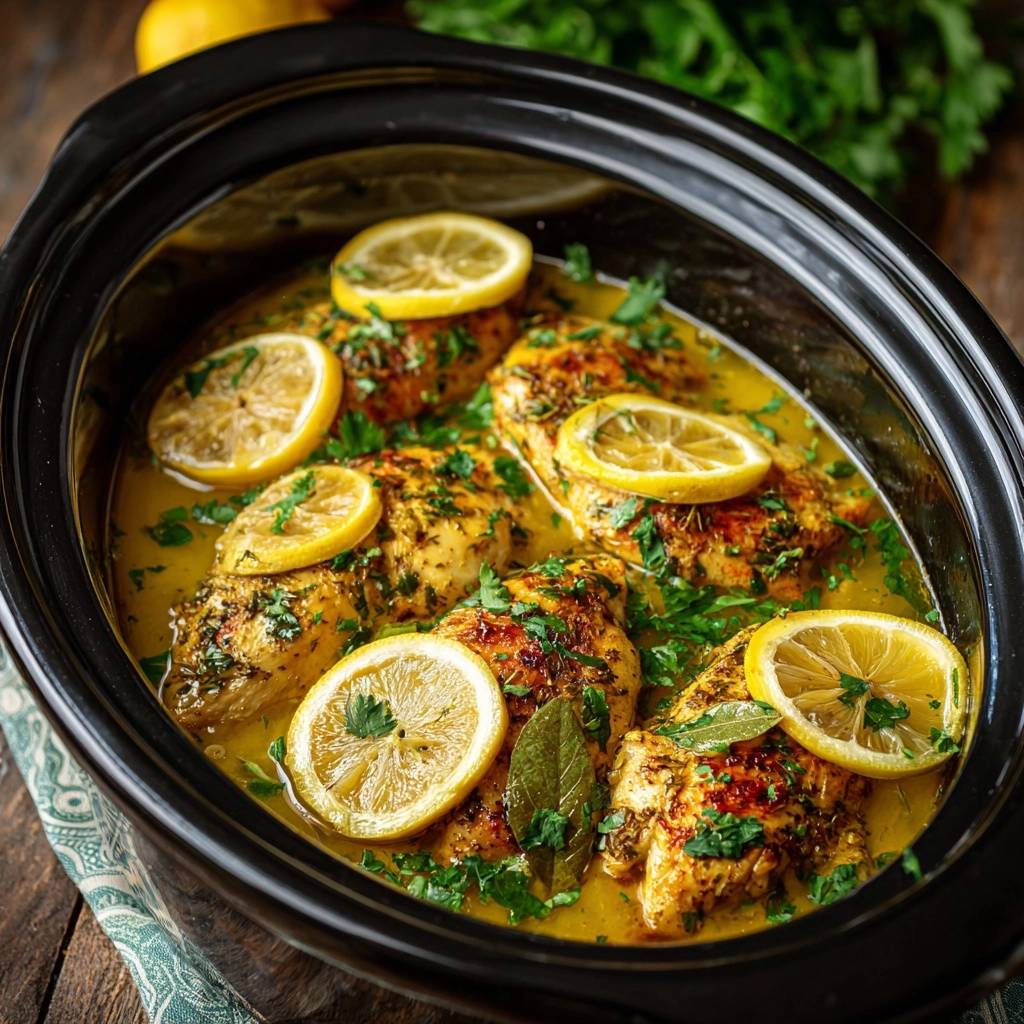
The lemon slices serve a different purpose. As they sit on top of the chicken, the essential oils in the zest perfume the meat. They also act as a physical barrier, keeping the top of the chicken breasts from drying out while they cook in the steam of the pot.
Phase One: The Maillard Reaction and Searing
If you want your chicken to have a deep, complex flavor, you cannot skip the sear. This process is known as the Maillard reaction. It is a chemical reaction between amino acids and sugars that creates that beautiful golden-brown crust and savory aroma.
For a different take on tender chicken, explore creamy lemon herb chicken thighs.
Before the chicken touches the pan, you must pat it completely dry with paper towels. If the surface is wet, the chicken will steam instead of sear, and you’ll miss out on that crucial texture. Get your skillet shimmering hot with olive oil before laying the breasts down.
You aren’t trying to cook the chicken all the way through at this stage. Just look for a deep golden color on both sides, which usually takes about 3 to 4 minutes per side. This “crust” will hold up beautifully in the slow cooker and prevent the meat from looking gray and unappetizing.
Phase Two: Assembling the Slow Cooker Layers
Once your chicken is seared, nestle the breasts into the bottom of the slow cooker. You want them to be in a relatively single layer if possible. This ensures they cook evenly and that the sauce can reach as much surface area as possible.
Whisk your broth, lemon juice, melted butter, and herbs in a separate bowl before pouring it over the meat. This ensures the garlic and herbs don’t just clump in one corner. I like to use a spoon to spread the herbs over the top of each breast so they look “crusted” when finished.
This is essentially a poaching method. The liquid shouldn’t fully submerge the chicken; it should come about halfway up the sides. This allows the bottom to simmer in the sauce while the top gently steams under the lemon slices.
Phase Three: Temperature Control and Timing
I cannot stress this enough: do not use the “High” setting. High heat is the enemy of juicy chicken breasts. It causes the proteins to tighten too quickly, resulting in that rubbery, bouncy texture that everyone hates about slow cooker meals.
Start checking the internal temperature with a digital probe thermometer at the 3-hour mark. Every slow cooker runs at a slightly different temperature, so yours might be faster than mine. You are looking for exactly 165°F (74°C) in the thickest part of the breast.
As soon as it hits that temperature, pull it out. If you leave it in “just to be safe,” it will overcook within minutes. The juices should run clear, and the meat should offer very little resistance when pierced with a knife.
Troubleshooting Common Slow Cooker Chicken Issues
If your chicken still feels a bit tough, it is almost certainly overcooked. Next time, try reducing the cook time by 30 minutes. If the sauce tastes a bit flat, it likely needs a tiny pinch more salt or a final squeeze of fresh lemon to wake up the flavors.
Sometimes the sauce can turn out thinner than you’d like because the chicken releases its own juices during the cook. If you prefer a thicker gravy, whisk a teaspoon of cornstarch with a tablespoon of cold water. Stir this “slurry” into the hot liquid in the pot and let it thicken for 10 minutes.
Another common issue is a bitter sauce. This usually happens if the lemon slices have a very thick white pith. If you’re sensitive to bitterness, you can zest the lemons and use the juice instead of placing the whole slices inside the pot.
Flavor Variations and Ingredient Swaps
You can easily give this dish a Mediterranean twist by tossing in a handful of kalamata olives and a tablespoon of capers during the last hour of cooking. The salty pop of the olives pairs perfectly with the lemon and rosemary.
For those who love a creamy sauce, stir in a splash of heavy cream or full-fat coconut milk during the last 20 minutes. This creates a silky, opaque sauce that feels incredibly indulgent over pasta or rice.
If you want a one-pot meal, you can add baby potatoes or trimmed green beans to the bottom of the pot before adding the chicken. These vegetables are hardy enough to withstand the 4-hour cook time and will soak up all that delicious herb butter.
Optimal Side Dish Pairings
You want a side dish that can act as a sponge for that incredible lemon-herb butter sauce. Garlic mashed potatoes are a classic choice, but orzo or quinoa also work beautifully. The small grains catch the sauce in every nook and cranny.
Complementary Dishes
To round out your meal, consider these other chicken dishes.
- For a vibrant starter, try the Garlic Herb Grilled Chicken Salad, which features similar herbaceous notes.
- If you’re in the mood for something green and satisfying, the Creamy Kale Caesar Salad with Sourdough Croutons offers a fresh counterpoint.
To balance the richness of the butter, I love serving this with something green and crisp. Roasted asparagus with a little sea salt or a simple arugula salad with a light vinaigrette provides a nice textural contrast to the tender chicken.
If you’re keeping things low-carb, cauliflower rice is a fantastic base. It absorbs the citrus notes without becoming heavy. Just make sure to season your sides lightly, as the chicken sauce provides most of the flavor punch for the meal.
Storage, Meal Prep, and Reheating Tactics
This chicken is a meal prep dream. You can store leftovers in an airtight container in the refrigerator for up to 4 days. In fact, the flavors often deepen by the second day as the herbs continue to infuse into the sauce.
Reheating is where most people go wrong. If you blast this in the microwave on high, it will dry out instantly. Instead, place the chicken in a skillet with a splash of broth, cover it, and warm it over low heat. This creates a mini-steam chamber that keeps the meat moist.
I don’t recommend freezing this specific recipe once it’s cooked. The lemon-butter emulsion tends to break and separate when thawed, which can result in a greasy texture. It is much better enjoyed fresh or from the fridge within a few days.
Expert Tips for Professional Results
For the easiest cleanup imaginable, use a slow cooker liner. It prevents the sauce from baking onto the sides of the ceramic pot, saving you from a lot of scrubbing later. It’s a small step that makes a huge difference on busy weeknights.
Always let your chicken rest for about 5 minutes before you slice into it. If you cut it immediately, all those hard-earned juices will run out onto the cutting board. Resting allows the fibers to reabsorb the moisture, ensuring a juicy bite every time.
Don’t throw away the leftover liquid! If you have sauce left over, it makes a phenomenal base for a quick soup or a flavorful risotto the next day. It’s essentially a concentrated herb-butter stock that is too good to waste.
Frequently Asked Questions
Can I use frozen chicken breasts?
It is not recommended to put frozen chicken directly into a slow cooker. It takes too long for the meat to reach a safe temperature, which can allow bacteria to grow. Additionally, frozen chicken releases a lot of excess water, which will dilute your beautiful lemon-herb sauce and make it watery.
Can I substitute chicken thighs?
Yes, you absolutely can. Chicken thighs are much more forgiving in the slow cooker because they have more fat. If you use bone-in, skinless thighs, increase the cook time to about 5 to 6 hours on the low setting. They will be incredibly tender and fall-off-the-bone delicious.
Is the butter necessary?
While you can use only olive oil, the butter provides a specific “fat-flavor carry” that makes the herbs and garlic pop. It also gives the sauce a body and richness that oil alone cannot achieve. If you are looking to cut calories, you can reduce the butter to one tablespoon, but I wouldn’t skip it entirely.
Why is my lemon sauce bitter?
Bitterness usually comes from the white pith (the spongy part) of the lemon slices. If your lemons have very thick skins, the pith can release bitter tannins during the long cook. To avoid this, you can peel the lemons before slicing or simply use the zest and juice instead of the whole rounds.
Can I add the parsley at the beginning?
I recommend waiting until the end to add the bulk of the parsley. Fresh parsley is very delicate; if it cooks for four hours, it will turn a dull brown color and lose its bright, grassy flavor. Adding it as a garnish at the end ensures a fresh pop of color and taste.
Lemon Herb Chicken
Course: Main CourseCuisine: AmericanDifficulty: easy4
servings15
minutes3
hours380
kcal180
MinutesThis recipe solves the problem of dry slow cooker meat by browning the chicken first and poaching it in a flavorful blend of lemon juice, butter, garlic, and fresh herbs on a low heat setting.
Ingredients
4 large boneless skinless chicken breasts
2 tablespoons olive oil
2 tablespoons unsalted butter, melted
1/2 cup low-sodium chicken broth
3 large lemons (2 juiced, 1 sliced into rounds)
4 cloves garlic, minced
1/4 cup fresh parsley, finely chopped (divided)
1 tablespoon fresh thyme, chopped (or 1 tsp dried)
1 tablespoon fresh rosemary, finely minced (or 1 tsp dried)
1 teaspoon onion powder
1 teaspoon salt
1/2 teaspoon black pepper
Directions
- Pat the chicken breasts completely dry with paper towels. Season both sides generously with salt, pepper, and onion powder.
- Heat the olive oil in a large skillet over medium-high heat. Once the pan is shimmering, sear the chicken for 3-4 minutes per side until a deep golden-brown crust forms. This step is crucial for flavor and texture.
- Transfer the seared chicken into the slow cooker.
- In a small bowl, whisk together the chicken broth, lemon juice, melted butter, minced garlic, thyme, rosemary, and half of the fresh parsley.
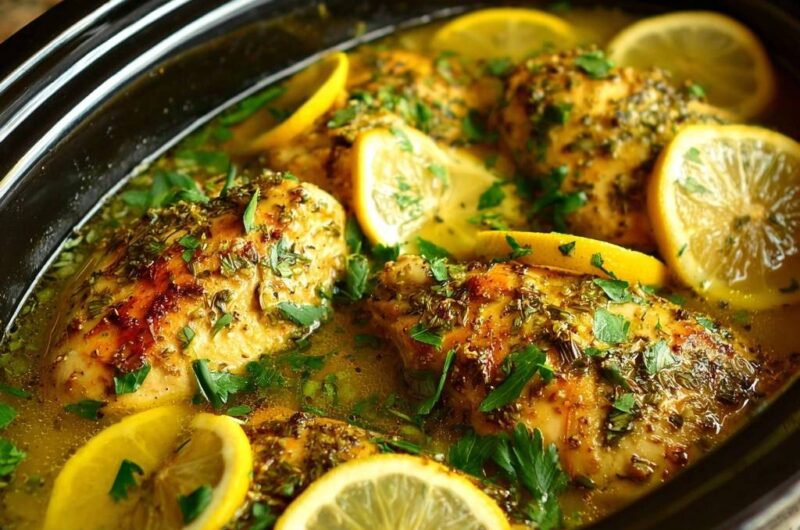
- Pour the liquid mixture over the chicken. Use a spoon to ensure the herbs are distributed across the top of the meat to match the visual herb-crusted finish.
- Arrange the lemon slices around and on top of the chicken breasts.
- Cover and cook on LOW for 3 to 4 hours. Do not use the high setting, as high heat causes the muscle fibers to contract and squeeze out all the moisture.
- Start checking the internal temperature at the 3-hour mark. Once the chicken reaches 165°F (74°C), remove it immediately to prevent overcooking.
- Garnish with the remaining fresh parsley. Serve the chicken drizzled generously with the lemon-herb butter sauce from the pot.
Notes
- Always cook on the low setting to prevent the chicken from becoming rubbery. Start checking the internal temperature at 3 hours to ensure it does not exceed 165 degrees Fahrenheit.