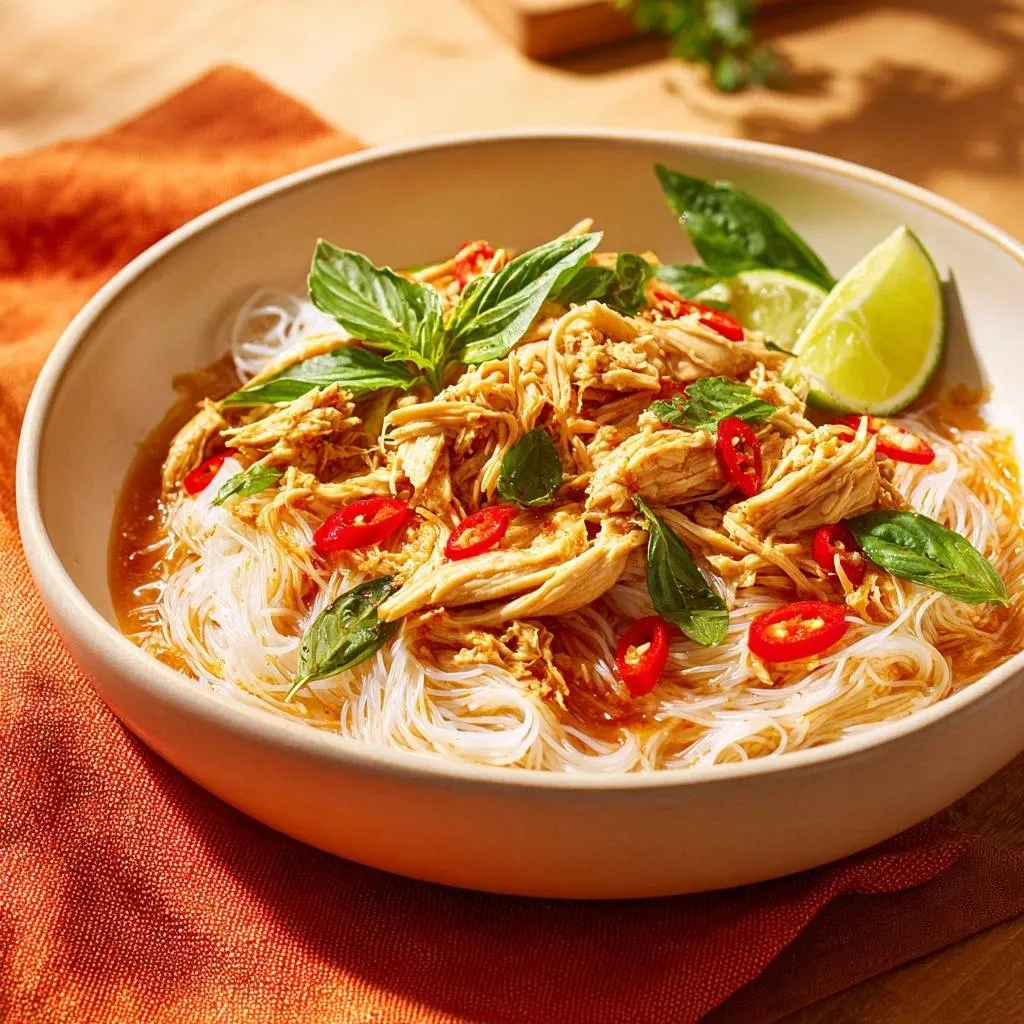
Most home cooks have experienced the “noodle brick” frustration. You boil a pot of water, drop in your delicate rice vermicelli, and within seconds, you’re left with a gummy, tangled mess that refuses to separate. It’s a heartbreaking end to what should be a light, vibrant meal.
This Thai Shredded Chicken Vermicelli recipe changes the game by focusing on the “bouncy” texture, known as al dente, that defines authentic Thai street food. By mastering the hydration process rather than just “cooking” the noodles, you’ll create a dish that feels professional and refreshing. At just 410 calories per serving, it’s a satisfying dinner that won’t leave you feeling weighed down.
The secret to success lies in a two-step soaking method that protects the delicate rice starch. Instead of aggressive boiling, we use controlled heat to soften the strands from the inside out. This ensures every single noodle stays distinct and slippery, ready to soak up that punchy chili-lime broth without turning into mush.
For a brighter, zippier flavor, explore this Thai lime chicken vermicelli bowl.
The Physics of Perfect Rice Vermicelli Texture
Rice vermicelli, often called Sen Mee in Thailand, is primarily made of rice flour and water. The science of its texture comes down to two types of starch: amylose and amylopectin. Thin noodles are high in starch, and the moment they hit boiling water, those starch granules rupture and release a sticky “glue” onto the surface.
When you boil these noodles, you’re essentially gelatinizing the exterior before the core is even hydrated. This is why they clump together in the colander. To get that restaurant-quality separation, we have to prioritize hydration over cooking. We want the water to penetrate the center of the noodle without melting the outside.
By using a specific soaking technique, you manage the starch release. Think of it as rehydrating a sponge rather than boiling a potato. This method keeps the structural integrity of the noodle intact, giving you that satisfying “snap” when you take a bite.
Temperature Control: Why Boiling Water is the Enemy
Boiling water sits at 212°F, which is far too aggressive for a noodle as thin as a hair. This intense heat causes the starch to explode, creating a film that acts like an adhesive. Once that film forms, there’s no saving the dish; you’re stuck with a solid mass of rice dough.
Instead, we use “hot but not boiling” water. This lower temperature allows the water to seep into the rice flour strands slowly. It softens the noodle to a perfect al dente state without compromising the exterior. It’s the difference between a distinct, silky strand and a soggy, flavorless clump.
Essential Components for Thai Shredded Chicken Vermicelli
Quality ingredients are the backbone of this dish. You want to look for thin rice vermicelli, usually sold in dried bundles. The flavor profile relies on the four pillars of Thai cuisine: salty, sour, sweet, and heat. Each one must be present to create a balanced “pool” of sauce at the bottom of your bowl.
Fresh lime juice provides the necessary acidity to cut through the richness of the chicken. Use a high-quality fish sauce for that deep, umami saltiness; if you’re avoiding fish, a light soy sauce works as a reliable backup. Honey acts as the bridge, mellowing out the sharp citrus and the spicy kick from the chili oil.
Selecting and Preparing the Protein
The chicken should be shredded into long, thin strips to mimic the shape of the noodles. This ensures you get a bit of everything in every forkful. You can poach a chicken breast with a few slices of ginger and a stalk of lemongrass for maximum flavor, but a rotisserie chicken is a fantastic time-saver.
Make sure your chicken is at room temperature or even slightly chilled before tossing it with the noodles. This is a refreshing, salad-style dish, so hot chicken can actually wilt the herbs and cause the noodles to soften further. Cold chicken also holds its shape better when you’re shredding it by hand.
The Aromatics: Thai Basil and Fresno Chilies
Thai basil is non-negotiable if you want that authentic, anise-like aroma. It has a peppery, licorice scent that is much sturdier than Italian sweet basil. If you can’t find it, a mix of regular basil and a tiny bit of fresh mint can mimic that complexity.
If you enjoy this fragrant chicken dish, you’ll also appreciate Thai basil chicken rice noodles.
Fresno chilies are perfect here because they offer a bright red color and a manageable heat level. They are slightly fruitier than jalapeños. If you prefer a milder experience, use a small spoon to scrape out the seeds and white ribs before slicing them into rounds.
Step-by-Step: Hydrating and Prepping the Noodles
Start by placing your dry vermicelli in a large heat-proof bowl. First, cover them with room temperature water and give them a gentle swirl. This initial rinse washes away loose surface starch before it has a chance to get sticky. Drain this water immediately.
Now, refill the bowl with hot water from the tap or water that has sat for a minute after boiling. Let them soak for exactly 3 to 5 minutes. You’re looking for a visual cue: the noodles should be opaque and flexible. Test one by pulling it; it should stretch slightly and then snap, rather than squishing between your fingers.
The Cold Rinse: Stopping the Residual Carry-over Heat
As soon as the noodles reach that al dente state, drain them and blast them with cold running water. This is the most critical step in the entire process. The cold water stops the cooking process instantly, preventing the noodles from becoming mushy from their own residual heat.
While rinsing, use your hands to gently lift and toss the noodles under the stream. You are physically washing away the remaining starch “glue.” Once the water runs clear and the noodles feel cool to the touch, shake the colander vigorously to remove as much excess moisture as possible.
Crafting the Chili-Lime Broth Base
In a small bowl, whisk your lime juice, fish sauce, honey, and chili oil. It’s important to whisk until the honey is completely dissolved; otherwise, you’ll end up with sweet clumps at the bottom of the bowl. The chili oil with flakes adds both heat and a beautiful toasted aroma.
The addition of chicken broth is what transforms this from a dry salad into a “sauce pool” dish. The broth creates a reservoir of flavor at the base of the bowl. As you eat, the noodles continue to draw up this seasoned liquid, ensuring the last bite is just as flavorful as the first.
Assembling the Thai Shredded Chicken Vermicelli
To ensure your noodles stay separated, use the “Barrier Method.” Immediately after draining and drying the noodles, toss them with about 3 tablespoons of your prepared dressing. The oil in the dressing coats each strand, creating a physical barrier that prevents them from fusing back together.
Once the noodles are coated, gently fold in your shredded chicken and half of the sliced chilies. Use tongs to lift and drop the mixture so you don’t break the delicate vermicelli. Divide the mixture into deep bowls, then pour the remaining dressing over the top so it settles at the bottom.
Troubleshooting Common Noodle Consistency Issues
If your noodles are still crunchy after the soak, don’t panic. This usually happens if the water wasn’t hot enough. Simply dunk them back into hot water for 60 seconds, then repeat the cold rinse. It’s better to under-soak and fix it than to over-soak and end up with mush.
If the dish tastes too salty, the fish sauce might have been particularly strong. You can balance this by squeezing in extra lime juice or adding a tiny pinch of extra honey. The acidity and sweetness will neutralize the salt on your palate.
Sometimes the noodles absorb the sauce faster than expected. If the bowl looks dry, simply splash in a little extra chicken broth and a drop of lime juice right before serving. This “late-addition” technique refreshes the texture and brings back that glossy look.
Flavor Variations and Dietary Swaps
For a vegetarian version of this dish, swap the chicken for smoked tofu or extra mushrooms. Use a high-quality soy sauce or a vegan “no-fish” sauce to maintain that salty depth. The smoky notes of the tofu pair beautifully with the lime and chili.
If you crave more heat, add a few chopped Bird’s Eye chilies to the dressing. These are significantly spicier than Fresnos and will give the broth a serious kick. You can also stir in a teaspoon of Nam Prik Pao (Thai chili jam) for a deeper, smokier flavor profile.
Adding a nutty crunch can also elevate the texture. A handful of toasted, crushed peanuts or a sprinkle of toasted sesame seeds adds a savory layer that complements the brightness of the lime. Just be sure to add these at the very last second so they stay crunchy.
Optimal Serving Suggestions and Pairings
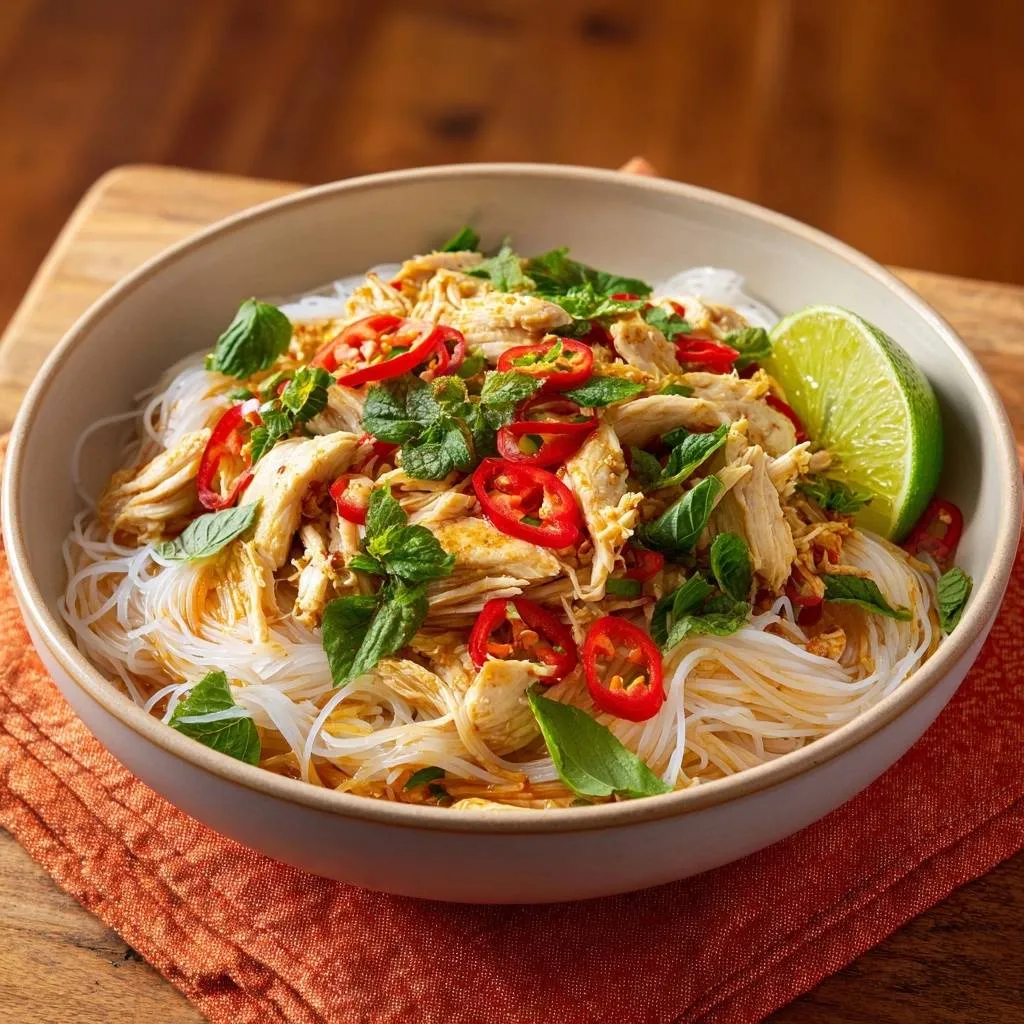
Presentation is key for this dish. Use deep, wide bowls to allow the sauce to pool properly. Garnish heavily with the fresh Thai basil and extra lime wedges. The bright green leaves against the red chilies make the dish look as vibrant as it tastes.
This meal is fantastic on its own, but it also pairs well with a side of steamed bok choy or a crisp green papaya salad. Because the noodles are light, you want side dishes that offer a crunch without being too heavy. Serve it immediately while the noodles are at their peak “bouncy” texture.
What to Try Next
Round out your Thai meal with these complementary dishes.
- For a bright and zesty addition, try the spicy Thai squid and cucumber salad, offering a refreshing contrast.
- Add some vibrant color and crunch with the Thai mango cabbage slaw, featuring crisp textures and a hint of sweetness.
Make-Ahead Strategies for Meal Prep
If you want to meal prep this, store the components separately. Keep the shredded chicken in one container and the prepared dressing in a jar. The noodles can be prepped ahead of time, but they may stick slightly in the fridge. To refresh them, simply rinse them under warm water for a few seconds to loosen the strands, then hit them with cold water again.
Always wait to add the fresh Thai basil and chilies until you are ready to eat. Herbs wilt quickly once they hit the acidic dressing, and you’ll lose that fresh, aromatic punch. The dressing itself actually tastes better after a day as the flavors have more time to meld together.
Expert Tips for Authentic Thai Flavor Profiles
The most important rule in Thai cooking is to taste and adjust. Limes vary in acidity and fish sauces vary in saltiness. Before you pour the dressing over your noodles, take a small spoonful. It should make your mouth water from the lime, tingle from the chili, and feel balanced by the honey.
For an extra layer of flavor, use a microplane to zest the lime before you juice it. The essential oils in the zest provide a floral aroma that juice alone can’t match. Stir the zest directly into the chili oil mixture to infuse the entire dish with a bright, citrusy fragrance.
Frequently Asked Questions
Can I use brown rice vermicelli for this recipe?
Yes, you can use brown rice vermicelli, but keep in mind the texture will be slightly different. Brown rice noodles tend to be heartier and have a nuttier flavor. They often require an extra 2 to 3 minutes of soaking time compared to white rice noodles. Be extra careful not to over-soak them, as they can become grainy if they get too soft.
How long does the shredded chicken stay fresh?
Cooked shredded chicken will stay fresh in an airtight container in the refrigerator for up to 3 to 4 days. If you are using rotisserie chicken, check the “sell-by” date on the original packaging. For the best flavor in this salad, try to use the chicken within 48 hours of shredding so it stays moist and tender.
What is the best substitute for Thai Basil?
If you can’t find Thai Basil, the best substitute is a combination of regular Italian basil and fresh mint. The mint helps replicate the cool, spicy notes of the Thai variety. Another option is to use cilantro, which provides a different but equally traditional Thai flavor profile that pairs perfectly with lime and chili.
Why is my chili oil separating from the sauce?
It is completely natural for chili oil to separate from the lime juice and broth because oil and water don’t naturally mix. To fix this, give the dressing a very vigorous whisk right before pouring it over the noodles. Once it hits the noodles, the starch on the surface of the vermicelli will actually help the sauce cling to the strands.
Can I freeze this dish?
I do not recommend freezing this dish. Rice noodles have a high water content and a delicate structure; once frozen and thawed, they become extremely mushy and lose their “bouncy” texture. The fresh herbs will also turn black and slimy. This dish is best enjoyed fresh or kept in the fridge for a maximum of two days.
Thai Shredded Chicken Vermicelli
Course: Main CourseCuisine: ThaiDifficulty: easy4
servings15
minutes10
minutes410
kcal25
MinutesA refreshing and savory noodle dish that solves the common problem of sticky rice noodles using a specific hydration technique. Features shredded chicken, Thai basil, and a zesty chili-lime dressing.
Ingredients
8 ounces thin rice vermicelli noodles
2 cups cooked chicken breast, shredded
1/4 cup fresh lime juice
3 tablespoons fish sauce (or soy sauce)
1 tablespoon honey
2 tablespoons chili oil with flakes
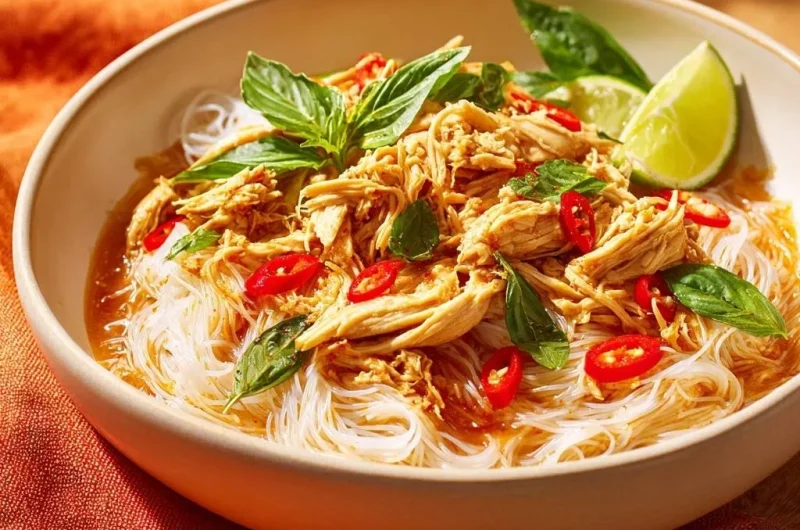
1/2 cup chicken broth (to create the light sauce pool seen in the image)
2 red Fresno chilies, sliced into rounds
1/2 cup fresh Thai basil leaves
1 lime, cut into wedges for garnish
Directions
- To solve the gummy noodle problem, place dry vermicelli in a large heat-proof bowl. Pour room temperature water over them first to loosen the starch, then drain. Refill the bowl with hot (not boiling) water. Soak for exactly 3 to 5 minutes until al dente. Immediately drain and rinse with cold water to stop the cooking process and remove excess surface starch that causes sticking.
- In a small bowl, whisk together the lime juice, fish sauce, honey, chili oil, and chicken broth until the honey is completely dissolved.
- Place the cooled, drained noodles in a large mixing bowl. Toss them with 3 tablespoons of the dressing immediately to create a barrier that prevents the strands from fusing together.
- Add the shredded chicken and half of the sliced red chilies to the bowl. Toss gently to combine.
- Divide the noodles and chicken into four deep serving bowls.
- Pour the remaining dressing evenly over each bowl so it pools slightly at the bottom, as shown in the image.
- Top each bowl with fresh Thai basil leaves and the remaining sliced chilies.
- Serve with a fresh lime wedge on the side to brighten the flavors.
Notes
- The secret to non-gummy noodles is the two-step soaking process and the immediate cold water rinse to remove surface starch.