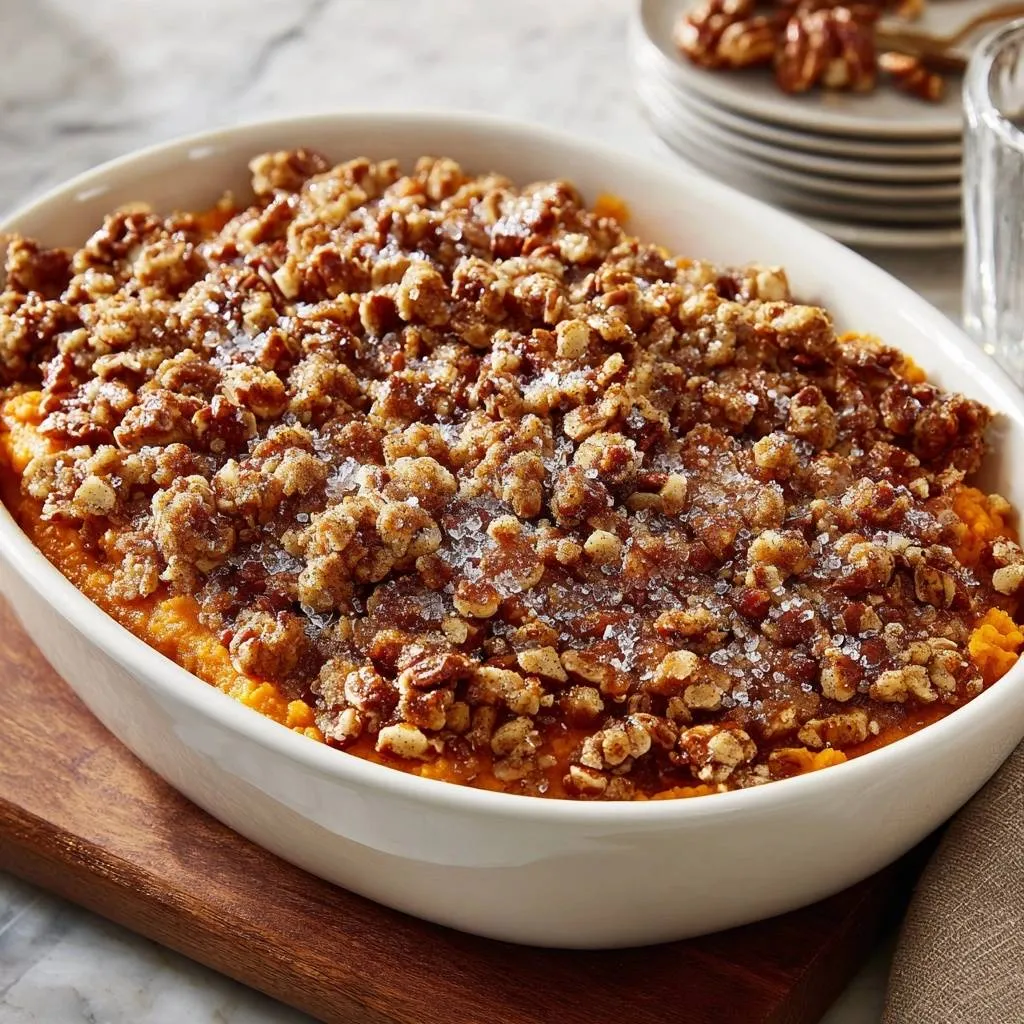
Most people settle for a sweet potato casserole that resembles baby food topped with a soggy, sad layer of nuts. You know the one—the topping sinks into the mash, creating a gummy texture that lacks any contrast. It’s a common holiday tragedy, but it’s entirely avoidable if you understand how moisture behaves in the oven.
The secret to a truly legendary Brown Sugar Pecan Sweet Potato Casserole lies in the structural integrity of the base and the temperature of your topping ingredients. We’re aiming for a velvety, souffle-like potato layer topped with a shatteringly crisp, candy-like pecan shell. When you get that perfect bite of creamy potato and crunchy praline, you’ll realize why this version wins every single time.
I’ve found that the real trick is a double-bake technique. By baking the potato base alone first, you create a firm “skin” on the surface. This thin layer acts as a structural floor, preventing the heavy brown sugar and butter from sinking into the mash. It’s a small change that yields professional, bakery-style results every time you head to the kitchen.
The Physics of a Non-Soggy Topping
Science plays a huge role in your holiday side dishes, especially when dealing with high-moisture vegetables like sweet potatoes. As the casserole bakes, the water inside the potatoes turns into steam. If you apply the topping immediately, that steam gets trapped, hydrating the flour in your crumble and turning it into a soft paste instead of a crisp crust.
Therefore, we use a moisture barrier method. By pre-baking the base, we allow the initial burst of steam to escape. This process dries out the surface of the potatoes, ensuring that when the butter and sugar finally hit the heat, they fry and caramelize against a dry surface rather than boiling in potato juice.
Why Surface Evaporation Changes Everything
Before you even think about mashing, you have to deal with the water from the boiling process. After draining your potatoes, return them to the hot pot over low heat for about two minutes. You’ll see steam rising rapidly and the surface of the cubes turning matte and slightly white.
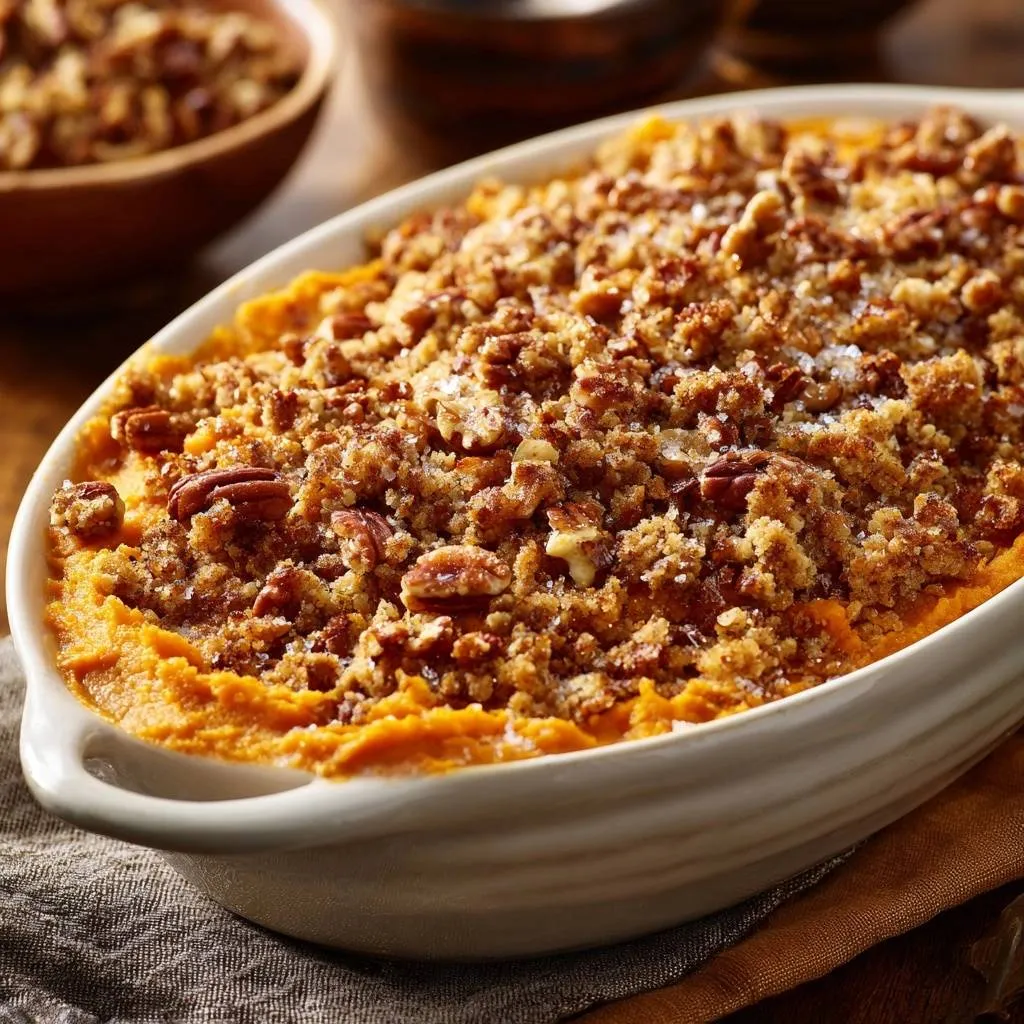
This “hot pot” method is vital because it removes residual surface water. If you skip this, that extra water ends up in your puree, leading to a loose, runny casserole. You want a dense, rich mash that can support the weight of a thick pecan layer without buckling.
The Structural Role of the Egg Binder
Eggs are the unsung heroes of a great sweet potato base. While some recipes rely solely on butter and milk, adding beaten eggs provides a necessary scaffold. As the eggs cook during that first 15-minute bake, they coagulate, turning the mash into a stable, airy structure.
This protein network is what allows the casserole to hold its shape when sliced. Without the eggs, the dish remains a heavy puree. With them, it transforms into something closer to a savory custard that can easily support a heavy, caramelized pecan topping.
Essential Components for the Potato Base
Quality starts with the spuds, and for this recipe, we’re using four pounds of fresh sweet potatoes. While it’s tempting to roast them whole in their skins, peeling and cubing them for a boil actually gives you more control over the final texture. It ensures every piece is cooked evenly, preventing those annoying hard lumps in your mash.
In addition to the potatoes, we use unsalted butter and whole milk to provide a rich mouthfeel. Using room temperature milk and melted butter helps the fats emulsify into the potato starch more effectively. This creates a silky consistency that feels luxurious on the tongue without being overly greasy.
Selecting the Right Sweet Potato Variety
When you’re at the grocery store, look for Jewel or Beauregard potatoes. These varieties have a deep orange flesh and a higher sugar content than the paler, starchier varieties. They also tend to have a smoother fiber structure, which is exactly what you want for a creamy casserole.
Garnet potatoes are another excellent choice because they hold their color beautifully during the bake. Avoid the white-fleshed sweet potatoes for this specific dish. They are often too dry and crumbly, which will make your casserole feel heavy and bread-like rather than light and velvety.
Maple Syrup vs. Granulated Sugar in the Mash
I prefer using maple syrup in the base because it adds a complex, earthy sweetness that granulated sugar just can’t match. The syrup mimics the natural caramel notes of the roasted pecans and the brown sugar topping. It also incorporates instantly into the mash, ensuring there’s no grittiness in the final product.
For more ideas on how to use those sweet potatoes, check out this pecan streusel sweet potato casserole.
However, if you find yourself without maple syrup, you can use honey or even a bit of agave. The goal is to enhance the natural sweetness of the potatoes without masking their flavor. Remember, the topping provides plenty of sugar, so we want the base to be balanced and flavorful, not cloying.
The Anatomy of the Pecan Crumble
The topping is a delicate balance of fat, flour, and sugar. We use light brown sugar because the molasses content helps the mixture clump together into those beautiful, craggy nuggets. All-purpose flour acts as the glue, holding the butter and sugar to the pecans so they don’t just melt into a puddle of oil.
Roughly chopping the pecans is better than using halves or a fine meal. You want varied sizes so that some bits get toasted and dark while others stay slightly softer. This variety in size creates a more interesting texture that keeps people coming back for second helpings.
Cold Butter vs. Melted Butter for Texture
This is the most important technical detail for the topping: use cold, cubed butter. When you work cold butter into the flour and sugar, you create tiny clumps of fat. In the oven, these clumps melt slowly, creating steam pockets that puff up the flour and sugar before they harden.
If you use melted butter, you’re essentially making a wet sand mixture. It will taste fine, but it will be flat and greasy. Cold butter is the secret to that “shatter” crunch. Use a pastry cutter or just your fingertips to pinch the butter into the dry ingredients until it looks like coarse crumbs.
The Impact of Coarse Sanding Sugar
Adding a sprinkle of coarse sanding sugar (sometimes called sparkling sugar) right after the casserole leaves the oven is a total pro move. These large crystals don’t melt easily, so they provide a secondary layer of crunch that sits on top of the caramelized pecans.
Visually, it makes the dish look like it came straight from a high-end catering kitchen. The crystals catch the light and give the topping a beautiful shimmer. It’s a small touch that adds a lot of “wow” factor to your holiday table.
Step-by-Step: Preparing the Sweet Potato Base
Start by boiling your cubed potatoes in salted water until they are fork-tender. You’ll know they’re ready when a knife slides in and out with absolutely no resistance. After the “hot pot” drying step, it’s time to mash. If you like a bit of texture, a hand masher works great, but for a cloud-like consistency, use a hand mixer.
Whip the potatoes on medium speed while slowly drizzling in your melted butter, milk, and maple syrup. Once the mixture is smooth, add the beaten eggs and vanilla. The batter should look glossy and smell incredible. Spread it into your baking dish, smoothing the top with a spatula so the heat distributes evenly during the first bake.
Don’t over-whip the potatoes if you’re using a mixer. If you go too long, the starches can become gummy. Just mix until the ingredients are incorporated and the large lumps are gone. The goal is a light, aerated base that will set up beautifully in the oven.
The First Bake: Setting the Foundation
Slide your dish into a 350°F oven for exactly 15 minutes. During this time, you aren’t looking for browning. Instead, you’re waiting for the eggs to set and the surface to lose its wet sheen. This creates a firm foundation that can support the weight of the pecan crumble.
If you skip this step and put the topping on immediately, the heavy nuts and sugar will sink into the raw potato mixture. By the time the potatoes cook through, your topping will be buried. This 15-minute head start ensures the topping stays exactly where it belongs—on top.
The Second Bake: Achieving the Caramelized Shell
After the first bake, pull the dish out and crank the heat up to 375°F. This higher temperature is crucial for the Maillard reaction. We want the butter and brown sugar to bubble and caramelize quickly, creating a hard, candy-like shell around the pecans.
Sprinkle the crumble evenly over the hot potatoes. Bake for another 20 to 25 minutes. You’ll know it’s done when the topping is a deep golden brown and the edges are bubbling. The smell of toasted pecans and cinnamon will fill your entire house, which is usually the signal that dinner is ready.
Troubleshooting Common Casserole Issues
If you notice the pecans are browning too quickly before the center is hot, simply tent the dish loosely with aluminum foil. This reflects the direct heat while allowing the interior to continue cooking. Every oven is different, so keep a close eye on it during the last 10 minutes.
If your base feels too loose or watery after the first bake, it likely means the potatoes weren’t dried enough after boiling. In this case, give it an extra five minutes in the oven before adding the topping. The extra time will help more moisture evaporate so the structure can firm up.
Preventing a Greasy Topping
A greasy topping usually happens if the butter was worked too much. If your hands are very warm, they can melt the butter while you’re mixing the crumble. If the mixture looks oily before it even goes in the oven, pop the bowl of topping in the fridge for 10 minutes to firm up the fats.
Additionally, make sure you’re measuring your flour correctly. Flour provides the structure that absorbs the melting butter. If you use too little, the butter has nowhere to go and will pool on top of the potatoes, creating a slick, oily mess instead of a crisp crust.
Fixing an Overly Sweet Base
Sweet potatoes vary wildly in their natural sugar content. If you taste your mash and find it’s already very sweet, reduce the maple syrup by half. You can also add an extra pinch of salt or a teaspoon of fresh lemon juice to cut through the sugar.
The acidity of the lemon juice is a secret weapon. It brightens the earthy flavor of the potatoes and balances the heavy fats from the butter and milk. It won’t make the dish taste like lemon; it just makes the sweet potato flavor “pop” more effectively.
Make-Ahead Strategies for Holiday Planning
You can absolutely make the potato base up to 24 hours in advance. Simply prepare the mash, spread it in the dish, cover it tightly with plastic wrap, and store it in the refrigerator. When you’re ready to bake, let it sit on the counter for 30 minutes to take the chill off before starting the first bake.
Store the topping in a separate airtight container or a zip-top bag in the fridge. Do not put the topping on the potatoes until you are ready for the second bake. Keeping them separate ensures the flour in the crumble stays dry, which is the only way to guarantee that signature crunch.
Freezing and Reheating Instructions
The potato base freezes surprisingly well. You can freeze the unbaked mash in a freezer-safe dish for up to three months. Thaw it completely in the refrigerator before proceeding with the recipe. However, I do not recommend freezing the topping, as the sugar can become grainy and the pecans may lose their freshness.
To reheat leftovers, use the oven rather than the microwave. A microwave will turn the topping soft and mushy. Instead, place the casserole in a 350°F oven for 10 to 15 minutes. This will recrisp the butter and sugar, bringing that professional texture back to life.
Pairing the Casserole with Savory Mains
Because this dish is quite sweet and rich, it pairs best with savory, salt-forward main courses. A roasted turkey with plenty of herb-heavy gravy is the classic choice. The saltiness of the gravy provides a perfect foil to the maple and brown sugar in the casserole.
It also works beautifully with a garlic and rosemary crusted lamb or a simple roasted chicken. If you’re serving a vegetarian feast, pair it with an earthy mushroom tart or roasted Brussels sprouts tossed in balsamic glaze. The goal is to balance the “candy” nature of the dish with savory, umami flavors.
Can I use canned yams for this recipe?
While you can use canned yams in a pinch, I strongly recommend fresh sweet potatoes. Canned versions are often packed in heavy syrup, which makes them much softer and significantly sweeter. This can lead to a mushy, overly sweet base that lacks the structural integrity needed to support the heavy pecan topping. If you must use canned, drain them thoroughly and rinse off the syrup before mashing.
What is the best substitute for pecans?
Walnuts are the best substitute for pecans in this casserole. they have a similar fat content and a pleasant bitterness that balances the brown sugar. If you have a nut allergy, you can use toasted pumpkin seeds (pepitas) or even a thick layer of rolled oats mixed with the butter and sugar for a “sweet potato crisp” style topping.
Why is my topping soft instead of crunchy?
A soft topping usually results from one of two things: either the butter was melted before it went into the oven, or the casserole didn’t rest long enough after baking. The “crunch” actually sets as the sugar cools down. Additionally, ensure you are using the higher temperature (375°F) for the second bake, as this is what caramelizes the sugars into a hard shell.
How should I store and reheat leftovers?
Store any leftovers in an airtight container in the refrigerator for up to four days. To maintain the crunchy topping, reheat the casserole in the oven at 350°F for about 10-15 minutes. Avoid the microwave if possible, as the steam generated will immediately soften the pecan crust and turn it gummy.
Can I make this dish dairy-free?
Yes, you can easily adapt this for a dairy-free diet. Substitute the butter with a high-quality plant-based butter stick (the kind meant for baking) and use full-fat coconut milk or cashew milk in the base. These alternatives provide the necessary fat content to keep the potatoes creamy without changing the flavor profile too drastically.
The Importance of the Resting Period
The hardest part of this recipe is waiting once it comes out of the oven. You must let the casserole rest for at least 10 to 15 minutes before serving. When the dish is bubbling hot, the sugar and butter in the topping are still in a liquid state. If you scoop into it immediately, the topping will slide off.
As the casserole sits, the molten sugar begins to crystallize and harden. This is when the “signature professional crunch” actually forms. This resting period also allows the potato base to firm up slightly, ensuring that you get a clean, beautiful scoop every time you serve your guests.
Sweet Potato Casserole
Course: Side DishCuisine: AmericanDifficulty: medium8
servings20
minutes45
minutes485
kcal65
MinutesThis recipe solves the common problem of mushy toppings by using a double-bake method. By setting the potato base first and finishing at a higher temperature, you achieve a shatteringly crisp, candy-like pecan crust over a smooth, maple-infused sweet potato base.
Ingredients
4 pounds sweet potatoes, peeled and cubed
1/2 cup unsalted butter, melted
1/2 cup whole milk
1/4 cup maple syrup
2 large eggs, beaten
1 teaspoon vanilla extract
1 teaspoon salt
1/2 teaspoon ground cinnamon
Topping:
1 1/2 cups pecan halves, roughly chopped
1 cup light brown sugar, packed
1/2 cup all-purpose flour
1/2 teaspoon ground cinnamon
6 tablespoons cold unsalted butter, cubed
2 tablespoons coarse sanding sugar (sparkling sugar) for garnish
Directions
- Place the cubed sweet potatoes in a large pot and cover with cold water. Bring to a boil and cook until very tender, about 15 to 20 minutes. Drain thoroughly. Return the potatoes to the hot pot and let them sit over the lowest heat setting for 2 minutes, shaking the pan to evaporate all remaining surface moisture. This step is crucial to ensure the base isn’t watery.
- Mash the potatoes until smooth (or use a hand mixer for a fluffier texture). Stir in the melted butter, milk, maple syrup, eggs, vanilla, salt, and cinnamon. Spread the mixture into a greased 2.5 or 3-quart oval baking dish.
- Preheat your oven to 350°F (175°C). Bake the potato base alone for 15 minutes. This sets the surface and creates a structural “skin” so the heavy topping won’t sink into the mash.
- While the base bakes, prepare the topping. In a bowl, whisk together the brown sugar, flour, and cinnamon. Use a pastry cutter or your fingers to work in the cold cubed butter until the mixture forms large, pea-sized clumps. Fold in the chopped pecans.
- Remove the dish from the oven. Increase the oven temperature to 375°F (190°C). Sprinkle the crumble mixture evenly over the hot potatoes, ensuring the pecans are well-distributed.
- Return to the oven and bake for another 20-25 minutes. The higher heat at this stage ensures the butter and sugar caramelize into a crisp shell rather than melting into the potatoes.
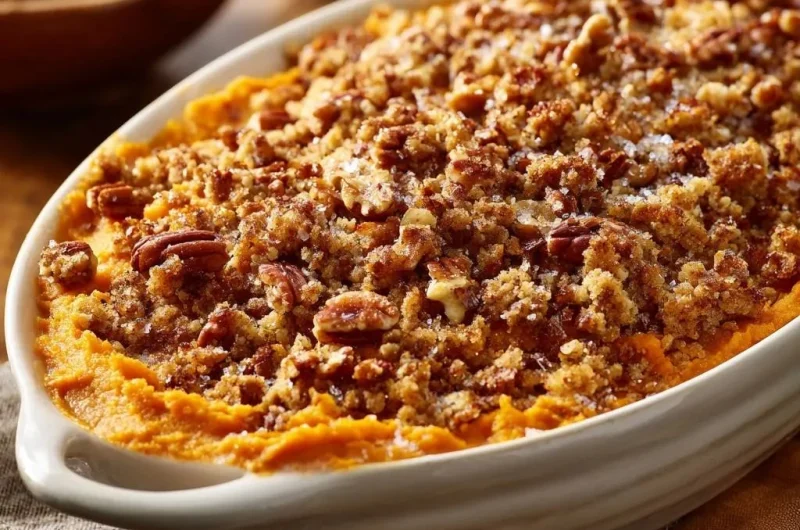
- Remove from the oven and immediately sprinkle the coarse sanding sugar over the top. The residual heat will help the crystals adhere without melting them. Let the casserole rest for 10-15 minutes before serving; this allows the sugar-butter bond to “set” into the signature professional crunch shown in the image.
Notes
- The secret to the ‘Anti-Soggy’ topping is the two-minute moisture evaporation step after boiling the potatoes and the initial 15-minute bake of the base alone to create a structural skin.