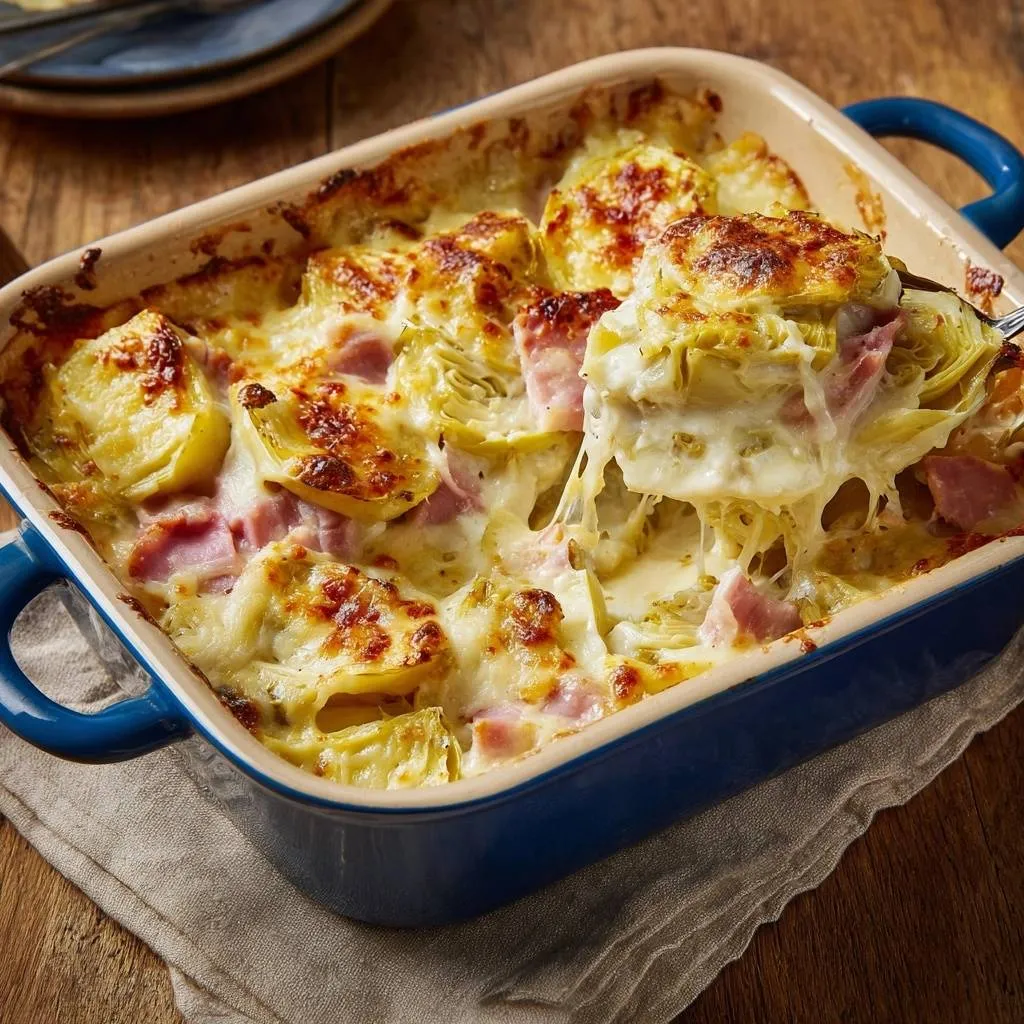
You’ve likely been there before: you pull a bubbling, golden-brown casserole out of the oven, only to find a pool of thin, gray liquid lurking at the bottom of the dish. It’s the ultimate kitchen heartbreak. That “casserole soup” happens when vegetables release their internal moisture, breaking your beautiful sauce and turning a cozy dinner into a soggy mess.
This Cheesy Artichoke and Ham Casserole is the solution to that soggy problem. We’re combining the salty, smoky punch of thick-cut ham with the earthy, tender bite of artichoke hearts. It’s a rich, savory experience that feels like a warm hug on a plate, but with a structural integrity that stays creamy from the first scoop to the last.
For more cheesy casserole ideas that avoid sogginess, check out this creamy bacon mac and cheese.
For a similar creamy comfort, check out this creamy bacon ravioli bake.
The secret to this success isn’t just luck; it’s a specific moisture-locking technique. By aggressively drying the artichokes and using cream cheese as a molecular stabilizer, we create a sauce that clings to every ingredient. You’ll get a velvety mouthfeel without a drop of excess water thinning out the flavor.
For a different take on a creamy casserole, check out this cheesy spaghetti squash casserole.
The Science of Preventing Watery Artichoke Casseroles
Casseroles often fail because of simple physics. When you bake vegetables like artichokes, the heat breaks down their cellular walls, causing them to dump their internal water into your sauce. If that sauce is a simple cream base, the added water causes the fats to separate, leaving you with a broken, oily, and thin liquid.
Canned artichokes are particularly notorious for this because they’ve been sitting in a brine bath. They act like tiny, leafy sponges. If you don’t force that brine out before baking, it will inevitably end up in your casserole dish. This is why the “Moisture-Lock” step is a mechanical necessity for a professional-grade result.
By pressing the artichokes, you’re clearing out the “storage water” to make room for the “flavor sauce.” When the artichokes are dry, they actually absorb a bit of the cheesy cream sauce as they bake. This creates a cohesive dish where the sauce and the vegetables become one, rather than two separate layers of food and liquid.
Why Canned Artichokes Require Pre-Processing
I prefer canned artichoke hearts over frozen or fresh for this recipe because they have a consistent, tender texture. However, the very structure that makes them delicious—those tight, overlapping leaves—is designed by nature to trap liquid. Even after draining them in a colander, a significant amount of brine remains tucked deep inside the heart.
If you skip the pressing step, that brine will boil inside the oven. This steam creates gaps in your casserole and prevents the cheese from properly adhering to the vegetables. Taking ten minutes to let them air-dry on paper towels ensures the surface tension is broken, allowing the sauce to coat every nook and cranny.
The Role of Cream Cheese as a Sauce Stabilizer
Heavy cream is delicious, but it’s temperamental under high heat, especially when it meets the mild acidity of artichokes. This is where cream cheese saves the day. Most commercial cream cheeses contain small amounts of stabilizers like carob bean gum or guar gum which are absolute heroes in the oven.
These stabilizers act as a safety net for the emulsion. They help the heavy cream and the fats from the mozzarella stay bonded together even as the temperature rises. Instead of a sauce that might curdle or “break,” the cream cheese ensures a thick, Mornay-style consistency that stays smooth and glossy.
Essential Components for the Cheesy Artichoke and Ham Casserole
Quality ingredients make a massive difference when you’re working with a short list. Since there aren’t many components, each one needs to pull its weight. You want a balance of salt, fat, and texture that keeps your palate interested with every bite.
I always recommend using room-temperature cream cheese. If it’s cold, it won’t whisk smoothly into the heavy cream, and you’ll end up with tiny white lumps in your sauce. Just set it on the counter thirty minutes before you start, and it will melt into the sauce like a dream.
Fresh garlic is another non-negotiable here. The jarred stuff has a metallic aftertaste that can get amplified during the baking process. Two cloves of freshly minced garlic provide a sweet, aromatic backbone that cuts through the richness of the heavy cream and cheese.
Selecting the Right Cut of Ham
The ham provides the primary salt and texture for this dish, so skip the thin deli slices. You want a thick-cut “steak” style ham or leftover bone-in ham chopped into sturdy one-inch cubes. These larger pieces provide a satisfying chew and won’t get lost in the sauce.
Smoked ham is my personal favorite because the woodsy aroma balances the tang of the artichokes. If you use a honey-cured ham, just be aware it will add a slight sweetness to the dish. Whatever you choose, make sure it’s fully cooked, as we are just looking to heat it through and let it release its juices into the bake.
The Cheese Blend: Mozzarella vs. Parmesan
We use a duo of cheeses because they serve two different purposes. Mozzarella is our “utility” cheese; it provides that iconic, gooey stretch and a mild, creamy flavor. It melts beautifully and creates the bulk of the casserole’s cheesy body.
Parmesan, on the other hand, is our “flavor” cheese. It doesn’t melt into a stretch, but it provides a sharp, salty punch and helps create that gorgeous golden crust on top. If you can, grate your cheese from a block. Pre-shredded bags are coated in potato starch to prevent clumping, which can make your sauce feel slightly grainy.
Step-by-Step: Executing the Moisture-Lock Technique
Start by draining your artichoke hearts thoroughly in a mesh strainer. Once they’ve stopped dripping, slice them in half lengthwise. This exposes the inner core where most of the liquid is trapped. Lay them out on a double layer of heavy-duty paper towels.
Place another layer of paper towels on top and press down firmly with the palms of your hands. You’ll be surprised at how much liquid the towels soak up. Don’t worry about squishing them slightly; they are resilient. Let them sit there for about ten minutes while you get the oven preheated and the sauce started.
This air-drying window is crucial. It allows the remaining surface moisture to evaporate. When you eventually toss these artichokes with the ham and cheese, the dry surface will allow the cheese to “grip” the vegetable. This is the secret to a casserole that holds its shape when served.
Building the Stabilized Mornay-Style Sauce
Melt your butter in a small saucepan over medium heat. When it starts to foam, add your minced garlic. You only need about sixty seconds here. You’re looking for the garlic to become fragrant and soft, but don’t let it turn brown. Brown garlic is bitter garlic, and it will ruin the delicate cream sauce.
Slowly pour in the heavy cream while whisking constantly. Once the cream is warm, add the softened cream cheese in small chunks. Keep whisking until the mixture is completely smooth and the cream cheese has vanished into the liquid. It will look thin at first, but be patient.
Let the sauce simmer on low for about three to five minutes. You’re looking for the “nappe” consistency. This is a fancy chef term that just means the sauce should be thick enough to coat the back of a spoon. If you run your finger through the sauce on the spoon, the trail should stay clean and not fill back in.
Assembling for Maximum Sauce Distribution
Instead of just layering ingredients in the pan, I prefer to toss the artichokes, ham, and half of the mozzarella in a large bowl first. This ensures that every piece of ham and every artichoke leaf is pre-coated with a little bit of cheese. It creates a more uniform texture throughout the bake.
Transfer that mixture into your greased baking dish. Now, pour your thickened cream sauce over the top. Don’t just dump it in the center; move the saucepan in a zigzag motion to cover the entire surface. Use a spoon to gently poke the ingredients, helping the sauce seep down into the bottom crevices.
This step prevents “dry pockets” where you might have a bunch of artichokes with no sauce. Once the sauce is distributed, sprinkle the remaining mozzarella and the parmesan over the top. This creates a multi-layered cheese experience with gooey pockets inside and a crisp crust on top.
Baking and Achieving the Golden Crust
Slide the dish into your 375-degree oven. This temperature is high enough to bubble the sauce and brown the cheese without curdling the dairy. Over the next 25 to 30 minutes, the proteins in the cheese and cream will begin to bind together, creating that stable structure we’re after.
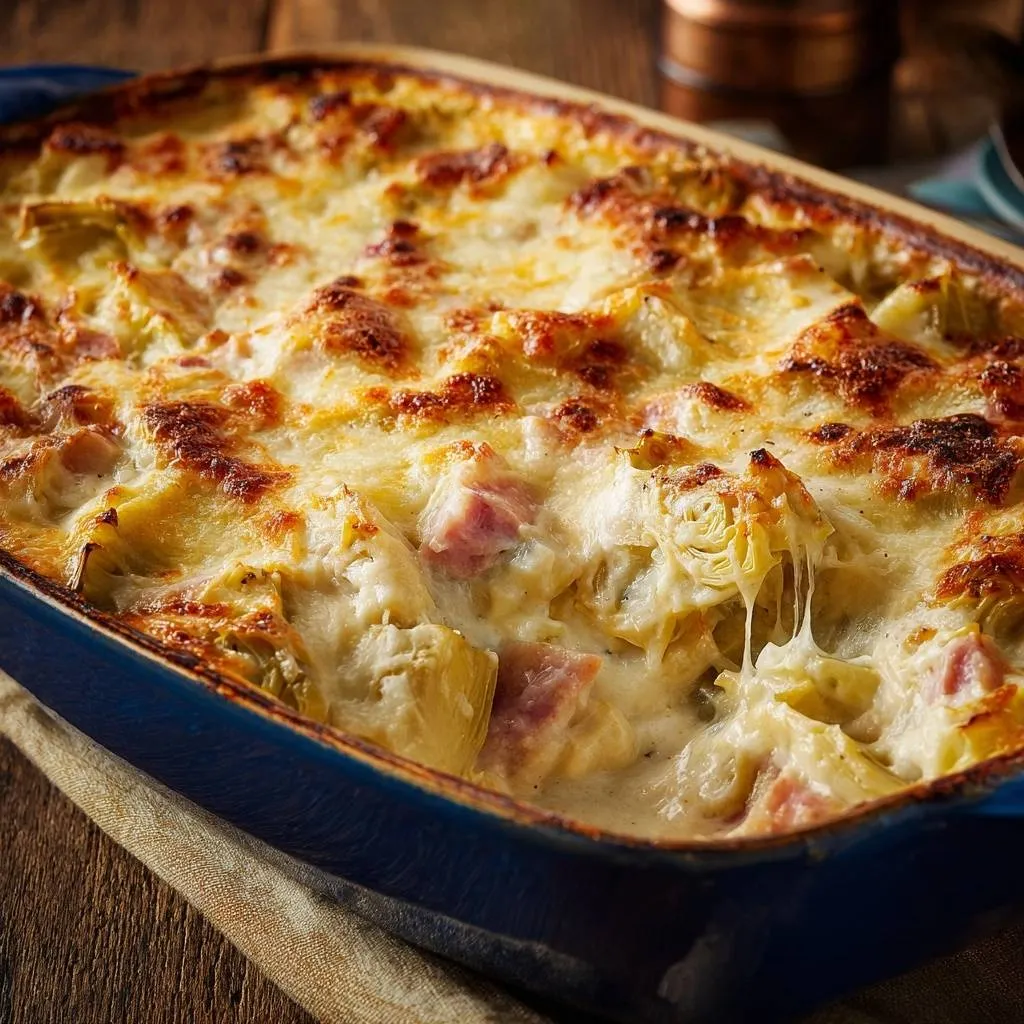
Keep an eye on the top during the last five minutes. You want to see deep golden-brown spots and a vigorous bubble around the edges. If the cheese is melted but looks pale, don’t be afraid to use the broiler. Switch it to high for just 90 seconds, but stay right there and watch it.
The broiler can go from “perfectly toasted” to “burnt” in a heartbeat. You’re looking for a beautiful, blistered appearance. This toasted cheese layer acts as a lid, trapping the heat and moisture inside the casserole while providing a salty, crunchy contrast to the creamy interior.
The Critical 10-Minute Rest Period
I know it’s tempting to dive in the second the timer goes off, but you must wait. When the casserole comes out of the oven, the sauce is at its most fluid state. If you cut into it immediately, the sauce will run to the empty space, and your portion will collapse into a pile.
During the ten-minute rest, a process called “setting” occurs. As the temperature drops slightly, the fats and the cream cheese stabilizers begin to firm up. This creates that velvety, cohesive mouthfeel. The sauce will cling to the ham and artichokes rather than sliding off them.
Think of it like a lasagna; it needs time to find its structural integrity. After ten minutes, the casserole will still be piping hot, but it will be much easier to serve. You’ll get clean, beautiful scoops that look as good on the plate as they do in the pan.
Make-Ahead Strategies and Storage Logistics
This is a fantastic dish for meal prep because it actually holds up quite well. If you want to make it a day in advance, I recommend prepping the artichokes and the sauce, but storing them separately in the fridge. This prevents the artichokes from soaking up too much liquid before they even hit the oven.
What to Try Next
If you enjoyed the cheesy, comforting elements of the casserole, consider these complementary dishes.
- For a similar cheesy bake, explore the cheesy roasted cauliflower gratin, which offers a delightful vegetable alternative.
- If you appreciate the spinach and artichoke combination, try the creamy spinach artichoke dip for a shared flavor experience.
When you’re ready to bake, just toss everything together and add about five minutes to the baking time since the ingredients are starting cold. If you have leftovers, store them in an airtight container in the refrigerator for up to three days. The sauce will thicken significantly as it cools.
To reheat, avoid the microwave if possible, as it can cause the oils in the cheese to separate. Instead, put a portion in a small oven-safe dish, cover it with foil, and bake at 350 degrees until heated through. If you must use a microwave, use 50% power and stir halfway through to keep the sauce creamy.
Flavor Variations and Ingredient Swaps
While the ham and artichoke combo is a classic, you can easily tweak this recipe to suit your mood. If you want a bit of acidity to cut through the fat, try adding a quarter cup of chopped sun-dried tomatoes to the mix. The tartness pairs beautifully with the earthy artichokes.
For those who love a bit of crunch, you can add a topping of panko breadcrumbs tossed with a tablespoon of melted butter. Sprinkle this over the cheese before baking. It adds an audible “crunch” that contrasts perfectly with the soft, creamy interior of the casserole.
If you aren’t a fan of ham, smoked turkey breast is an excellent substitute. It provides a similar smoky profile but with a leaner texture. You could even swap the oregano for fresh thyme or rosemary if you want a more herbal, “Sunday roast” vibe to the entire dish.
Troubleshooting Your Artichoke and Ham Bake
If your sauce ends up grainy, it’s usually due to one of two things: the heat was too high, or you used pre-shredded cheese with too much cellulose. Next time, keep the sauce on a low simmer and try grating your mozzarella from a fresh block for a smoother melt.
Are your artichokes still a bit tough? Make sure you are buying “artichoke hearts” and not “artichoke bottoms.” The bottoms are much denser and require a longer cooking time. The hearts should be tender enough to cut with the side of a fork after thirty minutes in the oven.
If the dish tastes too salty, check your ham. Some brands are much saltier than others. If you know your ham is a salt-bomb, you can omit the 1/4 teaspoon of salt from the sauce entirely. The parmesan and ham will usually provide enough seasoning on their own.
Optimal Side Dish Pairings
Because this casserole is so rich and creamy, you want to pair it with something bright and acidic. A simple arugula salad with a lemon vinaigrette is my top choice. The peppery bite of the greens and the sharp citrus dressing cleanse your palate between bites of the heavy cheese sauce.
Roasted balsamic Brussels sprouts are another great option. The charred, slightly bitter edges of the sprouts provide a nice counterpoint to the sweet creaminess of the bake. The acidity of the balsamic vinegar helps balance the fats in the mozzarella and heavy cream.
I generally avoid serving this with heavy starches like mashed potatoes or pasta. The casserole is very filling on its own, and adding more heavy carbs can make the meal feel overwhelming. Stick to high-fiber, vibrant vegetables to keep the dinner feeling balanced and fresh.
How should I store and reheat leftovers?
Store any leftovers in an airtight container in the refrigerator for up to 3 days. For the best texture, reheat in the oven at 350°F covered with foil until hot. This prevents the cheese from becoming rubbery. I do not recommend freezing this dish, as the heavy cream and artichokes can change texture and become grainy or watery upon thawing.
Why is my casserole sauce still a bit thin?
This usually happens if the “Moisture-Lock” step was rushed. If the artichokes aren’t pressed firmly, they release water during the bake. Additionally, ensure you simmer the sauce until it truly coats the back of a spoon before adding it to the dish. If it’s thin going in, it will stay thin in the oven. Always let the dish rest for 10 minutes after baking to allow the sauce to thicken and set.
Can I use frozen artichokes instead of canned?
Yes, you can use frozen artichoke hearts, but you must thaw them completely first. Once thawed, follow the same pressing and drying procedure as the canned version. Frozen artichokes often have a slightly firmer texture and less tang than canned ones, so you might want to add a teaspoon of lemon juice to the sauce to compensate for the missing brine flavor.
What can I use if I don’t have heavy cream?
Heavy cream is vital for the stability and richness of this sauce. If you must substitute, use half-and-half, but be aware the sauce will be thinner. Do not use regular milk, as the lower fat content will almost certainly cause the sauce to break or curdle when it reacts with the artichokes and high oven heat. If using a lower-fat dairy, you may need to add an extra tablespoon of cream cheese to help stabilize it.
Is there a way to make this dish vegetarian?
To make this vegetarian, simply omit the ham. To keep that smoky element that the ham usually provides, try adding a half-teaspoon of smoked paprika to the sauce or tossing in some smoked provolone cheese along with the mozzarella. You could also add sautéed mushrooms or roasted red peppers to maintain the bulk and heartiness of the dish.
Why did my cheese top get oily instead of browning?
This often happens with lower-quality mozzarella or if the oven temperature isn’t quite high enough. If the cheese melts too slowly, the fat separates before the proteins can brown. Ensure your oven is fully preheated to 375°F. If it looks oily, use the broiler for 60-90 seconds at the very end to quickly brown the proteins and create a crisp crust.

Cheesy Artichoke Ham Casserole
Course: Main CourseCuisine: AmericanDifficulty: easy6
servings15
minutes35
minutes650
kcal50
MinutesThis savory bake combines thick-cut ham and artichoke hearts in a velvety cream cheese and mozzarella sauce. By using a specific drying method for the artichokes and a cream cheese stabilizer, this recipe ensures a thick, non-watery consistency every time.
Ingredients
2 cans (14 ounces each) artichoke hearts, drained and halved
2 cups thick-cut cooked ham, chopped into 1-inch pieces
2 cups shredded mozzarella cheese
1/2 cup grated parmesan cheese
1.5 cups heavy cream
4 ounces cream cheese, softened (The stabilizer)
2 tablespoons butter
2 cloves garlic, minced
1 teaspoon dried oregano
1/2 teaspoon black pepper
1/4 teaspoon salt
Directions
- Preheat your oven to 375 degrees F. Grease a deep 9×9 inch or 2-quart baking dish with butter.
- The Moisture-Lock Step: Place your drained and halved artichoke hearts on a double layer of paper towels. Press down firmly with another paper towel to squeeze out the hidden brine trapped in the leaves. For the best results, let them air dry for 10 minutes while you prepare the sauce. This is mandatory to prevent excess liquid from thinning your sauce during baking.
- In a small saucepan over medium heat, melt the butter and sauté the minced garlic for 1 minute until fragrant.
- Whisk in the heavy cream and the softened cream cheese. Continue whisking until the cream cheese is fully melted and the sauce is smooth. Add the oregano, black pepper, and salt. Simmer for 3-5 minutes on low heat until the sauce coats the back of a spoon.
- In a large bowl, gently toss the dried artichoke hearts and ham with half of the mozzarella cheese.
- Transfer the artichoke and ham mixture into the prepared baking dish.
- Pour the thickened cream sauce evenly over the ingredients, ensuring it seeps into the crevices.
- Top with the remaining mozzarella and the grated parmesan cheese.
- Bake for 25 to 30 minutes. If the top isn’t deeply browned as shown in the image, turn the broiler on high for the last 2 minutes of cooking.
- The Set: Let the casserole rest for 10 minutes before serving. This final rest allows the fats and proteins in the cheese sauce to bind, guaranteeing a perfect, non-watery consistency on every plate.
Notes
- The moisture-lock step is mandatory: press artichokes firmly with paper towels to remove brine. Let the casserole rest for 10 minutes after baking to allow the sauce to set properly.