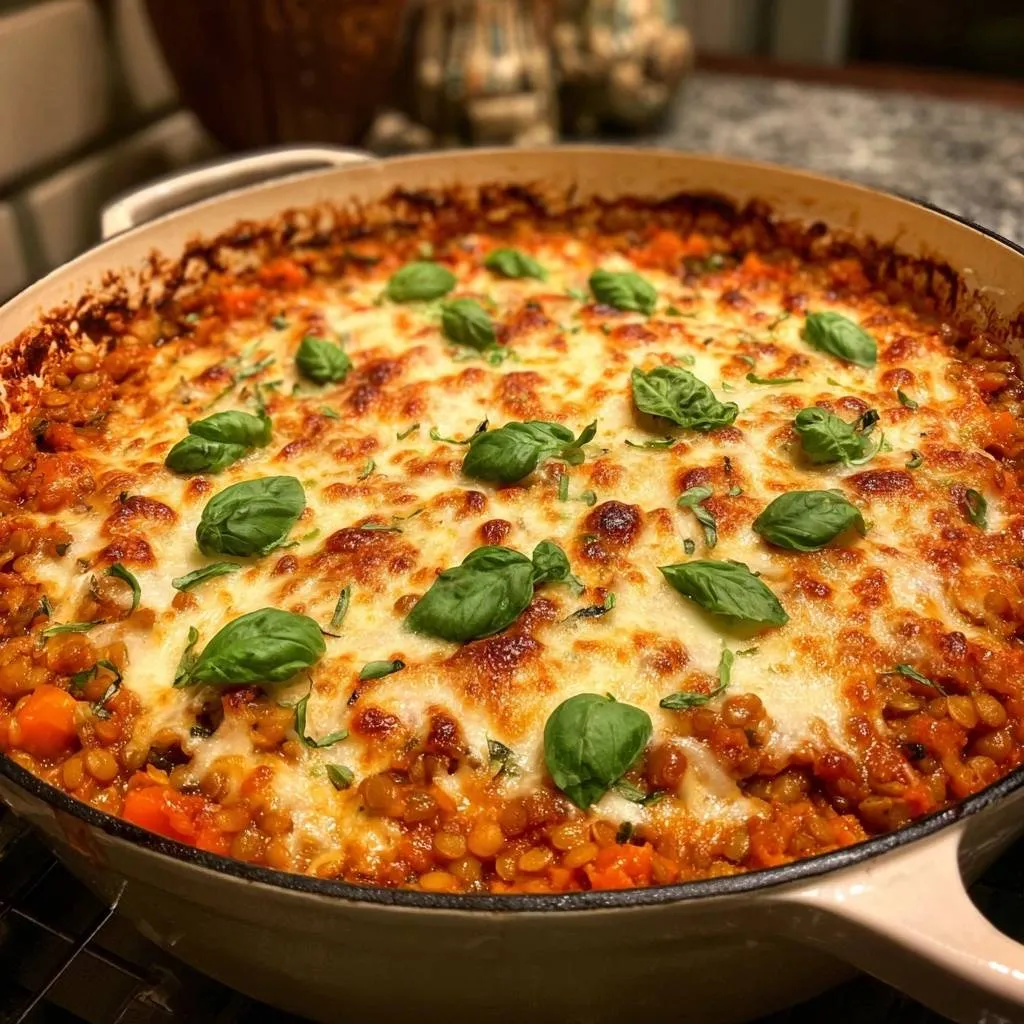
Most people avoid lentil bakes because they expect a pile of unappealing, brown mush. It’s a common frustration when you’re looking for a hearty, meatless meal but end up with something that has the texture of baby food. This Cheesy Baked Lentil Marinara changes that narrative by focusing on structural integrity and deep, savory flavors.
We’re transforming the humble legume into a meaty, structured centerpiece that rivals any classic Italian pasta bake. By treating the lentils with the same respect you’d give a fine risotto or a slow-cooked ragu, we bridge the gap between a simple vegetable side and a satisfying main course. The result is a dish that feels substantial, looks beautiful, and actually bites back.
The secret to this success lies in the “Toast and Simmer” method. I’ve found that skipping the pre-boil and instead toasting the dry lentils in oil creates a firm exterior that survives the long oven braise. This single technique ensures your dinner has a distinct, “al dente” mouthfeel rather than dissolving into the sauce. It’s a total game-changer for plant-based cooking.
For a similarly smooth texture, explore creamy spinach mac and cheese.
The Science of the Toast and Simmer Method
When you boil lentils in water, the pectin in their skins dissolves quickly, causing the interior starches to swell and burst. This is exactly how you end up with mush. However, when you toss dry lentils into a hot pan with olive oil and aromatics, you trigger a specific physical transformation. This toasting phase lightly browns the exterior and denatures the surface proteins.
This process creates a protective barrier around each individual lentil. Think of it as “tempering” the legume so it can withstand the acidity of the marinara and the heat of the oven. While the lentils still absorb the flavorful vegetable broth and tomato juices, they do so slowly and evenly. This prevents the skins from splitting prematurely during the fifty-minute cook time.
Traditional boiling methods focus on speed, but the “Toast and Simmer” method focuses on texture. By the time the dish hits the oven, the lentils are primed to soften without losing their shape. You’ll notice the difference immediately when you take your first bite; each lentil remains a distinct, savory morsel rather than a part of a uniform paste.
Essential Components for a Structured Lentil Bake
Success starts with your shopping list, and not all ingredients are created equal for this bake. You need components that can handle high heat and long durations without breaking down. Using the right variety of lentil and the correct type of cheese will determine if your dish is a success or a watery mess.
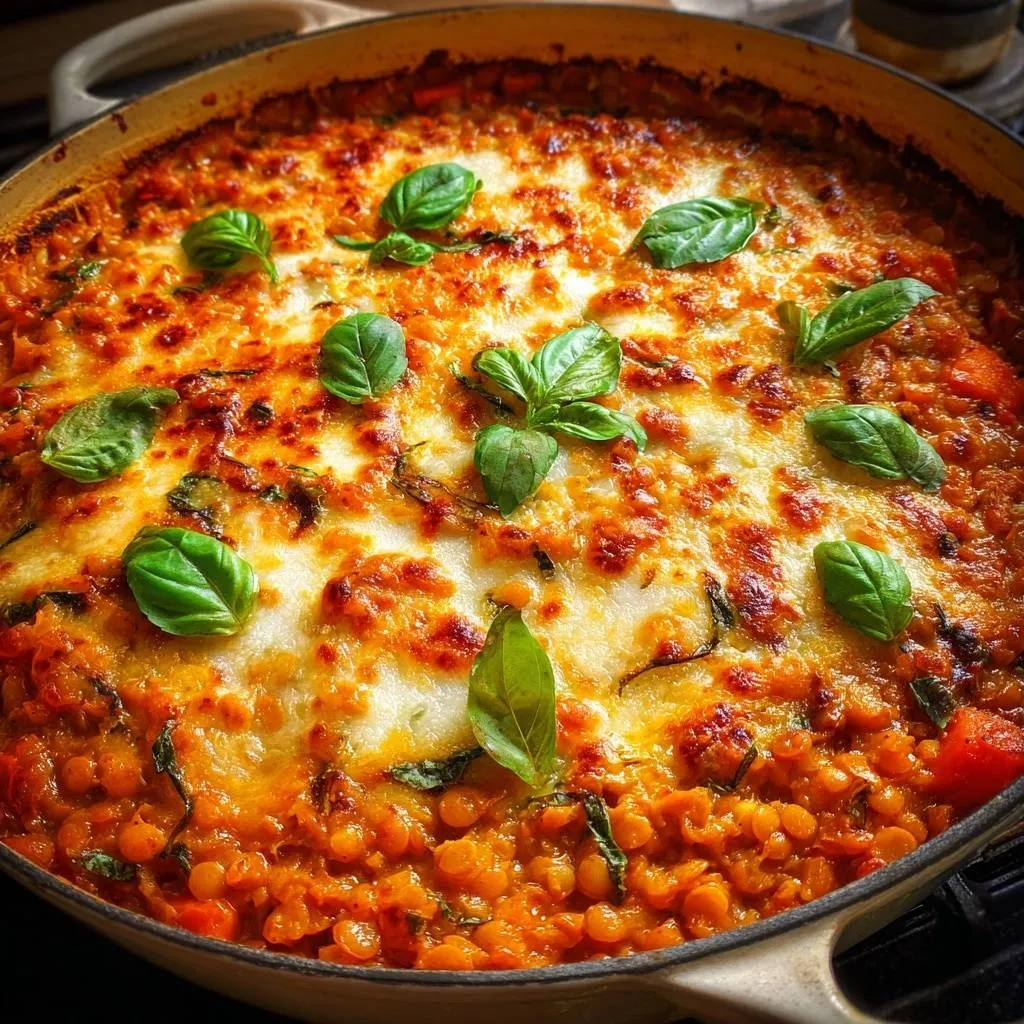
I always recommend low-moisture mozzarella for the topping. Fresh mozzarella balls are delicious, but they release a significant amount of water as they melt. In a dish that already features a saucy base, that extra liquid can turn your golden crust into a soggy layer. Low-moisture cheese melts into those iconic, stretchy brown spots we all crave.
Don’t overlook the carrots and onions, either. These aren’t just fillers; they provide the aromatic foundation. Finely dicing the onion ensures it melts into the sauce, while the half-inch carrot chunks provide a secondary texture that complements the lentils. These vegetables add a natural sweetness that balances the acidity of the tomatoes.
Selecting the Right Lentil Variety
For this specific recipe, you must use brown or green lentils. These varieties are sturdy and hold their shape well under pressure. If you can find French Green (Puy) lentils, they are even better because they are smaller and have a thicker skin, making them nearly impossible to overcook into mush.
Avoid red or yellow lentils at all costs for this preparation. Red lentils are processed to have their skins removed, which means they are designed to disintegrate into soups and dals. If you use them here, you’ll end up with a thick puree rather than a structured bake. Stick to the whole, skin-on varieties for the best results.
The Role of High-Acidity Marinara
The acidity in your marinara sauce actually plays a functional role in the cooking process. Acid can slow down the softening of legumes, which works in our favor here to maintain that “meaty” texture. This is why we use a high-quality, thick sauce rather than plain crushed tomatoes or a thin juice.
A premium marinara usually has a lower water content and more concentrated flavor. Since the lentils will be absorbing the liquid in the pan, you want that liquid to be as flavorful as possible. A thick sauce ensures that once the bake is finished, the consistency is like a rich ragu rather than a watery soup.
Step-by-Step: Building the Perfect Texture
Creating this dish is all about the transition of textures. You’ll start with hard, dry ingredients and end with a bubbly, cohesive masterpiece. Following these phases carefully ensures that every layer of flavor is locked in before the dish even enters the oven.
Round Out Your Meal
To complement your hearty lentil marinara, consider these fresh additions.
- For a burst of seasonal sweetness alongside your lentil marinara, explore the Harvest Kale and Apple Salad, featuring crisp apples that echo the vibrant flavors you’re enjoying.
- If you’re drawn to the apple and walnut combination, the Harvest Apple and Walnut Salad offers a delightful crunch that pairs well with the textures of your main dish.
Phase 1: Developing the Aromatic Base
Start by heating your oil until it shimmers, then drop in your onions and carrots. You aren’t looking to char these vegetables; you want them to sweat and soften. After about six to eight minutes, the onions should look translucent and smell sweet, which signals that their natural sugars have released.
This step is vital because it builds the first layer of flavor. If you rush this and add the liquid too soon, the onions will have a sharp, raw bite that clashes with the earthy lentils. Wait for that soft, golden look before moving to the next step.
Phase 2: The Critical Toasting Step
Once the vegetables are soft, stir in your minced garlic and the dry, rinsed lentils. Keep everything moving constantly for three to four minutes. You’ll notice the garlic becomes incredibly fragrant, and the lentils will take on a shiny, slightly darkened appearance.
Listen for a faint popping or crackling sound in the pan. This is the smell of success—a nutty, toasted aroma that indicates the outer skins are sealing. This short window of time is what prevents the “mush” factor later on, so don’t walk away from the stove during this phase.
Phase 3: The Oven Braise and Broil
After adding your liquids and bringing the pan to a simmer, cover it with a very tight lid. This trap of steam is what hydrates the lentils evenly. If your lid is loose, the liquid will evaporate too quickly, leaving you with crunchy lentils and a dry pan.
The final transformation happens under the broiler. Once the lentils are tender, pile on the cheese and watch it closely. You want “leopard spotting”—those deep brown circles of caramelized protein. Add the fresh basil only after the pan comes out of the oven to keep the leaves vibrant and green.
Avoiding Common Texture Mistakes
If you pull your dish out after forty minutes and the lentils still feel a bit too firm, don’t panic. Every oven and every batch of lentils is slightly different. Simply stir in a quarter cup of hot vegetable broth, put the lid back on, and give it another five to ten minutes of bake time.
Conversely, if the dish looks a bit too liquid when you remove the lid, leave it uncovered for an extra five minutes before adding the cheese. This allows the excess moisture to steam off. The most important rule, however, is the rest period. Letting the dish sit for ten minutes after baking allows the starches to settle and the sauce to thicken into a perfect consistency.
Flavor Variations and Ingredient Swaps
This recipe is a fantastic canvas for experimentation. If you want to add more depth, try stirring in a tablespoon of balsamic vinegar or some chopped sun-dried tomatoes before the bake. For an extra crunch, a handful of toasted walnuts stirred in at the end adds a wonderful earthy contrast to the soft cheese.
You can easily make this dish vegan by swapping the mozzarella and parmesan for your favorite plant-based alternatives. I recommend using a cashew-based mozzarella for the best melt. Adding a tablespoon of nutritional yeast to the lentil mixture will also help replicate that savory, cheesy “umami” flavor throughout the base of the dish.
Optimal Pairings for a Hearty Lentil Bake
Because this bake is rich and cheesy, it pairs beautifully with something bright or bitter. A side of sautéed broccolini with lemon and garlic or a sharp arugula salad helps cut through the density of the lentils. The acidity in a balsamic vinaigrette is the perfect foil for the savory marinara.
Should you crave a different kind of comforting bake, explore the strategy for Southern baked mac and cheese.
You’ll also want something to soak up every last drop of the sauce. A thick slice of toasted sourdough or a piece of warm garlic bread is almost mandatory here. If you want to keep things lighter, serving the lentil bake over a bed of steamed spaghetti squash provides a great texture contrast without the heaviness of traditional pasta.
Make-Ahead Strategies and Storage
This is one of those rare dishes that actually tastes better the next day. As it sits, the lentils continue to marry with the spices and the tomato sauce. Store any leftovers in an airtight container in the fridge for up to four days. It’s a meal prep dream because it holds its structure so well.
When you’re ready to reheat, the lentils may have absorbed most of the sauce. I recommend adding a tiny splash of water or an extra spoonful of marinara before popping it back in the oven or microwave. This restores the saucy, ragu-like texture. You can also freeze this bake for up to three months; just thaw it in the fridge overnight before reheating.
Expert Troubleshooting and Technical FAQ
Can I use canned lentils for this recipe?
I don’t recommend using canned lentils for this specific bake. Canned lentils are already fully cooked and soft. If you put them through a fifty-minute oven braise, they will completely disintegrate into a mushy paste. The “Toast and Simmer” method requires dry lentils to achieve the correct structural integrity.
Why does my cheese look oily on top?
Oily cheese usually happens if you use a high-fat mozzarella or if the oven temperature is slightly too low, causing the fat to separate before the proteins brown. To fix this, ensure your oven is fully preheated and use a “low-moisture” part-skim mozzarella. If it still looks oily, a quick blot with a paper towel before serving works wonders.
Can I cook this in a slow cooker instead?
While you can cook lentils in a slow cooker, you will lose the benefits of the toasting step. The constant moist heat of a slow cooker tends to soften the skins more than an oven bake. If you must use one, I suggest toasting the lentils in a skillet first, then transferring everything to the slow cooker for four hours on low.
How do I scale this recipe for a large crowd?
When doubling this recipe, use two separate pans or one very large, wide roasting pan. If the layer of lentils is too deep, the ones at the bottom will become mushy while the ones at the top stay dry. Maintaining a large surface area ensures even evaporation and consistent texture across the entire batch.
What if I don’t have vegetable broth?
You can use water in a pinch, but you’ll need to increase the salt and herbs to compensate for the lost flavor. Another great trick is to mix a teaspoon of bouillon paste into 2.5 cups of water. This provides the savory backbone the lentils need to taste “meaty” and satisfying.
Cheesy Baked Lentil Marinara
Course: Main CourseCuisine: AmericanDifficulty: medium6
servings15
minutes55
minutes450
kcal70
MinutesThis baked lentil dish features dry lentils toasted with aromatics and simmered in a rich marinara sauce, topped with melted mozzarella and parmesan for a meaty, satisfying vegetarian meal.
Ingredients
1.5 cups dry brown or green lentils, rinsed and thoroughly dried
1 tablespoon olive oil
1 large onion, finely diced
2 large carrots, peeled and cut into 1/2-inch chunks
3 cloves garlic, minced
24 ounces high-quality marinara sauce
2.5 cups vegetable broth
1 teaspoon dried oregano
1/2 teaspoon red pepper flakes (optional)
2 cups shredded low-moisture mozzarella cheese
1/2 cup grated parmesan cheese
Handful of fresh basil leaves for garnish
Salt and black pepper to taste
Directions
- Preheat your oven to 375°F (190°C).
- In a large oven-safe skillet or wide Dutch oven, heat the olive oil over medium heat. Add the onions and carrots, sautéing for 6 to 8 minutes until the onions are translucent and carrots begin to soften.
- Add the garlic and the dry lentils to the pan. This is the critical step: stir the dry lentils constantly for 3 to 4 minutes. Toasting the outer skin of the lentil prevents it from breaking down into mush during the bake.
- Pour in the vegetable broth, marinara sauce, oregano, and red pepper flakes. Season with salt and pepper. Stir well to combine.
- Bring the mixture to a boil on the stove, then immediately reduce to a simmer. Cover with a tight-fitting lid and transfer the skillet to the oven.
- Bake for 35 to 40 minutes. Remove the lid and check the lentils; they should be tender and the liquid should be mostly absorbed, creating a thick, ragu-like consistency.
- Sprinkle the mozzarella and parmesan evenly over the top, ensuring the cheese reaches near the edges of the pan.
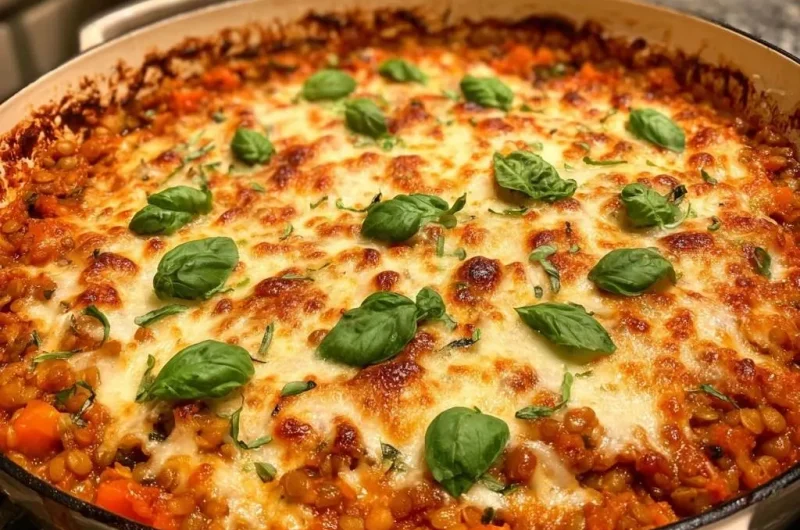
- Switch the oven to Broil for 3 to 5 minutes, watching closely, until the cheese is bubbly and features deep golden-brown spots as seen in the image.
- Remove from the oven and let the dish rest for 5 to 10 minutes. This allows the sauce to set so it isn’t watery. Top with fresh whole basil leaves before serving.
Notes
- The secret to preventing mushy lentils is toasting them dry with the garlic and onions for 3-4 minutes before adding liquid. Let the dish rest for 5-10 minutes after baking to allow the sauce to set.