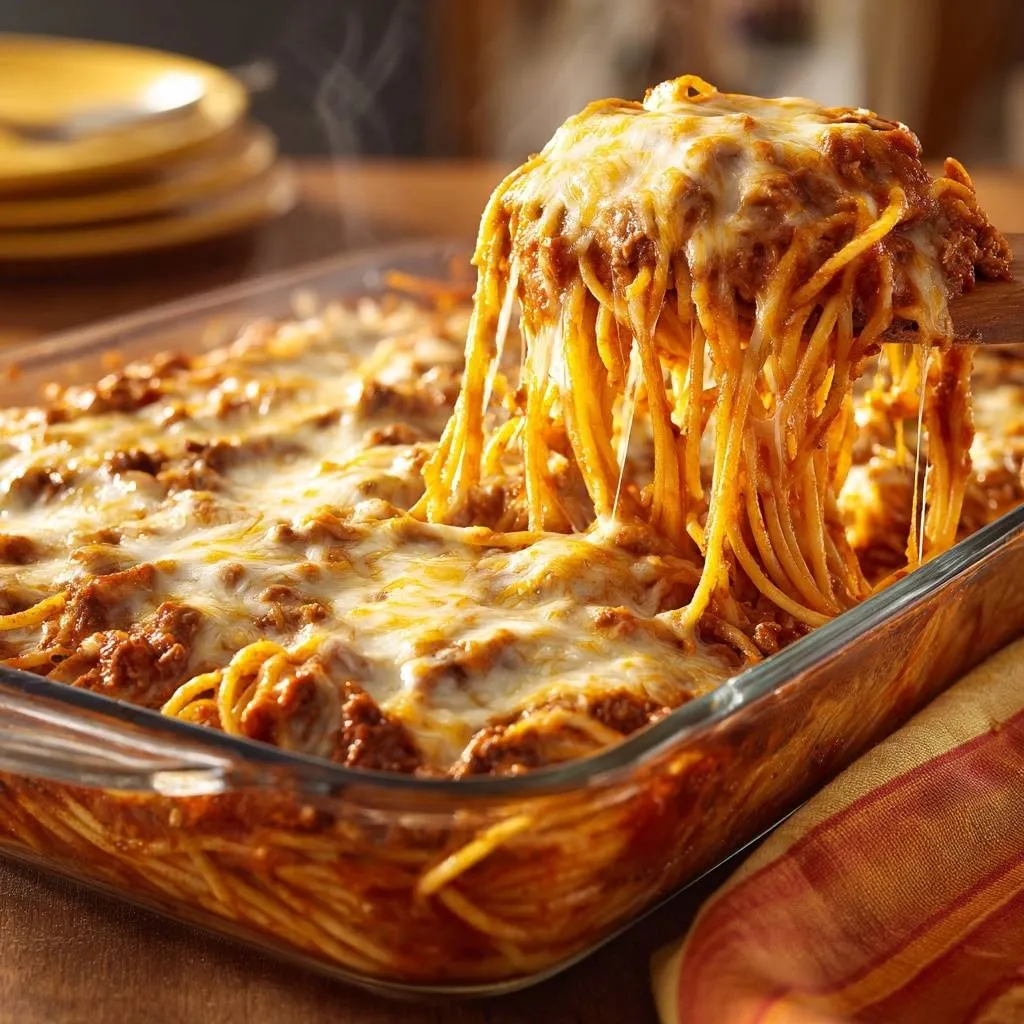
We have all experienced the disappointment of a pasta bake that looks stunning on the surface but reveals a gummy, mushy mess once you dive in. It is a common epidemic in home kitchens where the noodles lose their integrity and turn into a soft heap of starch. This Cheesy Baked Spaghetti Casserole solves that problem by treating the pasta with the respect it deserves, ensuring every strand remains distinct and firm.
The emotional appeal of a casserole lies in its ability to feed a crowd with minimal effort, yet the technical difficulty often lies in the moisture balance. You want a dish that feels indulgent and saucy without sacrificing the structural success of the spaghetti. By mastering a few simple kitchen physics tricks, you can create a meal that feels like a cozy Sunday classic but tastes like it came from a high-end Italian bistro.
The secret to this recipe is the moisture-locking sauce ratio and a specific par-boiling technique. Instead of boiling the life out of your noodles on the stove, you are going to undercook them significantly. This allows the pasta to finish its journey inside the oven, soaking up the savory beef juices and tomato essence without ever crossing the line into mushy territory.
The Science of Al Dente Oven Pasta
Baking pasta is not just about melting cheese; it is a secondary cooking process that involves complex thermodynamics. When you put a tray of spaghetti into a 375°F oven, the noodles continue to hydrate by drawing moisture from the surrounding sauce. If you start with fully cooked noodles, they will inevitably over-expand and lose their bite as they absorb that extra liquid.
Therefore, par-boiling is your most powerful tool for success. You must cook the spaghetti for exactly three minutes less than the package directions for al dente. This leaves a firm, slightly white core in the center of the noodle. While it might feel wrong to drain “crunchy” pasta, remember that those thirsty strands will act like sponges in the oven, reaching the perfect texture just as the cheese begins to bubble.
Why Moisture Ratios Matter in Casseroles
The balance between 24 ounces of marinara and 8 ounces of tomato sauce is not accidental. This specific volume provides enough liquid to finish cooking the pasta while maintaining a thick, clingy consistency. By simmering the sauce for 10 minutes before assembly, you reduce the water activity. This ensures the noodles stay firm rather than boiling in a pool of excess liquid, which is the primary cause of a soggy casserole.
For a richer sauce that truly elevates your spaghetti, consider one-pot hearty beef spaghetti techniques.
Essential Components for the Meat Sauce Base
A great casserole is only as good as its foundation, and here, that means the meat sauce. I recommend using 1.5 pounds of lean ground beef, specifically a 90/10 or 93/7 blend. Using lean meat ensures you get plenty of protein and flavor without an oil slick forming at the bottom of your glass dish. Even with lean beef, you should always drain any excess fat after browning to keep the mouthfeel clean and light.
Quality matters when it comes to your jarred marinara as well. Look for a brand that lists tomatoes and olive oil as the first ingredients rather than sugar or water. Since the sauce is the primary seasoning for your noodles, starting with a robust, high-quality base makes a world of difference in the final flavor profile. It is the difference between a “good” dinner and one that has everyone asking for the recipe.
Aromatics and Dried Herb Profiles
Finely dicing your onion is crucial because you want the flavor to melt into the sauce rather than having large, crunchy chunks in your pasta. In addition, always add your minced garlic during the last minute of browning the meat. Garlic burns quickly and becomes bitter, so a quick 60-second sauté is all it needs to release its aroma without ruining the sauce.
The combination of dried oregano and red pepper flakes creates a classic Italian-American flavor profile that thrives in a high-heat oven. Dried herbs are actually better than fresh in this specific application because they can withstand the 25-minute bake time without losing their punch. The red pepper flakes are optional, but they provide a subtle back-of-the-throat warmth that cuts through the richness of the three-cheese blend.
The Three-Cheese Blend for Maximum Melt
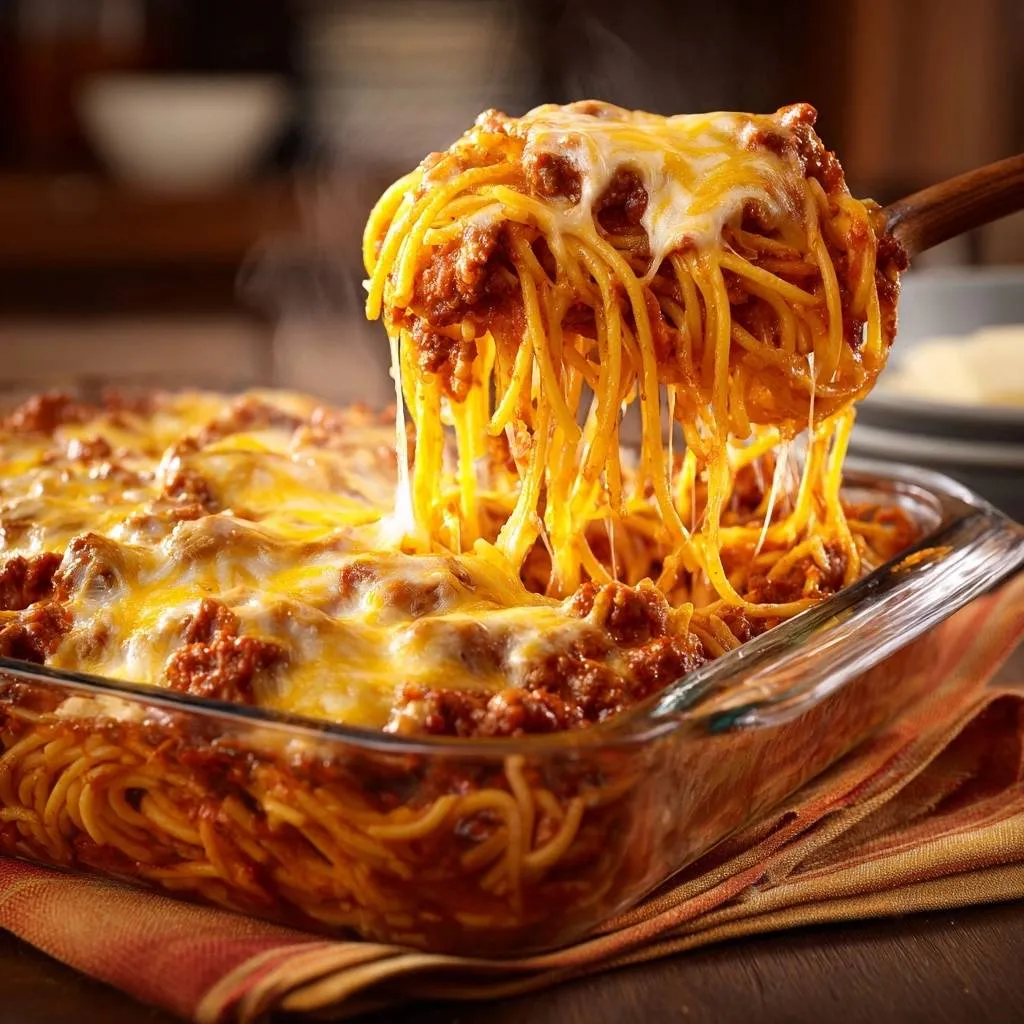
To get that iconic, stretchy cheese pull, you need a strategic blend of Mozzarella, Cheddar, and Parmesan. Mozzarella is the heavy lifter here because it has a high moisture content and excellent elasticity. However, Mozzarella can be a bit mild on its own, which is why we bring in sharp Cheddar for a punch of flavor and a beautiful golden hue. Finally, the Parmesan adds a salty, nutty finish that creates a crisp crust on top.
If you have the time, please grate your cheese from a block. Pre-shredded bags are coated in cellulose, an anti-clumping agent that prevents the cheese from melting into a smooth, cohesive layer. Block cheese melts much more fluidly and tastes significantly fresher. That extra five minutes of grating will result in a much more professional, gooey finish that coats every inch of the spaghetti.
Step-by-Step: Preparing the Spaghetti Foundation
Start by bringing a massive pot of water to a rolling boil. You must salt the water heavily—it should taste like the sea. This is your only chance to season the spaghetti from the inside out. If the water isn’t salty, the noodles will taste bland no matter how good your sauce is. Drop the noodles in and stir immediately to prevent them from sticking to the bottom or each other.
Set a timer for three minutes less than the “al dente” instructions on the box. When you drain the pasta, look for that firm white core when you bite into a strand. Don’t rinse the noodles! The natural starches remaining on the surface of the pasta are essential for helping the meat sauce “grip” the spaghetti. Just drain them well and get ready for the next step of the transformation.
Building the Sauce and Incorporating the Beef
Heat your olive oil in a large skillet and get that beef browning. As the meat cooks, it will leave behind “fond,” which are those little brown bits stuck to the bottom of the pan. These bits are concentrated flavor gold. When you pour in the tomato sauce, it will deglaze the pan, lifting those savory bits and incorporating them into the sauce for a deeper, more complex taste.
If you enjoy browning beef for casseroles, you’ll want to try skillet beef tortellini.
Let the sauce simmer on low for at least 10 minutes. You will notice the color shift from a bright red to a deeper, brick-like tone, and the texture will thicken significantly. This simmering phase is non-negotiable. It concentrates the flavors and ensures that the sauce is thick enough to coat the noodles rather than just running off them and pooling at the bottom of the baking dish.
The Coating Technique: Preventing Noodle Hydration
Most people make the mistake of layering plain noodles in a dish and pouring sauce over the top. This is a recipe for disaster because the sauce never reaches the center, and the noodles end up sticking together in a dry clump. Instead, you must toss the undercooked spaghetti directly into the skillet with the meat sauce before it ever touches the baking dish.
This coating technique is a critical technical step. The oils and tomato solids in the sauce create a physical moisture barrier around each strand of pasta. This prevents the noodles from over-hydrating and becoming mushy during the bake. By ensuring every single noodle is thoroughly coated, you guarantee a consistent texture and flavor in every single bite of the casserole.
Assembly Strategy for the Perfect Cheese Pull
Once your noodles are coated, pour half of the mixture into a greased 9×13 glass dish. Now, here is the pro move: add a middle layer of mozzarella and cheddar. This middle layer acts as a structural “glue,” holding the casserole together so it doesn’t fall apart when you serve it. It also provides a hidden pocket of gooey cheese that is a delight to find.
Layer the remaining spaghetti on top and spread it out evenly. When you add the final layer of cheese, make sure you take it all the way to the very edges of the dish. This seals the pasta underneath, protecting the top noodles from the direct heat of the oven so they don’t become hard or crunchy. The Parmesan goes on last to create that beautiful, salty Maillard reaction crust.
Baking and the Importance of the Rest Phase
Slide your dish into the 375°F oven and bake it uncovered. We bake it uncovered because we want a little bit of evaporation to happen, which further concentrates the flavors and allows the cheese to develop those gorgeous golden-brown spots. After about 20 to 25 minutes, the edges should be bubbling vigorously and the scent of toasted cheese should fill your kitchen.
Now comes the hardest part: you must let the casserole rest for at least 10 minutes. I know it smells incredible, but if you cut into it immediately, the sauce will run and the layers will collapse. During this rest period, the starches in the pasta “set” and the sauce binds to the noodles. This patience ensures a clean lift and a perfect, stackable scoop that stays together on the plate.
Make Ahead and Freezing Guide
This is a fantastic meal-prep dish because you can assemble the entire casserole up to 24 hours in advance. Just cover it tightly with plastic wrap and keep it in the fridge. When you are ready to eat, let it sit on the counter for 30 minutes to take the chill off before baking. You may need to add 5 to 10 minutes to the bake time if it is still cold from the refrigerator.
For long-term storage, this casserole freezes beautifully. Assemble it in a freezer-safe foil pan, but do not bake it. Double-wrap the top with heavy-duty aluminum foil to prevent freezer burn. It will stay fresh for up to three months. For the best results, thaw it in the fridge overnight before baking. If you must bake from frozen, keep it covered with foil for the first 45 minutes, then uncover and bake for another 20 minutes.
Troubleshooting Common Casserole Issues
If your casserole ends up watery, it usually means the sauce didn’t simmer long enough or the onions released too much moisture. Next time, ensure the sauce is thick and jammy before mixing it with the pasta. If the top noodles are crunchy, it means they weren’t fully covered by sauce or cheese. Make sure every strand is tucked under a blanket of cheese before it goes into the oven.
Blandness is almost always a result of under-salting the pasta water. Remember, the noodles themselves need seasoning! Finally, if your cheese is burning before the center is hot, your oven rack might be too high. Move the dish to the center rack to ensure even heating. If the cheese is browning too fast, you can always tent a piece of foil loosely over the top for the remainder of the bake.
Vegetarian and Protein Variations
You can easily adapt this recipe for different diets without losing the soul of the dish. For a lighter version, ground turkey or chicken works perfectly, though you might want to add a teaspoon of poultry seasoning to boost the flavor. If you want to go meatless, use plant-based crumbles or finely chopped mushrooms. Mushrooms provide a wonderful “umami” depth that mimics the richness of beef.
In addition, you can bulk up the nutritional value by adding diced bell peppers or shredded zucchini to the sauce. Just make sure to sauté these vegetables thoroughly with the onions to cook out their water content. If you add watery vegetables without cooking them down first, you risk thinning out your sauce and ending up with that dreaded mushy noodle texture we worked so hard to avoid.
Optimal Side Dish Pairings
Since this casserole is rich, cheesy, and heavy on the carbs, you want side dishes that offer a bright, acidic contrast. A simple arugula salad with a lemon-vinaigrette is my favorite pairing. The peppery bite of the greens and the hit of acid from the lemon cut right through the heavy mozzarella and beef. It cleanses the palate between bites and makes the whole meal feel more balanced.
Round Out Your Meal
To complement your cheesy baked spaghetti casserole, consider these dishes.
- For warm, savory bread, try these crisp garlic butter loaded croissants – the buttery richness works well.
- If you want another cheesy bread option, whip up some cheesy garlic swirls with a crispy base for added texture.
Roasted broccolini with plenty of garlic and a squeeze of lime is another excellent choice. While garlic bread is a classic, it can sometimes lead to “carb-overload” when paired with a big plate of spaghetti. If you really want bread, try a thin, toasted ciabatta brushed with a little olive oil rather than a heavy, butter-soaked loaf. This keeps the focus on the star of the show: the casserole.
Expert Tips for Reheating Leftovers
Leftover spaghetti often gets rubbery in the microwave because the high heat zaps the moisture out of the noodles. For the best results, reheat individual portions in the oven at 350°F. Place the slice in a small baking dish, add a tiny splash of water or extra marinara to the bottom, and cover it with foil. This creates a little steam chamber that re-hydrates the starches and melts the cheese perfectly.
If you are in a rush and must use the microwave, place a damp paper towel over the plate. This prevents the cheese from becoming oily and keeps the noodles from drying out. Use 50% power for a longer duration rather than full power for a short burst. This gentler heating method ensures the center gets hot without the edges turning into shoe leather. Your second-day spaghetti will taste almost as good as the first!
Frequently Asked Questions
How long can I store leftovers in the fridge?
You can store this casserole in an airtight container for up to 4 days. Because the sauce is thick and the noodles were undercooked, it actually holds its texture quite well during refrigeration. Just make sure it has cooled completely before you seal the container to prevent condensation from making the cheese soggy.
Why did my noodles turn out mushy despite par-boiling?
This usually happens if the sauce was too thin or if the casserole sat in the oven too long. If your marinara brand is particularly watery, simmer it for an extra 5 minutes to reduce it further. Also, check your oven temperature with a thermometer; if your oven runs cool, the pasta might be sitting in liquid for too long before the cheese actually browns.
Can I use a different type of pasta like Penne or Rigatoni?
Yes, you absolutely can! Short, tubular pastas like Penne or Rigatoni are actually excellent for casseroles because they trap the meat sauce inside the tubes. The same rules apply: cook them for 3 minutes less than the package says. However, spaghetti is the classic choice for that specific “nestled” texture that holds the cheese so well.
What can I use if I don’t have a jar of marinara?
You can make a quick substitute using two 15-ounce cans of tomato sauce mixed with a tablespoon of Italian seasoning, a teaspoon of sugar, and a splash of olive oil. Simmer this mixture for about 15 minutes to develop the flavors before adding it to your browned beef. It won’t be quite as complex as a slow-simmered marinara, but it works perfectly in a pinch.
Is it necessary to grease the baking dish?
Yes, even with a glass dish, the cheese and starch can create a very strong bond to the sides of the pan. A light coating of olive oil or non-stick spray ensures that you can get clean slices out of the dish and makes cleanup significantly easier. There is nothing worse than scrubbing burnt cheese off a glass pan for an hour!
Can I add vegetables like spinach to the layers?
Spinach is a great addition, but you must squeeze all the liquid out of it first. If you use frozen spinach, thaw it and wring it out in a kitchen towel until it is bone-dry. If using fresh, sauté it until wilted and drain it. Adding wet spinach directly to the layers will release water during the bake and ruin the consistency of your sauce.
Cheesy Baked Spaghetti
Course: Main CourseCuisine: AmericanDifficulty: easy8
servings15
minutes30
minutes550
kcal45
MinutesThis cheesy baked spaghetti casserole uses a specific par-boiling method and a simmered meat sauce to ensure the pasta stays firm and flavorful after baking. Layered with mozzarella, cheddar, and parmesan, it is a crowd-pleasing family dinner.
Ingredients
1 pound spaghetti noodles
1.5 pounds lean ground beef
1 jar (24 ounces) marinara sauce
1 can (8 ounces) tomato sauce
1 tablespoon olive oil
1 small onion, finely diced
3 cloves garlic, minced
1 teaspoon dried oregano
1/2 teaspoon red pepper flakes (optional)
2 cups shredded mozzarella cheese
1 cup shredded cheddar cheese
1/2 cup grated parmesan cheese
Salt and black pepper to taste
Directions
- Preheat your oven to 375 degrees F and lightly grease a 9×13 inch glass baking dish.
- Bring a large pot of heavily salted water to a boil. Add the spaghetti and cook for exactly 3 minutes less than the package directions for al dente. The noodles should be firm and slightly undercooked in the center; they will finish cooking by absorbing the steam and sauce in the oven. Drain and set aside.
- In a large skillet or dutch oven, heat olive oil over medium-high heat. Add the ground beef and diced onion. Cook until the beef is browned and the onions are translucent. Drain any excess fat.
- Add the minced garlic, oregano, and red pepper flakes. Cook for 1 minute until fragrant.
- Stir in the marinara sauce and tomato sauce. Season with salt and pepper. Let the sauce simmer on low for 10 minutes. This reduces the water content, ensuring the noodles don’t become soggy during the bake.
- Toss the undercooked spaghetti directly into the skillet with the meat sauce. Mix thoroughly until every strand is coated. This coating of fat and tomato solids acts as a barrier to prevent the noodles from over-hydrating.
- Pour half of the spaghetti mixture into the prepared glass baking dish. Sprinkle with 1 cup of the mozzarella and 1/2 cup of the cheddar cheese.
- Layer the remaining spaghetti on top. Finish by evening out the surface and topping with the remaining mozzarella, cheddar, and the parmesan cheese.
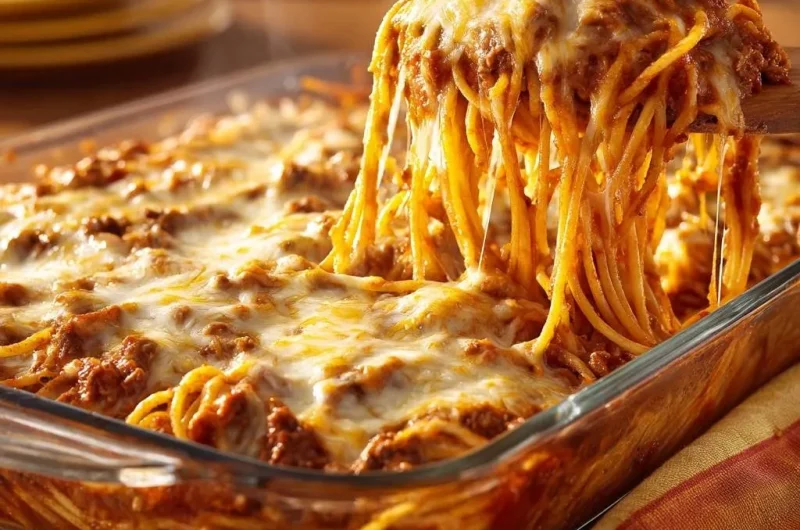
- Bake uncovered for 20 to 25 minutes until the cheese is melted, bubbly, and shows golden-brown spots as seen in the image.
- Let the casserole rest for 10 minutes before serving. This allows the starches to set and the sauce to bind to the noodles, ensuring a clean lift and perfect texture in every scoop.
Notes
- Cook the noodles exactly 3 minutes less than the package directions for al dente to prevent them from becoming gummy in the oven. Let the casserole rest for 10 minutes after baking to allow the starches to set.