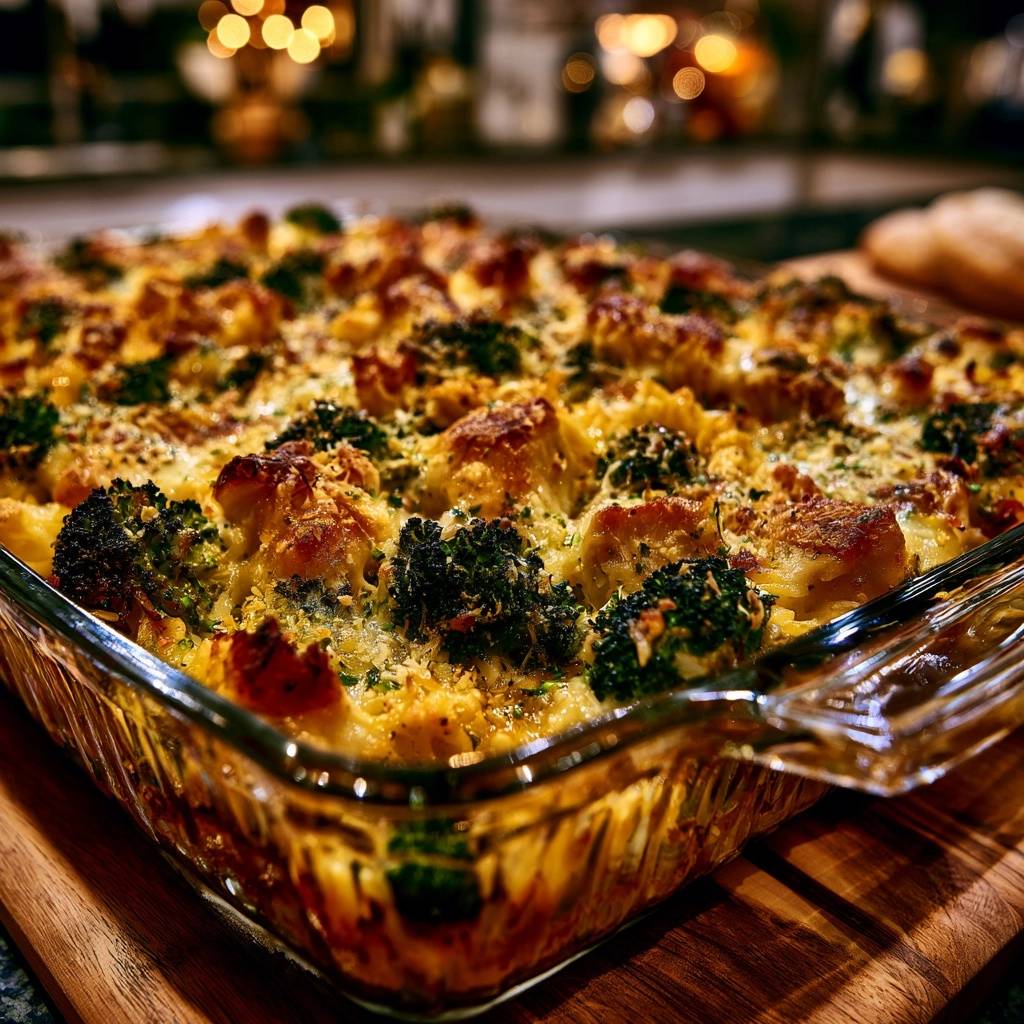
Most people have a love-hate relationship with casseroles because they often turn into a soggy, watery mess by the time they hit the table. You expect a rich, velvety bite, but instead, you get a pool of thin liquid at the bottom of the dish. This Cheesy Broccoli and Chicken Casserole fixes that heartbreak by using professional culinary techniques that prioritize texture just as much as flavor.
The secret lies in moisture management and a stable emulsion. Instead of tossing raw vegetables into a dish and hoping for the best, we use a specific roasting step and a classic roux-based sauce. These steps ensure the broccoli stays tender-crisp and the cheese sauce remains thick enough to coat every single morsel of chicken without breaking or thinning out.
I’ve found that the real trick to a professional-grade finish is the resting period. While it’s tempting to scoop into that bubbling cheese immediately, waiting just ten minutes allows the starches to fully set. This creates that iconic, cohesive “slice” rather than a runny heap on your plate. Trust me, your patience will be rewarded with the creamiest texture you’ve ever achieved in a home kitchen.
The Science of Preventing a Watery Casserole
Vegetables are mostly water, and broccoli is one of the biggest culprits when it comes to “weeping” inside a bake. When you steam or boil broccoli, the cell walls soften and trap moisture inside. Once that broccoli hits the oven inside a sauce, the high heat causes those cells to collapse, dumping all that excess water directly into your beautiful cheddar base.
Roasting the broccoli at 425°F before it ever touches the casserole dish is a total game-changer. This high heat triggers the Maillard reaction, which is a fancy way of saying it browns the sugars and creates a deep, nutty flavor. More importantly, the intense dry heat evaporates the internal water, essentially “pre-shrinking” the vegetable so it doesn’t dilute your sauce later.
Why Raw Broccoli Ruins the Sauce
If you use raw broccoli, the steam released during the baking process has nowhere to go but into the cheese. This creates a “broken” sauce where the fats separate from the liquids, leaving you with an oily, grainy texture. By roasting first, you ensure the broccoli is already structurally sound and flavorful before it meets the dairy.
The Role of a Stable Roux
A roux is a simple mixture of equal parts fat and flour, but it acts as the structural backbone of this entire dish. When you cook the flour in melted butter, the starch granules prepare to swell. As you whisk in the milk and cream, these granules trap the liquid in a tight web, creating a permanent emulsion that stays thick even under the intense heat of a 400°F oven.
Essential Components for the Perfect Bake
Success starts with the quality of your ingredients and how you prep them. Since this dish has a relatively short ingredient list, each item needs to pull its weight. You want a balance of lean protein, fresh greens, and high-fat dairy to create a meal that feels indulgent but balanced.
Selecting the Right Poultry and Produce
Chicken breast is the gold standard here because it stays lean and picks up the flavors of the thyme and paprika beautifully. However, you must cut the pieces into uniform 1-inch cubes. If the pieces are uneven, the small ones will turn into rubber while the large ones stay raw in the middle.
Always reach for fresh broccoli florets over the frozen bags. Frozen broccoli is blanched before freezing, which damages the cell walls and makes it much more likely to turn into mush. Fresh stalks have a snap and a peppery bite that holds up against the heavy cheddar sauce.
The Cheese Blend: Sharpness and Meltability
I strongly recommend grating your own cheese from a block. Pre-shredded cheese is coated in potato starch or cellulose to keep it from clumping in the bag, but those additives prevent the cheese from melting into a smooth, cohesive sauce. Sharp cheddar provides the punchy flavor, while the parmesan adds a salty, umami depth that rounds out the richness.
Aromatics and the Panko Crunch
Dried thyme and smoked paprika add a subtle earthiness that cuts through the heavy dairy. For the topping, Panko breadcrumbs are superior to standard crumbs because they are larger and airier. They act like tiny sponges for the butter, resulting in a shattered-glass crunch that contrasts perfectly with the soft interior.
Step-by-Step: Preparing the Chicken and Broccoli
The “pre-bake” phase is where the magic happens. You aren’t just cooking the food; you’re building layers of flavor that a simple “dump and bake” recipe can’t touch. Start by getting your oven hot and your skillet ready for some serious searing.
Roasting for Depth and Texture
When you toss the broccoli in olive oil and salt, make sure every floret is lightly coated. Spread them out on the baking sheet so they aren’t crowded; if they touch too much, they will steam instead of roast. You are looking for those tiny trees to develop dark, charred edges. That char is where the concentrated flavor lives.
Searing the Chicken for Maximum Succulence
Get your skillet nice and hot before adding the chicken. You want to hear a loud sizzle the moment the meat hits the pan. We are only looking for a golden-brown crust on the outside, so don’t worry about cooking it through. The “fond,” or the little brown bits stuck to the bottom of the pan, will dissolve into your sauce and add incredible savory depth.
Building the Velvety Cheddar Sauce
Creating a smooth sauce is a test of patience and technique. If you rush the process, you’ll end up with lumps or a floury aftertaste. Keep your whisk moving and your heat at a steady medium to ensure everything incorporates perfectly.
Whisking the Perfect Blonde Roux
After melting the butter and whisking in the flour, let it cook for at least two minutes. It should start to smell slightly nutty, like toasted bread. This “blonde” stage is crucial because it cooks out the raw flour taste while maintaining the maximum thickening power of the starches.
Incorporating Dairy Without Clumping
The secret to a lump-free sauce is adding the liquid very slowly at first. Pour in about a quarter cup of the milk and whisk until it forms a thick paste. Repeat this until the sauce thins out, then you can pour the rest in more quickly. Using heavy cream alongside the milk adds fat stability, which prevents the cheese from “breaking” into an oily mess.
Assembling and Achieving the Golden Crust
Now that your components are prepped, it’s time to bring them together. This is the stage where you ensure every bite is perfectly seasoned and coated. A glass 9×13 dish is perfect here because you can see the sauce bubbling along the sides, which helps you judge the doneness.
Layering for Even Heat Distribution
Don’t just pour the sauce on top and call it a day. Toss the chicken and roasted broccoli together in the dish first, then pour the sauce over and stir gently. This ensures the sauce gets into the nooks and crannies of the broccoli florets, preventing any dry pockets from ruining the experience.
The Final Broil and Resting Period
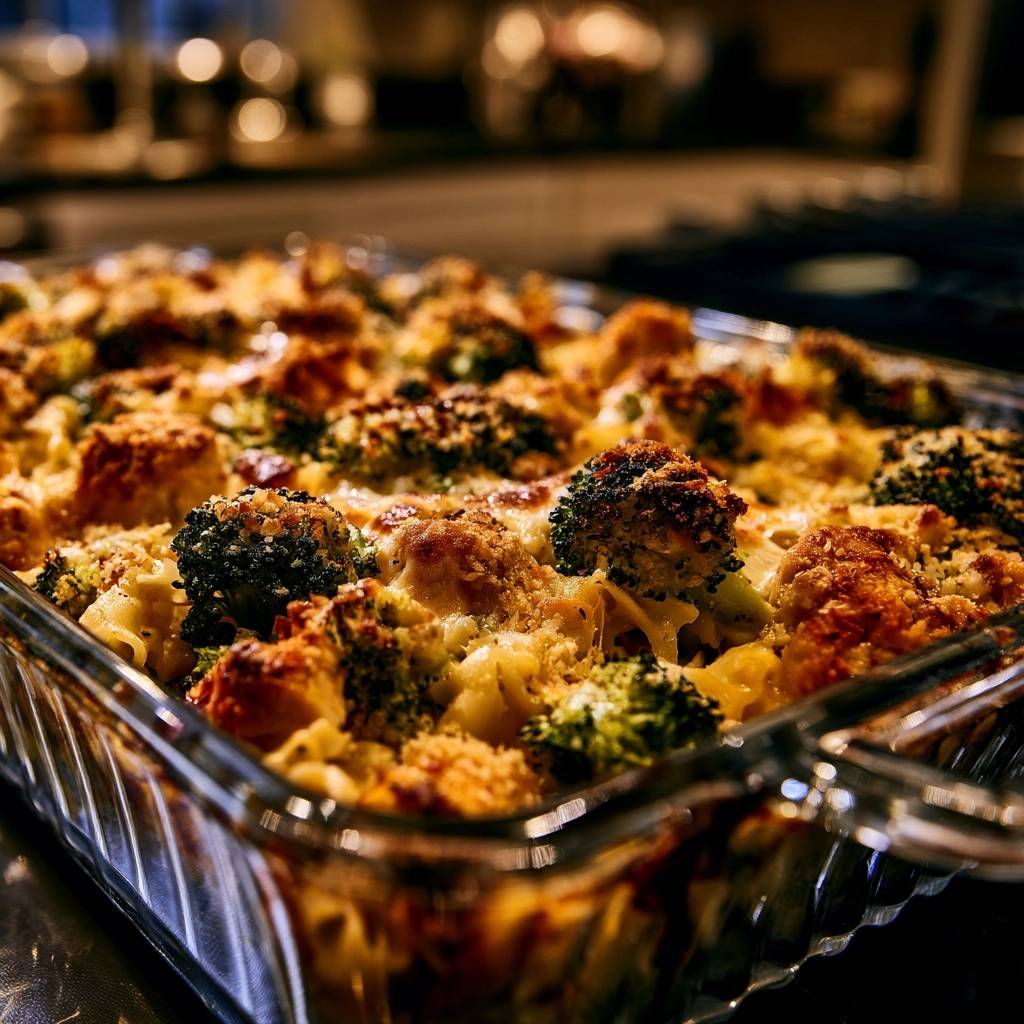
Bake until the edges are bubbling and the Panko is a deep mahogany brown. If the cheese is melted but the crumbs look pale, you can pop the broiler on for 60 seconds, but watch it like a hawk! Once it’s out, let it sit for 10 minutes. This allows the sauce to thicken and “grip” the chicken, making it much easier to serve.
Make Ahead and Storage Strategies
This casserole is a meal prep dream. You can assemble the entire dish (minus the Panko) up to 24 hours in advance and keep it covered in the fridge. When you’re ready to eat, add the breadcrumbs and bake, though you may need to add 5-10 minutes to the timer since the dish is starting out cold.
Leftovers stay delicious for about three days in an airtight container. To keep the chicken from getting rubbery, reheat portions in the oven at 350°F rather than the microwave. If you must use a microwave, use a lower power setting and cover the dish to trap the steam, which helps keep the meat tender.
Troubleshooting Common Casserole Issues
Even with the best techniques, things can go sideways. If your sauce looks too thick before it goes into the oven, don’t panic. Simply whisk in an extra tablespoon or two of milk until it reaches a pourable consistency. It will thicken back up as it bakes and rests.
If you notice the breadcrumbs are browning too quickly but the center isn’t bubbling yet, loosely tent the dish with aluminum foil. This reflects the direct heat away from the top while allowing the interior to continue cooking. Just make sure the foil doesn’t touch the cheese, or it will pull your beautiful crust right off!
Adjusting Consistency for Different Palates
Some people prefer a “tight” casserole that holds its shape like a lasagna, while others want it “saucy” like a bowl of mac and cheese. For a saucier result, increase the milk by half a cup. For a firmer bake, let the dish rest for a full 15 minutes before slicing.
Substituting Proteins or Vegetables
You can easily swap the chicken for turkey or even cauliflower florets for a vegetarian version. If you use cauliflower, follow the same roasting rules as the broccoli. It contains even more water, so getting a good char in the oven is essential to prevent a soggy result.
Expert Tips for Professional Results
Seasoning at every layer is what separates home cooks from chefs. Salt the broccoli before roasting, season the chicken before searing, and taste your cheese sauce before pouring it. This builds a complex profile where every ingredient shines.
Also, pay attention to the temperature of your dairy. While not strictly necessary, using room-temperature milk and cream helps them incorporate into the hot roux much faster with less whisking effort. Finally, always use a sharp cheddar; mild cheddar lacks the acidity needed to cut through the richness of the heavy cream.
How do I store leftovers and does this freeze well?
Store leftovers in an airtight container in the refrigerator for up to 3 days. While you can freeze this casserole, the dairy-based sauce may slightly change texture upon thawing, becoming a bit more grainy. If you do freeze it, do so before the final bake, and let it thaw completely in the fridge before putting it in the oven.
Why is my casserole sauce grainy or oily?
This usually happens for two reasons: using pre-shredded cheese or overheating the sauce. Pre-shredded cheese has anti-clumping agents that don’t melt smoothly. Additionally, if the sauce boils too vigorously after the cheese is added, the proteins can clump together and the fat can separate. Always stir in your cheese over low heat or after removing the pan from the burner.
Can I use frozen broccoli instead of fresh?
You can, but it is not recommended for the best texture. Frozen broccoli is already soft and holds a lot of water. If you must use it, thaw it completely and squeeze out as much liquid as possible with a paper towel before roasting. Skip the initial roasting time and just broil it for 5 minutes to dry it out further.
What can I use instead of Panko breadcrumbs?
If you don’t have Panko, crushed Ritz crackers or even crushed cornflakes make an excellent crunchy substitute. Avoid using fine, sandy breadcrumbs, as they tend to absorb the sauce and become soggy rather than staying crispy on top of the cheese.
Why was my chicken dry even though it was in sauce?
Dry chicken is usually the result of overcooking during the searing phase. Remember, the chicken will spend another 20 minutes in a 400°F oven. You only want to brown the outside in the skillet for about 2 minutes per side. If you cook it all the way through on the stove, it will definitely be overdone by the time the casserole is finished.
Can I make this gluten-free?
Yes! You can substitute the all-purpose flour in the roux with a 1:1 gluten-free flour blend. For the topping, use gluten-free Panko or crushed gluten-free crackers. The thickening process for the sauce remains exactly the same.
Cheesy Broccoli and Chicken Casserole
Course: Main CourseCuisine: AmericanDifficulty: easy6
servings15
minutes35
minutes50
Minutes440
kcalAmerican
Ingredients
1.5 pounds chicken breast, cut into 1-inch bite-sized pieces
5 cups fresh broccoli florets (cut into medium pieces)
2.5 cups shredded sharp cheddar cheese, divided
1/2 cup grated parmesan cheese
1/2 cup Panko breadcrumbs
1.5 cups whole milk
1/2 cup heavy cream (for added stability and richness)
4 tablespoons unsalted butter
3 tablespoons all-purpose flour
1 teaspoon garlic powder
1/2 teaspoon onion powder
1/2 teaspoon smoked paprika
1/2 teaspoon dried thyme
Salt and black pepper to taste
2 tablespoons olive oil
Directions
- Preheat your oven to 425°F (220°C). On a large rimmed baking sheet, toss the broccoli florets with 1 tablespoon of olive oil and a pinch of salt. Roast for 10-12 minutes until the edges are slightly charred. This evaporates the internal water so the broccoli stays crisp and doesn’t thin out the sauce.
- While the broccoli roasts, season the chicken pieces with salt, pepper, paprika, and thyme. Heat the remaining 1 tablespoon of olive oil in a large skillet over medium-high heat. Sear the chicken until golden brown on all sides (about 2 minutes per side). The chicken should not be fully cooked through yet. Remove chicken and set aside.
- Reduce skillet heat to medium. Melt the butter and whisk in the flour. Cook for 2 minutes, whisking constantly, to create a blonde roux. This is the essential binder for a stable sauce.
- Slowly pour in the milk and heavy cream while whisking vigorously to prevent lumps. Simmer for 3-5 minutes until the sauce is thick enough to heavily coat the back of a spoon. Stir in the garlic powder, onion powder, and 1.5 cups of the cheddar cheese. Whisk until completely smooth and remove from heat.
- In a 9×13 inch glass baking dish, combine the seared chicken and the roasted broccoli. Pour the cheese sauce over the mixture and toss gently to ensure everything is well-coated.
- Top the casserole evenly with the remaining 1 cup of cheddar cheese, the parmesan cheese, and the Panko breadcrumbs.
- Bake at 400°F for 15-20 minutes until the cheese is bubbling and the broccoli tips and breadcrumbs are deeply golden brown and crispy.
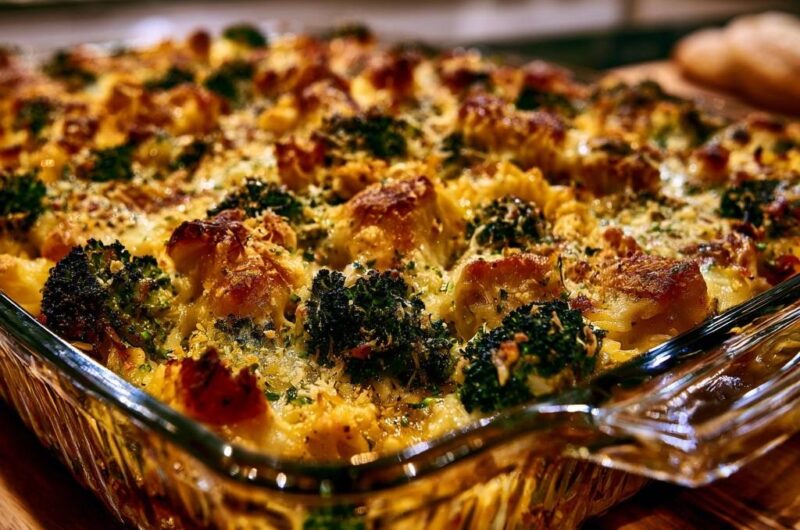
- Let the dish rest for 5-10 minutes before serving. This resting period is crucial for the sauce to set into the thick, creamy consistency shown in the image.
Notes
- Letting the dish rest for 5 to 10 minutes after baking is crucial for the sauce to set into a thick, creamy consistency. Roasting the broccoli beforehand is the key step to prevent a watery sauce.