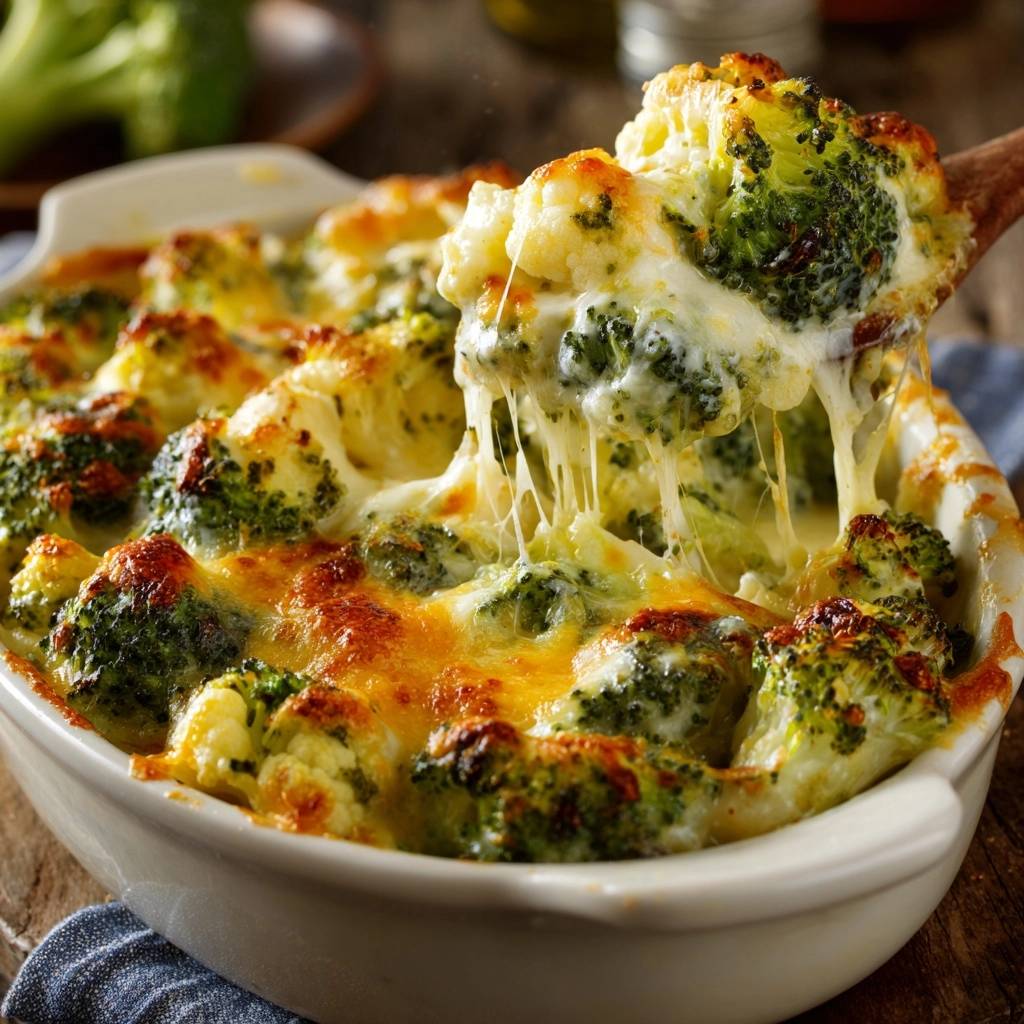
We’ve all been there. You pull a beautiful, bubbling vegetable casserole out of the oven, only to find a sad, watery puddle sitting at the bottom of the dish. It’s frustrating when the creamy sauce you worked so hard on turns into a thin, diluted mess. This happens because vegetables like broccoli and cauliflower are packed with water that releases during the baking process.
The secret to a truly spectacular Cheesy Broccoli Cauliflower Bake lies in mastering moisture control. Instead of a soggy side dish, you’re looking for tender-crisp florets enveloped in a velvety, thick Mornay sauce. When you get the technique right, every bite offers a satisfying contrast between the golden, toasted cheese crust and the rich, savory vegetables underneath.
If you enjoy creamy cheese sauces, you’ll want to see the secrets behind creamy baked mac and cheese.
I’ve found that the absolute best way to guarantee success is to ditch the traditional boiling or steaming methods entirely. The real magic happens when you dry-roast the vegetables first. This simple shift in technique evaporates excess moisture before the sauce even touches the pan, ensuring your final result is thick, creamy, and decadent every single time.
The Science of Preventing Watery Vegetable Casseroles
To understand why vegetable bakes often fail, we have to look at the cellular structure of cruciferous vegetables. Broccoli and cauliflower are made of roughly 90% water. When you apply heat, the cell walls begin to break down and collapse, dumping all that internal liquid directly into your baking dish.
If you boil or steam your vegetables before baking, you’re actually adding even more water to the equation. The florets act like little sponges, soaking up liquid that later thins out your cheese sauce. This is why many recipes result in a “broken” sauce that looks oily or curdled rather than smooth and cohesive.
Dry-roasting is the ultimate solution to this common kitchen headache. By placing raw florets in a hot oven without any oil or water, you encourage rapid evaporation. This process doesn’t just remove the water; it also triggers the Maillard reaction. This chemical reaction between amino acids and reducing sugars creates those beautiful brown edges and a deep, nutty flavor that steaming simply can’t replicate.

As the steam escapes the vegetables during this initial roast, the florets shrink slightly and become more porous. This is exactly what you want. Once you pour the cheese sauce over them, they are ready to grip onto that creamy goodness rather than shedding water and pushing the sauce away. It’s a fundamental shift that moves this dish from a basic side to a professional-grade gratin.
Why Fresh Florets Outperform Frozen Varieties
While frozen vegetables are convenient, they pose a significant challenge for a high-quality bake. The freezing process creates sharp ice crystals that rupture the vegetable’s cell walls. Once thawed, these ruptured cells leak water much more aggressively than fresh ones, often leading to a mushy texture that lacks any “bite.”
If you must use frozen, you’ll need to be extra diligent. Thaw them completely and use a clean kitchen towel to squeeze out as much moisture as humanly possible. However, for the best results, stick with fresh heads of broccoli and cauliflower. The structural integrity of fresh produce allows for that perfect tender-crisp finish that makes this dish so addictive.
Essential Components for a Velvety Cheese Sauce
A great bake is only as good as its sauce, and for this recipe, we are building a classic Mornay sauce. The foundation is a simple roux of butter and flour, but the liquid choice is where many people compromise. You really need to use whole milk here. The higher fat content provides the necessary viscosity and mouthfeel to stand up to the hearty vegetables.
The cheese blend is equally important for achieving that perfect balance of flavor and texture. Sharp cheddar provides the punchy, nostalgic flavor we all crave in a veggie bake. However, cheddar alone can sometimes become oily when melted. That’s why we mix in low-moisture mozzarella.
Mozzarella acts as the “glue,” providing that iconic cheese stretch and a smooth, creamy melt. Finally, a generous dusting of parmesan adds a salty, umami kick and helps create a crisp, browned crust on top. Using this trio ensures you get flavor, stretch, and texture in every single forkful.
The Role of Aromatics and Spices
You might wonder why we use garlic and onion powder instead of sautéing fresh aromatics. In a smooth cheese sauce, powders distribute flavor more evenly without adding extra moisture or “bits” that interrupt the velvety texture. They provide a consistent savory backbone that enhances the natural sweetness of the roasted vegetables.
Then there’s the nutmeg. It might seem like a dessert spice, but a tiny pinch is the secret weapon of French saucemaking. Nutmeg cuts through the richness of the dairy and highlights the earthy notes of the cauliflower. It doesn’t make the dish taste like a cookie; it just makes the cheese taste more like “itself.”
Step-by-Step: The Dry-Roast and Roux Method
Creating this bake is a three-phase process that focuses on building layers of flavor. By following these steps, you ensure that every component is cooked to its peak potential before they are combined in the baking dish.
Phase 1: Pre-Roasting for Texture and Flavor
Start by spreading your raw florets on a large baking sheet. You want them in a single layer so the air can circulate freely. If they are crowded, they will steam instead of roast. Look for the edges to start turning a dark golden brown and watch for the visible steam rising from the pan.
Do not be tempted to drizzle them with olive oil at this stage. Oil acts as a barrier that can trap moisture inside the vegetable. We want that moisture to escape into the air. This 10-minute head start in the oven is what separates a mediocre casserole from a masterpiece.
Phase 2: Crafting the Perfect Mornay Sauce
While the veggies roast, melt your butter in a heavy-bottomed saucepan. When you whisk in the flour, let it cook for at least a minute. You’re looking for a light golden color and a pleasant, toasted aroma. This “cooks out” the raw flour taste that can ruin a good sauce.
When adding the milk, go slowly. Start with just a splash and whisk until it forms a thick paste, then gradually add the rest in a steady stream. This technique prevents lumps from forming. Keep whisking until the sauce reaches the “nappe” stage, which means it’s thick enough to coat the back of a spoon without running off.
Phase 3: Assembly and the Final Bake
Once your sauce is thick and your cheese is melted in, toss the roasted vegetables into the sauce. Make sure you’re gentle so you don’t break the florets, but be thorough. You want the sauce to find its way into every little nook and cranny of the broccoli tops.
Transfer everything to your baking dish and top with the remaining cheese. Baking at 400°F allows the cheese to bubble and brown quickly while the vegetables finish softening. If you love a really crispy top, flick the broiler on for the last two minutes. Just stay close—cheese can go from golden to burnt in a heartbeat!
Troubleshooting Common Casserole Mistakes
If you find your sauce “breaking” or looking oily, it usually means the heat was too high when you added the cheese. Always remove the sauce from the burner before stirring in your cheddar and mozzarella. Residual heat is more than enough to melt the cheese without separating the fats.
Are your vegetables still too crunchy? This usually happens if the florets were cut into very large chunks. Try to keep them all around the same bite-sized dimension. If they are still firm toward the end of baking, you can tent the dish with foil to trap some steam and soften them up without burning the cheese.
If the top is browning too fast but the center isn’t bubbling yet, simply lower your oven rack or cover the dish loosely with aluminum foil. This protects the delicate cheese proteins while allowing the heat to penetrate the core of the casserole.
Flavor Variations and Ingredient Swaps
This recipe is a fantastic canvas for customization. If you want a bit of a kick, try adding a pinch of smoked paprika or a dash of cayenne pepper to the sauce. For those who love a crunchier texture, a topping of panko breadcrumbs mixed with a little melted butter and parmesan creates a wonderful “shattered glass” crust.
You can also easily turn this side dish into a full meal. Stirring in some shredded rotisserie chicken or leftover turkey works beautifully. Since these proteins are already cooked, they won’t add extra moisture to the dish, maintaining that perfect sauce consistency we worked so hard to achieve.
Optimal Pairings for a Rich Vegetable Bake
Because this bake is quite rich and creamy, it pairs best with lean proteins that offer a bit of acidity or char. A simple roasted chicken breast or a seared steak provides a great savory balance. The saltiness of the cheese also complements grilled fish or even a zesty lemon-herb salmon.
To round out the meal, consider serving a bright, acidic side salad. A simple mix of arugula or spinach with a sharp vinaigrette helps cleanse the palate between bites of the dense, cheesy sauce. It keeps the meal feeling balanced rather than overly heavy.
Make-Ahead Strategies and Storage Guidelines
You can definitely prep this dish in advance, but there’s a trick to it. Roast the vegetables and make the sauce, but store them in separate airtight containers in the fridge for up to 24 hours. If you combine them too early, the vegetables will start to soften and release moisture into the sauce while sitting.
When you’re ready to eat, just combine them, top with cheese, and bake as directed. You may need to add 5-10 minutes to the bake time since the ingredients are starting cold. For leftovers, store them in the fridge for up to 3 days. I don’t recommend freezing this dish, as the dairy in the sauce can become grainy and the vegetables will lose their texture upon thawing.
Expert Tips for Professional Results
First, always grate your own cheese from a block. Pre-shredded cheeses are coated in potato starch or cellulose to prevent clumping in the bag, which can make your sauce feel gritty or powdery. Freshly grated cheese melts much more smoothly and tastes significantly better.
Second, let the dish rest for at least 10 minutes after it comes out of the oven. This is the hardest part, but it’s vital. During this time, the cheese proteins tighten up and the sauce thickens as it cools slightly. If you scoop into it immediately, the sauce will be runny; if you wait, it will be perfectly set and creamy.
Finally, use a ceramic or glass baking dish if possible. These materials hold heat more evenly than metal pans, which helps prevent the edges from burning before the center is hot. Plus, they look beautiful when brought straight from the oven to the dinner table!
How do I store and reheat leftovers?
Store any leftovers in an airtight container in the refrigerator for up to 3 days. For the best texture, reheat in the oven at 350°F until bubbling, or use an air fryer for a few minutes to crisp up the cheese again. Microwaving works in a pinch, but it can make the vegetables a bit softer and the cheese sauce slightly oily.
Why did my cheese sauce turn out grainy?
Grainy sauce usually happens for two reasons: using pre-shredded cheese or overheating the dairy. Pre-shredded cheese contains anti-clumping agents that don’t melt smoothly. Additionally, if the sauce boils too vigorously after the cheese is added, the proteins can clump together. Always melt your cheese over low heat or residual heat off the burner.
Can I use frozen broccoli and cauliflower instead of fresh?
Yes, you can, but you must take extra steps to avoid a watery mess. Thaw the vegetables completely and squeeze them firmly in a kitchen towel to remove as much water as possible. Skip the dry-roasting step, as frozen vegetables are already blanched and will turn to mush if roasted for too long. Proceed straight to the assembly with the sauce.
What can I use if I don’t have all-purpose flour for the roux?
If you need a gluten-free option, a 1:1 gluten-free flour blend usually works well for a roux. Alternatively, you can skip the roux and thicken the sauce by simmering the milk with a bit of heavy cream and then whisking in the cheese, though the sauce will be slightly less stable. Cornstarch can also work as a thickener, but the texture will be more translucent and “glossy” than a traditional creamy Mornay.
Is there a substitute for the nutmeg?
If you don’t have nutmeg or don’t like it, you can simply omit it. However, a tiny pinch of dry mustard powder is a great alternative. It provides a similar “lift” to the cheese flavor without adding any heat. Even a tiny bit of white pepper can add that professional depth of flavor without the distinct aroma of nutmeg.
How do I make the top extra crispy?
The best way to get a “shattered glass” cheese crust is to use the broiler. Once the bake is finished, turn your oven to the broil setting (high) and watch it like a hawk for 1 to 2 minutes. You can also mix 1/4 cup of panko breadcrumbs with a tablespoon of melted butter and sprinkle that over the cheese before baking for an extra crunch.
Broccoli Cauliflower Bake
Course: Side DishCuisine: AmericanDifficulty: medium6
servings15
minutes35
minutes285
kcal50
MinutesThis vegetable bake features fresh broccoli and cauliflower florets tossed in a velvety homemade cheese sauce made with cheddar and mozzarella. By dry-roasting the vegetables first, the dish maintains a perfect texture without excess moisture.
Ingredients
1 pound fresh broccoli florets, cut into bite-sized pieces
1 pound fresh cauliflower florets, cut into bite-sized pieces
3 tablespoons unsalted butter
3 tablespoons all-purpose flour
2 cups whole milk
1 teaspoon garlic powder
1/2 teaspoon onion powder
1/2 teaspoon salt
1/4 teaspoon black pepper
1/4 teaspoon ground nutmeg (optional, for depth)
1.5 cups shredded sharp cheddar cheese
1.5 cups shredded low-moisture mozzarella cheese (for that perfect stretch)
1/2 cup grated parmesan cheese
Directions
- Preheat your oven to 425°F (220°C). Grease a deep 2-quart baking dish or a 9×13 inch ceramic dish.
- The Anti-Watery Secret: Spread the raw broccoli and cauliflower florets in a single layer on a large rimmed baking sheet. Roast them in the oven for 10-12 minutes without any oil or water. This “dry-roasting” step evaporates the excess internal moisture and slightly chars the edges, preventing a watery sauce and adding a nutty flavor.
- While the vegetables roast, melt butter in a heavy saucepan over medium heat. Whisk in the flour and cook for 1-2 minutes until the roux is bubbling and smells slightly toasted.
- Slowly pour in the milk in a steady stream while whisking constantly to prevent lumps. Add garlic powder, onion powder, salt, pepper, and nutmeg. Continue to cook and whisk until the sauce thickens enough to heavily coat the back of a spoon.
- Remove the sauce from heat. Stir in 1 cup of the cheddar and 1/2 cup of the mozzarella until completely melted and smooth.
- Transfer the par-roasted vegetables into the prepared baking dish. Pour the cheese sauce evenly over the top, tossing gently to ensure the sauce gets into every crevice of the florets.
- Top the dish with the remaining cheddar, mozzarella, and parmesan.
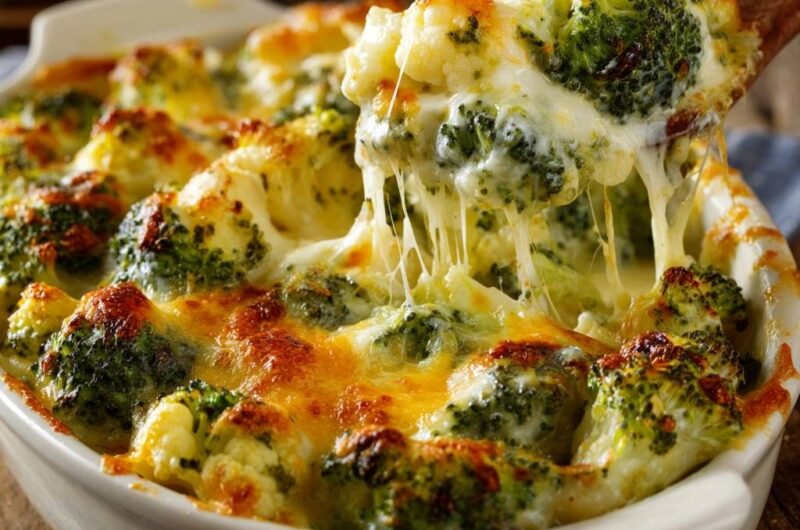
- Reduce oven heat to 400°F (200°C). Bake for 15-20 minutes, or until the cheese is deeply golden brown and bubbling vigorously. For the specific toasted crust shown in the image, broil on high for the last 2 minutes.
- Let the dish sit for 5-10 minutes before serving. This is crucial to allow the cheese proteins to tighten and the sauce to fully set.
Notes
- The dry-roasting step is essential to prevent a watery sauce. Let the dish rest for 5 to 10 minutes after baking to allow the sauce to set properly.