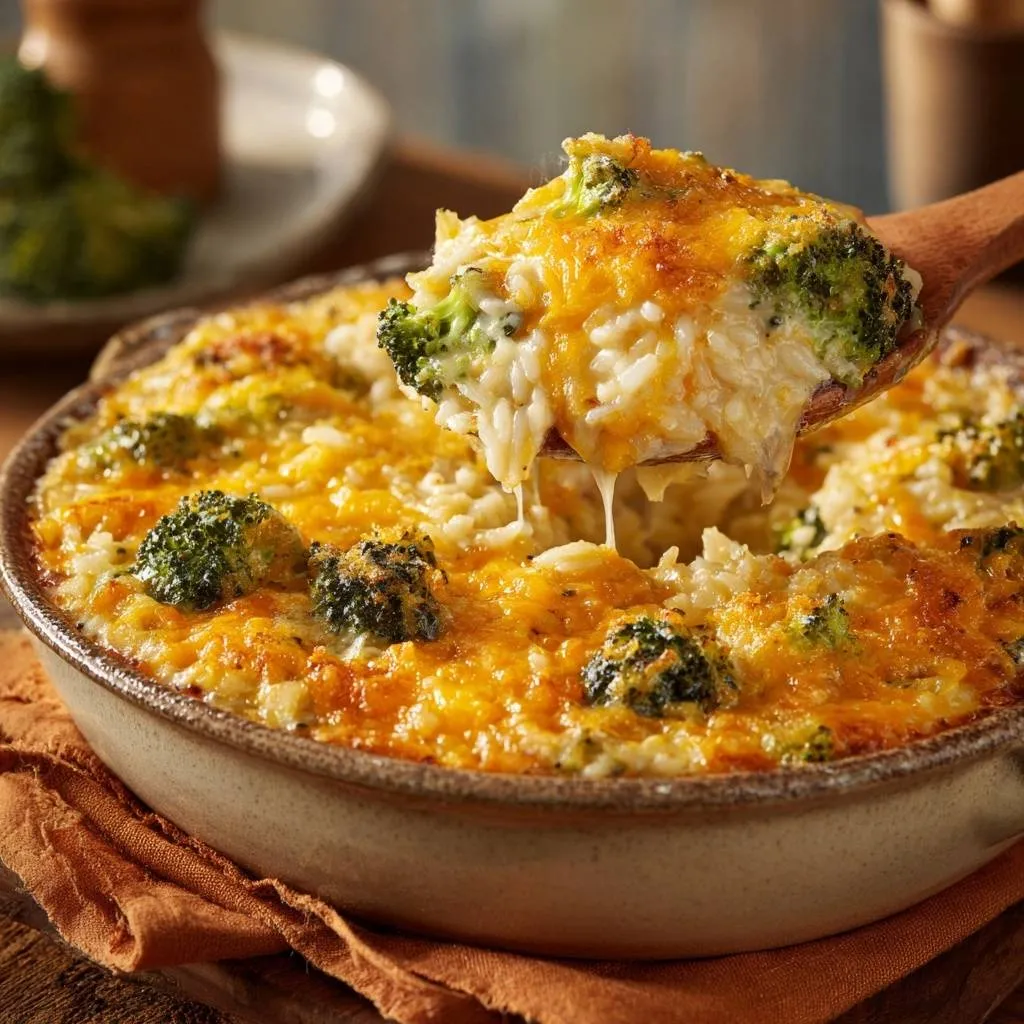
Most people have a love-hate relationship with broccoli rice casserole. We love the nostalgic, creamy comfort, but we hate the mushy, indistinct pile of gray vegetables and gummy grains that often ends up on the plate. It’s a common kitchen frustration that usually stems from the rice absorbing too much moisture during the baking process.
The goal of this recipe is to redeem this classic side dish by focusing on structural integrity. You’re going to achieve a balance between a sharp, velvety cheddar sauce and distinct, individual grains of rice that actually have a bite. When you pull this out of the oven, the vibrant green broccoli and the bubbling, golden-brown panko crust will make it the star of the table.
The secret to this success lies in the par-boiling technique. By cooking the rice just until it has a firm white core and then air-drying it, you create a barrier that prevents the grains from blowing out. This ensures that every forkful is creamy but never soggy, providing a professional texture that most home versions lack.
The Science of Preventing Gummy Rice and Soggy Broccoli
Achieving the perfect casserole texture is really a lesson in starch management. When you boil rice, the starch granules swell and eventually burst if overcooked, releasing amylopectin which creates that sticky, gummy mess. By boiling the rice for exactly 7 to 8 minutes, you stop the process while the grain is still “al dente.”
Rinsing the rice in cold water for 10 seconds is a non-negotiable step because it strips away the excess surface starch. Once you spread those grains out on a baking sheet to air-dry, a process called retrogradation begins. This slightly firms up the exterior of the grain, making it resilient enough to withstand being folded into a heavy cheese sauce and baked.
Broccoli faces a similar challenge with moisture. If you toss raw or over-boiled broccoli into a casserole, it leaches water as it bakes, thinning out your beautiful sauce. Blanching the florets for just two minutes and immediately plunging them into an ice bath shocks the vegetable. This preserves the bright green chlorophyll and locks the moisture inside the cell walls so it stays in the broccoli and out of your sauce.
Essential Components for a Richer Cheese Sauce
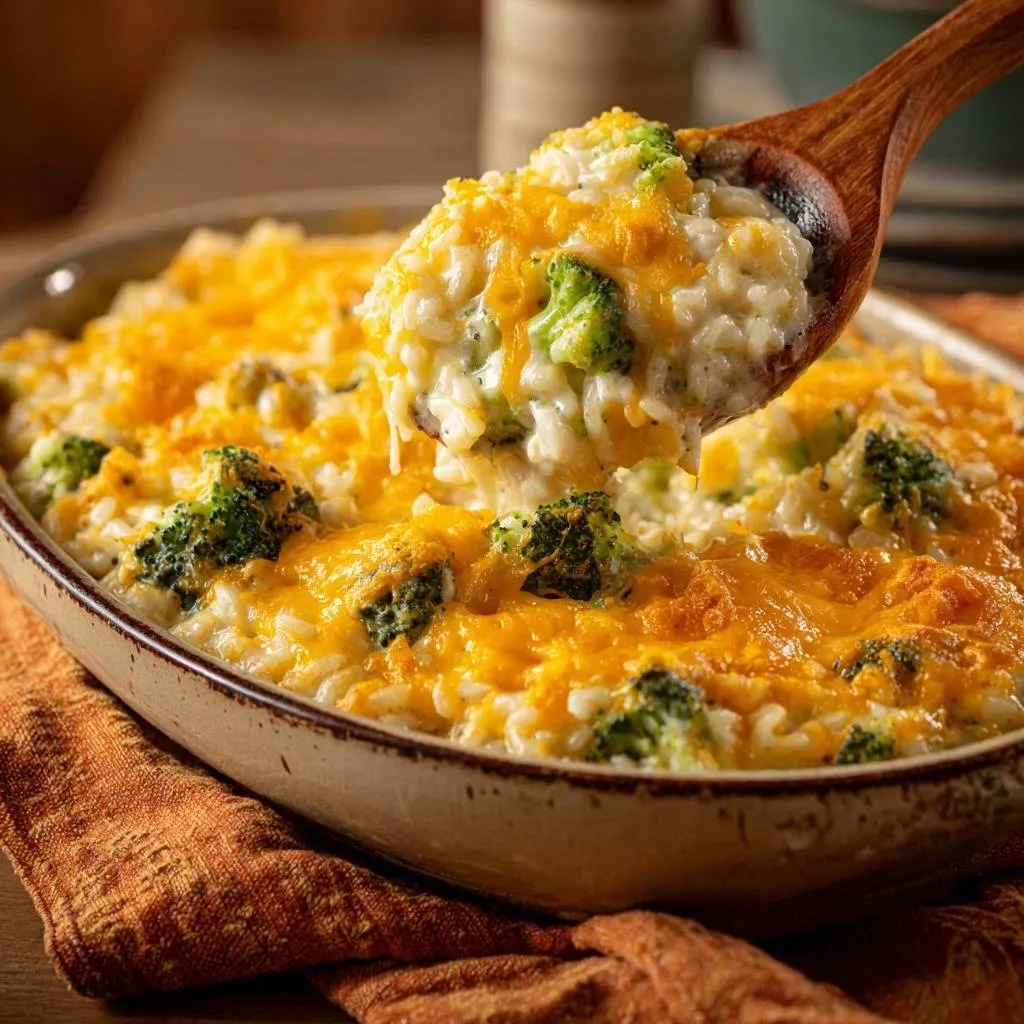
A great casserole lives or dies by its sauce, and quality ingredients make all the difference here. I always recommend using a sharp or extra-sharp cheddar because the aging process gives it a punchy flavor that doesn’t get lost among the rice. Mild cheddars tend to disappear, leaving the dish tasting flat and overly fatty.
While cheddar provides the flavor, mozzarella is the secret weapon for that iconic “cheese pull.” It has a high moisture content and excellent elasticity, which complements the sharpness of the cheddar. Adding heavy cream to the mix ensures a glossy, professional finish that coats every grain of rice without breaking into an oily mess.
Don’t overlook the dry seasonings, as they provide the “backbone” of the dish. Garlic and onion powder offer a savory depth that builds a foundation for the cheese. A touch of smoked paprika adds a very subtle earthiness and a hint of color that makes the sauce look even more appetizing once it hits the heat of the oven.
Choosing the Right Rice Variety
For this specific casserole, long-grain white rice is the undisputed champion. It contains less amylopectin than short-grain or medium-grain varieties, which means the grains naturally want to stay separate rather than clumping together. While jasmine or basmati are delicious, their floral aromas can sometimes clash with the sharp cheddar, making standard long-grain the most reliable choice for a classic flavor profile.
Fresh vs. Frozen Broccoli: Texture Implications
Fresh broccoli is always the first choice because you have total control over the crunch. However, if you’re using frozen florets, you must be more aggressive with your drying. Frozen broccoli is blanched before freezing, which breaks down the cell walls; you’ll need to thaw it completely and squeeze it in a clean kitchen towel to remove every drop of excess water to avoid a watery casserole.
For another take on tender baked vegetables, check out this cheesy broccoli cauliflower bake.
Phase One: Preparing the Rice and Vegetable Base
Start by bringing a large pot of heavily salted water to a boil. Think of this like cooking pasta; the water should taste like the sea to season the rice from the inside out. Drop the rice in and set a timer for 7 minutes. You’re looking for a grain that is tender on the outside but still has a tiny, firm white speck in the center.
After the cold rinse, don’t skip the air-drying step on the baking sheet. While the rice rests, steam your broccoli florets until they are just barely tender and bright green. The ice bath is crucial here. Once they are cold, pat them dry with paper towels. Any water left on the broccoli will ruin the emulsion of your cheese sauce later.
Phase Two: Constructing the Mornay Sauce
Creating the sauce starts with a simple roux. Melt your butter and whisk in the flour, cooking it for about 2 minutes. You want it to smell slightly nutty but stay pale; this step is vital to cook out the raw, pasty flour taste. Slowly stream in the milk and cream while whisking constantly to ensure a smooth base.
Watch for the “nappe” stage, which is when the sauce is thick enough to coat the back of a spoon and hold a line when you run your finger through it. Remove the pan from the heat before stirring in your cheese. If the sauce is boiling when the cheese goes in, the proteins can clump and the fats can separate, resulting in a grainy or oily texture.
Phase Three: Assembly and the High-Heat Bake
When it’s time to combine everything, use a gentle folding motion with a silicone spatula. You’ve worked hard to keep those rice grains separate and the broccoli intact, so don’t mash them now. Gently incorporate the sauce until everything is evenly coated, then transfer the mixture to your greased baking dish.
We bake this at 400°F rather than the traditional 350°F. This higher temperature triggers the Maillard reaction more quickly, browning the panko and cheese topping before the interior rice has a chance to overcook. You get a beautiful, shattered-crisp crust and a moist, creamy center in about 20 minutes.
Troubleshooting Common Casserole Pitfalls
If you find your sauce looks a bit too thick before it goes into the oven, don’t panic. Simply whisk in a tablespoon or two of warm milk to loosen it up. If the panko topping is browning too quickly while the center is still cold, loosely tent the dish with a piece of foil to protect the crust while the heat penetrates the middle.
The most important tip for structural integrity is the rest period. Let the casserole sit on the counter for 5 to 10 minutes after it comes out of the oven. This allows the starches to settle and the cream sauce to thicken slightly around the rice grains. If you scoop into it immediately, the sauce will run to the bottom of the dish.
Make-Ahead Strategies and Storage Logistics
You can easily prep the components of this dish 24 hours in advance. Store the par-boiled rice, blanched broccoli, and cheese sauce in separate airtight containers in the fridge. When you’re ready to eat, simply combine them and bake. This prevents the rice from sitting in the sauce overnight and becoming mushy.
Leftovers stay fresh in the refrigerator for up to three days. For the best results, reheat portions in the oven at 350°F with a tiny splash of milk to restore the creaminess. While you can freeze this casserole before the final bake, the texture of the broccoli may soften slightly upon thawing, so it’s best enjoyed fresh or refrigerated.
Complementary Pairings for a Balanced Meal
Since this casserole is quite rich and cheesy, it pairs beautifully with lean proteins that have a bit of acidity. A lemon-herb roasted chicken or a seared salmon fillet with a squeeze of fresh lime works perfectly. The citrus helps cut through the heavy cream and sharp cheddar, balancing the palate.
For a similar flavorful experience, check out this creamy cheesy chicken bake.
I also love serving this alongside a simple green salad tossed in a sharp vinaigrette. The crunch of fresh greens and the tang of vinegar provide a necessary contrast to the soft, savory nature of the rice and broccoli. It turns a heavy side dish into a well-rounded, satisfying meal.
Completing Your Meal
Round out your dinner with these complementary dishes that share similar ingredients or offer a pleasing contrast.
- For another cheesy, baked broccoli delight, consider these Crispy Broccoli Cheddar Bites, offering a delightful texture contrast.
- If you’re craving more savory baked goodness, try the Cheesy Sausage Biscuit Bake, a hearty option that pairs well.
Expert Tips for the Perfect Crust
For the ultimate crust, pay attention to your panko-to-cheese ratio. I like to toss my panko breadcrumbs with a tablespoon of melted butter before sprinkling them over the mozzarella. This ensures that every crumb turns a deep, golden brown and achieves a “shatter-crisp” texture that contrasts with the creamy rice below.
If your oven doesn’t brown things evenly, use the broiler for the final 2 to 3 minutes. Stay right there and watch it closely! You want those deep golden-brown toasted spots to appear on the cheese. This “pro move” adds a layer of toasted flavor and makes the dish look like it came straight out of a high-end bistro.
Frequently Asked Questions
Can I use brown rice instead of white?
Yes, but you must adjust your technique. Brown rice has a tough outer bran layer and requires more liquid and a longer par-boiling time, usually around 20 to 25 minutes. Ensure it reaches that “al dente” state before draining. The final casserole will have a nuttier flavor and a chewier texture than the white rice version.
Why did my cheese sauce turn out grainy?
Grainy sauce usually happens for two reasons: using pre-shredded cheese or adding cheese to a boiling liquid. Pre-shredded cheese is coated in potato starch or cellulose to prevent clumping, which can make sauces gritty. Always grate your own cheese from a block and remove the sauce from the heat before stirring the cheese in.
Is there a gluten-free substitute for the flour and panko?
Absolutely. You can replace the flour in the roux with a cornstarch slurry (mix equal parts cornstarch and cold milk) added to the simmering cream. For the topping, crushed rice crackers or gluten-free breadcrumbs work perfectly. Just ensure you still toss them in a little butter to help them brown in the oven.
Can I add protein directly into the casserole?
Adding cooked protein is a great way to make this a one-pan meal. Fold in two cups of shredded rotisserie chicken or a can of rinsed chickpeas when you combine the rice and broccoli. Since these ingredients are already cooked, they won’t change the baking time, but they will make the dish much heartier.
How do I prevent the broccoli from turning gray?
The gray color is caused by overcooking, which breaks down the chlorophyll. By blanching the broccoli for only two minutes and immediately “shocking” it in an ice bath, you stop the cooking process instantly. This locks in the vibrant green color, which will hold up beautifully during the short 20-minute bake in the oven.
Broccoli Rice Casserole
Course: Main CourseCuisine: AmericanDifficulty: medium6
servings15
minutes25
minutes380
kcal40
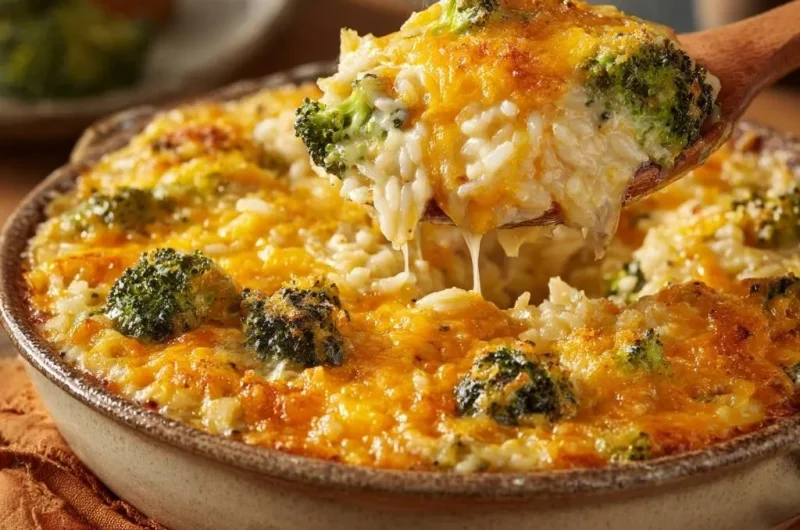
MinutesThis elevated classic features tender long-grain rice, vibrant broccoli, and a rich blend of sharp cheddar and mozzarella. By par-boiling the rice and blanching the broccoli, this dish achieves a perfect texture with a golden-brown panko crust.
Ingredients
2 cups long-grain white rice (uncooked)
4 cups fresh broccoli florets, cut into bite-sized pieces
2 cups sharp cheddar cheese, shredded
1 cup mozzarella cheese, shredded
1.5 cups whole milk
1/2 cup heavy cream (for the visual creaminess shown in the image)
3 tablespoons unsalted butter
3 tablespoons all-purpose flour
1/2 teaspoon garlic powder
1/2 teaspoon onion powder
1/4 teaspoon smoked paprika
Salt and black pepper to taste
1/2 cup panko breadcrumbs for the topping
Directions
- Preheat your oven to 400°F (200°C). The higher heat ensures the golden-brown crust seen in the image without overcooking the interior. Grease a deep 9-inch round ceramic baking dish or a 9×13 inch dish.
- The Secret to Non-Mushy Rice: Bring a large pot of salted water to a rolling boil. Add the rice and cook for exactly 7-8 minutes (the rice must be “al dente” with a firm white core). Drain immediately in a fine-mesh sieve and rinse with cold water for 10 seconds to remove excess surface starch. Spread the rice out on a flat baking sheet to air-dry for 5 minutes. This prevents the grains from clumping or becoming gummy.
- While the rice dries, steam the broccoli florets for only 2 minutes. They should be bright green and very firm. Immediately plunge them into ice water, then drain and pat dry.
- In a medium saucepan, melt the butter over medium heat. Whisk in the flour and cook for 2 minutes to remove the raw flour taste. Slowly whisk in the milk and heavy cream. Continue whisking until the sauce thickens enough to coat the back of a spoon. Remove from heat.
- Stir in 1 cup of the cheddar cheese, garlic powder, onion powder, paprika, salt, and pepper until the sauce is smooth and glossy.
- In a large bowl, gently fold together the par-boiled rice, blanched broccoli, and the cheese sauce using a silicone spatula.
- Transfer the mixture to your prepared dish. Top with the remaining cheddar, mozzarella, and a light dusting of panko breadcrumbs.
- Bake for 20 minutes, then turn on the broiler for 2-3 minutes until the cheese is bubbling and develops the deep golden-brown toasted spots shown in the image.
- Let the casserole rest for 5-10 minutes before serving. This allows the cream sauce to set around the rice grains for the perfect texture.
Notes
- The secret to non-mushy rice is cooking it al dente for 7 to 8 minutes, rinsing with cold water, and air-drying on a baking sheet before mixing with the sauce.