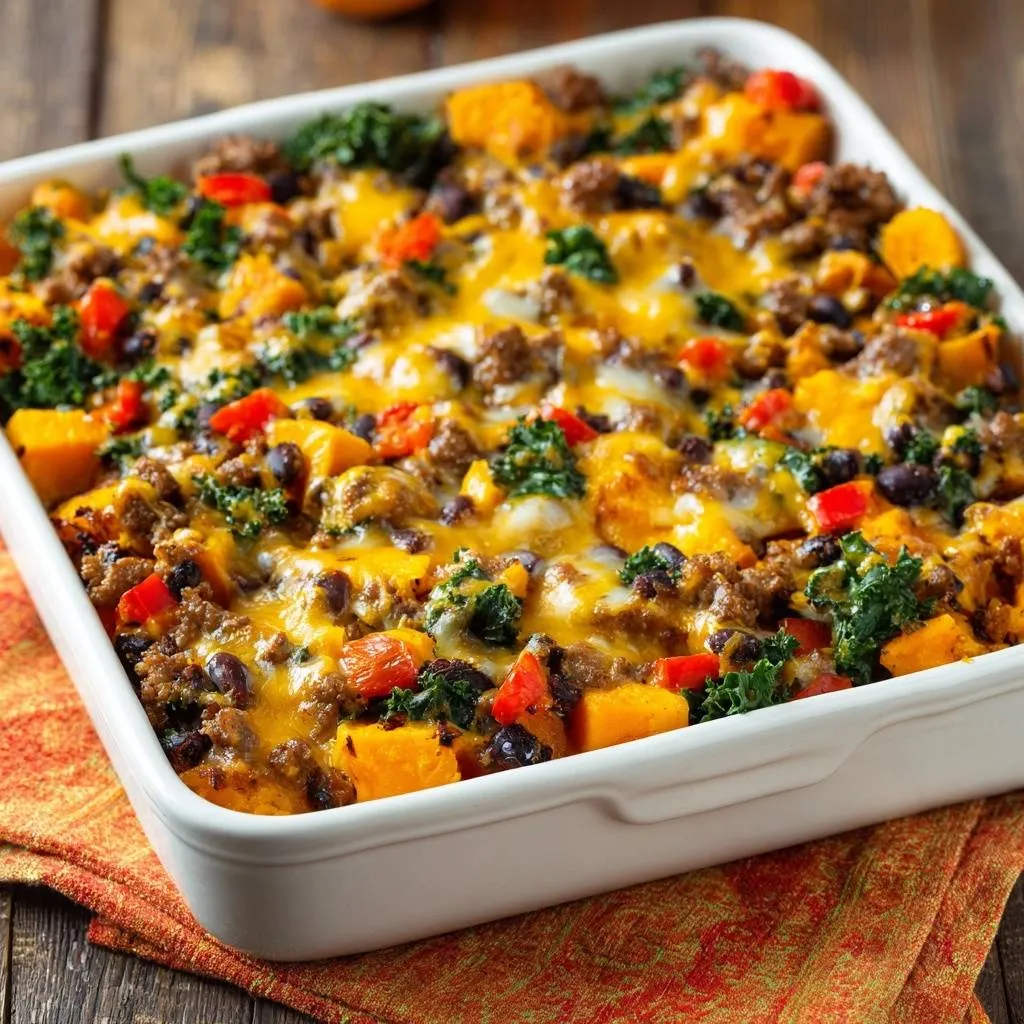
Most vegetable casseroles end up sitting in a pool of water by the time they hit the table. You’ve likely experienced that disappointing mushy texture where the vegetables steam rather than roast, turning a promising dinner into a soggy mess. This Cheesy Sweet Potato and Beef Bake solves that common frustration by using a specific roasting technique that locks in the natural sugars of the sweet potato while ensuring the kale stays crisp and the beef stays juicy.
The flavor profile here hits every satisfying note: smoky paprika, savory beef, and the sharp bite of melted cheddar. By focusing on moisture control, we create a dish that is hearty and structured rather than watery. It’s the kind of meal that feels like a warm hug but maintains the integrity of every single ingredient.
The secret to this recipe’s success is the high-heat par-roasting of the potatoes. Most people toss everything into a dish raw and hope for the best, but that’s a recipe for disaster. By roasting the cubed sweet potatoes at 400°F before they ever touch the beef, you evaporate the excess water that usually ruins a bake. This ensures the potatoes are tender and caramelized, providing a sturdy foundation for the rest of the ingredients.
The Science of Preventing Casserole Sogginess
Vegetables like sweet potatoes and kale are packed with internal moisture that releases as soon as the cell walls break down during cooking. If you crowd these ingredients into a deep baking dish while they are raw, that moisture has nowhere to go. It gets trapped under the cheese and beef, effectively steaming the entire meal from the inside out. This is why so many bakes end up with a layer of liquid at the bottom of the pan.
To combat this, we utilize the physics of evaporation through a pre-roast method. When you spread the sweet potato cubes on a flat sheet pan and blast them with 400°F heat, you trigger the Maillard reaction. This chemical reaction between amino acids and reducing sugars creates that beautiful brown crust and deep flavor. More importantly, the dry heat of the oven pulls moisture out of the potatoes before they are combined with the other components.
The kale also benefits from this strategic heat management. Instead of burying raw kale in a liquid-heavy mixture, we fold it in at the very end. The residual heat from the roasted potatoes and browned beef gently wilts the leaves. This prevents the kale from becoming slimy or waterlogged, allowing it to maintain a pleasant chew and a vibrant green color even after the final bake.
Essential Components for the Beef and Potato Bake
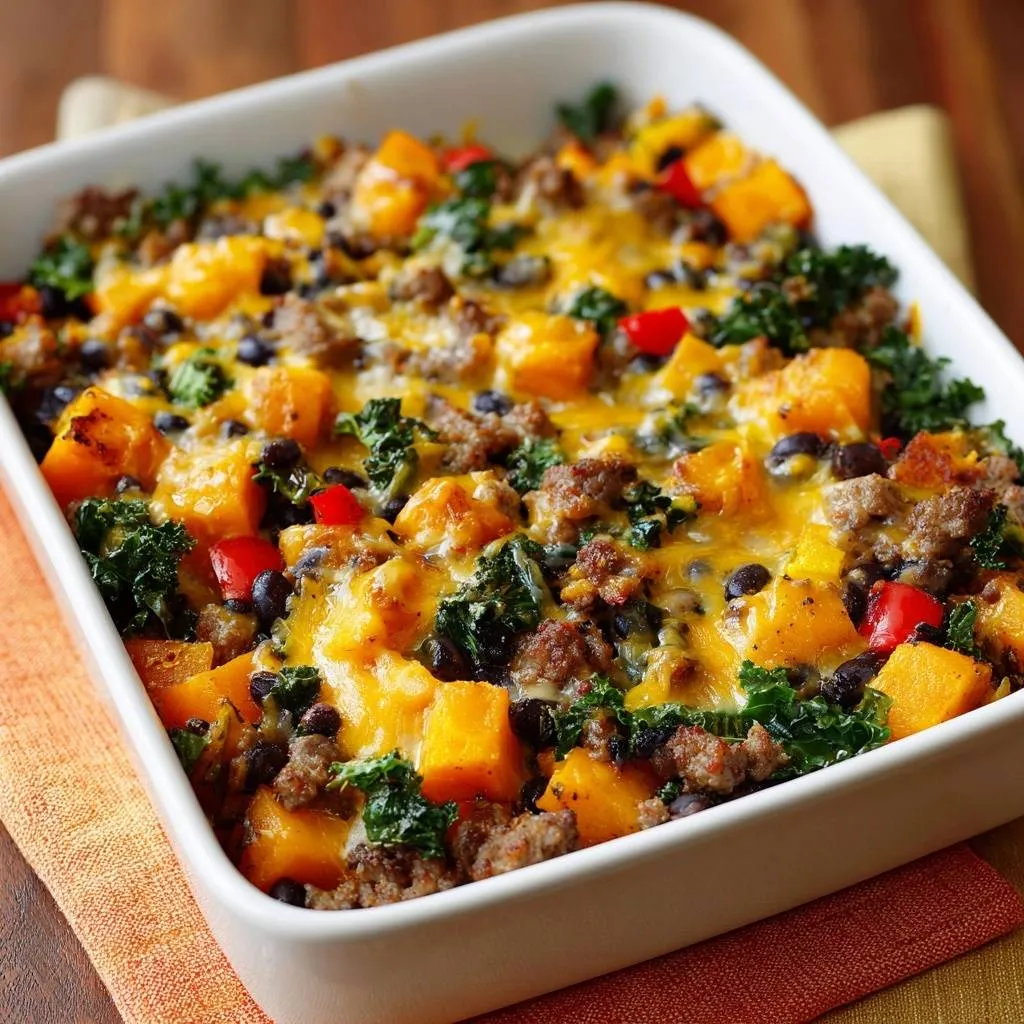
Quality ingredients are the backbone of this dish, and choosing the right versions of these staples makes a massive difference in the final texture. For the meat, I always recommend lean ground beef, specifically a 90/10 or 93/7 blend. Since we are combining the beef with roasted vegetables, a higher fat content like 80/20 will leave a greasy film at the bottom of your baking dish. Lean beef provides plenty of protein and flavor without the oily residue.
When it comes to the potatoes, look for Garnet or Jewel varieties. These are the classic orange-fleshed sweet potatoes found in most US grocery stores. They have a high starch content that holds its shape well during the two-stage cooking process. Avoid using true yams, which are starchier and drier, as they won’t achieve that creamy interior we want alongside the beef.
The choice of kale is equally important. Curly kale is the champion of this bake because its ruffled edges create pockets of air. These edges catch the heat of the oven, becoming slightly crisp while the rest of the leaf stays tender. Lacinato or baby kale tends to collapse too quickly, losing its identity in the mix. Finally, please grate your own sharp cheddar cheese. Pre-shredded bags are coated in potato starch or cellulose to prevent clumping, which results in a grainy, plastic-like melt. Freshly grated cheese melts into a smooth, gooey blanket that binds the dish together perfectly.
Dry Spices and Aromatics
We use a blend of smoked paprika, garlic powder, and onion powder to build a “crust” of flavor directly on the beef. Using dry spices instead of liquid marinades or heavy sauces is another tactical move to keep the bake dry. The smoked paprika adds a campfire depth that mimics the flavor of a slow-cooked chili, while the garlic and onion powders provide a consistent savory backbone in every bite. These spices bloom in the rendered beef fat, coating every crumble in a concentrated layer of seasoning.
Phase One: Roasting Sweet Potatoes for Maximum Texture
Success starts with how you prep your potatoes. Aim for uniform 1-inch cubes; if some are tiny and others are huge, the small ones will burn before the large ones are soft. When you toss them with olive oil, ensure every side is lightly coated. This oil acts as a heat conductor, helping the outside of the potato reach those high temperatures needed for browning.
When you spread them on the baking sheet, give them space. If the cubes are touching or overlapping, they will trap steam between them, defeating the purpose of the pre-roast. You want to see blistered, golden-brown edges after 20 minutes. When you poke one with a fork, it should be tender but not falling apart. This “par-roasted” state is exactly what we need before the final assembly.
Phase Two: Preparing the Savory Beef and Bean Base
To get the most flavor out of your ground beef, resist the urge to stir it immediately. Drop the beef into a hot skillet and let it sear undisturbed for about two minutes. This develops a dark brown crust that adds a rich, “meaty” flavor you just can’t get from gray, steamed meat. Once that crust forms, use your spoon to break it into small, uniform crumbles.
After the beef is browned, drain the fat thoroughly. Even lean beef will release some liquid, and removing it is vital for our anti-soggy mission. Once drained, toss in the diced red peppers. We only sauté these for a few minutes because we want them to stay vibrant and slightly crisp. Adding the black beans at this stage allows them to heat through and absorb the spices without becoming mushy. The beans add a great earthy texture that complements the sweetness of the potatoes.
Phase Three: Assembling the Layers for Heat Distribution
Now comes the assembly in your 9×13 inch dish. This specific size is perfect because it allows the ingredients to spread out, ensuring even heat distribution. When you combine the hot potatoes, the beef mixture, and the raw kale, work quickly. The heat from the cooked components will start to soften the kale immediately. Fold everything together gently so you don’t mash the potatoes.
The final step is what I call the “Cheese Shield.” By spreading a thick, even layer of sharp cheddar over the top, you create a protective barrier. This shield traps just enough moisture to finish cooking the kale while protecting the leaves from the direct intensity of the oven’s heating element. However, make sure a few tips of the kale are poking through the cheese. These little bits will crisp up beautifully, providing a fantastic textural contrast to the gooey cheese and soft potatoes.
Troubleshooting Common Baking Obstacles
If you pull your potatoes out after 20 minutes and they are still rock hard, your oven might be running cold. Oven calibrations can drift over time, so it’s worth using an internal thermometer. If they aren’t tender, give them another 5 to 7 minutes. Don’t move to the assembly phase until those potatoes are bite-ready, or they will stay hard even after the final bake.
Excess moisture can also sneak in through your supplemental ingredients. If you are using frozen bell peppers or canned beans that weren’t drained well, you’ll introduce unwanted liquid. Always pat your peppers dry if they were frozen and give those black beans a vigorous shake in the colander. If you are using a ceramic baking dish, keep in mind they hold heat longer but take longer to heat up than glass. You might need an extra 5 minutes in the final stage to get that cheese bubbling perfectly.
Flavor Variations and Ingredient Swaps
This bake is incredibly versatile if you want to switch up the protein. Ground turkey or ground chicken are excellent lean alternatives, though you may need an extra teaspoon of olive oil since they lack the natural fat of beef. For a richer, more gamey flavor, ground bison works beautifully and is naturally very lean, fitting perfectly into our anti-soggy framework.
If kale isn’t your favorite green, you can substitute Swiss chard or collard greens. Just be sure to chop them finely and remove the thick center ribs, as those take much longer to cook than the leaves. For those who crave heat, adding a diced jalapeño to the beef sauté or a teaspoon of chipotle powder will give the dish a spicy, smoky kick. If you need to go dairy-free, a cashew-based cheese sauce or a heavy dusting of nutritional yeast can provide that savory “umami” hit without the milk products.
Optimal Side Dish Pairings
Since this bake is quite rich and savory, it pairs best with something bright and acidic. A simple citrus slaw made with shredded cabbage, lime juice, and cilantro cuts through the heaviness of the beef and cheese perfectly. Alternatively, a pile of quick-pickled red onions served right on top of the bake adds a pop of color and a sharp vinegar tang that wakes up the palate.
If you want to keep things light, a crisp arugula salad tossed in a lemon vinaigrette is a great choice. The peppery bite of the arugula complements the sweetness of the potatoes. For a bit of extra crunch, sprinkle some toasted pumpkin seeds (pepitas) over the finished dish. If you find the spices a bit intense, a dollop of plain Greek yogurt or sour cream on the side provides a cooling, creamy finish that balances the smoky paprika.
Storage, Reheating, and Meal Prep Strategy
This dish is a meal prep dream because it actually holds its structure well. Store leftovers in an airtight container in the refrigerator for up to four days. To prevent the kale from getting slimy, let the bake cool completely before snapping the lid on. This prevents steam from condensing inside the container and softening the ingredients further.
When it comes to reheating, the microwave is your enemy if you want to maintain texture. It tends to make the potatoes rubbery and the cheese oily. Instead, use your oven or an air fryer. Reheating at 350°F for about 10 minutes will crisp the edges back up and melt the cheese evenly. If you want to freeze this, I recommend freezing the beef and potato mixture in a freezer-safe bag and adding fresh kale and cheese only when you are ready to bake and serve. This keeps the greens from turning to mush during the thawing process.
How do I store leftovers and does it freeze well?
Store leftovers in an airtight container in the refrigerator for up to 4 days. For the best texture, reheat in the oven or air fryer at 350°F until warmed through. While you can freeze the cooked beef and potato mixture for up to 3 months, the kale may become quite soft upon thawing. For best results, freeze the beef and potatoes, then add fresh kale and cheese when you’re ready to bake.
Why are my sweet potatoes still hard after baking?
This usually happens if the potato cubes are larger than 1 inch or if the oven wasn’t fully preheated. Every oven is different, so if your potatoes aren’t fork-tender after the initial 20-minute roast, leave them in for another 5-10 minutes. They must be mostly cooked before you assemble the casserole, as the final 15 minutes in the oven is mainly to melt the cheese and wilt the kale.
Can I use a different type of potato or meat?
Yes, you can use Yukon Gold potatoes, though they won’t have the same sweetness as sweet potatoes. For meat, ground turkey, chicken, or bison are great substitutes. If using turkey or chicken, add a little extra seasoning as these meats are milder than beef. Always stick to lean grinds (90% or higher) to prevent the dish from becoming greasy.
For an equally satisfying sweet potato dish, check out this creamy sweet potato gratin.
Why is my kale bitter or tough?
Kale can be bitter if the woody stems aren’t removed. Make sure to strip the leaves off the stems and discard the tough centers. The bitterness is also mellowed by the fat in the beef and the salt in the cheese. If you’re very sensitive to bitterness, you can massage the raw kale with a tiny bit of olive oil before folding it into the mix.
Can I prep this dish 24 hours in advance?
You can brown the beef and chop the vegetables a day ahead, but I don’t recommend assembling the entire dish and letting it sit in the fridge overnight. The salt in the beef and cheese will draw moisture out of the kale and peppers, leading to a soggy base. For the best results, roast the potatoes and assemble the dish right before you plan to eat.
How do I get the cheese extra bubbly and brown?
If the cheese is melted but you want those classic golden-brown spots, turn your broiler on for the last 60 to 90 seconds of cooking. Watch it very closely, as the broiler can go from perfect to burnt in a matter of seconds. This will also give the exposed kale tips an extra-crispy texture.
Cheesy Sweet Potato and Beef Bake
Course: Main CourseCuisine: AmericanDifficulty: easy6
servings15
minutes40
minutes410
kcal55
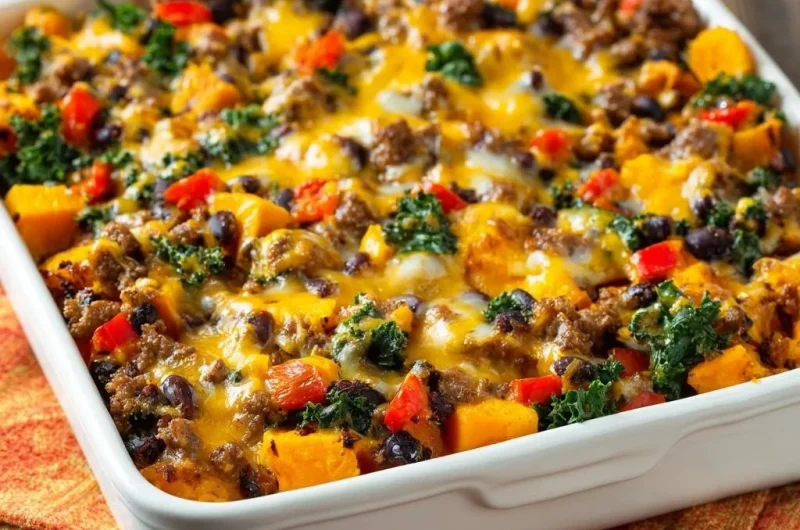
MinutesThis recipe uses a specific roasting technique to prevent the common problem of watery vegetable casseroles. By pre-roasting the sweet potatoes and draining the beef, you achieve a perfect texture with caramelized potatoes, juicy beef, and crisp kale.
Ingredients
1 pound lean ground beef
3 large sweet potatoes, peeled and cubed into 1-inch pieces
2 cups chopped curly kale, stems removed
1 red bell pepper, diced
1 can (15 oz) black beans, rinsed and drained
2 cups shredded sharp cheddar cheese
2 tablespoons olive oil
1 teaspoon garlic powder
1 teaspoon smoked paprika
1/2 teaspoon onion powder
Salt and black pepper to taste
Directions
- Preheat your oven to 400°F (200°C). This high heat is the secret to preventing sogginess by roasting rather than steaming the vegetables.
- Toss the cubed sweet potatoes in a large bowl with olive oil, salt, and pepper. Spread them in a single layer on a large rimmed baking sheet. Roast for 20 minutes. This pre-roasting step evaporates excess moisture and ensures the potatoes are tender before the quick-cooking ingredients are added.
- While the potatoes roast, brown the ground beef in a large skillet over medium-high heat. Use a wooden spoon to break the beef into small crumbles. Once fully browned, drain the fat thoroughly to prevent a greasy finish. Cook until no pink remains and it reaches 160°F (71°C).
- Stir the garlic powder, smoked paprika, onion powder, and diced red peppers into the beef. Sauté for 2-3 minutes until the peppers are slightly softened but still vibrant. Stir in the drained black beans.
- In a 9×13 inch baking dish, combine the par-roasted sweet potatoes, the beef and pepper mixture, and the chopped kale. Toss gently so the kale is distributed throughout; the residual heat will begin to wilt the kale without making it slimy.
- Spread the mixture into an even layer and top with the shredded cheddar cheese.
- Return the dish to the oven for 10-15 minutes, or until the cheese is fully melted and bubbling, and the tips of the kale poking through the cheese are slightly crisp.
- Let the casserole rest for 5 minutes before serving to allow the flavors to meld and any natural juices to set.
Notes
- The secret to the anti-soggy texture is the high-heat roasting at 400°F and pre-cooking the sweet potatoes to evaporate excess moisture before combining with other ingredients.