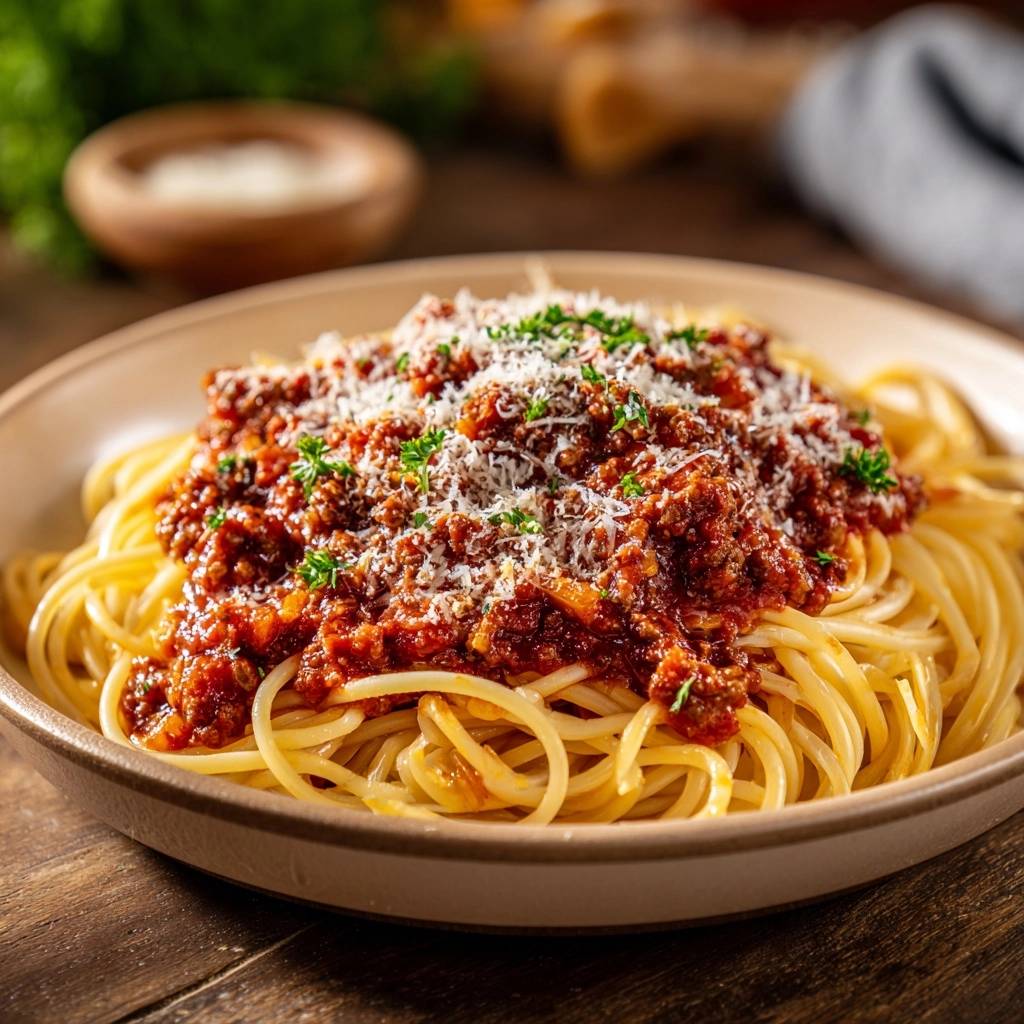
We’ve all been there. You spend an hour in the kitchen, plate up a beautiful mound of pasta, and within seconds, a sad puddle of watery liquid begins to pool at the bottom of the dish. It’s the ultimate kitchen heartbreak. A true Bolognese should be a cohesive, velvety masterpiece where the meat and tomato cling to every strand of spaghetti rather than separating into a thin soup.
The difference between a mediocre meat sauce and a restaurant-quality ragu isn’t just about the ingredients; it’s about the physics of the pan. When you master the art of the reduction, you transform humble ground beef into a rich, concentrated sauce that carries deep, savory notes. This recipe focuses on eliminating that excess moisture from the start, ensuring your dinner is bold, thick, and incredibly satisfying.
The secret to this specific success is the finely grated carrot. While it might seem like a minor addition, the carrot provides a natural sugar source that balances the acidity of the tomatoes without the need for processed white sugar. Furthermore, as the carrot melts into the sauce during the long simmer, its fibers act as a natural thickening agent, binding the fats and liquids together for a perfect emulsion.
The Anatomy of a Non-Watery Meat Sauce
A watery sauce usually happens because the moisture trapped inside the vegetables and meat hasn’t been fully evaporated before the liquid base is added. If you “dump and stir” your ingredients, that internal water eventually leaks out during the simmering process, thinning your sauce. To prevent this, we use a specific reduction technique that forces the water out early.
Therefore, we focus on creating an emulsion. This is the scientific process of joining fat and water into a smooth, unified sauce. By browning the meat until it sizzles in its own rendered fat and then adding a concentrated tomato paste, we create a “glue” that holds the beef broth and marinara together. This results in a chunky, hearty texture that stays exactly where you put it.
Essential Components for Classic Spaghetti Bolognese
Quality starts with your protein choice. I always recommend an 80/20 ground beef blend. While leaner meat might seem healthier, that 20% fat is vital for a silky mouthfeel. As the fat renders out, it carries the flavors of the garlic and oregano throughout the entire pot, preventing the meat from feeling dry or grainy.
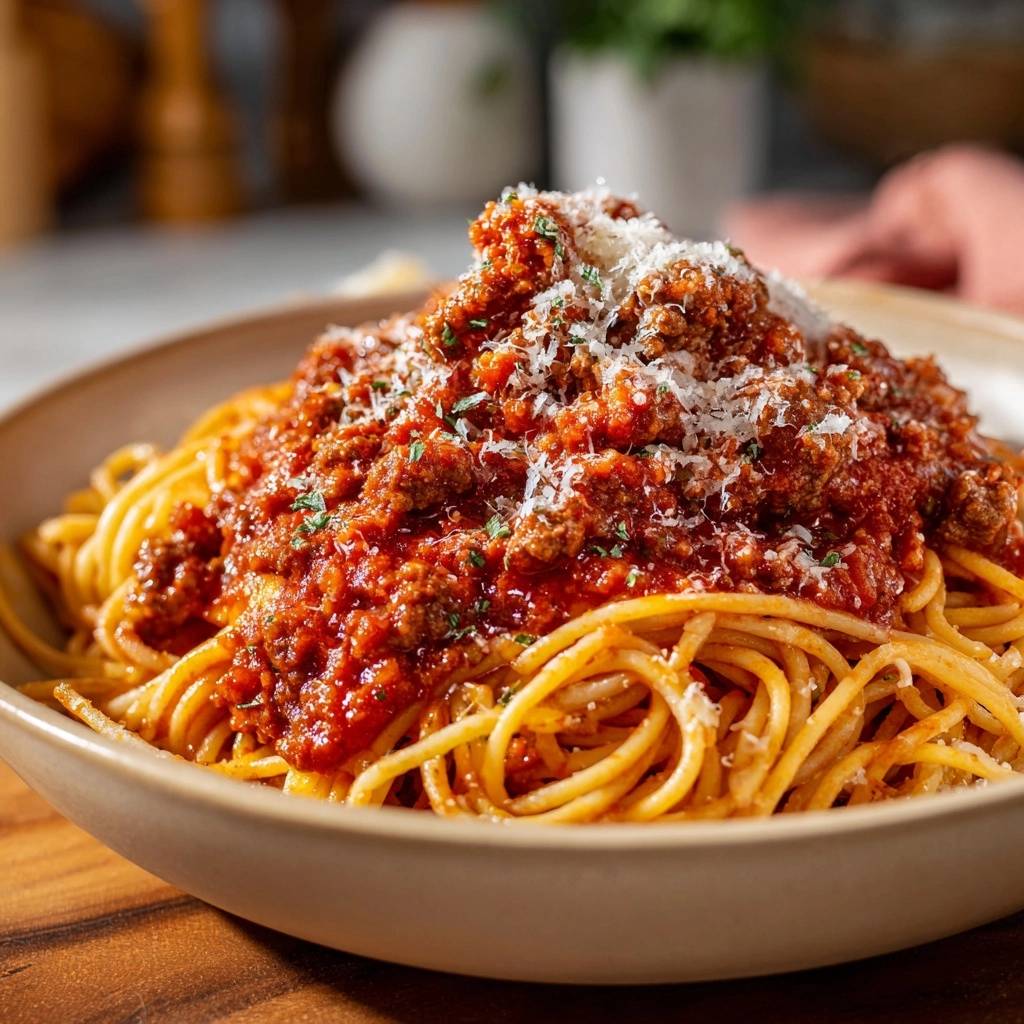
In addition to the beef, the aromatics play a huge role. Finely diced onions and minced garlic provide the savory base, but the grated carrot is the real hero. It disappears into the sauce, providing a subtle sweetness that rounds out the sharp edges of the marinara. For the finishing touch, use fresh curly parsley. Its slightly bitter, grassy flavor cuts through the richness of the beef and cheese perfectly.
Selecting the Right Pasta Shape and Texture
While spaghetti is the traditional choice here, the way you cook it is more important than the shape itself. You must cook the noodles until they are “al dente,” meaning they still have a slight bite in the center. Overcooked pasta becomes mushy and releases too much starch, which can make the final dish feel gummy rather than silky.
When you drain the pasta, whatever you do, don’t rinse it! That light coating of starch on the surface of the noodles is essential. It acts as a natural adhesive, helping the thick meat sauce “grip” the spaghetti so every forkful is perfectly balanced.
The Role of Tomato Paste as a Flavor Anchor
Tomato paste is often treated as an afterthought, but in this recipe, it’s the “flavor anchor.” It contains highly concentrated tomato solids that provide a massive hit of umami. However, if you just stir it in at the end, it will taste metallic and raw.
The key is to cook the paste directly in the hot fat with the meat and garlic for several minutes. This triggers the Maillard reaction, a chemical process that browns the natural sugars and proteins. You’ll see the color shift from a bright, vibrant red to a dark, moody brick red. This step adds a smoky depth that makes the sauce taste like it’s been simmering for eight hours instead of forty-five minutes.
Step-by-Step: Building the Perfect Ragu Base
Building a great ragu is all about layers. You can’t rush the initial stages, or you’ll lose the complexity of the dish. Start by getting your pan truly hot before the meat even touches the surface. You want to hear a loud hiss the moment the beef hits the oil.
Searing the Beef and Aromatics
Add your ground beef, onions, and carrots to the pan together. At first, the meat will release a lot of greyish liquid. This is the “danger zone” for a watery sauce. Keep cooking over medium-high heat until all that liquid evaporates completely.
You’ll know you’re ready for the next step when the sound in the pan changes from a bubbling simmer to a sharp sizzle. This means the water is gone and the meat is finally “frying” in its own fat. Look for those crispy, dark brown bits on the edges of the beef; that’s where the real flavor lives.
Caramelizing the Tomato Paste and Garlic
Once the meat is browned, clear a small spot in the center of the pan and drop in your minced garlic and tomato paste. By adding the garlic now rather than at the beginning, you ensure it softens and perfumes the oil without burning and becoming bitter.
Stir the paste into the meat constantly for about three minutes. It will start to stick to the bottom of the pan slightly, creating a “fond” or a layer of toasted flavor. This concentrated base ensures that when you finally add your liquid marinara, the sauce has a thick, sturdy foundation to build upon.
The Reduction Phase: Concentrating the Flavors
Now it’s time to add the marinara sauce and beef broth. The broth adds a necessary saltiness and depth, but it also introduces more liquid that we need to manage. This is why the simmering phase is so critical to the final texture of your Bolognese.
Always simmer your sauce uncovered. If you put a lid on the pot, the steam hits the lid, turns back into water, and drips right back into your sauce. By leaving the lid off, you allow that excess moisture to escape into the air, leaving behind a thick, chunky, and incredibly potent ragu.
Testing for the Proper Sauce Consistency
How do you know when it’s done? Use the “Spoon Test.” Scoop up a bit of sauce and hold the spoon level. The sauce should sit high on the spoon without any thin liquid running off the edges. If you see a ring of water forming around the meat, it needs more time.
If the sauce still feels a bit thin after 30 minutes, don’t panic. Just keep the heat low and continue simmering in five-minute increments. The flavors will only get better as they concentrate, so a little extra patience goes a long way in achieving that restaurant-style body.
Plating for Restaurant-Quality Presentation
Forget the old-school method of tossing the pasta and sauce together in a big messy pot. For a truly professional look, plate the components separately. Use a pair of tongs to twirl the spaghetti into a tight, high mound in the center of a shallow bowl.
Spoon the thick ragu directly onto the top of the pasta mound. Because the sauce is so thick, it will sit proudly on top rather than sliding off into the bottom of the bowl. This presentation highlights the texture of the meat and makes the dish feel much more special.
For a similar thick sauce experience, try this hearty meatball and pasta soup.
The Finishing Touches: Parmesan and Parsley
The final layer of flavor comes from the garnish. Use a microplane or a fine grater for the parmesan cheese. These tiny, snowy flakes have more surface area than thick shreds, meaning they will melt almost instantly when they hit the hot sauce.
This melted cheese creates a secondary thickening layer that binds the sauce even further. Sprinkle the fresh parsley over the top at the very last second. The heat from the sauce will release the parsley’s aroma just as you set the plate down on the table.
Troubleshooting Common Bolognese Issues
If your sauce ends up too salty, don’t worry. You can balance it by adding a splash of heavy cream or a little extra unsalted beef broth. The fats in the cream help coat the palate and dull the sharp sting of excess salt.
On the other hand, if the sauce becomes too thick and won’t move, use your reserved pasta water. That starchy water is liquid gold. Add it one tablespoon at a time until the sauce reaches a glossy, pourable consistency that still holds its shape.
Sometimes the meat can feel a bit tough if it’s cooked too quickly. If this happens, simply add a splash more broth and simmer on the lowest possible heat for another 15 minutes. The low heat helps break down the connective tissues in the beef, making it tender and “melt-in-your-mouth” soft.
Make-Ahead Strategies and Storage Tips
Bolognese is one of those rare dishes that actually tastes better the next day. As the sauce sits in the fridge, the aromatics like garlic and oregano continue to infuse into the meat. This “mellowing” process creates a more harmonious and complex flavor profile.
When reheating, do it slowly on the stovetop over medium-low heat. Add a tiny splash of water to loosen it up, as the sauce will naturally thicken even more as it chills. Avoid the microwave if possible, as it can heat the sauce unevenly and cause the fats to separate from the solids.
Freezing and Thawing Your Ragu
This sauce freezes beautifully, making it a perfect candidate for meal prep. Transfer the cooled sauce to airtight containers or heavy-duty freezer bags. It will stay fresh and delicious for up to three months. Just be sure to leave a little headspace in the container, as the sauce will expand slightly as it freezes.
To thaw, move the container to the refrigerator 24 hours before you plan to eat. Thawing slowly in the fridge is the best way to maintain the emulsion. If you try to defrost it too quickly in hot water, the sauce might “break,” leaving you with that watery separation we worked so hard to avoid!
Expert Tips for the Home Chef
Firstly, always salt your pasta water “like the sea.” This is your only chance to season the actual noodles. If the pasta itself is bland, even the best sauce won’t be able to save the dish. Aim for about one tablespoon of salt per gallon of water.
Secondly, use a heavy-bottomed pan like a Dutch oven or a cast-iron skillet. These pans distribute heat more evenly, which prevents the tomato paste from scorching in hot spots. Even heat leads to an even reduction, which is the key to that thick, consistent texture.
Finally, remember that “low and slow” is a mantra for a reason. While this recipe is designed to be ready in 45 minutes, you can’t rush the browning of the meat. Taking those extra few minutes to ensure the moisture is gone before adding the liquids is the single biggest factor in your success.
Alternative Protein Options
If you want to experiment, you can easily swap the ground beef for other proteins. A mix of half beef and half ground lamb adds a wonderful earthy richness to the ragu. Alternatively, ground turkey works well, though you may need to add an extra tablespoon of olive oil since turkey is much leaner than beef.
Regardless of the meat you choose, the technique remains the same. You must sear the protein until the water is gone and the “sizzle” begins. This ensures that no matter what protein you use, your Bolognese will be thick, hearty, and never watery.
Vegetable Add-ins for Extra Bulk
For those who love a more complex “Soffritto” base, feel free to add finely diced celery along with the onions and carrots. Mushrooms are another fantastic addition; when finely chopped and browned with the beef, they add a massive boost of savory umami flavor.
Just remember that mushrooms hold a lot of water. If you add them, you’ll need to extend the initial browning phase by a few minutes to ensure all that extra moisture evaporates. As long as you stick to the “sizzle” rule, your sauce will remain thick and delicious.
How do I store leftover Spaghetti Bolognese?
You should store the sauce and the pasta separately if possible. Place the sauce in an airtight container and keep it in the refrigerator for up to 4 days. If the pasta is already mixed in, it will stay good for about 2 days, though the noodles will absorb more sauce and become softer over time. For long-term storage, the sauce alone freezes perfectly for up to 3 months in a freezer-safe bag or container.
Why is my Bolognese sauce still watery?
The most common reason for a watery sauce is not browning the meat and vegetables long enough. You must cook the beef until all the grey liquid has evaporated and the meat begins to sizzle in its own fat. Additionally, if you simmer the sauce with a lid on, the steam cannot escape, which prevents the sauce from thickening. Always simmer uncovered to allow for proper reduction.
Can I use a different type of pasta?
Yes, you can certainly use other pasta shapes. While spaghetti is classic, wider noodles like pappardelle or tagliatelle are excellent for holding onto thick, meaty sauces. Short shapes like rigatoni or penne also work well because the hollow centers trap the chunky ragu inside. Just ensure whatever pasta you choose is cooked al dente and never rinsed after draining.
What can I use if I don’t have beef broth?
If you are out of beef broth, you can substitute it with chicken broth or even a vegetable bouillon cube dissolved in water. In a pinch, you can use plain water, but you will need to be more aggressive with your seasoning. Add an extra pinch of salt and perhaps a dash of Worcestershire sauce to help mimic the savory depth that the beef broth usually provides.
How can I make the sauce less acidic?
If your sauce tastes too sharp or acidic, it’s usually due to the tomatoes. The grated carrot in this recipe is designed to fix this naturally. However, if it’s still too tart, try simmering the sauce for an extra 10 minutes; heat often mellows the acidity. You can also add a small knob of butter at the very end of cooking. The fat in the butter coats the tongue and neutralizes the perception of acid without changing the flavor profile.
Spaghetti Bolognese
Course: Main CourseCuisine: Italian-AmericanDifficulty: easy4
servings15
minutes45
minutes580
kcal60
MinutesA hearty and thick meat sauce served over al dente spaghetti. This recipe focuses on caramelizing tomato paste and reducing the sauce uncovered to ensure a rich, chunky consistency that clings to the pasta.
Ingredients
1 pound ground beef (80/20 for best flavor)
1 pound spaghetti noodles
24 ounces thick tomato marinara sauce
3 tablespoons tomato paste
3 cloves garlic, minced
1 small onion, finely diced
1 medium carrot, finely grated (the secret to natural sweetness and thickness)
1 tablespoon olive oil
1/2 cup beef broth
1/2 cup finely grated parmesan cheese
2 tablespoons fresh curly parsley, chopped
1 teaspoon dried oregano
Salt and black pepper to taste
Directions
- Bring a large pot of heavily salted water to a boil. Cook the spaghetti according to package directions until al dente. Drain well, but do not rinse. Toss the noodles with a teaspoon of olive oil to prevent sticking and keep them glossy.
- While the water boils, heat olive oil in a large skillet or dutch oven over medium-high heat. Add the ground beef, diced onion, and grated carrot.
- Cook until the beef is deeply browned and the vegetables are soft. To avoid a watery sauce, ensure you cook off all the initial moisture released by the meat and vegetables until the beef begins to sizzle and “fry” in its own fat.
- Stir in the minced garlic and tomato paste. Cook for 3 minutes, stirring constantly, until the paste turns a deep brick red. This caramelization is the “flavor anchor” that prevents a thin, acidic sauce.
- Pour in the marinara sauce, beef broth, and oregano. Reduce the heat to low and simmer uncovered for 25-30 minutes. Simmering without a lid is essential to evaporating excess water and concentrating the sauce into a thick, chunky ragu.
- Taste and season with salt and pepper. If the sauce is still too thin, simmer for another 5 minutes until it holds its shape on a spoon.
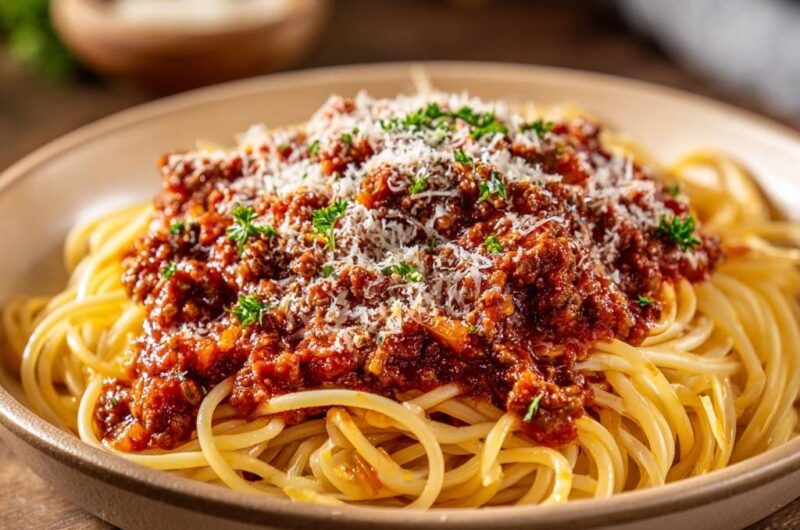
- To match the visual presentation: Divide the plain spaghetti into bowls first, twirling the noodles into a high mound.
- Spoon a generous portion of the thick meat sauce directly onto the center of the pasta mound.
- Finish with a heavy dusting of finely grated parmesan cheese and a sprinkle of fresh curly parsley. Serve immediately.
Notes
- The secret to the natural sweetness and thick texture is the finely grated carrot. Ensure you cook the beef until it sizzles in its own fat to prevent a watery finish.