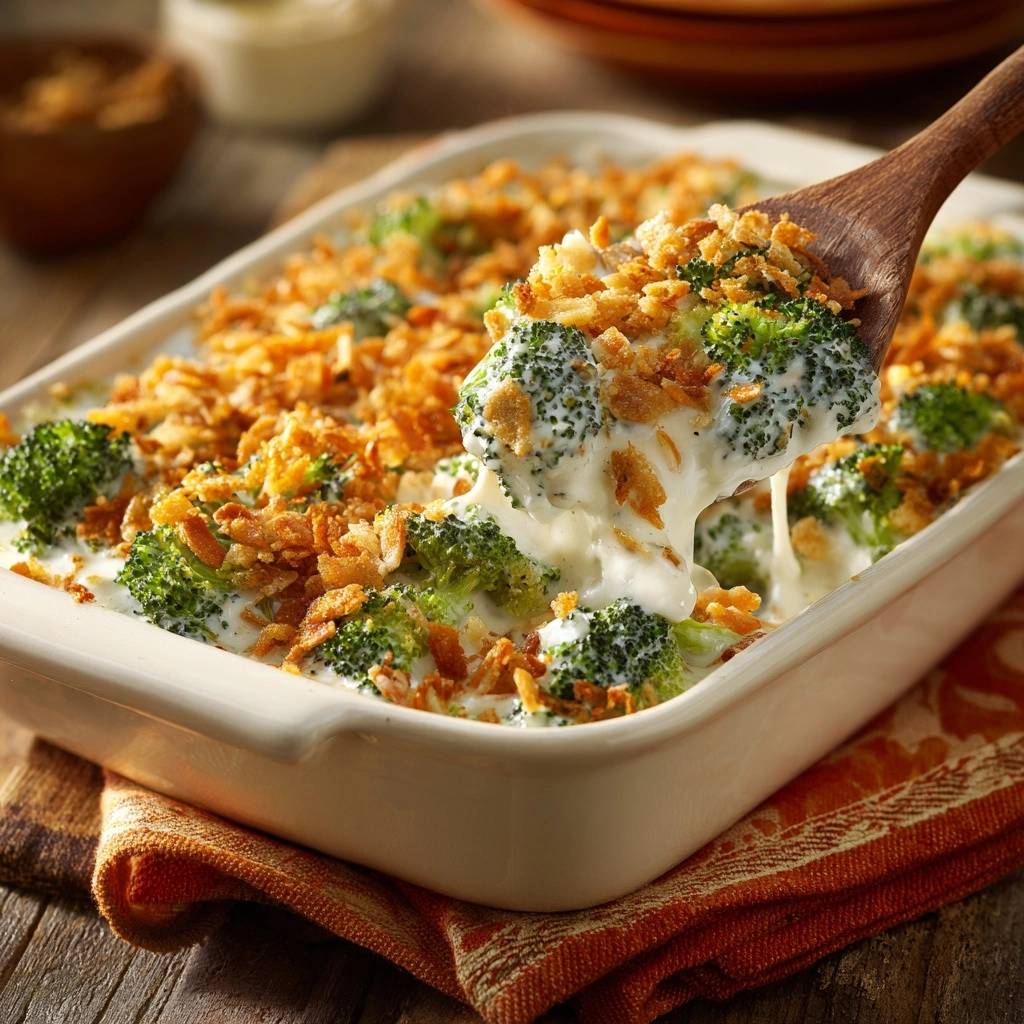
Most vegetable side dishes suffer from a fatal flaw: the dreaded “soup” at the bottom of the pan. You’ve likely experienced it before, where a promising cheesy bake turns into a watery mess by the time it hits your plate. This happens because broccoli is a moisture-heavy vegetable that releases its liquid as it cooks, thinning out your beautiful sauce into a bland, runny puddle.
This Creamy Baked Broccoli Casserole solves that problem with a specific anti-soggy technique that prioritizes texture as much as flavor. By focusing on moisture management, we create a dish where the sauce remains thick and velvety while the broccoli stays tender-crisp. You get the sharp bite of white cheddar and a buttery, shatteringly crisp topping in every single mouthful.
The secret to this success is a dry par-roasting step that evaporates excess water before the dairy even touches the vegetables. Therefore, you aren’t just boiling the broccoli in cream; you’re roasting it to concentrate the flavor. This professional approach ensures the emulsion stays stable and the topping never loses its crunch to rising steam.
The Science of Preventing Watery Broccoli Casserole
Broccoli is composed of roughly 90% water held within its cellular walls. When you apply heat, those walls collapse and the water leaks out. If you place raw or steamed broccoli directly into a casserole dish with sauce, that water has nowhere to go but into your cream. This dilution is what causes the sauce to “break” or look curdled as the fats separate from the liquid.
The “sweating” process used in this recipe is a game-changer for home cooks. By roasting the florets at 400°F on a flat sheet, you encourage the moisture to turn into steam and escape into the oven air. This is fundamentally different from boiling or steaming, where the broccoli actually absorbs more water into its porous florets.
Furthermore, this high-heat environment triggers a slight Maillard reaction, which adds a subtle nuttiness to the vegetable. You are essentially pre-shrinking the broccoli so it occupies its final space in the dish without any further shrinkage during the final bake. This results in a dense, rich casserole rather than a loose, watery one.
Why High-Heat Par-Roasting is Non-Negotiable
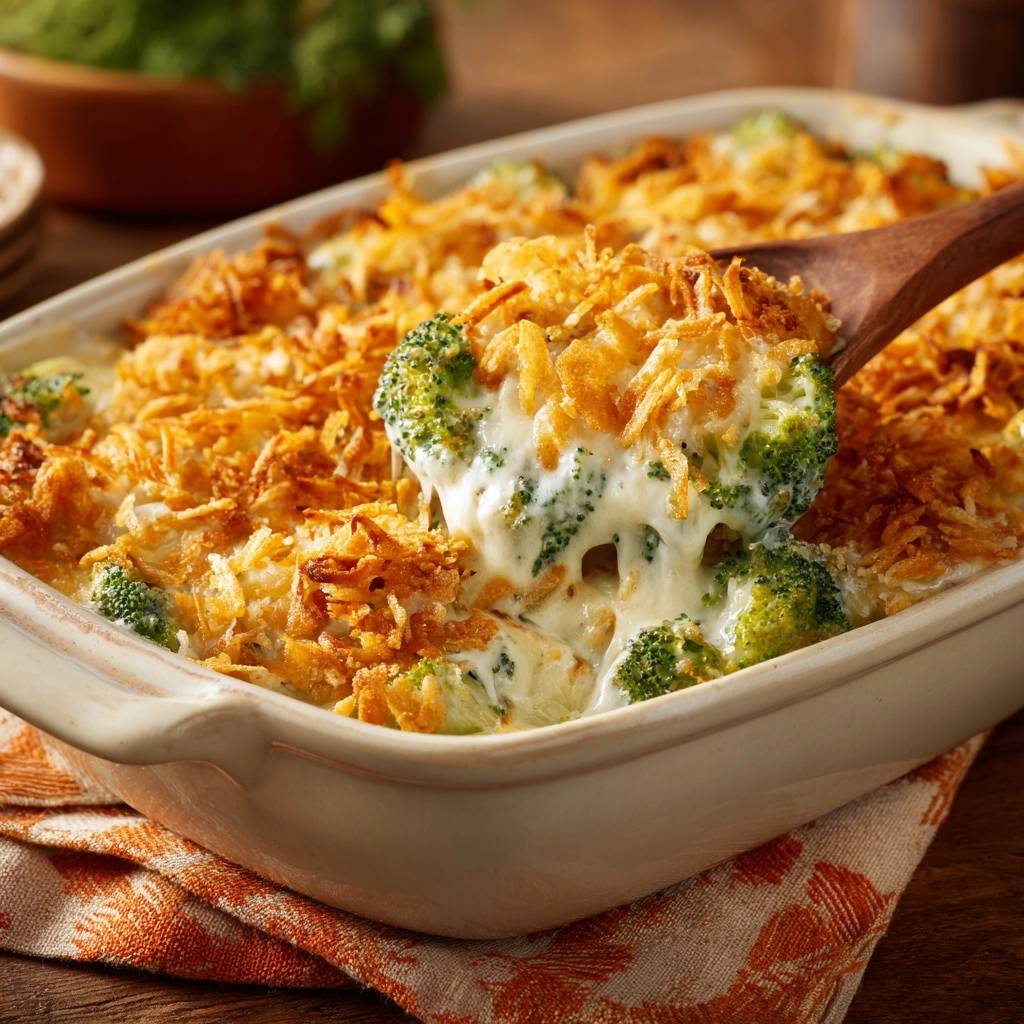
Boiled broccoli often turns into a mushy, olive-drab paste that lacks any structural integrity. However, par-roasting preserves the vibrant green chlorophyll, keeping the dish visually stunning. Because the moisture is removed early, the sauce clings to the florets instead of sliding off, ensuring every bite is perfectly seasoned.
Essential Components for the Velvety Cheese Base
The foundation of a great casserole lies in the quality of the dairy. While many recipes call for mild yellow cheddar, this version relies on sharp white cheddar for a sophisticated flavor profile. Sharp cheddar has a lower moisture content and a more intense tang, which cuts through the richness of the heavy cream beautifully.
In addition to the cheddar, cream cheese acts as a vital stabilizer. It contains emulsifiers that help the heavy cream and sour cream stay bonded together under heat. Without this structural support, the high fat content in the cream might separate, leaving you with an oily film on top of the dish.
Selecting the Best Broccoli Florets
Fresh broccoli is always the superior choice for this recipe because it maintains its cell structure better than frozen varieties. When shopping, look for tight, bluish-green crowns without any yellowing. If you must use frozen broccoli, you must thaw it completely and squeeze it in a kitchen towel to remove every drop of water before roasting.
Uniformity is your best friend in the kitchen. Therefore, you should cut your florets into consistent, bite-sized pieces. If some pieces are massive and others are tiny, the small ones will turn to mush while the large ones remain raw. Aim for pieces about one inch wide for the best mouthfeel.
The Triple-Dairy Emulsion: Cream, Sour Cream, and Cream Cheese
This recipe uses a “triple-threat” dairy approach to achieve the perfect consistency. The heavy cream provides the liquid base, while the sour cream adds a necessary acidic tang to balance the salt. The cream cheese provides the “body” or thickness that makes the sauce feel luxurious rather than thin.
Before the casserole goes into the oven, the sauce should have the consistency of a thick pancake batter. It should be glossy and smooth, with the shredded cheese evenly distributed. This ensures that as the cheese melts, it creates a cohesive web of flavor around every piece of broccoli.
Step-by-Step: Preparing the Creamy Baked Broccoli Casserole
Success with this dish depends on following the temperature changes carefully. You are moving from a high-heat moisture extraction phase to a moderate-heat melting phase. This transition is what keeps the dairy from scorching while ensuring the broccoli finishes cooking to a perfect tender-crisp state.
Phase 1: The Moisture-Extraction Roast
Start by preheating your oven to 400°F and spreading the florets on a large baking sheet. Do not crowd the pan; if the broccoli is piled on top of itself, it will steam instead of roast. You want the hot air to circulate around each piece to pull the moisture out effectively.
Watch for the visual cues after about 8 minutes. The broccoli should look bright green and slightly softened, but it should not have any dark char marks yet. If you see the tips starting to brown excessively, pull them out immediately. The goal here is dehydration, not full caramelization.
Phase 2: Building the Savory Cream Binder
While the broccoli is in its first roast, focus on the sauce. It is much easier to whisk the mixture if your cream cheese is truly softened to room temperature. If it’s too cold, you’ll end up with tiny white lumps that won’t disappear during baking.
For a similar cheesy delight, check out this cheesy hash brown casserole.
Whisk the liquids and spices first until they are completely homogenous. Only after the base is smooth should you fold in the first cup of shredded cheddar. This prevents the cheese from clumping together before it even hits the baking dish.
Phase 3: Assembly and Temperature Adjustment
Once the broccoli is out, remember to drop the oven temperature to 350°F. This lower heat allows the casserole to bubble gently without breaking the cream sauce. Transfer the warm broccoli to your 9×13 dish and pour the cream mixture over the top.
Use a large spoon to gently fold the broccoli into the sauce. You want to be careful not to break the florets, as they are more fragile after the initial roast. Ensure the sauce gets into all the nooks and crannies of the broccoli heads for maximum flavor delivery.
Engineering the Perfect Shatter-Crisp Topping
The contrast between the velvety sauce and the crunchy topping is what makes this dish addictive. By mixing crushed buttery crackers with crispy fried onions, you create a multi-dimensional texture. The crackers provide a sandy, melt-in-your-mouth crunch, while the onions offer a savory, salty snap.
Melted butter is the essential conductor here. It coats every crumb, ensuring that the heat of the oven browns the topping evenly rather than just drying it out. This creates a golden-brown crust that acts as a lid, keeping the moisture inside the broccoli while providing a loud, satisfying crunch with every forkful.
Alternative Textures: Nuts and Seeds
If you want to experiment with different textures, you can easily swap the crackers for other crunchy elements. Sliced almonds or chopped pecans add a sophisticated, earthy note that pairs beautifully with the sharp cheddar. Panko breadcrumbs are another excellent choice if you prefer a lighter, airier crunch than traditional crackers provide.
Troubleshooting Common Casserole Pitfalls
If you find that your sauce has broken or looks oily, it usually means the oven was too hot or you used low-fat dairy. Always stick to full-fat heavy cream and sour cream, as the fat content acts as a buffer against the heat. If the sauce looks thin, let the casserole sit for 10 minutes after baking; it will naturally thicken as it cools.
For broccoli that feels too firm, check your floret size. Large chunks take longer to soften than the sauce takes to bubble. If this happens, you can cover the dish with foil for the first 10 minutes of the final bake to trap steam and finish softening the vegetables before browning the topping.
Make-Ahead Strategies and Storage Logistics
You can easily prepare this dish up to 24 hours in advance, which is perfect for holiday hosting. Simply roast the broccoli and mix it with the sauce, then store it in the refrigerator in your baking dish. However, do not add the cracker topping until the very moment you are ready to put it in the oven.
To reheat leftovers, the oven is your best friend. While the microwave is faster, it will turn the cracker topping soft and chewy. Place individual portions in a small oven-safe dish at 350°F for about 10 minutes to restore the original texture of the crust and the creaminess of the sauce.
Freezing Guidelines for Long-Term Prep
Freezing cream-based casseroles can be tricky because the dairy often separates upon thawing. If you want to freeze this, it is best to freeze the par-roasted broccoli and the cheese sauce in separate airtight bags. When you are ready to eat, thaw them in the fridge, mix them together, and then add the fresh topping before baking.
Pairing Suggestions for a Balanced Table
Because this Creamy Baked Broccoli Casserole is so rich and savory, it pairs best with proteins that have a bit of acidity or brightness. A lemon-herb roasted chicken is a classic choice, as the citrus cuts through the heavy cream. Similarly, a garlic-rubbed lamb or a seared beef tenderloin provides a robust flavor that stands up to the sharp cheddar.
If you are serving this as part of a larger spread, consider adding a bright, vinegary side salad. The acidity of a balsamic vinaigrette or a lemon-dressed arugula salad cleanses the palate between bites of the decadent casserole. This balance ensures that the meal feels indulgent without becoming overwhelming.
Expert Tips for Casserole Success
Firstly, always grate your own cheese from a block. Pre-shredded cheeses are coated in potato starch or cellulose to prevent clumping in the bag, which can make your casserole sauce feel gritty or powdery. Freshly grated cheese melts into a much smoother, more luxurious emulsion.
Secondly, pay attention to your baking dish material. Glass dishes tend to hold heat longer and can brown the edges faster, while ceramic dishes provide more even heat distribution. If using glass, you might need to pull the casserole out a few minutes early to prevent the edges from becoming too dark.
Thirdly, check for doneness by looking at the bubbles. You want to see slow, thick bubbles around the edges and a few in the center. If the sauce is boiling violently, it is getting too hot and may separate. The topping should be a deep, golden brown, signaling that the butter has fully toasted the crackers and onions.
How do I store leftovers and does it freeze well?
Store any leftovers in an airtight container in the refrigerator for up to 3 to 4 days. While you can freeze the components separately, freezing the fully assembled and baked casserole is not recommended. The cream sauce often separates and becomes grainy, and the cracker topping will lose its signature crunch entirely upon thawing.
Why was my broccoli casserole watery?
The most common reason for a watery casserole is skipping the par-roasting step. Broccoli releases a significant amount of liquid as it cooks; if that liquid isn’t evaporated beforehand, it thins out the sauce. Additionally, using frozen broccoli that hasn’t been thoroughly dried or using low-fat dairy products can contribute to a runny consistency.
Can I use a different type of cheese?
Yes, you can substitute the sharp white cheddar with other melting cheeses like Gruyère, Fontina, or even a sharp yellow cheddar. However, avoid using pre-shredded blends or very hard cheeses like Parmesan as the primary base, as they won’t provide the same creamy melt. Always ensure you grate the cheese yourself for the smoothest texture.
Can I make this gluten-free?
To make this dish gluten-free, simply swap the buttery crackers for your favorite gluten-free cracker brand and ensure the crispy fried onions are labeled gluten-free. The sauce itself is naturally thickened by the cream cheese and does not require flour, making it an easy transition for those with dietary restrictions.
What if I don’t have sour cream?
If you are out of sour cream, you can substitute it with plain Greek yogurt. The yogurt provides a similar tang and thickness, though it has slightly less fat. Be careful not to overcook the casserole if using yogurt, as it can be more prone to curdling than sour cream under high heat.
How do I prevent the topping from burning?
If the topping is browning too quickly before the sauce is bubbling, loosely tent the dish with aluminum foil. This allows the interior to continue heating while shielding the crackers and onions from the direct heat of the oven’s heating element. Remove the foil for the last two minutes of baking to ensure the topping stays crisp.
Broccoli Casserole
Course: Side DishCuisine: AmericanDifficulty: easy6
servings15
minutes25
minutes340
kcal40
MinutesThis recipe solves the common problem of watery vegetable sides by roasting the broccoli first to remove excess moisture. The result is a thick, velvety casserole topped with a shatteringly crisp layer of fried onions and buttery crackers.
Ingredients
2 pounds fresh broccoli florets, cut into bite-sized pieces
1.5 cups sharp white cheddar cheese, shredded
1 cup heavy cream
4 ounces cream cheese, softened
1/2 cup sour cream
1 teaspoon garlic powder
1/2 teaspoon onion powder
1/2 teaspoon salt
1/4 teaspoon black pepper
1 cup crushed buttery crackers (like Ritz)
1/2 cup crispy fried onions
4 tablespoons unsalted butter, melted
Directions
- Preheat your oven to 400°F. This high heat is the secret to the Anti-Soggy Bottom.
- Place the raw broccoli florets on a large baking sheet. Roast them for 8 to 10 minutes without any oil or water. This crucial step “sweats” the moisture out of the broccoli so it doesn’t release into your casserole later.
- While the broccoli roasts, whisk together the heavy cream, softened cream cheese, sour cream, garlic powder, onion powder, salt, and pepper in a large bowl until smooth. Stir in 1 cup of the shredded white cheddar.
- Remove the broccoli from the oven and lower the temperature to 350°F. Transfer the par-roasted broccoli into a 9×13 inch baking dish.
- Pour the cream mixture over the broccoli and toss gently to coat every floret. Sprinkle the remaining 1/2 cup of cheddar on top.
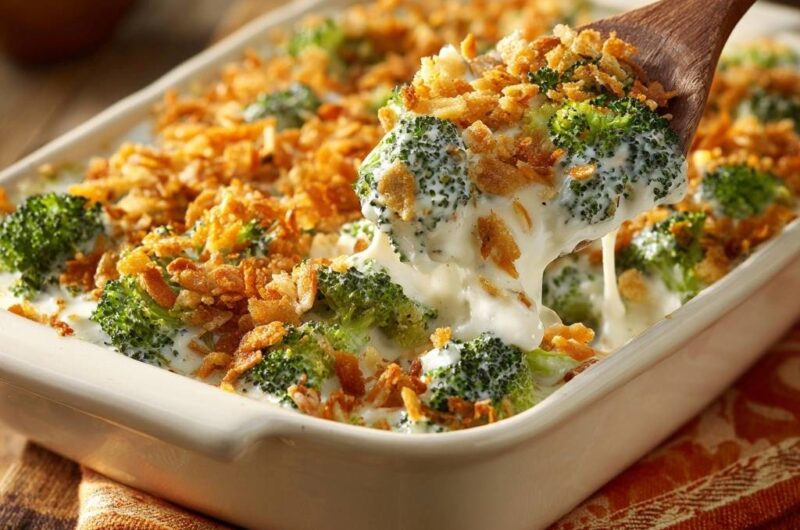
- In a small bowl, combine the crushed crackers, crispy fried onions, and melted butter. Spread this mixture evenly over the top of the casserole to achieve the textured, golden crust seen in the image.
- Bake for 15 to 20 minutes until the sauce is bubbling and the topping is deep golden brown. Serve immediately for the perfect contrast of thick, creamy sauce and crunchy topping.
Notes
- The secret to the Anti-Soggy Bottom is roasting the raw broccoli at 400 degrees Fahrenheit for 8 to 10 minutes without oil or water before assembling the casserole.