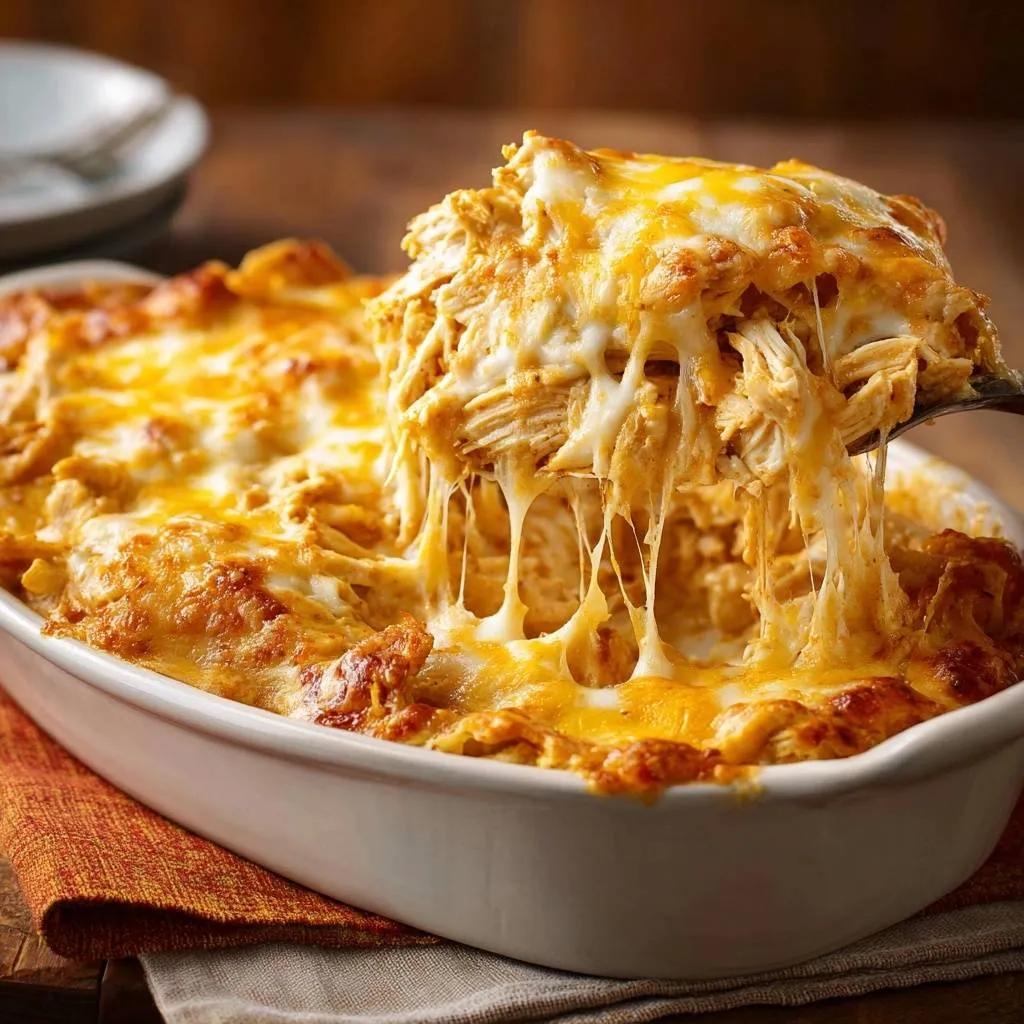
Most chicken casseroles suffer from a frustrating flaw: they hit the table sitting in a pool of orange grease or watery liquid. This Creamy Buffalo Chicken Casserole is the technical solution to that “soggy bottom” epidemic. By focusing on a stable emulsion and a specific layering technique, you get a dish that stays thick, rich, and perfectly scoopable from the first bite to the last.
The sensory appeal here is undeniable, combining the sharp tang of cayenne pepper with the cooling richness of a high-fat dairy base. It delivers all the bold flavors of your favorite game-day wings but in a format that feels like a substantial, high-protein dinner. Best of all, you can have this entire meal prepped and baked in just about 40 minutes, making it a reliable weeknight powerhouse.
The secret to the perfect texture lies in the “internal bind.” Instead of just throwing cheese on top, we fold a portion of it directly into the chicken and sauce mixture. This creates a structural matrix that grips the sauce to the protein, preventing the fats from separating and weeping into the bottom of your baking dish. It’s a small step that makes a massive difference in the final mouthfeel.
For a similar satisfying crunch, try this creamy chicken spaghetti bake.
The Science of a Non-Watery Buffalo Sauce
Understanding why casseroles turn watery is the first step to culinary success. When chicken breasts bake, the muscle fibers contract and squeeze out moisture. In a standard recipe, that water thins your sauce until it breaks, leaving you with a grainy, oily mess. To combat this, we use the physics of emulsification to create a stable environment for the meat.
The high-fat content in softened cream cheese and thick ranch dressing acts as a powerful stabilizer. These ingredients contain emulsifiers that help bond water and fat together. When you whisk these with the buffalo sauce, you’re creating a thick barrier that coats every strand of shredded chicken. This “pre-sealing” method ensures that any moisture released during the baking process stays trapped within the sauce’s structure rather than pooling at the bottom.
Furthermore, the “Anti-Soggy Bottom” theory relies on the viscosity of your binder. A thin sauce will always migrate downward due to gravity. However, by starting with a base that has the consistency of a thick dip, the sauce stays exactly where you put it. This results in a casserole that maintains its integrity even after you cut into it, providing a creamy, uniform texture throughout the entire dish.
Essential Components for the Creamy Buffalo Base
Choosing the right chicken is the foundation of this dish. While you can poach your own, rotisserie chicken is actually superior for this specific application. Because rotisserie chicken is roasted with dry heat, it has a lower moisture content than boiled or poached meat. This means it’s less likely to “weep” liquid into your sauce, and the slightly firmer texture holds up better against the heavy cream cheese base.
The hot sauce you choose provides the necessary acidity to cut through the heavy fats. A vinegar-based cayenne sauce, like Frank’s RedHot, is the gold standard here. The vinegar doesn’t just add flavor; it helps balance the richness of the ranch and cream cheese, ensuring the dish doesn’t feel overly cloying on the palate. It provides that signature “zip” that defines the buffalo profile.
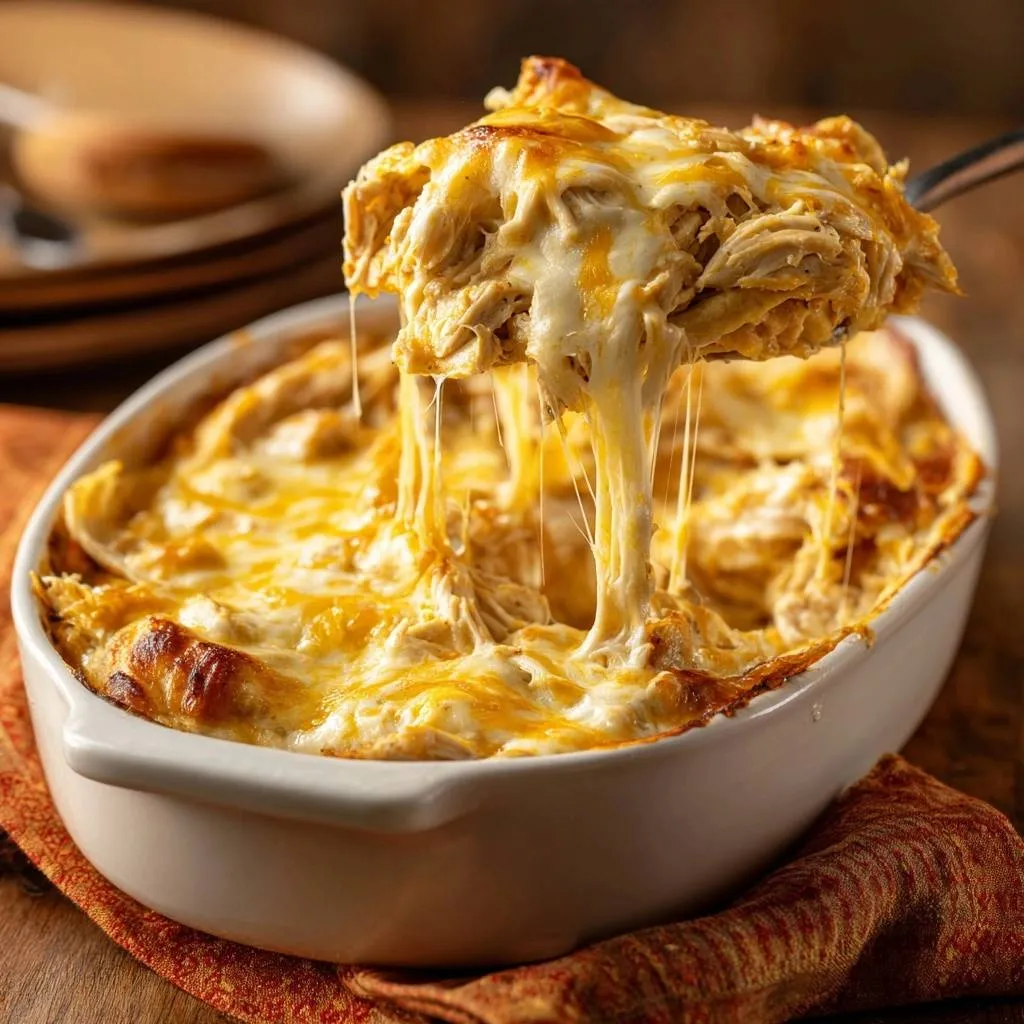
Cheese selection is equally strategic. We use a blend of sharp cheddar and mozzarella for a specific reason. Sharp cheddar provides the punchy, salty flavor that stands up to the heat of the buffalo sauce. Mozzarella, on the other hand, is included for its superior melting capabilities and “cheese pull.” It acts as a moisture barrier on top, sealing the steam inside the chicken mixture while it bakes.
For a similar cheesy chicken experience, explore this cheesy butternut squash chicken pasta bake.
Finally, we rely on garlic and onion powder rather than fresh aromatics. While fresh garlic is great in many dishes, it can release additional water and create a gritty texture in a smooth emulsion like this. Using powders ensures the flavor is distributed evenly throughout every square inch of the casserole without compromising the silky consistency of the sauce.
Step-by-Step: Building the Perfect Emulsion
Phase one of this recipe is the cold emulsion. You must start with cream cheese that is truly at room temperature. If the cheese is even slightly cold, it will “bead” when you add the buffalo sauce, resulting in small, unappealing white lumps. Use a whisk or a hand mixer to beat the cream cheese, ranch, and spices until the mixture looks like a smooth, pale-orange frosting.
Phase two involves the internal bind. Once your sauce is perfectly smooth, fold in your shredded chicken along with one-third of your total cheese. This is a critical technical step. By incorporating cheese into the chicken mixture itself, you are creating a structural web. As the casserole heats up, this internal cheese melts and thickens the sauce further, ensuring it clings to the chicken rather than sliding off.
Phase three is compaction. When you transfer the mixture to your 9×13 inch dish, don’t just spread it around loosely. Use a sturdy spatula to press the mixture down firmly into the corners. This eliminates air pockets that can cause uneven heating or “hot spots” where the sauce might break. A compacted base ensures that the heat travels through the dish evenly, resulting in a consistent temperature from the edges to the center.
Achieving the Golden-Brown Cheese Seal
When you apply the final layer of cheese, use the “edge-to-edge” method. Make sure the shredded cheddar and mozzarella touch the very sides of your ceramic or glass dish. This creates a functional steam-lock. By sealing the edges, you prevent the moisture in the sauce from evaporating too quickly, which keeps the chicken incredibly tender while the top browns.
To get that professional, bubbly crust, the broiler is your best friend. After the initial 20-minute bake, the cheese should be melted but might still look pale. Switch your oven to the broil setting for the last 2 to 3 minutes. Stay right there and watch it! The Maillard reaction happens fast, and you want a deep golden-brown color without scorching the delicate milk solids in the cheese.
The most difficult part of this recipe is the 10-minute rest after it leaves the oven. This is not just a suggestion; it is a functional part of the cooking process. During this time, carry-over cooking finishes the center of the dish, and the fats begin to re-bind as the temperature drops slightly. If you scoop into it immediately, the sauce will be runny. If you wait, it will be perfectly set and creamy.
Make-Ahead Strategies and Storage Logistics
This casserole is a dream for meal prep. You can assemble the entire dish up to 24 hours in advance. Simply cover it tightly with foil and keep it in the refrigerator. Because we use a thick emulsion, the chicken won’t soak up all the sauce and become mushy. When you’re ready to eat, just add about 5 minutes to the baking time to account for the cold dish.
Freezing requires a bit more care. You can freeze the unbaked casserole for up to three months. However, dairy-heavy sauces can sometimes become slightly grainy after freezing. To prevent this, always use the “slow thaw” method. Move the dish from the freezer to the fridge 24 hours before you plan to bake it. This slow temperature change helps the emulsion stay intact.
When it comes to leftovers, the microwave is often the enemy of cheese-heavy dishes because it can cause the oils to separate. For the best results, reheat individual portions in the oven at 350°F. This helps revive the crispy texture of the cheese topping. If you must use a microwave, use 50% power and stir halfway through to keep the sauce creamy.
Optimal Pairings for Spicy Chicken Dishes
Since this dish is rich and spicy, you want sides that offer a cooling contrast. A crisp celery and carrot slaw tossed in a light lime vinaigrette is a fantastic choice. The crunch of the raw vegetables provides a necessary textural break from the creamy casserole, while the lime juice helps cleanse the palate between spicy bites.
If you are looking for a low-carb pairing, cauliflower rice is an excellent vehicle for soaking up any extra buffalo sauce. Alternatively, roasted root vegetables like carrots or parsnips offer a natural sweetness that balances the heat of the cayenne. Their earthy flavors ground the brightness of the buffalo sauce beautifully.
For those who aren’t counting carbs, a crusty, yeast-free flatbread or even simple toasted baguette slices are ideal. You’ll want something sturdy to scoop up every last bit of the sauce. The bread acts as a neutral base that lets the bold flavors of the sharp cheddar and buffalo sauce take center stage.
What Else to Try
If you enjoyed this creamy buffalo chicken casserole, consider these other satisfying dishes.
- For a different take on comfort food, explore the Zesty Cheeseburger Pasta Salad, which offers a familiar yet fresh flavor experience.
- To complement your casserole with some fresh baking, try the Cheddar Chive Bread, a simple loaf perfect for soaking up any extra sauce.
Troubleshooting Common Casserole Failures
If you find that your sauce has separated into a layer of oil, it usually means the oven was too hot or the dish baked for too long. High heat can break the emulsion. If this happens, give the casserole a gentle stir after the resting period; often, the sauce will come back together as it cools slightly and the proteins re-absorb the fats.
Dry chicken is usually a result of the shred size. If you shred the chicken into tiny, hair-like strands, they will overcook and lose their texture. Aim for “chunky shreds” about the size of a bite-sized piece of pasta. This ensures the meat stays juicy and provides a satisfying chew that stands up to the heavy sauce.
If the dish tastes too salty, it’s likely because the rotisserie chicken was heavily seasoned. You can balance this by adding a little extra cream cheese or a splash of heavy cream to the base next time. Also, ensure you are using “buffalo style” sauce rather than straight hot sauce, as the former usually has a more balanced sodium profile.
Lastly, if the top is burnt but the middle is cold, your oven rack is likely too high. Position your rack in the center of the oven for the main bake. Glass dishes also hold heat differently than ceramic; glass heats up faster and stays hot longer, so keep a close eye on the edges if you aren’t using a ceramic casserole dish.
Frequently Asked Questions
Can I use Greek yogurt instead of ranch dressing for a lighter version?
You can, but there is a significant risk of curdling. Greek yogurt has a much lower fat content and a different protein structure than ranch dressing. If you choose to use it, do not let the oven exceed 350°F, and be aware that the sauce will be much tangier and slightly thinner. The high heat of a 375°F oven often causes the yogurt to separate into whey and solids.
What is the best substitute for sharp cheddar?
If you want to maintain the flavor profile, Pepper Jack is an excellent substitute. It melts beautifully and adds an extra kick of heat. If you want something milder, Monterey Jack or Colby are great options. Avoid pre-shredded “taco blends” if possible, as the anti-caking agents used in those packages can prevent the cheese from melting into a smooth, cohesive layer.
How do I increase the heat level without thinning the sauce?
Adding more liquid buffalo sauce can throw off the moisture balance and lead to a watery casserole. Instead, increase the heat by adding a teaspoon of red pepper flakes or a half-teaspoon of cayenne powder to the cream cheese mixture. This boosts the spice level significantly without changing the viscosity of your emulsion, keeping the texture perfectly creamy.
Can I add pasta or rice directly into this mixture?
Adding starches directly requires more liquid, as pasta and rice will absorb moisture as they bake. If you want to add 2 cups of cooked pasta, you should increase the ranch dressing by 1/4 cup and add an extra 4 ounces of cream cheese. This ensures there is enough “loose” sauce to coat the starches without leaving the chicken dry or the overall dish too thick.
Buffalo Chicken Casserole
Course: Main CourseCuisine: AmericanDifficulty: easy6
servings15
minutes25
minutes440
kcal40
MinutesThis recipe solves the common frustration of watery casseroles by using a specific layering technique. By pre-sealing shredded chicken in a thick, emulsified sauce and incorporating a secondary cheese bind, the dish remains creamy and rich rather than greasy.
Ingredients
4 cups cooked chicken breast, shredded (rotisserie works best)
3/4 cup buffalo style hot sauce (e.g., Frank’s RedHot)
8 ounces cream cheese, softened to room temperature
1/2 cup thick ranch dressing
1 teaspoon garlic powder
1/2 teaspoon onion powder
1 1/2 cups shredded sharp cheddar cheese, divided
1 1/2 cups shredded mozzarella cheese, divided
1/2 cup sliced green onions (optional garnish)
Directions
- Preheat your oven to 375°F (190°C). Lightly grease a 9×13 inch baking dish or a deep oval casserole dish.
- In a large mixing bowl, combine the softened cream cheese, buffalo sauce, ranch dressing, garlic powder, and onion powder. Use a whisk or hand mixer to blend until the mixture is completely smooth and emulsified. This thick, high-fat base is the secret to preventing a watery casserole.
- Fold the shredded chicken into the sauce. Add 1/2 cup of the cheddar and 1/2 cup of the mozzarella directly into the chicken mixture. This internal cheese bind helps hold the sauce to the meat as it heats.
- Spread the chicken mixture evenly into the prepared baking dish. Press down slightly with a spatula to remove air pockets.
- Top with the remaining 1 cup of cheddar and 1 cup of mozzarella. Ensure the cheese reaches the very edges of the dish to create a seal.
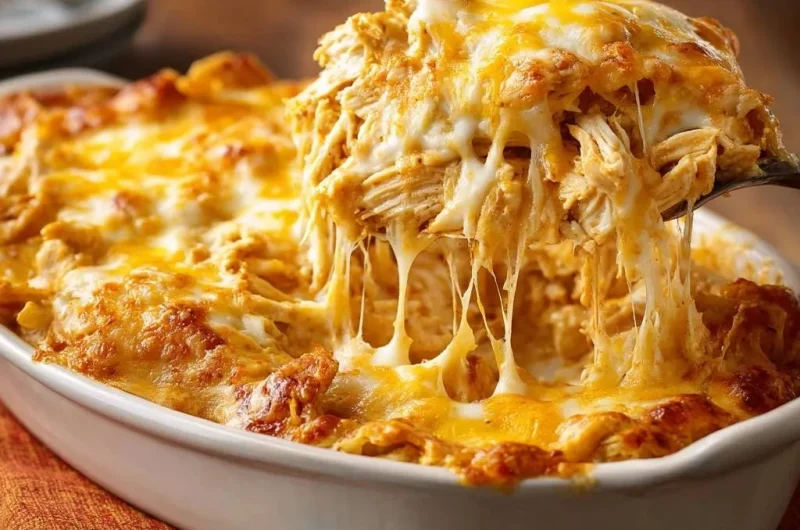
- Bake for 20 to 25 minutes. For the specific golden-brown, bubbly crust shown in the image, turn the broiler on for the final 2-3 minutes of cooking, watching closely to prevent burning.
- CRITICAL STEP: Let the dish rest for 10 minutes before serving. This resting period allows the proteins and fats to re-bind and the sauce to set properly, ensuring the perfect, non-runny texture seen in the photo.
- Garnish with green onions if desired and serve.
Notes
- Let the dish rest for 10 minutes before serving to allow the proteins and fats to re-bind and the sauce to set properly.