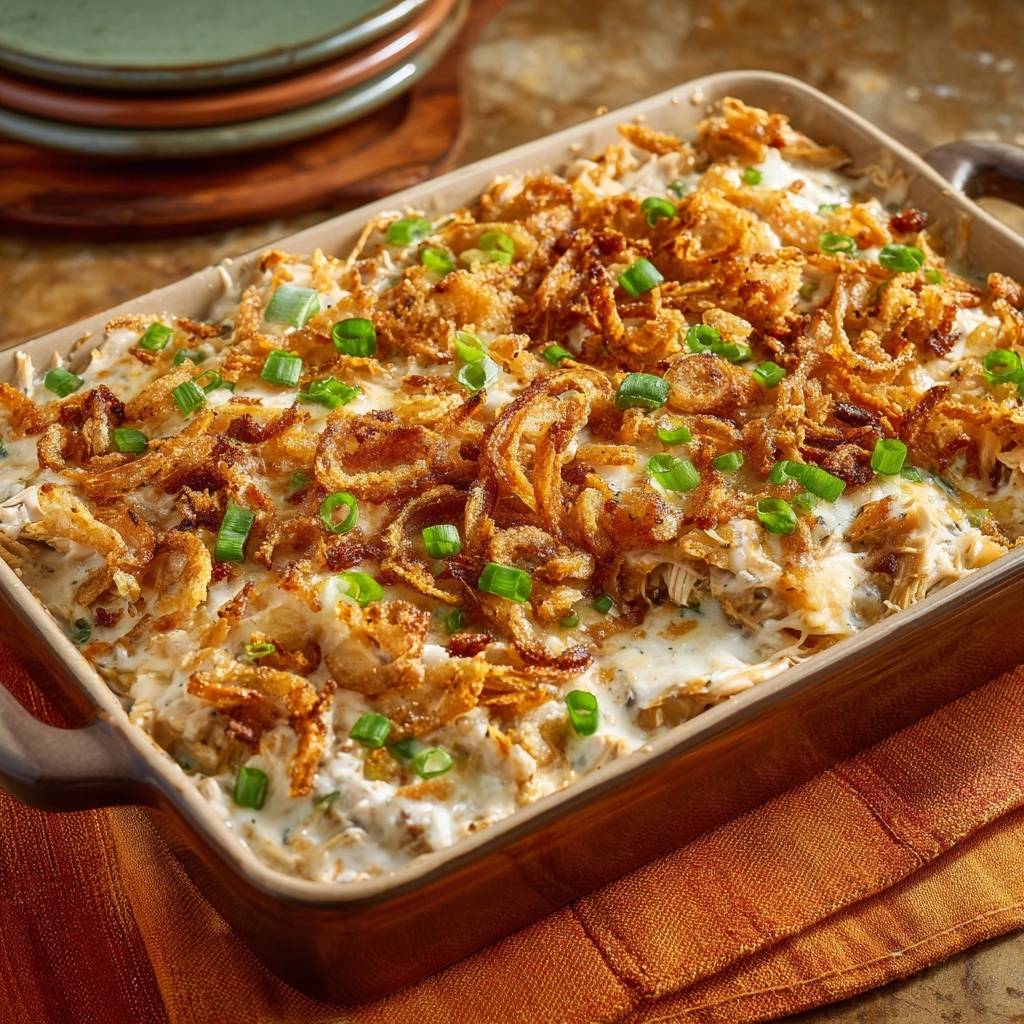
Most casseroles suffer from a tragic flaw: the dreaded soggy topping. You’ve likely experienced it before, where those promisingly crunchy onions turn into a limp, oil-soaked disappointment within minutes of hitting the oven. It’s a common moisture trap that ruins the beautiful contrast between a rich filling and a crisp crust.
This Creamy French Onion Chicken Casserole changes the game by focusing on textural integrity. We’re aiming for a velvet-like Gruyere sauce that hugs the chicken, topped with onions that stay shatteringly crisp until the very last bite. By adjusting how we layer and time the bake, we can finally say goodbye to mushy textures forever.
The secret lies in a specific two-stage baking method and a “fat barrier” technique. I’ve found that heating the base separately allows steam to escape before the topping ever touches the dish. This professional approach ensures your dinner has the same high-quality finish you’d expect from a bistro, right in your own kitchen.
Essential Components for the French Onion Base
The foundation of this dish relies on a balance of salt, fat, and acidity. Condensed cream of mushroom soup acts as our heavy lifter here, providing a concentrated savory base and the necessary thickening power to hold the chicken together. It’s a pantry staple that ensures the sauce doesn’t break or become watery under high heat.
To brighten the richness of the soup, we use full-fat sour cream. The acidity in the sour cream cuts through the heavy dairy, while the high fat content provides stability. If you use a low-fat version, the sauce is much more likely to curdle or thin out, so stick to the good stuff for that luscious mouthfeel.
For the seasoning, dried thyme is actually superior to fresh in this specific application. Dried herbs have a concentrated, earthy punch that stands up well to the long baking time. While fresh herbs can sometimes turn bitter or disappear in a heavy sauce, dried thyme blooms in the oven, infusing the entire casserole with that classic French onion aroma.
Selecting the Best Cheese for Melting
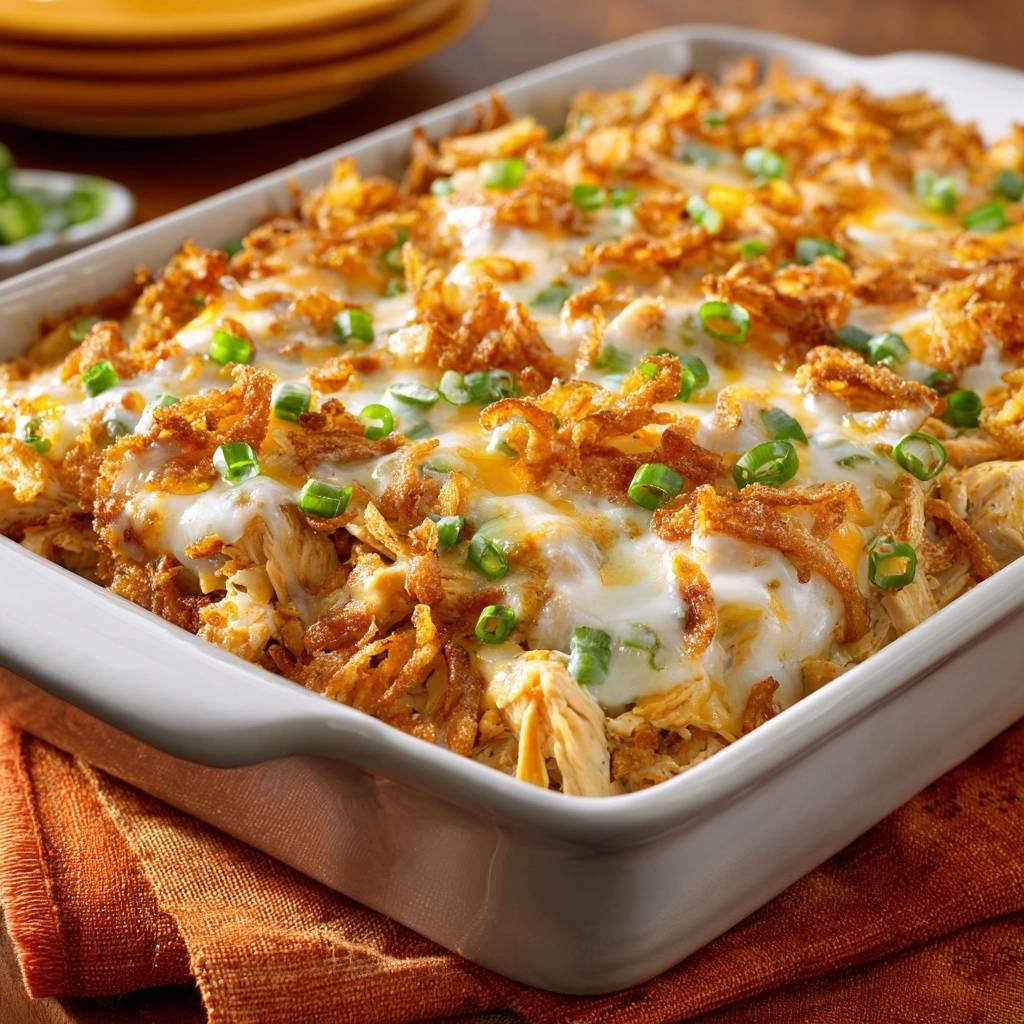
While you can use Swiss cheese for a mild, sweet profile, Gruyere is the gold standard for this recipe. Gruyere is a Swiss-style cheese that’s aged longer, giving it a complex, nutty flavor and incredible melting properties. It creates a smooth, stretchy consistency that pairs perfectly with the savory chicken.
Regardless of which you choose, you must grate the cheese yourself. Pre-shredded bags are coated in potato starch or cellulose to prevent clumping, but those additives also prevent the cheese from melting into a cohesive “seal.” Freshly grated cheese melts into a fluid layer that’s essential for our anti-soggy strategy.
The Role of Pre-Cooked Shredded Chicken
Using pre-cooked chicken, like a rotisserie chicken or poached breasts, isn’t just a time-saver; it’s a structural necessity. Raw chicken releases a significant amount of liquid, known as “purge,” as it cooks. In a casserole, that liquid has nowhere to go but into your sauce, making it runny and steaming your topping from underneath.
By starting with cooked protein, you control the moisture levels from the start. The chicken stays juicy by soaking up the cream sauce rather than leaking water into it. This ensures the final result is thick, creamy, and stable enough to support the heavy layer of fried onions we’ll add later.
The Science of the Anti-Soggy Topping Hack
To understand why this recipe works, we have to look at the thermodynamics of a standard bake. In most recipes, you throw everything in at once. As the sauce bubbles, it releases steam. That steam travels upward, gets trapped under the onion topping, and turns your crispy garnish into a sponge. It’s a losing battle against physics.
Our two-stage baking process solves this by reducing “water activity” in the sauce first. During the initial 15-minute bake, the sauce reaches a simmer and releases its initial burst of steam. By the time we’re ready for the topping, the sauce has thickened and stabilized, meaning there’s less moisture looking to escape through the crust.
Then comes the “Cheese Barrier” concept. Before the onions go on, we apply a fresh layer of shredded cheese over the hot chicken base. This cheese melts almost instantly, creating a hydrophobic shield. Because oil and water don’t mix, this layer of melted cheese fat acts as a waterproof membrane, preventing any remaining steam from migrating into the fried onions.
Finally, the second blast in the oven is short and intense. We only need 8 to 10 minutes to toast the onions and finish melting the cheese. This isn’t enough time for the onions to absorb moisture, but it’s just enough to give them a fresh, toasted crunch. The result is a distinct separation of textures that stays crispy even as the dish sits on the table.
Step-by-Step: Preparing the Creamy Chicken Foundation
Start by whisking your soup, sour cream, milk, and spices in a large bowl. You want to be vigorous here until the mixture is completely homogenous and smooth. If you see lumps of sour cream, keep whisking, as those can create pockets of uneven texture once the cheese starts to melt.
Once the sauce is smooth, gently fold in your shredded chicken and the first cup of cheese. Use a spatula to ensure every strand of chicken is well-coated. When you transfer it to the baking dish, spread it out firmly into the corners to create an even surface for the topping to rest on later.
Executing the Two-Stage Baking Technique
Preheat your oven to 375°F, which is the sweet spot for casseroles. It’s hot enough to get the sauce bubbling and the edges slightly caramelized without scorching the dairy. Slide the chicken base in for its solo 15-minute bake. You’ll know it’s ready when the edges are starting to show tiny bubbles.
Pull the dish out and work quickly. Sprinkle that second cup of cheese evenly across the top. You’ll see it start to glisten and melt immediately. Pile the crispy onions on top of that melted cheese. Don’t be shy; a thick, even layer ensures that the “seal” is fully covered and protected from the direct heat of the oven.
Avoiding Common Casserole Mistakes
If your sauce looks too thick before it goes into the oven, don’t hesitate to add an extra splash of milk. It should be the consistency of a thick pancake batter. Conversely, if it looks a bit thin after the first 15 minutes, give it another 5 minutes of bake time to reduce before you add the cheese and onions.
Watch the clock during the final stage. Fried onions have a high oil content and can go from perfectly toasted to burnt and bitter in a matter of sixty seconds. As soon as you smell that toasted onion aroma and see the edges turning a deep golden brown, get that dish out of the oven immediately.
Flavor Variations and Ingredient Swaps
If you want to add more depth, try folding in some caramelized onions or sautéed leeks directly into the chicken mixture. This doubles down on the “French Onion” profile and adds a natural sweetness that balances the salty soup. It’s a simple way to make the dish feel even more gourmet.
For perfectly tender pearl onions to complement this dish, check out this glossy honey-glazed pearl onions trick.
For those who prefer to avoid processed ingredients, you can swap the canned soup for a homemade mushroom velouté. Simply make a roux with butter and flour, whisk in chicken stock and sautéed mushrooms, and simmer until thick. It takes a bit more effort but offers a cleaner, more sophisticated flavor profile.
Optimal Side Dish Pairings
Since this casserole is incredibly rich and savory, you want side dishes that provide a sharp contrast. A simple arugula salad tossed in a bright lemon vinaigrette is my favorite pairing. The peppery greens and hit of acid cut right through the heavy Gruyere and cream sauce.
Roasted balsamic Brussels sprouts or steamed haricots verts with plenty of garlic also work beautifully. You’re looking for something with a bit of “snap” or bitterness to balance the soft, creamy texture of the main event. Avoid heavy starches like mashed potatoes, as the casserole is already quite filling on its own.
Make-Ahead Instructions and Storage Logistics
You can easily prep the chicken and sauce mixture up to 24 hours in advance. Store it in the greased baking dish, covered tightly with foil in the fridge. When you’re ready to eat, let it sit on the counter for 20 minutes to take the chill off before starting the first stage of the baking process.
Whatever you do, do not add the onions until the very last 10 minutes of the actual bake. If you store the casserole with the onions on top, they will inevitably turn to mush in the refrigerator. For leftovers, the oven or an air fryer is your best friend. A microwave will kill the crunch, but a quick 5-minute blast at 350°F in the oven will revive those onions beautifully.
Expert Troubleshooting and FAQ
Can I use Greek yogurt instead of sour cream?
You can, but be careful. Greek yogurt is much leaner than sour cream and is prone to curdling at high temperatures. If you make this swap, use full-fat Greek yogurt and ensure the oven doesn’t exceed 375°F. The flavor will be tangier, which some people actually prefer.
Why did my cheese separate or become oily?
Cheese usually separates when it’s heated too quickly or if you’re using pre-shredded varieties with fillers. If the oven is too hot, the fat will break away from the milk solids. Stick to 375°F and always grate your cheese fresh from the block for the smoothest melt.
Can I use raw chicken in this recipe?
I strongly advise against it. Raw chicken will release a lot of water as it cooks, which will thin out your sauce and create steam. This steam will rise and make your onion topping soggy, defeating the entire purpose of the two-stage baking method. Always use pre-cooked chicken.
How do I double the recipe for a crowd?
You can easily double the ingredients and use two 9×13 inch pans. I don’t recommend using one giant deep pan, as the center may not heat through properly before the edges burn. If you bake two pans at once, rotate them halfway through the first 15-minute bake to ensure even heating.
Can I freeze this casserole?
You can freeze the chicken and sauce base, but the texture of the dairy may change slightly upon thawing. If you freeze it, do so without the cheese topping or onions. Thaw it completely in the fridge before baking, and follow the two-stage baking instructions as if it were fresh. Do not freeze the fried onions, as they will lose their texture.
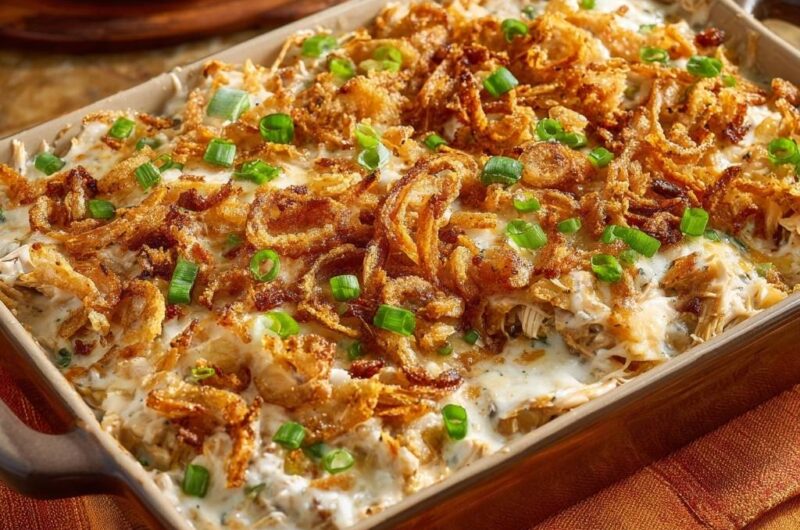
Creamy French Onion Chicken Casserole
Course: Main CourseCuisine: AmericanDifficulty: easy6
servings15
minutes25
minutes410
kcal40
MinutesThis recipe solves the problem of soggy casserole toppings by using a specific baking method. By heating the chicken base first and creating a cheese seal, the crispy onions stay crunchy while the Swiss cheese and mushroom sauce create a decadent meal.
Ingredients
4 cups shredded cooked chicken breast
10.5 ounces condensed cream of mushroom soup
1 cup sour cream
1/2 cup milk
1 teaspoon garlic powder
1/2 teaspoon black pepper
1/2 teaspoon dried thyme
2 cups shredded Swiss or Gruyere cheese
6 ounces crispy fried onions
1/4 cup chopped green onions
Directions
- Preheat your oven to 375 degrees F. Lightly grease a 9×13 inch baking dish.
- In a large mixing bowl, whisk together the condensed soup, sour cream, milk, garlic powder, black pepper, and dried thyme until completely smooth.
- Fold the shredded chicken and 1 cup of the shredded cheese into the sauce. Spread the mixture evenly into the prepared baking dish.
- Bake the chicken base alone for 15 minutes. This is the secret step: heating the base first allows excess moisture to evaporate so it does not steam the topping later.
- Remove the dish from the oven. Sprinkle the remaining 1 cup of cheese over the hot chicken. This creates a “cheese seal” that prevents the sauce from soaking into the onions.
- Pile the crispy fried onions on top in an even layer, ensuring they cover the cheese.
- Return to the oven for only 8 to 10 minutes. This short second blast of heat melts the cheese to act as a moisture barrier while toasting the onions without letting them absorb the liquid from the sauce.
- Remove from the oven and garnish with fresh green onions. Serve immediately to enjoy the ultimate contrast between the creamy center and the crunchy topping.
Notes
- The two-stage baking method and the cheese seal are essential to prevent the fried onions from becoming soggy.