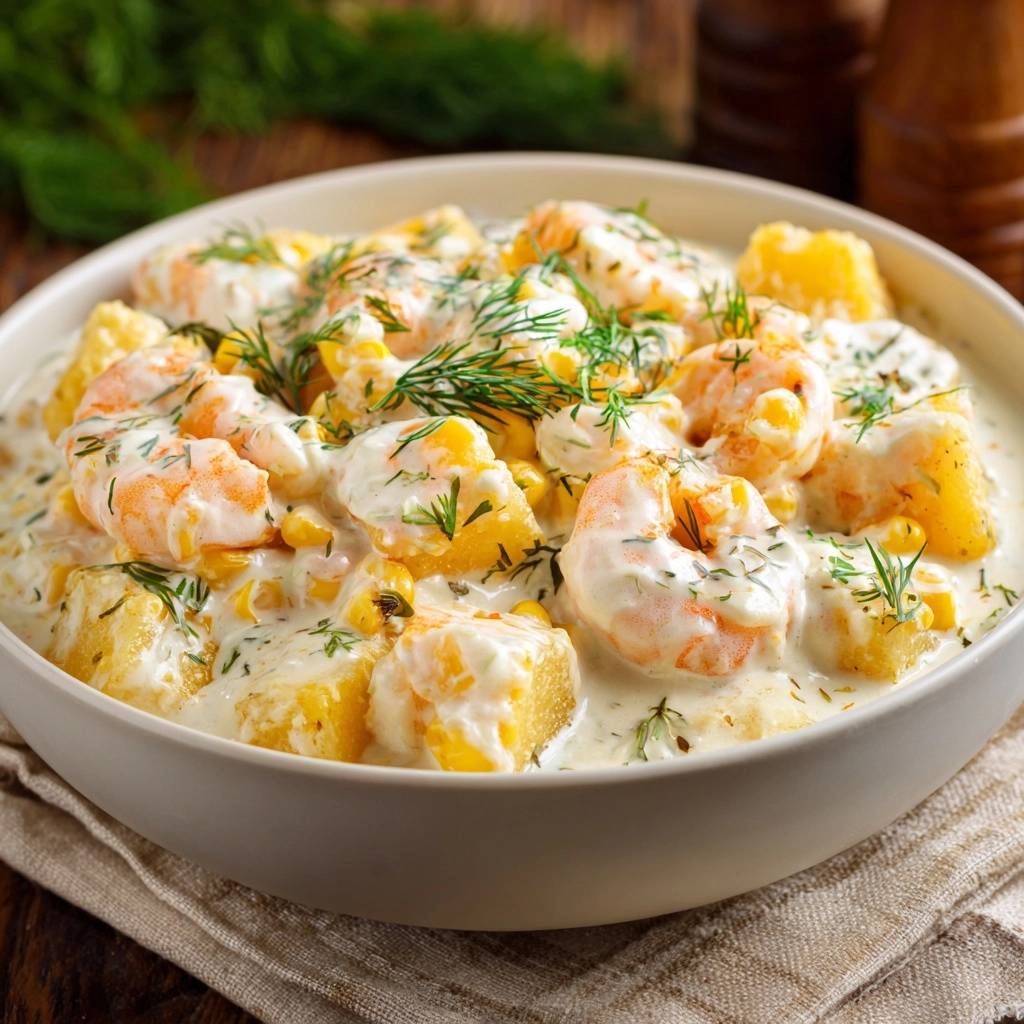
Nothing ruins a cozy dinner faster than a cream sauce that looks more like a puddle of water than a velvety glaze. You’ve likely been there before: you follow a recipe perfectly, but the moment the potatoes hit the pan, the sauce breaks into an oily, unappealing mess. It’s a common frustration that keeps many home cooks from attempting seafood cream dishes at home.
The secret to a restaurant-quality Creamy Garlic Shrimp and Potato Bowl lies in the specific starch-to-fat ratio. By using a light flour binder and controlling the moisture of your vegetables, you create a sauce that clings to every curve of the shrimp and every edge of the potato. The result is a luxurious, stable emulsion that stays thick from the first bite to the last.
I’ve found that the real trick is all about the “steam-dry” method for your potatoes. If you toss wet potatoes into a hot cream sauce, you’re essentially diluting your hard work with potato water. Taking just two minutes to let that moisture evaporate ensures your sauce stays rich and glossy rather than turning into a thin soup.
For achieving truly tender, juicy results with your garlic shrimp, consider these searing tips.
The Science of a Non-Watery Cream Sauce
Creating a stable cream sauce is more about chemistry than luck. Dairy is a delicate balance of water, fat, and protein. When you introduce high heat or acidic ingredients like certain broths, those proteins can tighten and clump, causing the fat to separate. This is what we call a “broken” sauce, and it’s the primary reason homemade cream dishes often feel greasy.
To prevent this, we use an all-purpose flour binder to create a light roux. The flour particles act as a physical barrier, surrounding the fat droplets and preventing them from merging back together. When you whisk this roux into your chicken broth and heavy cream, you’re building a stable molecular bond that can withstand the heat of the skillet without splitting.
Furthermore, the potatoes themselves play a role in the sauce’s structural integrity. By steam-drying the gold potatoes after boiling, you remove the surface water that would otherwise leach into the cream. Instead, the exterior starch of the dry potato actually helps thicken the sauce further during the final toss, acting as a secondary emulsifier for a perfectly cohesive dish.

Essential Components for the Garlic Shrimp Bowl
Quality ingredients are the backbone of this dish, starting with the shrimp. I always recommend large shrimp, specifically a 16/20 count, because they offer a satisfying “snap” when bitten. Ensure they are peeled and deveined before you start; this isn’t just for aesthetics, but to ensure the texture remains consistent and free of grit.
When it comes to the potatoes, Yukon Golds are the undisputed champions for this bowl. Unlike Russets, which are mealy and prone to falling apart, gold potatoes have a waxy texture and a natural buttery flavor. They hold their cubed shape beautifully even after being tossed in a heavy sauce, providing a creamy mouthfeel that mimics the richness of the dairy.
Aromatics and herbs provide the necessary high notes to cut through the fat. Fresh garlic is non-negotiable here; the pre-minced stuff in jars often has a metallic aftertaste that can overwhelm the delicate cream. Similarly, fresh dill brings a bright, grassy finish that parsley simply can’t match. It lifts the entire flavor profile and pairs perfectly with the sweetness of the corn.
Finally, pay attention to your dairy. Using room-temperature heavy cream is a small step that makes a massive difference. Cold cream hitting a hot pan can cause thermal shock, leading to instant curdling. By letting the cream sit on the counter for a few minutes while you prep, you ensure a smooth, seamless transition into the roux.
Phase One: Preparing the Potato Base
Most people make the mistake of dropping potatoes into already boiling water. This causes the outside to overcook and turn mushy before the center is even warm. Instead, always start your cubed potatoes in a pot of cold, salted water. This allows the temperature of the potato to rise gradually with the water, ensuring an even cook from edge to center.
You are looking for “fork-tender” results, which usually takes about 8 to 10 minutes once the water reaches a boil. The potatoes should be soft enough to pierce easily but firm enough that they don’t crumble. Once you drain them, don’t rush them back into the pan. Let them sit in the colander for at least two minutes. You’ll see steam rising off them; that’s the excess moisture leaving the building.
Phase Two: Searing Shrimp for Maximum Texture
To get that beautiful golden color on your shrimp, you need to trigger the Maillard reaction. This won’t happen if your shrimp are wet. Use paper towels to pat the shrimp bone-dry before they ever touch the oil. If they’re damp, they will steam in the pan rather than sear, resulting in a rubbery texture and a grey appearance.
Heat your olive oil until it’s shimmering, then add the shrimp in a single layer. Sear them for exactly 60 seconds per side. They should be just turning pink and opaque. Don’t worry if they don’t feel “done” all the way through yet. We remove them from the pan immediately to prevent overcooking, as they will finish gently in the residual heat of the sauce later.
Phase Three: Building the Garlic Roux Binder
This is the technical heart of the recipe. After removing the shrimp, lower your heat to medium and melt the butter. Add your minced garlic, but keep it moving. You want it to become fragrant and soft, not brown or crispy. Burnt garlic will turn the entire cream sauce bitter, so stay vigilant during these 30 seconds.
Once the garlic is ready, sprinkle the tablespoon of flour over the butter. This is the “Whisking Minute.” You need to cook this paste for about 60 seconds to remove the raw flour taste. It will look like a thick, bubbling paste. Slowly whisk in the chicken broth, and you’ll see it transform from a clump into a smooth, slightly thickened liquid that serves as the foundation for your cream.
Phase Four: Emulsifying the Heavy Cream Sauce
Now, pour in your room-temperature heavy cream and onion powder. The key here is a gentle simmer. Never let a cream sauce reach a rolling boil, as the intense agitation and heat can cause the proteins to curdle. Keep the heat at medium-low and whisk constantly. You are looking for the sauce to “coat the back of a spoon.”
This means when you dip a spoon into the sauce and run your finger through the coating, the line should stay clean and sharp. During these 3 to 5 minutes of simmering, the onion powder and dried thyme are infusing their flavors directly into the fat of the cream. This creates a deep, layered savory profile that tastes like it’s been simmering for hours.
Phase Five: The Final Assembly and Emulsion
The final step is the “marriage” of all your components. Add the corn, the steam-dried potatoes, and the seared shrimp back into the skillet. Use a gentle folding motion rather than aggressive stirring. You want to coat everything in the sauce without breaking the potato cubes or tearing the tender shrimp.
As the potatoes sit in the sauce for those final two minutes, their surface starch acts as a secondary thickener. This creates a glossy, thick coating that looks like velvet. The shrimp will finish cooking through perfectly in this gentle heat. Once the sauce is bubbling slightly and everything is hot, remove it from the heat and shower it with that fresh dill.
Troubleshooting Common Cream Sauce Errors
If your sauce becomes too thick before you’ve even added the potatoes, don’t panic. Simply whisk in a tablespoon of chicken broth at a time until it reaches your desired consistency. The starch in the flour can sometimes be more efficient than expected, but a little extra liquid will loosen it right back up without breaking the emulsion.
If you notice the sauce looks oily or “split,” it usually means the heat was too high. You can often fix this by removing the pan from the heat and whisking in a teaspoon of room-temperature cream very vigorously. This can help re-emulsify the fats. To avoid rubbery shrimp, always pull the pan off the burner the second the shrimp are opaque; they continue to cook for several minutes even after the heat is off.
Flavor Variations and Ingredient Swaps
While corn adds a lovely sweetness, you can easily swap it for other vegetables. Blanched asparagus tips or frozen peas work beautifully in this creamy base. If you want a bit of heat, adding a pinch of red pepper flakes to the butter while sautéing the garlic creates a “Spicy Garlic” version that cuts through the richness of the heavy cream.
Round Out Your Meal
Consider these dishes to complement your creamy garlic shrimp and potatoes.
- For a lighter option with similar herb notes, try the garlic herb grilled chicken salad.
- If you enjoy comforting, savory flavors, the golden cornbread and herb stuffing would be a wonderful addition.
For those looking for dairy-free options, this specific roux-based method is tricky. Coconut milk can work, but it will significantly change the flavor profile. Cashew cream is a better substitute for the heavy cream as it has a high fat content and natural starch that helps maintain the emulsion. However, the traditional heavy cream and butter combo provides the most authentic “bistro” experience.
Optimal Side Dishes and Serving Suggestions
Because this dish is incredibly rich and savory, it pairs best with sides that offer high acidity. A simple arugula salad dressed with plenty of fresh lemon juice and a pinch of salt is the perfect palate cleanser. The peppery bite of the greens cuts right through the garlic cream, making every bite of the bowl feel fresh.
For a bright, zesty counterpoint to this dish, check out our lemon garlic shrimp orzo.
You will definitely want a vessel to soak up every last drop of that sauce. A thick slice of toasted sourdough or a crusty baguette is ideal. The tanginess of sourdough specifically complements the sweetness of the shrimp and corn. Serve the bowl immediately while the sauce is at its peak glossiness for the best experience.
Expert Tips for Storage and Reheating
Cream sauces are notoriously difficult to reheat because the microwave tends to explode the fat molecules, leaving you with a puddle of oil and dry clumps of protein. If you have leftovers, store them in an airtight container for no more than two days. Seafood has a short shelf life, so it’s best to enjoy this dish quickly.
To reheat, use the “Low and Slow” stovetop method. Place the leftovers in a small saucepan over low heat. Add a splash of milk or chicken broth to help loosen the sauce. Stir gently and constantly as it warms up. This gradual temperature increase allows the emulsion to stay intact, ensuring your second-day lunch is just as creamy as the original dinner.
Frequently Asked Questions
Can I use frozen shrimp for this bowl?
Yes, you can use frozen shrimp, but you must thaw them completely before cooking. The best way is to leave them in the refrigerator overnight. If you’re in a rush, place them in a sealed bag under cold running water. Most importantly, you must pat them extremely dry with paper towels. Any lingering ice crystals or water will melt into your sauce and make it watery.
Why did my cream sauce curdle?
Curdling usually happens because of temperature shock or excessive heat. If you pour ice-cold cream into a boiling hot pan, the proteins will seize instantly. Always use room-temperature cream and keep the stove at a gentle simmer. Additionally, ensure your chicken broth isn’t overly acidic, as high acid levels can also cause dairy to break.
What are the best potato substitutes?
If you can’t find Yukon Gold potatoes, red potatoes are the next best choice because they are also waxy and hold their shape. Avoid Russet potatoes at all costs for this recipe. Russets are very starchy and “floury,” meaning they will disintegrate into the sauce and turn your elegant cream bowl into a thick, grainy mashed potato mess.
How do I store leftovers safely?
Store your leftovers in an airtight glass or plastic container in the refrigerator. Because this dish contains both seafood and dairy, it should be consumed within 48 hours. I do not recommend freezing this dish; the potatoes will become grainy and the cream sauce will completely separate and lose its texture upon thawing.
Can I make this recipe in one pot?
While you can technically cook the potatoes in the same pan before starting the sauce, I don’t recommend it for beginners. Boiling the potatoes separately allows you to control their texture perfectly and ensures they are dry before they hit the cream. If you are an experienced cook, you can par-boil the potatoes, wipe the pan dry, and then proceed with the shrimp and sauce steps.

Shrimp and Potato Bowl
Course: Main CourseCuisine: AmericanDifficulty: medium4
servings15
minutes25
minutes510
kcal40
MinutesA rich and comforting bowl featuring seared shrimp, tender gold potatoes, and sweet corn tossed in a garlic-infused cream sauce. This recipe utilizes a light roux and specific reduction method to ensure a stable, glossy emulsion that perfectly coats every ingredient.
Ingredients
1 pound large shrimp, peeled and deveined
1.5 pounds gold potatoes, peeled and cubed into 1-inch pieces
1 cup sweet corn kernels (fresh or frozen)
4 cloves garlic, minced
1.5 cups heavy cream (room temperature)
1/2 cup chicken broth
2 tablespoons unsalted butter
1 tablespoon olive oil
1 tablespoon all-purpose flour (the “binder”)
1/4 cup fresh dill, roughly chopped
1 teaspoon onion powder
1/2 teaspoon dried thyme
Salt and black pepper to taste
Directions
- Place cubed potatoes in a pot of cold salted water. Bring to a boil and cook for 8 to 10 minutes until tender but still holding their shape. Drain thoroughly and let them steam-dry in the colander for 2 minutes to remove excess moisture.
- Pat the shrimp completely dry with paper towels. Season with salt and pepper. In a large skillet, heat olive oil over medium-high heat. Sear the shrimp for 1 minute per side until just pink. Remove shrimp from the pan immediately and set aside.
- Lower the heat to medium and add the butter to the same skillet. Once melted, add the minced garlic and sauté for 30 seconds until fragrant.
- Sprinkle the flour over the garlic and butter. Whisk for 1 minute to cook out the raw flour taste. This creates a light roux that guarantees the sauce will never be watery.
- Slowly pour in the chicken broth while whisking to deglaze the pan. Let it simmer for 1 minute until slightly thickened.
- Reduce heat to medium-low. Pour in the heavy cream and onion powder. Bring to a gentle simmer (do not boil). Whisk constantly for 3 to 5 minutes until the sauce thickens enough to coat the back of a spoon.
- Stir in the corn kernels and dried thyme. Simmer for 1 minute.
- Add the cooked potatoes and seared shrimp back into the skillet. Toss gently for 2 minutes to allow the potatoes to absorb the cream and the shrimp to finish cooking. The starch from the potatoes will further emulsify the sauce into a thick, glossy coating.
- Season with additional salt and pepper to taste. Remove from heat and garnish heavily with fresh chopped dill. Serve immediately in warm bowls.
Notes
- To prevent the sauce from breaking, ensure your heavy cream is at room temperature before adding it to the pan. Letting the boiled potatoes steam-dry for two minutes is crucial to prevent excess water from thinning the final sauce.