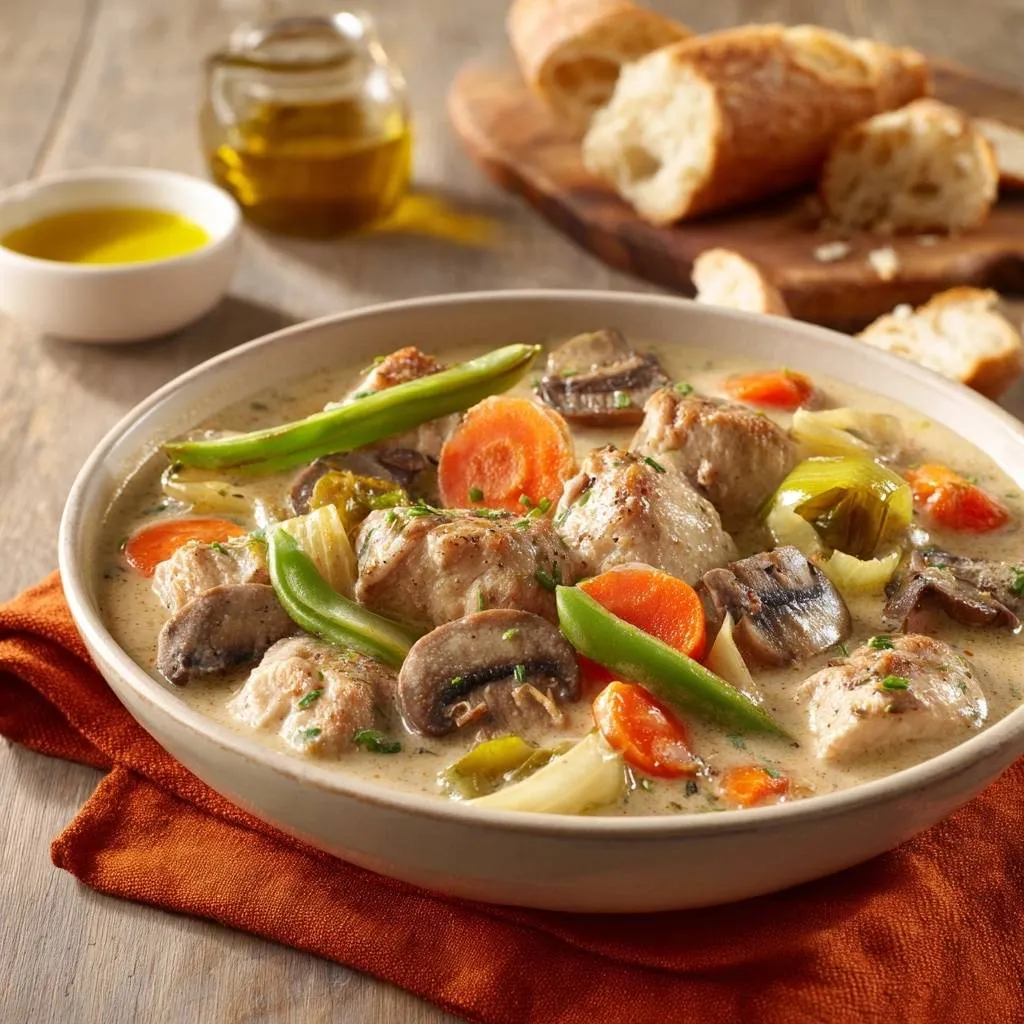
Imagine a bowl of stew so rich and glossy that it coats your spoon like a warm hug. Most home cooks have faced the disappointment of a “watery” stew where the vegetables swim in a thin, gray broth that lacks any real body. That ends today because this Creamy Harvest Chicken Stew is designed with a specific structural foundation to ensure a thick, luxurious finish every single time.
The secret lies in the marriage of a proper roux and a strategic simmering technique. We aren’t just tossing ingredients into a pot and hoping for the best; we are building layers of flavor and managing moisture levels. By focusing on the fat-to-flour ratio and the timing of the cream, you’ll create a meal that feels like a professional bistro dish right in your own kitchen.
I’ve found that the biggest mistake people make is rushing the liquid addition. If you dump all your broth in at once, the flour granules clump together, and you lose that velvety mouthfeel. Taking an extra two minutes to whisk in the broth gradually is the difference between a broken sauce and a masterpiece. Let’s get into the details of how to make this the most requested meal in your house.
The Anatomy of a Thick Creamy Harvest Chicken Stew
Every ingredient in this stew serves a purpose beyond just filling the bowl. We use chicken thighs because they are the workhorse of the poultry world. Unlike breasts, which can turn stringy and dry during a simmer, thighs contain enough fat and connective tissue to stay succulent and tender. As they cook, they release gelatin into the sauce, which naturally adds to the body and richness of the final dish.
The aromatics here are just as intentional. While many recipes call for yellow onions, we use leeks for their delicate, buttery sweetness. Leeks melt into the sauce much more elegantly than onions do, providing a sophisticated flavor profile that screams “harvest.” When paired with cremini mushrooms, you get a massive boost of umami. Creminis are just baby portobellos, and they hold their shape much better than white button mushrooms, offering a meaty texture that complements the chicken perfectly.
Finally, the green beans and carrots provide the necessary crunch and color. By using fresh green beans and thick-cut carrots, we ensure the vegetables have a “bite” to them. There is nothing worse than a mushy vegetable, so we treat these with respect by adding them at different stages of the cooking process to preserve their integrity.
Selecting the Right Poultry and Produce
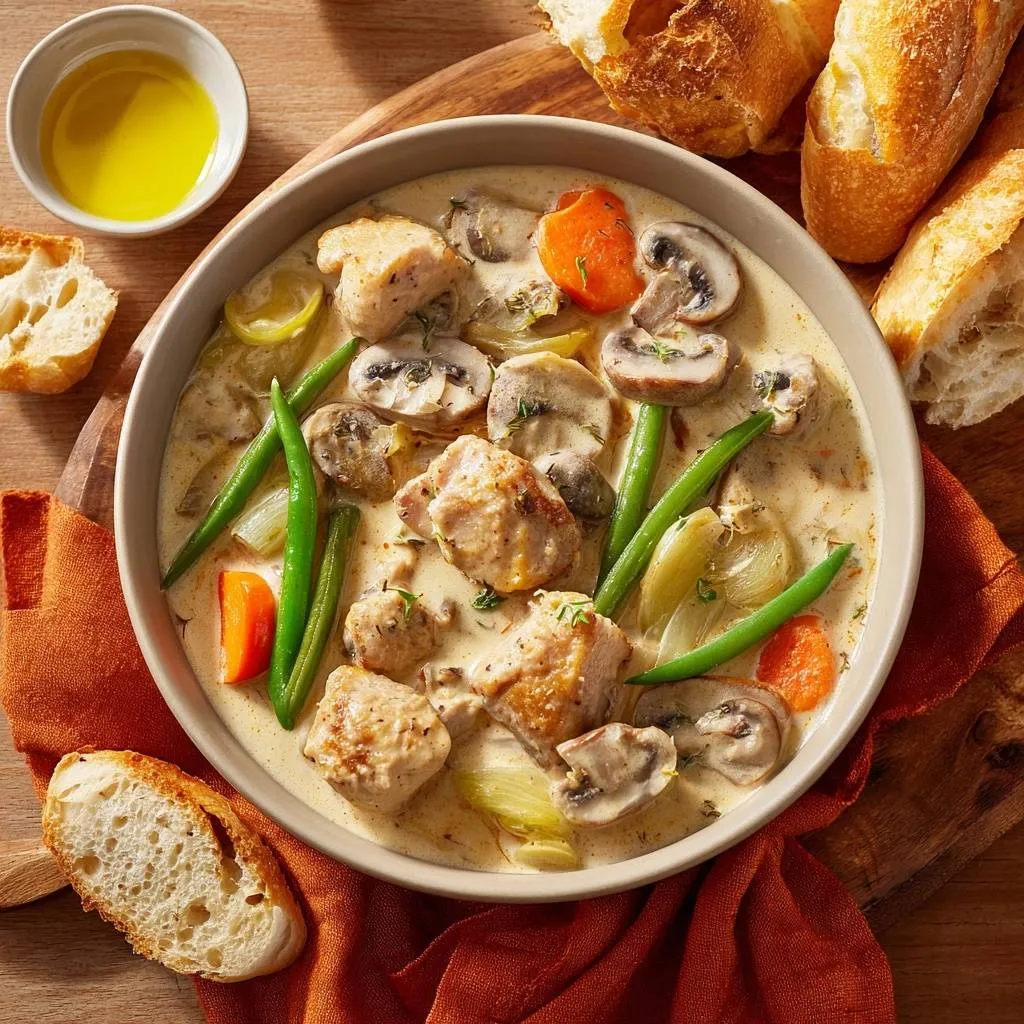
When you’re prepping your chicken, aim for 1.5-inch chunks. This size is the “Goldilocks” zone—large enough to stay juicy in the center while the outside gets a beautiful sear, but small enough to fit perfectly on a soup spoon. If you cut them too small, they’ll overcook before the carrots are even tender.
For the vegetables, consistency is key. Slice your carrots into thick rounds so they don’t disintegrate. For the green beans, make sure you trim the tough stem ends. Using fresh beans instead of canned or frozen is vital here; the fresh snap provides a much-needed textural contrast to the creamy sauce and soft leeks.
The Role of High-Quality Fats and Thickeners
We use a 1:1 ratio of butter to all-purpose flour to create our roux. This is the “glue” that holds the stew together. The butter provides a rich, nutty base, while the flour acts as a stabilizer that prevents the cream from separating later on. It’s a classic French technique that works every time.
Heavy cream is our final touch, but it’s added at the very end for a reason. If you boil heavy cream for too long, it can lose its fresh flavor or even curdle if the heat is too high. By stirring it in at the finish, we maintain that glossy, bright white appearance and a silky texture that coats every single ingredient in the pot.
Essential Tools for a Successful Braise
To get the best results, you really need a heavy-bottomed pot or a Dutch oven. These pots distribute heat evenly, which prevents “hot spots” that can burn your roux or scorch the bottom of your stew. A thin pot will often result in unevenly cooked chicken and a sauce that tastes slightly burnt.
I also highly recommend using a flat-edged wooden spoon rather than a standard round one. The flat edge allows you to really scrape the bottom of the pot. This is crucial for “deglazing,” which is the process of lifting all those browned bits of chicken and vegetable (the fond) into the sauce. That’s where the deepest flavor lives, and you don’t want to leave it stuck to the metal!
Step-by-Step: Building the Flavor Foundation
The first step is the most important for flavor: the sear. You want to get your pot nice and hot with a bit of oil before adding the seasoned chicken. Don’t crowd the pan! If you put too much chicken in at once, the temperature of the pot drops, and the meat starts to release moisture and steam. Instead of a golden-brown crust, you’ll end up with gray, rubbery meat.
Work in batches if you have to. You’re looking for the Maillard reaction—that beautiful chemical change that happens when proteins brown. This creates a complex, savory flavor that a simple boil can never replicate. Once the chicken has a deep golden crust, remove it. It won’t be cooked through yet, but that’s okay; it will finish in the sauce later.
After the chicken is out, don’t wash the pot! All those brown bits are flavor gold. Drop in your butter, leeks, and mushrooms. The mushrooms will act like little sponges, soaking up the butter and the chicken juices. Sauté them until the leeks are soft and translucent and the mushrooms have released their water and started to brown. This stage smells incredible and sets the tone for the entire meal.
Creating the Roux with Leeks and Mushrooms
Once your vegetables are soft, sprinkle the flour over them. It will look a bit messy and pasty at first, but keep stirring. You need to cook this mixture for about two minutes. This “cooks out” the raw flour taste. You’ll know it’s ready when it starts to smell slightly nutty and the flour has turned a pale golden color. This ensures your stew tastes like cream and herbs, not like a bag of flour.
The Gradual Liquid Incorporation Technique
Now comes the part that requires a little patience. Pour in your chicken broth one cup at a time. After the first cup, the mixture will turn into a thick paste. Don’t panic! Keep stirring or whisking until it’s smooth, then add the next cup. By doing this gradually, you allow the starch granules in the flour to expand evenly. This is the “Never Watery” secret. By the time the third cup is in, you’ll have a perfectly smooth, slightly thickened base that is ready for simmering.
The Simmer: Reducing Moisture for Maximum Density
We use a two-stage simmering process to control the density of the stew. First, we add the carrots and thyme, cover the pot, and let it simmer for 10 minutes. This trapped steam cooks the carrots through until they are tender. Since carrots take the longest to cook, they need this head start in a moist environment.
The second stage is the “Skyscraper” secret: we simmer uncovered. When you return the chicken and add the green beans, leave the lid off. This allows a small amount of steam to escape, which naturally reduces and concentrates the sauce. It’s like a built-in thickening mechanism. By the time the chicken is fully cooked, the sauce has intensified in flavor and reached a perfect, spoon-coating consistency.
Troubleshooting Common Stew Consistency Issues
Sometimes, despite our best efforts, things don’t go perfectly. If your stew looks too thick (which can happen if your “simmer” was more of a “boil”), simply stir in a splash of chicken broth or water until it reaches your desired consistency. It’s always easier to thin a sauce than it is to thicken one!
If the sauce still feels a bit thin for your liking, you can use a cornstarch slurry as a backup. Mix one teaspoon of cornstarch with a tablespoon of cold water and stir it into the boiling stew. Let it cook for one minute to activate. Finally, always let the stew rest for about 5 minutes before serving. As the temperature drops slightly, the starches settle and the viscosity increases, giving you that perfect “harvest” feel.
Flavor Variations and Dietary Adjustments
This recipe is quite flexible if you have dietary needs. If you want to avoid dairy, you can swap the butter for a high-quality olive oil and use full-fat coconut cream or a cashew-based cream instead of heavy cream. The flavor will be slightly different, but the texture will remain wonderfully rich.
For a gluten-free version, you can use a gluten-free all-purpose flour blend for the roux, or skip the flour step entirely and thicken the end product with a larger cornstarch slurry or pureed white beans. If you want to lean even harder into the “harvest” theme, try adding diced parsnips or turnips along with the carrots. They add a lovely earthy punch that pairs beautifully with the leeks.
What to Serve with Creamy Harvest Chicken Stew
Texture is everything when serving a creamy dish. You need something to cut through the richness of the butter and cream. A crusty baguette is the classic choice for a reason; the crunchy crust and airy interior are perfect for mopping up every last drop of that velvety sauce. I like to warm the bread in the oven for a few minutes so it’s nice and toasty.
To balance the meal, a simple bitter green salad is a fantastic side. Use arugula or radicchio tossed in a light lemon vinaigrette. The acidity of the lemon and the bitterness of the greens act as a palate cleanser, making every bite of the rich stew taste just as good as the first one. It prevents the meal from feeling too “heavy.”
For a side that won’t get watery, consider this bright carrot salad.
Make-Ahead Strategies and Storage Standards
This stew actually tastes even better the next day as the flavors have more time to meld. However, keep in mind that the starch will continue to work as it cools. When you take it out of the fridge, it might look more like a thick gel than a stew. This is completely normal and a sign of a well-made roux!
To reheat, place the stew in a saucepan over low heat. Add a tablespoon or two of broth or water to loosen it up. Stir gently as it warms to maintain the emulsion of the cream. Avoid using a microwave if possible, as it can heat the stew unevenly and cause the cream to “break” or become oily. Store leftovers in an airtight container for up to three days.
Expert Tips for Professional Results
- Never let the stew reach a rolling boil once you have added the heavy cream; a gentle simmer is all you need to prevent curdling.
- Try “blooming” your dried thyme by stirring it into the butter and vegetables for 30 seconds before adding the flour to release its essential oils.
- Use fresh chives for the garnish rather than dried; the fresh herb provides a necessary hit of “green” acidity that brightens the heavy sauce.
- If you have an instant-read thermometer, pull the chicken when it hits 165°F to ensure it stays juicy and doesn’t become overcooked.
- Use a low-sodium chicken broth so you have total control over the salt levels, especially since the sauce reduces and concentrates the saltiness.
How should I store and reheat leftovers?
Store the stew in an airtight container in the refrigerator for up to 3 days. Because of the dairy and the roux, the sauce will thicken significantly when cold. To reheat, place it in a pot over low heat and add a splash of broth or water to bring it back to its original consistency. Avoid boiling it vigorously during reheating, as this can cause the cream to separate. I do not recommend freezing this stew, as the texture of the potatoes and the cream sauce can become grainy and “broken” once thawed.
Why is my stew sauce still too thin?
If your sauce is thin, it usually means the roux didn’t have enough time to cook or the liquid wasn’t reduced enough. To fix this, you can let the stew simmer uncovered for an extra 5-10 minutes to allow more evaporation. Alternatively, mix 1 teaspoon of cornstarch with 1 tablespoon of cold water to create a slurry. Stir this into the simmering stew and cook for 1-2 minutes; it will thicken the sauce almost instantly without changing the flavor.
Can I use chicken breasts instead of thighs?
You can use chicken breasts, but you must be very careful not to overcook them. Breasts lack the fat and connective tissue of thighs, so they can become dry and “woody” if simmered for too long. If using breasts, I recommend searing them quickly and then adding them back to the pot only for the final 5-7 minutes of cooking to ensure they stay as tender as possible.
What can I use if I don’t have leeks?
If you can’t find leeks, the best substitute is a combination of yellow onion and a little bit of garlic. Use one medium yellow onion and sauté it until it is very soft. While leeks have a milder, more “herby” sweetness, onions will provide a similar structural base for the flavor. You could also use shallots for a flavor profile that is closer to the sophistication of a leek.
Why did my cream sauce curdle?
Cream usually curdles for two reasons: high heat or high acidity. If you add the cream to a boiling pot and keep the heat on high, the proteins in the dairy can clump together. Always turn the heat down to low before stirring in the heavy cream. Additionally, ensure you aren’t adding any strong acids like lemon juice or vinegar until the very end, after the cream has been incorporated and stabilized by the roux.
Chicken Stew
Course: Main CourseCuisine: AmericanDifficulty: medium4
servings15
minutes30
minutes460
kcal45
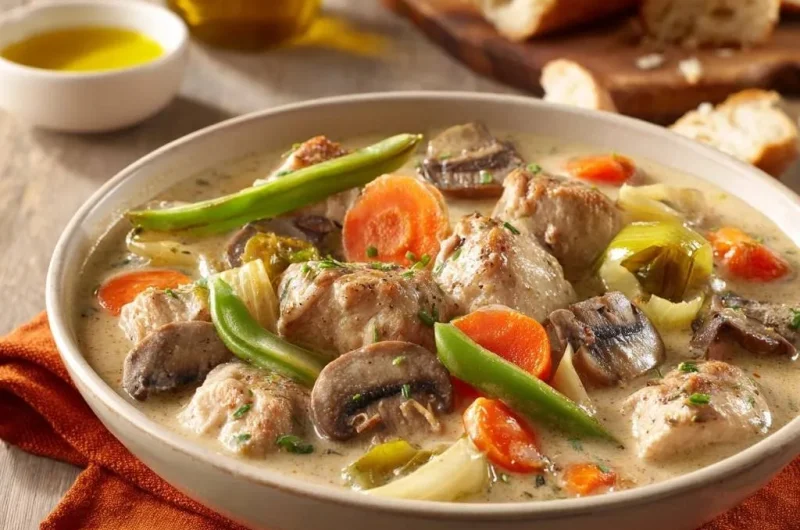
MinutesThis comfort food staple combines juicy chicken thighs with carrots, mushrooms, and leeks in a glossy, cream-based sauce. By using a specific fat-to-flour ratio and a strategic simmering process, this recipe guarantees a thick consistency that perfectly coats every ingredient.
Ingredients
1.5 lbs chicken thighs, cut into large 1.5-inch chunks (for juicier results)
2 cups carrots, sliced into thick rounds
8 oz cremini mushrooms, halved or thickly sliced
1 cup fresh green beans, trimmed
2 large leeks, white and light green parts only, cut into 1-inch chunks
3 cups high-quality chicken broth
3/4 cup heavy cream
3 tablespoons butter
3 tablespoons all-purpose flour
1 teaspoon dried thyme
1/2 teaspoon garlic powder
Salt and black pepper to taste
Fresh chives, finely chopped for garnish
Crusty baguette and extra virgin olive oil for serving
Directions
- Season the chicken chunks generously with salt, pepper, and garlic powder.
- Heat 1 tablespoon of olive oil in a large heavy-bottomed pot over medium-high heat. Sear the chicken in batches until deeply golden brown on all sides. Remove chicken and set aside.
- In the same pot, melt the 3 tablespoons of butter. Add the mushrooms and leeks. Sauté for 5-6 minutes until the mushrooms are browned and the leeks have softened.
- To solve the watery sauce problem, sprinkle the 3 tablespoons of flour directly over the buttery vegetables. Stir constantly for 2 minutes. This creates a roux that acts as the structural base for the sauce.
- Slowly pour in the chicken broth one cup at a time, whisking or stirring vigorously between additions. This gradual incorporation ensures a smooth, thick, non-clumpy base.
- Add the carrots and thyme. Bring to a gentle boil, then reduce heat to low. Cover and simmer for 10 minutes.
- Stir in the green beans and return the seared chicken (and any juices) to the pot. Simmer uncovered for another 8 to 10 minutes. Leaving the lid off during this final stage allows excess moisture to evaporate, naturally concentrating the flavors and thickening the stew. The chicken is done when it reaches 165°F (74°C) in the thickest part.
- Stir in the heavy cream. Allow the stew to simmer for an additional 3 minutes until the sauce is glossy and thick enough to coat the back of a spoon.
- Taste and adjust seasoning with salt and pepper. Garnish with a heavy sprinkle of fresh chives. Serve immediately in shallow bowls with warm baguette slices and a side of olive oil for dipping.
Notes
- For the best results, use chicken thighs instead of breasts to maintain juiciness. Ensure you simmer uncovered in the final stages to allow moisture to evaporate and the flavors to concentrate. Serve with a crusty baguette and olive oil.