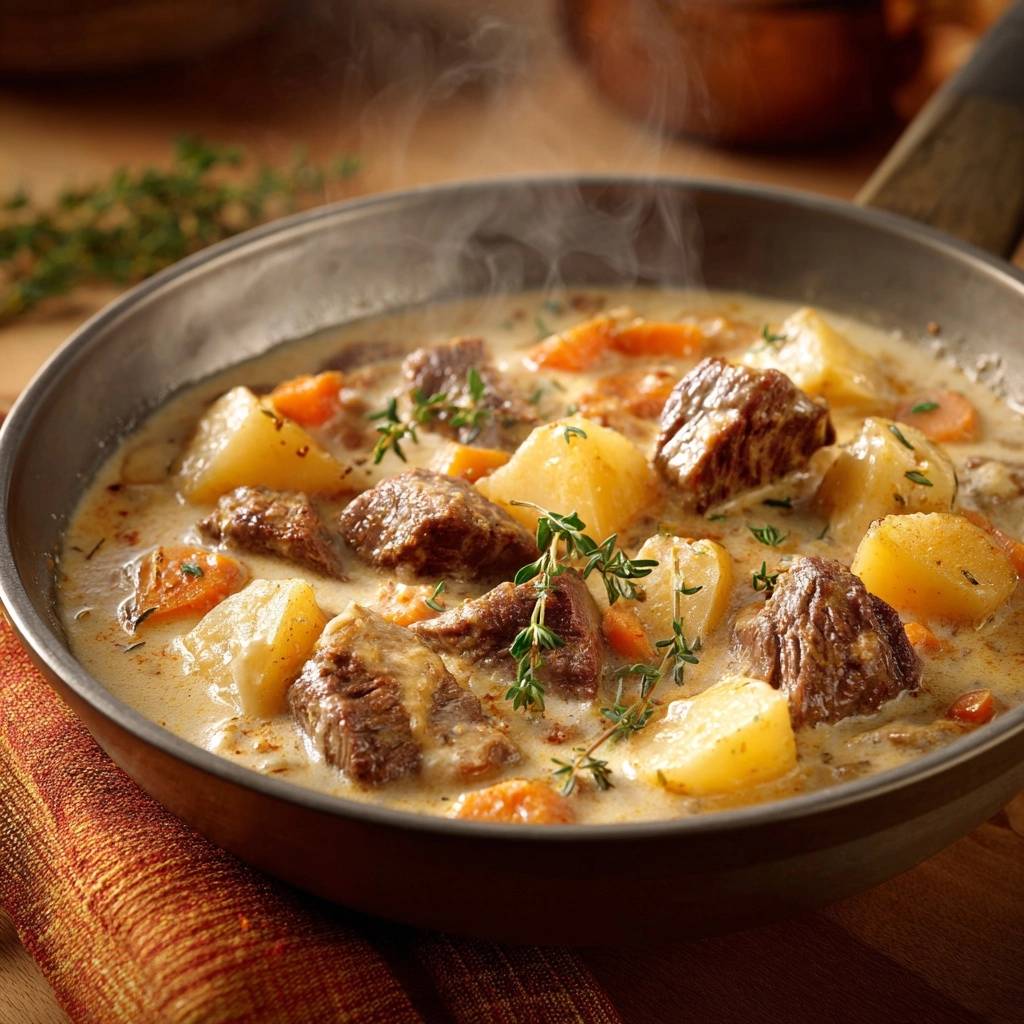
Imagine a bowl of beef stew where the meat falls apart at the touch of a spoon and the sauce is so velvety it coats the back of a ladle like liquid silk. Most home cooks struggle with the heartbreaking moment when a beautiful pot of stew turns into a grainy, separated mess the second the dairy hits the heat. It’s a common frustration that usually ends with an oily film on top and a curdled texture that ruins the mouthfeel of an otherwise perfect meal.
The secret to a professional-grade Creamy Slow-Simmered Beef Stew isn’t just about the ingredients; it’s about the chemistry of emulsification. You’re looking for a stable bond between the fats and the liquids that can withstand the long cooking process. By mastering a few simple temperature control tricks, you can ensure your sauce stays perfectly smooth from the first bite to the last.
I’ve found that the absolute key to success lies in the tempering technique. Instead of pouring cold cream directly into a hot pot, you must bridge the temperature gap. This small but vital step prevents the dairy proteins from shocking and tightening, which is exactly what causes that dreaded curdling. Once you learn this, you’ll never settle for a broken sauce again.
The Science of Tender Beef and Emulsion
When you cook beef chuck for 90 minutes, you’re participating in a beautiful chemical transformation. Beef chuck is loaded with collagen, a tough connective tissue that makes the meat chewy if cooked quickly. However, when you maintain a low, steady simmer, that collagen slowly melts into gelatin. This gelatin doesn’t just make the meat tender; it actually adds a natural body and richness to your broth.
While the beef softens, you have to manage the physics of the sauce. A stable cream sauce requires a delicate balance. High heat is the ultimate enemy of dairy proteins. If the stew reaches a rolling boil after the cream is added, the proteins will clump together and separate from the fats. Keeping the heat at a “lazy bubble” ensures the emulsion stays intact while the flavors meld.
You don’t need alcohol to build a deep, complex flavor profile. The secret is the “fond,” those dark brown bits stuck to the bottom of your Dutch oven after searing the beef. These bits are concentrated umami. When you sauté your onions and add the broth, you’re deglazing the pan and lifting that flavor back into the liquid. It provides a savory backbone that makes the creaminess of the final dish pop without needing a drop of grape juice.
Essential Components for Creamy Slow-Simmered Beef Stew
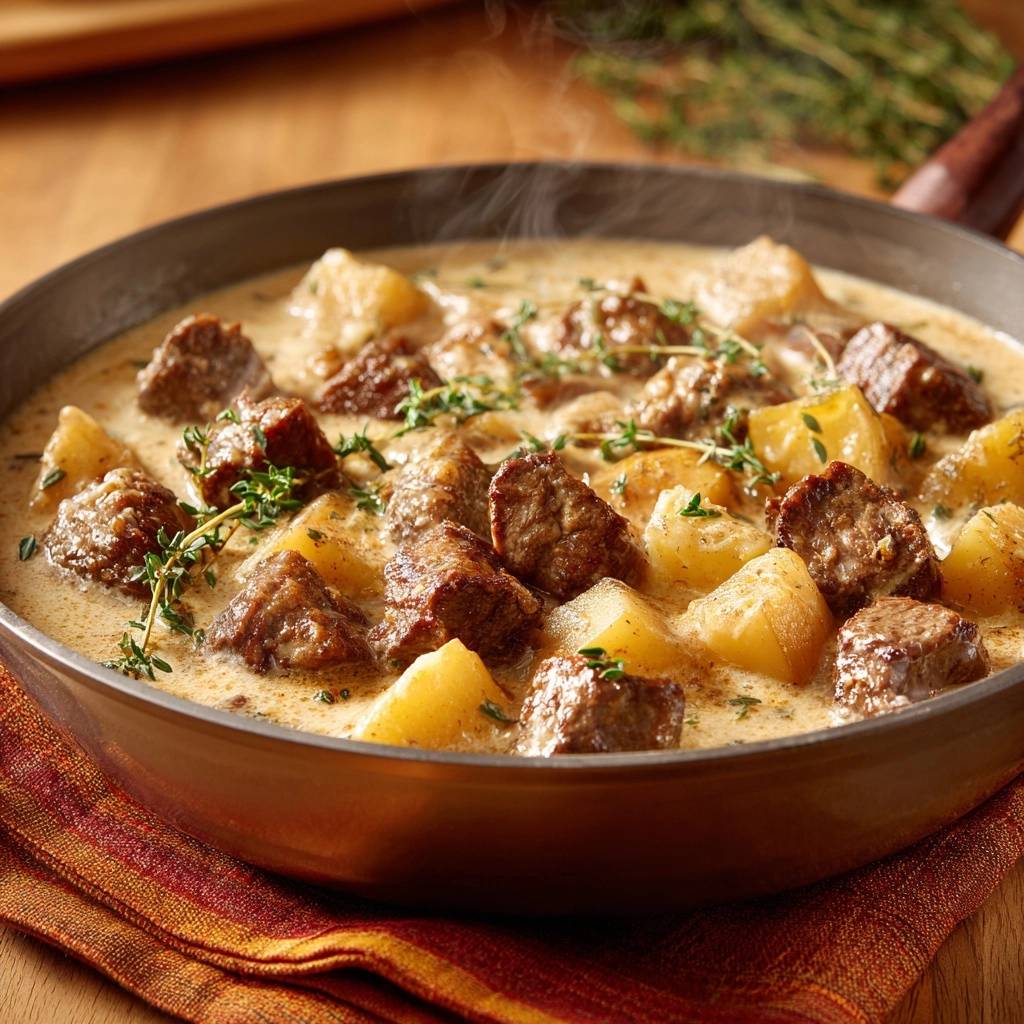
Choosing the right potato can make or break the texture of your stew. I always reach for Yukon Gold potatoes because they sit in the “Goldilocks” zone of starch content. Unlike Russets, which tend to disintegrate and turn the stew into a grainy mash, Yukon Golds hold their structural integrity. They have a naturally buttery flavor and a waxy skin that helps them stay intact through the long simmering process.
The quality of your beef broth is your foundation. Since we aren’t using grape juice to add acidity or depth, a high-quality, low-sodium beef stock or bone broth is essential. It provides the liquid base that will eventually be transformed into a rich gravy. If the broth is too salty to start, it will become overwhelming as it reduces, so always start with a lighter hand on the salt shaker.
Finally, your heavy cream must be at room temperature before it even touches the pot. Cold cream hitting a hot liquid is a recipe for disaster. By letting it sit on the counter while the stew simmers, you reduce the thermal shock. Heavy cream is also non-negotiable here; lower-fat options like milk or half-and-half don’t have enough fat to stabilize the sauce, making them much more likely to break.
Selecting the Right Cut of Beef
Don’t be tempted to buy expensive, lean cuts like sirloin or filet mignon for this recipe. Because these cuts lack intramuscular fat and connective tissue, they will actually turn dry and stringy during a 90-minute simmer. You need a hardworking muscle like beef chuck or brisket.
As the stew cooks, the fat within the chuck melts, basting the meat from the inside out. This is what creates that “melt-in-your-mouth” sensation. Look for a piece of meat with plenty of white marbling throughout. That fat is your insurance policy for flavor and tenderness.
Aromatics and Flavor Enhancers
The synergy between Worcestershire sauce, fresh thyme, and garlic creates a sophisticated flavor profile. The Worcestershire sauce adds a fermented, salty kick that mimics the depth usually provided by red grape juice. It cuts through the richness of the heavy cream, ensuring the dish doesn’t feel too heavy on the palate.
I strongly recommend using fresh thyme sprigs rather than the dried version. Fresh herbs provide a bright, earthy top note that balances the heavy dairy base. Dried thyme can sometimes become bitter or “dusty” tasting during a long simmer, whereas fresh sprigs release their oils slowly, perfuming the entire kitchen.
Preparing the Foundation: Searing and Deglazing
The Maillard reaction is your best friend when it comes to building flavor. This is the chemical reaction between amino acids and reducing sugars that gives browned food its distinctive taste. To get a proper sear, you must pat the beef cubes completely dry with paper towels. If the meat is damp, it will steam in the pan rather than brown, and you’ll miss out on that deep, roasted flavor.
Work in batches to avoid crowding the pan. If you put too much meat in at once, the temperature of the oil will drop, and the beef will release its juices and boil in its own liquid. Give each cube enough space to develop a dark, crusty exterior. Once the meat is removed, those browned bits left behind are the “gold” you’ll use to flavor the onions and garlic.
Building the Roux and Braising Liquid
Creating a roux with butter and flour is what gives this stew its initial thickness. You want a 1:1 ratio of fat to flour. After sautéing the onions in butter, sprinkle the flour over the top and whisk it constantly. You’re looking to cook the flour for about two minutes until it smells slightly nutty. This removes the “raw” flour taste that can ruin a sauce.
When it’s time to add the broth, do it slowly. Start with just a splash and whisk it into the flour and onions until a thick paste forms. Gradually add more liquid, whisking vigorously the whole time. This method prevents lumps from forming and ensures a silky, consistent base that will play perfectly with the cream later on.
The Low-Temperature Simmering Phase
Heat management is the difference between a tender stew and a tough one. You aren’t looking for a rolling boil; you want a “lazy bubble.” This means only one or two bubbles should break the surface every few seconds. This gentle heat allows the beef to soften without the muscle fibers tightening up and becoming rubbery.
Timing your vegetables is just as important. By adding the carrots and potatoes at the start of the simmer, they have enough time to become tender. Because we used Yukon Golds and thick-cut carrots, they won’t turn to mush. They’ll absorb the savory beef broth, becoming little flavor bombs that hold their shape when you go to serve.
For a different kind of delightful bite, learn to make sticky glazed meatballs.
The Tempering Technique for Velvety Texture
Tempering is the most critical part of this entire process. If you’ve ever had a sauce break, it’s likely because the temperature change was too abrupt. To do this correctly, take a small bowl and pour in your room-temperature heavy cream. Ladle about half a cup of the hot stew liquid into the cream while whisking constantly.
This process gradually raises the temperature of the cream, stabilizing the proteins so they don’t “clump” when they hit the main pot. Once the cream mixture feels warm to the touch, you can slowly stir it back into the Dutch oven. This creates a seamless, velvety transition that results in a professional-looking sauce.
After the cream is integrated, you must be vigilant. Never let the stew reach a boil again. The high heat will break the emulsion you just worked so hard to create. Keep the burner on the lowest possible setting just to let the flavors marry for a few minutes. The sauce will thicken slightly as it sits, reaching a perfect, spoon-coating consistency.
Troubleshooting Common Stew Consistency Issues
If your stew feels a bit too thin before you add the cream, don’t panic. You can let it simmer uncovered for an extra 10 minutes to reduce the liquid. If it’s still not thick enough, a small cornstarch slurry (one teaspoon of cornstarch mixed with a tablespoon of cold water) can be stirred in. Just remember that the cream will also add significant body.
If you’ve accidentally over-salted the broth, the “potato trick” is a lifesaver. Drop in an extra peeled potato chunk and let it simmer for 15 minutes. The potato acts like a sponge, soaking up the excess salt. You can then remove the extra potato before serving, leaving you with a perfectly balanced broth.
Preventing Grainy Dairy Integration
The fear of curdling is real, but it’s easily avoided by sticking to high-fat dairy. Heavy cream has a high enough fat-to-protein ratio that it is naturally more stable under heat. If you try to use 1% milk or even half-and-half, the lower fat content makes the proteins much more susceptible to bonding together and creating that grainy texture.
Another tip is to ensure your acids are balanced. While Worcestershire sauce adds great flavor, too much acidity can also cause dairy to curdle. Stick to the measurements in the recipe, and always add your dairy at the very end of the cooking process to minimize its exposure to prolonged heat.
Managing Salt and Acid Balance
Always wait until the very end to do your final seasoning. As the stew simmers for 90 minutes, the liquid reduces and the flavors concentrate. What tasted perfectly salted at the beginning might be too salty by the end. Taste the sauce after the cream has been fully incorporated, then add a final pinch of salt or a crack of black pepper if needed.
Optimal Side Dishes for Creamy Stews
Since this stew is already rich and contains potatoes, you want side dishes that offer a textural contrast. A thick slice of toasted sourdough bread is the perfect vessel for mopping up every last drop of the creamy sauce. The slight tang of the sourdough cuts through the richness of the beef and cream beautifully.
For a vegetable side, stick to something crisp and bright. Steamed green beans or a simple arugula salad with a light lemon dressing provide a much-needed “snap” to the meal. Avoid serving this over mashed potatoes or pasta, as the double-starch can make the meal feel overly heavy and one-dimensional.
Storage, Reheating, and Make-Ahead Instructions
Like most braised dishes, this stew actually tastes better the next day. As it sits in the fridge, the flavors of the thyme, garlic, and beef continue to meld and deepen. However, reheating a cream-based stew requires a gentle touch. If you microwave it on high, the sauce will almost certainly break and become oily.
To reheat, place the stew in a small saucepan over low heat. Add a splash of beef broth or a tablespoon of water to loosen the sauce, as it will thicken significantly while cold. Stir it gently and frequently until it’s warmed through. I don’t recommend freezing this stew; the potatoes can become grainy and the cream sauce often separates during the thawing process.
How should I store leftovers?
Store any leftover stew in an airtight container in the refrigerator for up to 3 to 4 days. Because this contains heavy cream, it is important to get it into the fridge within two hours of cooking. When you’re ready to eat, reheat it slowly on the stovetop over low heat to keep the sauce from separating.
Why did my stew sauce turn out thin?
A thin sauce usually happens if the roux wasn’t cooked long enough or if too much broth was added. To fix this, you can simmer the stew uncovered for a few minutes before adding the cream to let some moisture evaporate. Alternatively, a small cornstarch slurry can be added at the very end to reach your desired thickness.
Can I use a different cut of meat?
While beef chuck is the gold standard for stew, you can also use brisket or bone-in short ribs. Avoid lean cuts like round roast or sirloin, as they lack the fat and collagen needed to stay moist during the long simmer. If you use short ribs, be sure to trim the excess surface fat so the stew doesn’t become overly greasy.
What is the best way to prevent curdling?
The most effective way to prevent curdling is the tempering method. By mixing a bit of the hot broth into your room-temperature cream before adding it to the pot, you stabilize the dairy. Additionally, never let the stew boil once the cream has been added, as high temperatures are the primary cause of dairy separation.
Can I make this in a slow cooker?
Yes, you can adapt this for a slow cooker by following the searing and roux-building steps in a pan first. Transfer everything except the cream to the slow cooker and cook on low for 6-8 hours. Whisk in the tempered cream at the very end, just before serving, to ensure the sauce remains smooth and velvety.
Beef Stew
Course: Main CourseCuisine: AmericanDifficulty: medium4
servings20
minutes1
hour30
minutes510
kcal110
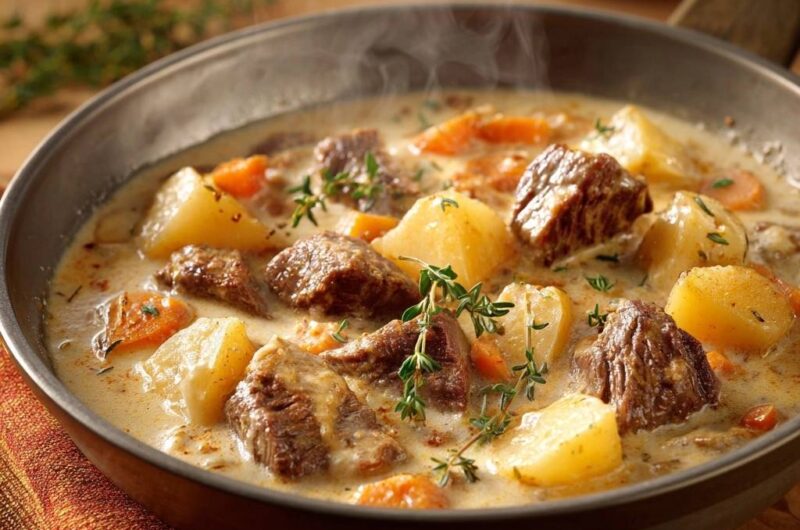
MinutesThis hearty beef stew features tender chuck roast, Yukon Gold potatoes, and carrots in a rich, emulsified cream sauce. The secret lies in a low-heat finish and tempering the cream to prevent breaking.
Ingredients
1.5 lbs beef chuck, cut into 1.5-inch cubes
3 large Yukon Gold potatoes, peeled and cut into large chunks
2 large carrots, sliced into thick rounds
1 yellow onion, diced
3 cloves garlic, minced
3 cups high-quality beef broth
1 cup heavy cream (room temperature)
2 tablespoons all-purpose flour
3 tablespoons butter
1 tablespoon olive oil
6 sprigs fresh thyme (plus more for garnish)
1 teaspoon Worcestershire sauce
Salt and black pepper to taste
Directions
- Pat the beef cubes completely dry with paper towels. Season generously with salt and pepper.
- Heat olive oil in a large heavy-bottomed pan or Dutch oven over medium-high heat. Sear the beef in batches, ensuring not to crowd the pan, until a deep brown crust forms on all sides. Remove beef and set aside.
- Lower heat to medium. Add butter and onions, sautéing until translucent and scraping up the browned bits (fond) from the bottom of the pan. Stir in garlic and cook for 1 minute.
- Sprinkle the flour over the onions and garlic. Whisk constantly for 2 minutes to cook out the raw flour taste, creating a light roux.
- Slowly pour in the beef broth and Worcestershire sauce while whisking vigorously to ensure no lumps form.
- Return the beef and any accumulated juices to the pan. Add the potatoes, carrots, and thyme sprigs. The liquid should nearly cover the ingredients.
- Bring to a very gentle simmer, then reduce heat to low. Cover and cook for 70-80 minutes, or until the beef is fork-tender and the potatoes are soft.
- To solve the curdling problem: Turn the heat to the lowest setting. In a separate small bowl, whisk 1/2 cup of the hot stew broth into the heavy cream. This “tempering” process raises the temperature of the cream gradually so it doesn’t break when hitting the pot.
- Slowly pour the tempered cream mixture back into the stew, stirring gently to incorporate.
- Let the stew sit on the lowest heat for 3-5 minutes to thicken slightly. Do not allow it to reach a boil once the cream is added. Remove thyme stems and serve immediately, garnished with fresh thyme sprigs.
Notes
- To prevent the sauce from breaking, ensure the heavy cream is at room temperature before tempering and never let the stew reach a boil after the cream has been added.