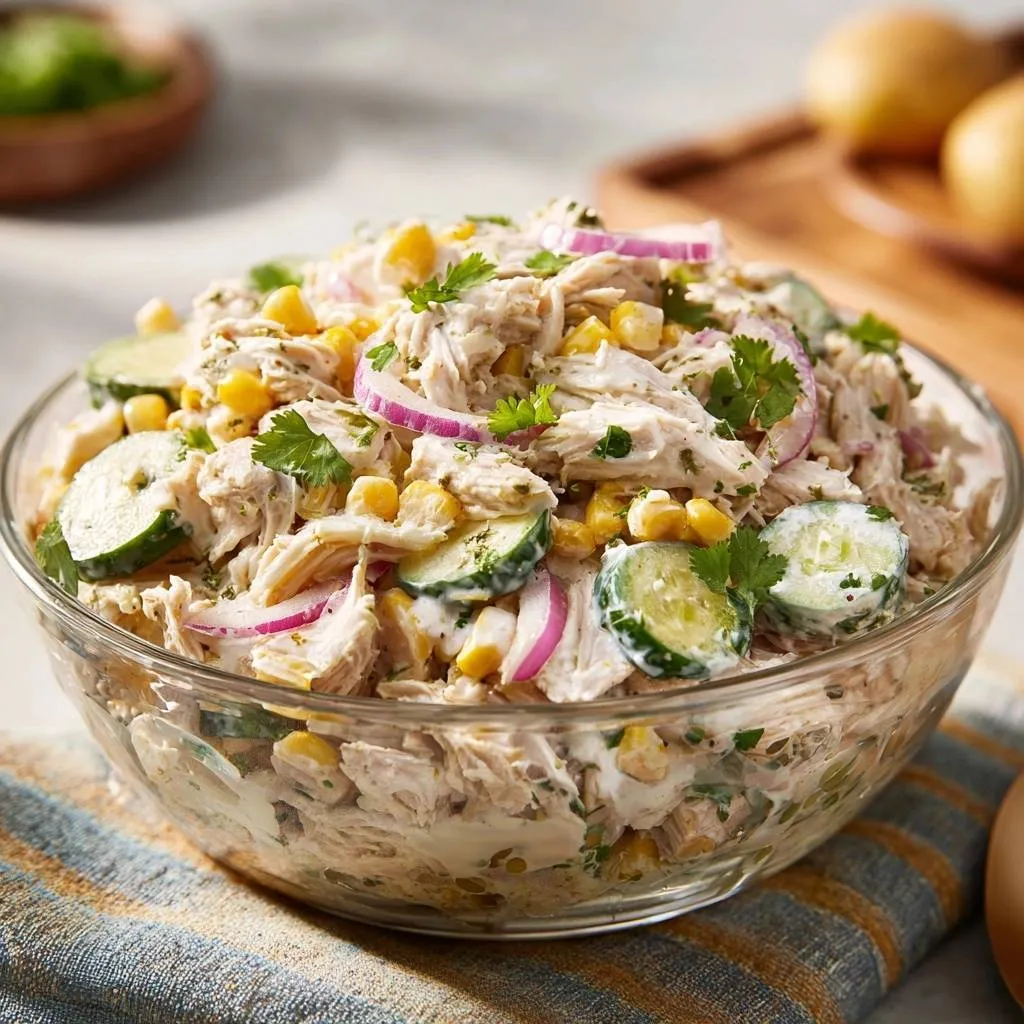
Nothing ruins a fresh chicken salad faster than a pool of water at the bottom of the bowl. Most recipes fail because the cucumbers release moisture the second they hit the dressing, turning your creamy lunch into a watery mess. This recipe uses a simple salt and drain technique to lock in the crunch and keep your dressing thick and velvety from the first bite to the last.
You’ve likely experienced the disappointment of a soggy salad that looked great in the kitchen but fell apart by the time it reached the table. The culprit is osmosis, where the salt in the dressing pulls water out of the vegetables. By addressing this chemical reaction before you mix the ingredients, you ensure a professional result every single time.
The secret to this dish’s longevity is the “Anti-Soggy Cucumber Hack.” By salting the cucumber rounds early, you force them to release their internal liquid ahead of time. This creates a firmer, snappier texture that stands up to the creamy mayonnaise and yogurt base without diluting the flavors.
The Science of the Anti-Soggy Cucumber Hack
English cucumbers are roughly 95% water, held within a delicate cellular framework. When you sprinkle salt over the sliced rounds, you create a high concentration of solutes on the outside of the vegetable. This triggers osmosis, drawing the water out of the cells and through the skin to balance the concentration.
If you skip this step, that water eventually leaks into your dressing, breaking the emulsion and making the sauce runny. A “cured” cucumber has a much denser, more concentrated flavor and a satisfying snap that mimics a quick pickle. This 15-minute wait time is the difference between a mediocre side dish and a gourmet salad that stays fresh for hours.
Why English Cucumbers Outperform Field Varieties
English cucumbers, often sold wrapped in plastic, are the gold standard for this salad because of their thin, edible skin and tiny seeds. Standard field cucumbers have thick, waxy skins and large, watery seed cavities that contribute to a mushy texture. The English variety provides a consistent crunch and a uniform shape that looks beautiful when sliced into half-moons.

Essential Components for Creamy Zesty Chicken and Corn Salad
Using a rotisserie chicken is the ultimate pro move for this recipe. The meat is already seasoned and tender, providing a specific “shred” that holds onto the dressing much better than cubed chicken breast. I recommend shredding the meat while it is still slightly warm, as it pulls apart into more delicate, absorbent fibers.
Sweet corn adds a necessary structural pop and a burst of natural sugar to balance the savory chicken. While fresh corn cut off the cob is wonderful, high-quality canned sweet corn works perfectly as long as it is drained and patted dry. This ensures you aren’t introducing any extra liquid that could compromise the creamy base.
The Role of Greek Yogurt in Dressing Stability
A dressing made entirely of mayonnaise can often feel heavy or greasy on the palate. By swapping a portion of the mayo for Greek yogurt, you introduce a bright tang and a more robust protein structure. The yogurt acts as a stabilizer, helping the lemon juice and spices stay suspended in a thick, velvety coating that clings to the chicken.
Fresh vs. Dried Herbs: Balancing Dill and Cilantro
I use dried dill for the dressing base because its flavor is concentrated and it hydrates beautifully in the yogurt mixture. It provides a consistent, earthy backbone to the salad. Fresh cilantro, however, is added at the very end to provide a hit of aromatic brightness and a pop of green color that dried herbs simply cannot replicate.
Step-by-Step: Preparing the Chicken and Corn Base
Start by shredding your chicken into bite-sized pieces. You want a mix of long shreds and smaller bits so that every forkful is cohesive. If the pieces are too large, the salad becomes difficult to eat; if they are too small, it turns into a paste. Aim for a texture that looks rustic and hearty.
Once the chicken is ready, move on to the corn. If you are using canned corn, don’t just drain it in a colander. Spread the kernels out on a paper towel and pat them dry. This might seem like an extra step, but removing that surface moisture is vital for maintaining the “zesty” thickness of the lemon-garlic sauce.
The Curing Process: Prepping Your Cucumbers
Slice your English cucumber into rounds about half an inch thick. Place them in a colander and toss them with the salt. After about 10 minutes, you will see a significant amount of liquid dripping from the bottom of the colander. The cucumbers will look slightly more translucent and feel more flexible than when they were fresh.
The most important part of this process is the “Pat-Dry” technique. Use a heavy-duty paper towel or a clean kitchen towel to press firmly on the cucumbers. You want to remove every drop of surface moisture and any excess salt. If they feel damp to the touch, keep drying them until they are matte and firm.
Emulsifying the Zesty Lemon and Garlic Dressing
Always whisk your dressing in a separate bowl before adding the solids. This ensures the garlic powder and dried dill are evenly distributed. When you whisk the lemon juice into the mayo and yogurt, the mixture should reach a “ribbon stage” where it is thick enough to hold its shape for a second when drizzled from a spoon.
Using garlic powder instead of raw minced garlic is a deliberate choice here. Raw garlic can be sharp and overwhelming in a cold salad. The powder hydrates in the lemon juice, creating a mellow, savory flavor that permeates the entire dish without any spicy “hot spots” that might ruin the balance.
Assembling the Salad for Maximum Crunch
Order of operations matters when you are mixing this salad. Add the chicken, corn, and red onions to the dressing first. Toss these ingredients vigorously until the chicken is fully saturated. This creates a protective layer around the meat and ensures the base flavor is locked in.
Fold the cucumbers and cilantro in last using a gentle spatula motion. You don’t want to bruise the cilantro or break the cucumber rounds. By adding them at the end, you keep the cucumbers from being overworked, which helps them maintain that signature “snap” you worked so hard to achieve during the curing process.
Troubleshooting Common Texture Issues
If your salad feels a bit too thick after mixing, don’t reach for water. Add a teaspoon of lemon juice or a tiny bit more yogurt to loosen it up. If the red onion flavor feels too sharp or pungent, try soaking the slices in ice water for five minutes before adding them to the bowl to mellow out the bite.
If you accidentally over-salted the cucumbers, don’t panic. Simply rinse them quickly under cold water and then be extra diligent about patting them dry. You can also omit the salt from the dressing itself to compensate for any lingering saltiness on the vegetables.
Flavor Variations and Ingredient Swaps
This recipe is a fantastic canvas for modifications. If you want more crunch, diced radishes make a great addition because they have a low moisture content. For a smoky twist, you can swap the sweet corn for charred poblano peppers or even add a pinch of smoked paprika to the dressing.
Protein Alternatives for a Different Profile
If you want to change the protein, grilled turkey breast is an excellent substitute for chicken. For a vegetarian version, canned chickpeas work well, but you must peel the skins off for the best texture. Keep in mind that chickpeas don’t absorb dressing like shredded chicken does, so you may need slightly less sauce.
Optimal Serving Temperatures and Side Pairings
While you can eat this immediately, a 30-minute chill in the fridge is the “sweet spot.” This allows the dried dill to fully hydrate and the flavors to meld. However, don’t leave it for more than four hours before the first serving if you want the absolute peak of cucumber crispness.
This salad is incredibly versatile. Serve it on toasted sourdough for a hearty lunch, or scoop it into butter lettuce wraps for a low-carb option. It also looks stunning when served inside a hollowed-out heirloom tomato, making it a perfect centerpiece for a summer brunch.
Make-Ahead Strategy and Storage Guidelines
Because of the cucumber treatment, this salad stays fresh in the fridge for up to three days in an airtight container. Unlike traditional recipes that get watery by day two, this version holds its creamy consistency. If you notice a tiny bit of separation after 48 hours, just give it a quick stir to bring the emulsion back together.
Expert Tips for High-Volume Preparation
If you are doubling this recipe for a party, use a large baking sheet to drain the cucumbers in a single layer. This ensures even salting and faster moisture release. When mixing a large batch, use a bigger bowl than you think you need to avoid crushing the ingredients while you fold them together.
For crisp results every time, consider trying easy homemade dill pickles.
Selecting the Best Rotisserie Chicken
When buying a rotisserie chicken, look for one that is plump and has intact skin. Avoid birds that look shriveled or are sitting in a large amount of grease, as this usually indicates they are overcooked and dry. A juicy bird will yield the best shredded texture for your salad.
Managing the “Zest” Factor
The “zest” in this salad comes primarily from the lemon juice and black pepper. If you prefer a more aggressive tang, you can add a teaspoon of lemon zest to the dressing. Always taste the salad after mixing and adjust the pepper levels at the very end to suit your personal preference.
How long does this chicken salad stay fresh in the fridge?
This salad stays fresh and creamy for up to 3 days when stored in an airtight container. Because the cucumbers are salted and drained beforehand, they won’t release excess water, which usually makes chicken salad soggy. If you plan to eat it over several days, keep it in the coldest part of your refrigerator.
Why is my chicken salad still watery?
The most common reason for a watery salad is skipping the “Pat-Dry” step after salting the cucumbers. Even if they have drained in a colander, they still hold surface moisture that will thin out the mayonnaise. Ensure you press them firmly with paper towels until they are completely dry to the touch before adding them to the dressing.
Can I use frozen corn instead of canned?
Yes, you can use frozen corn. However, you must thaw it completely and pat it dry with paper towels. Frozen corn often holds more internal moisture than canned, so I recommend quickly sautéing it in a dry pan for 2 minutes to evaporate any lingering water before letting it cool and adding it to the salad.
What can I use if I don’t have Greek yogurt?
If you don’t have Greek yogurt, you can use sour cream as a direct substitute. It provides a similar tang and thickness. If you only have mayonnaise, you can use that instead, but add an extra teaspoon of lemon juice to provide the acidity that the yogurt usually contributes.
Can I freeze this chicken salad?
No, I do not recommend freezing this salad. Mayonnaise and Greek yogurt based dressings tend to break and become grainy when thawed. Additionally, the cucumbers will lose their crisp cellular structure and become mushy once they have been frozen and defrosted.
Is there a way to make this spicy?
Absolutely. To add some heat without changing the texture, add a half teaspoon of red chili flakes or a finely diced jalapeño (with the seeds removed) to the dressing. Avoid adding hot sauce, as the extra liquid can thin out the creamy consistency of the salad.

Chicken and Corn Salad
Course: Main CourseCuisine: AmericanDifficulty: easy4
servings20
minutes360
kcal20
MinutesThis chicken salad uses a simple salt-and-drain technique for cucumbers to maintain a crisp texture and prevent the dressing from becoming watery. Combined with rotisserie chicken, sweet corn, and a tangy yogurt-mayo dressing, it is a perfect meal-prep solution.
Ingredients
3 cups shredded rotisserie chicken breast
1 cup sweet corn kernels, drained
1 large English cucumber, sliced into 1/2-inch thick rounds
1/2 small red onion, thinly sliced into half-moons
1/4 cup fresh cilantro, roughly chopped
1/2 cup mayonnaise
2 tablespoons Greek yogurt (for added body and tang)
1 tablespoon fresh lemon juice
1/2 teaspoon garlic powder
1/2 teaspoon dried dill
1/2 teaspoon salt (for draining)
Black pepper to taste
Directions
- Place the sliced cucumber rounds in a colander and sprinkle with 1/2 teaspoon of salt. Toss to coat and let them sit for 10-15 minutes. This is the critical step to draw out excess water that would otherwise thin your sauce.
- While the cucumbers drain, prepare the dressing. In a large mixing bowl, whisk together the mayonnaise, Greek yogurt, lemon juice, garlic powder, dried dill, and black pepper until thick and smooth.
- Thoroughly pat the cucumbers dry with paper towels, pressing firmly to remove all surface moisture.
- Add the shredded chicken, corn, and thinly sliced red onions to the bowl with the dressing. Toss until the chicken is fully coated.
- Gently fold in the prepared dry cucumbers and the fresh cilantro.
- Serve immediately or chill for 30 minutes. Because the cucumbers were properly drained and the dressing was stabilized with yogurt, the salad will stay creamy and the cucumbers will remain crisp even if made a few hours ahead.
Notes
- The salt-and-drain technique is critical to prevent the salad from becoming watery. Using Greek yogurt adds body and stabilizes the dressing.