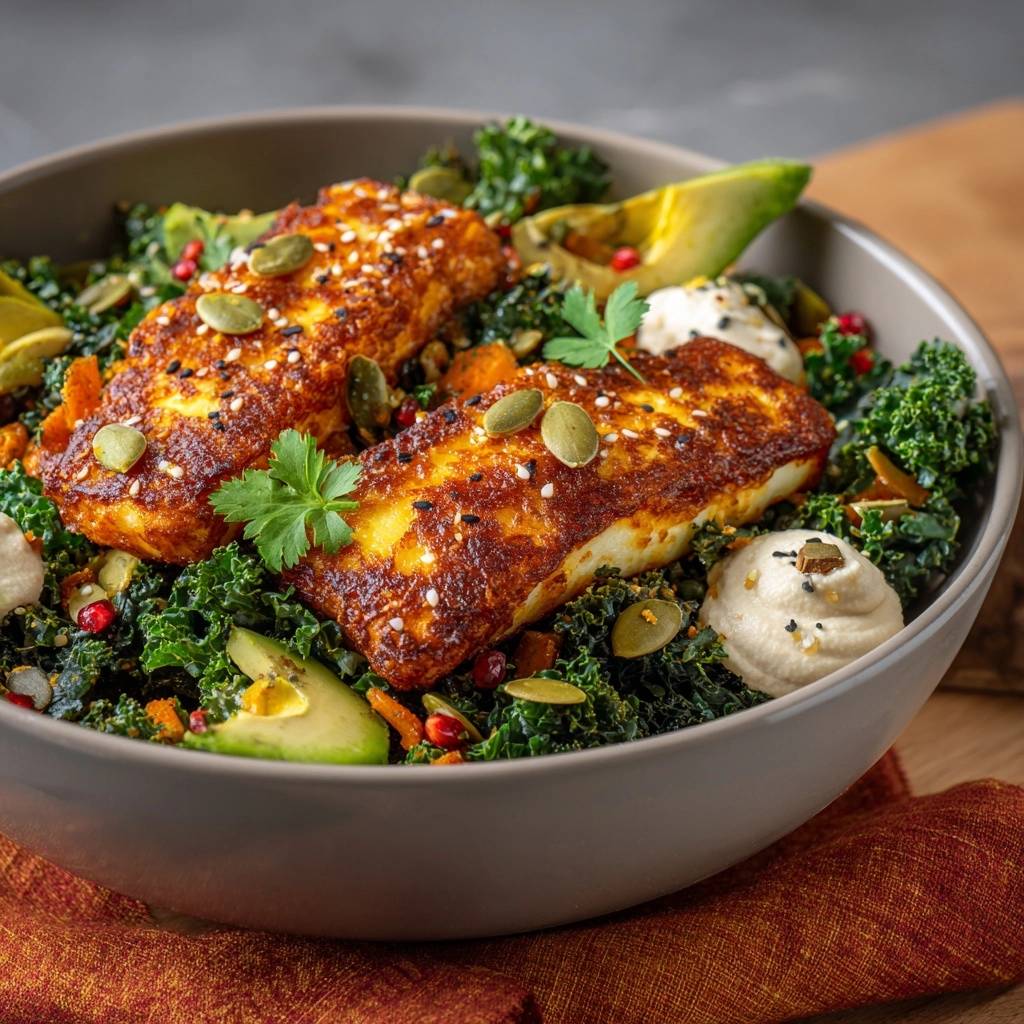
Most people end up with halloumi that is either a squeaky, rubbery mess or a puddle of melted cheese in the bottom of the pan. You want that specific, shatteringly crisp exterior that gives way to a warm, tender center. This Crispy Pan-Seared Halloumi Kale Bowl solves the texture puzzle by using a moisture-wicking technique that guarantees a golden-brown crust every single time.
This bowl isn’t just about the cheese, though it’s certainly the star of the show. It’s a high-protein, nutrient-dense meal that perfectly balances the salty punch of the halloumi with the earthy bitterness of massaged kale and the natural sweetness of roasted sweet potatoes. Every bite offers a contrast of temperatures and textures that will make you forget you’re eating a salad.
The secret to success here is the dry-sear method. By skipping the oil in the initial stages of cooking the cheese, you allow the halloumi to develop a deep mahogany crust without steaming it. I’ve found that even a tiny bit of surface moisture can ruin the sear, so grab your paper towels and get ready to pat that cheese bone-dry.
For another fantastic halloumi dish, check out this grilled halloumi power bowl.
The Science of the Perfect Halloumi Sear
Achieving the perfect sear on halloumi involves understanding the Maillard reaction. This is the chemical reaction between amino acids and reducing sugars that gives browned food its distinctive flavor. Because halloumi has a high melting point due to its unique pH and the way the curds are heated during production, it can withstand high heat without losing its shape.
However, moisture is the absolute enemy of a good crust. If there is water on the surface of the cheese when it hits the pan, that water must evaporate before browning can begin. This creates a layer of steam that cooks the cheese from the outside in, leading to that dreaded rubbery, “squeaky” texture. By removing all surface moisture, the heat goes directly into browning the proteins and sugars.
When you use the dry-sear method, you are essentially frying the cheese in its own fats. As the halloumi heats up, it releases a small amount of oil that acts as a natural frying medium. This ensures that the smoked paprika you’ve dusted on the surface adheres perfectly, creating a textured, flavorful skin that stays crisp even after you plate it.
Why the Dry-Sear Method Works
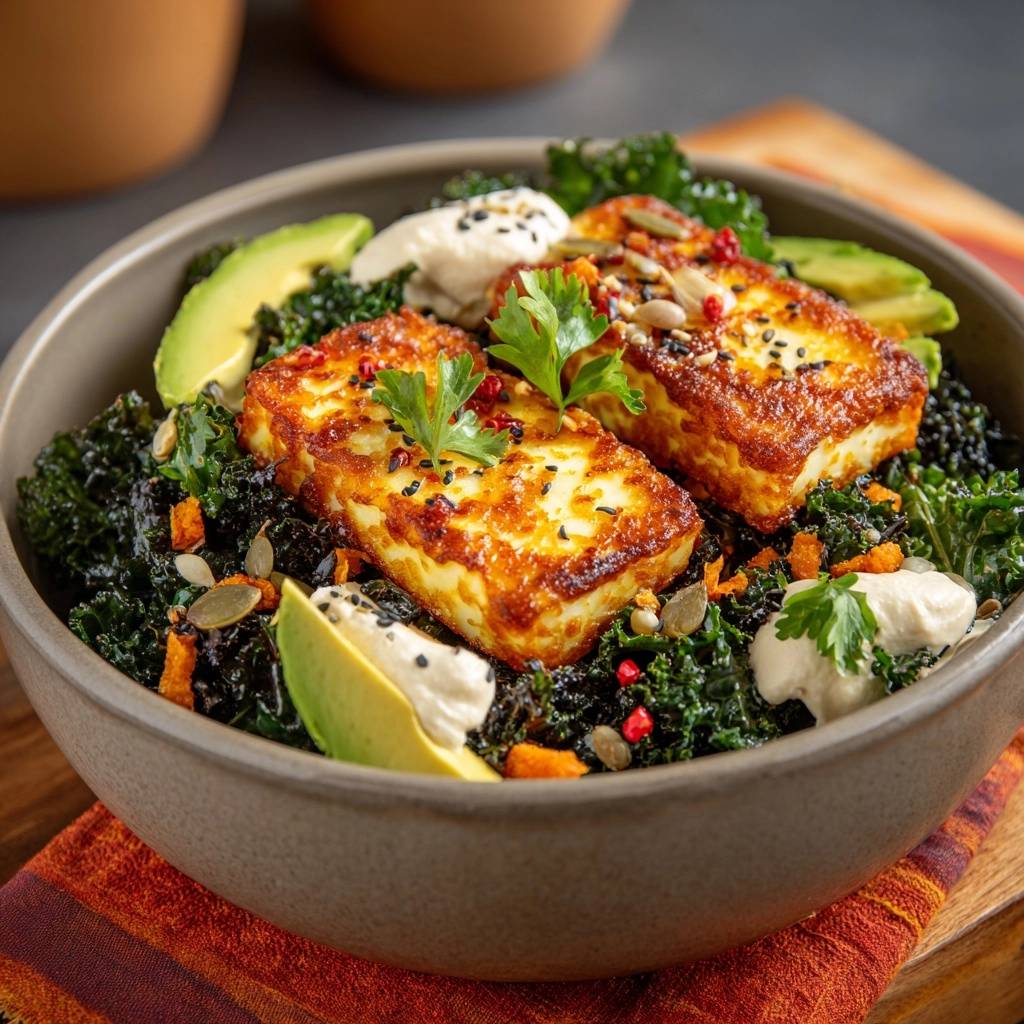
Placing dry cheese onto a hot, un-oiled non-stick surface might feel counterintuitive, but it’s the best way to control the crust. Without extra oil floating in the pan, the cheese makes direct contact with the heat source. This immediate contact triggers the browning process instantly, locking in the moisture inside the cheese rectangle while the outside becomes firm and crunchy.
For perfectly golden halloumi, see how to achieve crispy halloumi in this Halloumi Kale Power Bowl.
Essential Components for the Halloumi Kale Bowl
Every ingredient in this bowl serves a specific purpose for flavor and balance. I prefer curly kale over Lacinato (dino) kale for this specific recipe because the ruffled edges catch the hummus and pomegranate seeds better. The kale provides a sturdy, fibrous base that stands up to the warm toppings without wilting into a soggy mess.
Smoked paprika is non-negotiable here. It doesn’t just add a hint of woodsy flavor; it provides that deep, rich mahogany color that makes the cheese look professionally prepared. To finish, pomegranate seeds are essential. Their bright, tart juice cuts through the heavy saltiness of the halloumi and the creaminess of the avocado, acting as a natural palate cleanser between bites.
Selecting and Slicing Your Halloumi
When shopping, look for a halloumi that uses a traditional blend of sheep and goat milk, as these often have a richer flavor than 100% cow milk versions. Aim for slices that are approximately 1/2 inch thick. If you slice them too thin, the cheese will crisp up but lose its soft interior; too thick, and the center won’t warm through by the time the outside is browned.
The Role of Healthy Fats: Avocado and Hummus
You might notice there isn’t a traditional vinaigrette for this bowl. That’s because the creaminess of the ripe avocado and the tahini-rich hummus act as a built-in dressing. As you eat, these components mix with the lemon juice from the massaged kale to create a rich, velvety sauce that coats every leaf and potato cube.
Step-by-Step: Roasting the Sweet Potato Base
Start by preheating your oven to 400°F. When prepping your sweet potato, aim for a 1/2-inch dice. This is the “golden ratio” for roasting because it provides enough surface area for caramelization while ensuring the inside turns buttery and soft within 20 minutes. If the cubes are too large, the outsides will burn before the centers are tender.
Toss the cubes with olive oil, garlic powder, and a pinch of salt right on the baking sheet. The garlic powder provides a savory, umami foundation that complements the salty cheese. Spread them out so they aren’t touching; if the pan is crowded, the potatoes will steam instead of roasting, and you’ll miss out on those crispy edges.
The Secret to Tender, Non-Bitter Kale
Raw kale can be tough and bitter, but a quick massage changes everything. When you rub the kale with lemon juice and olive oil, you are physically breaking down the tough cellulose structure of the leaves. The acid in the lemon juice also helps to neutralize the bitter compounds, making the greens much more palatable.
Use your hands to firmly squeeze and rub the leaves for about two minutes. You’ll know it’s ready when the volume of the kale has reduced by nearly half and the color has shifted to a vibrant, dark forest green. At this point, the kale will be tender enough to eat comfortably while still retaining a pleasant crunch that contrasts with the soft sweet potatoes.
Executing the Mahogany Halloumi Crust
Once your kale and potatoes are ready, it’s time for the main event. Heat your non-stick skillet over medium-high heat until a drop of water flicked onto the surface sizzles and disappears instantly. Place your paprika-dusted, bone-dry halloumi slices into the pan. Now comes the hard part: don’t touch them.
You need to wait for the “patience phase.” After about 2 to 3 minutes, the cheese will naturally release from the pan. If you try to flip it and it sticks, it’s not ready yet. Once it flips easily, you’ll see a gorgeous, deep mahogany crust. Sear the other side for another 2 minutes. The high heat locks the moisture inside, ensuring the cheese is soft and gooey rather than tough.
Assembling the Bowl for Maximum Visual Appeal
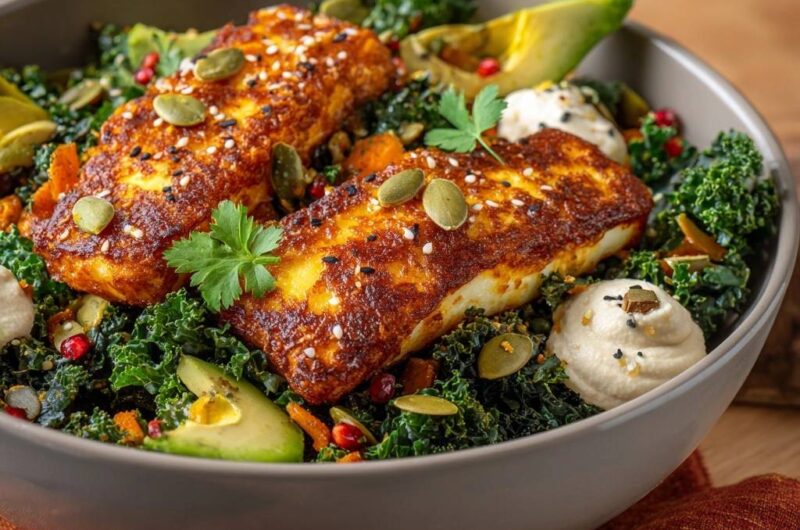
Plating this bowl is all about the “deconstructed” look. Start with a generous bed of the massaged kale and roasted sweet potato mixture. Instead of smearing the hummus, use a piping bag or a small spoon to place two distinct, clean dollops on the side. This keeps the flavors separate until you’re ready to mix them.
Shingle the avocado slices next to the hummus for a professional touch. Place the warm halloumi slices right on top of the kale so the heat slightly softens the greens further. Finally, layer your crunch. Sprinkle the pumpkin seeds, sesame seeds, and pomegranate seeds over the top. The multi-tonal colors make the dish look as good as it tastes.
Flavor Variations and Ingredient Swaps
If you want to switch things up, roasted butternut squash or kabocha squash makes an excellent substitute for sweet potato. Both offer a similar sweetness that balances the halloumi. For the crunch factor, toasted walnuts or slivered almonds can stand in for pumpkin seeds if that’s what you have in your pantry.
Round Out Your Meal
Explore more satisfying recipes that complement the flavors of your kale bowl.
- For a flavorful start to any meal, consider these gourmet bagel toppings, offering a variety of textures and tastes.
- If you enjoyed the savory elements of the halloumi, you might also like these spinach and feta puff pastry pinwheels for a delightful bite.
For those who like a bit of heat, a sprinkle of Aleppo pepper or red chili flakes over the finished bowl adds a nice kick. Aleppo pepper is particularly good because it offers a mild, fruity heat that doesn’t overpower the delicate flavor of the cheese. You could also swap the parsley for fresh mint to give the bowl a more Mediterranean flair.
Avoiding Common Halloumi Mistakes
The most common mistake is panicking if the cheese starts to “leak” water in the pan. This usually happens if the cheese wasn’t patted dry enough or if the pan wasn’t hot enough. If this happens, quickly remove the cheese, wipe the pan dry, increase the heat, and try again. It’s a quick fix that saves the texture.
Also, avoid using a stainless steel pan for this dry-sear method unless you are very experienced with heat management. Halloumi is prone to sticking to stainless steel without a significant amount of oil. Stick to a high-quality non-stick skillet to ensure those beautiful crusts stay on the cheese and not on the bottom of your pan.
Expert Tips for Meal Prep and Storage
Halloumi is at its absolute peak the moment it leaves the pan. As it cools, the proteins begin to tighten back up, and that famous “squeak” returns. If you are meal prepping, I recommend roasting the sweet potatoes and massaging the kale ahead of time. Store them in the fridge for up to four days.
When you’re ready to eat, simply reheat the kale and potato base in the microwave or a pan, then sear the halloumi fresh. It only takes five minutes to cook the cheese, and the difference in texture is worth the extra effort. If you must store cooked halloumi, reheat it in a dry pan over medium heat to try and regain some of that lost crispness.
Troubleshooting Your Halloumi Bowl
Why is my halloumi still squeaky?
Squeakiness is usually a sign of undercooking or excess moisture. If the cheese hasn’t reached that deep mahogany color, the proteins haven’t broken down enough to soften the interior. Next time, ensure the cheese is bone-dry and leave it in the pan a few seconds longer. You can also try a slightly lower temperature for a longer duration to melt the inside more thoroughly.
Can I use a different cheese?
If you can’t find halloumi, look for “bread cheese” (Juustoleipä) or a firm Paneer. Bread cheese reacts very similarly to halloumi when heated. Paneer won’t get quite as melty on the inside, but it takes a sear beautifully. Just keep in mind that Paneer is much milder, so you may want to add a bit more salt or seasoning to your kale base.
How do I keep the avocado from browning?
The best way to prevent browning is to slice the avocado at the very last second. However, if you’re prepping ahead, toss the slices in a little extra lemon juice. The acid slows down the oxidation process. You can also keep the pit in the container with the sliced avocado to help keep it green for an hour or two.
Is this bowl suitable for a vegan diet?
To make this vegan, you can substitute the halloumi with extra-firm tofu. Press the tofu for at least 30 minutes to remove all water, then slice it into rectangles. Season with nutritional yeast, smoked paprika, and a splash of liquid smoke before searing in a pan with a little oil. It won’t have the same salty “chew” as halloumi, but it provides a similar high-protein experience.
Halloumi Kale Bowl
Course: Main CourseCuisine: Mediterranean and AmericanDifficulty: easy2
servings15
minutes10
minutes510
kcal25
MinutesA nutritious and vibrant bowl featuring massaged kale, roasted sweet potatoes, and avocado, topped with halloumi cheese seared using a special moisture-wicking technique to ensure a crispy exterior and soft interior.
Ingredients
8 ounces halloumi cheese, sliced into thick rectangles
4 cups fresh curly kale, stems removed and finely chopped
1 large sweet potato, peeled and diced into 1/2-inch cubes
1 ripe avocado, sliced
1/2 cup hummus (for dolloping)
2 tablespoons pumpkin seeds (pepitas)
1 tablespoon white and black sesame seeds
2 tablespoons pomegranate seeds
2 tablespoons olive oil (divided)
1 tablespoon lemon juice
1 teaspoon smoked paprika
1/2 teaspoon garlic powder
Fresh parsley for garnish
Directions
- Roast the Base: Preheat your oven to 400°F (200°C). Toss the diced sweet potatoes with 1 tablespoon of olive oil, garlic powder, and a pinch of salt. Spread on a baking sheet and roast for 20 minutes until tender. (The image shows roasted orange segments mixed into the kale).
- Prep the Cheese: The most important step to avoid rubbery cheese is to pat the halloumi slices extremely dry with paper towels. Any surface moisture will steam the cheese instead of searing it.
- Season: Dust the dried halloumi slices lightly with smoked paprika on both sides. This provides the deep mahogany color seen in the image.
- The Dry Sear: Place a non-stick skillet over medium-high heat. Do not add oil yet. Adding oil too early prevents the cheese from developing that specific crust. Place the dry cheese slices directly onto the hot pan.
- Cook: Sear for 2 to 3 minutes per side. Only flip when the cheese releases easily from the pan and shows a deep, golden-brown, textured crust. This high-heat dry sear locks in the moisture so the inside stays soft.
- Massage the Kale: While the cheese cooks, place the chopped kale in a large bowl. Drizzle with the remaining olive oil and lemon juice. Use your hands to massage the kale for 2 minutes until it turns dark green and tender. Fold in the warm roasted sweet potatoes.
- Assemble: Divide the kale and sweet potato mixture into two bowls. Top with the warm, crispy halloumi slices.
- Garnish: Add two large dollops of hummus to each bowl using a piping bag or spoon for a clean look. Arrange avocado slices and a sprinkle of pomegranate seeds.
- Finish: Top the halloumi directly with pumpkin seeds, sesame seeds, and fresh parsley as shown in the image. Serve immediately while the cheese is at its peak texture.
Notes
- The secret to avoiding a rubbery texture is to pat the cheese extremely dry and use a dry-sear method without oil in the pan initially. For the best presentation, use a piping bag for the hummus and garnish with fresh pomegranate seeds.