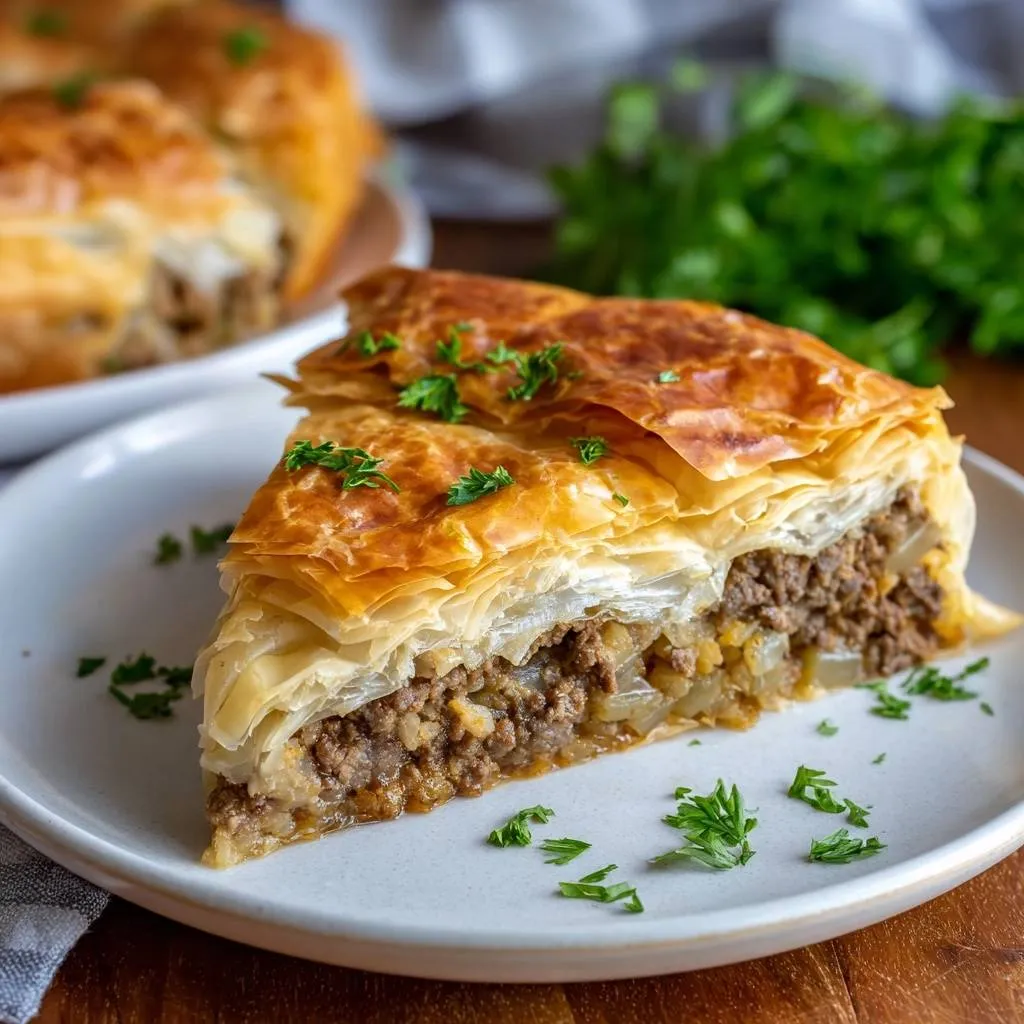
You’ve likely experienced the heartbreak of a meat pie that looks stunning on top but hides a greasy, waterlogged mess underneath. That disappointing, limp pastry happens because moisture from the meat and vegetables migrates downward during baking, turning your crust into a soggy sponge. This Golden Beef Phyllo Pie changes the game by using a specific layering technique and moisture-control method that ensures every single bite is shatteringly crisp from top to bottom.
This dish is more than just a meal; it’s a structural masterpiece that balances the delicate nature of Mediterranean pastry with a hearty, savory center. We aren’t just throwing ingredients into a pan. We’re engineering a pie that maintains its integrity even after it’s sliced. The warm, aromatic blend of cinnamon and allspice provides a deep, savory profile that feels sophisticated yet incredibly comforting.
The secret to this success lies in the moisture barrier. By using a thin layer of plain breadcrumbs between the buttered sheets, we create a “sponge” that catches stray juices before they ever touch the bottom crust. This professional trick, combined with fully cooling your filling before assembly, guarantees that your phyllo stays light and airy rather than becoming a leathery, steamed disappointment.
The Anatomy of a Crisp Golden Beef Phyllo Pie
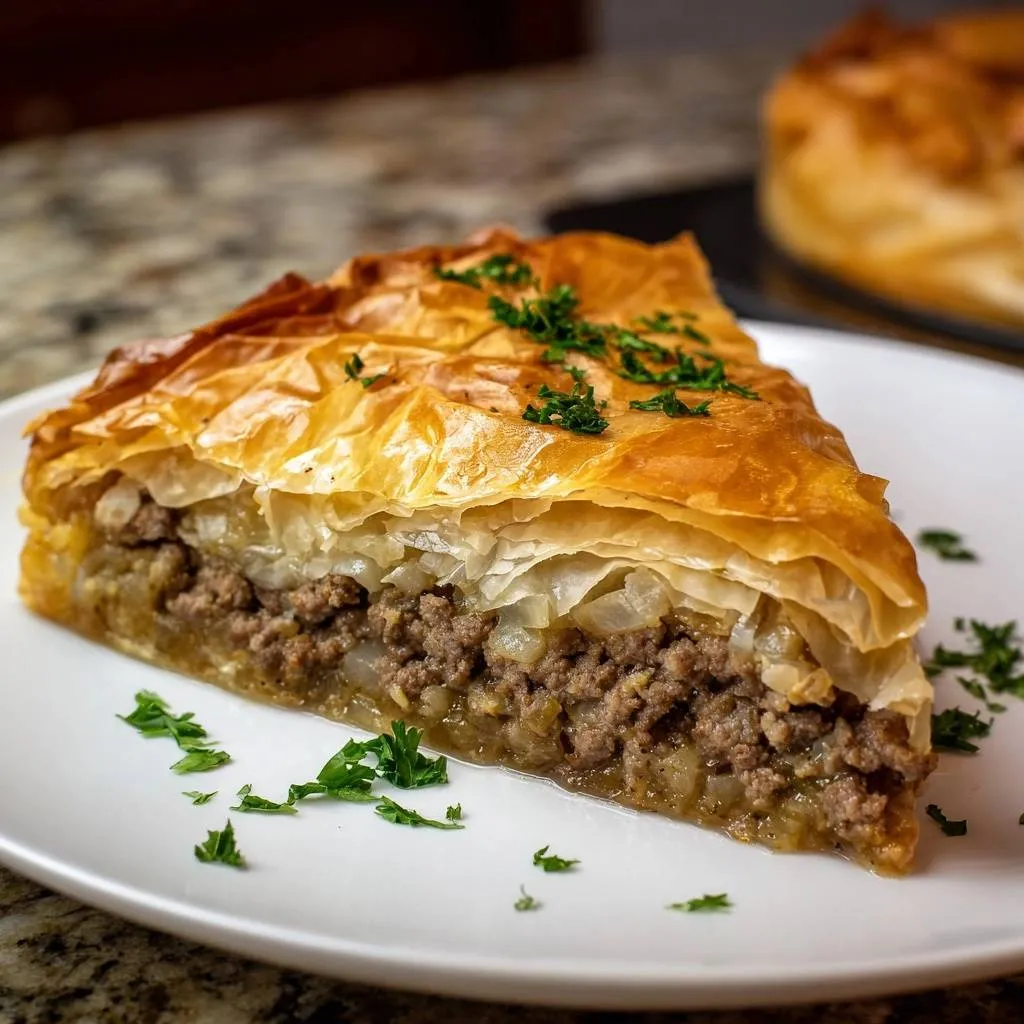
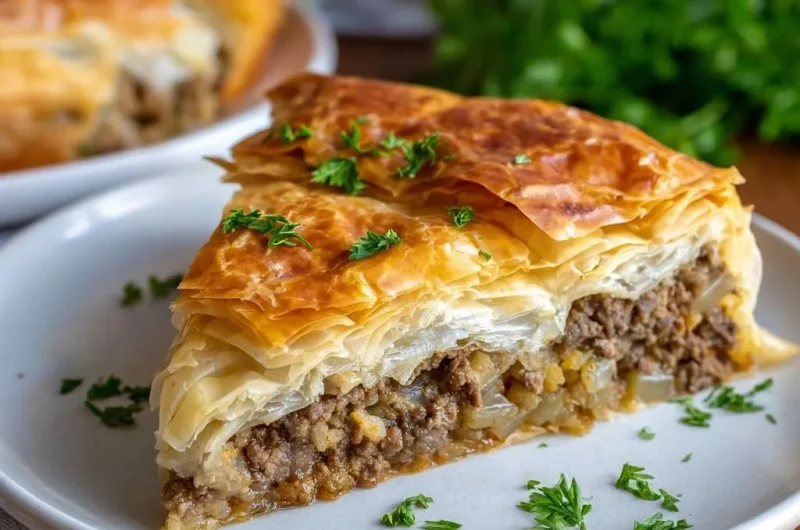
A perfect phyllo pie relies on the contrast between its structural components. You want a top that crackles loudly when the knife hits it, revealing a dense, spiced interior that stays together. The exterior should be a deep mahogany, indicating that the butter has effectively fried the paper-thin layers of dough into a golden lattice.
Inside, the beef shouldn’t be swimming in sauce. Instead, it should be moist but “tight,” held together by finely softened onions and the natural proteins of the meat. This crunch factor is the defining characteristic of the dish. When you achieve that perfect ratio of flaky pastry to savory filling, you’ve mastered one of the most satisfying textures in the culinary world.
Essential Components for the Spiced Beef Filling
Quality starts with the meat. I recommend using 1.5 pounds of lean ground beef, ideally a 90/10 or 93/7 blend. While fat usually equals flavor, too much rendered fat in a phyllo pie is the enemy of a crisp crust. The lean beef provides the bulk and protein without leaving a puddle of oil at the bottom of your baking dish.
The flavor profile is built on an aromatic trio of yellow onions, garlic, and fresh parsley. Yellow onions are preferred here because they have a higher sugar content than white onions, allowing them to caramelize slightly and add a natural sweetness. Garlic and parsley provide the sharp, herbaceous notes that cut through the richness of the buttered pastry.
Don’t be intimidated by the cinnamon and allspice. These aren’t here to make the pie taste like dessert. Instead, they provide a “warm” savory depth that is traditional in Middle Eastern and Mediterranean meat pies. If you like a little kick, the optional red pepper flakes provide a beautiful balance to these warmer spices without overwhelming the palate.
Selecting and Handling Delicate Phyllo Sheets
Phyllo dough is notoriously finicky, but it’s easy to manage once you know the rules. For this recipe, standard thin sheets work best as they allow for more layers and more air pockets. The most important step happens 24 hours before you start cooking: you must thaw the dough in the refrigerator.
Never try to thaw phyllo on the counter at room temperature. The rapid temperature change causes condensation inside the plastic, which makes the sheets stick together and tear. Keep the dough in its wrapper until the very moment you are ready to assemble the pie. If you’re working in a dry kitchen, keep a slightly damp (not wet!) kitchen towel over the stack of sheets to prevent them from becoming brittle.
The Role of Fats and Moisture Barriers
We use a full cup of melted unsalted butter for a reason. While oil might seem easier, butter contains milk solids that brown beautifully and provide that classic, nutty flavor. It’s the key to achieving the “Golden” part of the Golden Beef Phyllo Pie. Always use unsalted butter so you can control the seasoning of the dish yourself.
Then there’s our secret weapon: 1/4 cup of plain breadcrumbs. These act as a desiccant, or a drying agent. By sprinkling them between the bottom layers, you create a buffer zone. If the meat releases any juice during the 45-minute bake, the breadcrumbs absorb it instantly, protecting the pastry layers underneath from turning into mush.
Phase 1: Preparing the Moisture-Controlled Meat Filling
Start by browning your beef in a large skillet over medium-high heat with a touch of olive oil. Here is the “Dry Meat” rule: once the beef is browned, you must drain it. I actually recommend pouring the meat into a colander to let every drop of liquid and fat escape. This might seem extreme, but residual fat is the primary reason for a greasy pie.
Return that dry meat to the pan and add your diced onions and garlic. Sauté them for about 8 to 10 minutes. You’re looking for the onions to become translucent and soft. More importantly, you want to see that any moisture released by the vegetables has completely evaporated from the pan. Once the mixture looks dry and smells fragrant, stir in your spices and parsley.
The Cooling Requirement: Preventing Internal Steam
This is the most critical technical step in the entire process. You must let the beef filling reach room temperature before it touches the dough. If you put hot filling onto cold, buttered phyllo, you create immediate steam. That steam gets trapped between the layers of dough, resulting in a leathery, chewy texture instead of a crisp one.
To speed this up, spread the meat mixture out on a flat baking sheet rather than leaving it in a deep bowl. This increases the surface area and lets the heat escape quickly. It should feel cool to the touch before you even think about opening that package of phyllo dough. Patience here pays off in the final crunch.
Phase 2: Engineering the Multi-Layered Pastry Base
Preparation of the pan is key. Brush your springform pan or pie plate generously with butter and add your first sprinkle of breadcrumbs. When you start layering the first 10 sheets of phyllo, use a “Radial Rotation” technique. This means you lay a sheet down, brush it with butter, and then rotate the next sheet slightly so the corners point in a different direction.
This rotation ensures that the overhanging dough covers the entire circumference of the pan evenly. You aren’t just stacking; you’re building a foundation. Make sure you brush every single sheet thoroughly. The butter creates tiny air pockets between the layers, a process known as lamination, which is what makes the pastry puff and flake.
Applying the Breadcrumb Shield
You’ve already put some breadcrumbs on the very bottom of the pan, but the most important application happens on the 10th layer. Right before you pour in the meat, sprinkle the remaining breadcrumbs over the buttered phyllo. This creates a direct barrier between the meat and the pastry. It’s a simple step that makes a massive difference in the structural integrity of the bottom crust.
Phase 3: Assembly and the Crinkle-Top Technique
Spread your cooled beef filling evenly over the breadcrumb-covered base. Fold those overhanging edges back over the meat to seal it in. Now, for the top 8 sheets, we want to create visual interest and extra crunch. Instead of laying them perfectly flat, try the “crinkle” method. Slightly bunch or fold the top two layers as you lay them down.
For another taste of tender, savory goodness, check out these Swedish meatballs in creamy sauce.
This bunching creates more surface area. More surface area means more spots for the butter to brown and more edges to become shatteringly crisp. It gives the pie a rustic, professional look that suggests it came straight from a high-end bakery. Tuck any remaining excess edges down into the sides of the pan for a clean finish.
The Scoring Secret: Why You Must Cut Before Baking
Steam always needs an exit strategy. If you don’t give it one, it will force its way out, causing the pie to “dome” or explode at the seams. Take a very sharp knife and score the top layers of the phyllo into 8 wedges before you put it in the oven. You don’t need to cut all the way through to the bottom, just through the top pastry layers.
This scoring allows the internal steam from the onions and meat to vent out cleanly. It also makes serving much easier later on. Since phyllo is so brittle once baked, trying to cut it fresh out of the oven usually results in the top layer shattering into a million pieces. Pre-cutting solves both problems at once.
Thermal Precision: Baking for Maximum Crunch
Set your oven to 375°F (190°C) and place the rack in the middle position. This allows the heat to circulate evenly around the top and bottom of the pan. You are looking for a “Mahogany” brown color, not just a light tan. If the pie looks pale, it won’t have that signature crunch. It usually takes about 40 to 45 minutes to reach this stage.
Keep an eye on it during the last 10 minutes. If the top is browning too quickly but the center feels like it needs more time, you can loosely tent a piece of foil over the top. However, don’t pull it out too early. That deep golden color is the signal that the butter has fully cooked the flour in the dough, ensuring a long-lasting crispness.
Post-Oven Protocol: The 15-Minute Rest
I know it smells incredible, but you must wait. Let the pie rest in the pan for at least 15 minutes after you pull it out of the oven. This period allows for carry-over cooking, where the heat finishes setting the proteins in the meat. If you cut into it immediately, the juices will run, and you’ll ruin that bottom crust you worked so hard to protect.
During this rest, the internal structure firms up. This ensures that when you finally lift a wedge out of the pan, it stays tall and proud on the plate. The bottom will have had time to slightly “cure” against the breadcrumbs, making it sturdy enough to hold by hand if you’re feeling casual. Garnish with a little extra fresh parsley right before serving for a pop of color.
Troubleshooting Your Golden Beef Phyllo Pie
If your pastry is shattering too much and seems overly dry, you might have used a bit too much butter or left it in the oven five minutes too long. Next time, try a slightly lighter hand with the brush. On the flip side, if the center feels soft or “wiggly,” it usually means the filling was still too wet or your oven temperature was running low. Using an oven thermometer can help ensure you’re hitting that 375°F mark accurately.
If you notice the top browning too fast, don’t panic. Just drape a piece of aluminum foil over the top like a tent. Don’t seal it tight, or you’ll trap steam and make the pastry soggy. The tent just deflects the direct heat while allowing the middle of the pie to finish cooking through. This is a common fix for deep-dish pies that require longer bake times.
Make-Ahead Strategies and Storage
This pie is a fantastic candidate for make-ahead meals. You can assemble the entire pie, score it, and then wrap it tightly in plastic wrap and foil to freeze it unbaked. When you’re ready to eat, bake it straight from the freezer. You’ll just need to add about 15 to 20 minutes to the total baking time. It tastes just as fresh as the day you made it.
For leftovers, whatever you do, stay away from the microwave. Microwaves turn phyllo into a rubbery, sad mess. Instead, reheat slices in a 350°F oven for about 10 minutes or use an air fryer for 3 to 5 minutes. This will reactivate the butter and bring that “shatter” back to the crust. Store any leftovers in an airtight container in the fridge for up to three days.
Optimal Side Dish Pairings
Because this pie is rich and buttery, it pairs best with acidic or creamy sides that can cut through the fat. A lemon-tahini dressed cucumber salad is a perfect match. The brightness of the lemon and the crunch of the cucumbers provide a refreshing contrast to the warm spices in the beef. It keeps the meal feeling light despite the hearty pastry.
Another great option is a dollop of thick Greek yogurt mixed with dried mint and a grated clove of garlic. The cool creaminess of the yogurt acts as a sauce for the pie. If you want something warmer, roasted root vegetables with a balsamic glaze offer a sweet and tangy side that complements the cinnamon and allspice beautifully. These pairings turn a single pie into a complete, balanced feast.
How do I store leftovers so they stay crispy?
Store leftovers in an airtight container in the refrigerator for up to 3 days. To maintain the crispness, never reheat in a microwave. Instead, place slices on a baking sheet in a 350°F oven for 10 minutes or use an air fryer at 320°F for 4-5 minutes. This helps the butter crisp up the layers again without making the dough chewy.
Why did my phyllo dough crack while I was working with it?
Phyllo cracks when it dries out. This usually happens if it wasn’t thawed properly in the fridge or if it was left exposed to the air for too long. To prevent this, keep the stack of dough covered with a slightly damp kitchen towel while you work, and only take out one sheet at a time. If a sheet does crack, don’t worry—just brush it with butter and keep layering; the butter acts as “glue” and the cracks won’t be visible once baked.
Can I substitute the ground beef with something else?
Yes, you can use ground lamb or ground turkey. If using lamb, be even more diligent about draining the fat, as lamb is naturally much greasier than beef. If using turkey, you may need to add a teaspoon of olive oil to the pan while browning since it is very lean. The key is to ensure whatever protein you use is cooked until dry before adding it to the pastry.
What if I don’t have a springform pan?
A 9-inch deep-dish pie plate or a ceramic baking dish will work perfectly fine. The advantage of a springform pan is that you can remove the sides to show off the golden edges of the pastry, but the flavor and crunch will be exactly the same in a standard pie dish. Just make sure the dish is at least 2 inches deep to accommodate all the layers.
Is there a substitute for the breadcrumbs?
If you don’t have breadcrumbs, you can use very finely crushed crackers or even a small amount of semolina flour. The goal is to have a dry ingredient that can absorb moisture. Avoid using flour, as it can become pasty when mixed with the meat juices. Breadcrumbs are the gold standard for this specific “moisture barrier” technique.
Beef Phyllo Pie
Course: Main CourseCuisine: Mediterranean-American FusionDifficulty: medium8
servings25
minutes45
minutes450
kcal70
MinutesThis savory meat pie uses lean ground beef seasoned with warm spices like cinnamon and allspice, encased in layers of buttery, flaky phyllo dough. The recipe focuses on specific techniques-draining meat, cooling the filling, and using breadcrumbs-to prevent the common issue of a soggy bottom crust.
Ingredients
1.5 pounds lean ground beef
2 large yellow onions, finely diced
3 cloves garlic, minced
1 teaspoon ground cinnamon
1 teaspoon ground allspice
1/2 teaspoon red pepper flakes (optional)
Salt and black pepper to taste
1/2 cup fresh parsley, chopped
1 package (16 oz) phyllo dough, thawed
1 cup unsalted butter, melted
1/4 cup plain breadcrumbs (for the moisture barrier)
1 tablespoon olive oil
Directions
- Preheat your oven to 375°F (190°C).
- In a large skillet over medium-high heat, add the olive oil and brown the ground beef. This is the first secret to a crisp pie: cook the meat until it is fully browned and then drain every drop of liquid and fat from the pan using a colander.
- Return the dry meat to the pan and add the diced onions and garlic. Sauté for 8-10 minutes until the onions are translucent and any remaining moisture has completely evaporated. Stir in the cinnamon, allspice, salt, pepper, and red pepper flakes. Remove from heat and stir in the fresh parsley. Let the filling cool to room temperature (adding hot filling to phyllo creates steam, which causes sogginess).
- Brush a 9-inch round springform pan or deep-dish pie plate generously with melted butter. Sprinkle 2 tablespoons of the breadcrumbs evenly over the bottom of the buttered pan. These breadcrumbs act as a moisture barrier, absorbing any residual juices so the bottom pastry stays dry and crisp.
- Layer 10 sheets of phyllo dough into the pan one by one. Brush each individual sheet thoroughly with melted butter and rotate them slightly so the corners hang over the edges in a circular pattern. Sprinkle the remaining 2 tablespoons of breadcrumbs over the 10th layer of phyllo before adding the meat.
- Spread the cooled beef filling evenly over the phyllo base.
- Fold the overhanging edges of the phyllo back over the meat. Layer 8 more sheets of phyllo on top, brushing each with butter. For the visual “crinkled” effect shown in the image, slightly bunch or fold the top two layers as you lay them down. Tuck the excess edges down into the sides of the pan.
- Use a very sharp knife to score the top layers of phyllo into 8 wedges before baking. This allows steam to escape from the meat during cooking, preventing the pastry from becoming tough or steamed from the inside.
- Bake for 40 to 45 minutes until the top is a deep, mahogany golden brown.
- Let the pie rest in the pan for 15 minutes. This allows the internal structure to set so the slices stay tall and the bottom remains crisp when moved to a plate. Garnish with extra fresh parsley before serving.
Notes
- Ensure the meat filling is completely cooled to room temperature before assembling to prevent steam from softening the phyllo. Scoring the top layers before baking is essential for steam release.