You’ve likely experienced the disappointment of a sad, wilted salad that looks more like a swamp than a meal. It’s a common frustration for anyone trying to eat healthy on a busy schedule. Most greens simply give up the ghost the moment they touch dressing, leaving you with a soggy mess by lunchtime.
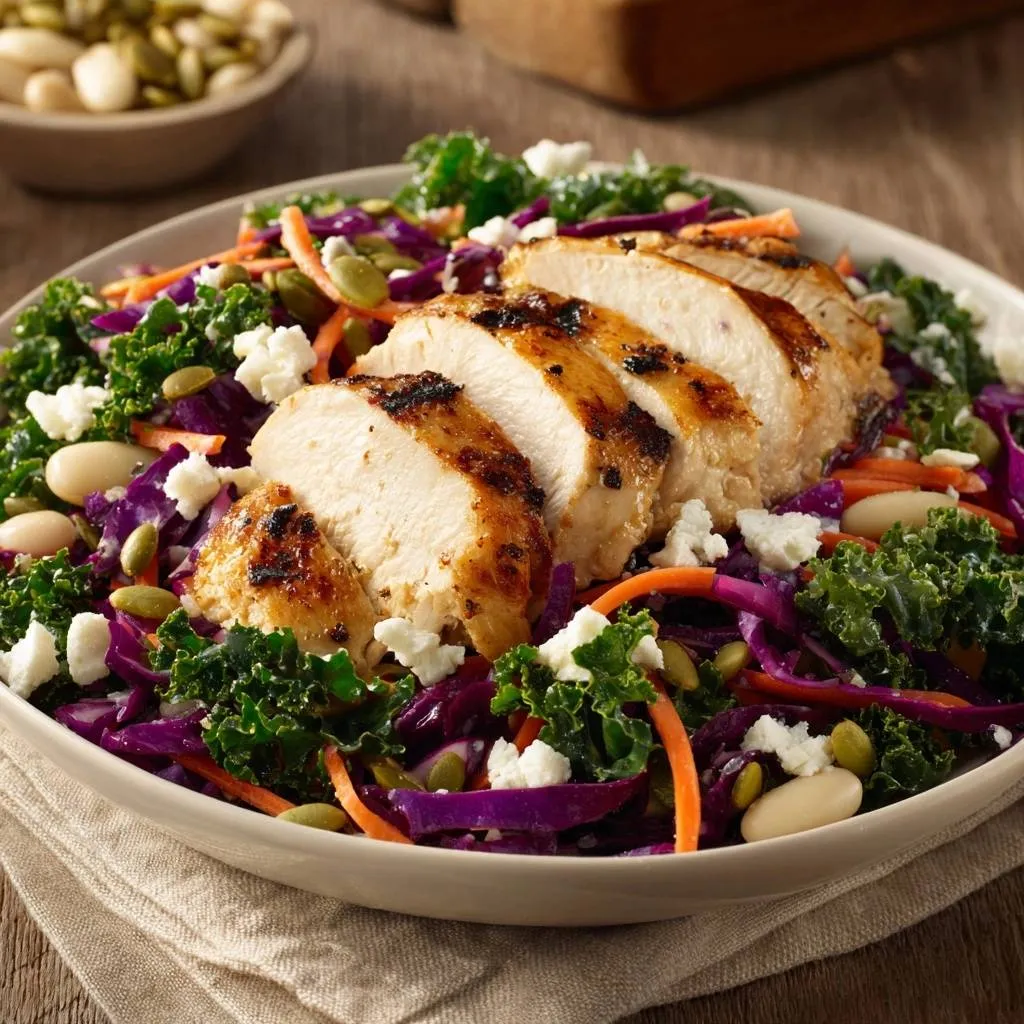
This Grilled Chicken Kale and Cabbage Power Salad changes the game entirely. It’s built on a foundation of “power” ingredients that offer incredible nutrient density and, more importantly, structural integrity. This isn’t just a side dish; it’s a robust, satisfying meal designed to stay crunchy and vibrant for hours or even days.
The secret to this recipe’s success lies in a specific mechanical technique used to prep the greens. By massaging the kale with a fat-based barrier, you’re not just softening the leaves; you’re chemically protecting them from moisture. This ensures every bite remains as crisp as the moment you made it.
The Science of Massaging Kale for Texture
Kale is notorious for its tough, fibrous texture, which comes from a complex network of cellulose and lignins. These are the same structural components that allow the plant to stand tall in a garden during a frost. However, they make for a pretty chewy and unpleasant raw salad if you don’t treat them correctly.
When you massage kale with olive oil and lemon juice, you’re performing a manual breakdown of these cell walls. As you firmly work the leaves between your fingers for two to three minutes, you’ll feel the texture shift. The leaves transform from a light, dusty green and a stiff, paper-like feel to a deep, translucent forest green with a silky, tender mouthfeel.
Furthermore, the olive oil acts as a hydrophobic barrier. By coating the broken-down fibers in fat before they sit too long with the acidic lemon juice, you prevent the acid from “cooking” the greens into a limp state. This mechanical action also releases a slight sweetness from the kale, balancing its natural bitterness perfectly.
Essential Components for the Power Salad Base
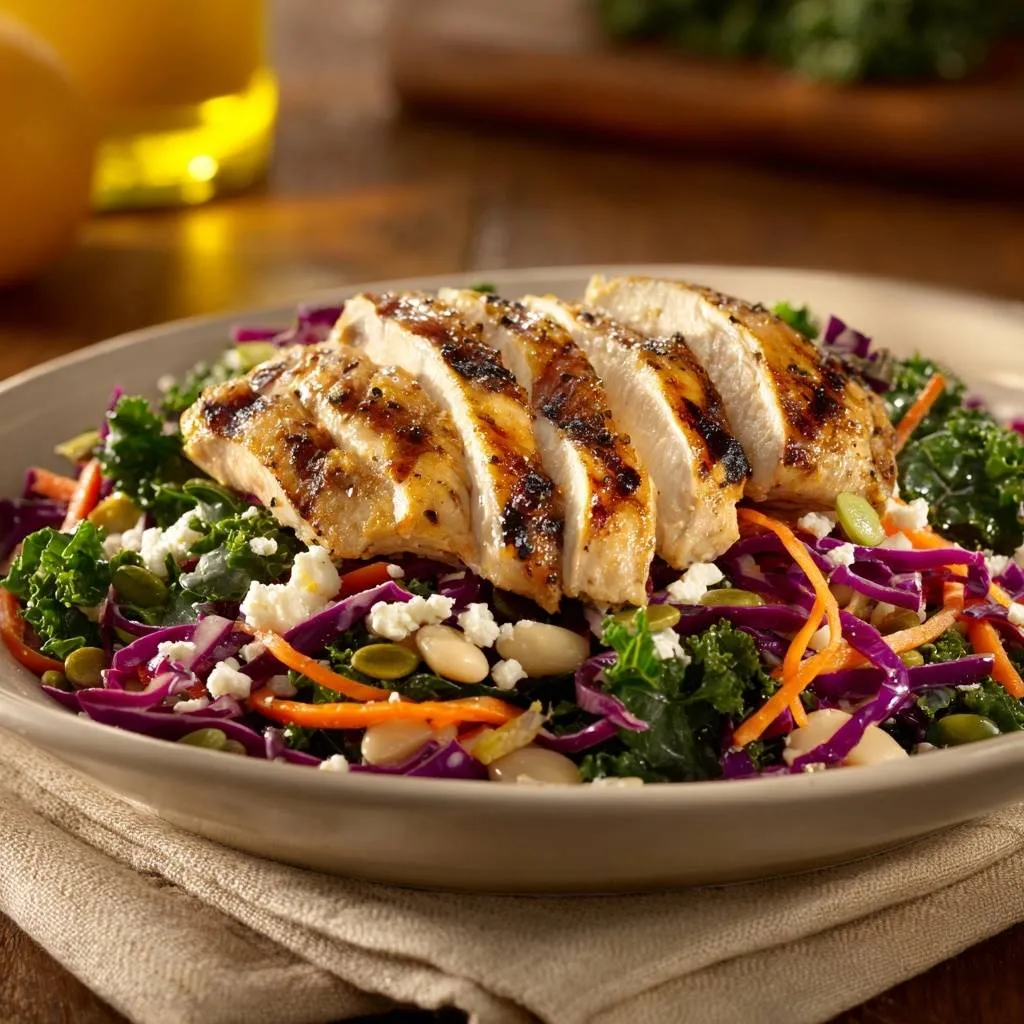
Curly kale is the preferred choice here because its ruffled edges create thousands of tiny pockets to hold the dressing and feta crumbles. While Lacinato (Dino) kale is delicious, curly kale provides more volume and a more satisfying “crunch” when properly massaged. It acts as the sturdy backbone of the entire bowl.
Red cabbage is the unsung hero of longevity in this dish. It contains high levels of anthocyanins, which are powerful antioxidants, but practically speaking, it stays crunchy much longer than green cabbage. Its vibrant purple hue also provides a stunning visual contrast against the dark greens and orange carrots.
Julienned carrots are essential because their thin, matchstick shape maximizes surface area. This allows them to soften just slightly while still providing a snap of sweetness. Finally, the cannellini beans add a creamy, buttery texture that contrasts with the crunch, providing a boost of plant-based protein and fiber to keep you full until dinner.
Sourcing Quality Chicken and Produce
When shopping, look for kale bunches that are vibrant and springy; avoid any bags with yellowing edges or a slimy feel. For the cabbage, choose a head that feels heavy for its size and has tightly packed leaves. A dense cabbage is a fresh cabbage that will yield the best crunch.
For the protein, air-chilled chicken breasts are the gold standard. Most commercial chicken is chilled in water baths, which causes the meat to soak up excess moisture. Air-chilled chicken retains its natural juices, leading to a better sear on the grill pan and a much more intense flavor after cooking.
Pantry Staples: Oils, Acids, and Aromatics
Extra virgin olive oil is more than just a cooking medium here; it’s a primary flavor component. Use a high-quality oil with a peppery finish to complement the earthy kale. Fresh lemon juice is non-negotiable because bottled juice often has a metallic aftertaste that can ruin the delicate balance of the honey and garlic.
The dry rub for the chicken relies on smoked paprika and garlic powder. The smoked paprika provides a “just-off-the-grill” aroma even if you’re using an indoor pan. Garlic powder is preferred over fresh garlic for the rub because it creates a uniform crust that won’t burn or become bitter over high heat.
Step-by-Step: Grilling the Perfect Chicken Breast
Start by patting your chicken breasts completely dry with paper towels. This is a crucial step; moisture on the surface of the meat creates steam, which prevents browning. Rub the spices evenly over both sides, pressing them in so they adhere during the flip.
Heat your grill pan until it’s nearly smoking before adding the oil. You want to hear a loud sizzle the moment the meat hits the metal. This high heat triggers the Maillard reaction, a chemical process between amino acids and reducing sugars that gives browned food its distinctive, savory flavor and those beautiful charred ridges.
Cook the chicken for about 5 to 6 minutes per side. Use a meat thermometer to pull the chicken at exactly 165°F. Once it’s off the heat, let it rest on a cutting board for at least 5 minutes. If you cut it too soon, the juices will run out, leaving you with dry, woody meat instead of succulent strips.
For an even crisper bite, check out this crispy chicken salad.
The “Anti-Soggy” Assembly Technique
The assembly order is the most important part of this recipe. You must massage the kale alone with the oil, lemon, and honey first. This ensures every leaf is fully coated and tenderized before the other ingredients are introduced. If you toss everything together at once, the cabbage and carrots will get in the way of the kale massage.
Once the kale is dark and silky, add the cabbage and carrots. Toss them thoroughly so they pick up the residual dressing. This secondary layer of vegetables provides a different type of crunch that holds up beautifully against the softened kale, creating a multi-dimensional texture in every forkful.
When adding the cannellini beans, use a gentle folding motion. You want to distribute them without smashing them into a paste. The goal is to keep the beans whole so they pop in your mouth, providing a creamy contrast to the seeds and greens. Finish by layering the chicken on top rather than mixing it in to keep the crust crisp.
Flavor Variations and Ingredient Swaps
If you want even more texture, try replacing the cannellini beans with roasted chickpeas. You can roast them in the oven with a little olive oil until they are crunchy. For a different cheese profile, goat cheese offers a tangy, creamy alternative to the salty bite of feta.
Vegetarians can easily swap the chicken for grilled halloumi or extra-firm tofu. If using tofu, press it for 20 minutes beforehand to remove excess water, then season it with the same smoked paprika rub. It will take on those grill marks beautifully and provide a similar “bite” to the chicken.
Maximizing Crunch: Seeds, Nuts, and Textures
Pumpkin seeds, or pepitas, are the secret weapon for crunch in this salad. They have a mild, nutty flavor that doesn’t overpower the greens. To take them to the next level, toast them in a dry skillet for 2 minutes until they start to pop and smell fragrant. This releases their natural oils and intensifies the flavor.
You can also experiment with slivered almonds or sunflower seeds for a different mouthfeel. The key is to use “structural” toppings. Unlike croutons, which act like sponges and soak up moisture, seeds and nuts have a natural oil content that allows them to stay crunchy even after being tossed with the greens.
For a similar crunch, explore the sesame ginger chicken salad and its anti-soggy method.
Meal Prep and Storage Strategies
This is one of the few salads that actually tastes better the next day. Because kale is so hardy, the 48-72 hour window in the fridge allows the flavors to meld without the greens breaking down. Store the salad in a glass airtight container if possible, as glass doesn’t retain odors like plastic can.
For the best experience, store the sliced chicken in a separate small container or on top of the greens. You can eat the chicken cold, which is delicious, or give it a quick 30-second zap in the microwave before adding it back to the cold salad. This temperature contrast between the warm chicken and chilled greens is a restaurant-level touch.
Troubleshooting Common Salad Pitfalls
If your kale still feels tough or “pokey” after massaging, you simply haven’t worked it long enough. Give it another minute of firm squeezing; you can’t really over-massage kale. If the salad tastes too salty, don’t panic. Add a handful of extra shredded cabbage or a tiny drizzle of honey to balance the palate.
If you find the salad has a bit of liquid at the bottom of the bowl after a day in the fridge, it’s likely from the beans or the cabbage. Simply give it a quick toss to redistribute the dressing. To prevent this, ensure your beans are dried very well after rinsing before they ever touch the greens.
Managing Moisture Levels
Moisture is the enemy of a long-lasting salad. After rinsing your cannellini beans, spread them out on a clean kitchen towel and pat them dry. Any water clinging to the beans will dilute the dressing and contribute to that “soggy” feeling you are trying to avoid.
Balancing the Acid-to-Fat Ratio
The balance between the lemon juice and olive oil is what makes the dressing sing. If the salad feels too sharp or acidic, add a teaspoon more of olive oil. If it feels heavy or greasy on the tongue, a quick squeeze of extra lemon will brighten the flavors and cut through the fat.
Expert Tips for Restaurant-Quality Presentation
Presentation is all about “bowl architecture.” Instead of using a deep, narrow bowl where everything gets buried, choose a wide, shallow pasta bowl. This allows you to spread the greens out and showcase the vibrant colors of the purple cabbage and orange carrots.
When slicing the chicken, always cut against the grain. This breaks up the muscle fibers, making the meat much more tender. Fan the slices out across the top of the greens in a decorative pattern. This not only looks professional but ensures you get a piece of chicken in every bite without having to dig through the bowl.
Frequently Asked Questions
Can I use pre-bagged kale for this recipe?
Yes, you can use pre-bagged kale, but it requires a little extra work. These bags often contain large, woody stems that are unpleasant to eat. Take a moment to pick through the kale and remove any thick stems before starting the massage process. You may also need to chop the pieces smaller for a better eating experience.
How do I prevent the chicken from drying out?
The most common mistake is overcooking the meat. Use a digital meat thermometer and pull the chicken off the heat as soon as it hits 165°F. The 5-minute resting period is also mandatory; it allows the muscle fibers to relax and reabsorb the juices. If you skip the rest, the juice will end up on your cutting board instead of in the meat.
Is there a substitute for the honey?
If you don’t have honey or prefer a vegan alternative, maple syrup or agave nectar work perfectly. They provide the necessary sweetness to balance the lemon and the viscosity needed to help the dressing cling to the kale during the massage. Avoid granulated sugar, as it won’t dissolve properly in the cold oil.
What other greens can be added to this mix?
You can mix in other hardy greens like shredded Brussels sprouts or Swiss chard. These have a similar cellular structure to kale and will hold up well. However, avoid soft greens like spinach, arugula, or butter lettuce. These delicate leaves will wilt almost instantly once they are massaged or dressed.
Round Out Your Meal
Complement your grilled chicken salad with these satisfying main courses.
- If you’re craving something hearty, explore the depths of slow-braised beef short ribs with this slow-braised beef short ribs recipe.
- For a lighter, flavorful option, consider skillet roasted cod with white beans and tomato, a wonderful skillet roasted cod preparation.
Can I grill the chicken in advance?
Absolutely. You can grill the chicken up to two days in advance. Store it whole in the fridge and slice it just before serving to keep it from drying out. While it’s great cold, you can also reheat the slices in a dry pan over medium heat for 60 seconds to bring back some of that freshly-grilled texture.
Grilled Chicken Salad
Course: Main CourseCuisine: AmericanDifficulty: easy2
servings15
minutes12
minutes440
kcal27
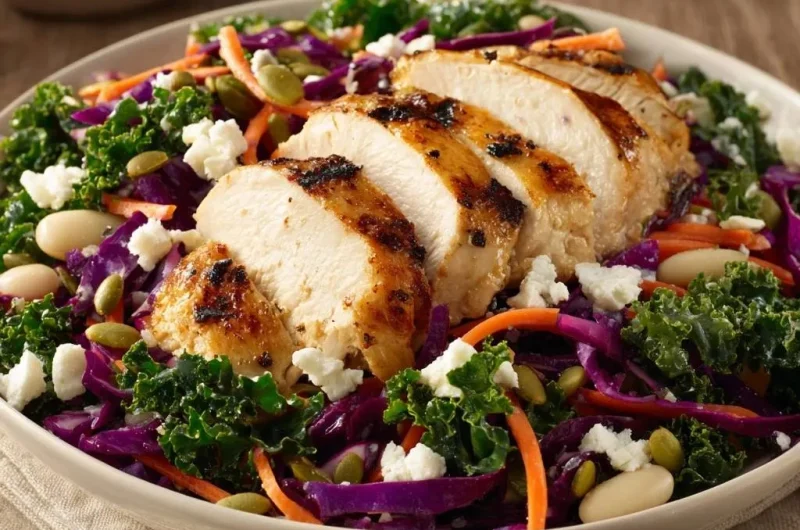
MinutesA nutrient-dense power salad featuring charred grilled chicken, tender massaged kale, and vibrant vegetables. The unique oil-massage technique ensures the greens stay crisp and flavorful, making it ideal for meal prep.
Ingredients
2 boneless skinless chicken breasts
4 cups chopped curly kale, stems removed
2 cups shredded red cabbage
1 cup julienned carrots
1/2 cup canned cannellini beans, rinsed and drained
1/4 cup pumpkin seeds (pepitas)
1/4 cup crumbled feta cheese
2 tablespoons olive oil (divided)
1 tablespoon lemon juice
1 teaspoon honey
1 teaspoon garlic powder
1/2 teaspoon smoked paprika
Salt and black pepper to taste
Directions
- Season the chicken breasts with garlic powder, smoked paprika, salt, and pepper. Heat a grill pan over medium-high heat with 1/2 tablespoon of olive oil. Grill the chicken for 5 to 6 minutes per side until deeply charred and the internal temperature reaches 165°F. Set aside to rest for 5 minutes before slicing into thick strips.
- To solve the soggy greens problem, place the chopped kale in a large bowl. Drizzle with the remaining 1.5 tablespoons of olive oil, lemon juice, and honey. Use your hands to firmly massage the kale for 2 to 3 minutes. This breaks down the tough cellulose structure, turning the leaves tender and dark green while the oil creates a protective barrier that prevents the greens from becoming limp.
- Add the shredded red cabbage and julienned carrots to the bowl. Toss thoroughly with the massaged kale. The cabbage and carrots provide a secondary layer of crunch that holds up against the dressing.
- Gently fold in the rinsed cannellini beans and pumpkin seeds, ensuring they are distributed throughout the greens.
- Divide the salad base into two wide bowls. Arrange the sliced grilled chicken prominently on top of the greens.
- Finish by sprinkling the crumbled feta cheese over the entire dish. The saltiness of the feta complements the lemon-massaged greens perfectly.
- Serve immediately or refrigerate. Because of the oil-massage technique, this salad will maintain its perfect texture and structural integrity even if prepared ahead of time.
Notes
- Massaging the kale with olive oil and lemon juice breaks down the tough fibers and creates a moisture barrier that prevents the salad from becoming soggy even after refrigeration.