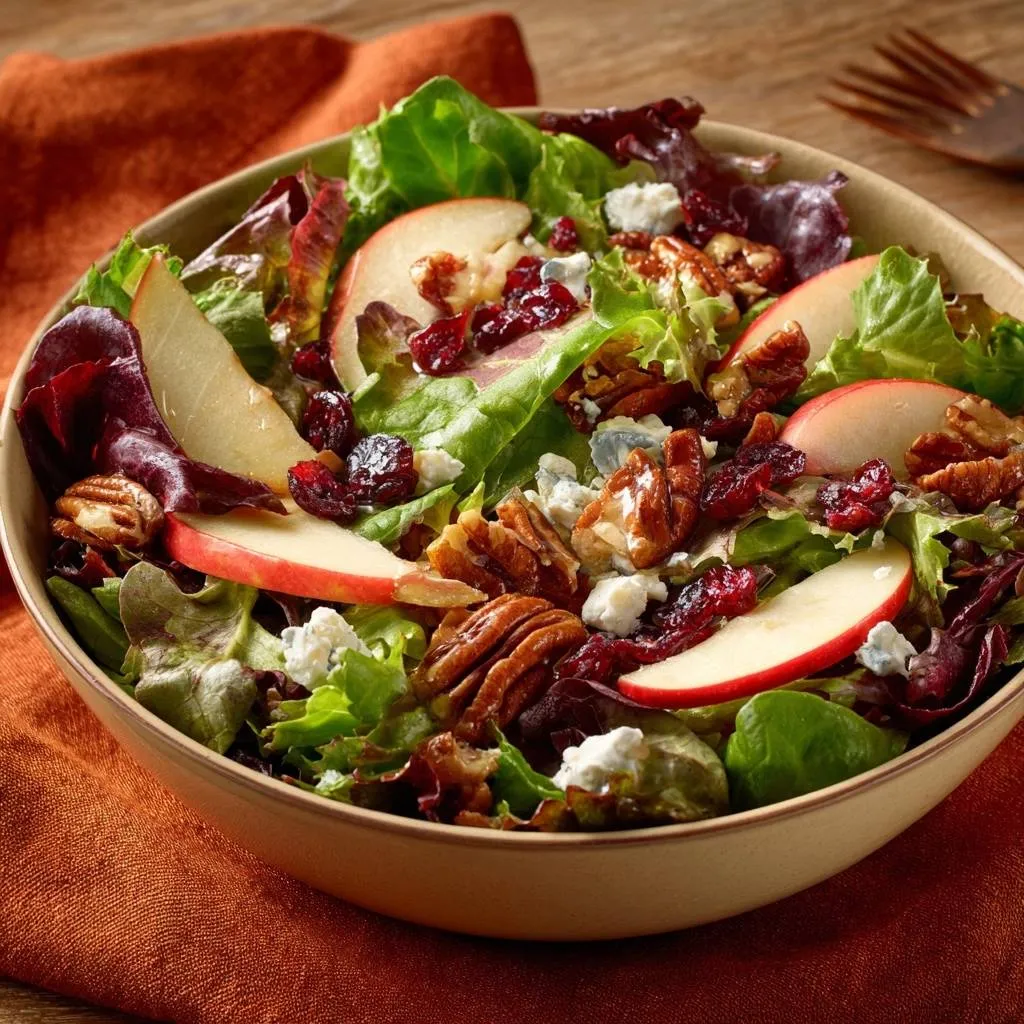
Imagine a forkful of crisp, cold greens that actually crackles when you bite into it, followed by the buttery crunch of toasted pecans and the sharp tang of blue cheese. Most people settle for salads that look beautiful for five minutes before turning into a limp, watery mess at the bottom of the bowl. It’s frustrating to spend money on premium autumn produce only to have the textures vanish under a heavy dressing.
The secret to a restaurant-quality Harvest Apple and Pecan Salad isn’t just the ingredients; it’s the physics of moisture control. We’ve all been there, watching a perfectly good salad “weep” as the salt draws out water from the vegetables. This recipe changes that by using a specific moisture-lock technique that keeps every leaf vibrant and every apple slice snapping-fresh until the very last bite.
For a similar taste experience, explore this harvest apple and walnut salad.
I’ve found that the real trick lies in the order of operations. Most home cooks dress the greens and then add the toppings, but the secret is actually “priming” your fruit. By coating your apple slices in a tiny bit of the vinaigrette before they ever touch the lettuce, you create a pH-lowering shield that stops browning and locks in juice. This keeps the rest of your salad dry and crisp while the apples stay bright and beautiful.
The Anatomy of a Crisp Autumn Salad
A truly great salad is a study in contrasts. You need the earthy, slightly bitter notes of red leaf lettuce to balance the sugary punch of dried cranberries. When you combine these with the creamy, salty funk of blue cheese, your palate stays engaged because every bite offers something different. It’s not just a side dish; it’s a carefully constructed flavor profile that hits sweet, salty, and acidic notes all at once.
Texture plays an even bigger role than flavor here. We use Honeycrisp apples specifically because they have a unique cellular structure that doesn’t collapse when sliced thin. When you pair that structural integrity with the loft of mixed spring greens, you get a salad with “height.” A flat salad is a sad salad, so we focus on ingredients that provide volume and a satisfying mouthfeel.
Why Honeycrisp Apples Excel in Salads
While a Granny Smith is tart and a Gala is sweet, the Honeycrisp offers the perfect sugar-to-acid ratio for a savory salad. More importantly, Honeycrisp apples have larger cells than other varieties. When you bite into one, those cells actually rupture rather than crushing, which is why they feel so much juicier and crisper. This density means they won’t turn grainy or mealy when they sit in a vinaigrette for twenty minutes.
Selecting the Right Greens for Structural Integrity
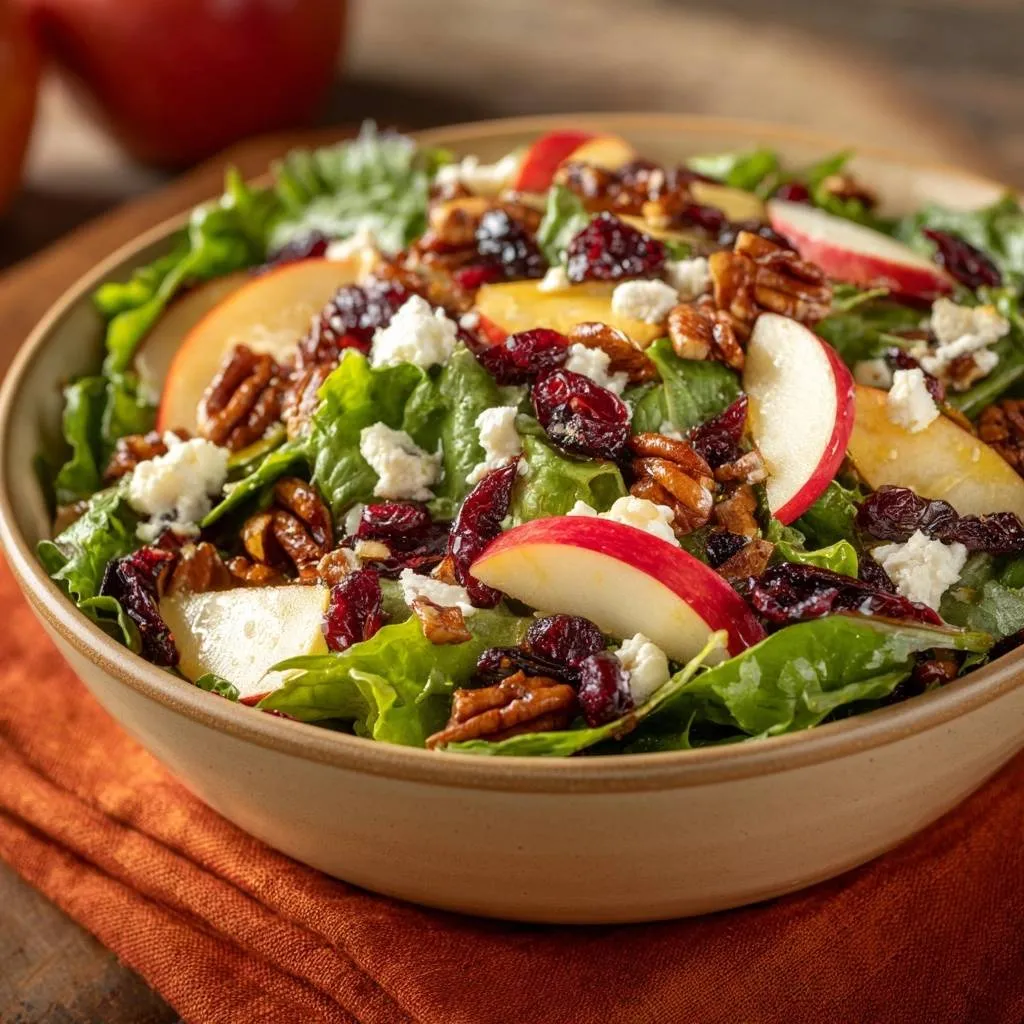
We use a mix of spring greens and red leaf lettuce to get the best of both worlds. Spring greens provide a delicate, buttery texture, while the ruffled edges of red leaf lettuce create “pockets” that catch the dressing. However, these greens are fragile. Unlike kale, which can be massaged and dressed an hour early, these leaves require gentle handling and a “just-in-time” dressing approach to prevent the vinegar from breaking down their thin cell walls.
Essential Components for the Harvest Apple and Pecan Salad
Quality is everything when you aren’t cooking the ingredients. Since there’s no heat to hide behind, you’ll want to reach for your best extra virgin olive oil. A high-quality oil has peppery back-notes that complement the blue cheese perfectly. Similarly, apple cider vinegar is the only choice here because it echoes the flavor of the fresh fruit, creating a cohesive bridge between the dressing and the salad bowl.
Don’t overlook the honey and Dijon mustard. These aren’t just for flavor; they are the “glue” of your salad. The honey provides a viscous body that helps the dressing coat the leaves, while the mustard ensures the oil and vinegar don’t separate. If you use a cheap, watery vinegar or a bland oil, the salad will taste flat. Spend the extra dollar on the good stuff—you’ll taste the difference in the very first bite.
The Role of Emulsifiers in Dressing Stability
Have you ever noticed how some dressings just slide off the lettuce and pool at the bottom? That happens because the oil and vinegar have “broken” or separated. Dijon mustard contains a natural emulsifier called mucilage. When you whisk it into the vinegar before adding the oil, it acts as a stabilizer. It surrounds the tiny droplets of oil and keeps them suspended in the vinegar, creating a thick, creamy coating that actually clings to the leaves.
Toasted Pecans vs. Raw: Maximizing Nutty Aromatics
Raw pecans are fine, but toasted pecans are transformative. When you heat the nuts, you trigger the Maillard reaction, which creates new, complex flavor compounds. This process also draws the essential oils to the surface, making the pecans smell incredible and giving them a much more brittle, satisfying crunch. That extra bit of warmth and depth is exactly what you need to stand up to the pungent, bold flavor of the crumbled blue cheese.
Step-by-Step: Achieving the Anti-Soggy Texture
The goal here is to manage moisture at every stage. If your greens are even slightly damp, the oil in the dressing will repel the water on the leaves, and your vinaigrette will never stick. You’ll end up with oily greens and a puddle of vinegar at the bottom. We want a light, even coating that makes the leaves glisten without weighing them down.
Phase 1: The Bone-Dry Greens Technique
Start by washing your greens in very cold water, but don’t stop at the salad spinner. Even after a good spin, microscopic droplets of water hide in the curls of the red leaf lettuce. After spinning, spread the greens out on a clean kitchen towel or layers of paper towels. Gently pat them dry. You want the surface of the leaf to be completely matte. This ensures the emulsion you worked so hard on actually bonds to the lettuce.
Phase 2: Creating the Acidic Barrier for Apples
As soon as you slice your Honeycrisp apples, they begin to oxidize and turn brown. To prevent this, take a tablespoon of your prepared dressing and toss the apple wedges in it immediately. The acidity in the apple cider vinegar stops the enzymatic browning, while the oil creates a waterproof barrier. This prevents the apples from releasing their own juice into the salad, which is a major cause of “soggy salad syndrome.”
Phase 3: The Emulsification Process
Grab a small glass jar for your dressing. Combine the vinegar, honey, mustard, salt, and pepper first. Give it a quick shake, then pour in the olive oil. Shake vigorously for at least 30 seconds. You’re looking for the mixture to turn opaque and slightly thickened. If it looks like clear oil with bubbles of vinegar, keep shaking. A properly emulsified dressing should look like a unified sauce, not two separate liquids.
The Light Coat Method for Assembly
Timing is the final hurdle. You should never dress this salad until the very moment you are ready to eat. Vinegar is an acid that essentially “cooks” the delicate greens, causing them to wilt and lose their crunch within minutes. By using the “light coat” method, you ensure the salad stays fresh throughout the entire meal rather than just the first few bites.
Tossing with Cold Tongs
It sounds like a small detail, but temperature matters. If you use warm tongs or your bare hands, the heat can cause the greens to soften. I like to pop my mixing bowl and tongs in the fridge for 10 minutes before I assemble the salad. When everything is chilled, the dressing stays thick and the greens stay turgid and crisp. Drizzle half the dressing, toss gently, and only add more if the leaves aren’t lightly glistening.
Flavor Variations and Ingredient Swaps
While the apple and pecan combo is a classic, this template is incredibly flexible. You can easily swap components based on what you have in your pantry or your personal taste preferences. The key is to maintain the balance of sweet, salty, and crunchy. As long as you keep the moisture-lock techniques the same, the salad will be a success regardless of the specific toppings you choose.
For those who adore this combination of sweet fruit and nuts, consider our caramel apple pecan layer cake.
For a different take on this flavorful combination, explore the harvest kale and apple salad.
Alternative Cheeses for Different Palates
If blue cheese is too intense for you, try a creamy goat cheese. It provides a similar tang but with a much milder, earthy finish. For those who prefer something firmer, shaved aged Gouda or even a sharp white cheddar works beautifully. These harder cheeses add a nutty saltiness that pairs perfectly with the sweetness of the Honeycrisp apples without overpowering the delicate greens.
Substituting Dried Fruits and Seeds
Dried cranberries are the standard, but dried cherries or chopped dried figs offer a deeper, more sophisticated sweetness. If you have a nut allergy in the house, swap the pecans for toasted pumpkin seeds (pepitas) or sunflower seeds. They still provide that essential Maillard-reaction crunch and savory depth without the risk. Just be sure to toast them briefly in a dry pan to wake up their natural oils.
Troubleshooting Common Salad Issues
Even with the best ingredients, things can go wrong. The most common complaint is a salad that tastes “flat” or one that is so acidic it makes you wince. Usually, these issues come down to a lack of balance in the vinaigrette. Remember that the dressing is there to enhance the greens, not drown them out. If something feels off, it’s usually an easy fix with a pinch of salt or a drop of honey.
Fixing an Overly Acidic Vinaigrette
If your dressing tastes too sharp, don’t just add more oil, as that can make the salad greasy. Instead, add a tiny pinch of salt. Salt actually suppresses our perception of sourness. If it’s still too biting, whisk in another half-teaspoon of honey. The sweetness will round out the harsh edges of the vinegar without thinning out the texture of your emulsion.
Complementary Dishes
Looking for more dishes that go well with your harvest apple and pecan salad? Consider these options.
- For a flavorful seafood main, try this honey glazed pineapple salmon, which offers a sweet and savory contrast.
- Another great chicken option is our grilled pineapple chicken quesadillas, featuring bright, tropical notes that pair well with fruit-forward salads.
Restoring Wilted Greens Before Prep
If you pulled your lettuce out of the fridge and it looks a little sad, don’t toss it. You can often revive greens using an “ice bath shock.” Submerge the leaves in a bowl of ice water for about 15 to 20 minutes. The cold water helps the plant cells regain their turgor pressure, making the leaves crisp again. Just be sure to dry them exceptionally well afterward using the bone-dry technique mentioned earlier.
Expert Tips for Professional Presentation
To get that “skyscraper” look you see in restaurants, don’t just dump everything in a deep bowl. Heavy ingredients like pecans, apple wedges, and cheese chunks naturally want to sink to the bottom, leaving you with a pile of plain lettuce on top. Use a wide, shallow bowl instead of a deep one. This gives you more surface area to showcase the beautiful toppings.
When assembling, start with a layer of greens, then add a few apples and pecans. Repeat the layers as you go. This ensures that every guest gets a bit of everything without having to dig through the bowl. Finally, finish with a few extra crumbles of blue cheese and a crack of fresh black pepper right on top. It looks intentional, professional, and incredibly appetizing.
How should I store leftovers of this salad?
If the salad is already dressed, it will not store well and will likely become soggy within a few hours. However, if you keep the components separate, they stay fresh for days. Store the dried greens in a container lined with a paper towel to absorb moisture. Keep the dressing in a sealed jar at room temperature or in the fridge. The pecans should stay in an airtight bag in the pantry to maintain their crunch. Do not freeze this salad, as the lettuce and apples will lose their texture entirely upon thawing.
Why did my dressing separate even though I used mustard?
Separation usually happens if the oil was added too quickly or if the ratio was slightly off. To fix a broken dressing, place a teaspoon of Dijon mustard in a clean bowl and slowly whisk the broken dressing into it, one drop at a time, until it re-emulsifies. Also, ensure your ingredients are at room temperature; very cold oil doesn’t always play nice with vinegar when you’re trying to create a stable bond.
Can I use a different type of vinegar?
Yes, you can substitute the apple cider vinegar with white balsamic or champagne vinegar. Both have a mild, fruity profile that complements the apples. Avoid using standard white distilled vinegar, as it is far too harsh and lacks the complex flavor needed for a fresh salad. If you use regular balsamic vinegar, be aware that it will turn the greens a dark, muddy color, which might affect the visual appeal of the dish.
My apples still turned brown, what did I do wrong?
Oxidation happens fast! If your apples turned brown, they likely sat out too long before being tossed in the dressing. Make sure your vinaigrette is fully prepared before you even pick up the knife to slice the fruit. Another tip is to ensure the dressing you use for the “barrier” has enough vinegar in it. If the dressing is too heavy on oil and light on acid, it won’t be as effective at stopping the browning process.
Is there a way to make this salad ahead of time for a party?
You can prep almost everything up to 24 hours in advance. Wash and dry the greens, toast the pecans, and whisk the dressing. Store them all separately. The only thing you should wait to do is slice the apples and assemble the bowl. If you must slice the apples an hour early, toss them in the dressing barrier as described and keep them in a sealed container in the fridge. Combine everything and add the final drizzle of dressing only when the guests are sitting down to eat.
Harvest Apple and Pecan Salad
Course: SaladCuisine: AmericanDifficulty: easy4
servings15
minutes450
kcal15
MinutesA vibrant autumn salad featuring Honeycrisp apples, toasted pecans, and blue cheese, tossed in a honey-dijon vinaigrette designed to stay crisp and fresh.
Ingredients
6 cups mixed spring greens and red leaf lettuce
2 large Honeycrisp apples, thinly sliced into wedges
1/2 cup dried cranberries
1/2 cup toasted pecan halves
1/2 cup crumbled blue cheese
1/4 cup extra virgin olive oil
2 tablespoons apple cider vinegar
1 tablespoon honey
1 teaspoon Dijon mustard
Salt and black pepper to taste
Directions
- The most critical step to prevent sogginess is ensuring your greens are bone-dry. Use a salad spinner to remove all moisture, then pat the leaves with a paper towel. Even a drop of water will prevent the dressing from adhering, causing it to slide off and pool at the bottom.
- In a small jar, whisk together the olive oil, apple cider vinegar, honey, and Dijon mustard until fully emulsified. The mustard acts as a stabilizer, creating a thick coating that clings to the leaves rather than soaking into them and breaking down the cell walls.
- To keep the apples from browning and releasing excess juice into the salad, toss the apple slices in a tiny bit of the prepared dressing immediately after slicing. The acidity and oil create a protective barrier.
- Place the dry greens in a large chilled bowl. Add the pecans, cranberries, and blue cheese.
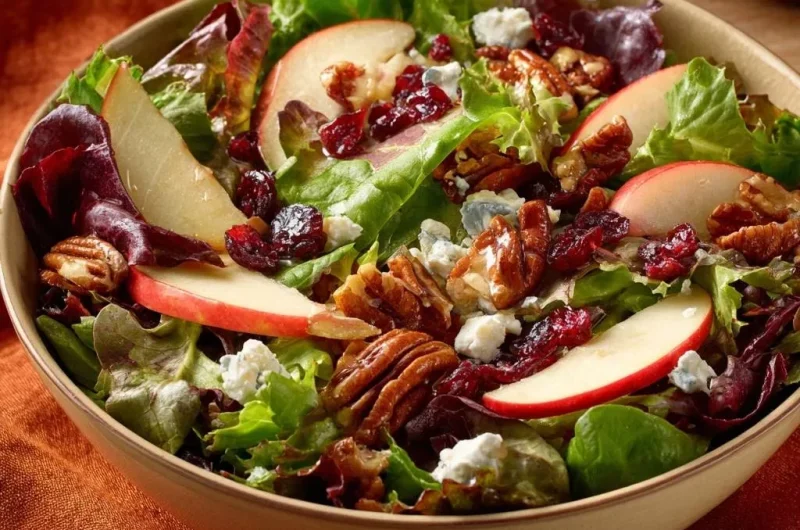
- To maintain the visual integrity shown in the image, do not pre-mix the salad. Instead, drizzle the dressing over the greens and toppings immediately before serving.
- Use the “light coat” method: drizzle half the dressing, toss gently with cold tongs to ensure the leaves are glistening but not submerged, and add more only if needed. This prevents the vinegar from wilting the delicate red leaf lettuce, keeping your salad crisp for the entire meal.
Notes
- The mustard in the dressing acts as a stabilizer to prevent the oil and vinegar from soaking into the lettuce leaves and causing them to wilt.