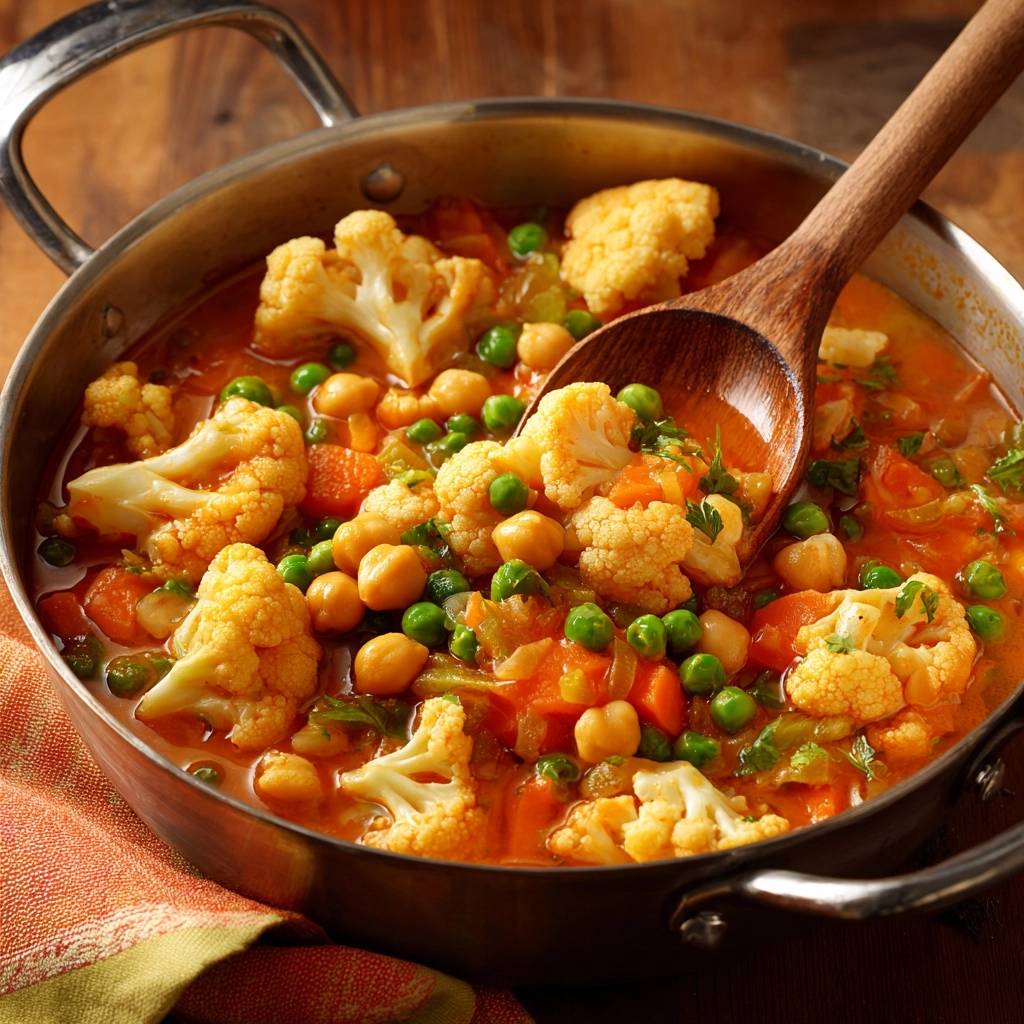
Imagine biting into a floret of cauliflower that is perfectly tender but still offers a satisfying, meaty resistance. Most vegetable stews fail because they treat every ingredient the same, resulting in a monochromatic, mushy bowl of disappointment. This Hearty Cauliflower and Chickpea Stew changes that narrative by focusing on structural integrity and a vibrant, velvety sauce that looks as good as it tastes.
The secret to this restaurant-quality finish isn’t a complicated ingredient list or hours of simmering. Instead, it relies on a specific staggered-simmer technique that protects the delicate texture of the vegetables while building a complex, orange-hued base. You’ll notice a deep, rich sheen in the sauce, which comes from the careful caramelization of tomato paste and the addition of creamy coconut milk.
I’ve found that the biggest mistake home cooks make is submerging the cauliflower in cold broth and boiling it until it collapses. To fix this, we nestle the florets into a pre-simmered, aromatic emulsion. This ensures the cauliflower steams and braises simultaneously, locking in its natural sweetness without letting it turn into a watery mess. It’s a total game-changer for plant-based cooking.
The Anatomy of a Non-Mushy Vegetable Stew
Cauliflower is a temperamental vegetable because its cellular structure is mostly water held together by pectin. When you subject it to high heat for too long, those pectin bonds dissolve, and the vegetable releases its water into your sauce. This is why many stews end up thin and bland. Furthermore, overcooked cauliflower releases sulfurous compounds that create an unpleasant, bitter aroma.
To achieve the “tender-crisp” gold standard, you have to respect the clock. By limiting the cooking time of the florets to a strict ten-minute window, you allow the heat to penetrate the core without destroying the outer walls. This keeps the Hearty Cauliflower and Chickpea Stew visually stunning, with distinct pieces of produce rather than a thick puree.
Texture is the most important element of a satisfying meal. When you maintain the structural integrity of the cauliflower, it provides a contrast to the creamy sauce and the soft pop of the peas. This variety in mouthfeel makes the dish feel more substantial and “hearty,” even though it’s entirely vegetable-based.
Essential Components for a Rich Stew Base
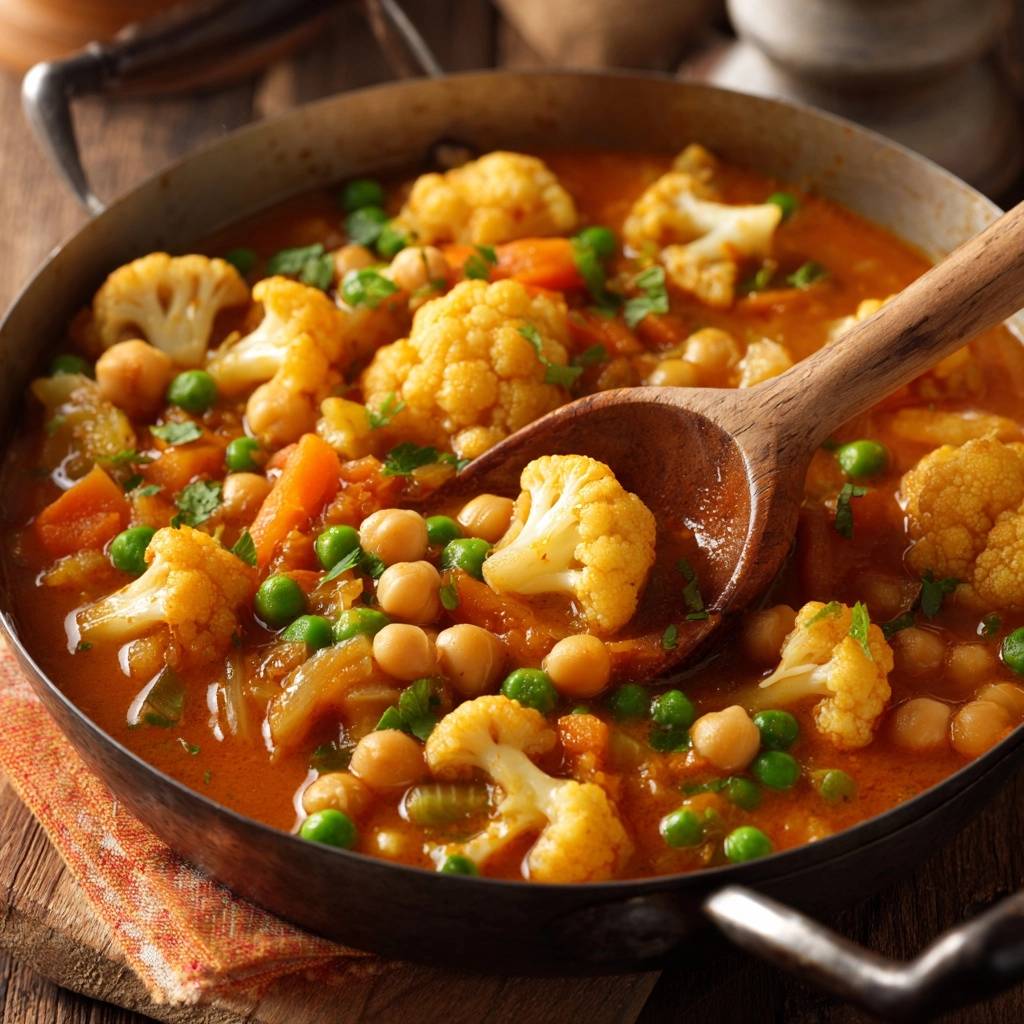
A great stew starts with a solid foundation, often called a mirepoix. In this recipe, the finely chopped onion, diced carrots, and celery provide the aromatic backbone. Sautéing these slowly allows their natural sugars to release, creating a sweet and savory base that balances the earthy spices we’ll add later.
The deep brick-red color and thick body of this stew come from the tomato paste. However, you can’t just stir it in and call it a day. You must “caramelize” the paste in the hot oil with the aromatics. You’ll see it transform from a bright red to a dark, concentrated maroon. This process removes the raw metallic taste and adds a layer of umami that mimics the depth of a slow-cooked meat stew.
For the liquid, full-fat coconut milk is the preferred choice for a velvety sheen. It provides a rich mouthfeel that coats the back of a spoon beautifully. If you prefer heavy cream, it works just as well, though it offers a more dairy-forward flavor. Both options emulsify with the vegetable broth to create a sauce that is thick enough to cling to every chickpea.
Finally, the spice profile is non-negotiable. Turmeric provides that iconic golden glow, while smoked paprika adds a subtle wood-fired depth. These spices are fat-soluble, meaning they need to hit the hot oil to fully release their flavor and color. This “blooming” step is what separates a flat-tasting stew from one that tastes like it came from a professional kitchen.
Selecting and Prepping Your Cauliflower
When you’re at the grocery store, look for a head of cauliflower that feels heavy for its size and has tightly packed florets. Avoid any with brown spots or “fuzz,” as these are signs of aging. Freshness is key because older cauliflower has a higher moisture content and will turn to mush much faster during the cooking process.
For another way to enjoy cauliflower and its vibrant flavor, check out this garlic broccoli tomato pasta.
Preparation is just as important as selection. You want to cut the cauliflower into large, uniform florets. If the pieces are too small, they’ll vanish into the sauce; if they’re uneven, some will be raw while others are overcooked. Aim for pieces about the size of a golf ball. When trimming, keep a bit of the stem attached to each floret to help hold the head together.
The Role of Legumes: Chickpeas and Sweet Peas
Chickpeas provide the “bite” in this Hearty Cauliflower and Chickpea Stew. I actually prefer using canned chickpeas here because they have been pressure-cooked to a consistent, firm texture. They hold their shape perfectly during the final simmer, providing an earthy contrast to the softer vegetables. Just make sure to rinse them thoroughly to remove any excess salt or starch from the canning liquid.
The sweet peas are added at the very end for a reason. They are delicate and can turn gray if cooked for more than a few minutes. By stirring them in during the last three minutes, you preserve their bright green color and their “pop.” This adds a burst of sweetness that cuts through the richness of the coconut milk and spices.
Step-by-Step: Executing the Staggered-Simmer Method
Phase one is the sauté. Heat your olive oil in a heavy-bottomed pot. You want to hear a gentle sizzle when the onions, carrots, and celery hit the pan. Cook them for about 6 to 8 minutes. You aren’t looking for dark browning here; you want the onions to look translucent and the carrots to lose their raw crunch.
Phase two is blooming the spices. Once the vegetables are soft, clear a small space in the center of the pot and add your garlic, turmeric, cumin, and paprika. Stir them into the oil for about 30 seconds until the kitchen smells incredible. Then, add the tomato paste. Keep stirring for two minutes. The paste will start to stick to the bottom slightly—this is good! It means the sugars are caramelizing.
Phase three is the emulsion. Slowly pour in the vegetable broth and coconut milk while whisking or stirring vigorously. You want to scrape up all those flavorful bits of tomato paste from the bottom of the pot. The liquid should transform into a smooth, streak-free, orange sauce. Bring this to a gentle simmer before moving to the next step.
Phase four is the cauliflower nestling. Carefully place your florets into the simmering liquid. Do not stir them aggressively; just tuck them in so they are partially submerged. Cover the pot. This creates a steam-filled environment that cooks the tops of the florets while the bottoms braise in the sauce. Set a timer for 8 minutes.
Phase five is the final addition. Remove the lid and gently stir in the chickpeas and frozen peas. Let them sit in the hot liquid for another 2 to 3 minutes. The residual heat is enough to warm the chickpeas and cook the peas through. Once the cauliflower is fork-tender but still holds its shape, remove the pot from the heat immediately to stop the cooking process.
Avoiding Common Mistakes in Vegetable Stews
If you find that your sauce is too thin, don’t panic. You can easily fix this by taking a fork and mashing a small handful of the chickpeas against the side of the pot. The starch from the chickpeas will act as a natural thickener. Alternatively, you can let the stew sit uncovered for five minutes after cooking; the sauce will naturally thicken as it cools slightly.
If the cauliflower is falling apart, you likely overcooked it or the florets were cut too small. Next time, try cutting them larger and reducing the covered simmer time. To save a batch that is already too soft, remove it from the heat immediately and serve it over a firm grain like quinoa to provide some much-needed texture.
Sometimes the spices can taste “raw” or gritty. This usually happens if they weren’t bloomed in oil long enough. To prevent this, always ensure there is enough oil in the pan to coat the spices before you add the liquid. If the stew is already finished and tastes a bit flat, a squeeze of fresh lemon or lime juice can brighten the flavors and mask that raw spice taste.
Flavor Variations and Dietary Swaps
This Hearty Cauliflower and Chickpea Stew is incredibly versatile. If you want a protein boost, you can add a cup of cooked red lentils during the simmering phase. They will break down and make the sauce even thicker and creamier. Firm tofu cubes are also a great addition; just sear them in the pan before you start the aromatics and add them back in at the end.
For those who like a bit of heat, you can stir in a tablespoon of harissa paste or a teaspoon of red pepper flakes during the spice-blooming phase. The smokiness of the harissa pairs beautifully with the coconut milk. If you want to lean into a more seasonal vibe, try swapping the carrots for diced butternut squash or sweet potatoes in the winter months.
What to Serve with Hearty Cauliflower and Chickpea Stew
Because this stew has a rich, flavorful sauce, you want to serve it with something that can soak up every drop. Fluffy basmati rice is the classic choice, but quinoa or couscous also work well. If you want to keep things low-carb, you can serve it as is in a large bowl, perhaps with a side of roasted greens.
Bread is another essential companion. A warm piece of flatbread or a thick slice of crusty sourdough is perfect for dipping into the orange sauce. The crunch of the bread provides a great contrast to the tender vegetables. Don’t forget the toppings! A heavy sprinkle of fresh parsley and cilantro adds a necessary hit of freshness.
Acidity is the final piece of the puzzle. A squeeze of fresh lime or lemon juice right before eating cuts through the richness of the coconut milk and makes the spices pop. If you have some plain Greek yogurt or a dollop of coconut cream, adding a swirl on top can provide a cooling element if you’ve made the stew spicy.
Make Ahead, Storage, and Reheating Guide
This stew actually tastes better the next day because the flavors have more time to meld together. You’ll notice that the sauce thickens significantly in the fridge as the starches settle. Store leftovers in an airtight container for up to four days. It’s a fantastic option for meal prepping since it holds up so well.
When reheating, the stovetop is your best friend. Place the stew in a small pot over medium-low heat and add a splash of water or broth to loosen the sauce. Avoid the microwave if possible, as it can heat unevenly and turn the cauliflower mushy. If you must use a microwave, heat it in short 30-second bursts, stirring in between.
Freezing is possible, but be aware that coconut milk-based sauces can sometimes separate or look grainy after thawing. To fix this, whisk the stew vigorously while reheating it on the stove. The cauliflower will also be slightly softer after being frozen, so it’s best to eat frozen portions within two months for the best quality.
Expert Troubleshooting and FAQ
Can I use frozen cauliflower instead of fresh?
You can use frozen cauliflower, but it requires a slight adjustment. Frozen vegetables are blanched before freezing, meaning they are already partially cooked. They also release more water. If using frozen, do not add them during the 8-minute simmer. Instead, add them at the very end with the peas and chickpeas, and only cook until they are heated through to avoid a mushy texture.
How do I get that specific deep orange color?
The secret is the “puchero” method of frying the tomato paste. You must sauté the tomato paste in the olive oil with the spices for at least two minutes. You are looking for the color to shift from a bright, candy-apple red to a dark, rusty brick color. This caramelization is what creates that vibrant, professional-looking orange hue once the white coconut milk is added.
Is there a substitute for coconut milk?
If you don’t like coconut or don’t have it on hand, heavy cream is the best direct substitute for richness. For a dairy-free alternative other than coconut, try cashew cream. You can make this by blending soaked cashews with a little water until perfectly smooth. Avoid using thin milks like almond or rice milk, as they lack the fat content needed to create a thick, velvety sauce.
Why is my stew bitter?
Bitterness usually comes from two sources: burnt garlic or old spices. Garlic only needs about 30 to 60 seconds of sautéing before you add liquid. If it turns dark brown, it will taste bitter. Additionally, turmeric can become bitter if it is past its prime. Always check your spice jars for freshness. A pinch of sugar or a squeeze of lime can often help balance out a slightly bitter stew.
Can I make this in a slow cooker?
While you can make this in a slow cooker, the texture will not be the same. The staggered-simmer method is designed specifically to prevent the cauliflower from becoming overcooked. In a slow cooker, the cauliflower often loses its shape and becomes part of the sauce. If you must use one, add the cauliflower during the last hour of cooking and the peas during the last 15 minutes.
Cauliflower and Chickpea Stew
Course: Main CourseCuisine: AmericanDifficulty: easy4
servings15
minutes25
minutes310
kcal40
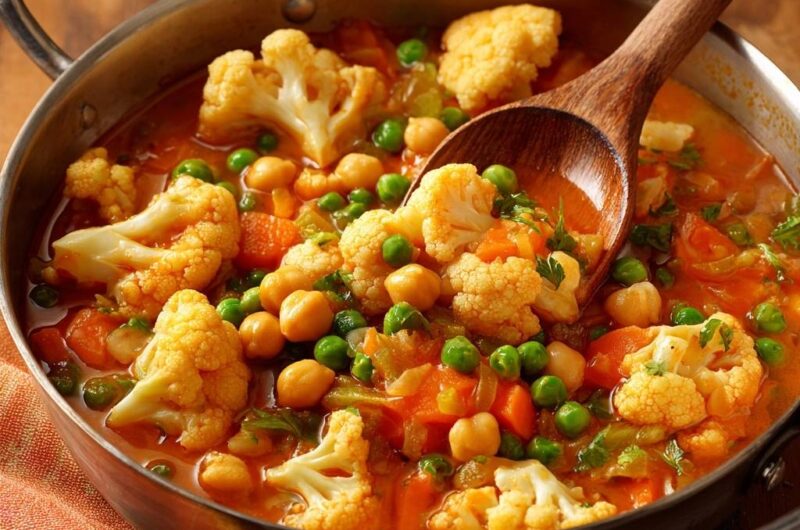
MinutesThis restaurant-quality stew uses a specific timing technique to ensure cauliflower stays firm while creating a velvety, orange-hued sauce. By using tomato paste and coconut milk, the dish achieves a deep flavor and professional visual texture.
Ingredients
1 large head cauliflower, cut into large uniform florets
1 can (15 oz) chickpeas, drained and rinsed
1 cup frozen sweet peas
2 large carrots, diced
1 yellow onion, finely chopped
2 stalks celery, diced (visible in image)
2 tablespoons tomato paste (for the deep orange color and thickness)
2 cloves garlic, minced
1/2 cup full-fat coconut milk or heavy cream (for the creamy visual texture)
1.5 cups vegetable broth
2 tablespoons olive oil
1 teaspoon turmeric
1 teaspoon ground cumin
1/2 teaspoon smoked paprika
Salt and black pepper to taste
Fresh parsley and cilantro, chopped for garnish
Directions
- Heat the olive oil in a large heavy-bottomed pot or deep skillet over medium heat. Add the onion, carrots, and celery. Sauté for 6 to 8 minutes until the vegetables soften and the onions are translucent.
- Stir in the garlic, turmeric, cumin, and paprika. Add the tomato paste and sauté for 2 minutes, stirring constantly, until the paste darkens to a deep brick red. This builds the rich color seen in the image.
- Pour in the vegetable broth and the coconut milk. Bring the liquid to a gentle simmer, whisking to ensure the tomato paste is fully incorporated into a smooth, creamy sauce.
- Here is the secret to avoiding mush: Add the cauliflower florets only once the sauce is simmering. Do not submerge them completely; let them nestle into the sauce. Cover and cook for exactly 8 to 10 minutes. This shorter window prevents the cauliflower from absorbing too much liquid and losing its shape.
- Stir in the chickpeas and frozen peas during the last 3 minutes of cooking. The residual heat will cook the peas perfectly, keeping them bright green and plump.
- Remove from heat immediately once the cauliflower is fork-tender but still holds its structure. The sauce should be thick enough to coat the back of a spoon. Season generously with salt and pepper.
- Garnish with a heavy sprinkle of fresh parsley and cilantro. Serve hot, ensuring the large florets are positioned on top to showcase the texture.
Notes
- The secret to avoiding mushy vegetables is adding the cauliflower only once the sauce is simmering and cooking for exactly 8 to 10 minutes. Add peas at the very end to maintain their bright green color.