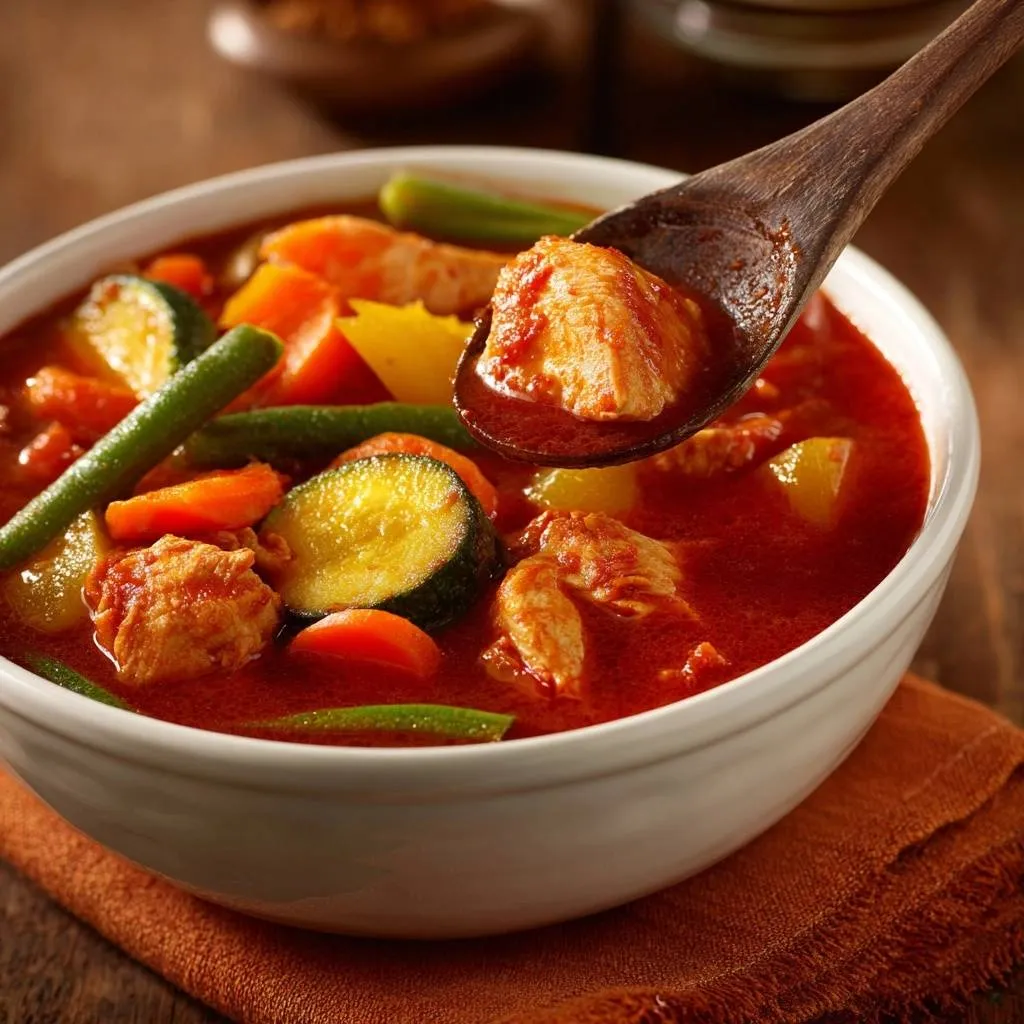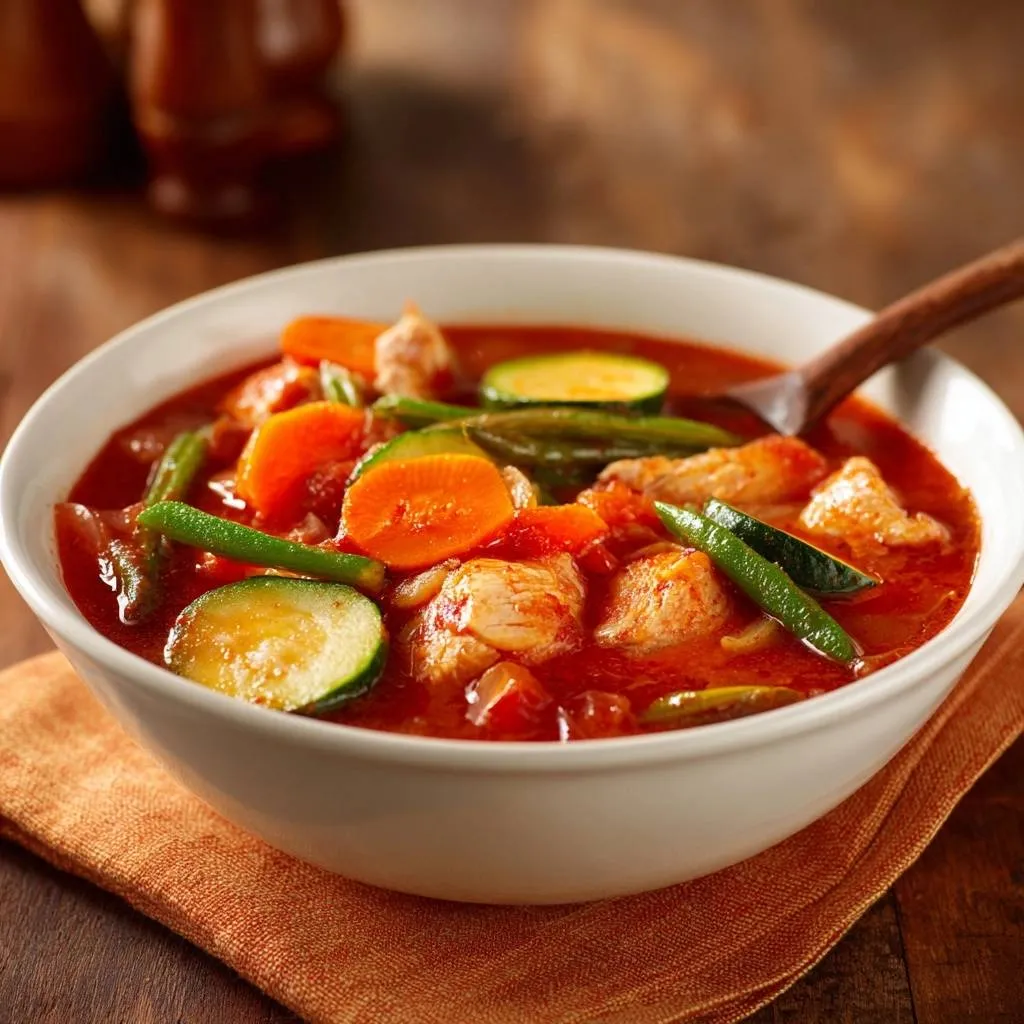
The Staggered Entry Method for Perfect Texture
Vegetables are not created equal when it comes to heat resistance. Carrots are dense and fibrous, requiring a significant head start in the hot oil to soften their core. If you add them at the same time as a water-heavy vegetable like zucchini, one will inevitably be undercooked or the other will be a pile of pulp. By sautéing the carrots early, you use the fat to break down their tough cell walls. Conversely, zucchini and green beans require very little time to reach their peak. We rely on a short simmer and the “carry-over cooking” effect, where the residual heat of the broth finishes the cooking process even after you turn off the stove. This precision prevents the vegetables from becoming waterlogged and dull.Essential Components for a Robust Garden Base
Choosing the right protein and aromatics sets the stage for a successful stew. We use chicken breast here because it offers a lean, clean profile that doesn’t overshadow the delicate garden flavors. While thighs are great for long braises, the quick 25-minute cook time of this recipe is perfect for keeping breast meat juicy and tender. Tomato paste acts as our secret umami agent. Rather than just thickening the liquid, it provides a deep, caramelized foundation that makes the broth taste like it simmered for hours. Always reach for a low-sodium chicken broth. This gives you total control over the seasoning, ensuring the final dish isn’t an accidental salt bomb as the liquid reduces.Selecting and Prepping Your Garden Produce
When you prep the zucchini, skip the thin half-moons. Instead, slice them into thick, substantial rounds. These “coins” have more surface area to withstand the simmering liquid without falling apart. For the green beans, leave them whole after trimming the ends. Keeping them intact preserves that satisfying “snap” and prevents the interior seeds from spilling out and making the broth cloudy.The Spice Profile: Oregano and Smoked Paprika
Smoked paprika is the heavy lifter that provides that rich, orange-red hue you see in high-end stews. It adds a subtle earthiness that mimics the flavor of a wood-fired oven. While fresh herbs are lovely, dried oregano is actually superior for this 25-minute simmer. Dried herbs release their oils slowly, providing a consistent herbal backbone without the risk of turning bitter or slimy like fresh leaves might during the cooking process.Phase One: Searing Protein and Building Aromatics
Start by getting your pot nice and hot with olive oil. When you add the chicken cubes, you’re looking for the Maillard reaction—that beautiful golden-brown crust that develops on the surface. This isn’t just for looks; those browned bits are concentrated flavor. Once the chicken is seared, pull it out of the pot. Leaving the chicken in the whole time would make it rubbery. Instead, keep those brown bits, known as the “fond,” in the pan and toss in your onions and carrots. As the onions release their moisture, they’ll lift that flavor off the bottom of the pot and coat the carrots. This ensures every layer of the dish is seasoned from the very beginning.Phase Two: Developing the Deep Red Broth
After the onions have softened, it’s time for the “pincé” technique. Stir in your tomato paste and cook it until it shifts from a bright red to a rusty, brick color. This step removes the raw metallic taste of the paste and unlocks a natural sweetness. You’ll smell the difference as it becomes fragrant and slightly toasted. Next, deglaze the pan by pouring in the crushed tomatoes and chicken broth. Use your wooden spoon to scrape up any remaining bits from the bottom. This process incorporates all that seared chicken flavor directly into the liquid. Once the oregano and smoked paprika hit the pot, the broth will transform into a vibrant, aromatic base that’s ready for simmering.Phase Three: The Precision Simmer and Timing
Once your broth is simmering, return the chicken to the pot. Cover it and let it cook on low for 10 minutes. This allows the chicken to finish cooking through while the carrots continue to soften in the acidic tomato environment. This middle phase is where the flavors really begin to meld into a cohesive unit. The final 6 to 8 minutes are the most critical. Drop in your whole green beans and thick zucchini rounds. You want to watch for the visual cue: the zucchini should look translucent around the edges but still opaque and firm in the center. When a fork can pierce the zucchini with just a little resistance, it’s time to kill the heat. The beans should still be a vibrant, grassy green.Troubleshooting Common Stew Consistency Issues
If you find your broth is a bit thinner than you’d like, don’t panic. You can let it simmer uncovered for a few extra minutes to reduce the liquid, which concentrates the flavor. Alternatively, a small starch slurry can tighten things up, though a natural reduction is always tastier. Keep in mind that a wider pot will lead to faster evaporation and a thicker result. If you accidentally over-salt the pot, adding a splash more broth or a squeeze of lemon juice can help balance the palate. The acidity of the lemon often masks excess saltiness. Also, remember that the stew will naturally thicken as it sits for a few minutes off the heat, so don’t rush to “fix” it while it’s still at a rolling boil.Flavor Variations and Seasonal Swaps
This recipe is a template that works year-round. In the winter, you might swap the zucchini for butternut squash or parsnips. Just remember the staggered entry rule: squash needs to go in with the carrots because it’s much denser. In the spring, a handful of fresh peas added in the last two minutes provides a lovely pop of sweetness. If you want a bit of heat, a pinch of red pepper flakes added with the garlic works wonders. For a more herbaceous finish, you can stir in fresh parsley or basil right before serving. The heat of the broth will wilt the fresh herbs just enough to release their aroma without losing their bright, punchy color.Make Ahead, Storage, and Reheating Protocols
Like most stews, the flavors here actually improve after a night in the fridge. However, the “mushy veggie” risk is real. To prevent this, cool the stew as quickly as possible by transferring it to a shallow container. This stops the cooking process immediately and keeps the zucchini from softening further in the hot liquid. When reheating, the stovetop is your best friend. Warm it over medium-low heat just until it’s steaming. Avoid the microwave if possible, as it tends to heat unevenly and can turn the green beans rubbery. If you plan to freeze this, be aware that zucchini has a high water content and will become very soft once thawed. It will still taste great, but it won’t have that signature “snap.”Optimal Pairings for a Hearty Chicken Stew
This stew is a complete meal on its own, but a few sides can really elevate the experience. A thick slice of crusty sourdough is almost mandatory for soaking up the rich, smoked paprika broth. The tang of the bread perfectly complements the sweetness of the cooked carrots and tomatoes. If you want something fresh on the side, a simple arugula salad with a sharp lemon vinaigrette provides a nice peppery contrast to the warm stew. For those looking to bulk up the protein even further, serving the stew over a small scoop of fluffy quinoa or brown rice adds a great nutty texture that pairs beautifully with the garden vegetables.Expert Tips for Success
Why You Should Never Boil the Stew
A rolling boil is the enemy of a good stew. High heat causes the chicken fibers to tighten and become tough, while the violent bubbles physically break down the delicate cell walls of your vegetables. Always aim for a gentle simmer—where only a few small bubbles break the surface—to keep the textures refined and the chicken succulent.The Importance of Resting Before Serving
Patience is a key ingredient. Letting the stew rest for about 5 minutes off the burner allows the proteins to relax and the broth to slightly thicken as the temperature drops. This resting period also lets the flavors fully meld, ensuring that first spoonful is perfectly balanced rather than just “hot.”Using High-Quality Olive Oil for Finishing
Right before you bring the bowls to the table, hit each one with a tiny drizzle of high-quality, extra-virgin olive oil. This “finishing oil” adds a fresh, grassy note that brightens the cooked vegetables. It provides a luxurious mouthfeel and a hit of raw flavor that contrasts beautifully with the deep, simmered broth.Adjusting Salt at the Very End
As the stew simmers, water evaporates and the salt concentrates. If you season perfectly at the beginning, it might be too salty by the time it’s done. Always do your final taste test in the last 60 seconds of cooking. This ensures the seasoning is spot-on for the final volume of liquid in the pot.Frequently Asked Questions
How long can I store this stew in the refrigerator?
You can safely store this stew in an airtight container for up to 3 to 4 days. In fact, the flavors often deepen by the second day as the spices permeate the chicken. Just be sure to cool it quickly before refrigerating to maintain the best possible texture for the vegetables.Why did my zucchini turn mushy even though I followed the time?
This usually happens if the zucchini rounds were sliced too thin or if the stew was kept at a hard boil rather than a gentle simmer. Ensure your rounds are at least a half-inch thick. Also, remember to stop the cooking as soon as they are fork-tender, as they will continue to soften slightly in the hot broth while you set the table.Can I use frozen vegetables instead of fresh?
You can use frozen green beans or carrots in a pinch, but fresh is highly recommended for the best texture. If using frozen green beans, add them during the last 4 minutes instead of 8, as they are usually blanched before freezing and will cook much faster. Avoid frozen zucchini, as it almost always becomes watery and soft when reheated in a soup.What can I use if I don’t have tomato paste?
If you’re out of tomato paste, you can simmer down about a half cup of tomato sauce until it thickens significantly, or simply omit it. However, you’ll lose that deep “brick red” color and some of the umami depth. You might want to add an extra pinch of smoked paprika to help compensate for the color loss.Is this recipe freezer-friendly?
Yes, you can freeze it for up to 3 months, but with a caveat. The chicken and broth freeze beautifully, but the zucchini and green beans will lose their crispness and become quite soft upon thawing. If you are making this specifically to freeze, consider leaving the zucchini out and adding fresh zucchini when you reheat the base later.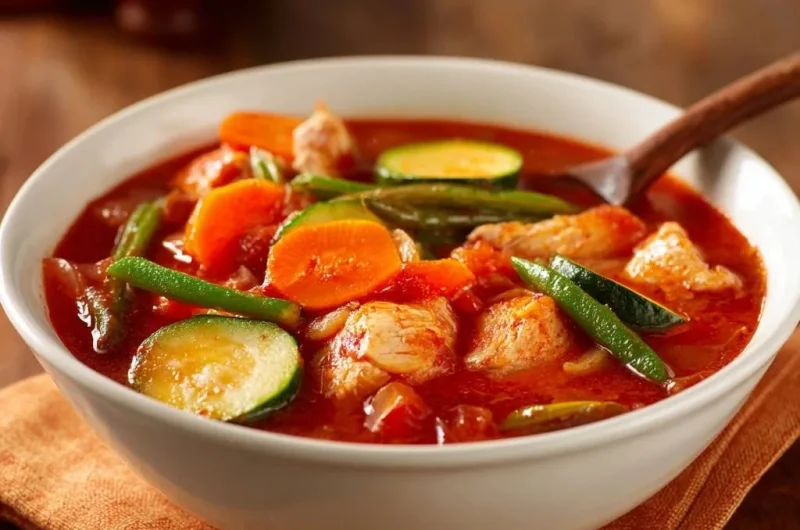
Chicken Stew
Course: Main CourseCuisine: AmericanDifficulty: easy4
servings15
minutes25
minutes325
kcal40
MinutesThis restaurant-quality stew avoids mushy vegetables by adding ingredients based on density. Featuring browned chicken breast, crushed tomatoes, and fresh garden vegetables, it offers a rich, smoky broth and perfect textures in every bite.
Ingredients
1 pound chicken breast, cut into 1-inch cubes
2 large carrots, peeled and sliced into 1/4-inch rounds
1 medium zucchini, sliced into thick rounds (not half-moons)
1 cup fresh green beans, trimmed and left whole
1 small yellow onion, diced
2 cloves garlic, minced
1 can (14.5 oz) crushed tomatoes
1 tablespoon tomato paste (for the deep red color shown)
3 cups low-sodium chicken broth
2 tablespoons olive oil
1 teaspoon dried oregano
1/2 teaspoon smoked paprika (to match the rich, orange-red broth)
Salt and black pepper to taste
Directions
- Heat olive oil in a large pot over medium-high heat. Add the chicken cubes and cook until browned on all sides, about 5 minutes. Remove chicken and set aside.
- In the same pot, add the onion and carrots. Sauté for 5 minutes. Carrots take the longest to soften, so they must start first to avoid being crunchy in the finished dish.
- Stir in the garlic and tomato paste. Cook for 1-2 minutes, stirring constantly, until the paste darkens slightly. This creates the deep, rich base seen in the image.
- Pour in the crushed tomatoes, chicken broth, oregano, and smoked paprika. Bring the liquid to a simmer.
- Return the chicken to the pot. Cover and simmer on low for 10 minutes. The chicken is done when it reaches 165°F (74°C) in the thickest part.
- Now for the texture secret: Add the whole green beans and zucchini rounds only during the last 6 to 8 minutes of cooking. This specific timing prevents the zucchini from disintegrating and keeps the green beans from turning a dull grey.
- Season with salt and pepper. Once the zucchini is fork-tender but still holds its shape, remove from heat and serve immediately in deep bowls.
Notes
- The secret to this dish is the staggered entry method. Add green beans and zucchini only in the last 6 to 8 minutes to maintain their bright color and snap.