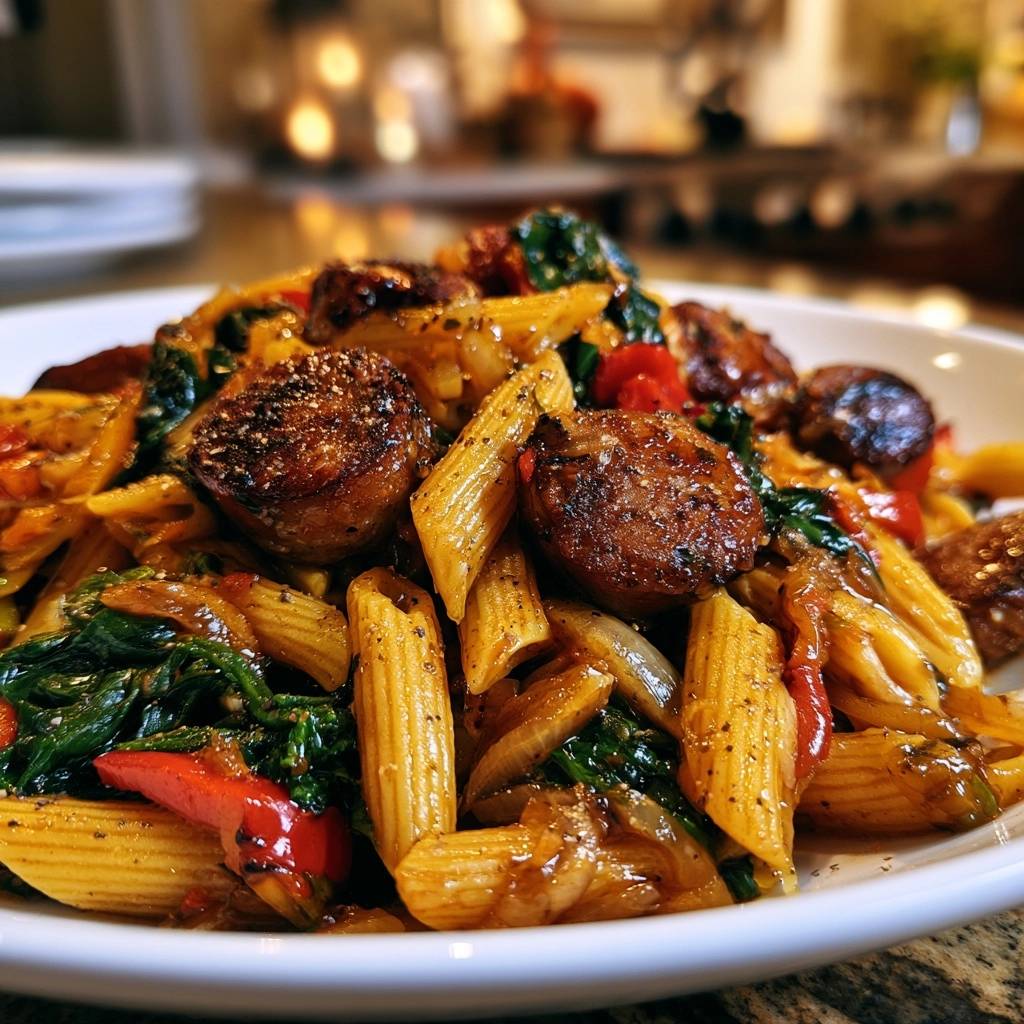
The one-pan pasta has long been a weeknight savior, but it often comes with a frustrating trade-off. You’ve likely experienced that disappointing moment when a beautiful skillet of pasta ends up sitting in a pool of green, watery liquid. This usually happens because the spinach was added too early or the heat wasn’t high enough to handle the moisture release.
This Italian Sausage and Penne Skillet changes the game by focusing on the chemistry of the sear and the timing of the greens. We aren’t just tossing ingredients into a pan; we’re building layers of flavor through a specific high-heat method. By mastering the “Anti-Soggy Spinach Secret,” you’ll ensure your sauce stays thick and glossy while your vegetables remain vibrant and crisp.
The secret to this dish’s success lies in the flash-wilt technique. Instead of simmering the spinach until it loses its soul, you’ll introduce it to a screaming hot pan for less than a minute. This creates a thermal shock that softens the leaves without breaking down their cellular walls, keeping the water inside the vegetable and out of your sauce.
Essential Components for the Perfect Skillet Pasta
Success starts with choosing the right pasta shape, and penne is the undisputed champion for this recipe. Its hollow center and ridged exterior act like a vacuum, trapping the balsamic-infused beef broth and bits of seared sausage. When you toss everything together, the penne holds onto the sauce much better than a smooth noodle like spaghetti would.
The Italian sausage provides the primary fat source and flavor base for the entire meal. As the sausage sears, it renders out seasoned oils infused with fennel and garlic, which then coat the peppers and onions. Using a high-quality sausage ensures you have enough flavorful fat to sauté your aromatics without needing excessive amounts of extra oil.
Don’t overlook the balsamic glaze. While many think of it as a salad topper, here it serves as a powerful tool for the Maillard reaction. The sugars in the glaze help the onions and peppers caramelize quickly, adding a deep mahogany color and a tangy acidity that cuts through the richness of the meat.
Selecting and Prepping Your Italian Sausage
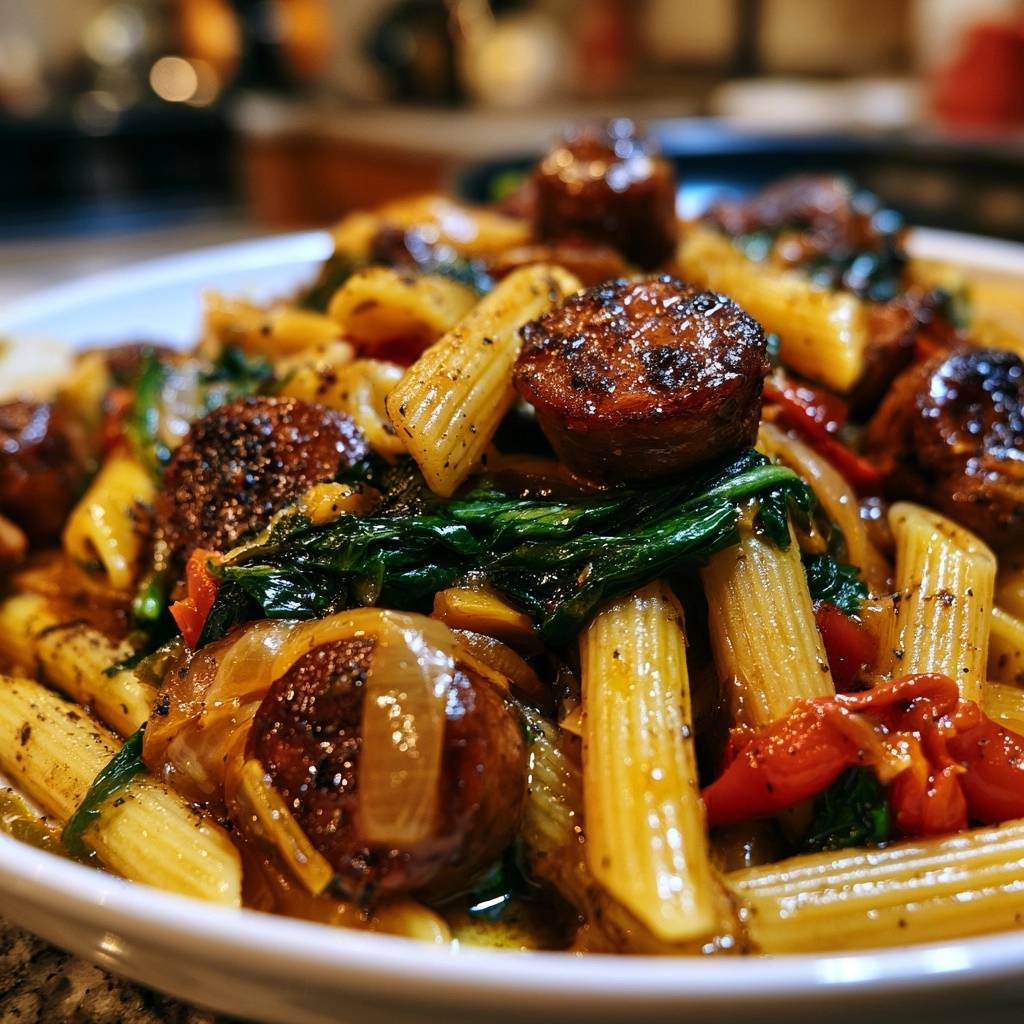
When shopping, look for links rather than bulk ground sausage. Slicing the links into 1-inch rounds creates two flat surfaces on every piece, which maximizes the surface area available for browning. This extra surface area means more crispy, caramelized bits in every single bite.
If you can find nitrate-free sausage, grab it. The cleaner fat profile results in a sauce that feels light on the palate rather than greasy. Always slice the sausage while it’s cold to get clean, even rounds that won’t fall apart when they hit the hot oil.
The Role of Beef Broth and Balsamic Glaze
Most pasta recipes default to chicken broth, but beef broth is the superior choice here. It provides a heavy, savory backbone that stands up to the bold spices found in Italian sausage. The darker notes of the beef broth complement the charred peppers and create a more “restaurant-quality” depth of flavor.
The balsamic glaze acts as a natural emulsifier. When it hits the pan with the beef broth and the reserved pasta water, it helps bind the fats and liquids together. This creates a tight, syrupy glaze that clings to the penne rather than sliding off to the bottom of the bowl.
The Science of the High-Heat Sausage Sear
The Maillard reaction is the chemical process that occurs when proteins and sugars are exposed to high heat, creating that savory, “browned” flavor we crave. To achieve this, your skillet must be hot before the meat ever touches it. If the pan is too cool, the sausage will release its juices and boil in its own liquid, resulting in a grey, rubbery texture.
You must leave the sausage rounds undisturbed for at least 3 to 4 minutes. It’s tempting to stir them, but every time you move the meat, you drop the surface temperature of the pan. Patience is rewarded with a deep, dark crust that provides a necessary textural contrast to the soft pasta.
As the sausage sears, it leaves behind “fond”—those little brown bits stuck to the bottom of the skillet. This fond is concentrated flavor. When you eventually add your liquids, these bits dissolve, infusing the entire sauce with the essence of the seared meat. This is why a heavy-bottomed skillet, like cast iron, is essential for heat retention.
Step-by-Step: Executing the Anti-Soggy Technique
Executing this dish requires a bit of choreography between the boiling pot and the hot skillet. You want your pasta to be ready just as the sauce reaches its peak concentration. This ensures the starch is active and ready to help thicken the final glaze.
Phase 1: Achieving Al Dente Penne
Always under-cook your penne by about 1 or 2 minutes compared to the package directions. The pasta should still have a firm “bite” in the center because it will continue to cook once it hits the skillet. If you cook it to completion in the water, it will turn mushy during the final toss.
Before draining, scoop out a quarter cup of the cloudy pasta water. This “liquid gold” is full of starch. When added to the skillet later, it acts as a bridge, helping the oil-based sauce and the water-based broth merge into a silky coating for the noodles.
Phase 2: Sautéing Aromatics in Sausage Drippings
After removing the sausage, the pan will be coated in flavorful rendered fat. Toss in your onions and peppers immediately. You want the heat high enough that the edges of the vegetables begin to char and soften within minutes.
Wait until the very end of this phase to add the minced garlic and dried oregano. Garlic burns quickly and becomes bitter, so it only needs about 60 seconds of heat. This short window is just enough to extract the oil-soluble flavors from the herbs without scorching them.
Phase 3: Deglazing and Reducing the Pan Sauce
Pour in the beef broth and balsamic glaze while the pan is still very hot. Use a wooden spoon to scrape the bottom of the skillet vigorously. You’ll see the liquid turn dark as it picks up the fond from the sausage and vegetables.
Let the liquid bubble and boil until it reduces by half. You are looking for a consistency that looks like a thin syrup. If you skip this step, the sauce will be too thin and won’t have the intensity needed to flavor the pound of pasta you’re about to add.
Phase 4: The 60-Second Flash-Wilt Method
This is the most critical moment of the recipe. Turn the heat to high and dump the entire bag of spinach into the pan. Use tongs to toss the leaves constantly so they all make contact with the hot surface and the reducing sauce.
Stop as soon as the spinach begins to collapse. It should still look bright green and slightly structured. By moving quickly, you evaporate the surface moisture of the leaves before the internal water can leak out, solving the soggy spinach problem entirely.
Troubleshooting Common Skillet Pasta Pitfalls
If your sauce looks too thick or the pan seems dry after adding the pasta, don’t panic. Simply add a tablespoon of the reserved pasta water at a time while tossing over high heat. The steam will loosen the sauce and help it coat the penne evenly.
On the flip side, if the sauce looks watery, keep the heat on high and keep tossing. The movement helps the starch in the pasta water emulsify the liquids. If you accidentally burn the garlic, it’s best to wipe the pan and start the aromatics over, as that bitterness will permeate the entire dish.
Flavor Variations and Ingredient Swaps
This recipe is a fantastic canvas for customization. While the classic Italian sausage is the standard, you can easily pivot the flavor profile by changing your protein or your greens. The technique remains the same even if the ingredients shift.
Adjusting the Heat Profile
If you love a spicy kick, swap the mild Italian sausage for a “hot” variety. You can also increase the red pepper flakes or stir in a spoonful of chopped Calabrian chiles during the deglazing phase. The vinegar in the chiles pairs beautifully with the balsamic glaze.
For those who prefer a sweeter profile, use a sweet basil sausage and add an extra drizzle of balsamic glaze at the very end. This emphasizes the caramelized onions and makes the dish feel more like a rustic harvest skillet.
Vegetable Additions and Substitutions
If you aren’t a fan of spinach, kale or Swiss chard are excellent hearty alternatives. However, these greens require more time to soften. Add them 2-3 minutes before the pasta, rather than the 60-second flash-wilt used for delicate baby spinach.
You can also add a burst of acidity by tossing in a handful of halved cherry tomatoes during the last minute of cooking. They will blister slightly and release their juices, adding a fresh, bright layer to the savory beef broth base.
Optimal Side Dishes for Savory Pasta
Since this skillet is quite rich and savory, you want side dishes that offer a crisp or bitter contrast. A simple salad of radicchio and arugula with a lemon vinaigrette is perfect. The bitterness of the greens cuts right through the fat of the sausage.
A crusty loaf of ciabatta or focaccia is also a great addition. You’ll want something to mop up any remaining balsamic reduction left on your plate. Avoid heavy, creamy sides, as the pasta is already quite filling and flavorful on its own.
Expert Tips for Storage and Reheating
Pasta has a tendency to absorb liquid as it sits, which can make leftovers feel dry. When storing, place the mixture in an airtight container as soon as it reaches room temperature. It will stay fresh in the refrigerator for up to three days.
To reheat, avoid the microwave if possible, as it can make the spinach rubbery and the sausage tough. Instead, place the pasta back in a skillet with a splash of beef broth or water. Heat it over medium-low, tossing gently until the sauce loosens up and the pasta is warmed through.
Frequently Asked Questions
Can I use whole wheat penne for this recipe?
Yes, you can use whole wheat penne, but keep in mind it has a heartier texture and a nuttier flavor. Whole wheat pasta often requires a minute or two more of cook time and may absorb more of the sauce. You might need to add a little extra pasta water during the final toss to keep it from becoming too dry.
Why is my spinach still watery even after following the tips?
The most common reason is that the pan wasn’t hot enough or there was too much liquid in the pan before the spinach was added. Ensure your beef broth has reduced to a syrupy consistency first. Also, make sure your spinach is as dry as possible before it hits the pan; if you just washed it, use a salad spinner to remove excess water.
Can I substitute the beef broth with something else?
If you don’t have beef broth, a rich mushroom broth is the best substitute because it provides a similar earthy “umami” depth. Vegetable broth works too, but the final sauce will be lighter in color and flavor. Avoid using just water, as you’ll lose the savory backbone that makes the sausage pop.
How do I get a darker, richer color on my sauce?
The dark color comes from two places: the “fond” from searing the sausage and the reduction of the balsamic glaze. To get a darker finish, ensure you get a very dark brown sear on the sausage rounds and let the balsamic and broth mixture bubble until it is thick and dark before adding the pasta back in.
Can I freeze this Italian Sausage and Penne Skillet?
It is not recommended to freeze this dish. Pasta often becomes mushy and loses its texture when thawed and reheated. Additionally, the spinach will lose its vibrant color and become quite slimy after a freeze-thaw cycle. This dish is best enjoyed fresh or within a few days from the fridge.
Italian Sausage and Penne Skillet
Course: Main CourseCuisine: Italian-AmericanDifficulty: easy4
servings10
minutes20
minutes30
Minutes580
kcalItalian-American
Ingredients
1 pound penne pasta
1 pound Italian sausages, sliced into 1-inch thick rounds
3 tablespoons olive oil, divided
1 large yellow onion, thinly sliced
1 red bell pepper, sliced into strips
4 cloves garlic, minced
5 ounces fresh baby spinach
1/2 cup beef broth
1 tablespoon balsamic glaze (for color and acidity)
1 teaspoon dried oregano
1/2 teaspoon red pepper flakes
1/2 cup freshly grated Parmesan cheese
Salt and coarse cracked black pepper to taste
Directions
- Bring a large pot of heavily salted water to a boil. Cook the penne until just al dente. Drain, reserving 1/4 cup of pasta water, and set aside.
- While the pasta cooks, heat 2 tablespoons of olive oil in a large cast-iron or heavy-bottomed skillet over medium-high heat. Add the sausage rounds in a single layer. Sear them undisturbed for 3 to 4 minutes per side until a deep, dark brown crust forms. Remove the sausage from the pan and set aside. Cook until no pink remains and it reaches 160°F (71°C).
- In the same skillet, add the remaining tablespoon of oil if the pan is dry. Add the onions and red peppers. Sauté in the sausage drippings until the edges are charred and soft, about 5-6 minutes. Add the garlic, oregano, and red pepper flakes, cooking for 1 minute until fragrant.
- Pour in the beef broth and balsamic glaze to deglaze the pan, scraping up all the browned bits (fond) from the bottom. Let the liquid reduce by half until it looks like a thin syrup.
- To solve the soggy spinach problem, turn the heat to high and add the fresh spinach all at once. Toss constantly for only 45-60 seconds until it just begins to collapse but remains vibrant green.
- Immediately add the cooked pasta, seared sausage, and the reserved pasta water back into the pan. Toss vigorously over high heat for 1 minute. The high heat evaporates excess moisture from the greens instantly while the starch in the pasta water binds the juices into a tight glaze.
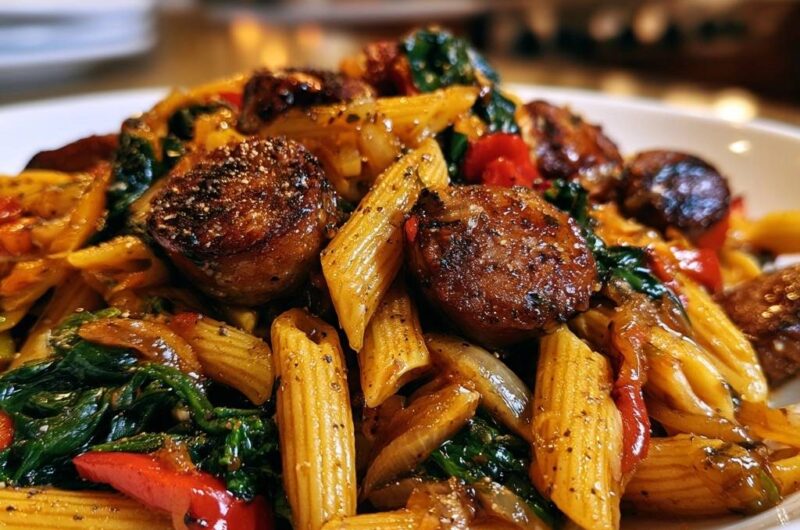
- Remove from heat. Stir in the Parmesan cheese and season with salt and a generous amount of coarse cracked black pepper to match the visual finish. Serve immediately.
Notes
- The secret to avoiding soggy spinach is to toss it on high heat for less than a minute and use reserved pasta water to bind the sauce.