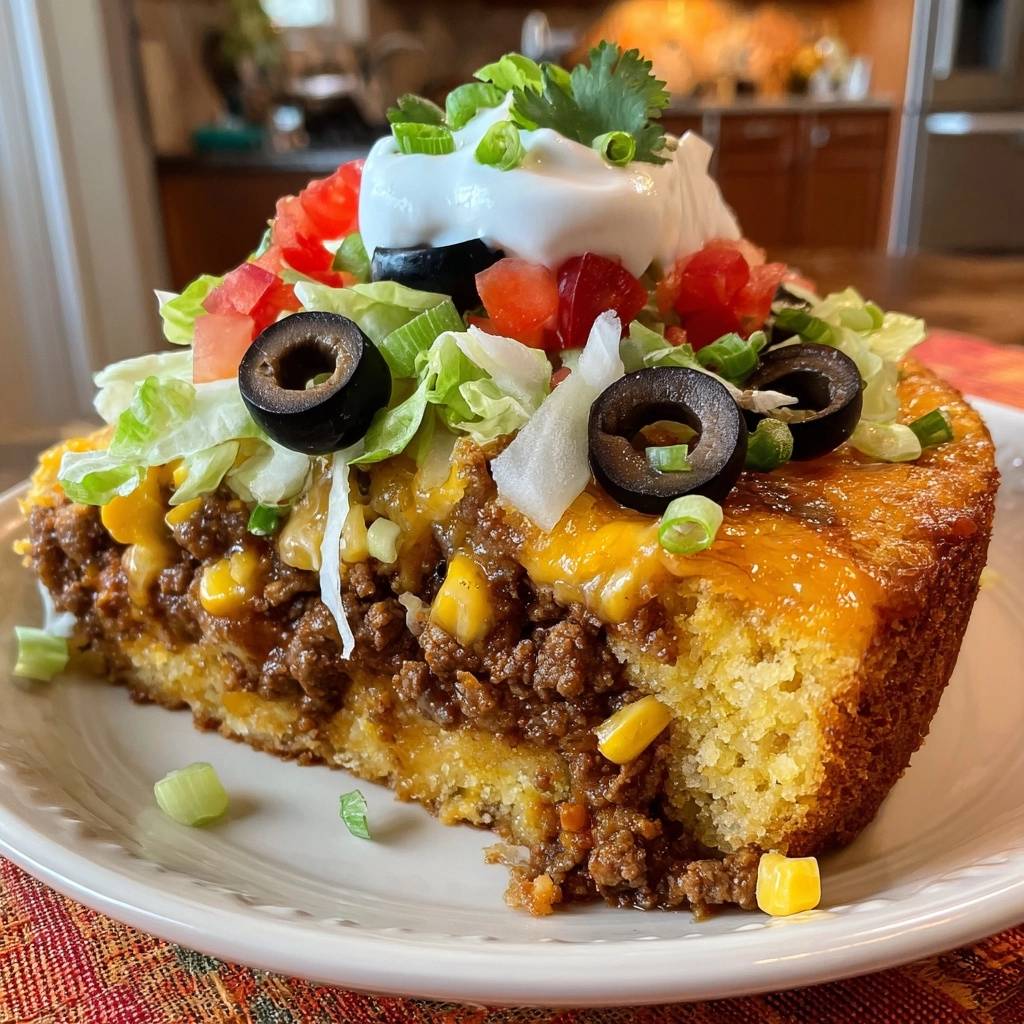
Most taco casseroles suffer from a fatal flaw that ruins an otherwise perfect dinner. You’ve likely experienced it before: a delicious, spicy meat topping sitting on a layer of mushy, gummy breading that soaked up every drop of grease and water. It’s a common frustration for home cooks who want that classic “Taco Pie” flavor but end up with a texture that resembles wet cardboard. This recipe changes the game by focusing on structural integrity and a specific layering technique that honors both the sweet, crumbly cornbread and the savory beef.
The evolution of the taco bake has moved from a simple “dump and bake” method to a more refined, tiered approach. By treating the cornbread as a foundation rather than just a filler, you create a beautiful contrast between the warm, fluffy base and the juicy, seasoned meat. The sweetness of the corn muffin mix acts as the perfect foil to the salty, earthy spices of the taco seasoning. It’s a comforting, hearty meal that feels substantial without being heavy, provided you follow the steps to keep those layers distinct.
The secret to this success is par-baking the cornbread base before the meat ever touches it. Most recipes fail because the raw batter and the wet meat cook at the same time, allowing the juices to seep deep into the starch. By giving the cornbread a head start in the oven, you create a firm, golden top crust that acts as a shield. This simple technical shift ensures that every bite has a distinct “snap” and a clean crumb, rather than a soggy mess that falls apart on the plate.
The Science of the Moisture-Lock Barrier
Understanding why casseroles fail is the first step toward culinary mastery. When you cook ground beef, it naturally releases fats and water, which are highly mobile. In a standard bake, these liquids migrate into the porous starches of the cornbread, turning a light crumb into a dense, wet paste. This isn’t just about flavor; it’s about the physics of moisture migration. To stop this, we use a “Cheese Seal” technique that creates a hydrophobic layer between the bread and the beef.
Once the cornbread is par-baked and hot, you immediately sprinkle a layer of shredded cheddar over the surface. The cheese melts instantly, forming a fatty, waterproof barrier that protects the bread. When you spread the meat mixture on top, the juices stay within the beef layer instead of soaking downward. This preserves the structural integrity of the dish, allowing you to cut clean, stackable wedges that hold their shape from the pan to the table.
Essential Components for the Loaded Taco Cornbread Bake
Quality ingredients are the backbone of this dish, starting with the beef. You should strictly use lean ground beef, specifically a 90/10 or 93/7 blend. Even though we drain the fat, starting with a leaner cut prevents excess grease from pooling in the corners of your baking dish. This keeps the flavor focused on the spices rather than the heavy mouthfeel of rendered fat. The whole kernel corn is equally important, as it provides a snappy texture that breaks up the softness of the meat and bread.
For more beefy goodness, try this spicy beef tater tot casserole.
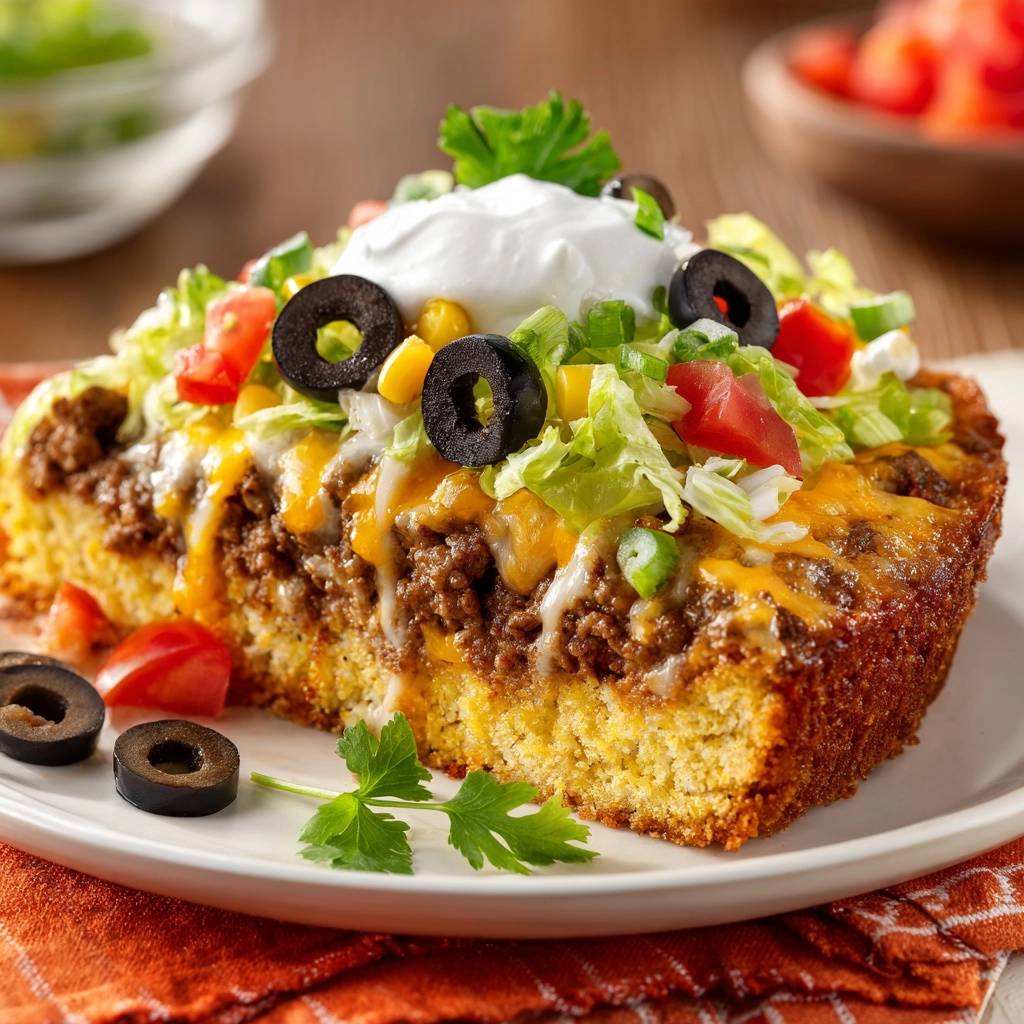
For the cornbread itself, large eggs are mandatory because they provide the necessary lift and protein structure. If the eggs are too small, the cornbread will be crumbly and dry rather than fluffy and cake-like. Additionally, using sharp cheddar cheese provides a punchy, acidic note that cuts through the sweetness of the corn. Every component serves a purpose, from the moisture in the tomatoes to the crunch of the lettuce, creating a multi-dimensional eating experience.
Choosing the Right Corn Muffin Mix
While you can certainly make a cornmeal blend from scratch, standard boxed mixes are actually preferred for this specific recipe. Commercial mixes have a higher sugar content, which is vital for balancing the heat and salt of the taco seasoning. This sweet-and-savory profile is what makes the dish so addictive. If you choose a traditional, unsweetened Southern-style cornmeal, the dish may taste overly salty, so stick to the blue boxes for that nostalgic, balanced flavor.
Fresh Toppings vs. Pantry Staples
The magic of a “loaded” bake lies in the contrast between the hot base and the cold, fresh toppings. When selecting your produce, opt for Roma tomatoes because they have a lower water content and firmer flesh than beefsteak varieties. This prevents the “cold” layer from becoming watery as it sits on the warm beef. Sharp cheddar is the gold standard here; its bold flavor stands up to the spices much better than a mild Monterey Jack or a pre-shredded Mexican blend.
Phase One: Preparing the Savory Beef and Corn Base
Start by browning your beef over medium-high heat until no pink remains. You must be diligent about draining the fat thoroughly; use a colander if necessary to ensure the meat is as dry as possible. Once the beef is back in the pan, add the taco seasoning, water, and corn. This is where patience pays off. You aren’t just mixing ingredients; you are performing a reduction to concentrate the flavors.
Simmer the mixture until the water has completely evaporated. You’ll know it’s ready when the meat looks glossy and coated in a thick, dark sauce rather than sitting in a pool of liquid. This concentrated mixture ensures that the spices are locked onto the beef. If the filling is runny, it will overwhelm the cheese barrier and compromise the cornbread base, so keep simmering until the pan is nearly dry.
Phase Two: Achieving the Perfect Par-Baked Crust
Preheat your oven to a hot 400°F. This high temperature is crucial because it triggers a rapid rise in the cornbread, creating those airy pockets we love. When mixing your batter, use a light hand. Whisk the eggs, milk, and muffin mix until they are “just combined.” If you overwork the batter, you’ll develop the gluten in the flour, resulting in a tough, rubbery cornbread rather than a tender crumb.
Pour the batter into your greased dish and bake for 12 to 15 minutes. You are looking for the edges to pull away slightly and the top to feel set to the touch. It shouldn’t be fully browned yet, as it still has more time to spend in the oven later. This window of time is the most critical part of the process; it builds the “floor” of your casserole so it can support the weight of the toppings without collapsing.
Phase Three: Layering and the Final Bake
As soon as the cornbread comes out of its first stint in the oven, work quickly. Sprinkle the first cup of cheese evenly across the hot surface. You’ll see it start to glisten and melt almost immediately. Next, carefully spread the beef and corn mixture over the cheese. Use a spatula to push the meat all the way to the edges, ensuring every slice will have an equal amount of topping.
Finish with the remaining cup of cheese and return the dish to the oven for another 15 minutes. During this final phase, the cheese will bubble and brown, and the cornbread will finish cooking through the center. Look for deep golden brown edges and a center that doesn’t jiggle when you gently shake the pan. The aroma of toasted corn and melted cheese will tell you exactly when it’s ready to pull out.
Why the 10-Minute Rest Period is Mandatory
It is incredibly tempting to slice into the bake the moment it leaves the oven, but you must wait. A 10-minute rest period allows for “carryover cooking,” where the residual heat finishes setting the very center of the cornbread. More importantly, it gives the starches and proteins time to firm up. If you cut it too early, the steam will escape too quickly, and the cheese barrier will still be in a liquid state.
Waiting ensures that the fats in the cheese have a chance to slightly solidify, acting as a glue that holds the meat to the bread. This is the secret to getting those clean, stackable wedges that look like they came from a professional kitchen. After ten minutes, the temperature will be perfect for eating, and the structure will be strong enough to support the heavy pile of fresh lettuce and tomatoes you’re about to add.
Customizing Your Loaded Taco Cornbread Bake
This recipe is a fantastic canvas for your own culinary preferences. If you love heat, try folding finely diced jalapeños or a small can of chopped green chiles directly into the cornbread batter. For those looking to lighten things up, ground turkey works beautifully as a substitute for beef, though you may want to add a teaspoon of olive oil to the pan since turkey is much leaner.
Vegetarians can easily swap the meat for a hearty mixture of black beans and roasted sweet potatoes seasoned with the same taco spices. You can also experiment with the cheese; a smoked provolone or a pepper jack can add a completely different flavor profile to the moisture barrier. The key is to keep the ratios the same so the par-baking and sealing techniques still function correctly.
Optimal Equipment: Cast Iron vs. Ceramic
While a 9×13 glass or ceramic dish works perfectly fine, a 10-inch cast iron skillet is the superior choice for this recipe. Cast iron has incredible thermal conductivity and heat retention, which means it gets much hotter than ceramic. This high heat creates a crispy, almost fried bottom crust on the cornbread that provides a wonderful crunch. It also looks beautiful when brought directly from the oven to the table for serving.
If you use a glass dish, keep an eye on the bottom of the bake. Glass tends to cook slower, so you might need an extra minute or two during the par-baking phase to ensure the base is fully set. Regardless of the vessel, make sure you grease it generously. Cornbread is notorious for sticking, and you want those wedges to slide out easily so you can show off the perfect layers you’ve created.
Make-Ahead Strategies and Storage
You can easily prep the beef and corn mixture up to two days in advance. Store it in an airtight container in the fridge, then simply reheat it slightly before spreading it over the par-baked cornbread. This makes the actual assembly on a weeknight incredibly fast. However, do not mix the cornbread batter ahead of time, as the leavening agents begin to lose their power the moment they hit the liquid ingredients.
Leftovers should be stored in the refrigerator without the cold toppings. When you are ready to eat again, avoid the microwave if possible. Reheating a slice in a 350°F oven or an air fryer for a few minutes will revive the crispness of the cornbread. Once the base is hot, then you can pile on the fresh lettuce, tomatoes, and sour cream to recreate that perfect temperature contrast.
Troubleshooting Common Casserole Issues
If your cornbread ends up too dry, you likely overbaked it during the first phase. Remember, it continues to cook during the second 15-minute window, so the par-bake should only go until the bread is just set. If the meat layer feels bland, it’s usually because the water wasn’t reduced enough. That liquid dilutes the spices; you want a thick, concentrated paste for the best flavor impact.
Sogginess usually comes from adding the lettuce and tomatoes while the bake is still piping hot or before the rest period is over. The steam from the meat will wilt the lettuce and draw moisture out of the tomatoes. Lastly, if your cornbread didn’t rise, check the expiration date on your muffin mix. The baking powder in those boxes can lose its potency over time, leading to a flat, dense base.
How do I prevent the edges from burning?
If you notice the edges of your cornbread are turning dark brown before the cheese in the center has melted, you can use a foil tent. Simply drape a piece of aluminum foil loosely over the top of the dish. This reflects some of the heat away from the surface while allowing the internal temperature to continue rising, ensuring a perfectly cooked center without charred edges.
Can I use frozen corn instead of canned?
Yes, you can use frozen corn, but you must thaw it completely and pat it dry with paper towels first. Frozen corn carries a lot of surface moisture and ice crystals. If you dump it straight into the beef, it will release that water and make your meat mixture runny, which threatens the integrity of your cornbread base. Once dried, it works exactly like canned corn.
What is the best way to reheat leftovers?
The oven is your best friend for leftovers. Place the slices on a baking sheet and heat at 350°F for about 10 minutes. This helps the cornbread regain its crumbly texture. A microwave tends to make the bread spongy and the meat rubbery. If you have an air fryer, 3-5 minutes at 320°F will make the edges crispy again while heating the center perfectly.
Can I double this recipe for a crowd?
You can double the recipe, but you should use two separate 9×13 dishes rather than one giant deep pan. If the cornbread layer is too thick, the center will remain raw while the edges burn. By using two dishes, you maintain the correct surface-area-to-depth ratio. The par-baking time will remain roughly the same, though you should check both dishes at the 12-minute mark.
Serving Suggestions and Side Pairings
Since this bake is “loaded” with toppings, you don’t need heavy side dishes. A simple lime-dressed slaw is a fantastic pairing; the acidity and crunch of the cabbage cut right through the richness of the cheese and cornbread. Alternatively, a light avocado salad with a cilantro-vinaigrette provides a creamy element that complements the spicy beef without making the meal feel overly stuffed.
If you want to lean into the Southwest theme, a side of chilled black bean salad with bell peppers and red onions works well. The key is to provide something bright and fresh to balance the warm, savory nature of the casserole. Avoid serving it with more bread or heavy rice dishes, as the cornbread base is already quite filling. A few lime wedges on the side for squeezing over the top can also elevate the entire flavor profile.
How long can I store leftovers in the fridge?
You can store the bake in an airtight container for up to 3 to 4 days. Make sure the dish has cooled completely before sealing it to prevent condensation from forming inside the container, which would make the cornbread soggy. Always store the fresh toppings like lettuce and sour cream separately and add them only after you have reheated the base.
Why did my cornbread crumble when I sliced it?
This usually happens for two reasons: either the bake didn’t rest long enough, or the batter was overmixed. The 10-minute rest is vital for the starches to lock together. If the batter was overmixed, the crumb becomes brittle. Also, ensure you are using a sharp, serrated knife to saw through the layers gently rather than pressing down hard, which can crush the delicate cornbread structure.
Can I substitute the taco seasoning?
If you don’t have a packet on hand, you can make a quick blend using chili powder, cumin, garlic powder, onion powder, and a pinch of salt. Use about 3 tablespoons of your homemade blend to replace one standard packet. This allows you to control the salt levels and the heat, making it easy to customize the flavor to your family’s specific tastes.
Cornbread Bake
Course: Main CourseCuisine: AmericanDifficulty: medium8
servings15
minutes35
minutes410
kcal50
MinutesThis recipe uses a specific layering and pre-sealing technique to ensure your cornbread stays fluffy and golden while the topping stays juicy. By par-baking the base and using a moisture-lock layer of cheese, you get the perfect bite every single time.
Ingredients
1 pound lean ground beef
1 packet taco seasoning
1/2 cup water
1 can (15 oz) whole kernel corn, drained
2 boxes (8.5 oz each) corn muffin mix
2 large eggs
2/3 cup milk
2 cups shredded sharp cheddar cheese, divided
1 cup shredded iceberg lettuce
1/2 cup diced Roma tomatoes
1/4 cup sliced black olives
1/4 cup sliced green onions
Sour cream and fresh cilantro for garnish
Directions
- Preheat your oven to 400 degrees F. Generously grease a 10-inch cast iron skillet or a 9×13 inch baking dish.
- In a large skillet over medium-high heat, brown the ground beef until fully cooked. Drain off all excess fat thoroughly. This is the first step in preventing a soggy base.
- Add the taco seasoning, water, and drained corn to the beef. Simmer for 5-7 minutes until the liquid has completely evaporated, leaving a thick, concentrated meat mixture. Set aside.
- In a bowl, whisk together the corn muffin mix, eggs, and milk until just combined. Pour the batter into the prepared skillet or dish.
- Bake the cornbread alone for 12-15 minutes. This par-baking creates a firm, golden top crust that prevents the meat from sinking in and making the bread gummy.
- Remove from the oven and immediately sprinkle 1 cup of the cheddar cheese over the hot cornbread. This creates a melted barrier that seals the bread from moisture.
- Spread the beef and corn mixture evenly over the cheese layer. Top with the remaining 1 cup of cheese.
- Return to the oven and bake for another 15 minutes, or until the cheese is bubbly and the edges of the cornbread are deep golden brown.
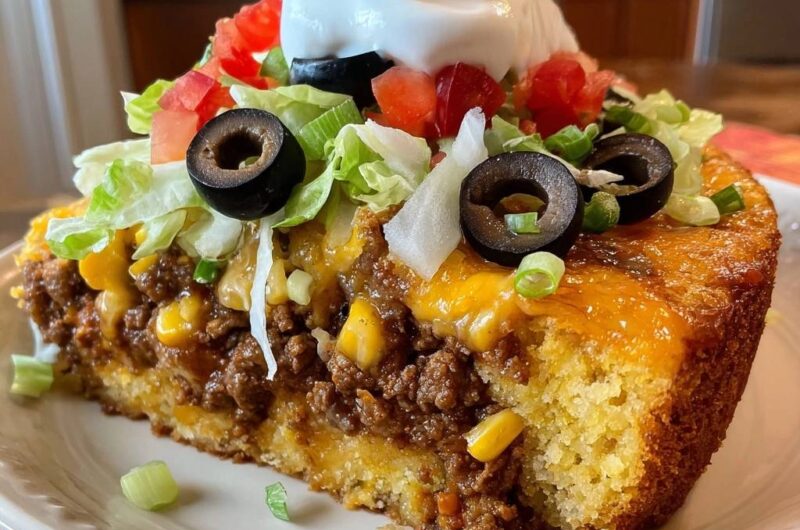
- Let the bake rest for 10 minutes before slicing. This is crucial for the structure to set so you get clean, stackable wedges as seen in the image.
- Top each slice generously with fresh shredded lettuce, diced tomatoes, black olives, green onions, a large dollop of sour cream, and fresh cilantro before serving.
Notes
- Draining excess fat from the beef and par-baking the cornbread are essential steps to prevent a soggy bottom. Let the bake rest for 10 minutes before slicing to ensure clean wedges.