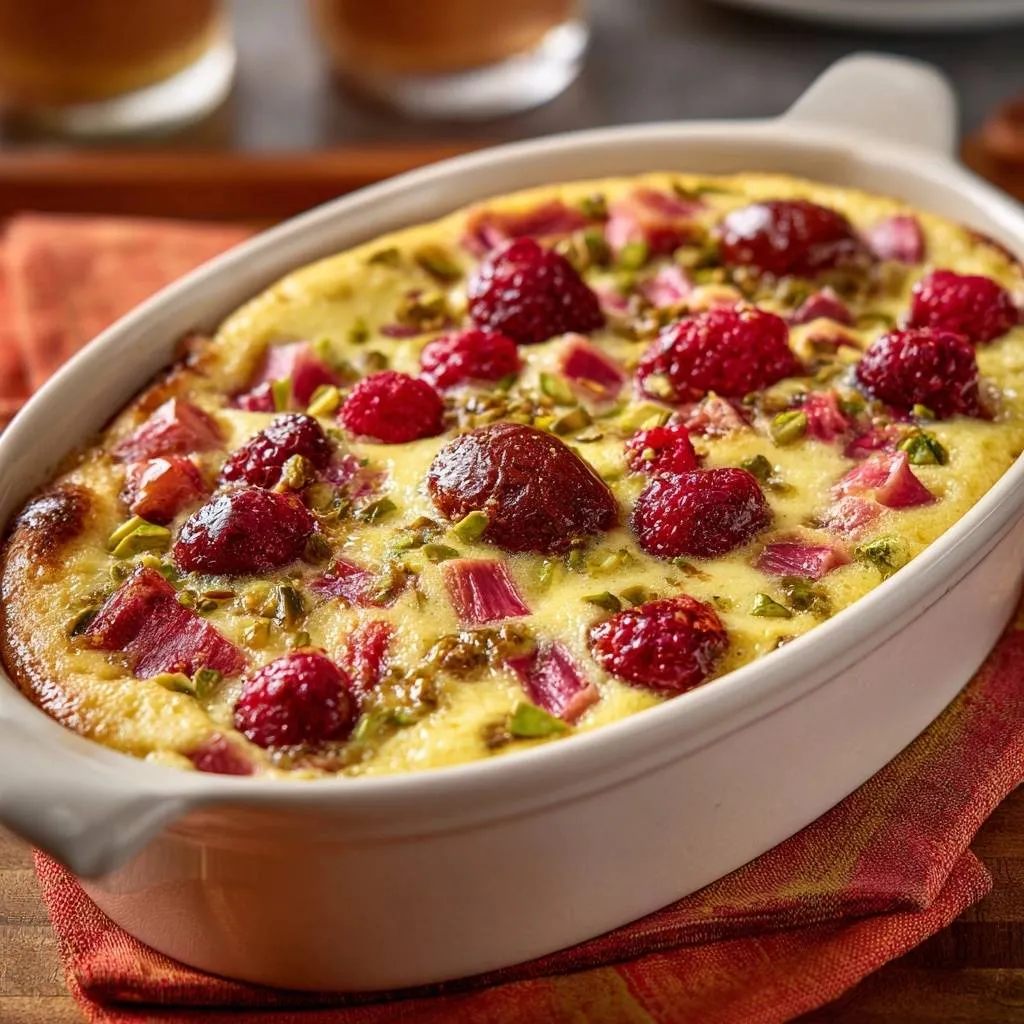
Few things are more disappointing than pulling a fruit bake out of the oven only to find a soupy, purple mess at the bottom of the dish. Rhubarb and raspberries are notorious for their high water content, which usually leaches out and dilutes the custard during the baking process. This Raspberry Rhubarb Custard Bake solves that specific frustration by using a strategic fruit-sealing technique that ensures every slice stays firm and elegant.
You’ll love the sensory contrast in this dish. The tart, vibrant snap of the rhubarb and the jammy sweetness of the raspberries cut right through the dense, velvety custard. Unlike a traditional French clafoutis which can sometimes feel rubbery or overly eggy, this recipe uses a specific ratio of heavy cream to a small amount of sifted flour. This creates a superior structural integrity that feels like a cross between a rich flan and a delicate cake.
The secret to this success is the cornstarch barrier. By coating the fruit before it ever touches the liquid, you create a protective shield. This ensures the custard sets into a smooth, sliceable texture rather than a watery pudding. I’ve found that this small extra step is the difference between a dessert that collapses and one that holds its shape beautifully on the plate.
The Science of Preventing a Watery Custard
Rhubarb and raspberries are delicious, but they are essentially little water balloons. When heat hits them in the oven, the cellular walls break down and release all that juice. In a standard custard, this extra liquid prevents the egg proteins from bonding correctly. Therefore, you end up with a broken, weeping custard that looks unappealing and tastes watered down.
The “Fruit-Sealing Technique” is your best defense against this soggy-bottom syndrome. By tossing the chopped rhubarb and raspberries in cornstarch, you are applying a dry, absorbent coating to every surface. As the fruit begins to release its juices during the bake, the cornstarch immediately hydrates and forms a thin, gelatinous barrier. This traps the moisture inside the fruit or thickens the juice right at the source.
In addition to protecting the custard, this starch barrier helps the fruit maintain its vibrant color. Instead of the juices bleeding out and turning the entire dish a muddy pink, the raspberries stay bright and the rhubarb keeps its distinct shape. This chemistry ensures that the custard surrounding the fruit remains creamy and pure, providing that professional, clean-cut look you want when serving guests.
Essential Components for the Perfect Set
Selecting the right rhubarb is the first step toward a perfect bake. Look for stalks that are firm and crisp, similar to celery. While deep red stalks offer a beautiful color, green stalks are just as tart and delicious. Just make sure they aren’t woody or limp, as those will result in a stringy texture that disrupts the smoothness of the custard.
Fresh raspberries are significantly better than frozen ones for this specific recipe. Frozen berries often carry extra ice crystals and have already had their cell walls damaged by freezing, making them much more likely to turn into mush. If you must use frozen, do not thaw them first; toss them in the cornstarch while frozen and work quickly to get the dish into the oven.
For more raspberry goodness, check out these raspberry coconut jam bars.
The dairy ratio is another non-negotiable element. Using a 1:1 ratio of heavy cream to whole milk provides the necessary fat content for a luxurious mouthfeel. If you try to use only milk, the custard will lack the richness needed to balance the sharp acidity of the rhubarb. Furthermore, that 1/3 cup of sifted flour acts as a stabilizer, giving the bake enough “slice-ability” to be served in neat wedges.
Finally, don’t skip the pistachios. The salty, fatty crunch of the nuts provides a much-needed textural break from the soft custard. They also offer a savory note that rounds out the sweetness of the sugar and the tang of the fruit, making the entire flavor profile feel more sophisticated and balanced.
Why Room Temperature Eggs are Mandatory
Using room temperature eggs is a small detail that makes a massive difference in the emulsification process. When eggs are cold, they can cause the fats in the heavy cream to seize up or clump. This leads to an uneven bake where some parts of the custard are denser than others.
Room temperature proteins bond much more effectively with the granulated sugar. When you whisk them together, they create a stable foam that incorporates air more easily. This ensures the batter is light enough for the fruit to rise properly and results in a uniform, silky texture throughout the entire dish.
Step-by-Step: Preparing the Fruit and Base
Start by chopping your rhubarb into uniform half-inch pieces. Consistency is key here because you want every piece of fruit to soften at the same rate. If some pieces are too large, they will remain crunchy while the custard overcooks. Once chopped, toss them with the raspberries and cornstarch until they look dusty and well-coated.
When you move on to the custard base, whisk your eggs and sugar with vigor. You are looking for a specific visual cue: the mixture should turn a pale, buttery yellow and look slightly frothy on top. This indicates that the sugar has begun to dissolve and you’ve incorporated enough air to give the custard its lift.
Always sift your flour before adding it to the wet ingredients. Because there is so little flour in this recipe, any small lump will be very noticeable in the finished product. Sifting ensures the flour integrates instantly, preventing those annoying pockets of dry starch that can ruin the velvety experience of the custard.
The Pour and the Floating Fruit Technique
When you are ready to combine everything, pour the custard mixture over the fruit very slowly. If you dump the liquid in too fast, you risk washing the cornstarch coating off the rhubarb and raspberries. A gentle pour keeps the “seal” intact and ensures the fruit stays exactly where it needs to be during the initial phase of baking.
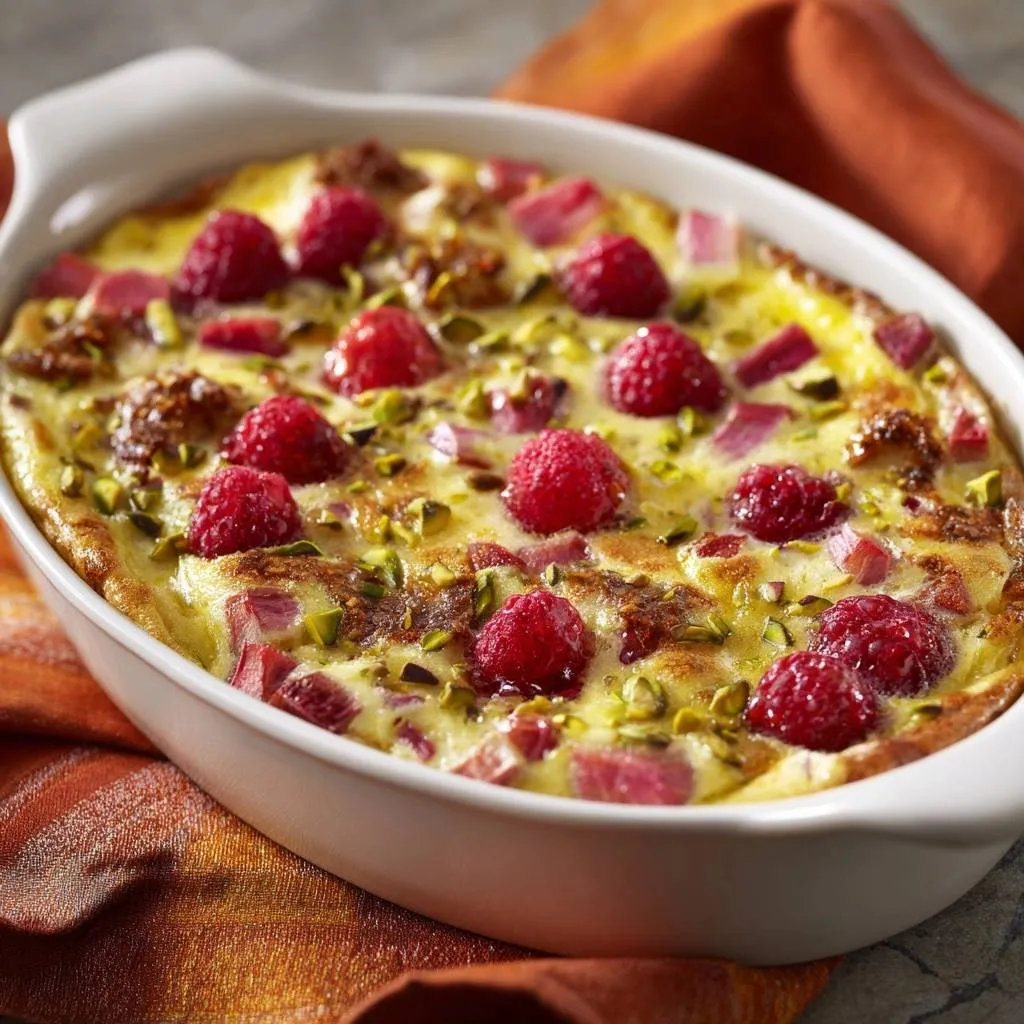
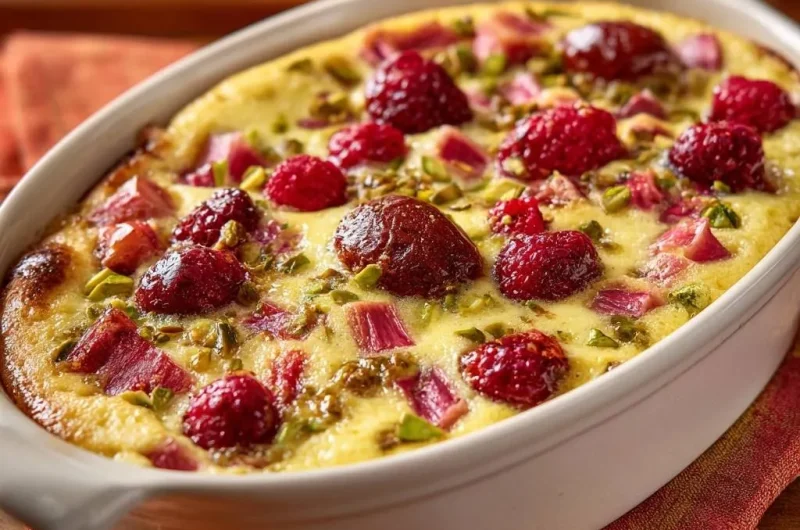
You might notice the fruit starts to bob and rise toward the surface. This “buoyancy factor” is a great sign! It means your batter is correctly aerated and has the right density. Having the fruit float toward the top creates a beautiful presentation where the red and pink hues peek through the golden custard and green pistachios.
This floating effect also helps with even cooking. Since the fruit is distributed throughout the top layer, the heat can penetrate the custard base more efficiently. It prevents the fruit from huddling at the bottom, which is the primary cause of a soggy, undercooked base in most fruit desserts.
Precision Baking: The Jiggle Test
The 35 to 40-minute window is the most critical part of the process. You want to look for edges that are puffed up and a light golden brown. However, the center is the real indicator of success. Do not use a toothpick; it won’t tell you anything useful about a custard’s doneness and will only leave a hole in your beautiful bake.
Instead, give the baking dish a gentle nudge. The very center should have a slight, jelly-like jiggle. It shouldn’t look like liquid sloshing around, but it shouldn’t be stiff either. This jiggle tells you that the eggs have set just enough to hold together while remaining incredibly creamy.
Remember that carry-over cooking is a real factor. The dish will continue to cook for several minutes after you pull it out of the oven. If you wait until the center is completely firm before removing it, the custard will become overbaked and rubbery by the time it actually reaches the table.
The Critical 20-Minute Resting Period
I know it’s tempting to dive in while the aroma is filling your kitchen, but you must wait. The thermodynamics of cooling are just as important as the baking itself. During these 20 minutes, the starches and egg proteins finish their “set” as the temperature drops slightly.
As the bake rests, the texture transforms from “liquid-hot” to “velvety-firm.” This resting period allows the juices inside the fruit to thicken further, ensuring that when you finally cut into it, the slice stays upright. If you cut it too early, the steam will escape too fast and the custard will likely collapse into a puddle.
This wait also improves the flavor. When the dish is piping hot, the acidity of the rhubarb can feel overwhelming. As it cools to a warm room temperature, the sweetness of the custard and the nuttiness of the pistachios come forward, creating a much more harmonious bite.
Flavor Variations and Seasonal Swaps
Once you master this base, you can adapt it to whatever is in season. If rhubarb isn’t available, stone fruits like apricots or cherries make a fantastic substitute. Just be sure to pit them and cut them into similar half-inch pieces to ensure they cook through at the same rate as the custard.
For other fruit-forward bakes, you might enjoy these strawberry cheesecake crumble bars.
For a different kind of fruit and chocolate treat, consider these cherry chocolate brownies.
You can also play with the aromatics. Rubbing lemon or orange zest into the sugar before whisking it with the eggs adds a bright, citrusy lift. If you want a warmer flavor profile, a pinch of ground cardamom or freshly grated ginger pairs exceptionally well with the natural tartness of the rhubarb.
Complementary Dishes
Looking for more comforting bakes? Consider these ideas.
- For a savory treat that uses a similar baking method, try these muffin tin chicken pot pies, offering a delightful contrast to the sweet custard bake.
- If you enjoy fruit-forward breakfast or brunch items, these fluffy cranberry maple pancakes offer a bright, seasonal flavor that pairs well with the tartness of rhubarb.
For those with nut allergies, you can easily swap the pistachios for toasted sunflower seeds or a sprinkle of rolled oats. This maintains that essential “crunch” factor without the risk. If you want to go even bolder, a few cracks of black pepper in the custard can actually highlight the floral notes of the raspberries.
Troubleshooting Your Custard Bake
If your custard separates or looks curdled, it usually means the oven was too hot or the eggs were over-whisked. High heat causes the egg proteins to tighten too quickly, squeezing out the moisture and creating a grainy texture. Always check your oven calibration if you notice this happening frequently.
If the fruit sank and stayed at the bottom, your batter might have been a bit too thin, or the fruit was exceptionally wet. Ensure you are measuring your flour accurately and using the cornstarch toss. Also, make sure you aren’t using a dish that is too deep; a 1.5-quart oval dish provides the perfect surface area for the fruit to float.
If the top is browning too fast but the inside is still liquid, your oven rack might be too high. Move the dish to the center rack for the next bake. You can also loosely tent the dish with foil for the last 10 minutes of baking to protect the top while the center finishes setting.
Frequently Asked Questions
Can I use frozen rhubarb if I thaw and drain it first?
Yes, you can use frozen rhubarb, but you must be careful. Thaw it completely in a colander and pat it very dry with paper towels. Because frozen rhubarb is much softer, it releases juice faster. Increase the cornstarch to 3 tablespoons to handle the extra moisture and prevent the custard from becoming soggy.
Why did my custard turn grey?
Rhubarb is highly acidic and reacts with aluminum. If you used an unlined aluminum baking pan or whisked the batter in an aluminum bowl, the acid can cause a chemical reaction that turns the custard a dull grey. Always use glass, ceramic, or stainless steel when working with rhubarb to keep the colors vibrant.
Is there a dairy-free substitute that maintains the structural integrity?
You can substitute the dairy, but you need high-fat options. Use full-fat canned coconut milk in place of both the heavy cream and whole milk. Avoid thin milks like almond or rice milk, as they lack the fat and proteins required to create a firm, velvety set. The flavor will change slightly, but the texture will remain similar.
How long does this stay firm in the refrigerator?
This bake stays firm and delicious for about 3 days in the refrigerator. Keep it covered with plastic wrap or in an airtight container. Note that the pistachios will lose their crunch over time as they absorb moisture from the custard, so you might want to add a fresh sprinkle when serving leftovers.
Can I reduce the sugar without affecting the set?
You can reduce the sugar by about 2 tablespoons without ruining the structure. However, sugar doesn’t just provide sweetness; it also helps tenderize the egg proteins. If you cut the sugar too much, the custard may become more “rubbery” and the tartness of the rhubarb might become unpleasantly sharp.
Storage and Reheating for Best Texture
If you have leftovers, store them in the refrigerator. I do not recommend freezing this dish. The freezing and thawing process creates ice crystals that tear through the delicate custard lattice. When thawed, the bake will lose its creamy texture and become grainy and watery.
For the best experience with leftovers, reheat them gently. A microwave will work in a pinch, but it tends to make the fruit very soft and the pistachios soggy. Instead, place a slice in a 300°F oven for about 10 minutes. This warms the custard through without overcooking it and helps restore some of the crunch to the nut topping.
This dish is also surprisingly good served cold right out of the fridge. The flavors deepen as it sits, and the texture becomes even more dense and fudge-like. Whether you enjoy it warm with a dollop of cream or cold as a quick snack, the anti-soggy technique ensures it remains a perfect treat until the very last bite.
Raspberry Rhubarb Custard Bake
Course: DessertCuisine: AmericanDifficulty: medium6
servings15
minutes40
minutes285
kcal55
MinutesThis Raspberry Rhubarb Custard Bake uses a specific fruit-sealing technique to ensure a firm, velvety base. By coating the fruit in cornstarch and adding a touch of flour to the custard, this recipe avoids the common watery mess of fruit bakes, resulting in a perfectly set dessert with vibrant fruit and a salty pistachio crunch.
Ingredients
2 cups fresh rhubarb, chopped into half-inch pieces
1 cup fresh raspberries
3 large eggs, room temperature
1/2 cup granulated sugar
1 cup heavy cream
1/2 cup whole milk
1/3 cup all-purpose flour (sifted)
1 teaspoon vanilla extract
1/4 teaspoon salt
2 tablespoons cornstarch (for coating fruit)
1/4 cup shelled pistachios, roughly chopped
Butter for greasing the dish
Directions
- Preheat your oven to 350°F (175°C) and generously grease a 1.5-quart oval baking dish with butter.
- To solve the soggy bottom issue, toss your chopped rhubarb and raspberries in a small bowl with the 2 tablespoons of cornstarch until evenly coated. This creates a thin barrier that absorbs excess fruit moisture during baking, preventing it from thinning out the custard.
- Spread the coated fruit evenly across the bottom of the prepared baking dish.
- In a medium mixing bowl, whisk the eggs and sugar together until the mixture is pale and slightly frothy.
- Whisk in the heavy cream, milk, vanilla extract, and salt.
- Gradually whisk in the 1/3 cup of sifted flour. This small amount of flour is essential to provide the structural integrity seen in the image, ensuring the custard sets firmly enough to support the fruit without becoming a liquid flan. Whisk until the batter is completely smooth and no lumps remain.
- Pour the custard mixture slowly over the fruit. The fruit will naturally float toward the top, which is exactly what you want for that beautiful presentation.
- Sprinkle the chopped pistachios over the top for a salty crunch that balances the tart fruit.
- Bake for 35 to 40 minutes. The key to the perfect texture is removing it when the edges are puffed and golden brown, but the very center still has a slight, jelly-like jiggle.
- Let the bake cool for at least 20 minutes before serving. This resting period allows the starches to fully set, ensuring a clean slice and a velvety mouthfeel.
Notes
- The secret to the perfect texture is the cornstarch coating on the fruit and the 20-minute resting period, which allows the starches to fully set for a clean slice.